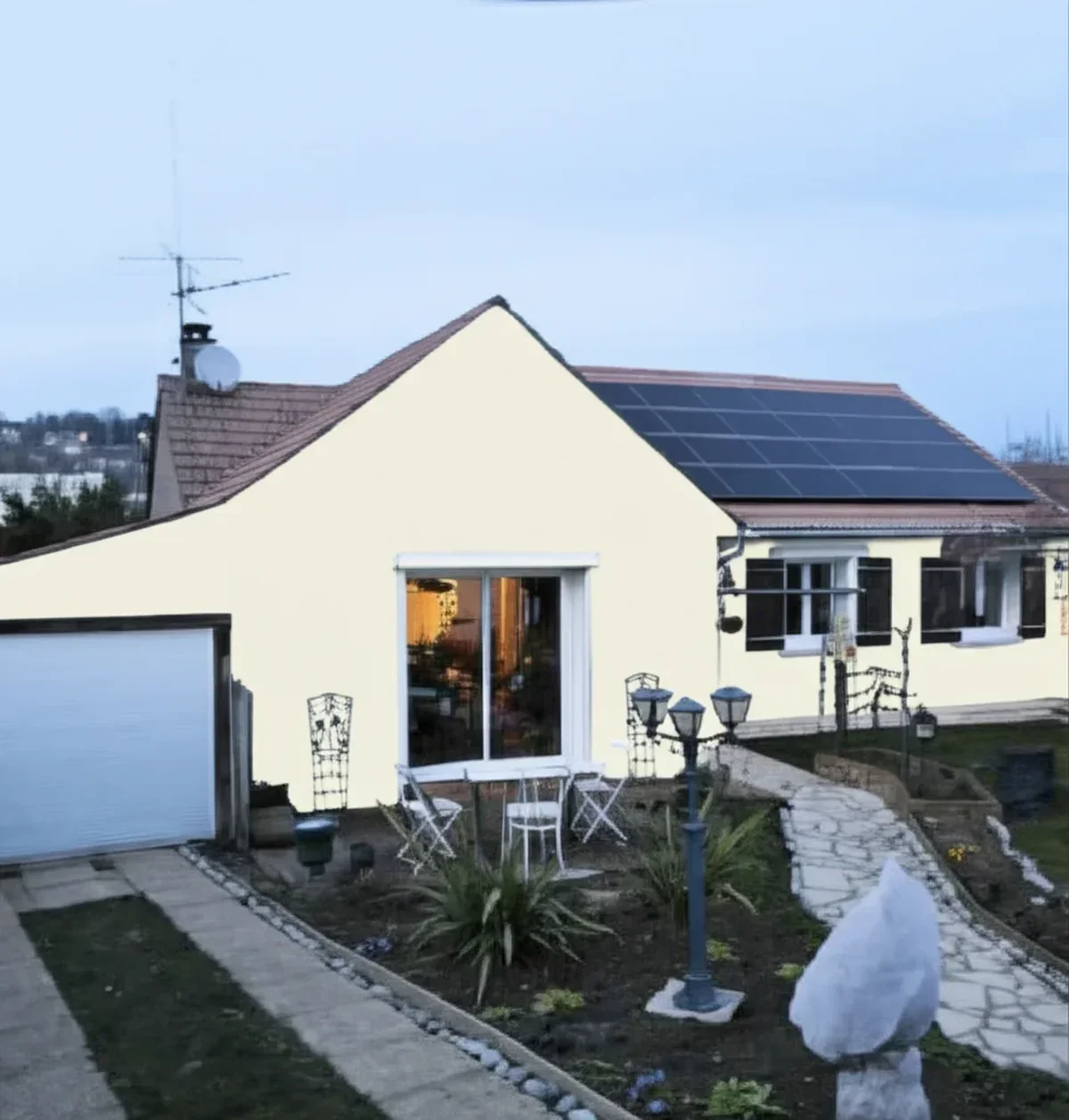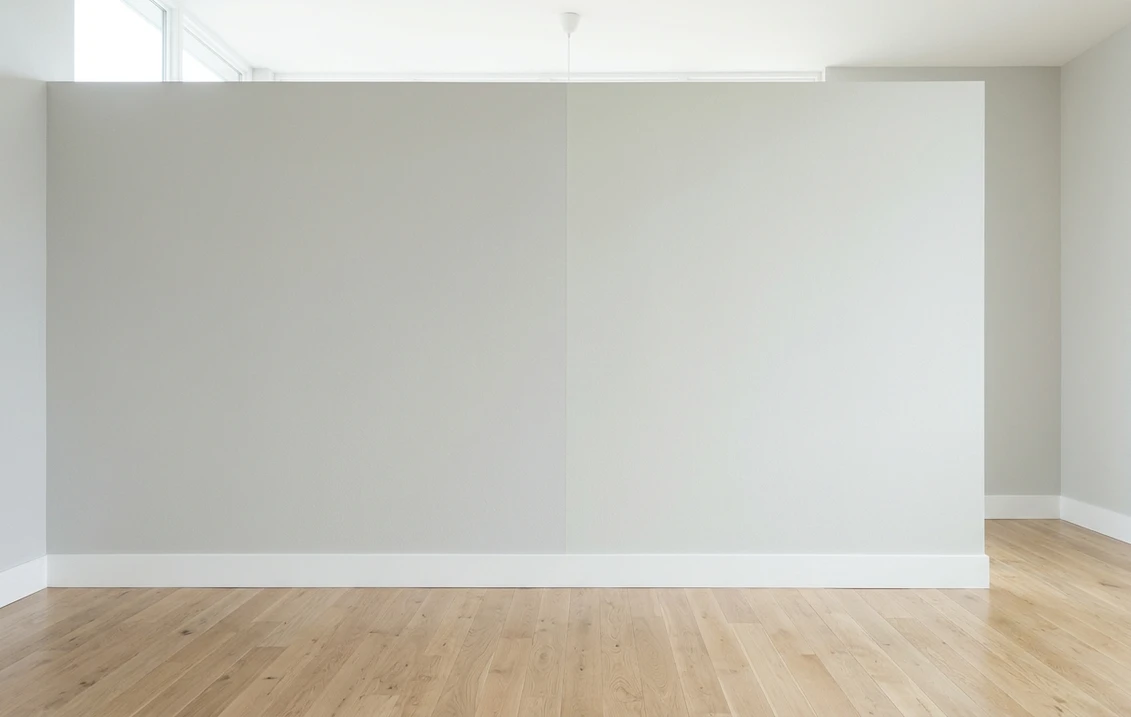
Try it on your house

The verdict in three lines. Stonington Gray HC-170 (LRV 59) is the steadier, slightly deeper gray: a cool blue-leaning light gray that always reads gray.
Gray Owl OC-52 (LRV 65) is the lighter chameleon: noticeably brighter on the wall, and famous for flashing green or blue depending on the light around it.
Unlike most gray duels, this one is decided twice: by depth (a visible 6-point LRV gap) and by undertone. The only real tiebreaker is seeing both on a photo of your own room.
Benjamin Moore Stonington Gray (HC-170) and Gray Owl (OC-52) are the two light grays that Benjamin Moore shoppers cross-shop more than any other pair. Both are long-running best-sellers, and both look like "just a nice light gray" on a two-inch chip. On a full wall they behave differently in two distinct ways, which makes this duel easier to call than most. This head-to-head puts the numbers side by side, walks the matchup room by room, and tells you exactly when each color wins. For the general method behind any two-color decision, start with our side-by-side method for comparing paint colors.
The numbers side by side
| Attribute | Stonington Gray HC-170 | Gray Owl OC-52 |
|---|---|---|
| Family | Cool light gray | Pale chameleon gray |
| LRV | 59 | 65 |
| Approximate hex | #CACBC5 | #D4D5CD |
| Approximate RGB | 202, 203, 197 | 212, 213, 205 |
| Undertone | Cool and blue-leaning, stays reliably gray | Shifts between green, blue, and gray with the light |
| Loves | Crisp white trim, marble, navy, black metal | Bright rooms, garden views, soft whites, natural wood |
| Watch out for | Can read icy in dim north light | The green flash surprises people who wanted a plain gray |
| Overall vibe | Classic, tailored, predictable | Airy, soft, organic |
Try it on your house
No photo? Try a sample
LRV values are the published Benjamin Moore figures, rounded to the nearest whole number. Hex and RGB are approximate digital renderings; the authoritative reference is a physical Benjamin Moore chip or sample.
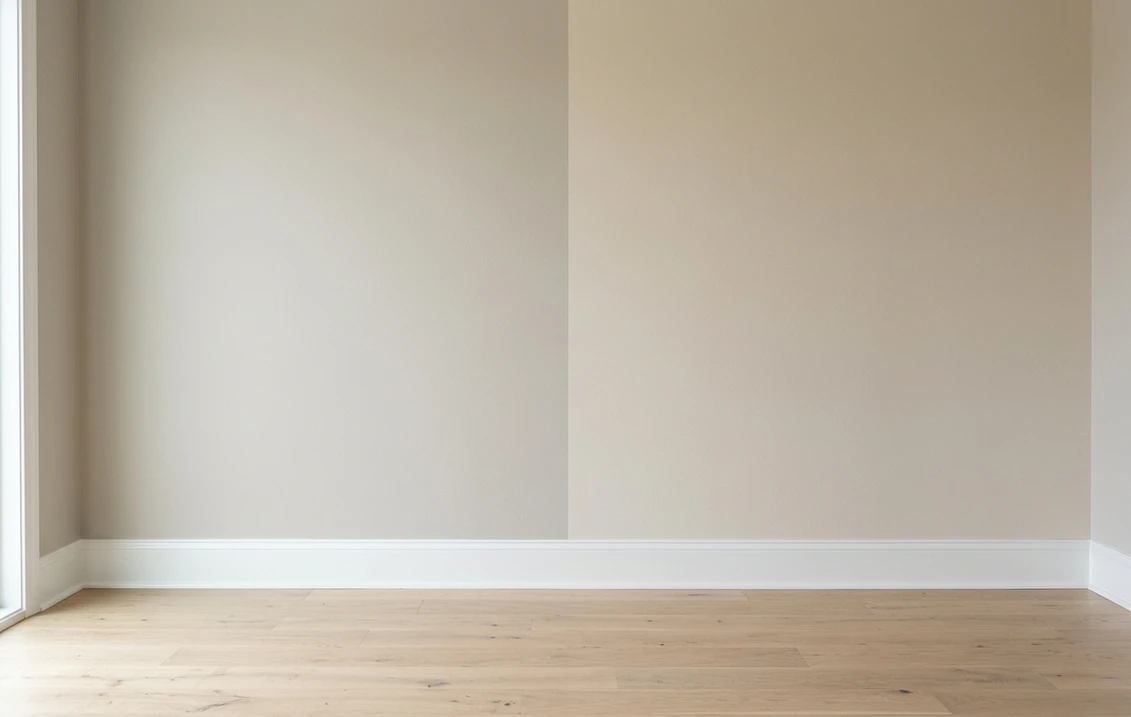
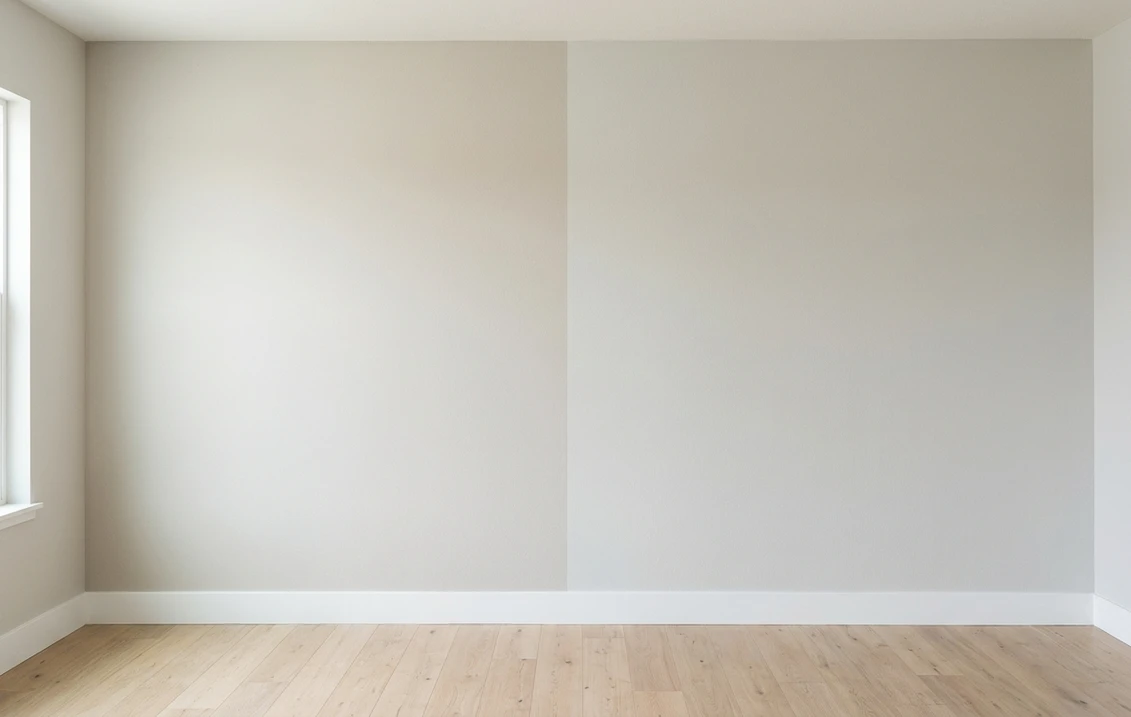
Read that table once and the shape of the duel is clear. First, depth: six LRV points is roughly half a step on a paint strip, and you can see it. Gray Owl reads brighter and airier on the same wall, while Stonington Gray keeps enough weight to show as a definite color against white trim. Second, temperament: Stonington Gray leans cool and blue everywhere, morning to evening. Gray Owl is the shape-shifter. Next to greenery or warm bulbs it can flash distinctly green; in cool light it swings toward blue-gray. Hold each chip against white printer paper and Stonington shows its steady blue-gray base while Gray Owl looks paler and slightly green beside it.
Upload one photo, get a photorealistic render, then swap to Gray Owl in one click. Free, no signup.
Room by room, exposure by exposure
One color is meaningfully lighter, the other meaningfully steadier, so the same room can crown either contender. Here is how the duel usually plays out.
| Situation | Usual winner | Why |
|---|---|---|
| Dim hallway or low-light room | Gray Owl | The higher LRV keeps the space bright where Stonington starts to feel heavy |
| North-facing living room | Careful with both | Cool light pushes Stonington icy and pulls Gray Owl blue; sample before committing |
| Bright south-facing room | Stonington Gray | It stays a composed gray, while strong sun and garden reflections bring out Gray Owl's green |
| Room with big windows onto trees or lawn | Depends on taste | Gray Owl embraces the green cast; pick Stonington if you want the walls to ignore it |
| Kitchen with white cabinets and marble | Stonington Gray | The crisp blue-gray base sits cleanly next to bright white and cool stone |
| Bedroom or nursery | Gray Owl | Lighter and softer, it keeps small rest spaces airy instead of somber |
Outdoors the same logic applies with harsher light, where both colors read lighter and cooler. If your shortlist is for siding rather than walls, the Stonington Gray exterior guide covers orientation, trim, and siding materials in full. And if this matchup makes you wonder about the next shade down on Stonington's strip, the Coventry Gray vs Stonington Gray duel settles that separate question.
When to choose Stonington Gray
- You want a gray that stays gray. Stonington Gray is one of the most predictable light grays in the Benjamin Moore deck. It will not surprise you with a green wall on a sunny afternoon.
- Your finishes are crisp and cool. Bright white trim, marble or quartz, chrome or black hardware, navy accents. Stonington's tailored blue-gray base belongs to that family.
- You want visible depth against white trim. At LRV 59 it has enough weight to read as a deliberate color choice rather than a tinted white.
- You are painting a sun-drenched room. Strong light lifts every color; Stonington can afford it.
For its full undertone breakdown, best rooms, and trim pairings, see the dedicated Stonington Gray HC-170 undertones profile.
When to choose Gray Owl
- You want the lightest wall that still reads gray. At LRV 65, Gray Owl sits just below the off-whites: enough color to frame art and trim, light enough to keep small rooms open.
- The room is starved for light. In dim hallways, basements, and north bedrooms, those six extra LRV points do real work.
- You like a soft, organic look. The green-gray flexibility that scares plain-gray purists is exactly what makes Gray Owl feel natural next to plants, linen, and pale wood.
- You plan to layer greens and muted blues. Sage, eucalyptus, and dusty blue accents sit more comfortably on Gray Owl's shifting base than on Stonington's firmer blue-gray. If the blue in that layering is going deep rather than dusty, it usually comes off the same Historical Collection as Stonington Gray HC-170, and our Hale Navy vs Newburyport Blue duel separates the grayer navy from the truer one.
The full room-by-room treatment of its light-shifting behavior lives in the Gray Owl OC-52 review.
Same wall, both grays, your actual light. Free render in about 30 seconds.
Frequently asked questions
What is the real difference between Stonington Gray and Gray Owl?
Two things: depth and stability. Gray Owl OC-52 (LRV 65) is about six LRV points lighter than Stonington Gray HC-170 (LRV 59), a visible half-step on the wall. And while Stonington stays a steady, blue-leaning gray in almost any light, Gray Owl is a chameleon that can shift toward green or blue depending on the room around it.
Is Gray Owl lighter than Stonington Gray?
Yes, clearly. Gray Owl's published LRV is around 65 versus around 59 for Stonington Gray. On a chip that gap looks minor; across a full wall Gray Owl reads noticeably brighter and airier, which is why it wins most low-light rooms while Stonington holds more presence in bright ones.
Does Gray Owl really look green on the wall?
It can, and this is the most common surprise in the duel. With sunlight bouncing off grass or trees, or under warmer bulbs, Gray Owl's green side comes forward; in cool light it swings toward blue-gray. If any green cast would bother you, Stonington Gray is the safer pick because it holds its blue-gray character instead of shifting.
Which is better for a north-facing room, Stonington Gray or Gray Owl?
Neither is a slam dunk, because both are cool grays and north light is cool too. Stonington Gray can turn icy, and Gray Owl leans blue-gray in the same conditions, though its higher LRV at least keeps the room brighter. Sample both on the darkest wall, and if the space still feels cold, the answer may be a warmer greige rather than either of these.
Settle it on your photo
Chips lie, screens lie, and Gray Owl in particular changes its story from one wall to the next. The fastest honest answer is to test both colors on a photo of your actual room and let your own light and trim pick the winner. If the duel widens into a warmer shortlist, the Revere Pewter vs Edgecomb Gray matchup covers the greige side of the Benjamin Moore deck.
1 HD render plus 3 free color variations. Start with Stonington Gray, swap to Gray Owl in one click.
Trademark notice. Benjamin Moore®, Stonington Gray®, Gray Owl®, Classic Gray® and Coventry Gray® are trademarks of Benjamin Moore & Co. FacadeColorizer is not affiliated with, endorsed by, or sponsored by Benjamin Moore & Co. Brand and color names are used for descriptive and editorial purposes only, consistent with nominative fair use. Hex and RGB values are approximate digital renderings; the only authoritative reference is a physical Benjamin Moore color sample.
Trademarks mentioned (Sherwin-Williams, Benjamin Moore, Behr, Caparol, Brillux, Sto, Alpina, Valspar, PPG, Glidden, Dulux, Crown Trade, Sandtex, Farrow & Ball, Johnstone's, Leyland) are property of their respective owners. FacadeColorizer is independent and not affiliated with any of them. Nominative fair use under Lanham Act §1125.