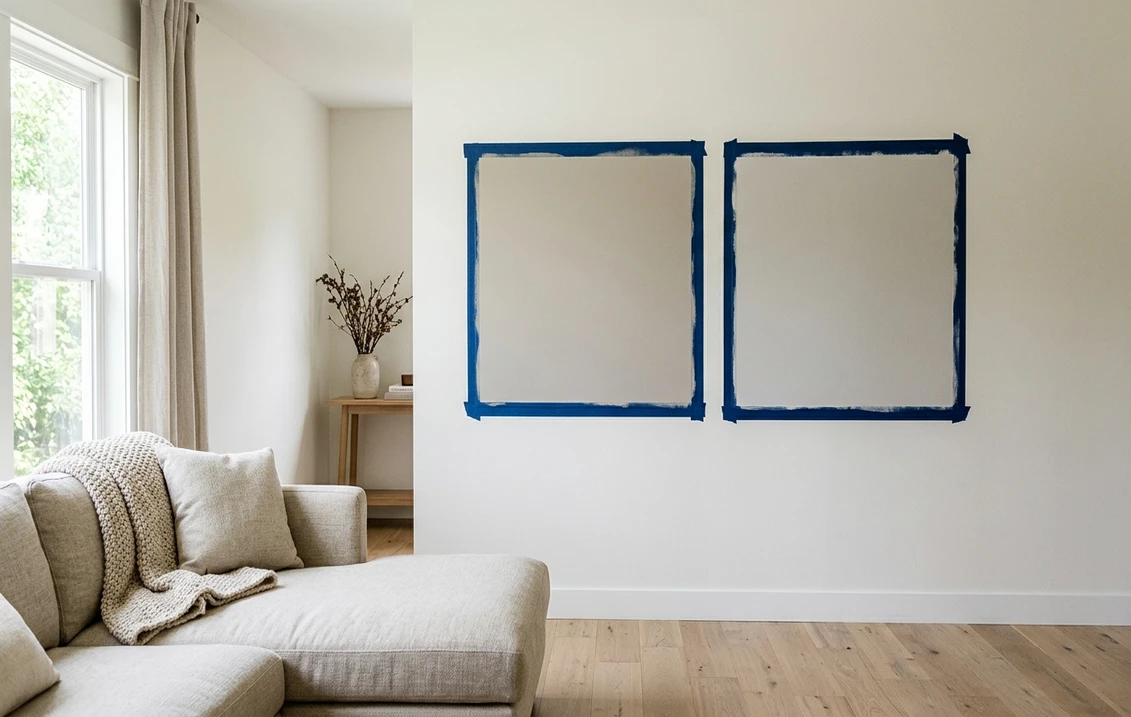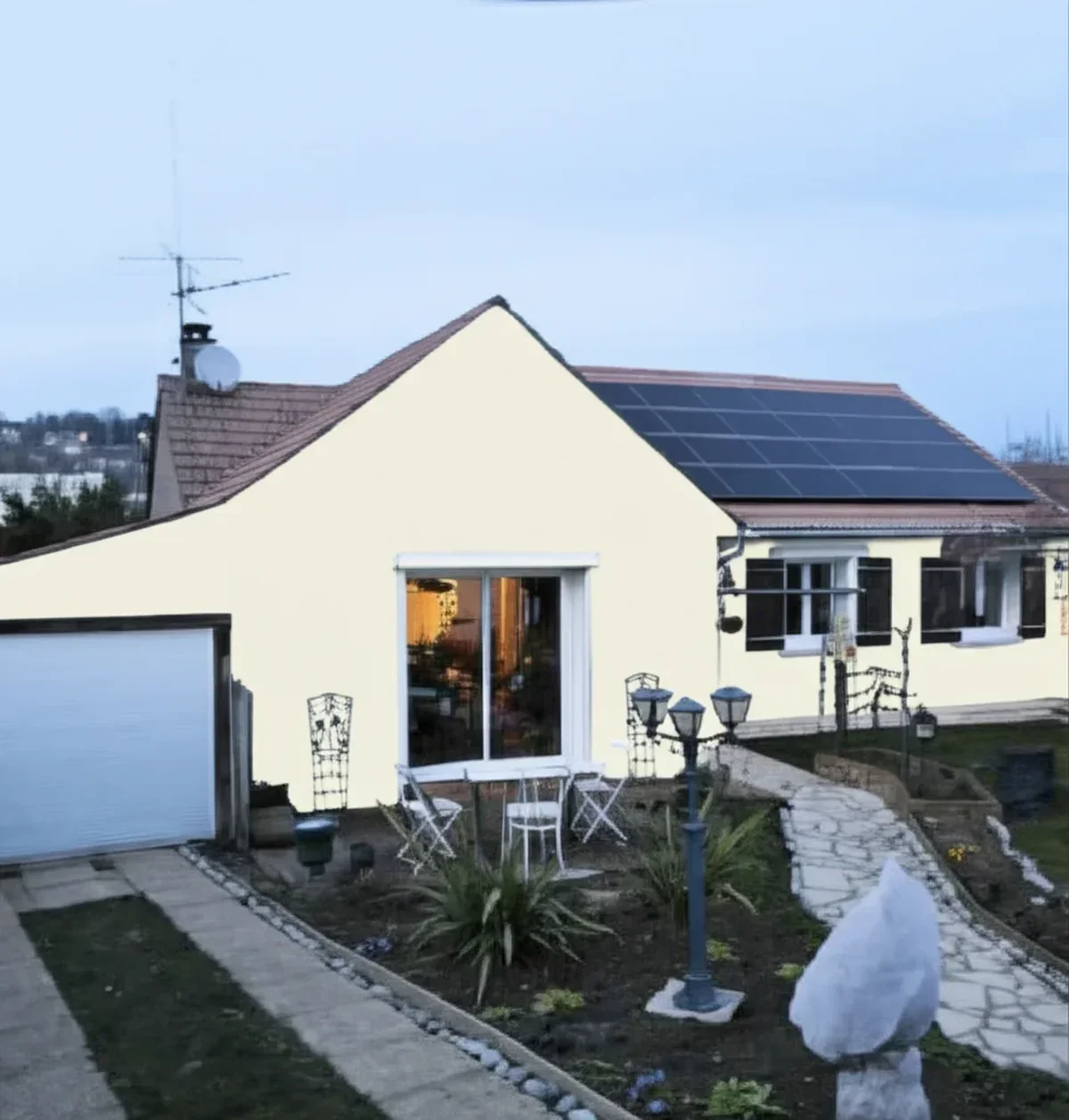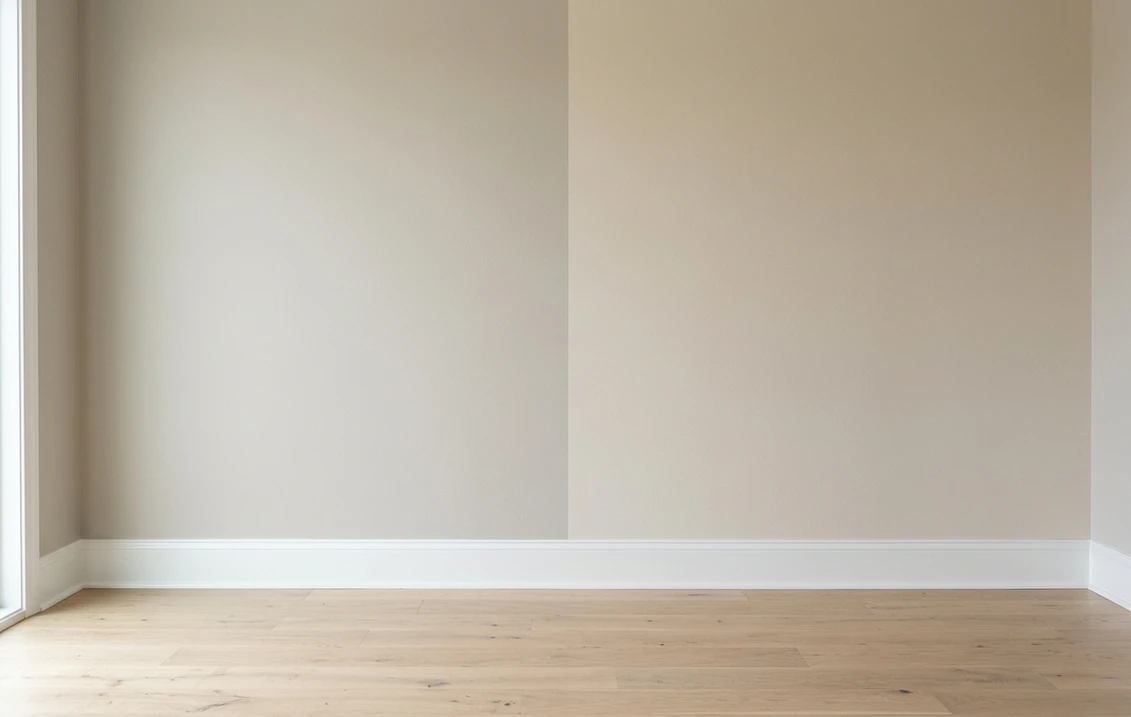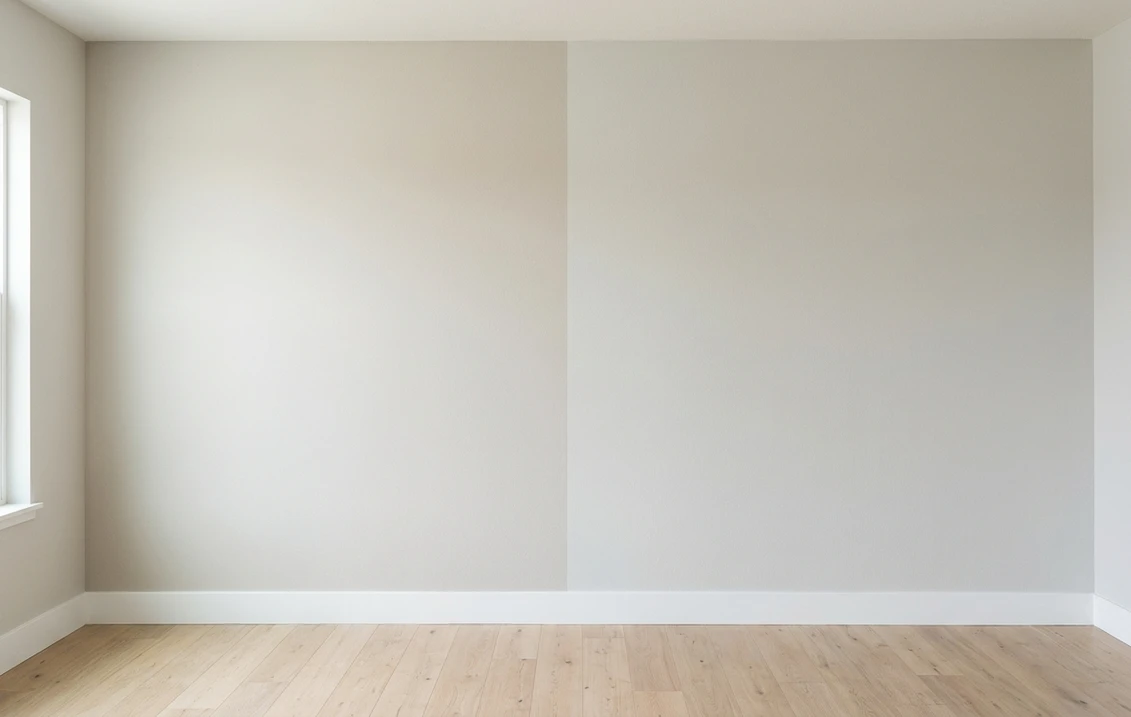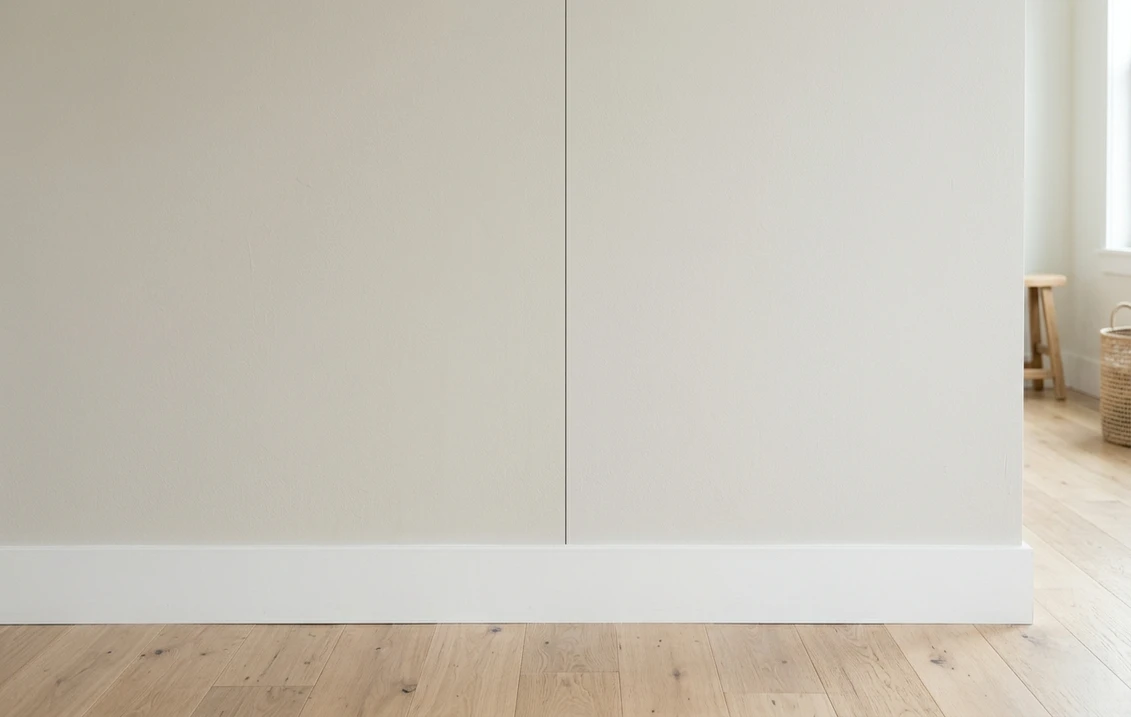
Try it on your house

The verdict in three lines. Edgecomb Gray HC-173 (LRV 63) is the warmer greige: a beige-leaning neutral that flatters oak floors, cream trim, and low-light rooms.
Balboa Mist OC-27 (LRV 67) is the lighter, cooler greige: it reads more gray, carries a faint gray-violet cast, and stays airy in bright rooms with crisp white trim.
The 4-point LRV gap is visible but small. Undertone decides this duel, so the only real tiebreaker is seeing both on a photo of your own room.
Benjamin Moore Edgecomb Gray (HC-173) and Balboa Mist (OC-27) are two of the most cross-shopped light greiges in the Benjamin Moore deck. Both sit at the pale end of the neutral band, and on small chips they can look like the same paint. On a full wall they part ways fast: one leans warm beige, the other cool gray with a whisper of violet. This head-to-head puts the numbers side by side, walks the duel room by room, and tells you exactly when each color wins. For the general method behind any two-color decision, start with our side-by-side method for comparing paint colors.
The numbers side by side
| Attribute | Edgecomb Gray HC-173 | Balboa Mist OC-27 |
|---|---|---|
| Family | Warm greige (Historical Collection) | Cool-leaning greige (Off-White Collection) |
| LRV | 63 | 67 |
| Approximate hex | #D9D3C4 | #DBD7CD |
| Approximate RGB | 217, 211, 196 | 219, 215, 205 |
| Undertone | Beige-taupe warmth, softens toward putty in shade | Grayer base with a faint gray-violet cast |
| Loves | Oak and walnut floors, cream trim, brass, linen | Crisp white trim, marble, chrome, black metal |
| Watch out for | Can drift beige in warm evening light | Can flash mauve or purple in dim, cool light |
| Overall vibe | Cozy, grounded, forgiving | Airy, serene, slightly more formal |
Try it on your house
No photo? Try a sample
LRV values are the published Benjamin Moore figures, rounded to the nearest point. Hex and RGB are approximate digital renderings; the authoritative reference is a physical Benjamin Moore chip or peel-and-stick sample.
Read that table once and the shape of the duel is clear. Balboa Mist is one visible step lighter, so the same room will always read a touch brighter and more open in it. The row that decides kitchens and living rooms, though, is undertone. Edgecomb Gray carries steady beige-taupe warmth that behaves almost the same from morning to night. Balboa Mist keeps more gray in the base and hides a faint violet note that most walls never show until a cloudy afternoon or a dim hallway pulls it out. Hold each chip against white printer paper and the difference jumps out in seconds; that trick, plus the two-coat sample rule, comes from the comparison method in the pillar guide linked above.
Upload one photo, get a photorealistic render, then swap to Balboa Mist in one click. Free, no signup.
Room by room, exposure by exposure
Because both live in the same light-greige band, the same room can crown either one depending on its light and fixed finishes. Here is how the duel typically plays out.
| Situation | Usual winner | Why |
|---|---|---|
| North-facing living room | Edgecomb Gray | Holds its warmth in flat, cool light; Balboa Mist is more likely to flash mauve |
| Bright south-facing room | Balboa Mist | Strong sun washes out the violet cast and keeps it airy; Edgecomb can lean beige |
| Open-plan whole-main-floor color | Either, pick by finishes | Both are proven whole-house neutrals; match the undertone to floors and trim |
| Bedroom with wood furniture and linen | Edgecomb Gray | Beige-taupe warmth flatters wood tones and warm textiles |
| Bathroom with marble and chrome | Balboa Mist | The cooler, lighter base sits cleanly next to bright white and cool stone |
| Hallway with little natural light | Edgecomb Gray | Dim corridors are exactly where Balboa Mist's violet note tends to surface |
If Edgecomb Gray keeps winning your rooms, two sibling duels sharpen the shortlist: the Revere Pewter vs Edgecomb Gray duel pits it against its deeper Historical Collection neighbor, and the Agreeable Gray vs Edgecomb Gray comparison crosses the aisle to Sherwin-Williams' best-selling greige.
There is also a way out of the tradeoff itself. What stops most people picking Balboa Mist is the gray-violet cast, and what stops them picking Edgecomb Gray is that 4-point drop in LRV. Light Pewter 1464 lands at roughly LRV 68, so it holds Balboa Mist's lightness, but its warmth is greige rather than violet, and what surfaces in poor light is a faint green-gray instead. If your sample boards keep failing for opposite reasons, that is the third card to pull.
When to choose Edgecomb Gray
- Your fixed finishes are warm. Oak or walnut floors, cream or off-white trim, brass or bronze hardware, beige stone. Edgecomb Gray's beige-taupe base joins that family instead of fighting it.
- The room faces north or gets little direct sun. Cool light strips warmth from every paint; Edgecomb Gray has warmth in reserve where Balboa Mist can turn cold or faintly purple.
- You want one forgiving color for the whole main floor. Edgecomb Gray is one of the most consistent light greiges in the Benjamin Moore deck, a default whole-house neutral for a reason.
- You need a touch more presence than an off-white. At LRV 63 it still reads light, yet it defines walls and lets white trim pop.
For its full undertone breakdown, best rooms, and trim pairings, see the dedicated Edgecomb Gray undertones and best rooms review.
When to choose Balboa Mist
- Your fixed finishes are cool. Bright white trim, marble or quartz with gray veining, chrome or matte-black hardware. Balboa Mist's grayer base reads intentional next to them.
- The room is bright and gets direct sun. Generous daylight burns off the violet cast and leaves a serene, barely-gray wall, while the same sun pushes Edgecomb Gray toward beige.
- You want the lightest wall that still counts as a color. At LRV 67, Balboa Mist hovers between off-white and greige: walls stay luminous but never stark.
- You plan to layer cooler accents. Soft blues, charcoals, and muted greens sit more comfortably on Balboa Mist than on a beige-leaning wall.
The full room-by-room treatment, including its lighting behavior and the famous purple flash, lives in the Balboa Mist room-by-room profile.
That purple flash also sets a rule for the deep accent, if you plan one. A navy with any violet in its base will lend Balboa Mist the exact cast you were trying to avoid, so the safe picks are the deep blues that stay demonstrably clean. Both Sherwin-Williams navies qualify: Naval SW 6244 and In the Navy SW 9178 avoid purple, and they differ from each other on depth and saturation rather than on undertone, as our Naval vs In the Navy comparison sets out. Edgecomb Gray is more forgiving here, which is one more reason it survives an accent-heavy room better.
The same no-violet rule applies if you would rather take the accent in charcoal than in navy, and it splits the two obvious candidates cleanly. Peppercorn SW 7674 runs dead-even RGB channels, about as violet-free as a dark gray gets, which makes it the safe one beside Balboa Mist. Iron Ore SW 7069 dips its blue channel just below red and green, so it leans faintly warm and belongs with Edgecomb Gray instead. Peppercorn vs Iron Ore works through the four-point LRV gap that decides how black each one actually looks on a wall.
Whichever greige wins, the trim decision that follows is the same shape: two Benjamin Moore soft whites tied on depth and separated only by undertone. White Dove OC-17 carries a drop of gray that keeps it from ever reading yellow, which is what makes it safe next to Balboa Mist; Cloud White OC-130 skips that gray filter and stays creamier, which is what keeps it from going cold beside Edgecomb Gray. Our White Dove vs Cloud White comparison settles that one the same way this page settles this.
Same wall, both greiges, your actual light. Free render in about 30 seconds.
Frequently asked questions
What is the real difference between Edgecomb Gray and Balboa Mist?
Two things: depth and undertone. Balboa Mist OC-27 (LRV 67) is one visible step lighter than Edgecomb Gray HC-173 (LRV 63), so it reads brighter in the same room. More importantly, Edgecomb Gray is a warm beige-taupe greige while Balboa Mist keeps a grayer base with a faint gray-violet cast that can surface in dim or cool light.
Is Balboa Mist lighter than Edgecomb Gray?
Yes. Balboa Mist has a published LRV of about 67 versus about 63 for Edgecomb Gray, so it reads noticeably airier on a full wall. If you want maximum brightness, Balboa Mist wins the depth question; if you want slightly more definition against white trim, Edgecomb Gray does.
Does Balboa Mist look purple on walls?
It can, in specific conditions. Balboa Mist hides a faint violet note inside its gray base. In bright, sunny rooms it stays a serene light greige, but in dim north-facing rooms, shaded hallways, or under certain cool bulbs it can flash mauve. If you want zero purple risk in that kind of room, Edgecomb Gray is the safer pick; either way, sample on the actual wall first.
Can I use Edgecomb Gray and Balboa Mist together in the same house?
You can, but keep them in separate zones. Their depths are close enough that on connected walls they can look like a mismatched batch rather than a deliberate contrast, and their undertones pull in different temperature directions. A cleaner plan is one greige for the main areas and the other in a closed-off room.
Settle it on your photo
Chips lie, screens lie, and even honest sample patches sit on someone else's wall in someone else's light. The fastest honest answer to Edgecomb Gray vs Balboa Mist is to test both colors on a photo of your actual room and let your own trim, floor, and windows pick the winner. Ten minutes of side-by-side renders beat a week of staring at taped-up swatches.
1 HD render plus 3 free color variations. Start with Edgecomb Gray, swap to Balboa Mist in one click.
Trademark notice. Benjamin Moore®, Edgecomb Gray®, Balboa Mist®, Pale Oak®, Classic Gray® and Revere Pewter® are trademarks of Benjamin Moore & Co. FacadeColorizer is not affiliated with, endorsed by, or sponsored by Benjamin Moore & Co. Brand and color names are used for descriptive and editorial purposes only, consistent with nominative fair use. Hex and RGB values are approximate digital renderings; the only authoritative reference is a physical Benjamin Moore color sample.
Trademarks mentioned (Sherwin-Williams, Benjamin Moore, Behr, Caparol, Brillux, Sto, Alpina, Valspar, PPG, Glidden, Dulux, Crown Trade, Sandtex, Farrow & Ball, Johnstone's, Leyland) are property of their respective owners. FacadeColorizer is independent and not affiliated with any of them. Nominative fair use under Lanham Act §1125.