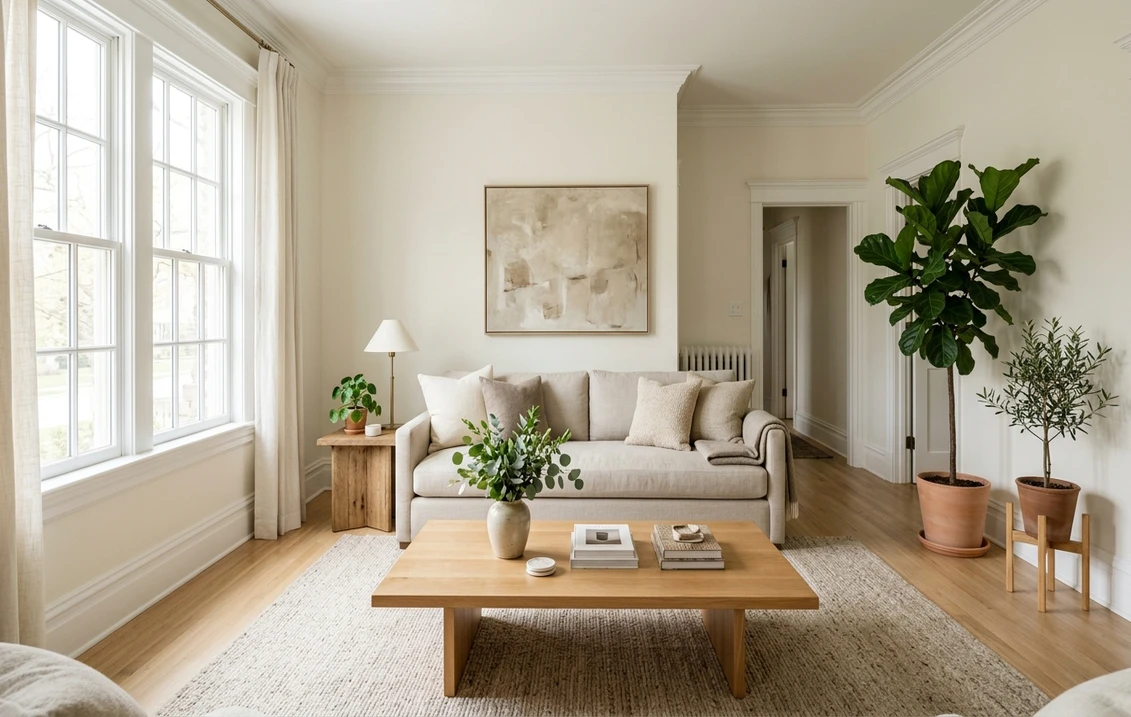
Try it on your room

Tour almost any newly renovated American home and odds are the walls are wearing a Benjamin Moore color. The brand built its reputation on color depth and a pigment library that designers trust. That trust is why a short list of the same names keeps resurfacing on Pinterest boards, real-estate listings, and design-firm spec sheets. White Dove, Revere Pewter, Hale Navy, Chantilly Lace: these are not random picks, they are the colors that photograph well, hold their undertone across rooms, and resell a house.
This guide is the overview. It decodes the twelve Benjamin Moore interior colors that get specified most often, grouped by family, with the published LRV (Light Reflectance Value), the real undertone to watch for, the rooms each one suits, and the trim that flatters it. Use it as a map: skim the table, find the family you are drawn to, then follow the links to the deep-dive reviews where we test a single color under different light. Pricing and labor for the surrounding job live in our interior house painting cost guide.
Upload one photo and preview White Dove, Revere Pewter, Hale Navy and more on your actual walls in about 30 seconds, free.
How to read this list before you fall for a swatch
Two numbers do most of the work when you compare paint colors. The first is the color code (OC, HC, or a four-digit number) that uniquely identifies the formula, so you order the same paint at any store. The second is LRV, a 0 to 100 scale of how much light a color bounces back. An LRV near 90 reads as a clean bright white, the mid 50s to low 70s is the territory of greiges and soft grays, and anything in the single digits is a deep, dramatic color that swallows light. North-facing and small rooms generally want higher LRV; sun-flooded south rooms can carry lower numbers without feeling heavy.
The trap is undertone. Every off-white and gray carries a secondary hue (yellow, green, blue, violet, or pink) that only shows up once the color is on four walls under your own light. A chip cannot reveal it; a sample on the wall can. That is the entire reason this list exists in families rather than as a flat top-12: once you know whether you want warm or cool, the choice narrows fast. For a broader primer on how hues group together, see our interior paint color families guide.
| Color | Code | LRV | Undertone | Best for |
|---|---|---|---|---|
| White Dove | OC-17 | 85 | Soft warm, faint yellow | Whole-home walls, trim, cabinets |
| Chantilly Lace | OC-65 | 92 | Crisp near-neutral | Bright trim, modern walls, ceilings |
| Simply White | OC-117 | 92 | Clean warm white | Sunny kitchens, airy living rooms |
| Swiss Coffee | OC-45 | 84 | Creamy yellow-beige | Cozy walls, warm farmhouse trim |
| Revere Pewter | HC-172 | 56 | Warm greige, green-gray | Open-plan main floors, hallways |
| Edgecomb Gray | HC-173 | 63 | Light warm greige | Bedrooms, north rooms, soft neutral |
| Classic Gray | OC-23 | 74 | Barely-there warm gray | Light-filled walls, gentle backdrop |
| Gray Owl | OC-52 | 61 | Cool gray, green-blue | Modern bathrooms, gray lovers |
| Stonington Gray | HC-170 | 60 | Cool blue-gray | Coastal interiors, bathrooms |
| Pale Oak | OC-20 | 70 | Warm taupe-greige | Bedrooms, transitional spaces |
| Hale Navy | HC-154 | 8 | Deep navy, soft black base | Accent walls, islands, studies |
| October Mist | 1495 | 58 | Soft sage, gray-green | Bedrooms, cabinets, calm spaces |
Try it on your room
No photo? Try a sample
LRV values rounded from Benjamin Moore published color data. Confirm the exact figure on the current Benjamin Moore technical data sheet before purchase.
The whites and off-whites everyone starts with
Whites are where most Benjamin Moore projects begin, partly because they double as trim and cabinet colors. The mistake is treating "white" as one thing. These four span from a crisp neutral to a creamy cottage white, and the gap between them is exactly what makes or breaks a room.
White Dove (OC-17)
If one color defines Benjamin Moore interiors, it is White Dove. At an LRV of about 85 it is a soft warm white with the faintest yellow base, never stark, never yellow enough to read cream. It is the rare color that works on walls, trim, doors, and cabinets in the same house, which is why designers reach for it as a safe default when in-room testing is not possible. It pairs cleanly with warm woods and most grays. The full undertone behavior, including how it shifts in cool north light, is covered in our White Dove OC-17 review.
Chantilly Lace (OC-65)
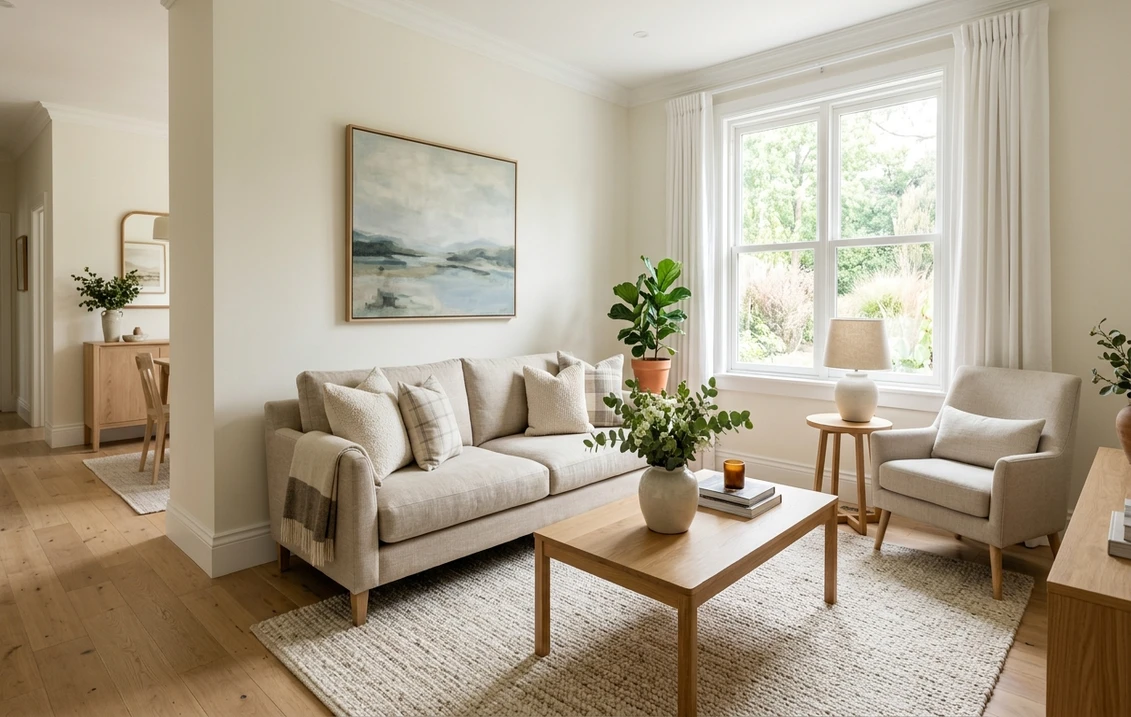
Chantilly Lace is the brighter, cleaner option, sitting near LRV 92 with very little visible undertone. It reads as a true modern white, which makes it the go-to for crisp trim against colored walls, for contemporary all-white rooms, and for ceilings that need to feel high and clean. Because it has so little warmth, it can feel cold in a north-facing room with no sun, so it rewards spaces that get good light. Many homeowners pair Chantilly Lace trim with a warmer wall like Revere Pewter for contrast.
Simply White (OC-117)
Benjamin Moore named Simply White its 2016 Color of the Year, and it still earns its place. Think clean, bright warm white, a touch softer than Chantilly Lace, with just enough warmth to glow in a sunny kitchen without tipping into cream. In a low-light room it can read slightly more yellow than you expect, so it performs best where daylight is generous. Want bright but not clinical across a whole room? This is the one.
Swiss Coffee (OC-45)
Swiss Coffee is the warm end of this group, a creamy yellow-beige white near LRV 84 that brings cottage and farmhouse softness. It feels cozy on walls and forgiving on trim in older homes where a stark white would look harsh. Note that Benjamin Moore and Behr both sell a Swiss Coffee, and they are not identical formulas; the difference matters if you are matching across brands, and we break it down in our Swiss Coffee Behr vs Benjamin Moore comparison.
Test White Dove, Chantilly Lace, Simply White and Swiss Coffee side by side on your real room photo, free.
Greiges and grays: the neutral workhorses
This is the most-searched family for a reason: a good greige is the backdrop a whole house can live on. Benjamin Moore's strength here is depth, the way these colors hold their identity instead of going flat. The four below run from warm to cool, and getting that direction right is more important than the exact name.
Revere Pewter (HC-172)
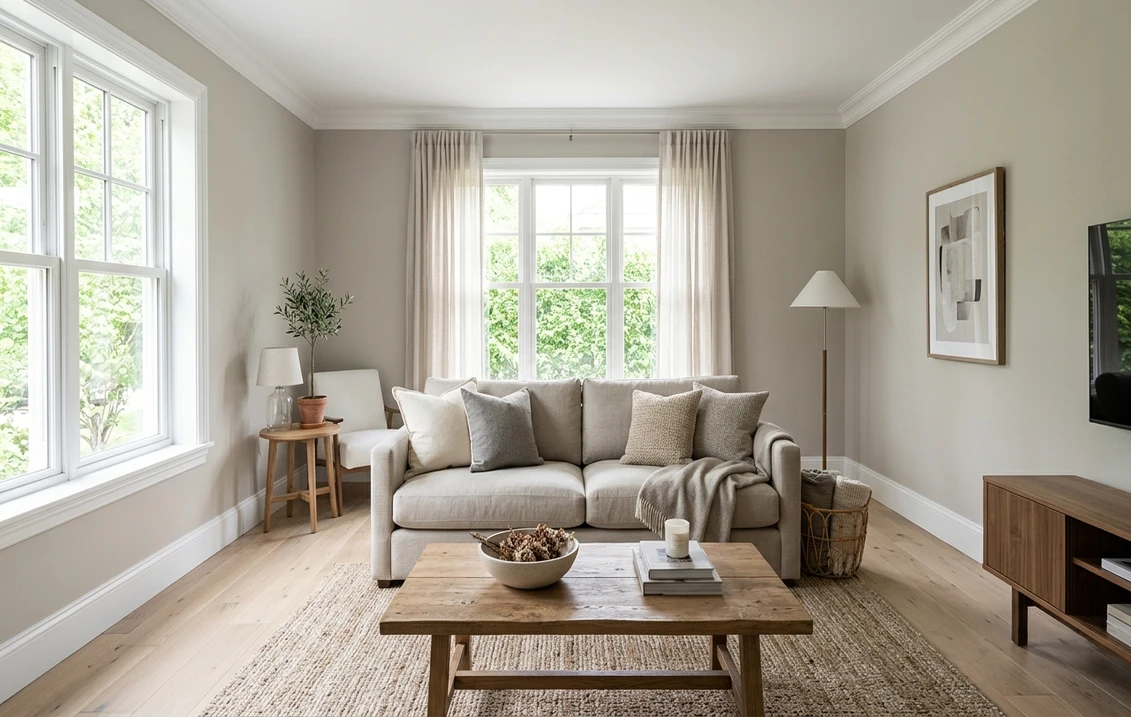
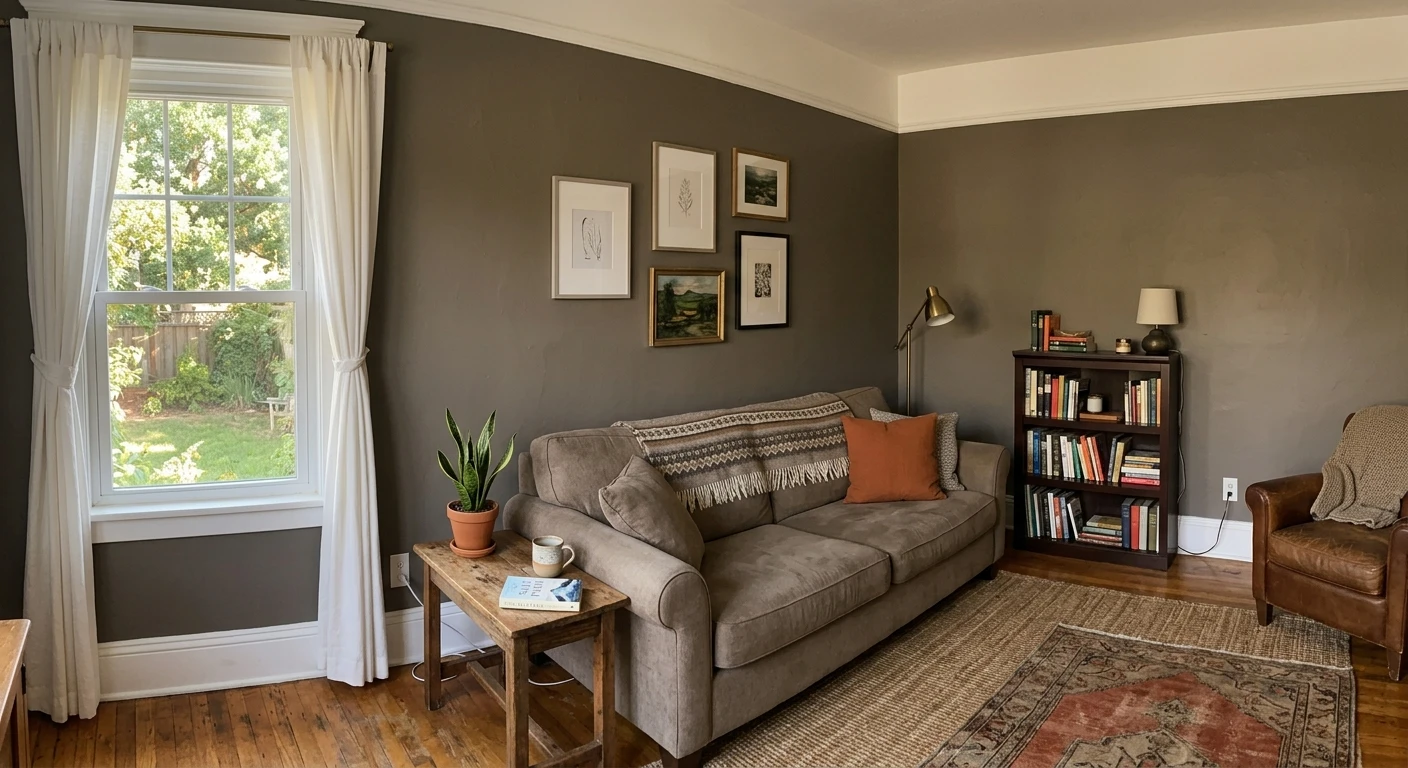
Revere Pewter is the greige that launched a thousand open-plan repaints. At LRV 56 it is a warm gray with a green-gray undertone that reads as a sophisticated, grounded neutral in rooms with good light. In a darker or very cool room it can lean muddier, which is the one thing to test for. It is the classic main-floor color, flowing from living room to kitchen to hall without fighting anything. Our Revere Pewter HC-172 review walks through its undertone shifts room by room.
Edgecomb Gray (HC-173)
Think of Edgecomb Gray as Revere Pewter's lighter, airier sibling. At LRV 63 it is a soft warm greige that brings the same warmth with more brightness, which makes it kinder to north-facing rooms and smaller spaces. It is a favorite for bedrooms and for anyone who loves Revere Pewter but found it too deep. The undertone is gentle enough that it rarely surprises.
Classic Gray (OC-23) and Pale Oak (OC-20)
For the lightest possible neutral, Classic Gray sits near LRV 74, a barely-there warm gray that behaves almost like an off-white in bright rooms and a soft gray in shade. Pale Oak (LRV 70) is its warmer cousin, a taupe-leaning greige that feels enveloping in bedrooms and transitional spaces. Both are quiet colors. They let furniture and art take the lead, and that is exactly why people love them: there is almost no way to get them wrong.
Gray Owl (OC-52) and Stonington Gray (HC-170)
When you actually want gray to read as gray, these two deliver. Gray Owl (LRV 61) is a clean, light gray with a green-blue undertone that can flex cool or almost greenish depending on light, a modern choice for bathrooms and gray-forward schemes. Stonington Gray (LRV 60) leans more clearly blue-gray and is a coastal-interior staple. Both are cooler than the greiges above, so pair them with crisp white trim like Chantilly Lace rather than a creamy white.
Choosing between warm greige and cool gray is the single biggest decision in this whole list. If you are torn, our room-by-room paint color ideas shows how each direction reads in different spaces, and the broader best interior paint colors of 2026 roundup puts them in context with the year's wider trends.
Color with depth: navy and sage
Neutrals carry a house, but the colors people remember are the saturated ones. Two Benjamin Moore shades dominate this conversation, and both are versatile enough to use boldly or in small doses.
Hale Navy (HC-154)
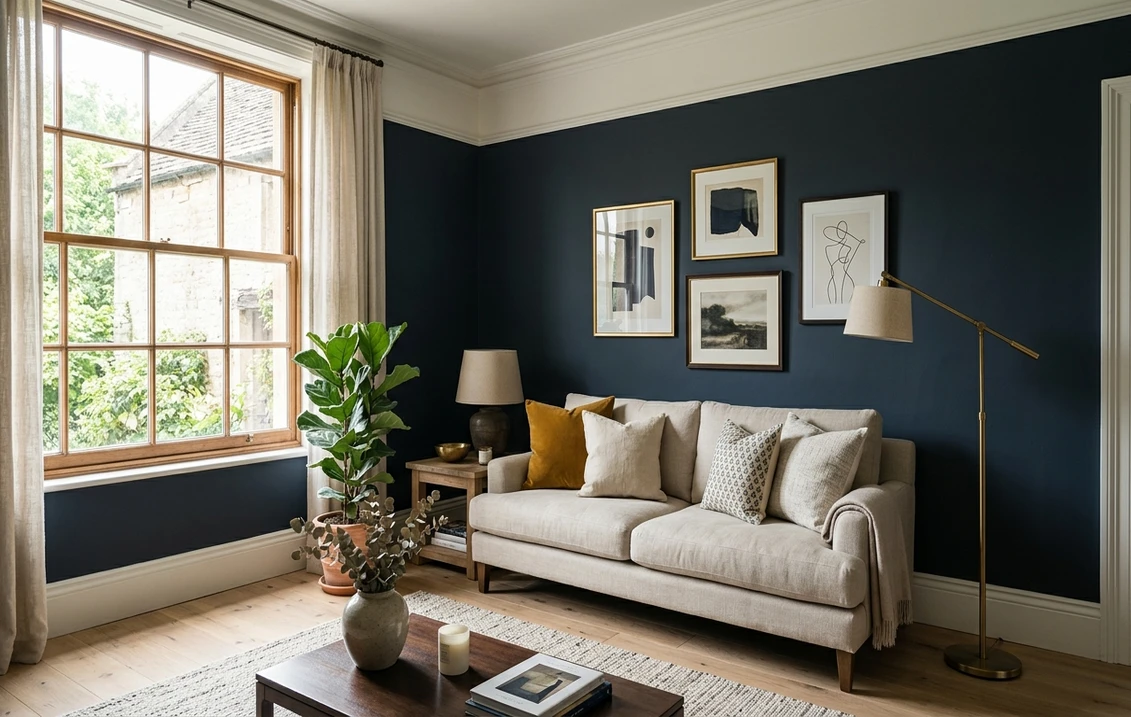
Hale Navy is the navy designers default to. With an LRV around 8 it is deep and light-absorbing, but it carries a soft, slightly muted base rather than a harsh electric blue, which is why it reads as timeless rather than trendy. Put it on a kitchen island, a study, a built-in bookcase, or a single accent wall and it does the heavy lifting. Brass, warm wood, and crisp white trim only make it look better. The catch: it is so dark that it wants light from elsewhere in the room. In a windowless space it can feel like a cave, unless a cave is the goal.
October Mist (1495)
Benjamin Moore's 2022 Color of the Year, October Mist, captured the shift toward soft, organic greens and has only grown more popular. Picture a gentle gray-green sage near LRV 58, calm and grounded, with none of the bright or minty edge that sinks a lot of greens. That balance makes it a standout for bedrooms, for cabinetry, and for anyone who wants color that still behaves like a neutral. Sage greens like this are a defining trend of the moment, which is why they feature heavily in our coverage of calming master bedroom paint colors.
Where these colors shine, room by room
One color, two rooms, two completely different results. Light and use drive almost all of it. Here is a quick orientation:
- Living rooms and open main floors: Revere Pewter, Edgecomb Gray, and Classic Gray are the workhorses, flowing room to room. Add Hale Navy or October Mist on a feature wall for depth. See our top living room paint colors of 2026.
- Bedrooms: Pale Oak, Edgecomb Gray, and October Mist deliver the soft, restful feel most people want. Lower-LRV colors are fine here because bedrooms benefit from a cocooning quality.
- Kitchens: Bright whites like Simply White and Chantilly Lace keep the space clean and light, while Hale Navy or October Mist on the island or lower cabinets adds contrast. For cabinet-specific guidance, see our kitchen cabinet colors guide and the latest trending kitchen cabinet paint colors.
- Bathrooms: Gray Owl and Stonington Gray bring a clean, modern, spa-like feel, especially with white trim and natural light.
- Trim, doors, and ceilings: White Dove for a soft, cohesive look; Chantilly Lace when you want crisp contrast against colored walls.
One caveat on the bedroom line: it assumes a bedroom with floor to spare. Under roughly 120 square feet the cocooning argument reverses and the safer Benjamin Moore picks move to the high-LRV end, Chantilly Lace, Simply White, White Dove, and Pale Oak, with Quiet Moments or Lavender Mist when you want a hint of color without losing the openness. Our shortlist of light colors for a small bedroom ranks them by LRV and by window direction.
Skip the sample pots. Upload your room photo and see the exact Benjamin Moore color on your walls, free.
Benjamin Moore's case rests on color, and the independent data agrees that this is where it wins: it finished third in the J.D. Power 2025 interior paint study (725 points, behind Sherwin-Williams at 728 and Behr at 727) and has no line in the Consumer Reports top five, yet no other mass-market brand matches Aura's saturated darks or the Historical Collection. Our ranking of interior paint brands weighs that trade-off against the price.
Benjamin Moore vs the other big two
Most US homeowners narrow the field to Benjamin Moore, Sherwin-Williams, or Behr, and the right answer depends on what you value. Benjamin Moore is prized for color depth and its premium Aura and Regal Select lines. Sherwin-Williams counters with the widest store network and two neutrals everyone knows, Agreeable Gray and Repose Gray. Behr competes on value, sold right off the shelf at Home Depot. Many of the most-loved Benjamin Moore colors have close cousins across brands, and a side-by-side comparison is the fastest way to decide.
For head-to-head breakdowns, see our Sherwin-Williams vs Benjamin Moore interior comparison and the Behr vs Sherwin-Williams comparison. If you are leaning toward the other catalogs, our Sherwin-Williams interior color hub and Behr interior color hub mirror this guide for those brands. Several SW neutrals map closely to the BM greiges above, including Agreeable Gray, Accessible Beige, and Repose Gray.
Test before you commit (the part that saves the project)
No list, this one included, can tell you exactly how a color will look in your room, because your light, floors, and furnishings change everything. The two reliable methods are a real-world sample and a digital preview, and the smartest approach uses both. Benjamin Moore sells peel-and-stick Color Samples and small Color Sample pots; paint a sizable swatch on two walls and check it in the morning, at midday, and under your evening lights before you buy gallons.
The faster, no-mess first pass is a digital visualizer. Upload a photo of your actual room and apply any of these Benjamin Moore colors virtually, so you can shortlist two or three before spending on samples. It will not replace a final in-room test, but it eliminates the obvious wrong turns. For the full decision framework, see our best interior paint colors guide, and budget the job with the interior house painting cost guide.
Upload one room photo and preview Benjamin Moore colors on your real walls before buying a single sample, free.
Frequently asked questions
What is the most popular Benjamin Moore interior color?
White Dove (OC-17) is consistently the most popular Benjamin Moore color for US interiors. It is a soft warm white at an LRV of about 85 that works on walls, trim, doors, and cabinets, which makes it the closest thing to a universal default. Among neutrals, Revere Pewter (HC-172) is the most popular greige, and Hale Navy (HC-154) is the go-to deep accent color.
What is the difference between White Dove and Chantilly Lace?
White Dove (OC-17, LRV around 85) is a soft warm white with a faint yellow base, so it feels gentle and cohesive on walls and trim together. Chantilly Lace (OC-65, LRV around 92) is a brighter, cleaner near-neutral white with very little undertone, ideal for crisp trim against colored walls and for modern all-white rooms. A common pairing is White Dove or a greige on the walls with Chantilly Lace trim for contrast.
Is Revere Pewter warm or cool?
Revere Pewter (HC-172) is a warm greige. Its undertone is a warm gray with a green-gray cast, which reads as a grounded, sophisticated neutral in rooms with good light. In darker or very cool spaces it can lean slightly muddy, so it is worth testing a sample on the wall. Edgecomb Gray (HC-173) is a lighter, airier alternative with similar warmth and a higher LRV.
How do Benjamin Moore colors compare to Sherwin-Williams?
Benjamin Moore is known for color depth and premium lines like Aura and Regal Select, while Sherwin-Williams has a larger store footprint and best-selling neutrals such as Agreeable Gray and Repose Gray. Many popular colors have near-equivalents across both brands. The fastest way to choose is a direct comparison, which we cover in our Sherwin-Williams vs Benjamin Moore interior comparison, or to preview both on your own room with a digital visualizer.
Shortlist from this list, then preview White Dove, Revere Pewter, Hale Navy and more on your actual walls before you buy.
Disclaimer: Benjamin Moore and the color names and codes referenced here (including White Dove OC-17, Chantilly Lace OC-65, Simply White OC-117, Swiss Coffee OC-45, Revere Pewter HC-172, Edgecomb Gray HC-173, Classic Gray OC-23, Gray Owl OC-52, Stonington Gray HC-170, Pale Oak OC-20, Hale Navy HC-154, and October Mist 1495) are trademarks of Benjamin Moore and Co. Sherwin-Williams and Behr are trademarks of their respective owners. FacadeColorizer is an independent paint visualization service and is not affiliated with, endorsed by, or sponsored by Benjamin Moore, Sherwin-Williams, or Behr. LRV figures are rounded from publicly published Benjamin Moore color data and may differ slightly from the current technical data sheet; always confirm the exact value and a physical sample before purchase. Color reproduction on screens approximates the manufacturer's chip. Sources: Benjamin Moore published color data and Color of the Year program 2016 (Simply White) and 2022 (October Mist), The Spruce paint color guides, and designer color references.
Trademarks mentioned (Sherwin-Williams, Benjamin Moore, Behr, Caparol, Brillux, Sto, Alpina, Valspar, PPG, Glidden, Dulux, Crown Trade, Sandtex, Farrow & Ball, Johnstone's, Leyland) are property of their respective owners. FacadeColorizer is independent and not affiliated with any of them. Nominative fair use under Lanham Act §1125.