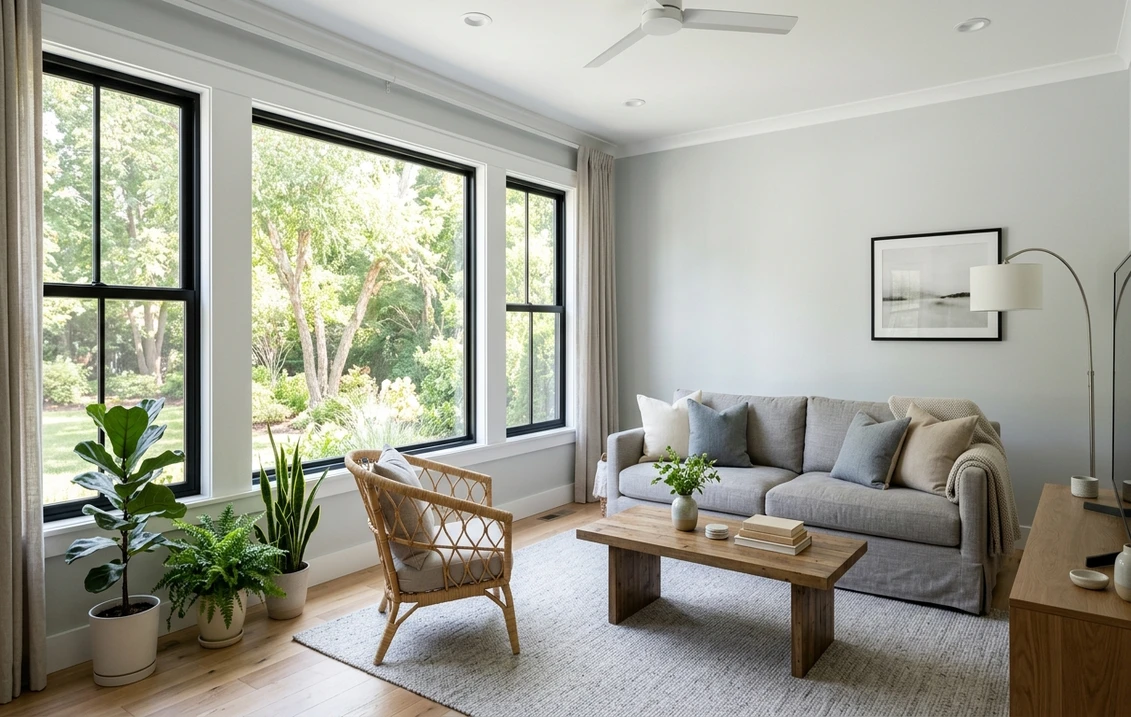
Try it on your room

Benjamin Moore Silver Mist (1619) is one of those pale grays that homeowners reach for when they want the calm of a gray without the commitment of a gray. It sits so high on the light scale that in some rooms it can pass for a soft off-white, then in others it suddenly reveals a quiet, misty green-gray cast that gives it its name. That dual personality is exactly why it shows up on so many short lists and exactly why it confuses people. The number-one question I get about Silver Mist is whether it will actually read as a color or just disappear into the trim. The honest answer depends entirely on your light, your trim, and how much wall you give it. Here is how 1619 behaves on real interior walls, and how to keep it from vanishing or, the opposite problem, going cold.
First, a name warning, because it trips up half the people searching. Benjamin Moore Silver Mist 1619 is not the same color as Sherwin-Williams Silvermist (SW 7621). The Sherwin-Williams version is a distinctly blue-green, almost spa-aqua color; the Benjamin Moore 1619 is a near-neutral pale gray with only a whisper of green. Same word, completely different rooms. This profile is one stop in our wider Benjamin Moore interior paint colors guide, and it stays strictly on the BM 1619 interior story: undertones, light, rooms, and pairings.
Upload a photo of your actual room and preview BM Silver Mist under your own light in about 30 seconds. Free: one HD render plus three variations.
Silver Mist 1619 at a glance: the numbers that matter
Before opinions, here are the verifiable specs from the Benjamin Moore color library. These are the values you can take to a paint counter:
| Spec | Silver Mist 1619 |
|---|---|
| Color number | 1619 (Color Preview / Classics collection) |
| LRV (Light Reflectance Value) | Approximately 64: a high, light gray that keeps rooms bright |
| Hex / RGB (approx.) | #D2D4CD / 210, 212, 205 |
| Color family | Pale, near-neutral gray |
| Primary undertone | Soft green-gray, with a faint cool lean in shade |
| Best base / finish | Light tint base; matte or eggshell on walls, satin on trim |
Try it on your house
No photo? Try a sample
The takeaway from those numbers: at an LRV around 64, Silver Mist is a light gray, lighter than crowd favorites like Gray Owl or Stonington Gray, but it is still meaningfully deeper than a true off-white. That high LRV is the source of both its charm and its risk. It bounces a lot of light, so it never closes a room down, but in a very bright room with white trim it can flatten out and read almost colorless. The undertone is the saving grace: that misty green-gray is what keeps it from being a generic builder gray and gives it a soft, slightly natural, organic quality on the wall.
Is Silver Mist warm or cool? The undertone, decoded
Silver Mist sits right on the fence, which is why people argue about it. It is best described as a cool-leaning near-neutral with a green-gray undertone, never a warm greige and never an icy blue-gray. The green is the signature. It is not a sage or a celadon, just a faint mineral green that softens the gray and stops it from going steely. Understanding when that green shows up, and when the color goes flat or cool instead, is the whole game.
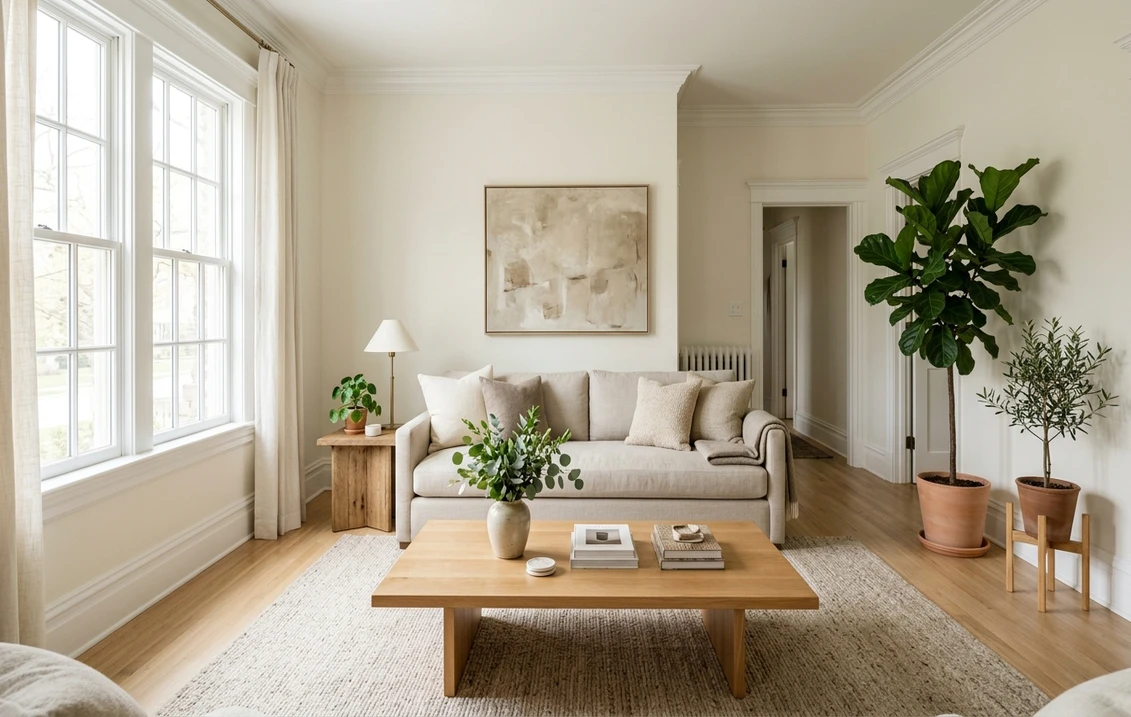
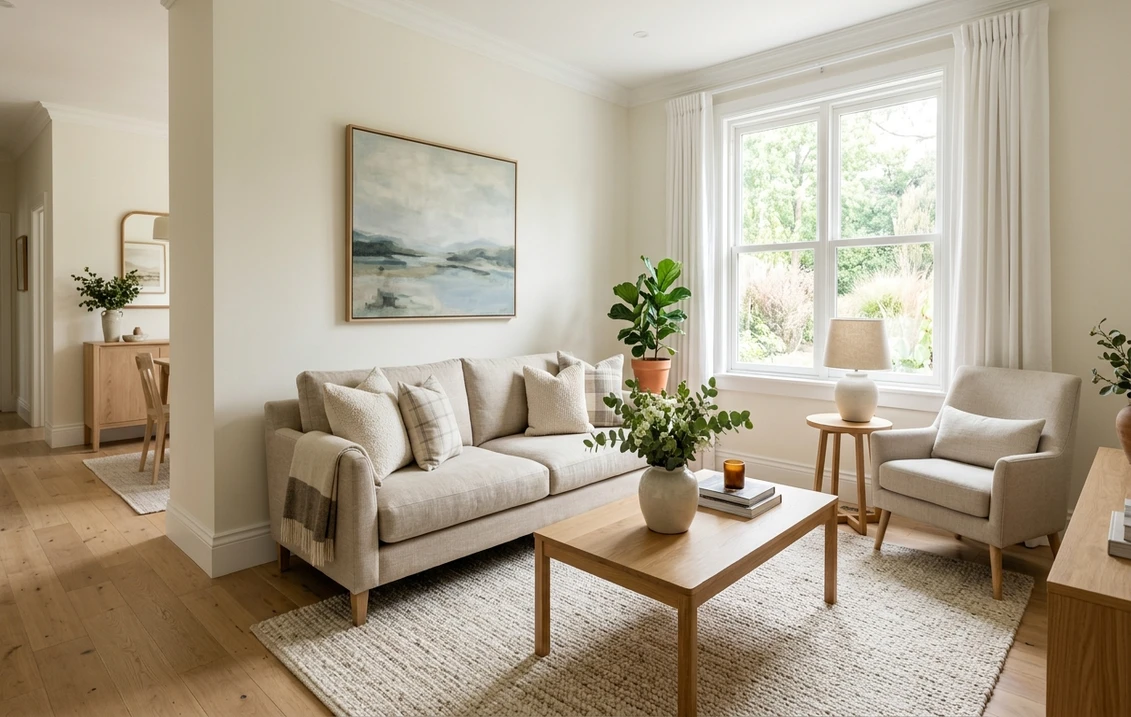
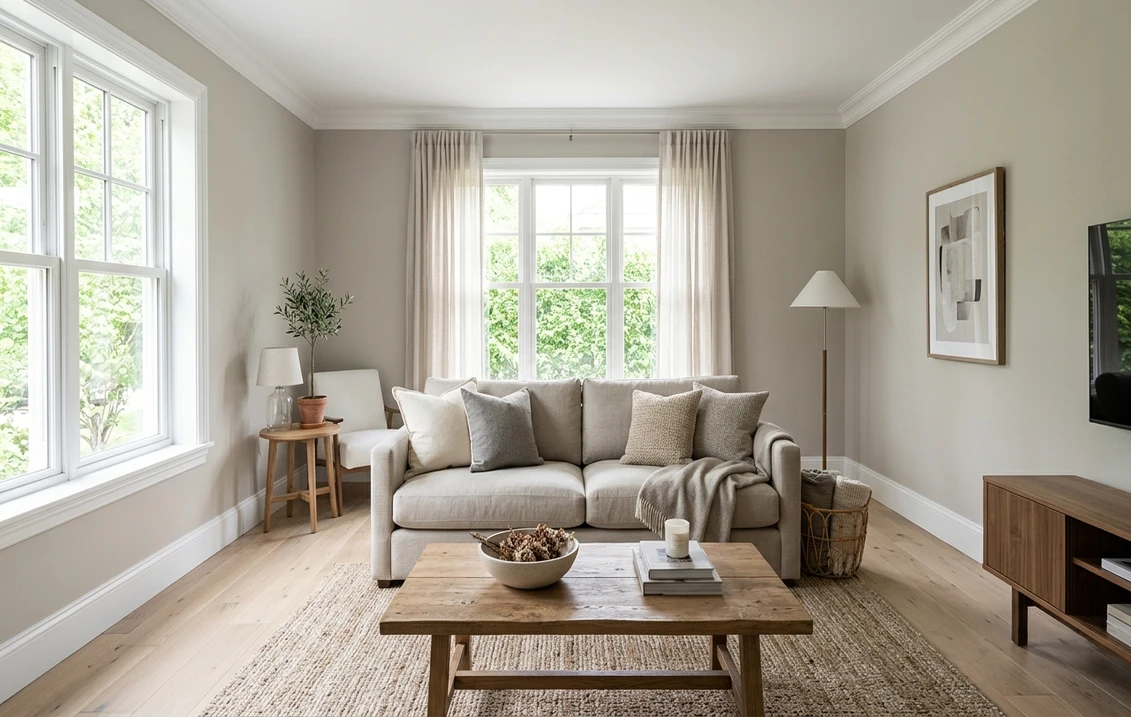
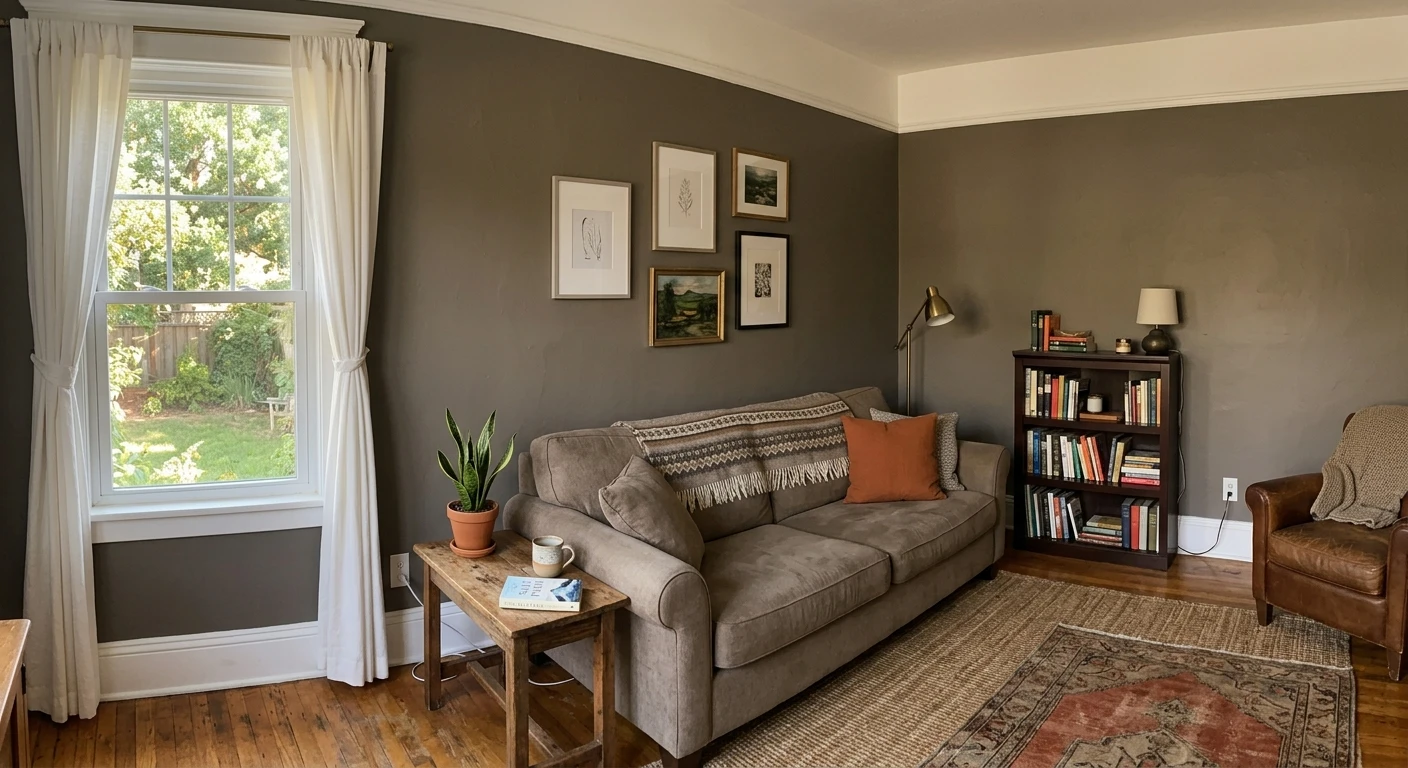
In good natural light, the green-gray cast is gentle and pleasant, giving the wall a calm, almost weathered-stone look. As the light cools (north exposure, overcast skies, deep shade), the green quiets down and a soft gray-cool character takes over; the wall reads grayer and a touch cooler, but it does not flip to blue the way Beacon Gray does. In strong warm afternoon sun the opposite happens: the green can nearly vanish and Silver Mist drifts toward a clean, light gray that flirts with off-white. So the single most important thing to know about 1619 is that its color presence is light-dependent. Give it some shadow and it shows its green-gray; flood it with bright sun and white trim and it can wash out.
One quirk specific to Silver Mist: because the undertone is so subtle, it picks up whatever is next to it. Against a warm cream trim it can look slightly green; against a crisp blue-white it can look colder and grayer. This chameleon behavior is normal for high-LRV grays and is the main reason a chip lies to you here. The chip shows the color in isolation; your room never will.
| Indoor light | How Silver Mist 1619 reads |
|---|---|
| South-facing (bright, warm) | The green nearly disappears; reads as a clean, light, near-white gray |
| West-facing (warm afternoon) | Soft and warm-gray late in the day, undertone goes quiet |
| East-facing (cool after noon) | Fresh and balanced in morning, leans gray-green and a touch cooler by afternoon |
| North-facing (cool, indirect) | Grayest and most muted; the green-gray reads clearest, never blue |
| Artificial light at night | Warm 2700K bulbs bring out a soft greige feel; cool 4000K bulbs push it grayer and crisper |
Sources: Benjamin Moore 1619 color data 2026; gray-paint undertone field coverage; designer reports compiled by FacadeColorizer.
Free AI visualizer. Test 1619 on your real walls before buying a single sample pot.
Best rooms for Silver Mist 1619
Light, soft, and quietly green-gray, Silver Mist is happiest where you want a barely-there backdrop that still feels intentional rather than stark white. It is the gray to use when you want a room to feel airy and serene, not bold. Here is where 1619 consistently earns its keep:
Bright bedrooms and nurseries
This is Silver Mist's sweet spot. In a bedroom the high LRV keeps the room light and the soft green-gray reads restful and a little natural, like sea glass diluted to a whisper. It pairs effortlessly with white bedding, pale wood, and natural linen, and it never feels heavy the way a mid-tone gray can in a sleeping space. If a calm bedroom is your project, our guide to calming master bedroom paint colors shows how it sits next to other quiet picks.
Bathrooms and powder rooms
The misty green-gray reads clean and spa-like against white tile, marble, and brushed nickel, and the high LRV stops even a small or windowless bath from feeling boxed in. Where a bluer gray like Beacon Gray can go cold over chrome and white porcelain, Silver Mist's faint green keeps it soft and inviting. It belongs in the same conversation as the picks in our roundup of the best bathroom paint colors for 2026.
Open-plan living rooms and hallways
Because it is so light and low-contrast, Silver Mist flows beautifully through open-plan main floors and long hallways where a deeper gray would feel choppy from room to room. It gives the walls a soft, cohesive envelope without drawing attention to itself, which is exactly what you want in a connective space. For where it lands among the year's other light grays, our light gray paint shades guide is a useful map.
Where to think twice
A very bright, sun-drenched south room with stark white trim is where Silver Mist can disappear and read as a slightly dirty white rather than a deliberate gray. If you want the color to actually register there, go a step deeper to Nimbus Gray, or commit to a warmer trim so the green-gray has something to push against. Likewise, if you crave a room with real depth and drama, 1619 is simply too pale to deliver it.
Trim, ceiling, and decor pairings
A near-neutral pale gray lives or dies on what sits next to it, and Silver Mist is especially context-sensitive because of its subtle undertone. Get the trim right and 1619 looks crisp and intentional; get it wrong and it can look either washed out or unexpectedly green.
- Soft warm-white trim (most flattering): BM White Dove (OC-17, LRV 85) is the designer default here too. Its gentle cream warmth gives Silver Mist's green-gray enough contrast to read as a real color rather than vanishing, while keeping the whole scheme soft and cohesive.
- Crisp clean trim (cooler, modern): BM Chantilly Lace (OC-65) sharpens the room and leans into the cooler side of 1619. Best in bathrooms, modern spaces, and homes with black hardware, but be aware it can make the walls look slightly grayer and pull a touch of the green forward.
- Avoid: a strong yellow-cream antique white. Next to it Silver Mist can tip noticeably green and look a little dingy, the most common pairing mistake with this color.
- Ceilings: the trim white carried up to the ceiling keeps everything airy. Because the walls are already so light, you can run wall color onto the ceiling for a soft, enveloping effect in a bedroom.
- Floors and decor: pale oak, white oak, limestone, brushed nickel, soft greens, and natural fibers all flatter the green-gray. Very warm orange-toned wood fights it slightly; cool it down with gray or green textiles.
For a step up in depth within the same family, its warmer, more taupe-leaning relative is covered in our Benjamin Moore Edgecomb Gray HC-173 review, and for the soft warm-white that pairs with it, see our Benjamin Moore White Dove OC-17 review.
See walls, trim, and floor together in one preview, free.
Silver Mist vs the pale grays people confuse it with
Silver Mist sits in a crowded BM neighborhood of pale, near-neutral grays, and because its undertone is so quiet, it is easy to grab the wrong one. These are the three that matter most indoors, and how to tell them apart:
- vs BM Beacon Gray (2128-60): the cool-light twin. Beacon Gray (LRV near 65) is in the same light range, but it leans clearly blue-gray where Silver Mist leans green-gray. Side by side, Beacon looks cooler and a touch crisper; Silver Mist looks softer and a little warmer. Choose Beacon for a fresh, coastal blue-gray; choose Silver Mist when you want the calm of gray without the blue chill.
- vs BM Pale Smoke (1584): Pale Smoke is the deceptive one. It looks like a pale gray on the chip but reveals a soft powder-blue undertone on the wall, especially in cool light. Silver Mist stays green-gray and never goes that blue. If a room read greener than you wanted, you probably meant Pale Smoke; if it read bluer, you meant Silver Mist instead of Pale Smoke. They are not interchangeable.
- vs BM Nimbus Gray (2131-50): Nimbus is the deeper cousin. At a lower LRV it is a full step darker with more obvious green-gray presence, so it actually reads as a color in bright rooms where Silver Mist would wash out. Pick Nimbus when you want the same family but with real depth and durability against light; pick Silver Mist when you want the lightest, airiest version of that green-gray idea.
Spelling and crossover note: BM Silver Mist, Silver Mist 1619 Benjamin Moore, and benjamin moore silver mist all point to this same 1619. Do not confuse it with Sherwin-Williams Silvermist (SW 7621), which is a far bluer-green spa color.
How to test Silver Mist 1619 before you commit
A 2-inch fan-deck chip is the number-one reason people misjudge a pale gray like Silver Mist: it shows the color in isolation, exaggerates the green, and cannot show how it nearly disappears in bright sun or what it does next to your specific trim. Two better methods:
- Paint a large swatch: roll a 12-by-12-inch sample (or a peel-and-stick sample) on two different walls, one bright and one shaded, and check it mid-morning, mid-afternoon, and at night under your normal bulbs. Watch specifically for whether it holds any color in your brightest spot; if it goes flat white there, you may want Nimbus Gray instead.
- Preview it digitally first: upload a real photo of your room and apply Silver Mist (plus a cooler option like Beacon Gray and a deeper one like Nimbus Gray) before you buy any samples, narrowing three contenders to the one worth painting. Budgeting context for the full repaint is in our interior house painting cost guide for 2026.
Preview Silver Mist against Beacon Gray and Nimbus Gray, side by side, free.
Frequently asked questions
Is Benjamin Moore Silver Mist 1619 warm or cool?
Silver Mist 1619 is a cool-leaning near-neutral gray with a soft green-gray undertone. It is not a warm greige and not an icy blue-gray. In good light the misty green shows gently; in cool or north light it reads grayer and a touch cooler but never turns blue; in strong warm sun the green can almost vanish and it drifts toward a light, near-white gray.
What is the LRV of Silver Mist 1619?
Silver Mist has a Light Reflectance Value of about 64 on the Benjamin Moore color data, with a hex approximation of #D2D4CD (RGB 210, 212, 205). That makes it a high, light gray: bright enough to keep a small room open and airy, but with enough body to read as a real gray rather than washing out entirely, except in very bright rooms with stark white trim where it can flatten toward off-white.
What is the difference between Silver Mist 1619 and Beacon Gray?
Both are pale grays in a similar light range, but Beacon Gray (2128-60) leans clearly blue-gray while Silver Mist (1619) leans green-gray. Side by side, Beacon looks cooler and crisper and Silver Mist looks softer and slightly warmer. Choose Beacon for a fresh, coastal blue-gray; choose Silver Mist when you want the calm of gray without the blue chill.
Is Silver Mist the same as Sherwin-Williams Silvermist?
No. They share a name but are very different colors. Benjamin Moore Silver Mist 1619 is a near-neutral pale gray with a faint green-gray undertone, while Sherwin-Williams Silvermist (SW 7621) is a distinctly blue-green, almost spa-aqua color. They belong in completely different rooms, so always confirm the brand and number before buying.
What trim color goes with Silver Mist 1619?
BM White Dove (OC-17) is the most flattering trim because its gentle cream warmth gives Silver Mist enough contrast to read as a real color while keeping the scheme soft. BM Chantilly Lace (OC-65) is the crisper, cooler option for bathrooms and modern spaces. Avoid a strong yellow-cream antique white, which can make the walls tip green and look slightly dingy.
Preview BM Silver Mist on your actual walls under your own light before buying a single sample.
Disclaimer: Benjamin Moore, Silver Mist (1619), Beacon Gray (2128-60), Pale Smoke (1584), Nimbus Gray (2131-50), White Dove (OC-17), Chantilly Lace (OC-65), and Edgecomb Gray (HC-173) are trademarks of Benjamin Moore & Co. Sherwin-Williams and Silvermist (SW 7621) are trademarks of The Sherwin-Williams Company. FacadeColorizer is an independent paint visualization service and is not affiliated with, endorsed by, or sponsored by Benjamin Moore or Sherwin-Williams. Color reproduction on screens approximates the manufacturer's chip; always confirm with a manufacturer sample under your own light before purchase. Sources: Benjamin Moore 1619 Silver Mist color data 2026, Benjamin Moore Beacon Gray, Pale Smoke and Nimbus Gray color data 2026, gray-paint undertone field coverage, designer reports compiled by FacadeColorizer.
Trademarks mentioned (Sherwin-Williams, Benjamin Moore, Behr, Caparol, Brillux, Sto, Alpina, Valspar, PPG, Glidden, Dulux, Crown Trade, Sandtex, Farrow & Ball, Johnstone's, Leyland) are property of their respective owners. FacadeColorizer is independent and not affiliated with any of them. Nominative fair use under Lanham Act §1125.