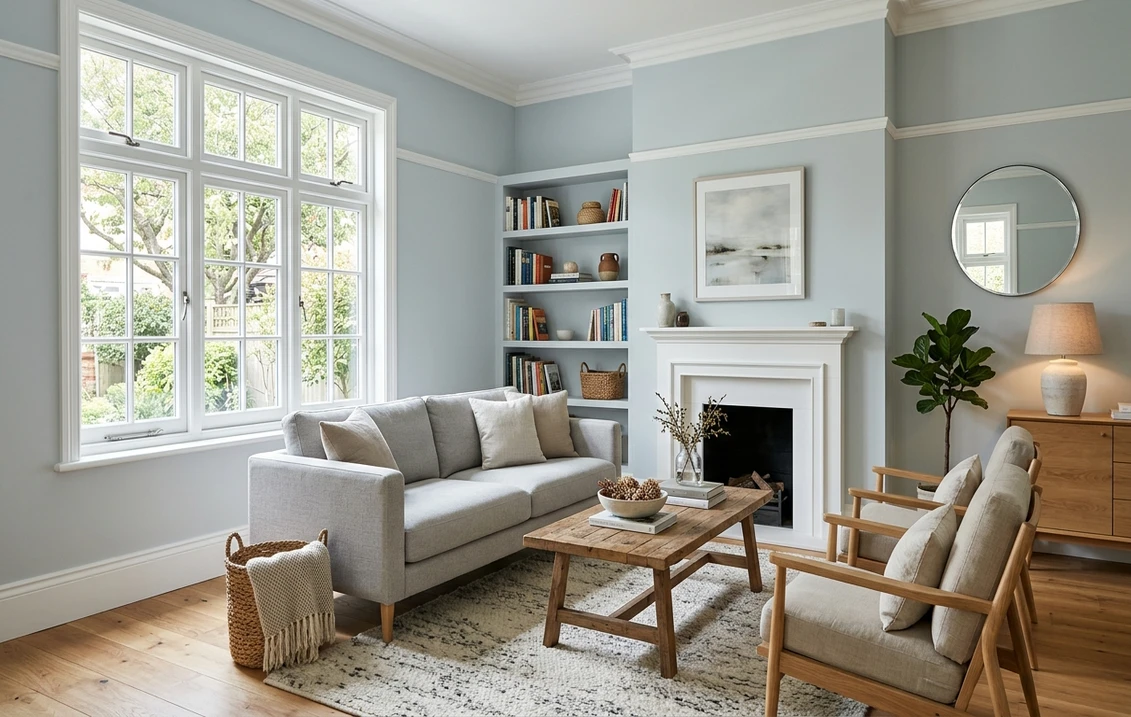
Try it on your room

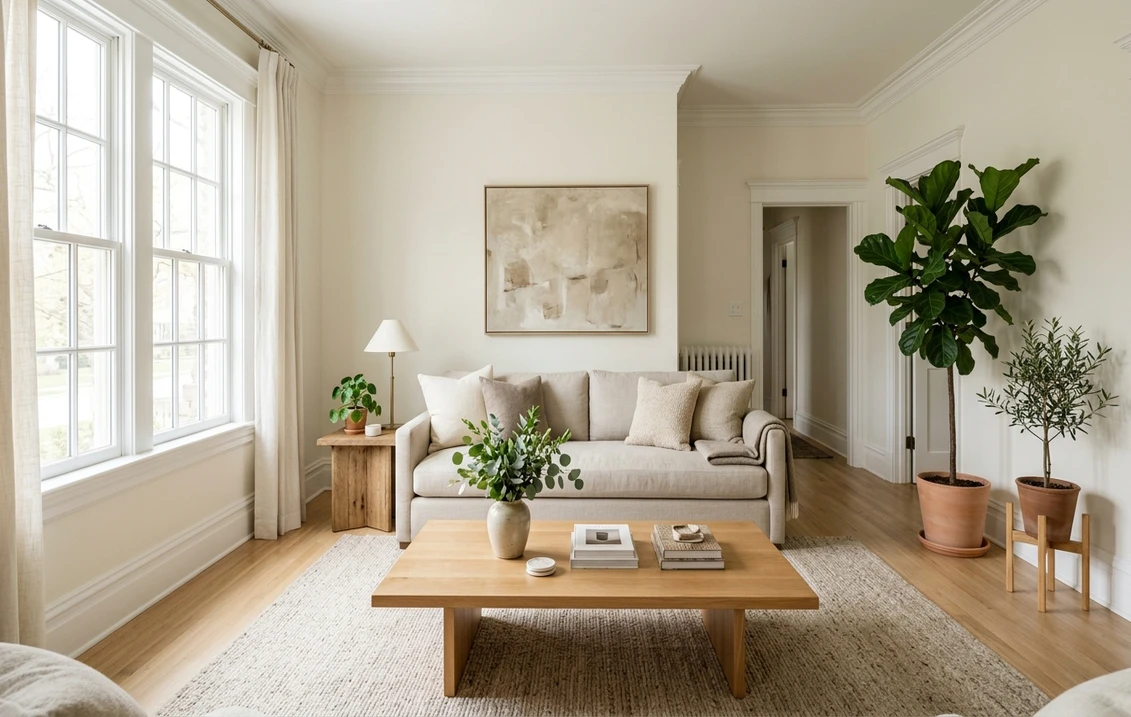
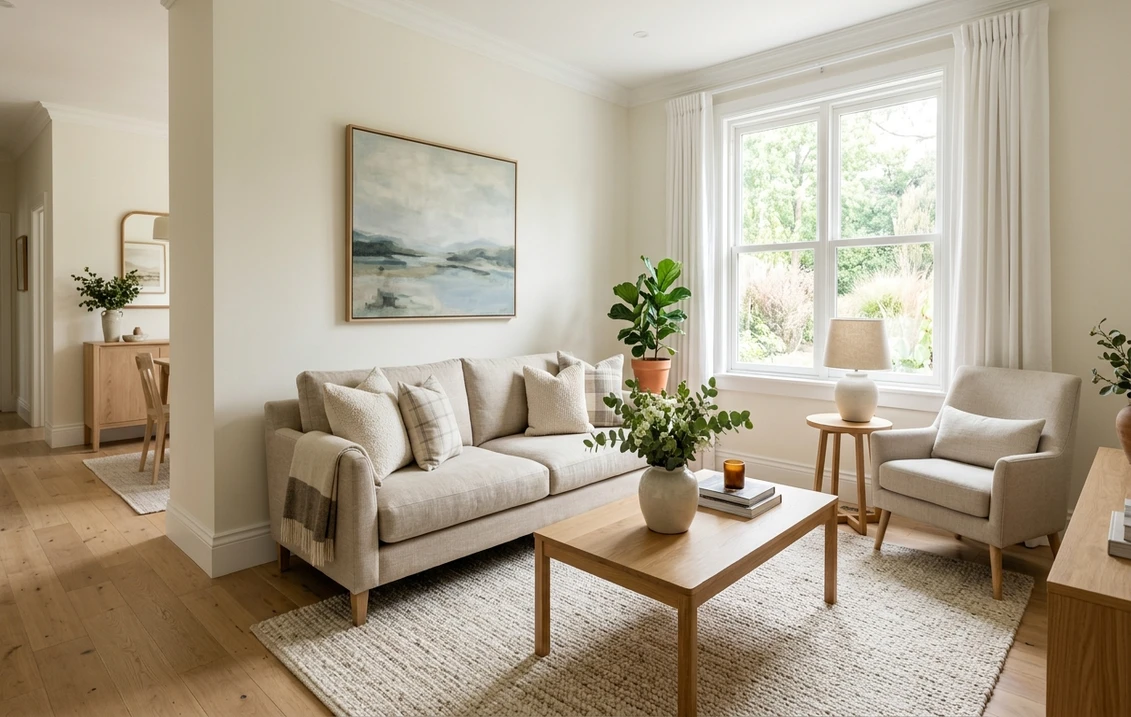
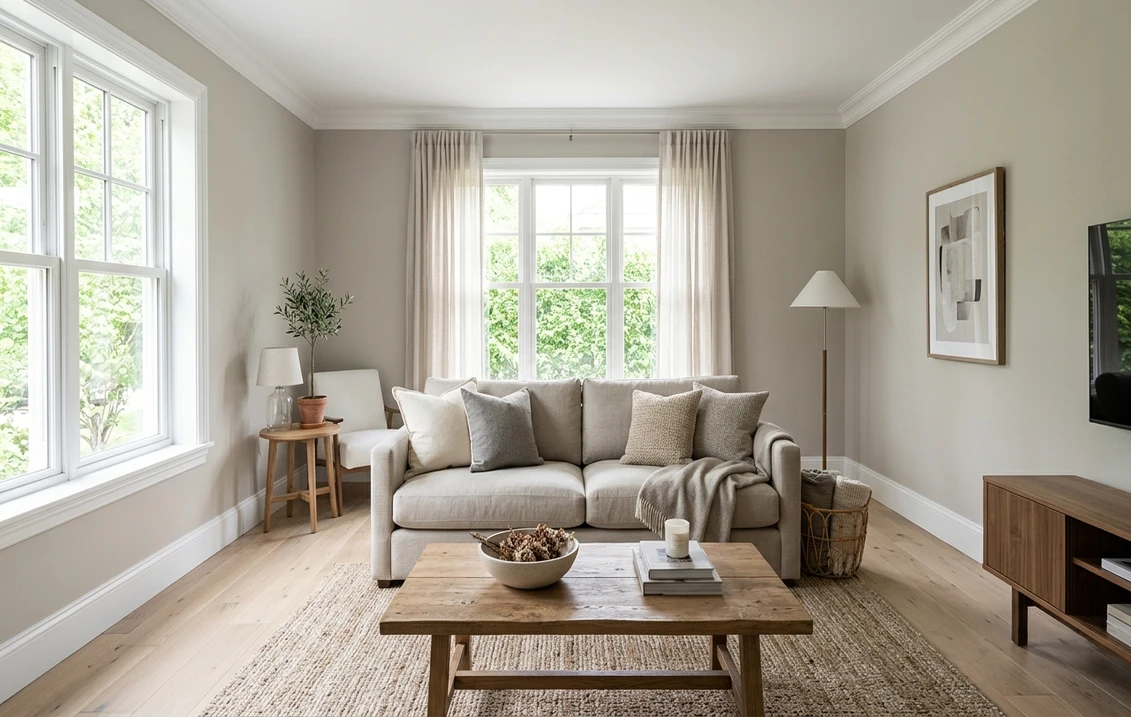
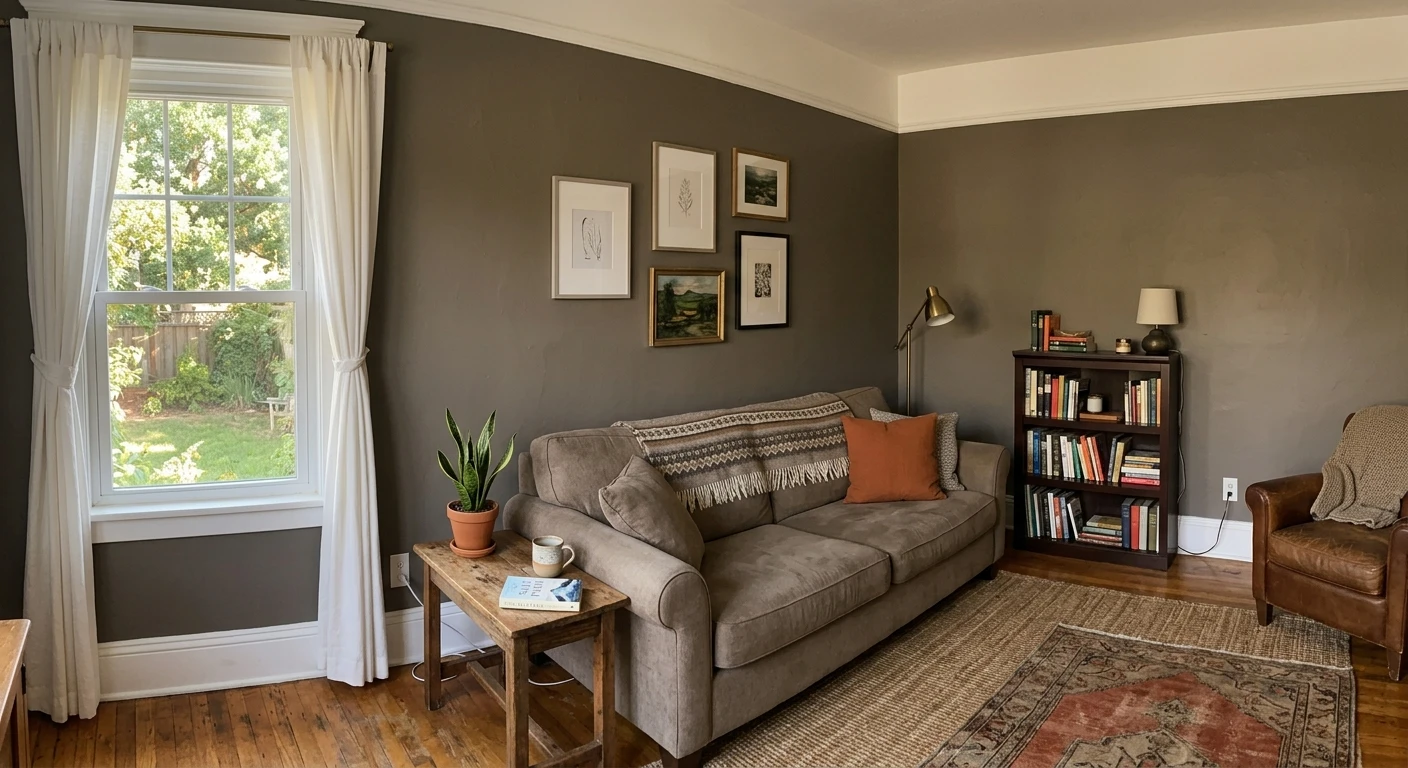
The first thing people say when they see Benjamin Moore Wickham Gray (HC-171) on a finished wall is some version of "wait, is that blue?" And in the right light it absolutely is. Wickham Gray is the palest, coolest, most openly blue-leaning member of Benjamin Moore's beloved Historical gray family, the one you reach for when you want a room to feel like a clean breath of sky rather than a safe neutral. It is light, frosty, and unapologetically fresh. The whole question with this color is not whether it leans blue (it does) but whether you want it to. Here is exactly how Wickham Gray behaves on real interior walls, where it shines, where it tips cold, and how it differs from the near-twins shoppers keep confusing it with.
Quick orientation before the deep dive. Wickham Gray HC-171 carries a published LRV of about 60 and a hex approximation of #C9CCC5 (RGB 201, 204, 197). That places it in light, airy gray territory: bright enough to keep a small or dim room from closing in, with just enough body to read as a real color rather than a tinted white. The undertone is a soft, clean blue with a faint cool-green ghost that surfaces in shade, which is what gives Wickham its watery, almost spa-like calm. This profile is one stop in our wider Benjamin Moore interior paint colors guide, and it sits one step cooler and bluer than its famous neighbor in our Stonington Gray HC-170 review. If Stonington is the cool gray that occasionally flirts with blue, Wickham is the one that just goes ahead and commits.
Upload a photo of your actual room and preview BM Wickham Gray HC-171 under your own light in about 30 seconds. Free tier includes 1 HD render plus 3 variations.
Wickham Gray at a glance: the numbers that matter
Before any opinions, here are the verifiable specs from the Benjamin Moore color library. These are the values you can take to a paint counter:
| Spec | Wickham Gray HC-171 |
|---|---|
| Color number | HC-171 (Historical Color collection) |
| LRV (Light Reflectance Value) | Approximately 60: light, airy, keeps a room bright |
| Hex / RGB (approx.) | #C9CCC5 / 201, 204, 197 |
| Color family | Light cool gray, blue-leaning |
| Primary undertone | Soft clean blue, with a faint cool green in shade |
| Best base / finish | Light tint base; eggshell or matte on walls, satin or semi-gloss on trim |
Try it on your house
No photo? Try a sample
The takeaway from those numbers: Wickham Gray is the airy, blue end of the gray spectrum, not a moody charcoal and not a hedged greige. At LRV 60 it reads almost as a pale, dusty sky-gray on a big wall, lighter in feel than its raw chip suggests. The blue is the entire identity here. If you want a true do-no-harm neutral that disappears, Wickham is not it. If you want a room that feels fresh, watery, and a little coastal, this is precisely the move. That tension is the whole decision in one sentence.
Is Wickham Gray too blue? The undertone, decoded
Let us be honest up front: Wickham Gray is the bluest of the popular Historical grays. On a small chip it can pass as a quiet gray, but rolled out across a full wall in good light it leans clearly blue, sometimes reading closer to a pale dove-blue than a gray. That is not a flaw, it is the personality, and understanding when the blue intensifies is what keeps the room feeling crisp instead of cold.
The dominant note is a clean, slightly grayed blue, the kind that feels like morning light rather than a saturated denim. Underneath it rides a faint cool-green ghost that keeps the color from ever going periwinkle or violet; this is what separates Wickham from a true blue paint and lets it still function as a neutral backdrop. In warm, bright south light the blue softens into a pale silvery gray with the faintest watery cast. In cool, indirect light (a north room, an overcast day, deep afternoon shade) the warm wavelengths drain out and the blue marches forward, and the wall can read as a soft, distinct sky blue. Wickham swings further toward blue in cool light than Stonington Gray does, which is the single most important thing to know about it.
One quirk to plan for: Wickham Gray looks grayer and more neutral on the fan deck than it does on a finished wall. The larger the painted area and the cooler the light, the bluer it reads. So if you fell in love with a 2-inch chip that looked like a quiet gray, budget for the real wall to land noticeably more blue, especially in any room without strong warm sun.
| Indoor light | How Wickham Gray reads |
|---|---|
| South-facing (bright, warm) | Soft silvery gray with a faint watery cast, its calmest and most balanced read |
| West-facing (warm afternoon) | Warmest read of the day; the blue relaxes and it nears a true light gray |
| East-facing (cool after noon) | Fresh and bright in the morning, then clearly blue from midday on |
| North-facing (cool, indirect) | At its bluest: reads as a pale sky-blue. Lean into it as a feature, not a fight |
| Artificial light at night | Warm 2700K bulbs pull it back toward gray; cool 4000K bulbs push it firmly blue |
Sources: Benjamin Moore HC-171 color data 2026; The Spruce gray-paint undertone coverage; designer field reports compiled by FacadeColorizer.
Free AI visualizer. See exactly how blue HC-171 reads on your real walls before buying a single sample pot.
Best rooms for Wickham Gray
Because it leans blue and reads light, Wickham Gray is happiest in rooms where you want freshness, calm, and a hint of color rather than a do-nothing neutral. It rewards good light and a clean palette. Here is where it consistently earns its keep:
Bathrooms and powder rooms
This is Wickham's sweet spot. The soft blue undertone reads like a spa against white subway tile, marble, and polished nickel, and at LRV 60 it keeps even a windowless bath feeling open. It looks especially good with chrome fixtures and crisp white cabinetry, where the cool lean signals clean rather than cold. The one trade-off is the mirror: a blue-gray bounces cool light back onto skin, so in a vanity-first powder room a soft rose such as Benjamin Moore Pink Damask 2078-60 flatters complexions in a way Wickham simply does not. Choose by whether the room is judged on its tile or on its reflection. It is the kind of light blue-gray that anchors many of the picks in our roundup of the best bathroom paint colors for 2026.
Bedrooms that want calm and a touch of sky
Blue is the classic restful bedroom hue, and Wickham Gray delivers that serenity while staying soft enough to live with for years. It pairs beautifully with white bedding, natural linen, rattan, and pale wood, and reads especially serene in an east bedroom where morning light keeps it fresh. If a peaceful bedroom is your project, our guide to calming master bedroom paint colors shows how a hue like this sits next to other quiet picks.
Bright, airy living spaces and coastal kitchens
In a south- or west-facing living room or a sunny kitchen, Wickham Gray reads as a light, breezy backdrop, the painted equivalent of an open window. On cabinetry it is a quietly modern choice that feels coastal without resorting to literal navy. For where it lands among the year's other light grays, our interior gray paint shades guide is a useful map.
Where to think twice
A small, dim, north-facing room lit only by cool LEDs is where Wickham Gray can flip from fresh to chilly, even slightly clinical, because there the blue has nothing to balance it. If that describes your space and you still want it cool, switch to 2700K bulbs and pair it with warm wood and linen. If you wanted a cozy, enveloping room, Wickham is the wrong tool; a warm greige will serve you far better. This color rewards light and a clean, slightly cool palette, so do not bury it in a cave or try to make it warm.
Trim, ceiling, and decor pairings
A pale blue-gray lives or dies on its trim. Get it right and Wickham looks crisp and intentional; get it wrong and it can look either icy or faintly dingy.
- Crisp clean white (most coherent): BM Chantilly Lace (OC-65) is the natural partner. Its bright, neutral white leans into Wickham's fresh, cool side and keeps the whole scheme reading clean and modern. This is the safe default for bathrooms and contemporary spaces.
- Soft warm white (to take the chill off): BM White Dove (OC-17, LRV 85) adds a gentle cream warmth that keeps Wickham's blue from going icy in cooler rooms, a smart move for north-facing bedrooms.
- Avoid: a heavy yellow-cream builder's antique white, which fights Wickham's blue and can make the walls look gray-blue and a little dirty by contrast.
- Ceilings: a clean white, often the trim color, keeps the room bright. A dingy flat builder white reads especially dull above a cool blue-gray.
- Floors and decor: pale oak, white oak, marble, polished nickel, woven naturals, and crisp white textiles flatter the blue. A deep navy or soft black on a vanity, door, or island reads tailored and coastal against the pale walls. Very warm orange-toned wood can clash, so temper it with cooler textiles.
See walls, trim, and floor together in one preview, free.
Wickham Gray vs the colors people confuse it with
Wickham Gray sits in a crowded neighborhood of pale cool grays, and shoppers constantly hold three other Benjamin Moore colors next to it. Here is how to tell them apart so you do not buy a near-twin by mistake.
- vs BM Stonington Gray (HC-170): the closest call, since they are direct HC neighbors. Stonington (LRV near 59) is marginally deeper and reads as a true cool gray that only hints at blue; Wickham (LRV near 60) is lighter, airier, and openly blue, especially in cool light. Choose Stonington when you want a versatile gray that behaves like a neutral on most walls; choose Wickham when you actively want that pale-sky blue feeling. Full breakdown in our Stonington Gray HC-170 review.
- vs BM Beacon Gray (2128-60): Beacon is Wickham's more saturated, more committed cousin. Where Wickham only suggests blue, Beacon Gray (also LRV near 60) reads as a clear, dusty pastel blue with more chroma and presence. Pick Wickham when you want the blue to stay quiet and gray-anchored; pick Beacon when you want the room to read confidently as a soft blue.
- vs BM Silver Mist (1619): the trickiest distinction, because both are pale and cool. Silver Mist leans more genuinely gray with a faint blue-green softness and reads more silvery and neutral; Wickham is bluer and fresher, less silver, more sky. If you want a pale cool color that still reads as a gray, lean Silver Mist; if you want it to lean blue, lean Wickham.
The short version: Silver Mist is the grayest, Stonington is the balanced middle, Wickham is the blue-leaning fresh one, and Beacon is the most openly blue. They are a family, not interchangeable.
Spelling note: wickham grey, BM Wickham Gray, and Wickham Gray Benjamin Moore all point to this same HC-171.
How to test Wickham Gray before you commit
Because Wickham Gray shifts so much between warm and cool light, a tiny fan-deck chip is the number-one reason people end up surprised by how blue it goes. Two better methods:
- Paint a large swatch: roll a 12-by-12-inch sample (or use a peel-and-stick sample) on two different walls and check it mid-morning, mid-afternoon, and at night under your normal bulbs. Watch your coolest, dimmest corner in particular; that corner shows you the bluest Wickham will ever get in your room.
- Preview it digitally first: upload a real photo of your room and apply Wickham Gray alongside a grayer alternative such as Stonington and a bluer one such as Beacon, so you can narrow three contenders to the one worth a sample pot. When you are ready to budget the full repaint, our interior house painting cost guide for 2026 walks through the per-square-foot math.
Preview Wickham Gray against Stonington and Beacon, side by side, free.
Frequently asked questions
Is Wickham Gray more blue or gray?
Wickham Gray (HC-171) is the bluest of Benjamin Moore's popular Historical grays. On a small chip and in warm south light it can pass as a soft silvery gray, but on a full wall and in cool or north light the clean blue undertone steps forward and it often reads as a pale sky-blue. A faint cool-green ghost keeps it from turning periwinkle, but you should expect it to lean blue, not stay neutral.
What is the LRV of Wickham Gray?
Wickham Gray has a Light Reflectance Value of about 60 on the Benjamin Moore color data, with a hex approximation of #C9CCC5 (RGB 201, 204, 197). That makes it a light, airy color: bright enough to keep a small or dim room feeling open, but with just enough body to read as a real blue-gray rather than washing out like a high-LRV off-white.
What are the best rooms for Wickham Gray?
Bathrooms, powder rooms, calm bedrooms, and bright, airy living rooms or coastal kitchens are where Wickham Gray shines, because its soft blue undertone reads spa-fresh against white tile, marble, and chrome. It is least reliable in small, windowless, or north-facing rooms lit only by cool LEDs, where the blue can tip from fresh to clinical; warm 2700K bulbs and warm wood help, or choose a greige instead if you want true coziness.
What trim color goes with Wickham Gray?
BM Chantilly Lace (OC-65) is the most coherent trim because its bright, clean white leans into Wickham's fresh, cool character. For north-facing rooms where you want to soften the chill, BM White Dove (OC-17) adds a gentle cream warmth. Avoid a heavy yellow-cream antique white, which fights the blue and can make the walls look gray-blue and slightly dingy by contrast.
What is the difference between Wickham Gray and Stonington Gray?
They are direct HC neighbors and look alike on a chip, but Stonington Gray (HC-170, LRV near 59) is slightly deeper and reads as a true cool gray that only hints at blue, while Wickham Gray (HC-171, LRV near 60) is lighter, airier, and openly blue, especially in cool light. Choose Stonington for a versatile near-neutral gray, and Wickham when you actively want a pale, sky-blue feeling in the room.
Preview BM Wickham Gray HC-171 on your actual walls under your own light before buying a single sample. Free tier: 1 HD render plus 3 variations.
Disclaimer: Benjamin Moore, Wickham Gray (HC-171), Stonington Gray (HC-170), Beacon Gray (2128-60), Silver Mist (1619), Gray Owl (OC-52), White Dove (OC-17), and Chantilly Lace (OC-65) are trademarks of Benjamin Moore & Co. FacadeColorizer is an independent paint visualization service and is not affiliated with, endorsed by, or sponsored by Benjamin Moore. Color reproduction on screens approximates the manufacturer's chip; always confirm with a manufacturer sample under your own light before purchase. Sources: Benjamin Moore HC-171 Wickham Gray color data 2026, Benjamin Moore HC-170, 2128-60, 1619, OC-17, and OC-65 color data 2026, The Spruce gray-paint undertone coverage, designer field reports compiled by FacadeColorizer.
Trademarks mentioned (Sherwin-Williams, Benjamin Moore, Behr, Caparol, Brillux, Sto, Alpina, Valspar, PPG, Glidden, Dulux, Crown Trade, Sandtex, Farrow & Ball, Johnstone's, Leyland) are property of their respective owners. FacadeColorizer is independent and not affiliated with any of them. Nominative fair use under Lanham Act §1125.