Try it on your room

The first time I brushed out Benjamin Moore Silver Sage (506) for a client, she squinted at the swatch and asked, completely seriously, whether I had grabbed gray by mistake. An hour later, in the afternoon sun, she asked the opposite: was it too green now? That swing is the whole personality of this color. Silver Sage is a muted, dusty gray-green: a soft, sophisticated sage that has been quieted down with so much gray it can pass for a warm gray in some light and a gentle eucalyptus in others. It is the color people reach for when they want green without committing to green, and the question that fills every search bar is simple: will it actually read green on my walls, or will it just look gray? The honest answer depends on your light, your trim, and how saturated the surfaces around it are. Here is exactly how Silver Sage behaves indoors.
Quick orientation before the deep dive. Silver Sage 506 has a published LRV of about 46 and a hex approximation of #BEC1AE (RGB 190, 193, 174). That puts it squarely in mid-tone territory: deeper than the airy spa greens, lighter than a true forest or olive. It is not a bright color and not a dark one; it is a grounded, mid-range gray-green that holds a room together without shouting. This profile is one stop in our wider Benjamin Moore interior paint colors guide, and it sits alongside our look at the best interior sage green shades and pairings: that roundup maps the whole sage family across brands, while this page stays focused on this one color, its undertones, rooms, and pairings.
Upload a photo of your actual room and preview BM Silver Sage under your own light in about 30 seconds, free.
Silver Sage at a glance: the numbers that matter
Before opinions, here are the verifiable specs straight from the Benjamin Moore color library. These are the values you can take to a paint counter:
| Spec | Silver Sage 506 |
|---|---|
| Color number | 506 (Benjamin Moore Color Preview / classic library) |
| LRV (Light Reflectance Value) | Approximately 46: mid-tone, neither bright nor dark |
| Hex / RGB (approx.) | #BEC1AE / 190, 193, 174 |
| Color family | Muted gray-green (dusty sage) |
| Primary undertone | Gray-green, with a faint silvery-yellow warmth in sun |
| Best base / finish | Medium tint base; matte or eggshell on walls, satin on trim and cabinets |
Try it on your house
No photo? Try a sample
The takeaway from those numbers: at LRV 46, Silver Sage absorbs noticeably more light than the popular pale sages everyone knows. That single fact explains most of its reputation. In a bright, sunny room it reads as a clean, soft sage and feels open. In a dim or north-facing room it can settle into a heavier, grayer, almost moody mid-tone that surprises people who expected something cheerful and airy. It is a real color with real depth, not a near-white. Treat it like a mid-tone, give it light, and it rewards you with a grown-up sage that feels custom rather than off the rack.
Is Silver Sage green or gray? The undertone, decoded
This is the entire debate, so let me be precise. Silver Sage is a green at its core, but it has been muted with so much gray that the green only fully reveals itself in certain conditions. There is no blue in it to speak of, and almost no yellow punch, which is what keeps it from looking minty, lime, or olive. What you get instead is a soft, dusty, slightly silvered green: the color of dried sage leaves or weathered eucalyptus, hence the name.
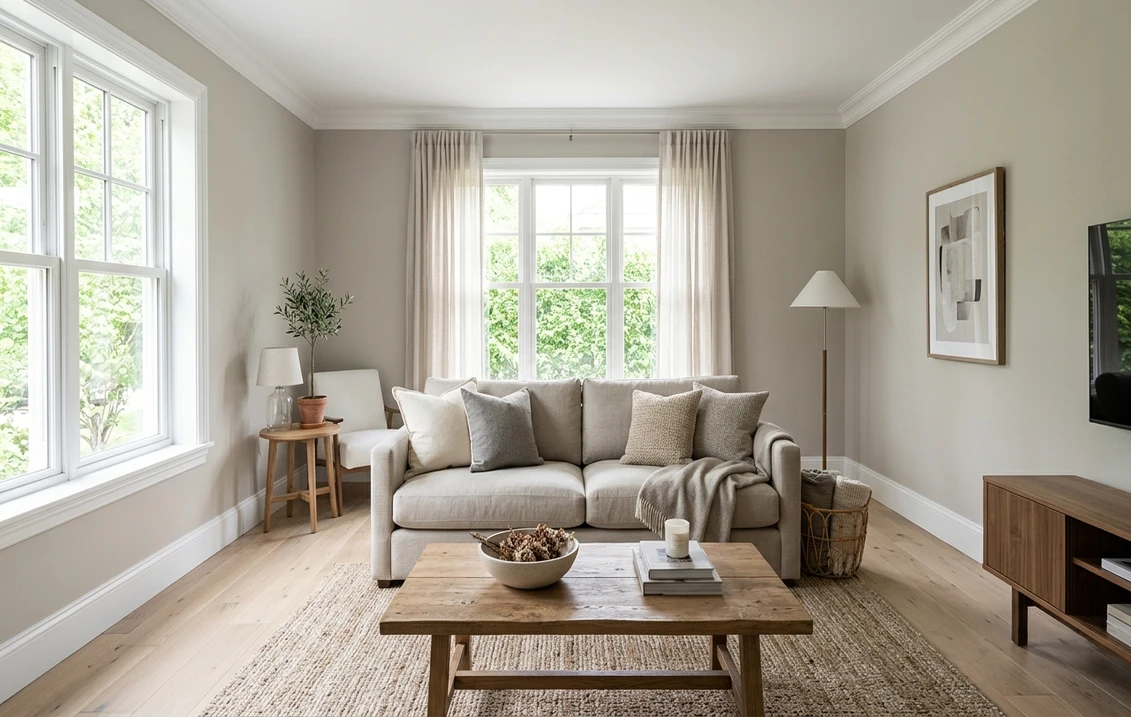
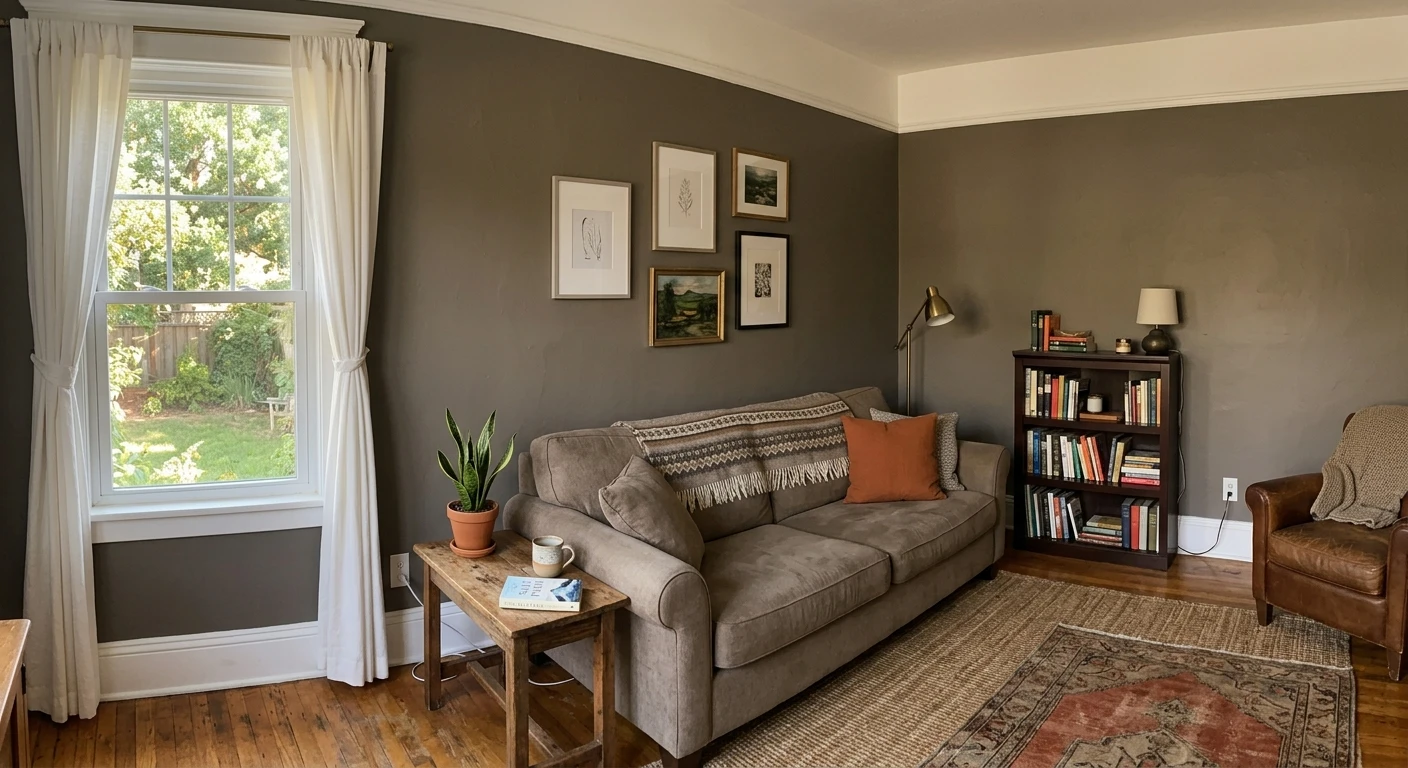
The green is loudest when the color has something to bounce against. Put Silver Sage next to a crisp white trim, a pure gray, or a saturated green plant and the eye instantly reads it as green. Strip those references away (a whole room painted in it, dim light, warm wood floors) and the gray takes over, so it drifts toward a warm greige. This is why two people can describe the same wall completely differently and both be right. In warm south or west light, a faint silvery-yellow warmth surfaces and the color feels soft and sunny. In cool, indirect north light, the warmth drains out and Silver Sage settles into a cooler, grayer, more contemplative version of itself, the read that earns it the word moody.
Watch out for one quirk. Silver Sage looks distinctly greener on a small chip and in product photos than it does as a finished wall. Saturation always reads stronger on a 2-inch sample than spread across a full wall, where light and scale dilute it. So if you fell in love with the chip expecting bold sage, assume the rolled wall will land a half-step grayer and quieter than you pictured.
| Indoor light | How Silver Sage reads |
|---|---|
| South-facing (bright, warm) | Soft, clean sage with a silvery warmth: its most flattering, balanced read |
| West-facing (warm afternoon) | Warmer and a touch yellower-green late in the day, cozy and grounded |
| East-facing (cool after noon) | Fresh sage in morning light, drifts grayer and quieter by afternoon |
| North-facing (cool, indirect) | At its grayest and moodiest; the green recedes and it reads as a warm gray-green |
| Artificial light at night | Warm 2700K bulbs revive the sage and the warmth; cool 4000K bulbs flatten it toward gray |
Sources: Benjamin Moore 506 color data 2026; The Spruce sage-and-green paint undertone coverage; designer field reports compiled by FacadeColorizer.
Free AI visualizer. Test Silver Sage on your real walls before buying a single sample pot.
Best rooms for Silver Sage
Calm, grounded, and nature-adjacent, Silver Sage is happiest in rooms where you want restful depth rather than brightness. Because it is a true mid-tone, it does its best work where there is enough natural light to keep the green alive. Here is where it consistently earns its keep:
Bedrooms aiming for calm and grounded
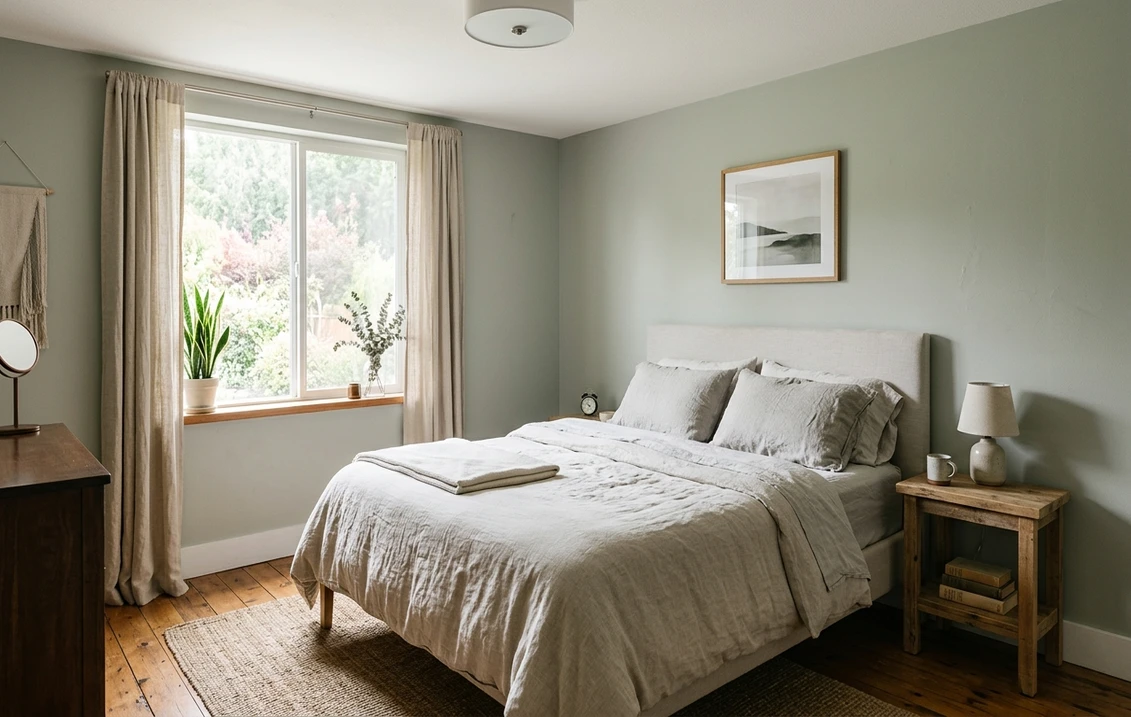
This is Silver Sage's sweet spot. The muted gray-green is deeply restful, with the biophilic, close-to-nature feel that makes sage such a popular bedroom hue, but its grown-up grayness keeps it from feeling juvenile or trendy. It cocoons a primary bedroom beautifully against linen bedding, rattan, and warm wood. If a serene retreat is your project, our guide to calming master bedroom paint colors shows how it sits next to other quiet picks, and these bedroom color schemes show full palettes built around tones like this.
Bathrooms and powder rooms
In a bath, Silver Sage delivers a soft, organic, spa-like calm without the icy edge of a cool gray. It looks especially good against white or marble-look tile, brushed brass, and natural stone, where the green reads clearly and the silvery quality feels expensive. In a windowless powder room, lean into the moodiness rather than fighting it. It earns a place in our roundup of the best bathroom paint colors for 2026 for that reason.
Studies, dining rooms, and cabinetry
The depth that can feel heavy in a small bedroom is exactly what makes Silver Sage excellent in a study, a moody dining room, or on kitchen and bathroom cabinets. As a cabinet color it reads as a soft, custom-looking sage that pairs with both warm brass and matte black hardware. For where it lands among other sage cabinet and wall options, our guide to interior sage green shades and pairings is a useful map.
Where to think twice
A small, dim, north-facing room with little natural light is where Silver Sage can tip from grounded to gloomy. At LRV 46 it does not bounce much light back, so a dark corner stays dark and the green flattens into a heavy gray-green. If that room needs to feel bright and open, this is the wrong pick; choose a paler sage instead, or commit to warm 2700K lighting and lots of crisp white trim to keep it fresh.
Trim, ceiling, and decor pairings
A muted gray-green lives or dies on what sits next to it. Get the trim right and Silver Sage looks intentional and custom; get it wrong and it can read either flat-gray or slightly dingy.
- Soft warm white trim (most balanced): BM White Dove (OC-17, LRV 85) is the designer default. Its gentle cream bias echoes Silver Sage's warmth and makes the green read clearly without going cold. This is the safe, cohesive pick for most homes.
- Creamy white trim (warmer, cozier): BM Swiss Coffee or a soft cream pushes Silver Sage toward its sunnier, farmhouse-sage side. Best for traditional and cottage spaces.
- Crisp bright white trim (cleaner, greener): BM Chantilly Lace (OC-65) gives the most contrast and makes the green pop hardest. Best for modern rooms and bathrooms where you want the sage to be unmistakable.
- Avoid: a stark, blue-white trim, which can make Silver Sage look murky and pull out the gray at the expense of the green.
- Ceilings: the trim white carried overhead keeps things cohesive. In a bedroom, painting the ceiling the same Silver Sage at a lighter scale creates an enveloping, cocooning effect.
- Floors and decor: warm wood (oak, walnut), rattan, jute, terracotta, aged brass, and cream textiles flatter it and reinforce the organic mood. For a full pairing playbook, see colors that go with sage green.
For contrast, a soft black or deep bronze on a door, window frame, or vanity reads tailored and modern against the muted sage. If you want to compare it against another BM sage with a different undertone, our Benjamin Moore October Mist 1495 review covers a grayer, lighter cousin from the same family.
See walls, trim, and floor together in one preview, free.
Silver Sage vs the colors people confuse it with
Almost every Silver Sage search ends in a side-by-side, and a handful of BM greens cause the most confusion. Getting these straight saves you from ordering the wrong sample:
- vs BM Soft Fern (2144-40): the most important comparison. Soft Fern is a clearer, more saturated, more obviously green sage with a touch more yellow and less gray. It reads unmistakably as green in almost any light, where Silver Sage stays quieter and can pass for greige. Soft Fern and Silver Sage land at similar mid-range LRVs, so the difference is not lightness but saturation: choose Soft Fern when you want the green to announce itself, and Silver Sage when you want a softer, grayer, more neutral sage that recedes.
- vs BM Healing Aloe (1562): these get swapped in listings constantly, but they are not close. Healing Aloe is a much paler, cooler, higher-LRV spa green with a faint blue-gray whisper; it reads as a soft, airy near-white-green. Silver Sage is far deeper, warmer, and grayer-green, a true mid-tone. Pick Healing Aloe for a light, breezy, barely-there spa feel, and Silver Sage when you want real color and grounded depth on the wall.
- vs BM October Mist (1495): October Mist is a lighter, grayer, more silvery sage (a former Color of the Year) that reads soft and quiet. Silver Sage is deeper and holds more green presence. Choose October Mist for a whisper, Silver Sage for a statement.
- vs BM Louisburg Green (HC-113): the historic one, and the comparison most people skip because it lives in a different collection. Louisburg (LRV around 41) occupies the same mid-tone gray-green bracket as Silver Sage, but it carries a faint olive-yellow base, and that base is what gives it an aged, period quality instead of a contemporary spa calm. Silver Sage stays the quieter of the two and can still pass for greige on a wall; Louisburg always reads as green. Pick Louisburg for older homes, paneled rooms, and kitchens that want a color with some history behind it; pick Silver Sage when you want sage that behaves like a neutral. Its rooms and trim pairings are in our Benjamin Moore Louisburg Green HC-113 review.
Spelling note: silver sage benjamin moore, BM Silver Sage, and Silver Sage 506 all point to this same color, sometimes listed simply as 506 in the classic library.
How to test Silver Sage before you commit
A 2-inch fan-deck chip is the number-one reason people pick a muted sage that disappoints: it exaggerates the green and hides how gray the color goes across a real day on a real wall. Two better methods:
- Paint a large swatch: roll a 12-by-12-inch sample (or a peel-and-stick sample) on two different walls and check it mid-morning, mid-afternoon, and at night under your normal bulbs. Watch specifically for how gray it goes in your dimmest corner; that corner tells you whether the green survives or collapses in your space.
- Preview it digitally first: upload a real photo of your room and apply Silver Sage (plus a clearer green like Soft Fern and a paler one like Healing Aloe) before you buy any samples, narrowing three contenders to the one worth painting. Pricing context for the full repaint is in our interior house painting cost guide for 2026.
Preview Silver Sage against a clearer and a paler sage, side by side, free.
Frequently asked questions
Is Silver Sage green or gray?
Silver Sage 506 is a green at its core, but it is muted with so much gray that it can read either way depending on light and context. Next to white trim, gray, or plants the green reads clearly; in a whole room, in dim light, or against warm wood the gray takes over and it drifts toward a warm greige. In bright south light it shows a soft silvery sage; in cool north light it settles into a grayer, moodier gray-green.
What is the LRV of Silver Sage 506?
Silver Sage has a Light Reflectance Value of about 46 on the Benjamin Moore color data, with a hex approximation of #BEC1AE (RGB 190, 193, 174). That makes it a true mid-tone: deeper than the airy pale sages and lighter than a forest or olive green. Because it absorbs a fair amount of light, it needs decent natural light to stay fresh, and can feel heavy in a small, dim room.
What are the best rooms for Silver Sage?
Calm, grounded bedrooms are Silver Sage's sweet spot, followed by spa-like bathrooms, moody dining rooms, studies, and cabinetry, where its muted gray-green reads restful and custom. It is least reliable in small, windowless, north-facing rooms with little natural light, where its mid-tone depth can flatten into a heavy gray-green; a paler sage or warm 2700K lighting helps there.
What trim color goes with Silver Sage?
BM White Dove (OC-17) is the most balanced trim because its gentle cream bias echoes Silver Sage's warmth and lets the green read clearly without going cold. A creamy white like Swiss Coffee pushes it cozier and more farmhouse, while crisp Chantilly Lace (OC-65) gives the most contrast and makes the green pop hardest. Avoid a stark blue-white, which can make the sage look murky.
What is the difference between Silver Sage and Soft Fern?
Soft Fern (2144-40) is a clearer, more saturated green with a touch more yellow and less gray, so it reads unmistakably as green in almost any light. Silver Sage (506) is quieter and grayer and can pass for greige in some rooms. The difference is saturation, not lightness: choose Soft Fern when you want the green to announce itself, and Silver Sage when you want a softer, more neutral sage that recedes. Note that Healing Aloe (1562) is a much paler, cooler spa green and not a close match to either.
Preview BM Silver Sage on your actual walls under your own light before buying a single sample.
Disclaimer: Benjamin Moore, Silver Sage (506), Soft Fern (2144-40), Healing Aloe (1562), October Mist (1495), White Dove (OC-17), Swiss Coffee, and Chantilly Lace (OC-65) are trademarks of Benjamin Moore & Co. FacadeColorizer is an independent paint visualization service and is not affiliated with, endorsed by, or sponsored by Benjamin Moore. Color reproduction on screens approximates the manufacturer's chip; always confirm with a manufacturer sample under your own light before purchase. Sources: Benjamin Moore 506 Silver Sage color data 2026, Benjamin Moore 2144-40 Soft Fern and 1562 Healing Aloe color data 2026, The Spruce sage-and-green paint undertone coverage, designer field reports compiled by FacadeColorizer.
Trademarks mentioned (Sherwin-Williams, Benjamin Moore, Behr, Caparol, Brillux, Sto, Alpina, Valspar, PPG, Glidden, Dulux, Crown Trade, Sandtex, Farrow & Ball, Johnstone's, Leyland) are property of their respective owners. FacadeColorizer is independent and not affiliated with any of them. Nominative fair use under Lanham Act §1125.