Try it on your room

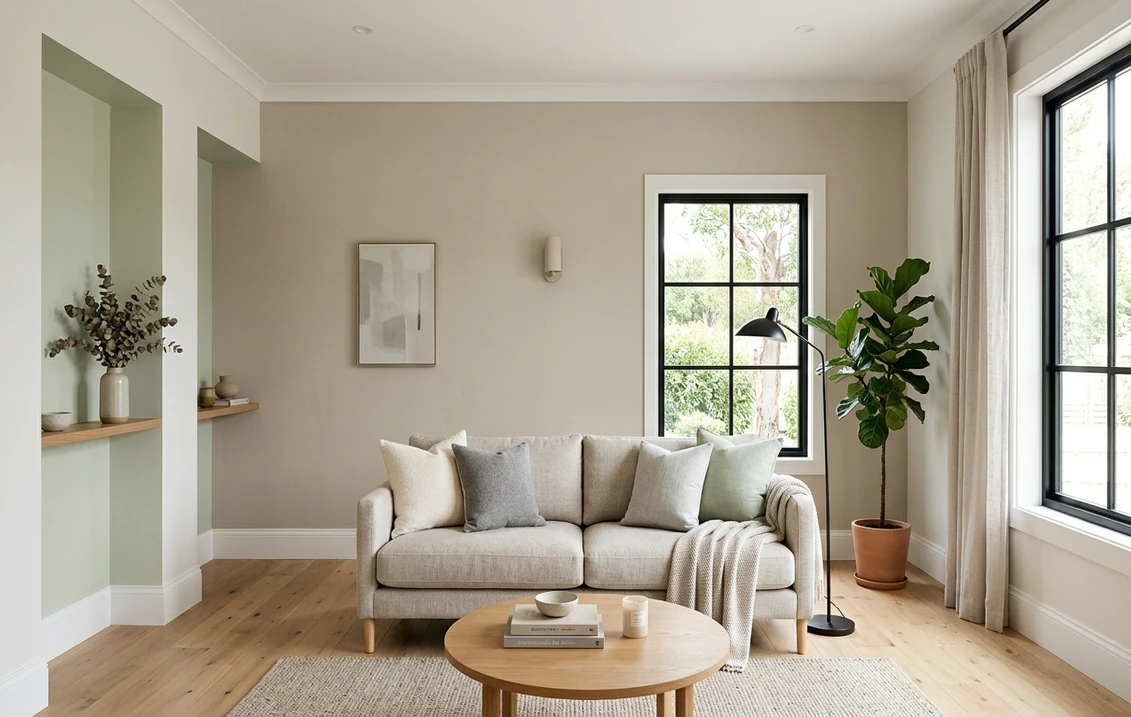
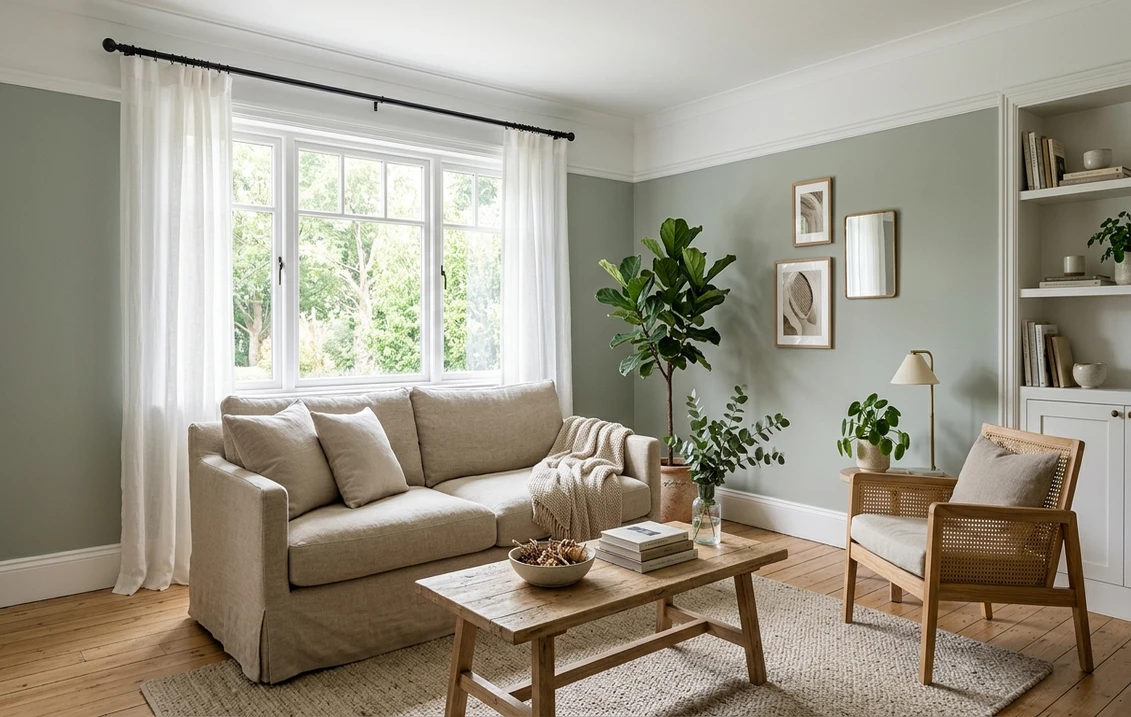
Sage green is the color that quietly ended the all-gray decade. Not a bright botanical green and not a true gray, but a soft, dusty gray-tinted green that reads calm, grounded, and natural. Designers reach for it on kitchen cabinets, bedrooms, studies, and powder rooms because it behaves like a neutral while adding a warmth flat gray never could. Sherwin-Williams crowned the look when it named Evergreen Fog (SW 9130) its 2022 Color of the Year, and demand has not cooled since.
The catch is that "sage" covers a wide band, from a barely-there whisper of green near LRV 60 down to an enveloping forest-sage in the low 20s. Pick the wrong depth or miss the undertone and a sage that looked perfect on the chip can flip gray, mint, or faintly yellow on your wall. This guide breaks sage down the way the rest of our interior paint color families guide handles the other neutrals: undertones, the best shades by LRV, lighting behavior, best rooms, and trim pairings.
Upload one photo and preview Evergreen Fog and four other sage greens under your own light, free.
What actually makes a green "sage"
A sage green is a green muted with gray: a touch of red plus black or raw umber knocks the saturation down toward the dusty olive of the sage herb leaf. That muting is why sage reads as a neutral rather than a statement, because there is more gray in the mix than green. Within the family, two undertones decide whether you love or hate a given can:
- Gray-green sages lean cool and sophisticated. These are the "muddy" sages (Evergreen Fog is the benchmark) that read almost gray in shade and reveal their green only in good light. Safest for a buyer-friendly, modern look.
- Yellow-green sages carry a warmer, slightly olive or celery base. They feel cozier and more organic but can edge toward "split pea" in strong warm light. Wonderful in the right room, risky in the wrong one.
Watch a third trap too: push the green cool enough and a sage stops reading as sage and starts reading as a soft blue-gray or sea glass. Not a flaw, just a different color story, so check the base before you commit.
The best interior sage greens, by LRV
LRV (Light Reflectance Value) is a 0-to-100 scale of how much light a color bounces back, published on every technical data sheet. For sage it matters most, because it tells you whether the green will feel airy or enveloping in your room. Here are the sage greens US designers specify most, lightest to deepest.
| Sage shade | Code | LRV | Undertone & feel |
|---|---|---|---|
| SW Softened Green | SW 6177 | 49 | Gentle gray-green; reads as a pale sage in most light |
| BM October Mist | 1495 | 47 | Soft gray-green, almost a green-tinged neutral; light and airy |
| BM Saybrook Sage | HC-114 | 45 | Warmer green with a faint blue-gray edge; classic mid-sage |
| SW Evergreen Fog | SW 9130 | 30 | Muddy gray-green; the 2022 benchmark, deepens in low light |
| SW Pewter Green | SW 6208 | 12 | Deep, smoky forest-sage; dramatic on cabinets and accents |
Try it on your room
No photo? Try a sample
Sources: Sherwin-Williams and Benjamin Moore official technical data sheets, 2026; LRV values as published by each manufacturer.
As a depth rule of thumb: the high-40s and above (Softened Green, October Mist) keep a room airy on all four walls, even in small spaces; the mid-40s down to the low-30s is the heart of the trend, rich but still livable on full walls in a well-lit room; and under LRV 20 (Pewter Green) is a moody, near-charcoal sage best saved for cabinetry, islands, and doors.
Evergreen Fog: the sage everyone copies
One sage defined the trend, and it is Sherwin-Williams Evergreen Fog (SW 9130). At LRV 30 it sits in the sweet spot: dark enough to feel like a true green, light enough not to swallow a room with decent windows. Its balanced gray-green base carries the faintest whisper of warmth, which is why it photographs so well and reads "expensive" rather than "minty." Benjamin Moore's closest sibling is October Mist (1495), that brand's own 2022 Color of the Year, though lighter and grayer. Respect the LRV: at 30, Evergreen Fog looks noticeably deeper in a north or low-light room than the chip suggests, so test it in the room before buying three gallons.
How sage behaves under different light
Sage is more light-sensitive than a flat gray because it has a chromatic undertone competing with the gray. The same can shifts noticeably with the room's orientation:
- North-facing rooms (cool, blue, no direct sun) pull sage cooler and grayer. A gray-green like Evergreen Fog can read almost slate, and lighter sages flatten toward plain gray. Want the green to stay visible here? Lean to a warmer or more saturated sage, not the muddiest one on the rack.
- South-facing rooms (warm, bright, lots of sun) bring the green forward and warm it up. Sage looks its richest here, though yellow-green sages can tip toward olive at midday.
- East-facing rooms read fresh and green in the morning, then settle to a calm neutral; west-facing rooms turn sage golden-green in late-day sun, lovely but worth previewing if you spend evenings there.
- Artificial light matters too: warm 2700K bulbs deepen and yellow sage, while cooler 4000K to 5000K bulbs keep it crisp and gray-green. Test under the bulbs you own.
Orientation drives light gray and off-whites the same way. With sage the stakes run higher, because there is a real color underneath waiting to show or hide.
Free AI paint visualizer. See how Evergreen Fog or Saybrook Sage behaves in your own north or south room.
Best rooms for sage green
Sage goes almost anywhere. Still, a handful of rooms show it off best.
- Kitchen cabinets and islands. The most popular sage application in the US. A mid-sage like Evergreen Fog on lower cabinets with warm white uppers is the look of the moment; deep Pewter Green on an island reads custom. Ten sage shades ranked for door fronts, each with the countertop, hardware, and backsplash that carries it, are in our guide to the best sage green for cabinets. Cabinets are also where sage stops being the only option worth considering: the doors take strong artificial light and a lot of hand traffic, so the green field there runs wider and darker than on walls. Our shortlist of the best greens for kitchen cabinets ranks twelve of them by LRV and covers the countertop, hardware, and floor pairings each depth needs.
- Bedrooms. Sage is restful by nature. A lighter sage (October Mist, Softened Green) keeps a primary bedroom airy; a deeper sage behind the bed creates a cocooning headboard effect.
- Home offices and studies. Green reads as focus and calm. A mid-to-deep sage on a study wall feels grounded and bookish, especially with warm wood.
- Powder rooms and small baths. Small windowless rooms are where you can be bold; a saturated sage or Pewter Green turns a tiny powder room into a jewel box, and the same logic makes mudrooms and laundry rooms low-risk places to audition a deeper sage.
A bathroom you shower in every day is a different job from a powder room: there a mid sage such as Clary Sage (SW 6178, LRV 41) or October Mist (1495) on a moisture-rated paint is the safer whole-room choice. Our guide to green bathroom paint, from pale greens to the 2027 picks sets out 15 bathroom looks and the fan sizing that keeps the finish clean.
Trim, ceiling, and decor pairings
What you put next to sage decides whether it reads warm and organic or cool and modern:
- Trim: a soft warm white is the safest partner; it softens sage and keeps contrast gentle. Stark, blue-based bright whites make a gray-sage look colder and dingy, so favor a creamier white like BM White Dove (OC-17) or SW Alabaster (SW 7008) over a crisp builder white.
- Ceiling: match the trim white, or for a deep sage on full walls, the same paint cut 25% keeps the room from feeling top-heavy.
- Metals and wood: brass is sage's best friend, pulling the green forward and reading luxe, while matte black grounds a deeper sage and cool chrome can make a gray-sage read colder. Warm and mid-tone woods (white oak, walnut, honey) feel organic and rich; very cool gray-washed wood fights the warmth.
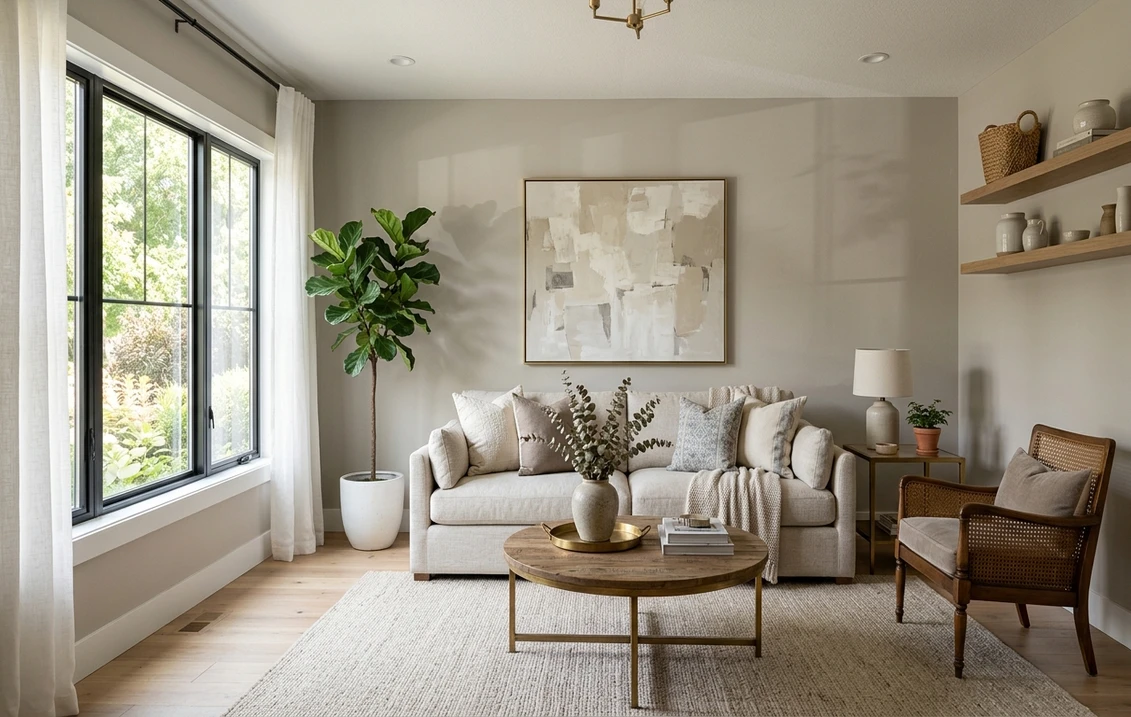
- Pairing colors: sage loves warm neutrals. It sits beautifully beside a warm greige, with terracotta, cream, soft black, and natural rattan, linen, and stone, the rare "color" that behaves like a neutral in an open plan.
One sheen note: flatter finishes (matte, eggshell) mute sage and hide wall imperfections; satin and semi-gloss deepen the color and exaggerate whatever cast the room throws. Test in your chosen sheen, not just on a flat chip.
Sage green vs the neutrals it replaced
Homeowners often land on sage after ruling out gray or greige, so it helps to see how it differs.
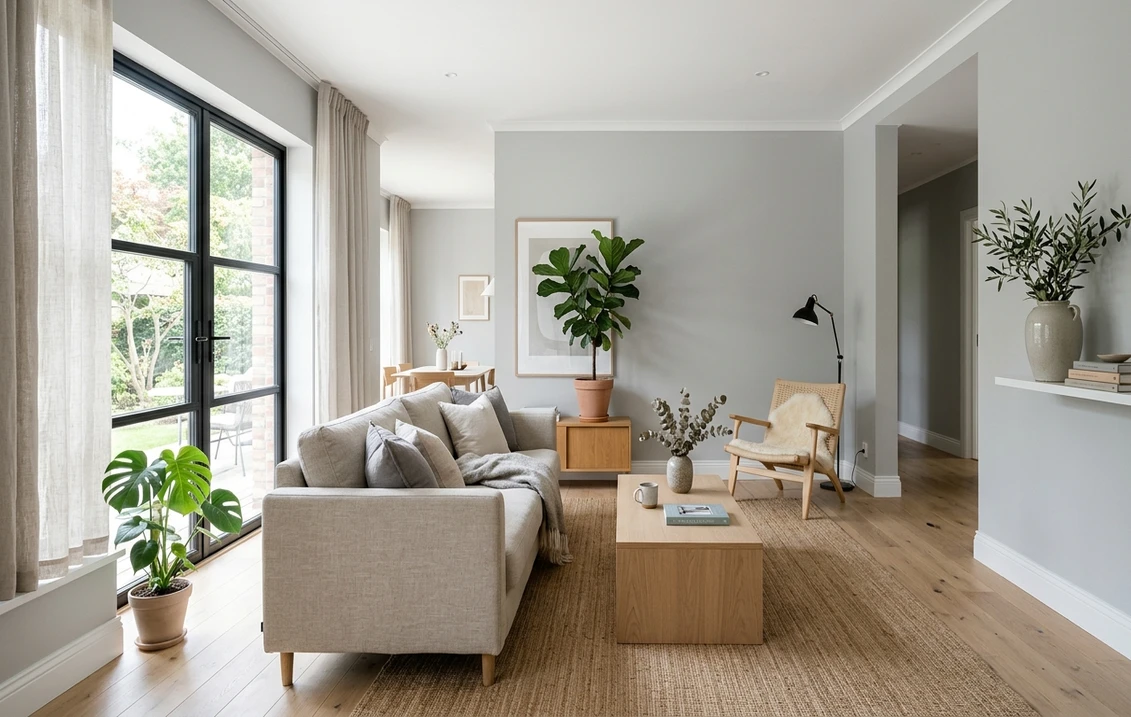
- Sage vs gray: a true gray is achromatic and can read cold or clinical in north light. Sage keeps that modern softness but adds a green warmth that feels alive, exactly why it took share from gray.
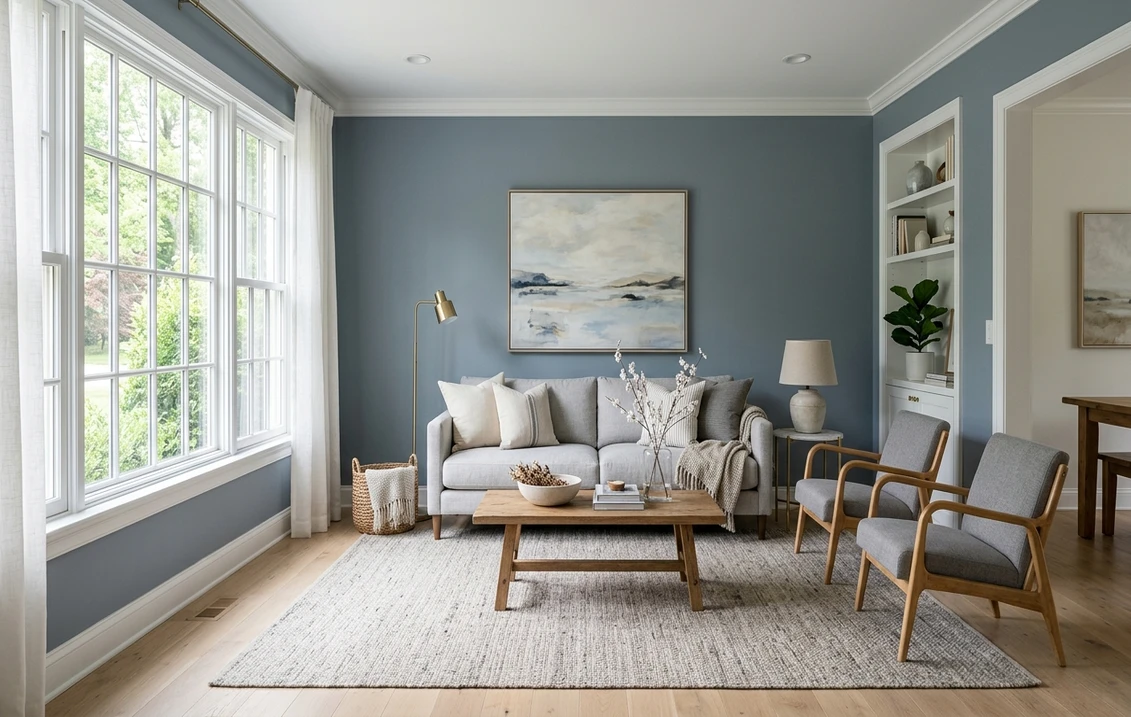
- Sage vs greige: greige is a warm gray-beige with no green; sage is a gray-green. Greige is the invisible whole-house neutral, sage the one you notice. Many homes use both: greige on living walls, sage on cabinets or a study. (Cool sages and warm blue-grays can also look alike on a chip; the tell is the base, one leans green and the other blue.)
- Sage vs the rest of the green family: sage is the gray-loaded middle of a much wider band, not the whole of it. Cool and lighten the same hue and you land on a coastal green like SW Sea Salt (6204, LRV 63); saturate it and you leave sage entirely for a true forest. Our roundup of the most popular green paint colors lays the full range out by LRV, which is the fastest way to see whether what you want is really a sage or a green from the next door down.
Sherwin-Williams and Benjamin Moore both make strong sages, top to bottom. Which brand's formula flatters your light is worth a look, and our Sherwin-Williams vs Benjamin Moore interior comparison breaks down how their greens, coverage, and price differ. If sage is one option on a longer shortlist, our best interior paint colors for 2026 roundup shows where it sits against the year's other favorites.
How to test sage before you commit
Sage is the family where a 2-inch fan-deck chip lies most: because the green and gray shift with scale and light, the chip reads lighter and grayer than the rolled wall. Two reliable ways to test:
- Large peel-and-stick swatch. Stick a 12-inch sample on two walls and check it at three moments: mid-morning, mid-afternoon, and after dark under your normal bulbs. Watch for the green going gray (too muddy) or olive (too warm).
- Digital preview first. Before buying samples, upload a real photo of the room into our visualizer workflow and apply several sages at once. Comparing Evergreen Fog against October Mist and Saybrook Sage on your own walls narrows the field before you spend a cent.
Repainting a whole room or several? Our interior house painting cost guide covers what a sage repaint of a bedroom, kitchen, or open main floor typically runs, including the extra coats deeper sages like Pewter Green can need.
Upload your room and preview five sage greens side by side, free.
Frequently asked questions
What is the most popular sage green paint color?
Sherwin-Williams Evergreen Fog (SW 9130, LRV 30) is the benchmark interior sage, the brand's 2022 Color of the Year and still the most popular gray-green for cabinets, bedrooms, and accent walls. Benjamin Moore's October Mist (1495, LRV 47) is the lighter, grayer alternative.
What trim color goes with sage green walls?
A soft, warm white is the safest trim for sage. Creamier whites like Benjamin Moore White Dove (OC-17) or Sherwin-Williams Alabaster (SW 7008) keep contrast gentle and let the green read warm. Stark, blue-based bright whites make a gray-sage look colder and dingy, so avoid the crispest builder whites unless you want a sharper, cooler look.
Does sage green make a room look smaller?
Only the deep sages do. A light sage in the high-40s LRV (Softened Green ~49, October Mist ~47) keeps a room airy on all four walls, even in small spaces. A deep sage under LRV 20 (Pewter Green) absorbs light and feels enveloping, wonderful in a powder room or behind a bed but closed-in on every wall of a small, low-light room. Match the LRV to the room's size and natural light.
Why does my sage green look gray (or too yellow) on the wall?
Sage has a green undertone competing with gray, so light pushes it either way. Cool north daylight strips the green and the sage reads gray; warm south or west sun, or 2700K bulbs, can pull a yellow-green sage toward olive. Test the color on two walls at three times of day, and lean to a warmer sage for north rooms or a grayer one for very sunny rooms.
See Evergreen Fog and four other sage greens on your own walls before buying a sample pot.
Disclaimer: Sherwin-Williams, Evergreen Fog (SW 9130), Pewter Green (SW 6208), and Softened Green (SW 6177) are trademarks of The Sherwin-Williams Company. Benjamin Moore, October Mist (1495), Saybrook Sage (HC-114), and White Dove (OC-17) are trademarks of Benjamin Moore & Co. FacadeColorizer is an independent paint visualization service and is not affiliated with, endorsed by, or sponsored by Sherwin-Williams, Benjamin Moore, or Behr. Color reproduction on screens approximates the manufacturer's chip; always confirm with a manufacturer sample before purchase. Sources: Sherwin-Williams and Benjamin Moore official technical data sheets 2026 (LRV and color codes as published), Sherwin-Williams 2022 Color of the Year announcement, Benjamin Moore 2022 Color of the Year announcement, The Spruce paint color references.
Trademarks mentioned (Sherwin-Williams, Benjamin Moore, Behr, Caparol, Brillux, Sto, Alpina, Valspar, PPG, Glidden, Dulux, Crown Trade, Sandtex, Farrow & Ball, Johnstone's, Leyland) are property of their respective owners. FacadeColorizer is independent and not affiliated with any of them. Nominative fair use under Lanham Act §1125.