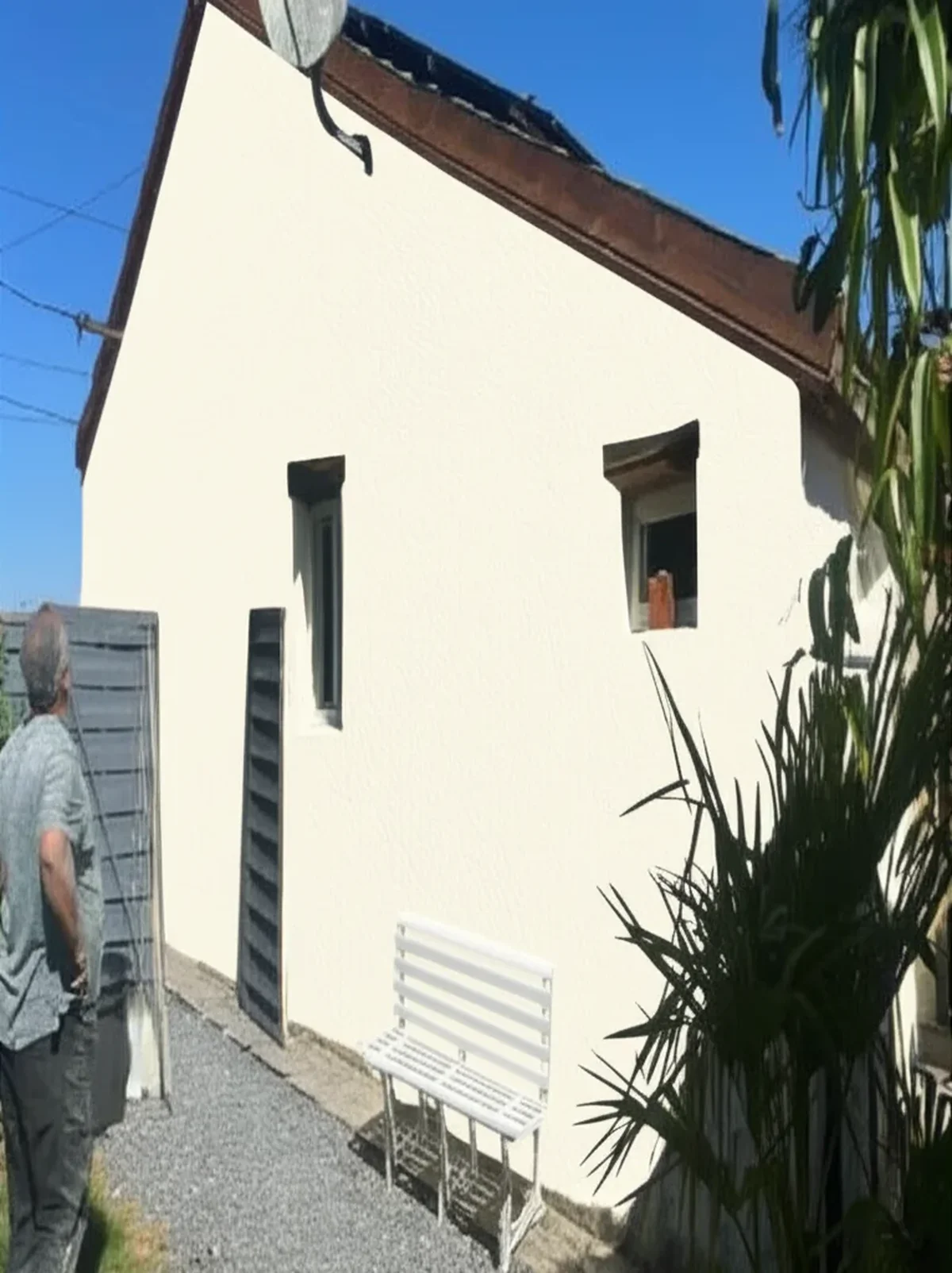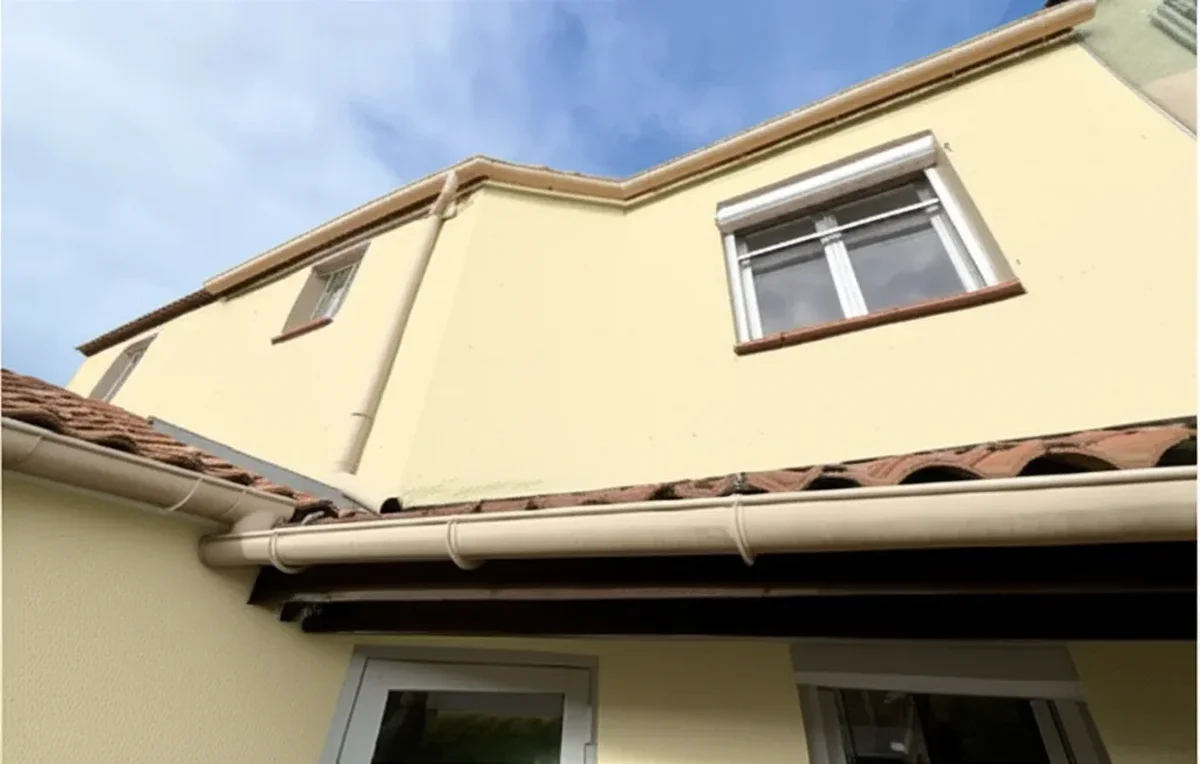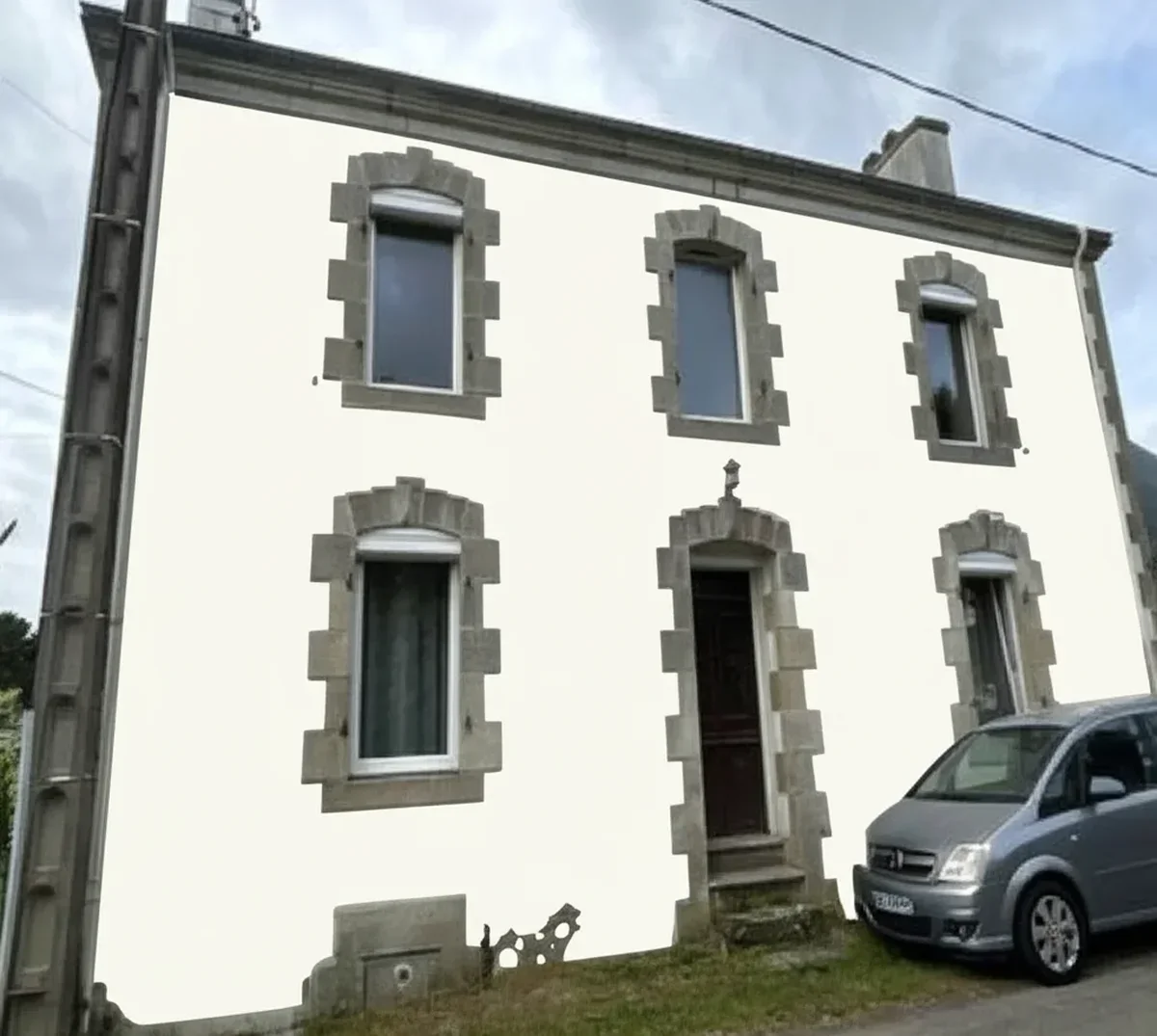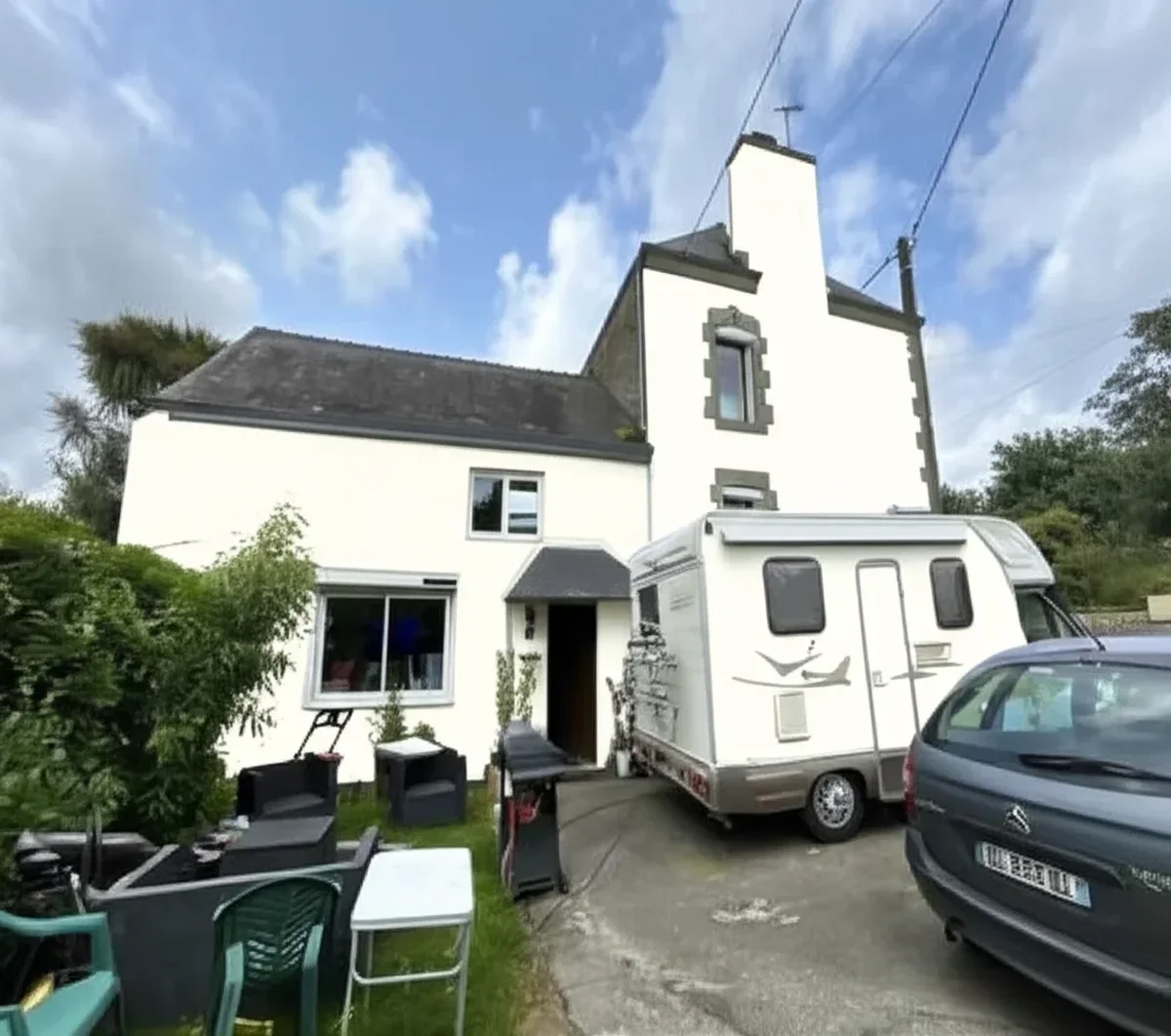
Try it on your house

Quick answer: The sage green house with white trim and black door is the most universally flattering three-color exterior of 2026. Our top trio for most US homes is SW Evergreen Fog 9130 body + SW Pure White 7005 trim + SW Tricorn Black 6258 door, a soft, English-country palette that flatters Craftsman, Cape Cod, cottage, and modern farmhouse facades alike. Preview the full trio free on your own house photo in 30 seconds, no signup.
FacadeColorizer is a free AI exterior paint visualizer. The sage green house with white trim and a black front door is, by a real margin, the breakout exterior trio of 2026: muted enough to read as a sophisticated neutral, crisp enough to feel current, and architecturally generous enough to flatter Craftsman, Cape Cod, English cottage, and modern farmhouse homes without much tweaking. In this guide we walk through five tested SW and BM trios with exact codes, the architectural styles each one suits, how sage drifts in different light, the roof colors that work with it, and the door materials that hold the look year after year. Updated June 2026.
This article belongs to our exterior house color combinations 2026 hub. If you want the broader green family before committing, see our whole-house green paint colors guide and our green exterior paint catalog by undertone. For the dedicated sage explainer with prices, see our sage green exterior paint guide, and for the ranked editorial top 10 see the best exterior green paint colors ranked.
Why The Sage + White + Black Trio Works In 2026
The sage green, white trim, black door combination is essentially an updated reading of classic English country and American Craftsman palettes. Soft sage acts as a quiet, dusty backdrop. Pure white trim sharpens architectural detail (window casings, fascia, columns, corner boards) and adds the rhythm that keeps a low-contrast facade from going flat. The black door supplies a single confident accent that pulls the eye to the entry without competing with siding or landscape. The result reads as polished but never theatrical, which is the precise tonal register the 2026 buyer wants.
Three forces converged to push this trio to the top in 2026. First, the green-family wave that started with Sherwin-Williams Evergreen Fog 9130 (their 2022 Color of the Year) has matured into a stable default rather than a trend spike. Second, black hardware and steel windows have normalized black as a neutral, so a black door no longer feels bold; it feels architectural. We field-tested BM Saybrook Sage HC-114 with Simply White OC-117 trim and a Wrought Iron 2124-10 door on a Cape Cod in Stamford, CT, with a cedar-shake roof, and the trio held up across morning haze, full noon, and golden-hour light without going either chalky or olive.
Top 5 Sage + White Trim + Black Door Pairings (SW & BM Codes)
Each row below is a complete three-color scheme. The codes are real and can go straight to Home Depot, Lowe's, or your local Sherwin-Williams or Benjamin Moore dealer. We list the architectural style each trio suits best, but most of these cross over without trouble.
| Rank | Sage Body | White Trim | Black Door | Best House Style |
|---|---|---|---|---|
| 1 | SW Evergreen Fog 9130 | SW Pure White 7005 | SW Tricorn Black 6258 | Cottage, Transitional, Modern Farmhouse |
| 2 | BM Saybrook Sage HC-114 | BM Simply White OC-117 | BM Black Iron 2120-20 | Cape Cod, Shingle, Traditional |
| 3 | BM Boothbay Gray HC-165 | BM Cloud White OC-130 | BM Wrought Iron 2124-10 | Cottage, Coastal, Craftsman |
| 4 | SW Clary Sage SW 6178 | SW Alabaster SW 7008 | SW Iron Ore SW 7069 | Craftsman, English Cottage |
| 5 | BM Salamander 2050-10 (deep sage) | BM Chantilly Lace OC-65 | BM Onyx 2133-10 | Modern, Contemporary, Tudor |
Try it on your house
No photo? Try a sample
1. SW Evergreen Fog + SW Pure White + SW Tricorn Black
The most universally flattering sage trio you can paint in 2026. SW Evergreen Fog 9130 (LRV around 30) is a soft, dusty sage with just enough warmth to read inviting rather than cold, and just enough body to sit comfortably across a whole facade. SW Pure White 7005 is a near-neutral white that sharpens trim without going icy or yellow, and SW Tricorn Black 6258 is the cleanest, blackest black SW makes (LRV 3), which is exactly what the entry needs as a 10% accent. This is the trio we recommend by default for homeowners who want a current sage exterior without a strong style commitment. The dedicated sage explainer linked at the top of this page goes deeper on this body color.
2. BM Saybrook Sage + Simply White + Black Iron
The Cape Cod and shingle-style favorite. BM Saybrook Sage HC-114 (LRV 36) is a lighter, sun-washed sage with a coastal feel. Simply White OC-117 trim keeps the contrast warm and friendly, and Black Iron 2120-20 is a softer black with the slightest blue undertone that suits weathered cedar shake and slate roofs. through dusk without flipping olive or going chalky.
3. BM Boothbay Gray + Cloud White + Wrought Iron
The coastal cottage trio. BM Boothbay Gray HC-165 reads more gray-green than true sage and is the right choice when your roof is charcoal asphalt or natural slate and you want the body to sit closer to gray. Cloud White OC-130 is a warm white that prevents the body from going cold under coastal light, and Wrought Iron 2124-10 is BM's most famous near-black, with a very subtle green undertone that links beautifully back to the sage body without anyone noticing the connection consciously.
4. SW Clary Sage + Alabaster + Iron Ore
The warm English-cottage trio. SW Clary Sage 6178 (LRV 41) is a warmer, herbier sage with visible yellow, perfect for Craftsman bungalows with natural wood beams and stone accents. SW Alabaster 7008 is a warm off-white that keeps the trim consistent in temperature. SW Iron Ore 7069 is technically a deep charcoal rather than a true black, which softens the door and prevents the trio from feeling too graphic on heavily detailed Craftsman facades.
5. BM Salamander + Chantilly Lace + Onyx
The modernist take. If you want sage but at the dark, dramatic end of the family, BM Salamander 2050-10 is a deep, almost black-green that flips between sage and forest depending on the light. Pair it with Chantilly Lace OC-65, the crispest, coolest pure white BM makes, and a true Onyx 2133-10 door for a confident, contemporary three-tone scheme. This trio belongs on contemporary, Tudor, or design-forward modern farmhouse builds, not on cottages.
When Sage Green + White + Black Actually Works
The sage / white / black trio rewards specific architectural vocabularies. It is at its strongest on:
- Craftsman bungalows. Wide eaves, exposed rafter tails, tapered columns, and natural-wood accents all benefit from the dusty quiet of sage. Crisp white sharpens the joinery; the black door anchors the front porch as the focal point. Pair with our Craftsman exterior paint guide.
- Cape Cod and shingle-style. The lighter sages (Saybrook Sage, Boothbay Gray) read coastal and soften the symmetry of a Cape's front-gable form. White trim against weathered cedar shake or asphalt charcoal roofs is a textbook combination.
- English cottage. Steep gables, divided-light windows, brick chimneys, and curved garden paths all sit comfortably against sage. The black door reads as the heavy plank door these homes were designed to have.
- Modern farmhouse. If you are tired of the white-on-white modern farmhouse default, sage is the cleanest pivot. It keeps the simplicity of the form while signaling that you understand the genre has moved on. See our modern farmhouse exterior paint guide.
- Transitional new builds. The trio reads as confident-without-trying on a basic two-story builder facade, which is why it ranks first in our 2026 simulation data.
When This Trio Does NOT Work
Sage is not architecturally universal. Skip this combination on:
- Mediterranean and Spanish revival. Stucco bodies with terracotta tile roofs are designed around warm earth tones (terracotta, sand, ochre, warm cream). Sage and a charcoal roof read off-key together, and a pure white trim can fight the warmth of a clay roof.
- Modern minimalist (true contemporary). If your home is genuinely contemporary (large planes, no traditional trim profile, large glass), the white trim layer has nothing to articulate and the trio loses half its logic. A two-color minimalist scheme (deep sage body + black door, no white trim) usually works better.
- Mid-century modern. MCM facades want their original tonal palette (warm walnut, deep brick, butter yellow, teal). Sage tends to flatten the horizontal lines.
- Brick homes with strong warm undertones. Red or orange brick fights cool sages. If the brick is staying, choose a warmer sage (Clary Sage) or pivot to a warm greige body entirely. On a 1905 to 1930 Craftsman with brick piers, the period-accurate pivot goes browner still: our five brown body and cream trim pairings set that scheme out with its SW and BM codes.
- Federal and Colonial Revival houses with heavy shutter hardware. The trio needs the black to sit on the door alone. Where the shutters are the dominant dark element, the historically settled pairing is a warm yellow body instead of sage, which our guide to the pale yellow house with black shutters covers with exact Sherwin-Williams and Benjamin Moore codes.
Color Drift: How Sage Behaves In Different Light
Sage is one of the most light-sensitive families on the rack, which is why almost everyone who skips sample boards regrets it. Here is how the same five shades read in different conditions, based on our test installations and visualizer data:
- North-facing walls (cool, indirect light). Sage skews cooler and grayer. Evergreen Fog can flip almost to a dirty teal. Compensate with a warmer sage (Clary Sage, Saybrook Sage) or warm the trim slightly with Alabaster.
- South-facing walls (warm direct sun). Sage warms and brightens. The same chip can read up to two shades lighter at midday than at dawn. Choose a slightly deeper code than you think you want.
- Overcast / Pacific Northwest light. Sage flattens. Deeper sages (Boothbay Gray, Salamander) hold their character better; very pale sages can read pure gray and lose the green entirely.
- High-altitude / Mountain West sun. Sage looks more saturated and slightly more yellow. Pick a cooler code than you would at sea level.
- Golden hour. Every sage warms toward olive. This is when the trio looks at its best and most photogenic, which is also when most listing photographers shoot. Plan accordingly.
Roof Color Pairings That Actually Work
Roof color is fixed and dominates the upper third of the facade. Pull your sage choice toward the roof, not against it:
- Cedar shake (weathered gray-brown). Best pairing. Almost any sage works, with Saybrook Sage and Boothbay Gray as the strongest matches. White trim and black door complete the look.
- Asphalt charcoal / black. Pairs cleanly with Evergreen Fog and Salamander. Tricorn Black or Onyx door for a low-contrast all-cool palette.
- Slate gray (true slate). Best with Boothbay Gray for a tonal gray-green scheme; black door supplies the necessary contrast.
- Brown / earth-tone asphalt. Switch to a warmer sage (Clary Sage) and a softer black (Iron Ore) so the brown roof and the door read as a temperature family.
- Terracotta tile. Skip this trio. Sage fights terracotta. See our Mediterranean revival exterior colors for the right palette.
Front Door Materials That Hold The Black
The black door is doing 10% of the work but 50% of the curb-appeal lifting. Material choice changes how the black ages and how often it needs repainting:
- Solid wood (mahogany, oak, fir). Best finish quality and the easiest to refinish, but black absorbs heat aggressively. On a south-facing wood door, expect cracking and paint failure within 4 to 6 years unless you use a high-quality exterior paint and re-coat preventatively. Wood is the right choice for shaded entries, north-facing porches, and covered Craftsman porches.
- Fiberglass. The best practical choice for most US homes in 2026. Won't warp, dent, or rot, holds paint exceptionally well, and many fiberglass doors come factory-finished in black that lasts 10+ years. Therma-Tru and Pella are the dominant brands.
- Steel. Cheapest of the three and a fine option, but black steel doors absorb significant heat on south-facing exposures and can warp the frame over time. Insulated steel mitigates this. Best used for utilitarian entries (garage interior door, side door, mudroom).
- Glass-and-steel modern panel doors. The most contemporary option, and where a true Onyx or Tricorn Black is the right code. Pair with brushed nickel or matte black hardware, not bronze.
For the right finish on the trim itself, see our exterior trim paint colors guide. White trim wants semi-gloss for definition; sage body wants satin for depth.
Hardware, Lighting, And House Numbers
The trio is undermined by the wrong hardware more often than by the wrong paint. Defaults that work:
- Door hardware: matte black (most current), oil-rubbed bronze (warmer, for Clary Sage trios), or brushed nickel (cooler, for Salamander modern trios). Never polished brass with sage.
- Porch light fixtures: matte black gooseneck or lantern fixtures for Cape Cod, Craftsman, and farmhouse; clean linear sconces for modern.
- House numbers: 5-inch matte black sans-serif numerals mounted on the trim or a small contrasting panel. Avoid script.
- Mailbox: matte black post-mount or wall-mount, never plastic white.
- Window grids: if your sashes have applied grids, keeping them in the trim white preserves the architectural reading. Replacing them with black grids is a strong upgrade on modern farmhouse and English cottage.
How To Test The Trio Before You Commit
A $5,000 to $12,000 repaint deserves more than a fan-deck guess. The professional process:
- Fix the fixed elements first. Confirm the roof color, brick or stone color, and driveway tone. Pull your sage code toward those temperatures.
- Preview the full trio digitally. Upload a photo of your home to FacadeColorizer and apply body, trim, and door together. Sage especially needs to be seen at full scale because chip-card sages always lie.
- Order peel-and-stick samples. Once two or three trios survive the digital test, get large physical swatches from Samplize or directly from the brand and tape them to north- and south-facing walls.
- Watch them for 48 hours. Check at dawn, midday, golden hour, and dusk. Photograph each. Sage drifts dramatically; commit only to a shade that holds its character across all four times of day.
- Confirm contrast from the curb. Stand 60 feet back. If the white trim disappears into the body, increase white intensity. If the black door blends into a deep sage, swap to a softer near-black like Iron Ore.
For the broader 20-trio reference, see our exterior house color combinations 2026 hub. For an alternative if you decide you want a gray body instead, see front door colors for gray houses.
Frequently Asked Questions
Does sage green house white trim black door look dated?
No. The trio is rooted in classic English country and American Craftsman palettes that have been considered timeless for a century. Its 2026 popularity is a return to a long-standing combination rather than a fad. Resale data and listing-photographer feedback both back this up: sage exteriors sell well and photograph well, two indicators that the look will age slowly.
Which sage green is the most versatile?
SW Evergreen Fog 9130 (LRV around 30) is the most versatile sage on the US market. It carries enough gray to read sophisticated, enough green to read intentional, and enough body to hold up across architectural styles from cottage to modern farmhouse. If you are choosing one and skipping the comparison, this is the safest default.
Should the trim be a pure white or a soft white?
For a cool sage (Evergreen Fog, Salamander) use a cooler pure white like SW Pure White 7005 or BM Chantilly Lace OC-65. For a warmer sage (Clary Sage, Saybrook Sage) use a softer warm white like BM Simply White OC-117 or SW Alabaster 7008. Matching temperature between body and trim keeps the trio cohesive.
Is black too bold for a small front door?
No. Because black acts as a neutral anchor against sage and white, even a narrow 32-inch door reads as proportional rather than dominant. If you want to soften the contrast further, choose Iron Ore SW 7069 or Wrought Iron BM 2124-10 instead of a true black; both read as deep charcoal at distance and reduce harshness without losing the focal-point effect.
What roof color works best with sage and black?
Cedar shake (weathered gray-brown) is the strongest pairing; charcoal asphalt is a close second. Both align temperature with the trio and let the white trim do its sharpening work. Avoid this combination if your roof is terracotta tile or a strong warm brown.
Can I use this trio on a brick house?
Yes, but choose a warmer sage if the brick is staying. Red or orange brick clashes with cool Evergreen Fog or Boothbay Gray. SW Clary Sage 6178 or a custom warm-sage match pairs better. If you are painting the brick rather than keeping it natural, see our paint vs natural brick decision guide.
How long will the sage hold its color before fading?
A quality exterior acrylic in sage will hold its color 8 to 12 years on north- and east-facing walls and 6 to 8 years on south- and west-facing walls before noticeable fade. Greens use more organic pigments than grays or whites, which makes them slightly more vulnerable to UV. Sherwin-Williams Emerald and Benjamin Moore Aura are the lines we recommend for sage exteriors.
Can I preview my exact sage trio on my house before painting?
Yes. FacadeColorizer lets you upload a photo of your home and apply a full body, trim, and door combination from Sherwin-Williams, Benjamin Moore, Behr, PPG, or Valspar in seconds. Seeing the trio on your real facade in your real light is the single best way to avoid the most common sage mistake (picking a shade that goes olive or chalky at scale). Free, no signup.
Preview Sage + White Trim + Black Door On Your Home - Free
Why gamble with a $5,000 to $12,000 repaint? FacadeColorizer lets you upload a photo of your home and apply any body, trim, and door combination from Sherwin-Williams, Benjamin Moore, Behr, PPG, and Valspar to your siding, trim, fascia, soffit, and front door in seconds. Compare all five sage trios above side by side, then share the winner with your painting contractor, your HOA board, or your partner before committing. It is 100% free, requires no signup, and works on phone or desktop. Preview these trios on YOUR house, free.
References: Benjamin Moore Saybrook Sage HC-114, Sherwin-Williams Evergreen Fog SW 9130, HGTV on the sage green exterior trend.
Trademarks mentioned (Sherwin-Williams, Benjamin Moore, Behr, Caparol, Brillux, Sto, Alpina, Valspar, PPG, Glidden, Dulux, Crown Trade, Sandtex, Farrow & Ball, Johnstone's, Leyland) are property of their respective owners. FacadeColorizer is independent and not affiliated with any of them. Nominative fair use under Lanham Act §1125.