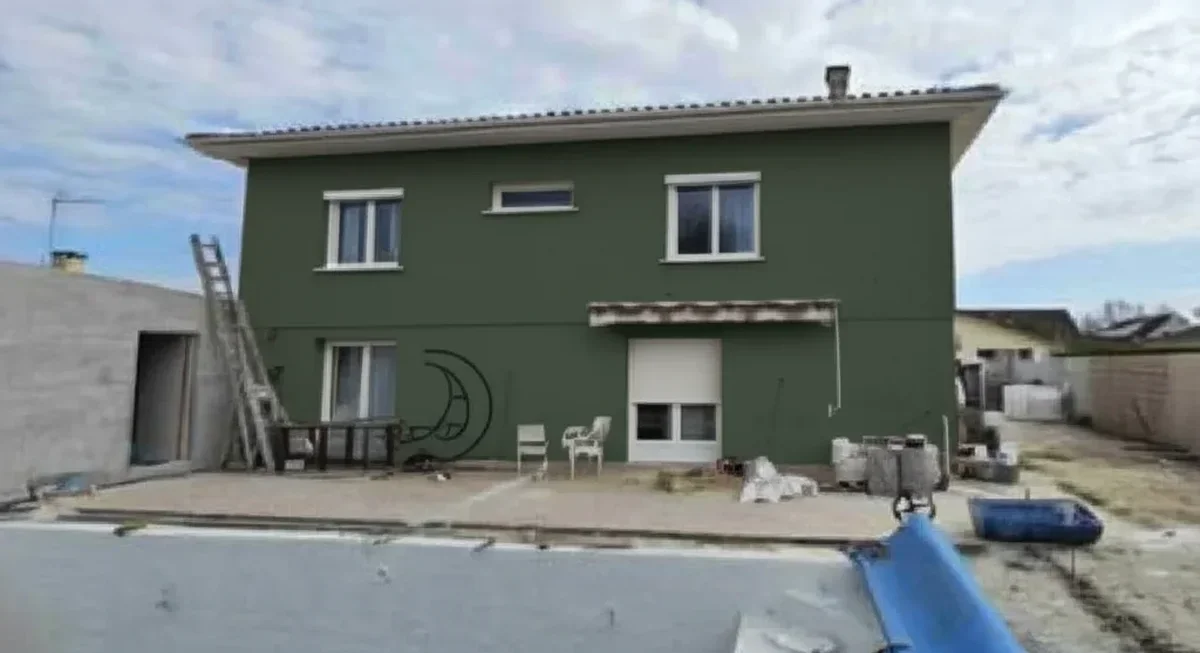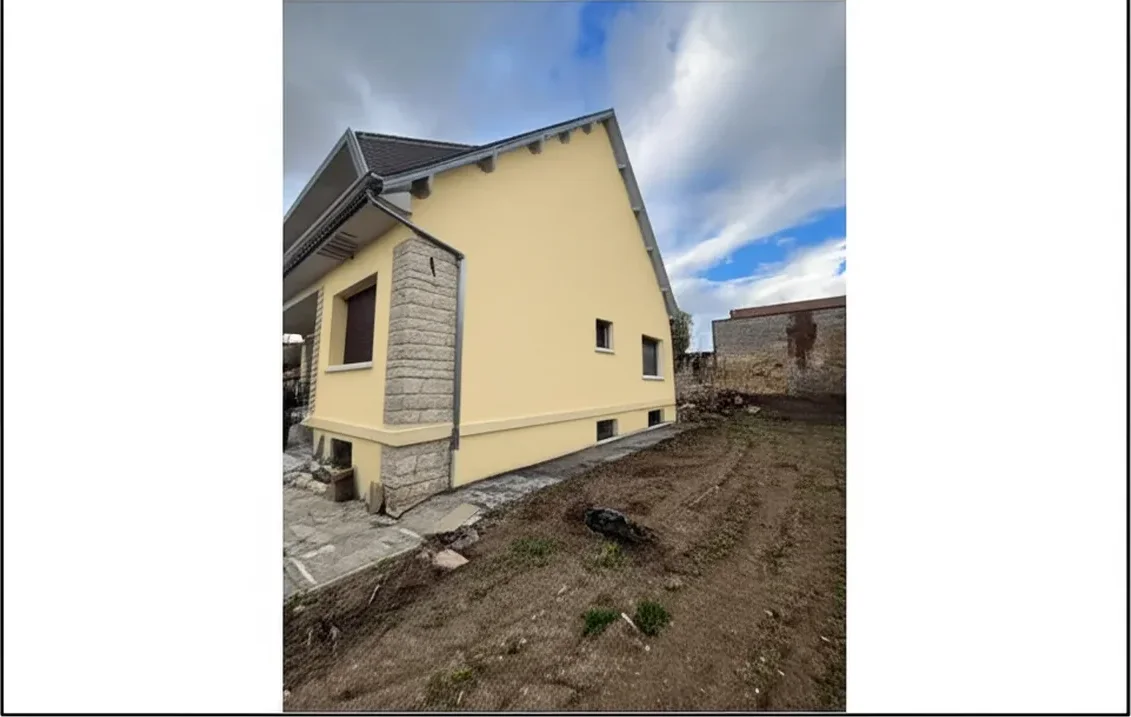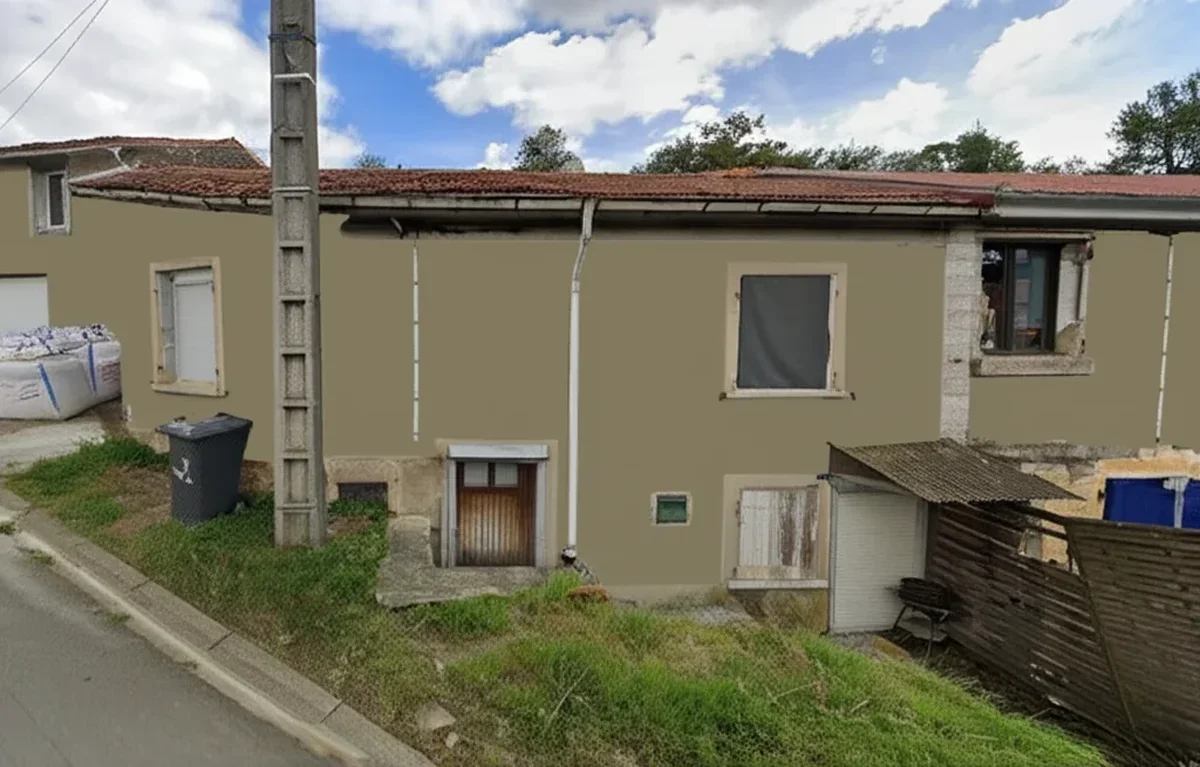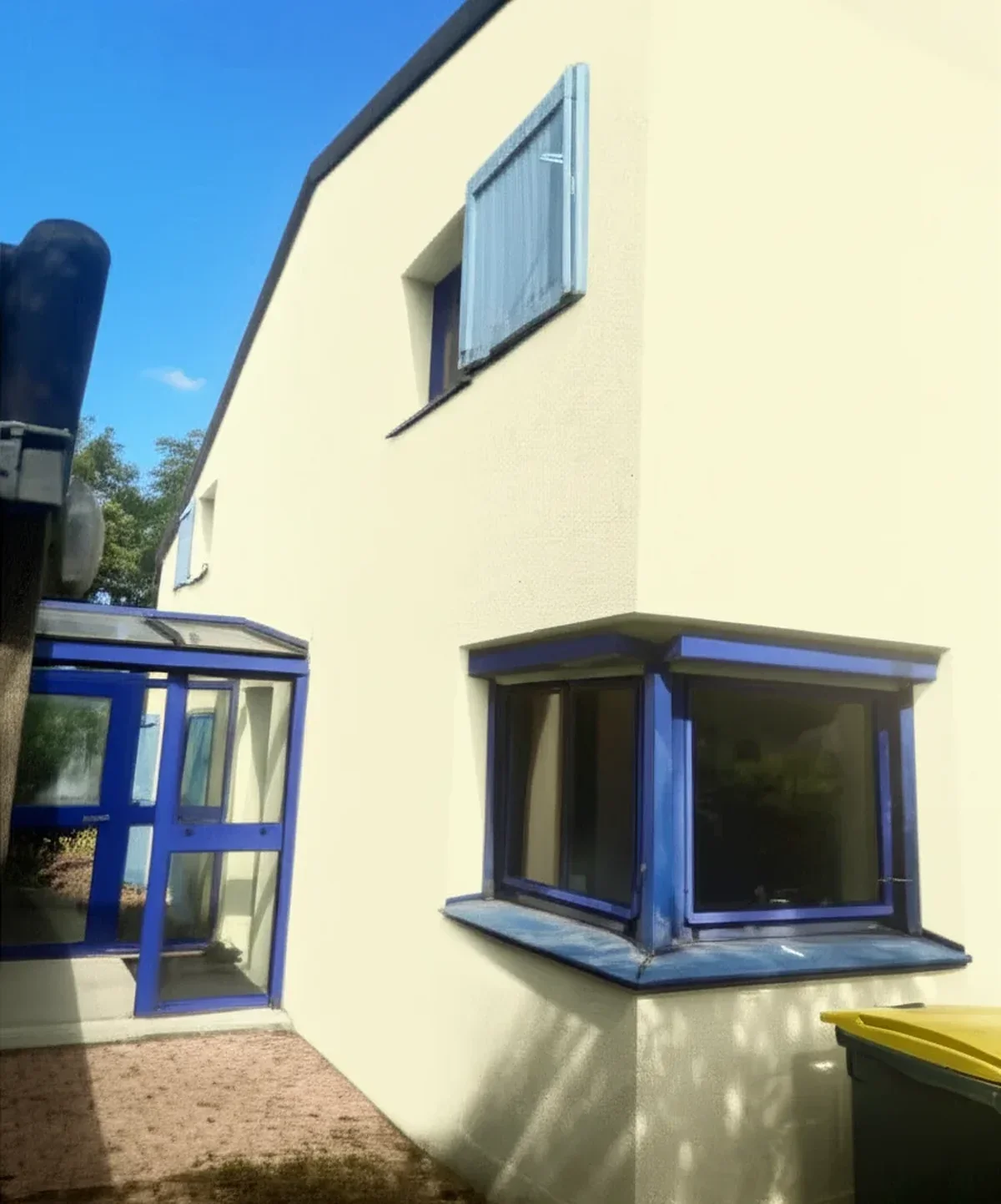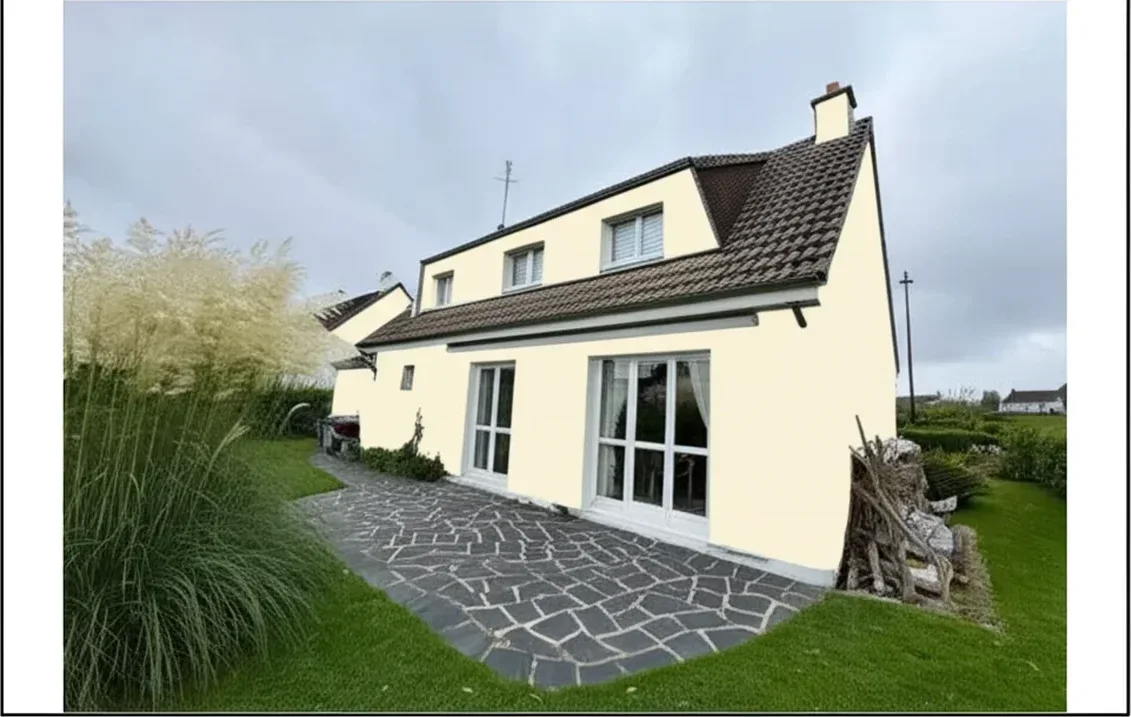
Try it on your house

Painting brick is one of the most permanent decisions a homeowner can make on an exterior. Unlike vinyl or fiber cement, paint physically bonds into the porous surface of clay brick and mortar joints, making removal expensive ($8-$15/sqft chemical strip) and rarely fully reversible. Yet for tired 1970s ranches, painted brick can add 12% to resale value, while on a Federal-era historic home it can subtract 3-7%.
This guide walks through the real cost trade-offs (do nothing $0, paint $1.50-$4/sqft, mineral limewash $4-$5/sqft, silicate $6-$9/sqft), the moisture and freeze-thaw physics behind painted brick failure, and a full decision matrix covering condition, climate, HOA, and resale impact. Sources: Brick Industry Association (BIA), International Masonry Institute, Romabio and Keim technical data sheets.
Why painting brick is a one-way decision
Brick is a vapor-open material. Mortar joints and the brick body itself absorb and release moisture seasonally, a process masons call "breathing." Conventional acrylic and latex paints form a continuous polymer film on the surface that seals the brick against vapor exchange. Trapped moisture migrates behind the film, then freezes in winter and pushes the face of the brick off in flakes. This failure mode, called spalling, is irreversible: the clay surface is gone for good.
A 2024 BIA technical note documented spalling on roughly 18% of painted brick walls inspected in mid-Atlantic and Midwest climates within 8-12 years of painting. In the humid Southeast the same study found surface paint failure (peeling, blistering) on 31% of walls within 6 years. In dry Southwest climates (Phoenix, Albuquerque) the failure rate dropped to under 5%, because freeze-thaw cycling is minimal and ambient humidity stays low.
The breathable alternative: mineral limewash and silicate
A third breathable route keeps the brick looking like brick: a penetrating mineral stain that changes the color without a film. How it works, what it costs and which brick accepts it is covered in our guide to brick staining.
Mineral coatings work fundamentally differently. Romabio Classico Limewash ($4-$5/sqft installed) is slaked lime that chemically bonds with the calcium in mortar and brick through a process called petrification. It does not form a film; vapor passes through freely. Keim Soldalit ($6-$9/sqft installed) is a potassium silicate that mineralizes into the substrate. Both products preserve the breathing function of the wall and can be reduced or removed mechanically over time without chemical strippers.
The trade-off: limewash has a softer, more weathered look (intentional patina) and typically needs touch-ups every 10-15 years. Silicate looks more like a uniform painted finish and lasts 20-30 years. Neither product is sold at most big-box stores; you order direct or through a specialty distributor.
A subtle but important point: limewash and silicate cannot be applied over existing acrylic paint. The mineral chemistry needs to react with the substrate (calcium or silicate) to bond. If your brick is already painted, mineral coatings will sit on top as a thin film and peel within 1-2 seasons. The only path back to a breathable wall once paint is on is full chemical strip first. This is the second-strongest reason (after spalling risk) to think hard before applying that first coat of acrylic.
Upload your brick photo - see paint, limewash, and natural side by side in 30 seconds
Cost comparison: do nothing vs paint vs limewash
Pricing reflects 2026 contractor rates for a typical 2,000 sqft single-story brick exterior in the continental US. Materials are roughly 25-35% of the installed price; the rest is prep, scaffolding, and labor.
| Option | Cost / sqft | 2,000 sqft total | Lifespan | Reversible? |
|---|---|---|---|---|
| Leave natural (clean only) | $0.30-$0.80 | $600-$1,600 | Indefinite | N/A |
| Acrylic / latex paint | $1.50-$4.00 | $3,000-$8,000 | 7-15 years | Difficult ($8-$15/sqft) |
| Romabio Classico Limewash | $4.00-$5.00 | $8,000-$10,000 | 10-15 years | Yes (mechanical / pressure wash) |
| Keim Soldalit silicate | $6.00-$9.00 | $12,000-$18,000 | 20-30 years | Partial (mineralized into brick) |
Try it on your house
No photo? Try a sample
The "do nothing" option is rarely truly free: brick walls benefit from periodic cleaning (soft wash, no high-pressure) and occasional tuckpointing of failed mortar joints ($8-$20/linear foot every 25-50 years). Both are dramatically cheaper than any coating program.
One factor deserves its own page: which white, and by which system. Acme Brick excludes from its guarantee any brick painted outside Brick Industry Association guidance and recommends mineral-based paints only for exterior masonry. Our guide to a white painted brick house goes through the three systems and the whites that hold up.
Decision matrix: 8 factors to weigh
Use this matrix as a checklist before committing. If you score 4 or more "Leave Natural" rows, the heritage option is almost certainly correct. Four or more "Paint" rows, and the resale and aesthetic case is on your side. A mix? Limewash is usually the right compromise.
| Factor | Leave Natural | Limewash | Paint |
|---|---|---|---|
| Brick condition | Sound, no spalling | Minor staining, mismatched repairs | Dated color, uniform look needed |
| Home age / style | Pre-1940 Federal, Georgian, Tudor | 1940-1970 Colonial, Cape Cod | 1970s-1990s ranch, builder-grade |
| Regional climate | Humid Southeast, freeze-thaw Northeast | Mid-Atlantic, Midwest moderate | Dry Southwest (AZ, NM, NV) |
| HOA / historic district | Strict historic review board | HOA allows muted finishes | No restrictions |
| Neighborhood norm | Block is mostly natural brick | Mixed natural / muted painted | Most neighbors painted |
| Resale impact | +0 to +5% on heritage homes | +5 to +10% modern refresh | +12% on tired ranch / -3 to -7% on Federal |
| Long-term maintenance | Tuckpointing every 25-50 yrs | Refresh every 10-15 yrs | Repaint every 7-15 yrs |
| Reversibility | Always reversible | Largely reversible | Removal $8-$15/sqft chemical strip |
| Up-front budget | $0-$1,600 (cleaning) | $8,000-$10,000 | $3,000-$8,000 |
Climate-specific guidance
Humid Southeast (FL, GA, AL, MS, LA, SC)
Year-round high relative humidity drives moisture into masonry from both sides. Avoid film-forming acrylic paint on solid brick walls in this region. If the visual change is non-negotiable, use Romabio Classico Limewash or Keim Soldalit: both maintain vapor permeability above 35 perms, well above the 10-perm minimum recommended by BIA for southeastern climates. Painted brick failure rates in the Gulf states run 25-35% within 6 years.
Freeze-thaw Northeast and Midwest (NY, PA, OH, IL, MI, MA)
The most damaging climate for painted brick. Daily freeze-thaw cycling between November and March pushes trapped moisture against the paint film, then expands it on freeze. Spalling is the dominant failure mode, often requiring brick replacement at $25-$45/sqft once it starts. Strongly favor leave-natural or limewash. If you must paint, use Sherwin-Williams Loxon XP, an elastomeric formulated for masonry breathability (perm rating 12-15).
Dry Southwest (AZ, NM, NV, southern CA)
The only US region where conventional acrylic paint on brick performs reliably long-term. Low humidity and minimal freeze-thaw cycling reduce moisture-driven failures to under 5% over 10 years. Standard Benjamin Moore Aura Exterior Masonry or SW Loxon are appropriate choices. Even here, BIA still recommends an alkali-resistant primer and confirmation that the brick is fully cured (homes built within the past 12 months should not be painted).
Brand recommendations 2026
Five products dominate the brick coating segment for residential exteriors. Each is optimized for a specific use case.
- Benjamin Moore Aura Exterior Masonry ($75-$95/gallon): premium acrylic with proprietary Color Lock technology. Best for dry climates, fully cured brick, and homeowners who want the widest color range.
- Sherwin-Williams Loxon XP ($65-$85/gallon): elastomeric with 1/16" crack bridging and the highest perm rating in the SW catalog. Best compromise if film-forming paint is required in mid-Atlantic or Midwest climates.
- Behr Marquee Masonry (the Home Depot shelf option): the mass-market pick, and the one most homeowners can actually start with on a Saturday. It is a film-forming acrylic like Loxon XP and Aura, so on sound, fully cured brick it is a legitimate choice rather than a downgrade; what shortens its life is skipped prep, not the can. Our painted brick guide sets out where Behr masonry paint sits against mineral paint and lime wash, with the prep and priming sequence each of the three systems needs.
- Romabio Classico Limewash ($90-$110/gallon, covers ~150 sqft): true slaked lime, vapor-open, mineral bond. Best for soft heritage look on Colonial, Cape Cod, and farmhouse styles. Also available as Romabio Avorio (mineral paint) for a more uniform finish.
- Keim Soldalit ($120-$150/gallon, covers ~120 sqft): potassium silicate, 20-30 year service life, mineralizes into substrate. Best premium choice when budget allows and a paint-like uniform finish is desired without film-forming chemistry.
If you regret painting: removal cost reality
Paint removal from brick is a specialty trade. Three methods exist, none of them cheap:
- Chemical stripping ($8-$15/sqft): peel-off poultice systems like Peel Away or Dumond Smart Strip applied in two-three coats. Best for thin coatings on sound brick. Roughly 75-85% recovery of original face.
- Soda or media blasting ($6-$12/sqft): aggressive, risks damaging brick face. BIA does not recommend abrasive blasting on residential brick because it strips the fired clay glaze and dramatically increases water absorption.
- Mechanical / steam combo ($10-$18/sqft): low-pressure steam plus hand scraping. Slowest but safest for historic homes.
For a 2,000 sqft brick exterior, full removal runs $16,000-$36,000 - often more than the original paint job and the new coating combined. This is the strongest argument for the visualizer-first approach: see the painted result before the brush touches the wall.
Even after a successful strip, the brick is rarely returned to its original appearance. Pigment from the paint penetrates 1-3 millimeters into porous brick and stains the face permanently. Most homeowners who go through removal end up applying limewash anyway to even out the residual ghosting. Plan for the visualizer test, the climate audit, and a frank conversation with your local realtor before signing any painting contract on natural brick.
Quick decision shortcut
If you only have two minutes to decide, use these three rules of thumb. They reflect the consensus of BIA technical staff and historic preservation consultants we surveyed for this guide.
- Pre-1940 home in a historic district: leave natural. The resale penalty alone (3-7%) outweighs any aesthetic gain, and historic review boards rarely approve film-forming paint.
- 1970s-1990s ranch with sound but dated brick: paint or limewash. Resale gain (10-12%) is real, and the brick is typically a hard-fired body that handles a coating with low spalling risk.
- Anything in between, or any wall in a freeze-thaw or humid Southeast climate: limewash. It is the only option that delivers an aesthetic refresh without sealing the wall, and it is the easiest to reverse if you change your mind.
100+ exterior colors - BM Aura, SW Loxon, Romabio limewash tones
Frequently asked questions
Does painting brick really lower resale value?
It depends entirely on the style and neighborhood. On Federal, Georgian, and Tudor homes built before 1940, painted brick subtracts 3-7% from appraised value because heritage buyers actively seek original masonry. On a 1970s-1990s builder ranch with dated red brick, a tasteful white or warm gray can add 10-12%. The single biggest predictor is the rest of the block: if neighbors are mostly natural brick, painted yours stands out negatively.
Is limewash actually breathable, or is that marketing?
It is genuinely breathable. Romabio Classico Limewash tests at 35-45 perms (ASTM E96), versus 5-10 perms for typical acrylic exterior paint. The chemistry is real: slaked lime (calcium hydroxide) reacts with atmospheric CO2 to form calcium carbonate, the same mineral as the original mortar and limestone. It bonds chemically, not mechanically, and does not form a continuous film. Keim Soldalit silicate works similarly, mineralizing into the brick rather than coating it.
What if my HOA requires painted brick but I want to preserve it?
Submit limewash as your alternative. Most HOAs wrote their painted-brick rules before mineral coatings were widely available, and the boards typically approve limewash once shown sample boards and the technical case (vapor permeability, no film, lower long-term maintenance). Bring a printed Romabio or Keim spec sheet to the architectural review meeting. If the HOA explicitly requires "uniform painted appearance," Romabio Avorio (mineral paint, not limewash) gives a closer-to-painted look while keeping breathability.
How do I know if my brick is too damaged to paint?
Inspect for spalling (face flaking off), efflorescence (white salt deposits), and failed mortar joints. If any wall shows more than 10% spalled face or recurring efflorescence, the brick is actively wet inside - painting will accelerate failure. Tuckpointing and a year of monitoring should come first. Walls that are merely stained or color-mismatched from past repairs are good candidates for limewash, which evens out the look without sealing in moisture.
The painted-brick decision is permanent enough that it deserves a visualizer test, a climate check, and a resale conversation with a local agent before you hire a painter. Try painted, limewashed, and natural side by side on your actual photo with our free AI paint visualizer. Sources: Brick Industry Association, International Masonry Institute, Romabio and Keim technical data sheets, ASTM E96.
Trademarks mentioned (Sherwin-Williams, Benjamin Moore, Behr, Caparol, Brillux, Sto, Alpina, Valspar, PPG, Glidden, Dulux, Crown Trade, Sandtex, Farrow & Ball, Johnstone's, Leyland) are property of their respective owners. FacadeColorizer is independent and not affiliated with any of them. Nominative fair use under Lanham Act §1125.