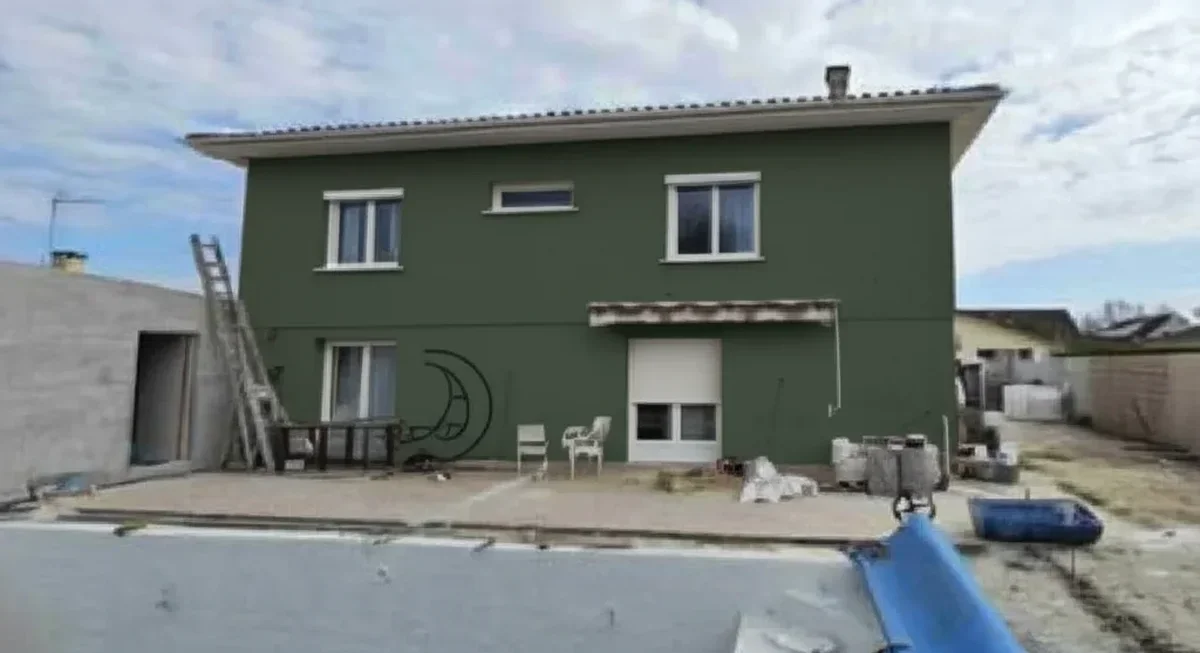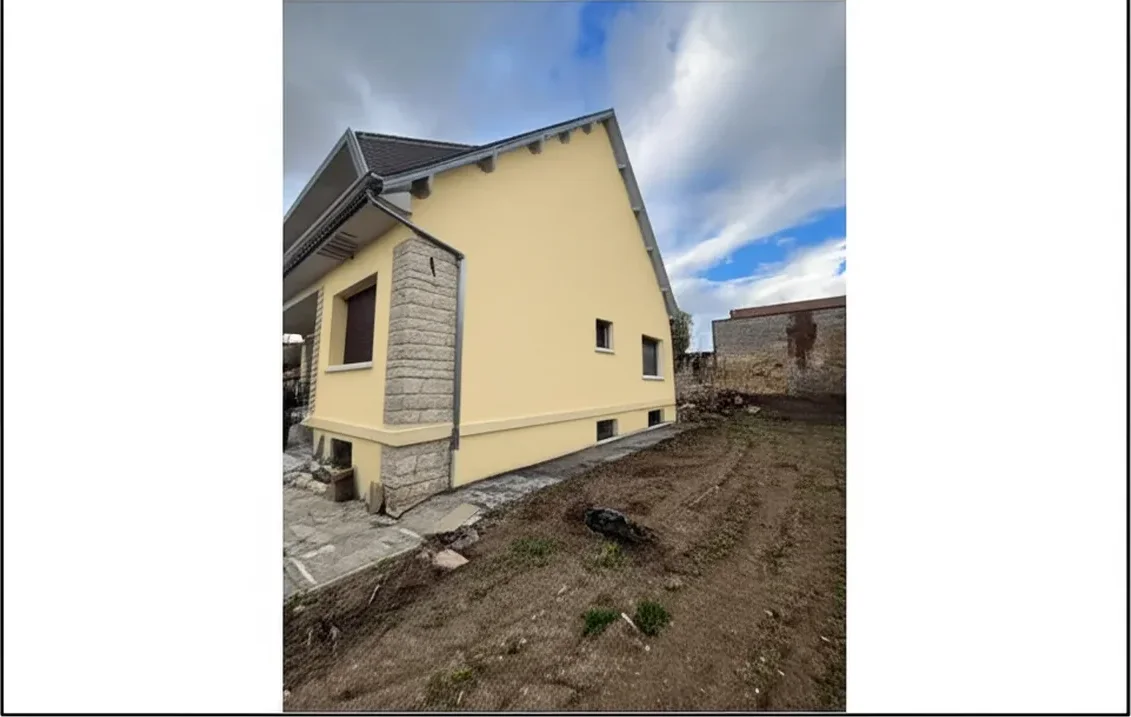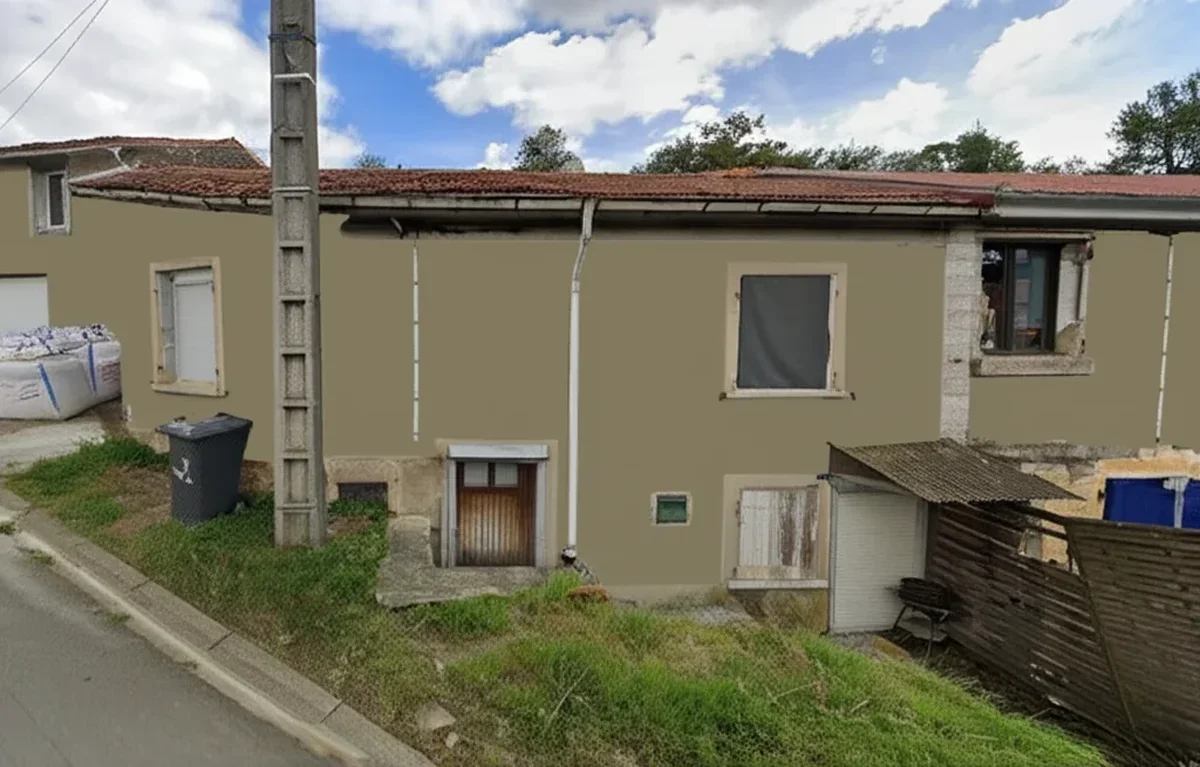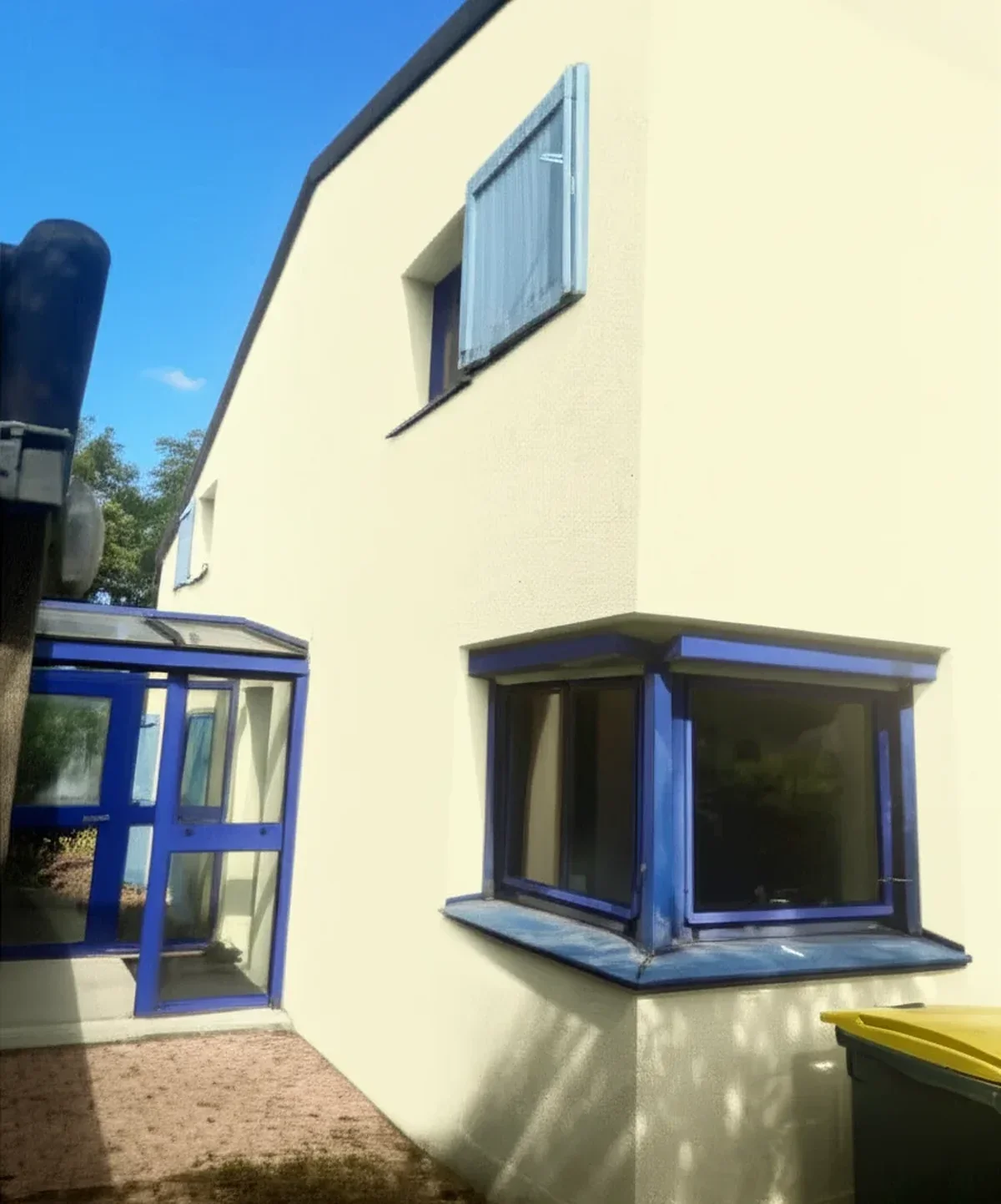
Try it on your house

Painting brick house white is the single most-searched exterior refresh on Pinterest in 2026, and the painted brick home look has carried major momentum into spring. The reason is simple: a tired 1970s red-brick ranch can become a $12K-resale-bump white-painted brick beauty in two weekends, with paint as the only variable.
This complete guide covers the yes/no decision (when to paint, when to walk away), the full step-by-step painting process, the top 10 painted brick colors for 2026 (Pure White, Iron Ore, Alabaster, and seven more), the chemistry of mineral paint vs masonry paint vs lime wash, real before/after case studies, $3-$7/sqft cost reality, and the 8 questions homeowners ask us most often. Sources: Brick Industry Association (BIA) technical notes, Romabio and Keim spec sheets, our internal visualizer dataset. A separate guide covers the option this page leaves aside, brick staining, which changes the color of the brick without any film.
Upload your photo, see white, black, gray, and lime wash on your actual brick in 30 seconds
1. When to paint brick: the honest yes/no decision
Painting brick is permanent. Acrylic and latex paint bonds physically into the porous clay and mortar, and full chemical removal runs $8-$15/sqft after the fact. Before you commit, use these six tests. If you get four or more green lights, painting is the right call. Three or fewer, leave the brick alone or try lime wash.
- Home age and style: green light for 1970s-1990s builder ranch, split-level, or non-historic Colonial. Red light for pre-1940 Federal, Georgian, Tudor, or any home in a designated historic district. Heritage brick subtracts 3-7% from appraised value when painted.
- Brick condition: green light if walls are sound, no spalling (face flaking), no efflorescence (white salt deposits), and mortar joints intact. Red light if more than 10% of any wall shows spalled or wet brick. Painted wet brick fails within 2-3 winters.
- Brick aesthetic: green light for orange-pink 1970s machine brick, mismatched repair patches, or salmon brick most buyers dislike. Red light for hand-laid clinker brick, Chicago common, or any wall with desirable patina and consistent tone.
- Climate: green light for dry Southwest (AZ, NM, NV, southern CA). Yellow light for mid-Atlantic and Midwest moderate climates. Red light for humid Southeast (FL, GA, AL) and freeze-thaw Northeast unless you switch to lime wash or silicate.
- Neighborhood norm: green light if 30% or more of nearby homes have painted brick. Red light if your block is mostly natural brick and you would be the outlier.
- HOA and review board: green light if HOA permits exterior color changes. Red light for historic review boards that require Munsell-matched mortar; many explicitly forbid film-forming paint on brick.
A common mistake: homeowners decide based on Pinterest mood boards without checking their own brick. The visualizer test removes that risk. Upload a photo of your actual elevation, drop in Sherwin-Williams Pure White or Alabaster, and see whether the painted look reads as upgrade or as cover-up before any contractor estimate. For the full paint-or-preserve framework, see our detailed brick house paint vs natural decision guide.
Free AI visualizer, 30-second turnaround
If the answer is yes, the sheen is nearly decided for you. Brick takes a flat masonry coating, both because the texture would fight a reflective film and because a tighter, glossier film breathes less on a wall that can carry moisture from the inside out. The full by-material reasoning is in our exterior paint finish guide.
2. Step-by-step: how to paint brick exterior
The right process is the difference between a 12-year painted brick exterior and one peeling in season three. Skip any of these eight steps and most paint warranties become void. The full sequence below assumes a 2,000 sqft ranch in moderate weather.
Step 1: Inspect and document
Walk every elevation. Photograph any spalling, mortar gaps wider than 1/8 inch, efflorescence (white salt deposits), and previous patch repairs. Note them on a printed elevation sketch. Anything you find here becomes a repair line item before paint touches the wall.
Step 2: Repair mortar (tuckpoint)
Failed mortar joints get raked out 3/4 inch deep and refilled with Type N mortar matched to color. Budget $8-$20 per linear foot. Let mortar cure 28 days minimum before primer. Painting over fresh mortar traps moisture and almost guarantees efflorescence bleeding through the topcoat within a year.
Step 3: Clean (soft wash only)
Pressure washing brick at 3,000 PSI strips the fired clay glaze and creates micro-fractures that absorb water for years. Use a soft wash: 1,000-1,500 PSI with a 25-degree tip held 18 inches off the wall, plus a masonry-safe surfactant. Let the wall dry 48-72 hours before any primer. A moisture meter should read under 12% on the surface.
Step 4: Treat efflorescence
If white salt deposits are present, dry-brush them off, then neutralize with a phosphoric acid masonry cleaner like Prosoco SureKlean Vana Trol diluted per label. Rinse thoroughly. Painting over active efflorescence is the number-one cause of premature paint failure on residential brick, per BIA inspection data.
Step 5: Prime with an alkali-resistant masonry primer
New or restored brick has surface pH of 11-13 (highly alkaline). Standard primers saponify and peel. Use Sherwin-Williams Loxon Masonry Primer ($55-$70/gallon), Loxon Conditioner for chalky surfaces, or Benjamin Moore Super Spec HP Masonry Sealer. Two coats on south and west elevations. Allow 12-24 hours cure between coats.
Step 6: Apply finish coat (acrylic or elastomeric)
Two finish coats of Sherwin-Williams Loxon XP, SW Resilience, Benjamin Moore Aura Exterior Masonry, or Behr Marquee Masonry. Spray-and-back-roll is the BIA-preferred method: airless sprayer at 2,500 PSI delivers paint into mortar joints, then a thick-nap roller (3/4 inch) presses the film into the brick face. Skipping the back-roll leaves pinholes in joints where water enters.
Step 7: Caulk transitions
Brick-to-window, brick-to-trim, and brick-to-siding transitions get caulked with a paintable urethane like Sika Sikaflex 1a, then touched up to match. Standard silicone caulks reject paint and stay shiny.
Step 8: Cure and inspect
Acrylic exterior paint reaches full cure at 14-30 days. Avoid pressure washing or aggressive cleaning during that window. Inspect at 90 days and again at the one-year mark for any pinhole bleeding or peeling. Catch failures early and most are spot-repairable for under $200.
A weekend DIY job on a 2,000 sqft ranch is realistically a 4-6 day project for a homeowner with sprayer experience, or 2-3 days for a 3-person crew. Pros charge $4,500-$10,000 for the full sequence above. Cutting steps to fit a weekend is the surest way to repaint in five years instead of twelve.
Free, no signup, 100+ Sherwin-Williams, Benjamin Moore, and Behr exterior colors
If the color you have in mind is white, read our dedicated guide to a white painted brick house before this list: white is the one color where the choice between acrylic paint, limewash and mineral paint changes both the look and the maintenance, and where the mortar joints decide which white works.
3. Top 10 painted brick colors 2026
These are the ten colors that come up again and again on painted brick, from the whites that dominate the category to the charcoals that have joined them. We list LRV (Light Reflectance Value), undertone, and the home style that works best with each; the LRV figures for the Sherwin-Williams colors are the manufacturer's published values (Pure White 84, Alabaster 82, Repose Gray 58, Urbane Bronze 8, Iron Ore 6, Tricorn Black 3).
| Rank | Color | LRV | Undertone | Best for |
|---|---|---|---|---|
| 1 | SW Pure White (SW 7005) | 84 | Neutral, hint of warm | Modern farmhouse, transitional ranch |
| 2 | SW Alabaster (SW 7008) | 82 | Soft creamy white | Colonial, Cape Cod, traditional |
| 3 | SW Iron Ore (SW 7069) | 6 | Soft black, slight brown | Modern bold, contemporary |
| 4 | BM Swiss Coffee (OC-45) | 83 | Warm cream | Farmhouse, traditional ranch |
| 5 | SW Repose Gray (SW 7015) | 58 | Greige, soft warm | Transitional, mid-century |
| 6 | BM White Dove (OC-17) | 85 | Soft warm white | Tudor, English cottage |
| 7 | SW Tricorn Black (SW 6258) | 3 | True deep black | Modern minimalist, urban |
| 8 | BM Revere Pewter (HC-172) | 55 | Warm gray, hint of green | Colonial, suburban ranch |
| 9 | Romabio Avorio Bianco | 86 | Soft chalky white | European-inspired, Italian villa |
| 10 | SW Urbane Bronze (SW 7048) | 8 | Dark warm bronze-brown | Craftsman, mountain modern |
Try it on your house
No photo? Try a sample
White remains the default on painted brick, and in our own facade barometer half of all customers test at least one white or off-white; the deep charcoals, Iron Ore first among them, are the colors that have joined it on modern and transitional houses. The trend is visible: see our analysis at white house black trim bold 2026 for full color pairing matrices.
For deeper dives on the two leaders, our standalone guides explain undertone behavior at different times of day and architectural fit: SW Pure White exterior complete guide and SW Alabaster exterior complete guide.
4. Mineral paint vs masonry paint vs lime wash
Three product families dominate painted-brick chemistry in 2026. They look similar in photos but behave very differently on the wall.
| Property | Masonry paint (acrylic) | Mineral paint (silicate) | Lime wash |
|---|---|---|---|
| Examples | SW Loxon XP, BM Aura, Behr Marquee | Keim Soldalit, Romabio Bianco Calce | Romabio Classico Limewash |
| Bonding mechanism | Film on surface | Mineralizes into substrate | Chemical bond (petrification) |
| Vapor permeability | 5-12 perms | 25-35 perms | 35-45 perms |
| Lifespan | 7-15 years | 20-30 years | 10-15 years (intentional patina) |
| Installed cost | $3-$5/sqft | $6-$9/sqft | $4-$5/sqft |
| Look | Uniform painted finish | Matte mineral, looks painted | Soft, variegated, intentional patina |
| Reversibility | Difficult, $8-$15/sqft strip | Partial, mineralizes into brick | Easy, mechanical or pressure wash |
| Climate fit | Dry Southwest best | All US climates | All US climates, especially humid Southeast |
Masonry paint is the default homeowner choice because it is sold at every Sherwin-Williams, Benjamin Moore, and Home Depot. Mineral paint and lime wash require ordering through specialty distributors. For most ranch-style homes in dry climates, masonry paint delivers the look at the lowest cost. For pre-1970 homes, freeze-thaw climates, or any wall where breathability matters, lime wash or silicate is worth the premium.
Side-by-side AI preview of all three coating chemistries
For a deeper dive on the Sherwin-Williams Loxon line specifically, our forthcoming SW Loxon stucco paint guide covers technical specs, application methods, and warranty fine print. The same chemistry applies to brick. Likewise, the Behr masonry stucco brick paint review compares Behr Marquee Masonry side by side with Loxon XP.
5. Painted brick before and after: 4 case studies
Case 1: 1978 Atlanta ranch, orange brick to Pure White
Original: typical 1970s salmon-orange machine brick, mismatched repair patch on the south wall. Owner uploaded photo, tested 14 colors in our visualizer, settled on SW Pure White over Loxon Masonry Primer. Job ran 3 days with a 3-person crew, $5,800 installed for 1,850 sqft. Comparable sale on the block: $12,500 above appraised value after listing. Color worked because the orange-pink undertone of the brick disappeared completely under a true neutral white.
Case 2: 1965 Cincinnati split-level, red brick to Iron Ore
Bold move: black-brown paint on the entire facade. Owner first ruled it out, then tested SW Iron Ore against the brick photo and reversed the decision in 10 minutes. Two coats of Loxon XP over alkali-resistant primer, $6,400 for 2,100 sqft. Trim painted SW Pure White for high contrast. Photo appeared on three Cincinnati real estate accounts within two weeks of completion.
Case 3: 1972 Phoenix tract home, red brick to Alabaster
Bone-dry desert climate makes acrylic paint safe long-term. Owner used Benjamin Moore Aura Exterior Masonry in Alabaster, $7,200 for 2,400 sqft. Cool-pigment infrared-reflective formula kept south-wall surface temperature 14F lower than the original red brick on a 108F day, measured with an infrared thermometer. AC bill dropped 9% the following August versus the prior year.
Case 4: 1948 Charleston Federal, brick preserved with lime wash
Historic district forbade film-forming paint. Owner applied Romabio Classico Limewash in Bianco Notte to even out 75 years of mismatched repair patches without sealing the wall. $9,400 for 1,700 sqft. Result: softer, slightly variegated finish that historic review board approved on first submission, and the wall remained vapor-permeable for the humid coastal climate.
All four homeowners ran their photos through our visualizer first. Three of them changed their color choice between the initial intent and the final pick. The fourth (Case 2) made a 180-degree pivot from light gray to dark Iron Ore. Visualizer-first thinking saved each of them between $0 and $14,000 in avoided repaint costs.
Free, no credit card, real photo simulations
6. Cost: $3-$7/sqft installed, line-item breakdown
Professional painted-brick projects range from $3/sqft on simple single-story ranches with sound brick to $7/sqft for two-story homes with extensive prep, scaffolding, or premium coatings. The line items below are the cost components a painted-brick quote is built from; the ranges are the ones published by national cost guides for masonry painting, and the way to read them is in the notes under the table.
| Line item | Cost range | % of total |
|---|---|---|
| Inspection, soft wash, dry time | $400-$800 | 8-12% |
| Tuckpointing failed mortar joints | $300-$1,500 | 6-18% |
| Efflorescence treatment | $150-$400 | 3-5% |
| Alkali-resistant primer (2 coats) | $600-$1,000 | 10-14% |
| Finish coat (2 coats acrylic) | $2,500-$5,500 | 45-65% |
| Caulking, trim, cleanup | $300-$600 | 5-8% |
| Total 2,000 sqft single-story | $4,250-$9,800 | 100% |
DIY can cut $1,500-$3,000 from the total if you already own a quality airless sprayer ($600-$1,200) and have one prior exterior project under your belt. First-time DIY on brick is harder than first-time DIY on wood siding because back-rolling the paint into joints is awkward and primer adhesion is unforgiving. For full cost benchmarks on every part of the exterior, see exterior house painting cost 2026.
Two-story homes add $1.50-$2.50/sqft for scaffolding or lift rental. Homes with extensive ornamental brick (corbels, dentils, recessed panels) add 15-25% to labor. Premium products like Benjamin Moore Aura Exterior Masonry or Romabio mineral coatings shift material costs up by $800-$1,800 over the budget tier.
Free preview, no credit card, all major exterior brands
For trim and color pairing budget alongside the brick repaint, see brick house trim paint ideas 2026 and the broader exterior house color combinations 2026 guide. For comparison with stucco coating economics, see stucco color options complete guide. If you are still weighing the two cladding types before painting either, our breakdown of how brick compares to stucco covers durability, upkeep, and resale side by side.
7. What the brick industry itself says before you paint
The reference document is Technical Note 6 from the Brick Industry Association, Changing the Appearance of Brick Masonry, revised in March 2025. Two of its warnings frame every idea on this page. On permanence: "paint can be very difficult to remove from brick masonry without causing damage, and painted exterior brickwork can require repainting on a regular basis depending on the type of paint". On the wall itself: "in most cases, deterioration of brick masonry is due to unaddressed moisture problems. Treatments can further compromise the brickwork if they trap moisture in the wall." That is why steps 1 to 4 above come before any color decision.
The note also draws the line that separates the coating families in section 4: mineral treatments such as limewash and silicate paint "penetrate the pores of the brickwork while maintaining the water vapor permeance", while acrylic latex "typically form[s] a film on the surface of brickwork, which can adversely affect the water vapor permeance". Manufacturers follow the same logic. Acme Brick's guidelines for painted brick state that "any brick painted in a manner that does not follow BIA guidance is excluded from the Limited Guarantee" and recommend "only mineral-based paints" for exterior masonry. If the brick is going white, our guide to a white painted brick house compares the three systems on exactly those criteria.
Sources and references
- Brick Industry Association, Technical Note 6, Changing the Appearance of Brick Masonry (March 2025), permanence, moisture, permeance and preparation guidance.
- Acme Brick, Technical Bulletin: Guidelines for Painted Brick, guarantee exclusion and mineral-paint recommendation.
- Sherwin-Williams, Iron Ore SW 7069, Repose Gray SW 7015 and Tricorn Black SW 6258, manufacturer color pages.
- Sherwin-Williams, Alabaster SW 7008, manufacturer color page.
Painted brick is a 7-to-30-year commitment depending on the coating you choose. The visualizer test is free and takes 30 seconds; the paint job costs $4,250-$9,800. Test before you commit with our free AI paint visualizer. Sources: Brick Industry Association technical notes, Romabio and Keim spec sheets, FacadeColorizer facade barometer (16,983 facade previews and 1,961 customers, July 2025 to June 2026).
Trademarks mentioned (Sherwin-Williams, Benjamin Moore, Behr, Caparol, Brillux, Sto, Alpina, Valspar, PPG, Glidden, Dulux, Crown Trade, Sandtex, Farrow & Ball, Johnstone's, Leyland) are property of their respective owners. FacadeColorizer is independent and not affiliated with any of them. Nominative fair use under Lanham Act §1125.