Try it on your house

Lime wash brick is the breathable, mottled, partially translucent finish that has displaced solid white paint as the top exterior refresh choice for older brick homes since 2022. Unlike acrylic paint, true limewash is slaked lime (calcium hydroxide) that chemically bonds with the calcium in mortar and brick. The result is a soft, weathered, Old-World look where the brick texture and color still read through the finish at roughly 20 to 40 percent.
This 2,700-word guide covers the chemistry, the three premium products (Romabio Classico, Vasari, Pure Original), step-by-step DIY application, white versus cream versus gray finish choices, maintenance cycles (every 5 to 7 years), real installed cost ($2 to $5 per square foot), and an eight-question FAQ.
Lime wash vs paint: the breathability difference
If you want a color change rather than the mottled white look, the breathable alternative is a mineral masonry stain, compared with limewash and paint in our brick staining guide.
The defining feature of lime wash is vapor permeability. Brick is a porous, breathing material: moisture enters and exits the wall daily through both faces and through mortar joints. Acrylic and latex exterior paints form a continuous polymer film that seals the wall (typical perm rating 5 to 10). Trapped moisture migrates behind the film, freezes in winter, and pushes the brick face off in flakes. This failure is called spalling and it is permanent.
Lime wash works on completely different chemistry. Romabio Classico Limewash tests at 35 to 45 perms per ASTM E96, four to nine times more breathable than acrylic. The slaked lime in the wash reacts with atmospheric CO2 to form calcium carbonate, the same mineral as natural limestone. It bonds chemically with the calcium in the mortar and the clay in the brick, not as a film on top. Vapor passes through freely both ways, so freeze-thaw cycling cannot trap moisture behind the finish. For the parent overview of all painted brick options, see our painted brick exterior complete guide, and for the broader paint versus natural decision the brick house paint vs natural decision guide.
The mottled, partially translucent finish
Lime wash never reads as solid color. By design it sits on the brick at 60 to 80 percent opacity, allowing the underlying red, brown, or buff brick to show through. Heavy brushwork in one direction emphasizes the brick texture; thinned washes pulled with a damp brush create the soft, cloudy effect that mimics 200-year-old European farmhouses. This is the look most homeowners are after when they search for "limewash exterior" or "white wash brick."
By contrast, German smear uses pre-mixed mortar (not lime) troweled over the brick at 30 to 60 percent coverage to mimic centuries of weathered mortar leaching out of the joints. It is thicker, three-dimensional, and far less reversible than a true lime wash. Many homeowners conflate the two, but a real German smear is a masonry job ($6 to $12 per square foot) while a lime wash is a brush-and-mist DIY job ($2 to $5 per square foot installed).
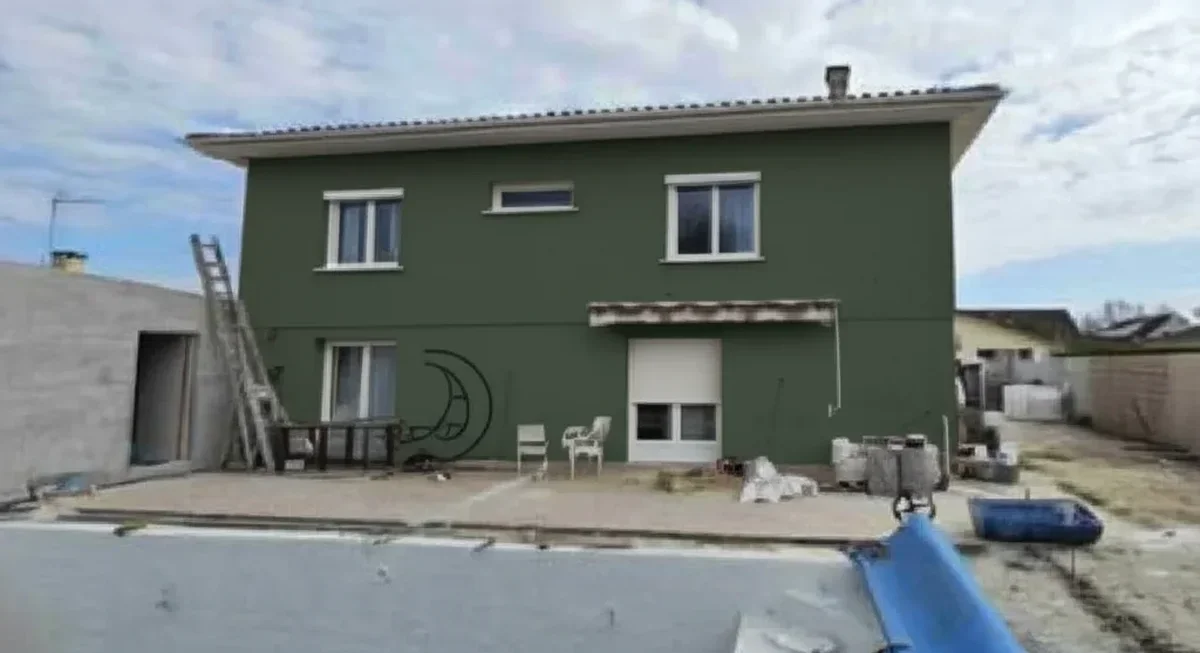
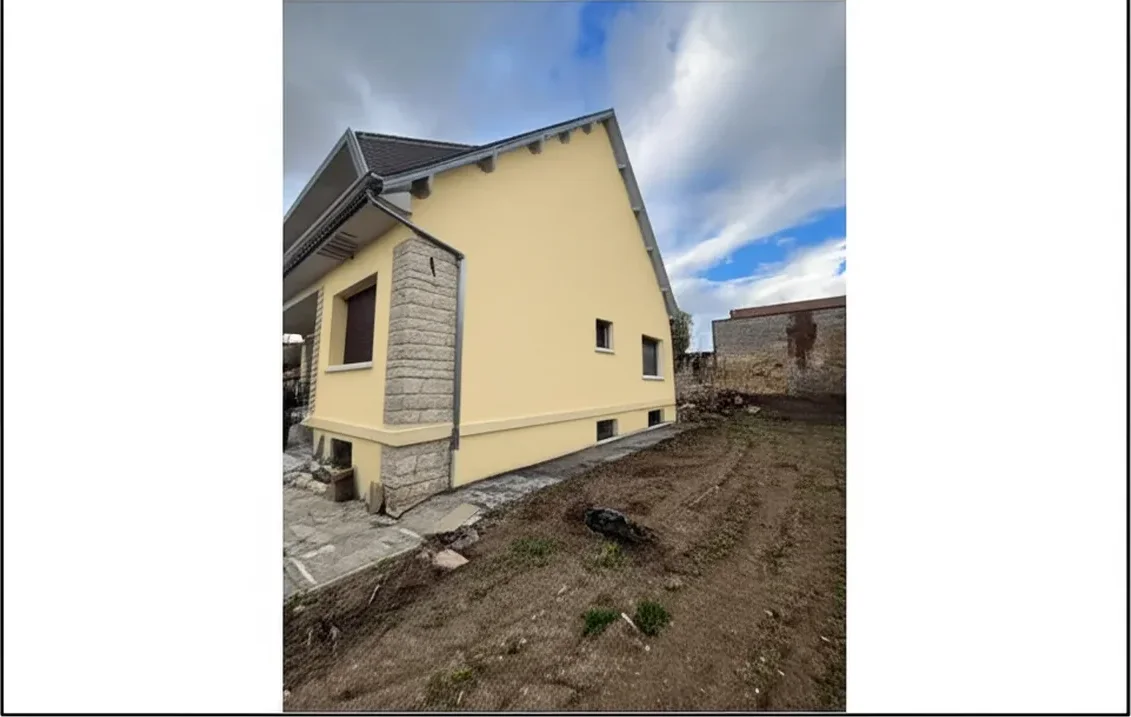
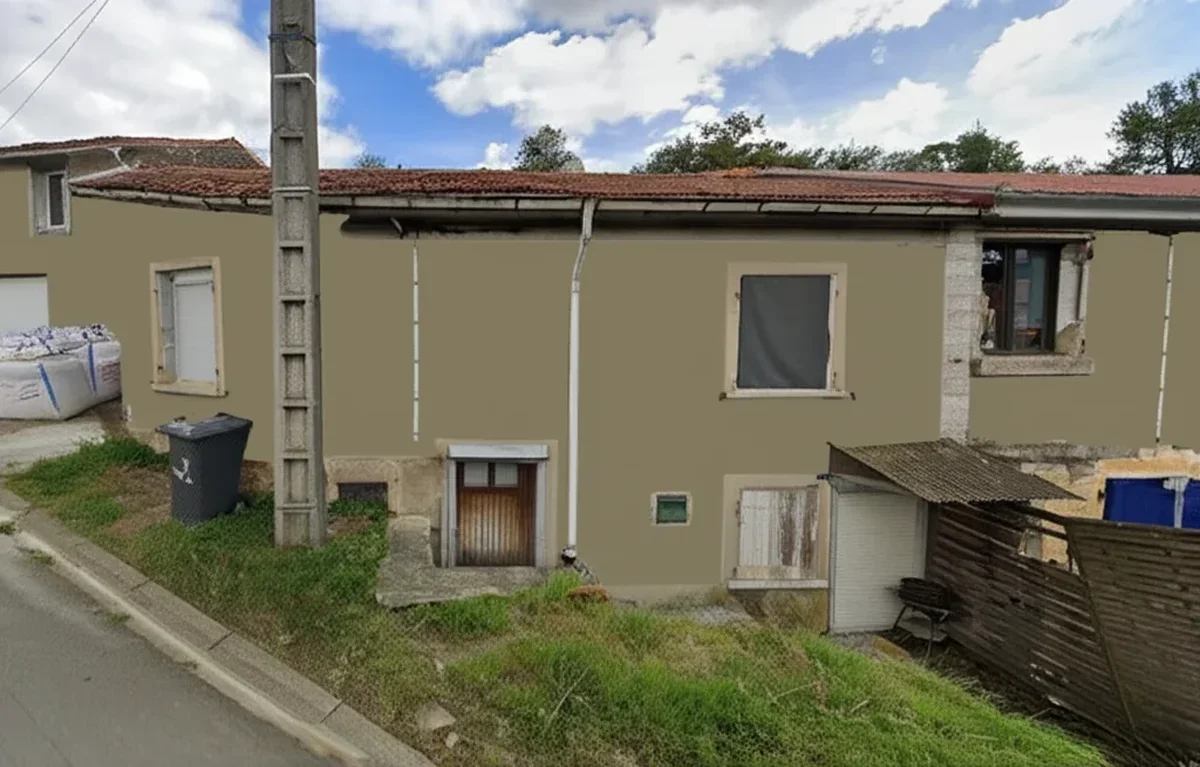
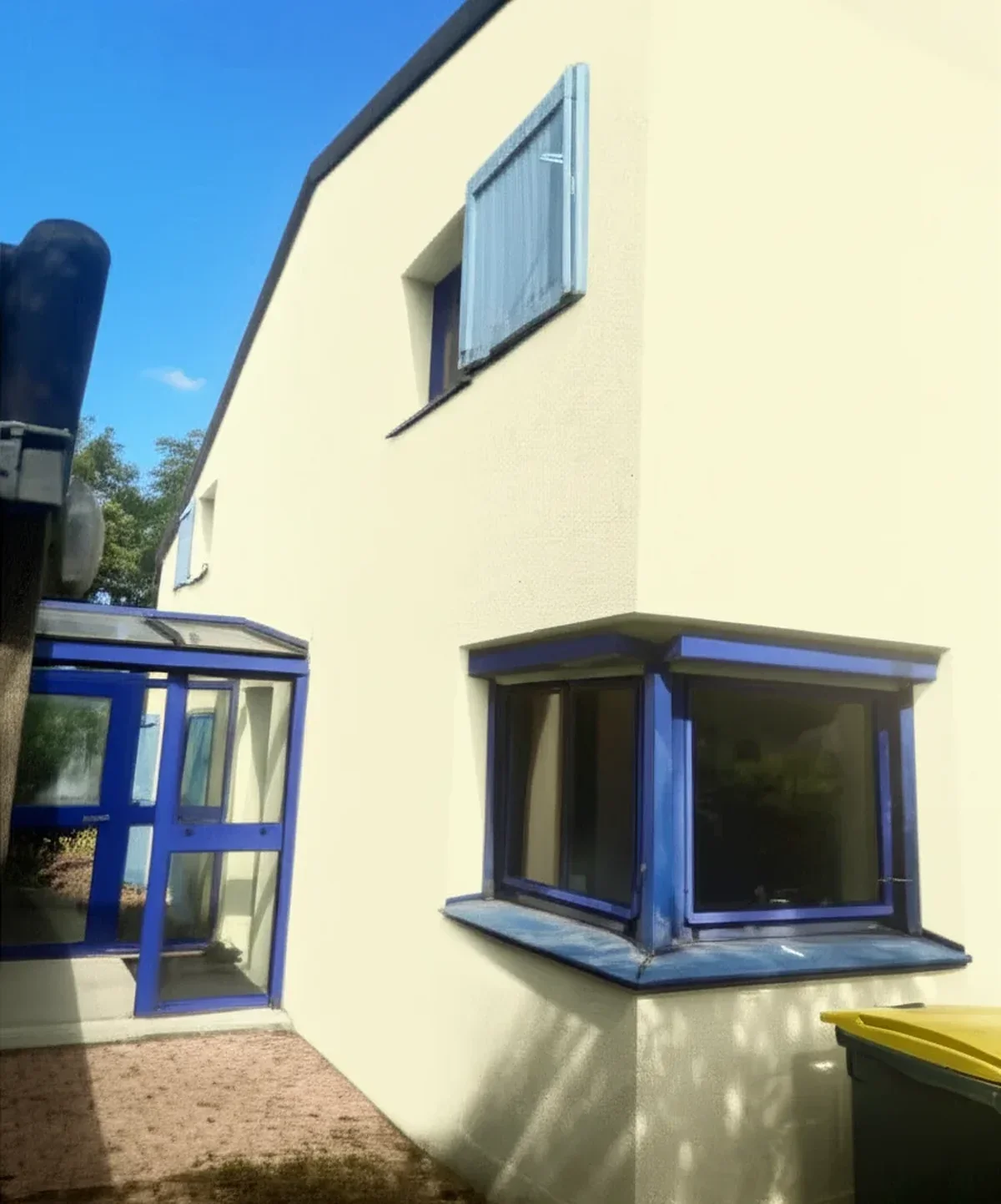
Upload your brick exterior, preview white, cream, and gray lime wash in 30 seconds
The three premium products: Romabio, Vasari, Pure Original
Three brands dominate the residential lime wash market in the United States. Each is true slaked lime (not "lime-look" acrylic), each is vapor-open, and each is sold direct or through a small dealer network rather than at big-box retailers.
Romabio Classico Limewash (Italy)
The best-known and easiest to source in North America. Romabio Classico is sold in 1-quart, 1-gallon, and 5-gallon pails through specialty masonry dealers and online direct from romabio.com. Coverage is roughly 150 square feet per gallon at one coat. Most projects use two coats to achieve the target opacity. Stock colors include Bianco White, Avorio White (warm), Riposo Beige, Nube Gray, Cardo Gray, and Fiore Pink. Custom tinting is available through authorized dealers. Price runs $90 to $110 per gallon, which works out to roughly $0.65 to $0.75 per square foot in material.
Romabio also markets Romabio Avorio Mineral Paint, which is mineral chemistry (silicate plus lime) for homeowners who want the breathability of lime wash with a more uniform painted appearance. It costs more ($120 to $145 per gallon) but covers in one to two coats. For visit information on the full product line, see romabio.com.
Vasari Lime Wash (Texas)
A Texas-based artisan brand specializing in Mediterranean and Tuscan finishes. Vasari sells lime wash, lime paint, and Venetian plaster through their own showroom network and online at vasari.com. Their lime wash is hand-stirred slaked lime with natural mineral pigments, sold in 1-gallon and 5-gallon containers at $95 to $120 per gallon. Coverage matches Romabio (about 150 square feet per gallon, two coats typical).
Vasari's strength is the warm Mediterranean palette: Bianco Latte (creamy white), Antico Bianco (aged ivory), Pietra Gray (warm stone gray), Terra Bruna (chocolate brown undertone). Designers favor Vasari for Spanish Colonial, Italianate, and Mediterranean Revival homes in California, Arizona, and the Gulf states. See our Mediterranean Revival exterior color guide for full palette context.
Pure Original (Netherlands)
Pure Original Marrakech Lime Paint and Classico Lime Paint are imported Dutch lime washes available through US designers and select online retailers (pureoriginal.com plus partner shops). The brand markets to the design-forward and renovation-focused customer; coverage and chemistry match Romabio and Vasari but the color library leans toward muted earth tones (Linseed, Smoked Pearl, Aged Limestone, Volcanic Ash). Price is the highest of the three at $135 to $180 per gallon, but tint accuracy and pigment depth are widely praised in design publications.
A practical comparison: Romabio is the entry choice for DIYers and easier to source; Vasari is the choice for Mediterranean and Spanish styles in the Sunbelt; Pure Original is the design-forward choice when budget and color depth matter more than logistics.
Most limewash projects on US houses are white or off-white. If that is your case, our guide to a white painted brick house puts limewash next to acrylic and mineral paint on breathability, aging and warranty, using the Brick Industry Association's own classification.
Step-by-step DIY application
Lime wash is one of the most DIY-friendly exterior finishes available. The product itself is non-toxic (just slaked lime and water), tools are basic (masonry brush, garden mister, drop cloths), and the forgiving mottled finish hides minor application errors. Plan two consecutive dry days with no rain in the forecast and temperatures between 50 and 85 degrees Fahrenheit.
Step 1: Clean the brick (Day 1 morning)
Lime wash bonds with clean masonry only. Pressure wash the brick at low pressure (1500 to 2000 PSI maximum, 25-degree tip, held 18 inches from the wall) to remove dirt, loose mortar, mildew, and any existing flaking. For heavy mildew, brush on a 1:4 bleach-to-water solution, dwell 10 minutes, rinse. Allow the wall to dry fully for 24 hours before applying lime wash. Trying to apply lime wash on damp or freshly cleaned wet brick will cause streaking and weak bonding.
Step 2: Mix the lime wash (Day 2 morning)
Romabio Classico ships pre-mixed; stir for 2 to 3 minutes with a paint mixer attachment on a drill, then thin with water at a 1:1 ratio (one part lime wash, one part clean water) in a 5-gallon bucket. Vasari and Pure Original ship at heavier consistency and typically thin at 1:1.5 to 1:2. The right viscosity is roughly that of skim milk: thin enough to brush easily, thick enough to leave color on the brick.
Step 3: Mist the wall
Use a garden hose with a fine mist nozzle to dampen the brick. The brick should be visibly wet (no puddles, no runoff) just before brushing on the lime wash. The dampness slows the absorption and gives you time to work the finish. Most pros mist a 4-by-8 foot section, brush on the wash, then move to the next section.
Step 4: Apply with a masonry brush
Use a 4-inch or 5-inch natural-bristle masonry brush (cheaper synthetics work but shed more). Load the brush moderately, brush the wash onto the misted brick in any direction. Work the wash into the mortar joints. For a more authentic European farmhouse look, use random multi-directional strokes (north, south, diagonal). For a tighter, more uniform finish, brush in one consistent direction. Leave intentional variation in opacity: heavier wash in some areas, thinner in others.
Step 5: Distress (optional, within 1 to 4 hours)
While the first coat is still slightly damp (within 1 to 4 hours of application), you can selectively remove lime wash with a damp sponge or wet brush to expose more of the underlying brick. This is the technique that creates the authentic "aged limewash" look. Remove more from raised brick edges and corners, less from recessed mortar joints. Once the wash fully dries (12 to 24 hours), removal becomes much harder.
Step 6: Apply second coat (Day 3 morning, optional)
One coat of lime wash typically reads as 60 to 70 percent opacity, which is the right level for the soft, brick-still-showing-through look. If you want closer to 80 to 90 percent opacity (more uniform white or cream), apply a second coat 24 hours after the first. Repeat the mist-brush-distress cycle. Do not exceed two coats; additional coats stop bonding and start sitting as a fragile surface layer.
Romabio, Vasari and Pure Original tones on your actual photo
Preview the finish before you brush the first coat
White vs cream vs gray: choosing the lime wash color
Three color families dominate residential lime wash projects. The right choice depends on brick undertone, architectural style, and regional norms. See our brick house trim paint ideas for matching trim recommendations.
White lime wash (47% of projects)
The classic Old-World finish. Romabio Bianco White, Vasari Bianco Latte, and Pure Original Aged Limestone are the top three picks in this family. White lime wash works best on red brick (the most common), warm orange-red brick, and salmon-toned brick. The contrast highlights the underlying brick texture and gives the strongest Provence/Tuscan farmhouse look. Compare with modern farmhouse exterior paint colors for the broader white-house aesthetic.
Cream and ivory lime wash (31% of projects)
Romabio Avorio, Vasari Antico Bianco, and Pure Original Linseed are warmer, less stark than pure white. Best on pink-leaning or peachy brick, where bright white can read clinical. Cream is also the safer choice in HOA-conscious neighborhoods where neighbors may push back on stark white. Pairs well with warm trim colors (Benjamin Moore White Dove, see our SW Pure White exterior guide for the cool-white alternative).
Gray and warm gray lime wash (16% of projects)
Romabio Nube Gray, Romabio Cardo Gray, Vasari Pietra Gray, and Pure Original Smoked Pearl. The contemporary choice: gray lime wash on red brick produces a deep, sophisticated, almost European industrial look. Best for modern interpretations of traditional brick homes, often paired with black or charcoal trim and metal-frame windows. See our white house black trim guide for the bold contrast playbook.
The remaining 6 percent of projects use brown, taupe, or pink lime wash, generally on regional-specific styles (Spanish Colonial in the Southwest, coastal homes in the Carolinas).
Romabio, Vasari and Pure Original tones in 30 seconds
Maintenance: refresh every 5 to 7 years
Lime wash is not a permanent finish. The lime mineralizes into the brick face and mortar over the first 2 to 4 weeks, then weathers naturally for 5 to 10 years. Sun-loaded south and west elevations typically need a refresh coat at 5 to 7 years; north and east elevations can go 8 to 12 years.
"Refresh" means a single thin coat over the existing finish, not stripping and reapplying. The lime in the new coat bonds with the lime in the old coat through the same calcium carbonate chemistry. Total refresh cost is roughly half the original installed cost ($1 to $2.50 per square foot), and a refresh on a 2,000 square foot exterior runs $2,000 to $5,000 with a contractor or $400 to $1,000 in materials for DIY.
A useful comparison: typical acrylic exterior paint needs a full repaint every 7 to 15 years at $1.50 to $4 per square foot. Lime wash refresh at 5 to 7 years at $1 to $2.50 per square foot works out to roughly the same lifetime cost while delivering the heritage finish and preserving brick breathability.
Year-by-year aging
Lime wash is designed to age. Expect these visual milestones on a typical south-facing wall:
- Months 1 to 3: full opacity, slight chalkiness, lime continuing to react with CO2. Avoid hard scrubbing or pressure washing during this period.
- Year 1 to 2: maximum density and color saturation. The "fresh" look most homeowners photograph and share.
- Year 3 to 5: gentle erosion on sun-exposed surfaces, more of the underlying brick reading through. This is the authentic "aged limewash" look that lime wash advocates actually prefer.
- Year 6 to 7: noticeably thinner on south and west walls. Time for the refresh coat.
- Year 8 and beyond (without refresh): still bonded, still preserving brick breathability, but mostly translucent. Aesthetic personal preference at this point.
Cost breakdown: $2 to $5 per square foot installed
Lime wash is one of the most affordable specialty brick finishes available, particularly when done DIY. Material is roughly 25 to 35 percent of the installed cost; labor, prep, and scaffolding make up the rest. For broader context, see our exterior house painting cost guide.
| Scope | DIY cost / sqft | Contractor cost / sqft | 2,000 sqft total (contractor) |
|---|---|---|---|
| Romabio Classico, 2 coats | $0.70-$1.20 | $2.50-$4.00 | $5,000-$8,000 |
| Vasari, 2 coats | $0.80-$1.30 | $3.00-$4.50 | $6,000-$9,000 |
| Pure Original, 2 coats | $1.10-$1.80 | $3.50-$5.00 | $7,000-$10,000 |
| Refresh coat (year 5-7) | $0.35-$0.60 | $1.00-$2.50 | $2,000-$5,000 |
Try it on your house
No photo? Try a sample
DIY savings of roughly 65 to 75 percent come at a real labor cost: two full days for a 2,000 square foot exterior, plus scaffolding rental for second-story walls ($200 to $500 for a weekend). Many homeowners do single-story facades themselves and hire out the second-story and gable walls.
When lime wash is not the right choice
Lime wash is not a universal solution. Three situations call for a different finish:
- Already-painted brick: lime wash cannot bond with existing acrylic or latex paint. The mineral chemistry needs to react with the calcium in the brick or mortar. On painted brick, lime wash sits as a thin film and peels within 1 to 2 seasons. The only path is full chemical strip first ($8 to $15 per square foot), which often costs more than the original paint plus a fresh lime wash combined.
- Glazed, very dense, or non-porous brick: some 20th-century fired bricks have a hard glazed face that does not absorb lime wash uniformly. Test a 2-by-2 foot patch first. If the wash beads up or fails to penetrate, lime wash is not the right choice.
- Stucco walls: lime wash is formulated for masonry units with mortar joints. On flat stucco it can work but typically requires a primer coat of mineral primer and reads as a flatter finish. For full guidance, see our elastomeric paint stucco guide.
For homes outside the brick category, the Midwest farmhouse paint guide covers the broader aesthetic context where lime wash often fits stylistically.
Quick decision shortcut
If you have a brick exterior and you want a refresh that is breathable, reversible, and visually heritage-appropriate, lime wash is almost always the right call. Use these three rules:
- Red or orange brick + traditional or farmhouse style: Romabio Bianco White, 2 coats with light distressing.
- Mediterranean or Spanish Colonial: Vasari Antico Bianco or Bianco Latte, 2 coats, heavier distressing on raised brick.
- Modern interpretation of traditional brick: Romabio Cardo Gray or Vasari Pietra Gray with black trim. See our white house black trim guide for the contrast logic.
Test white, cream and gray lime wash before brushing the wall
Frequently asked questions
What is the difference between lime wash and white wash?
"White wash" is a colloquial term that often covers two very different products: real lime wash (slaked lime, mineral chemistry, breathable, 5 to 7 year refresh) and acrylic paint thinned with water to mimic the look (film-forming, sealed, 7 to 15 year repaint). When a contractor offers a "white wash" at $1.50 per square foot, ask whether the product is true slaked lime (Romabio, Vasari, Pure Original) or a watered-down acrylic. The breathability and reversibility difference is significant.
How is German smear different from lime wash?
German smear uses pre-mixed Type N or Type S mortar (not lime) troweled over brick at 30 to 60 percent coverage. The finish is thick, three-dimensional, and mimics centuries of weathered mortar. Lime wash is brush-and-mist, thin (60 to 80 percent opacity), and shows the brick texture clearly. German smear costs $6 to $12 per square foot installed and is much less reversible. Lime wash costs $2 to $5 per square foot and can be pressure-washed off relatively easily.
Can I lime wash already painted brick?
No, not effectively. Lime wash needs to bond chemically with calcium in the brick or mortar. On acrylic-painted brick, the lime sits as a thin film on top of the paint and peels within 1 to 2 seasons. The only options on painted brick are chemical paint stripping (Peel Away or Dumond Smart Strip at $8 to $15 per square foot) followed by lime wash, or applying a new coat of mineral paint (Romabio Avorio) which is more forgiving than true limewash but still requires testing on a patch first.
How long does Romabio Classico last before it needs a refresh?
Romabio's published service life is 10 to 20 years, but a visual refresh is typically welcome at 5 to 7 years on south and west elevations and 8 to 12 years on shaded north and east walls. The lime continues to bond with brick over the full lifespan; the refresh is for aesthetic density, not structural integrity. Cost of a refresh coat runs $1 to $2.50 per square foot installed.
Is lime wash reversible if I change my mind?
Largely yes, which is one of its biggest advantages over acrylic paint. A standard pressure wash at 2000 to 2500 PSI within the first 24 to 48 hours of application removes 95 percent of the lime wash. After the lime has fully cured (3 to 4 weeks), removal requires stronger pressure washing or a mild acidic wash, and full restoration to original color is not guaranteed. Compared to chemical stripping painted brick at $8 to $15 per square foot, lime wash reversibility is dramatically easier and cheaper.
Can I lime wash in winter or hot summer?
Application temperature should stay between 50 and 85 degrees Fahrenheit for 24 hours before and after application. Below 50, the lime carbonation reaction slows and the wash may not bond fully. Above 85, evaporation outpaces absorption and the wash dries before bonding. The sweet spot in most US climates is April through May and September through October. In the deep South, December and January work well; in the Northeast, June through early September only.
Does lime wash work on chimneys, fireplaces, and interior brick?
Yes, with caveats. Exterior chimneys are excellent candidates and pair visually with a lime-washed main wall. Interior fireplaces benefit from lime wash on the brick surround (heat-stable up to roughly 300 degrees Fahrenheit), but avoid the firebox itself, where temperatures exceed safe limits for mineral coatings. For interior accent walls, lime wash is fully appropriate and follows the same DIY steps as exterior application.
Will lime wash work over a coat of Romabio mineral primer on new brick?
Yes, and this is the manufacturer-recommended approach for very new brick (built within the past 12 months). New brick is still curing and has higher alkalinity than aged brick; the mineral primer (Romabio Mineral Shield or similar) buffers the alkalinity and gives a uniform absorption surface. Two coats of lime wash over one coat of mineral primer is the textbook system for newly built brick exteriors, and total installed cost runs roughly 15 to 20 percent above the standard two-coat lime wash on aged brick.
Lime wash is the breathable, reversible, heritage-appropriate refresh for brick exteriors. Before mixing the first bucket, test white, cream, and gray lime wash on your actual brick photo with our free AI paint visualizer. Sources: Romabio technical data sheets (romabio.com), Vasari product specifications (vasari.com), HGTV exterior finishes coverage (hgtv.com), Brick Industry Association technical notes, ASTM E96 vapor permeability standards.
Trademarks mentioned (Sherwin-Williams, Benjamin Moore, Behr, Caparol, Brillux, Sto, Alpina, Valspar, PPG, Glidden, Dulux, Crown Trade, Sandtex, Farrow & Ball, Johnstone's, Leyland) are property of their respective owners. FacadeColorizer is independent and not affiliated with any of them. Nominative fair use under Lanham Act §1125.