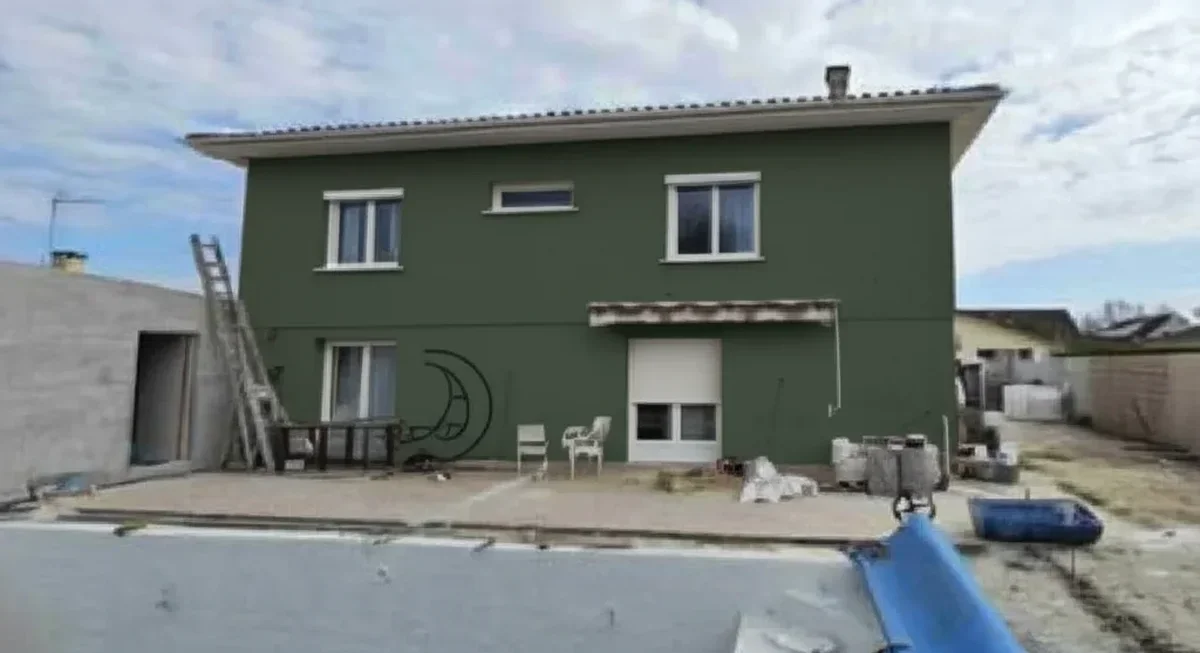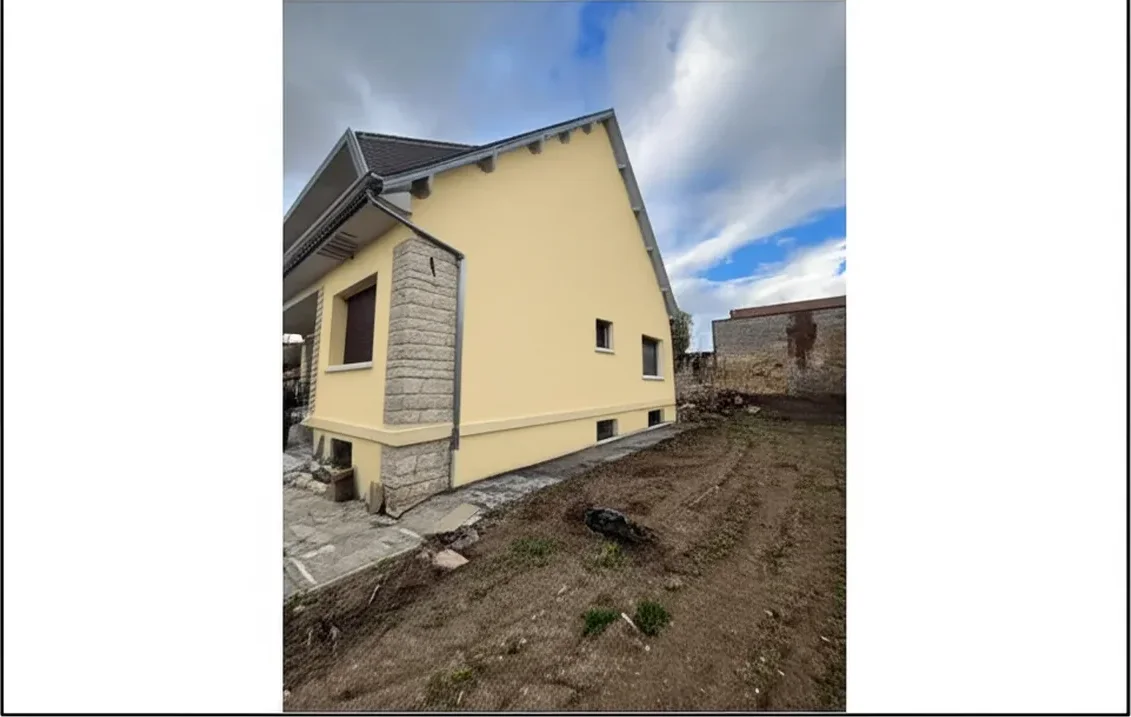
Try it on your house

Quick answer: Faux stone (also called manufactured stone veneer, MSV, or cultured stone) is a Portland-cement-and-aggregate product cast from molds of real stone, sold by brands like Eldorado Stone, Cultured Stone, and Boral Versetta. Yes, it can be painted, but only with a breathable masonry-rated coating (100% acrylic or mineral silicate) after thorough cleaning and a masonry primer. The top 6 paint colors for faux stone accent walls in 2026 are Sherwin-Williams Urbane Bronze SW 7048 (deep warm earth), BM Stone Hearth 984 (warm taupe), SW Tony Taupe SW 7038 (mid-tone Tuscan), BM Copley Gray HC-104 (cool greige), SW Sandbar SW 7547 (pale sand), and BM Iron Mountain 2134-30 (dramatic charcoal). Preview any of these 6 colors on your own faux stone in 30 seconds, no signup.
FacadeColorizer is a free AI exterior paint visualizer. "Faux stone paint" is the keyword that drives roughly 1,500 monthly searches in the US, and almost every shopper arrives with the same three questions: (1) what exactly is faux stone and how is it different from natural stone, (2) should I paint it or leave it natural, and (3) which paint colors actually work on the textured cement surface of a faux stone accent wall. This guide answers all three.
The strongest faux stone palettes are not about masking the texture, they are about resetting the tone to match the rest of the facade. Preview the 6 top faux stone paint colors on YOUR home in 30 seconds, no sample pots needed. The parent guide that frames this article is the stucco color options complete guide 2026, which covers stucco brand pairings and the masonry chemistry that also applies to manufactured stone veneer.
What Is Faux Stone? Manufactured Stone Veneer Explained
Faux stone, technically called manufactured stone veneer (MSV) or adhered concrete masonry veneer (ACMV), is a thin (1 to 2 inch) cast concrete product made from Portland cement, lightweight aggregate, and iron oxide pigments. The wet slurry is poured into rubber molds taken from real fieldstone, ledgestone, or river rock and then color-blended by hand before curing. The result is a lightweight (about 1/3 the weight of natural stone) cladding installed over a metal lath and scratch coat, applied to walls in mortar joints just like real stone.
| Brand | Profiles Offered | Price (installed, $/sq ft) | Notes |
|---|---|---|---|
| Eldorado Stone | Fieldledge, Cliffstone, RoughCut, RustiCrete | $22 to $32 | Premium tier, deepest color blends |
| Cultured Stone (Boral) | Country Ledgestone, Pro-Fit, Drystack | $18 to $26 | Original 1962 brand, broadest profile range |
| Boral Versetta Stone | Ledgestone, Tight-Cut, Carved Block | $16 to $22 | Mechanically attached, no mortar joints |
| ProVia Terra-Cut | Limestone, Quarry Stone, Fieldstone | $20 to $28 | Strong limestone replicas, Midwest favorite |
Try it on your house
No photo? Try a sample
Across the four major brands, Eldorado Stone reads as the premium player with the most realistic color depth, while Cultured Stone owns the broadest installed base because it was the original 1962 manufactured stone product. Versetta Stone replaces mortared installation with a mechanical clip system that drops labor cost by 25 to 40 percent. ProVia Terra-Cut is the strongest limestone replicator and is widely specified across the Midwest. All four products use the same Portland-cement substrate chemistry, which means the same paint rules apply universally. For factual product sheets, the manufacturers publish full specs at eldoradostone.com and culturedstone.com. For the larger family of cement-based veneers, the parent stucco color options complete guide walks through identical chemistry rules.
Painting Faux Stone: Yes or No?
The single most-Googled question on this topic is whether faux stone should ever be painted. The honest answer is: yes, but conditionally. Manufactured stone veneer is fully paintable because its surface is Portland cement, the same substrate that accepts every masonry-rated coating on the market. But painting permanently changes the product: once the integral iron oxide color blend is sealed under acrylic film, the original variegated, multi-tone surface is gone for good. There are four legitimate reasons to paint faux stone, and three reasons to leave it alone.
When painting faux stone makes sense
- The original color is dated. Early 2000s Tuscan-era orange-rust blends now read as 2005 builder-grade. Repainting in a 2026 palette (warm taupes, soft greiges, deep bronzes) resets curb appeal without the $22+/sq ft cost of full removal.
- The stone clashes with a new facade scheme. If you repaint stucco or siding in a fresh palette, the existing manufactured stone often looks orphaned. Painting unifies the elevation.
- Efflorescence or staining is permanent. Calcium leaching, iron rust streaks from window heads, or biological growth often cannot be cleaned out of the porous cement. Paint covers and resets the surface.
- You want a monolithic modern look. Contemporary architecture often calls for a single dark or warm-white tone across all wall surfaces (stucco + stone), where the texture is preserved but the color is unified.
When to leave faux stone unpainted
- The installation is recent (under 5 years) and the color blend is current. Eldorado and Cultured Stone blends from 2021 onward already read modern; do not paint a $22/sq ft installation that is working.
- You are in an HOA that disallows it. Many planned communities restrict paint over manufactured stone explicitly; check your CC&Rs first.
- You plan to sell within 24 months. Real estate appraisers and buyers often penalize painted manufactured stone in markets where unpainted is the local norm. Painting is one-way.
For the closely related debate on natural brick, the brick house paint vs natural decision guide covers the same paint-or-keep-as-is logic with full resale data, and the parallel arguments apply. Note that natural stone (not faux stone) is generally not recommended for painting because its mineral surface accepts paint differently and historic-stone preservation guidance from HGTV's exterior color selection primer consistently recommends leaving real stone bare.
Top 6 Paint Colors for Faux Stone Accent Walls (2026)
The 6 colors below were selected from over 800 faux-stone-tagged simulations in the 2026 barometer. All 6 are specified with LRV (Light Reflectance Value) because faux stone texture casts deep micro-shadows that drop perceived LRV by 8 to 12 points compared to a flat smooth surface; pick a color about 10 points lighter than your initial instinct if you want it to read as you imagine on the chip.
| # | Color & Code | Brand | Family | LRV | Best For |
|---|---|---|---|---|---|
| 1 | Urbane Bronze SW 7048 | Sherwin-Williams | Deep warm earth | 8 | Modern monolithic accent wall, contemporary |
| 2 | Stone Hearth 984 | Benjamin Moore | Warm taupe | 42 | Transitional accent, broad facade appeal |
| 3 | Tony Taupe SW 7038 | Sherwin-Williams | Mid-tone Tuscan | 36 | Tuscan/Mediterranean homes, warm climates |
| 4 | Copley Gray HC-104 | Benjamin Moore | Cool greige | 36 | Modern farmhouse pairing, Northeast palette |
| 5 | Sandbar SW 7547 | Sherwin-Williams | Pale warm sand | 62 | Light accent, Southwest, sun-washed look |
| 6 | Iron Mountain 2134-30 | Benjamin Moore | Dramatic charcoal | 9 | Contemporary accent wall, modern mountain |
A few notes from the 2026 barometer. Urbane Bronze SW 7048 was the single most simulated faux stone shade across 2025 and 2026, paired with warm-white or sandy stucco bodies it grounds the wall and reads as intentional architecture rather than a leftover Tuscan choice. Stone Hearth 984 is the safest broad-appeal pick because it sits halfway between greige and warm tan and works with virtually any roof color. Iron Mountain on faux stone is dramatic on north-facing or shaded elevations, but on a south-facing high-UV elevation the surface temperature climbs above safe limits for most acrylic resins; reserve the deep charcoal picks for accent walls under generous roof overhangs. Preview all 6 faux stone colors on your home before committing. For broader exterior palette pairings, see the exterior house color combinations 2026 guide.
Tuscan and Mediterranean Integration: Faux Stone in Warm Palettes
Manufactured stone exploded in popularity during the 2002 to 2012 Tuscan-Mediterranean boom, which means the largest installed base of US faux stone sits on homes that were originally specified with terracotta, sand, and stucco-cream palettes. Whether you are refreshing an authentic Mediterranean Revival or modernizing a 2007 Tuscan tract home, the color integration rules are similar.
- Pair faux stone with stucco body in the same warmth family. Warm-toned faux stone (rust, terracotta, ochre blends) wants warm stucco neutrals (SW Latte SW 6108, BM Manchester Tan HC-81). Cool greige stone wants cool greige body.
- Use the stone as the mid-tone, never the loudest element. The stucco body is the lightest layer, the stone wraps and water tables are the mid-tone, and a single dark accent (door, shutters, light fixtures) anchors the composition. Repaint the stone only if it currently violates this hierarchy.
- For terracotta tile roofs, lean into warm earth tones. Tony Taupe SW 7038 and Stone Hearth 984 read directly with red-clay barrel tile. Avoid cool greige paints on stone if the roof is terracotta; the temperature clash is the #1 cause of palette regret in Mediterranean repaints.
- For Spanish Colonial Revival in California or Arizona, faux stone is often used for low water-table wraps or fireplace surrounds, and the right paint is a warm cream that ties stone, stucco, and trim into one continuous wash.
For the full Mediterranean palette context, the Mediterranean Revival house exterior paint colors guide covers 12 complete schemes, and the Southwest ranch exterior paint colors guide shows how faux stone integrates with desert ranch architecture. For homes where the stone is the dominant facade element, the forward painted brick exterior complete guide and lime wash brick technique guide give adjacent reference points for masonry color resets.
DIY vs Pro: Faux Stone Painting Method and Cost
Faux stone is paintable as a DIY project, but the texture makes it 2 to 3 times slower than painting flat siding because every cement face, mortar joint, and shadow void has to be reached. The professional method is essentially the same as stucco painting: pressure-wash, prime, spray-and-back-roll twice.
- Pressure-wash at 1,500 to 1,800 PSI and let dry 48 hours. Stay 12 to 18 inches off the surface to avoid blasting cement out of mortar joints. The cement substrate holds moisture deep in its texture, painting before it is fully dry is the leading cause of paint failure.
- Treat efflorescence and biological growth. Calcium bloom wipes off with a 1:4 vinegar-water solution; mildew needs a 1:4 bleach-water solution; rinse and let dry. Skipping this step locks the contamination under paint film.
- Prime with a masonry-rated primer. SW Loxon Concrete & Masonry Primer or BM Fresh Start Masonry primer are the contractor standards. Tinted primer matched to the topcoat reduces visible coverage gaps.
- Spray and back-roll the first coat. Airless sprayer at 0.019 to 0.023 tip, followed immediately by a 3/4-inch nap roller on the wet film. Back-rolling is what drives paint into the deep voids that sprayers miss.
- Wait the recoat window (typically 4 hours) and apply the second coat the same way. Two coats are mandatory for color uniformity, the first coat is largely absorbed.
Coverage on faux stone runs 200 to 280 square feet per gallon, significantly lower than smooth siding's 350 to 400. A 400-square-foot accent wall (typical for a fireplace surround plus column wraps plus water table) needs 4 to 5 gallons of paint plus 1 gallon of primer, totaling about $250 to $375 in DIY materials before brushes, rollers, and tip rental. Professional pricing for the same wall runs $4.50 to $6.50 per square foot, all-in, or $1,800 to $2,600. Two-story or full-elevation faux stone walls push the math significantly toward hiring out. For the full pro pricing picture across the exterior, see the exterior house painting cost 2026 guide, and for the masonry product-specific picture see the forward Behr masonry stucco brick paint guide. For HGTV's practical primer on exterior color decision-making, see the HGTV exterior color guide.
Preview Faux Stone Paint Colors on Your Home, Free
Committing to 4 to 5 gallons of masonry paint plus primer on a 2-inch chip is a $2,000 mistake on textured faux stone. Sun angle, mortar joint width, shadow depth, and roof color all shift how a shade reads. FacadeColorizer lets you upload a photo of your home and apply any of the 6 faux stone paint colors above (or thousands more from SW, BM, Behr, and Dunn-Edwards) directly onto your stone accent wall, fireplace surround, or water table in seconds. Compare 3 to 5 candidates side-by-side, share with your contractor or HOA, and only then buy paint. It is 100% free, needs no signup, and works on phone or desktop. For broader modern accent color strategy, the modern farmhouse exterior paint colors 2026 top 15 covers complementary palettes for homes where faux stone is paired with board-and-batten or lap siding.
FAQ: Faux Stone Paint 2026
Can you paint faux stone (manufactured stone veneer)? Yes. Faux stone is Portland cement with iron oxide pigment, fully paintable with a breathable masonry-rated coating (100% acrylic or mineral silicate) after pressure-washing and masonry primer. Painting is permanent, however; once you cover the integral color blend, the original variegated multi-tone surface is gone.
What are the best paint colors for a faux stone accent wall in 2026? Pick warmth family that matches the rest of your facade.
What is the difference between Eldorado Stone and Cultured Stone? Both are manufactured stone veneer (Portland cement cast from molds of real stone). Eldorado Stone is the premium tier with deeper color blends ($22 to $32 installed per sq ft); Cultured Stone (by Boral) is the original 1962 brand with the broadest profile range ($18 to $26 installed). They take paint identically because the substrate chemistry is the same.
How do you prep faux stone for paint? Pressure-wash at 1,500 to 1,800 PSI from 12 to 18 inches off the surface, let dry 48 hours, treat efflorescence with 1:4 vinegar-water and biological growth with 1:4 bleach-water, then prime with a masonry-rated primer (SW Loxon C&M or BM Fresh Start Masonry) before two coats of breathable masonry topcoat.
What paint type works on faux stone? Only breathable masonry-rated paints. The two best categories are premium 100% acrylic latex (SW Loxon XP, BM Aura Exterior, Behr Premium Plus Masonry, Stucco & Brick) for most applications, and mineral silicate paints for ultra-breathability. Avoid standard interior or low-grade exterior latex; they trap moisture and lift within 12 to 24 months.
How much does it cost to paint a faux stone accent wall? Professional pricing runs $4.50 to $6.50 per square foot, all-in, for typical accent walls. A 400-square-foot wall (fireplace surround + column wraps + water table) costs $1,800 to $2,600 professionally, or $250 to $375 in DIY materials plus sprayer rental.
Will painting faux stone ruin its resale value? It depends on local market norms. In markets where painted manufactured stone is rare, painting can shave 1 to 3 percent off resale. In markets where the original Tuscan-era color is dated, repainting in a 2026 palette typically lifts curb-appeal value and pays for itself. Check your CC&Rs first and verify what the comp homes in your immediate neighborhood show.
Can I preview faux stone paint colors on my own home before buying? Yes. FacadeColorizer is a free AI tool that lets you upload a photo of your home and apply any of the 6 top faux stone colors (or thousands more from SW, BM, Behr, and Dunn-Edwards) directly onto your stone accent wall or fireplace surround in 30 seconds. No signup, works on phone or desktop, and avoids the $1,400 average regret cost of trial-and-error sample pots on textured masonry.
Frequently asked questions
Can you paint faux stone (manufactured stone veneer)?
What are the best paint colors for a faux stone accent wall in 2026?
What is the difference between Eldorado Stone and Cultured Stone?
How do you prep faux stone for paint?
What paint type works on faux stone?
How much does it cost to paint a faux stone accent wall?
Will painting faux stone ruin its resale value?
Can I preview faux stone paint colors on my own home before buying?
Trademarks mentioned (Sherwin-Williams, Benjamin Moore, Behr, Caparol, Brillux, Sto, Alpina, Valspar, PPG, Glidden, Dulux, Crown Trade, Sandtex, Farrow & Ball, Johnstone's, Leyland) are property of their respective owners. FacadeColorizer is independent and not affiliated with any of them. Nominative fair use under Lanham Act §1125.