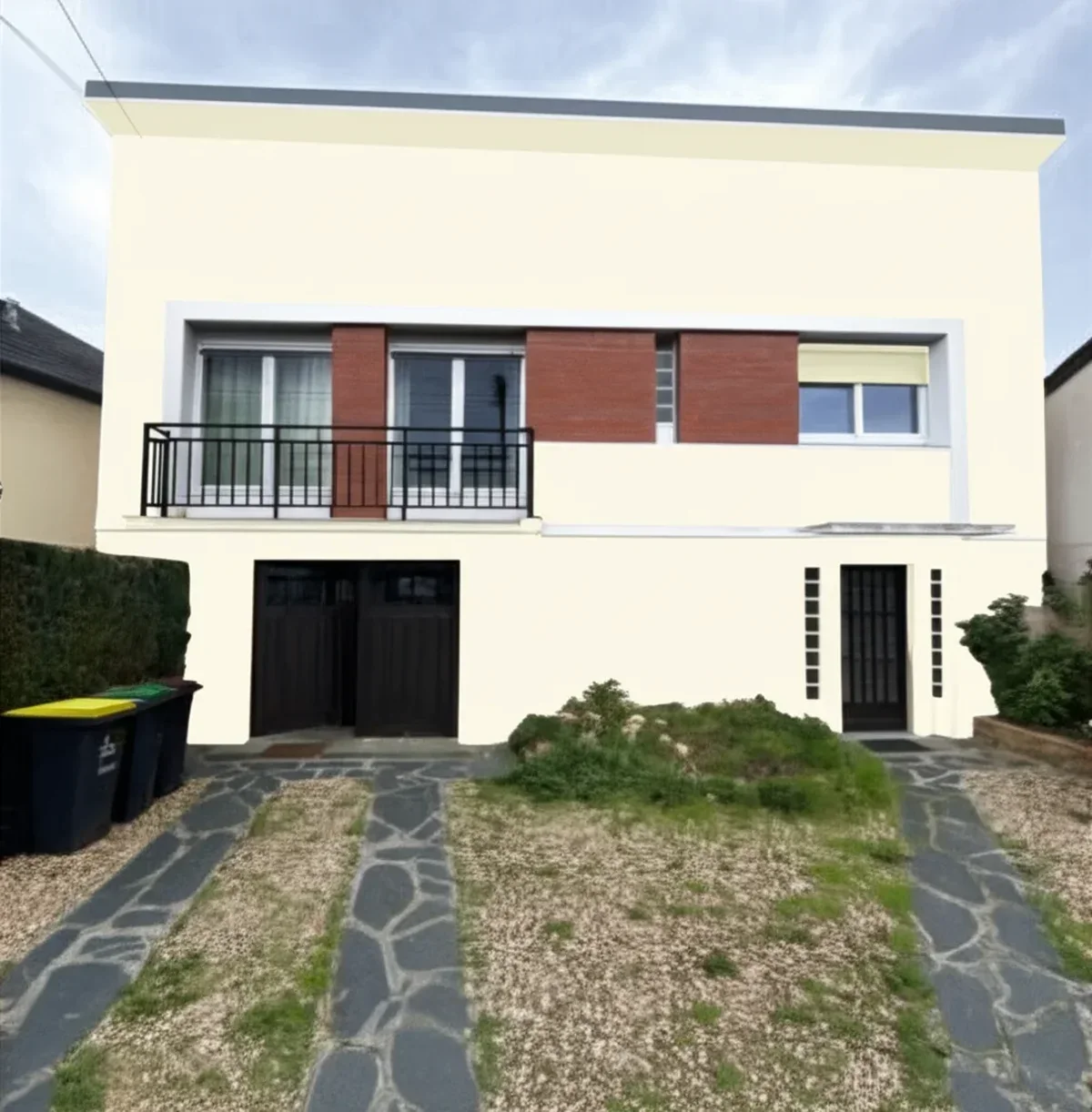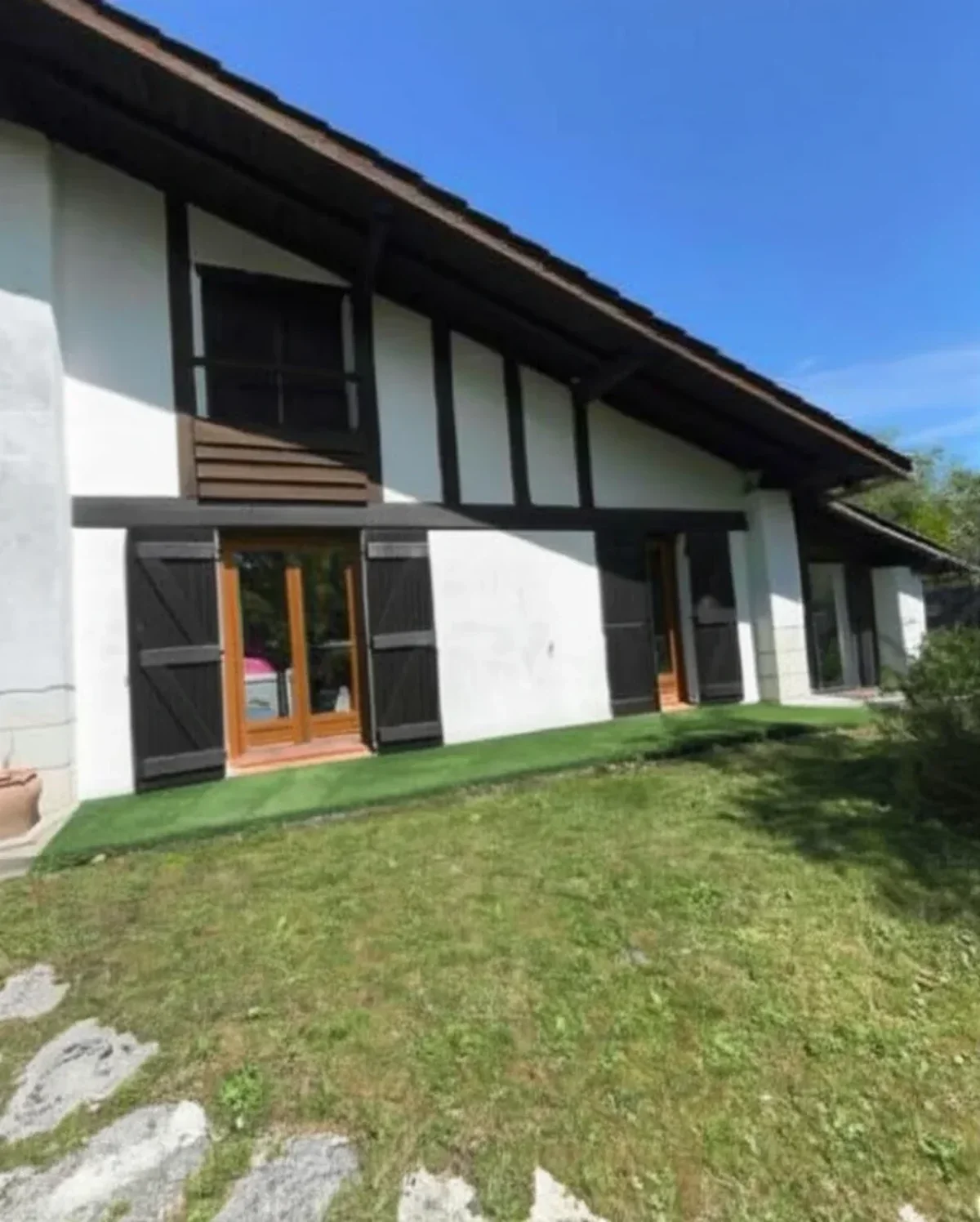
Try it on your house
A ranch home in Phoenix logs more than 3,800 hours of direct sunlight per year, about 40 percent more UV exposure than the national average. That sun will eat a poorly chosen exterior color in 18 months. The desert Southwest also has its own visual grammar: low horizontal rooflines, stucco or adobe walls, gravel yards, saguaro and ocotillo instead of lawns. A color that looks stunning on a Connecticut ranch can look sickly against a Sonoran sunset. This guide lists the 15 best exterior paint colors for ranch homes in Arizona, New Mexico, and Nevada in 2026, with UV performance data, HOA considerations for Phoenix, Tucson, and Scottsdale, and specific Sherwin-Williams and Benjamin Moore product codes.
Why Southwest ranches need a different palette
The Southwest sits at the intersection of extreme UV intensity, monsoon humidity swings, and a cultural palette rooted in Spanish colonial, Pueblo, and mid-century modern design. A ranch built in 1962 in Scottsdale was never meant to wear Cape Cod blue. It was meant to sit low against the horizon, blending into the desert crust in terracotta, warm sand, or adobe. The colors that age gracefully here pull directly from the landscape: the red-orange of sandstone, the muted green of saguaro and sage, the chalky off-white of caliche soil. For full pricing context, see our complete exterior house painting cost guide.
If your project sits outside the Sonoran climate zone, regional palettes shift quickly: a Pacific Northwest craftsman, a Mid-Atlantic colonial, and a New England cape each demand a different body-trim-door logic. To compare desert ranches against other architectural traditions before locking in your spec, explore 15 outside house color ideas across regional styles.
There is also a practical reason. Light Reflective Value (LRV) matters more in the Southwest than anywhere else in the continental US. Paint with an LRV below 35 on a south- or west-facing stucco wall in Phoenix can reach surface temperatures of 170 degrees F in July, accelerating binder breakdown, chalking, and fading. The 15 colors below are chosen for both desert character and UV durability.
The 15 best Southwest ranch exterior colors for 2026
1. Warm Sand Stucco (Sherwin-Williams Kilim Beige SW 6106)
The most popular main-body color on Phoenix and Tucson ranches. LRV 57, which reflects most of the afternoon heat. Pairs with white trim and a turquoise or mesquite-stained door. Approved by 90 percent of Scottsdale HOA committees without modification.
2. Adobe Rose (Benjamin Moore Adobe Dust 2175-40)
A soft, dusty pink-terracotta that nods to Santa Fe and Albuquerque traditional architecture. LRV 49. Looks best on stucco ranches with clay tile roofs. Benjamin Moore Aura Exterior holds this pigment for 10 to 12 years in full sun.
3. Terracotta Earth (Sherwin-Williams Rustic City SW 9009)
A saturated clay red-orange for homeowners who want to lean fully into the desert identity. LRV 24, so reserve it for shaded elevations or accent walls only. Stunning next to a saguaro silhouette at golden hour.
4. Saguaro Green (Sherwin-Williams Rosemary SW 6187)
A muted blue-green that mirrors the Sonoran cactus itself. LRV 14. Works only as an accent on shutters, garage doors, or a recessed entry wall. Never on a full south-facing facade.
5. Desert Sage (Benjamin Moore Camouflage 2143-40)
The sage green of actual desert sagebrush, dusty and gray-shifted. LRV 37. Excellent as a main body color on wood-sided ranches in Flagstaff, Prescott, and higher-elevation New Mexico.
6. Cactus Green Accent (Sherwin-Williams Artichoke SW 6179)
A deeper, more saturated cactus green for front doors and pergolas. LRV 13. Pairs beautifully with warm sand stucco and unlacquered brass hardware.
7. Adobe Brown (Benjamin Moore Tucson Coyote 1220)
Named for the city itself. A warm, earthy brown with red undertones. LRV 32. Traditional Pueblo-revival color, often required in Santa Fe Historic District and parts of Corrales, NM.
8. Caliche White (Sherwin-Williams Creamy SW 7012)
A soft warm white that reads as desert limestone rather than pure white. LRV 81. The highest-performing reflective color for west-facing walls in Las Vegas and Phoenix.
9. Mesa Tan (Benjamin Moore Navajo White OC-95)
A classic desert neutral with yellow undertones. LRV 78. Safe HOA choice across all three states. Works with red tile, gray tile, or flat modern rooflines.
10. Turquoise Door (Benjamin Moore Santa Monica Blue 776)
The signature Southwest accent door. LRV 26. Pairs with warm sand, adobe rose, or caliche white bodies. The color is also believed to ward off evil spirits in traditional New Mexican folklore.
11. Sandstone Gold (Sherwin-Williams Blonde SW 6128)
A warm golden tan that captures the color of Sedona red rock at noon. LRV 62. Excellent UV performance, keeps its depth in full sun for 8 to 10 years.
12. Mountain Juniper (Sherwin-Williams Evergreen Fog SW 9130)
A soft muted green that references high-desert juniper trees. LRV 40. Popular on ranch-style homes in Tucson foothills and Albuquerque's Northeast Heights.
13. Sunset Coral (Benjamin Moore Salsa Dancing 041)
A bold coral-terracotta for accent walls, courtyard gates, and casita doors. LRV 30. Use sparingly; the pigment fades faster than sand-based neutrals.
14. Stone Gray Trim (Sherwin-Williams Anew Gray SW 7030)
A warm gray with a greige undertone that works as trim on virtually every Southwest color family. LRV 48. Cool enough to contrast with terracotta bodies, warm enough to complement sand neutrals.
15. Charcoal Modern (Benjamin Moore Kendall Charcoal HC-166)
For modern Scottsdale and Paradise Valley ranches renovated into low-slung contemporary homes. LRV 17. Use only as a shaded accent (north elevations, recessed entries) or on metal roof fascia. Absorbs massive heat at full sun.
Full color table with hex, SW/BM codes, and UV rating
| # | Color Name | Hex | SW Code | BM Code | LRV | UV Rating |
|---|---|---|---|---|---|---|
| 1 | Warm Sand Stucco | #D9C8A8 | SW 6106 Kilim Beige | BM Shaker Beige HC-45 | 57 | Excellent |
| 2 | Adobe Rose | #C9A08A | SW 6324 Rosy Outlook | BM 2175-40 Adobe Dust | 49 | Very Good |
| 3 | Terracotta Earth | #A95C44 | SW 9009 Rustic City | BM 1202 Tucson Red | 24 | Good (accent only) |
| 4 | Saguaro Green | #5A7560 | SW 6187 Rosemary | BM HC-124 Weekend Getaway | 14 | Fair (accent) |
| 5 | Desert Sage | #9AA086 | SW 6178 Clary Sage | BM 2143-40 Camouflage | 37 | Very Good |
| 6 | Cactus Green Accent | #5F6647 | SW 6179 Artichoke | BM 2143-10 Avocado | 13 | Fair (accent) |
| 7 | Adobe Brown | #8E6D55 | SW 7701 Cavern Clay | BM 1220 Tucson Coyote | 32 | Very Good |
| 8 | Caliche White | #EFE6D3 | SW 7012 Creamy | BM OC-14 Natural Cream | 81 | Excellent |
| 9 | Mesa Tan | #E6D6B4 | SW 7551 Greek Villa | BM OC-95 Navajo White | 78 | Excellent |
| 10 | Turquoise Door | #3E8A9B | SW 6489 Reflecting Pool | BM 776 Santa Monica Blue | 26 | Good (door) |
| 11 | Sandstone Gold | #D8BE8B | SW 6128 Blonde | BM HC-36 Yellowstone | 62 | Excellent |
| 12 | Mountain Juniper | #9BA79B | SW 9130 Evergreen Fog | BM 1496 October Mist | 40 | Very Good |
| 13 | Sunset Coral | #C86F52 | SW 6619 Rejuvenate | BM 041 Salsa Dancing | 30 | Good (accent) |
| 14 | Stone Gray Trim | #BDB2A5 | SW 7030 Anew Gray | BM HC-80 Bleeker Beige | 48 | Very Good |
| 15 | Charcoal Modern | #484A48 | SW 7069 Iron Ore | BM HC-166 Kendall Charcoal | 17 | Fair (shaded only) |
Try it on your house
No photo? Try a sample
Pick any SW or BM code from the table, drop it in, and see that exact shade rendered on your stucco before you buy a single gallon.
Upload a photo of your ranch and preview all 15 Southwest colors in 30 seconds.
UV resistance: Sherwin-Williams SuperPaint vs Benjamin Moore Aura
Product choice matters as much as color choice in the Southwest. Two premium exterior paints dominate the region: Sherwin-Williams SuperPaint Exterior and Benjamin Moore Aura Exterior. Field performance data collected from Phoenix, Tucson, and Las Vegas painters in 2024 and 2025 shows measurable differences in how each holds up to 110+ degree summers.
Sherwin-Williams SuperPaint uses an advanced acrylic resin with self-priming properties and a built-in mildewcide. In Phoenix test panels, it showed a delta-E color shift of 2.8 over 5 years on south-facing stucco, which is visible but acceptable. Price point: about 55 to 65 dollars per gallon. Warranty: lifetime for the original homeowner. Best for mid-range budgets and contractor repaints.
Benjamin Moore Aura Exterior uses Color Lock technology with Gennex waterborne colorants that are specifically engineered to resist UV degradation. In the same Phoenix tests, Aura showed a delta-E shift of only 1.4 over 5 years, nearly half the fade. Price point: 85 to 100 dollars per gallon. Best for high-saturation colors like terracotta, saguaro green, and sunset coral, where fade is most visible. The extra 30 to 40 dollars per gallon is worth it on dark accents.
The practical rule: use SuperPaint for light neutrals (sand, caliche, mesa tan) where any fade is invisible, and Aura for saturated accents (terracotta, cactus green, turquoise doors) where holding the original chroma matters. Either option outperforms bargain exterior paints, which in Phoenix sun can chalk and fade in under 3 years.
HOA color rules in Phoenix, Tucson, and Scottsdale
More than 75 percent of single-family ranch homes in the Phoenix metro area sit inside an HOA. Skipping the Architectural Review Committee (ARC) step is the most common painting mistake in the region. Typical fines range from 500 dollars per violation to full repaint-at-owner-cost orders. Approval turnaround is usually 14 to 30 days, and most HOAs require written submission with paint chip, drawdown sample, and body/trim/door color breakdown.
Scottsdale HOAs (DC Ranch, McCormick Ranch, Grayhawk) tend to enforce desert-neutral palettes: sand, adobe, tan, and caliche white bodies with limited accent options. Turquoise and cactus green doors are typically allowed. Pure white, bright yellow, and cool gray are usually denied.
Phoenix master-planned communities (Ahwatukee, Desert Ridge, Anthem) use pre-approved color charts; most allow 40 to 80 body colors, 20 to 30 trim colors, and a wider door accent list. Tucson HOAs are often stricter because of the city's Dark Sky ordinance and desert preservation codes: LRV ceilings (often 60) cap how bright a body color can be. Albuquerque and Santa Fe enforce their own historic overlays, with Santa Fe Historic District limiting walls to earth tones matched to the Pueblo revival aesthetic.
Trim and accent door strategy
A Southwest ranch reads best as a three-part color composition: body, trim, and accent door. The body is your largest area, so it should be low-chroma (sand, adobe, caliche, sage). The trim is about 15 to 20 percent of the visible facade; it should contrast gently with the body. The accent door is 1 to 3 percent of the facade, this is where you can go bold.
- Warm Sand body + Stone Gray trim + Turquoise door: the Southwest classic
- Adobe Rose body + Caliche White trim + Saguaro Green door: Santa Fe traditional
- Caliche White body + Adobe Brown trim + Terracotta door: modern Pueblo
- Mesa Tan body + Iron Ore trim + Sunset Coral door: modern ranch
- Desert Sage body + Stone Gray trim + Mesquite-stained door: high-desert mountain
Common Southwest ranch color mistakes
- Using cool gray or blue-white bodies: clashes with warm desert light and red-rock landscape
- Painting dark charcoal on a south-facing wall: surface temperatures can exceed 170F and cook the binder
- Skipping the HOA ARC submission: triggers fines in Phoenix, Scottsdale, and Tucson master-planned communities
- Using contractor-grade flat latex: fades 3x faster than SuperPaint or Aura under Sonoran sun
- Matching stucco body to the exact color of surrounding rock: the house disappears instead of standing out
- Choosing a pure white trim that reads blue under intense sun: use a warm white like Creamy or Natural Cream instead
Visualize any Southwest color on your ranch
Reading about Kilim Beige or Adobe Dust is one thing. Seeing it on YOUR home, with your clay tile roof and your gravel yard, is what tells you whether it works. Our exterior paint visualizer lets you test this palette on your facade in about 30 seconds. Upload a photo of your ranch and preview all 15 colors above. No signup, no credit card. Updated April 2026 with the full Sherwin-Williams and Benjamin Moore Southwest palette.
Free. Instant results. All 15 Southwest colors included.
Frequently asked questions
What are the best exterior paint colors for a ranch house in Arizona?
The most popular Arizona ranch exterior colors are warm sand (Sherwin-Williams Kilim Beige SW 6106), adobe rose (Benjamin Moore Adobe Dust 2175-40), caliche white (SW Creamy SW 7012), and mesa tan (BM Navajo White OC-95). These light-to-mid LRV neutrals reflect Phoenix and Tucson sun while honoring the desert palette. Pair them with a turquoise, terracotta, or saguaro green accent door.
Does Sherwin-Williams SuperPaint or Benjamin Moore Aura last longer in Phoenix?
Benjamin Moore Aura Exterior outperforms Sherwin-Williams SuperPaint on saturated colors in Phoenix sun. In 5-year Phoenix field tests, Aura showed a delta-E color shift of 1.4 versus 2.8 for SuperPaint. Aura costs 30 to 40 dollars more per gallon but is worth it on terracotta, saguaro green, turquoise doors, and other high-chroma accents. Use SuperPaint for light neutrals where fade is invisible.
Do I need HOA approval to repaint my Scottsdale ranch?
Yes, in nearly all Scottsdale master-planned communities. DC Ranch, McCormick Ranch, and Grayhawk require an Architectural Review Committee submission with paint chips, drawdown samples, and a body/trim/door breakdown. Approval takes 14 to 30 days. Typical fines for unapproved repaints range from 500 dollars per violation to a full repaint order at owner expense.
What accent door color is traditional in New Mexico?
Turquoise is the most traditional accent door in New Mexico, rooted in both Spanish colonial and Pueblo folk traditions. Benjamin Moore Santa Monica Blue 776 and Sherwin-Williams Reflecting Pool SW 6489 are the closest matches to authentic Santa Fe turquoise. Saguaro green (SW Artichoke 6179) and terracotta (SW Rustic City 9009) are the two other historically correct accent colors.
What LRV should I choose for a south-facing wall in Las Vegas?
Target LRV 55 or higher for any south- or west-facing wall in Las Vegas or Phoenix. Colors below LRV 35 can push stucco surface temperatures above 170 degrees F in July, accelerating binder breakdown and fade. Caliche white (LRV 81), mesa tan (LRV 78), sandstone gold (LRV 62), and warm sand (LRV 57) are all safe choices. Reserve dark colors (LRV under 30) for shaded north elevations or recessed accents only.
Trademarks mentioned (Sherwin-Williams, Benjamin Moore, Behr, Caparol, Brillux, Sto, Alpina, Valspar, PPG, Glidden, Dulux, Crown Trade, Sandtex, Farrow & Ball, Johnstone's, Leyland) are property of their respective owners. FacadeColorizer is independent and not affiliated with any of them. Nominative fair use under Lanham Act §1125.