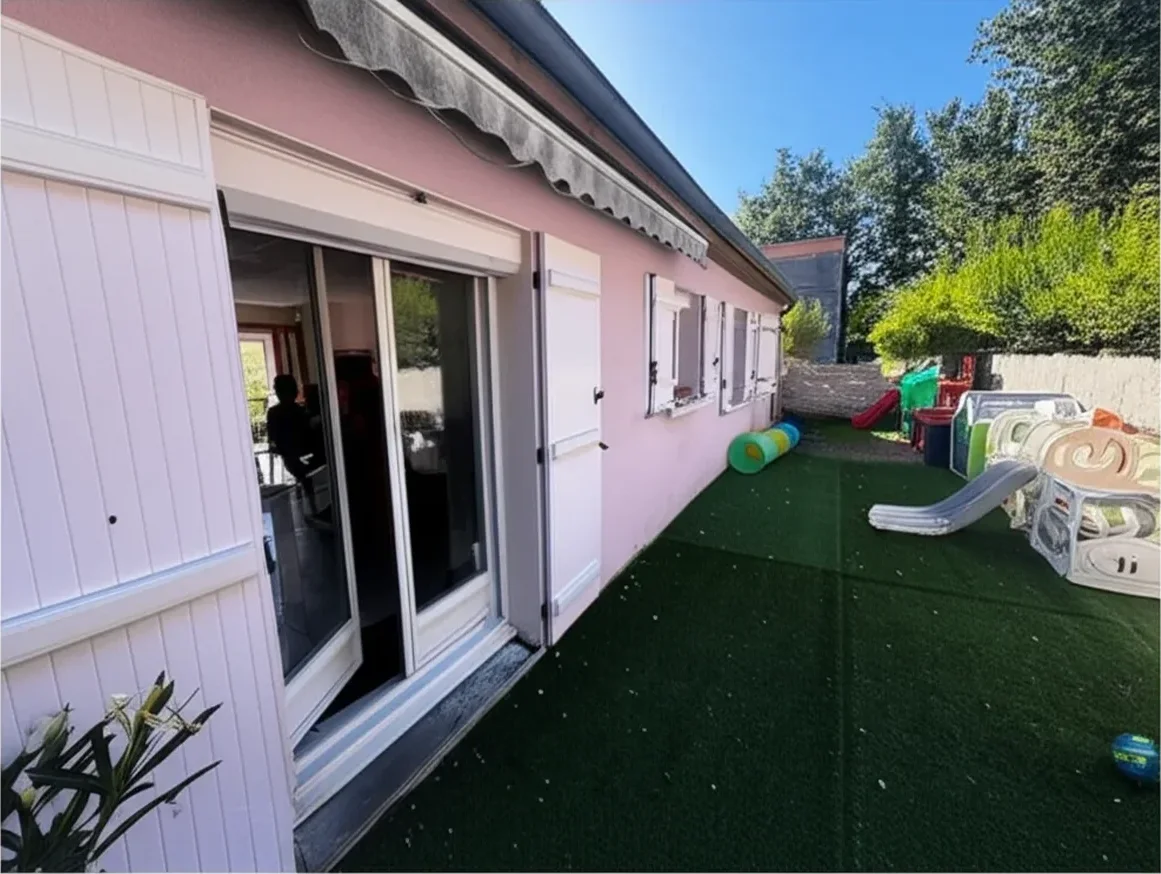
Try it on your house

Planning an exterior house painting project in Buffalo, New York for 2026? Buffalo homeowners pay between $3.20 and $5.50 per square foot, or roughly $5,800–$13,200 for a standard 1,800–2,400 sq ft home. Humid continental winters, brutal lake-effect snow off Lake Erie, century-old wood frame homes in Allentown and the Elmwood Village, Olmsted-designed park corridors in Parkside, and Frank Lloyd Wright's Prairie influence at the Darwin Martin House all shape the price. This guide walks every Buffalo-specific factor before you request a free estimate.
Preview your Buffalo facade in any color before the snow lifts. For citywide pricing benchmarks, see our exterior house painting cost by city guide.
Upload a photo of your home and try our AI paint visualizer to preview Benjamin Moore Bracken Brown on an Allentown Federal, BM Hale Navy on an Elmwood Village Queen Anne, or a Polonia-inspired heritage palette under Buffalo's late-spring light before your painting contractor shows up with the first gallon.
Buffalo Exterior Painting Cost Per Square Foot in 2026
The average cost per square foot for exterior house painting across the Buffalo metro in 2026 ranges from $3.20 to $5.50, depending on surface preparation, paint grade, number of stories, and siding material. Entry-level bids on vinyl-sided ranches in West Seneca, Cheektowaga, and Tonawanda land near $3.20/sq ft, while three-story Queen Anne and Victorian homes with elaborate trim, lead abatement, and Allentown Preservation District review push past $5.50/sq ft. For a typical 2,000 sq ft home in Buffalo, expect to budget $6,400–$11,000 for a quality two-coat system. If you would rather work out a number for your own Buffalo home, our painting estimate calculator does the per-foot math for you.
| Home Size (sq ft) | Low ($3.20/sq ft) | High ($5.50/sq ft) | Average |
|---|---|---|---|
| 1,500 sq ft | $4,800 | $8,250 | $6,525 |
| 2,000 sq ft | $6,400 | $11,000 | $8,700 |
| 2,500 sq ft | $8,000 | $13,750 | $10,875 |
| 3,000+ sq ft | $9,600 | $16,500+ | $13,050 |
Try it on your house
No photo? Try a sample
Buffalo bids run noticeably below New York City and Boston in dollar terms because labor and insurance carry costs are lower, but the prep load is heavier per square foot than any Sun Belt city. Compare ranges across our Pittsburgh 2026 exterior painting cost guide and our Detroit MI exterior painting cost guide for sister Rust Belt benchmarks.
For the widest benchmark on the board, San Francisco is quoted at $4.50 to $10.00 per square foot, close to double the Buffalo range, and the surprise is that the calendar is not the reason. The practical Bay Area painting season runs May through October, roughly the same six months lake-effect weather leaves open here. What actually separates the two numbers is labor rates, a permit stack that bills $400 to $1,200 just for historic color review, and a hill-access surcharge that never appears on a Western New York bid. Our guide to exterior painting cost in San Francisco itemizes all three, which is the clearest way to see what Buffalo's lower figure is and is not buying you.
Buffalo Neighborhood Price Table: Where You Live Matters
Costs swing widely across the Buffalo metro based on home age, architectural style, preservation district status, and tree canopy. Here is what Buffalo homeowners are paying in 2026 by neighborhood for a full exterior repaint on a typical home:
| Buffalo Neighborhood | Typical Home Style | Average 2026 Cost |
|---|---|---|
| Allentown | Federal, Colonial, 1900s wood frame | $10,500–$16,500+ |
| Elmwood Village | Queen Anne, Victorian, Foursquare | $9,800–$15,500 |
| Parkside (Olmsted) | Prairie, Arts & Crafts, Foursquare | $10,000–$15,800 |
| North Park / Hertel | Bungalow, Cape Cod, Foursquare | $7,800–$12,000 |
| Delaware District | Victorian mansion, Tudor, Colonial Revival | $11,500–$18,000+ |
| Polonia / Broadway-Fillmore | Polish heritage wood frame, twin homes | $5,800–$9,500 |
| West Side / Grant Street | Italianate, Victorian double, Folk Vernacular | $6,500–$10,500 |
| South Buffalo / Old First Ward | Irish worker cottage, two-flat, ranch | $6,000–$10,000 |
| Kenmore / Tonawanda | Cape Cod, ranch, mid-century Colonial | $6,200–$10,800 |
| Amherst / Williamsville | Colonial Revival, split-level, modern | $7,500–$13,000 |
| West Seneca / Cheektowaga | Mid-century ranch, split-level, vinyl re-clad | $5,800–$9,800 |
| Clarence / East Aurora | Greek Revival, Federal farmhouse, modern | $8,500–$14,500 |
Allentown (designated a National Historic District in 1980, one of the largest preservation districts in the United States) and the Delaware Avenue Historic District carry a 20–35% premium due to elaborate Victorian trim, 1880s–1900s wood framing, and Buffalo Preservation Board palettes. Homes near the Darwin Martin House complex in Parkside skew higher because owners often choose Prairie-school earth tones (deep amber, oxide red, olive green) that require careful three-color coordination across body, fascia, and trim.
Five Buffalo Factors That Move Your Bid
Buffalo sits at a unique intersection: Great Lakes climate, late-19th-century housing stock, and a deep Olmsted-era architectural legacy. These five factors explain why two homes of the same square footage can receive bids $4,000 apart in Western New York:
- Allentown 1900s Preservation District ($1,200–$3,500 premium): The Allentown Historic District protects roughly 800 buildings, most dating 1830–1910 with heavy Federal and Colonial influence. Color changes require Buffalo Preservation Board review, historically appropriate palettes (creams, ochres, deep greens, oxide reds), and often hand scraping of original wood siding rather than aggressive power washing. Bids in Allentown almost always include lead-paint testing and EPA RRP-certified labor.
- Frederick Law Olmsted park system influence: The Olmsted-designed parks (Delaware, Cazenovia, Front, South, Riverside) define the street grid in Parkside, North Park, and the West Side. Mature 100+ year tree canopies keep walls shaded and damp deep into morning. Premium mildew resistant formulas (Benjamin Moore Aura Exterior, Sherwin-Williams Emerald) are essentially mandatory on north-facing elevations.
- Brutal lake-effect snow (April–October paint window): Buffalo averages roughly 95 inches of seasonal snowfall and 60+ freeze-thaw cycles per year, more than any other major US metro. The realistic exterior painting window is late April through mid-October, and ambitious crews aim for the dry June–September stretch. Outside this band, surface temperatures fall below the 35°F floor for premium acrylic paints, voiding most manufacturer warranty terms.
- Polonia heritage palettes: The Broadway-Fillmore corridor (Polonia) was settled by Polish immigrants between 1880 and 1920, and many original frame homes still carry traditional heritage color cues, ivory body, red oxide trim, deep green shutters, or cream with cobalt-blue accents. Repaint costs are lower here ($5,800–$9,500) because homes are smaller and HOA-free, but color consultation matters culturally.
- Frank Lloyd Wright Darwin Martin House influence: The Darwin Martin House complex (1903–1905) anchors Parkside and made the neighborhood a working laboratory for Prairie-school exteriors. Homeowners increasingly request three-band Prairie palettes (amber stucco, olive green trim, oxide red accents). Three-color coordination adds 8–15% to labor because each band needs separate cut-in and masking.
For broader context on cold-climate prep, see our 2026 complete exterior painting cost guide.
Buffalo Painter Networks: Where Crews Come From
Unlike larger metros where national franchises dominate, Buffalo's exterior painting market is still 70%+ small, family-run crews, many second- or third-generation. Knowing how the networks are organized helps you read bids:
- Allentown / Elmwood specialists: A short list of crews carry Buffalo Preservation Board references and EPA RRP certification. Their bids are higher per square foot but include lead testing, historic color matching, and hand-scraping by default.
- South Buffalo / Old First Ward traditional crews: Mostly Irish-American family operations, strong on Folk Victorian and worker-cottage trim work. Competitive pricing, often paint-only bids without deep prep, ask explicitly about scraping and caulking.
- Polonia / Broadway-Fillmore crews: Polish-American operators with deep heritage-palette knowledge. Many offer cash-friendly pricing on small two-flat exteriors.
- Suburban franchises (Amherst, Williamsville, Clarence): CertaPro, Five Star, and regional networks dominate the suburbs. Higher bids, but consistent warranty documentation and online booking.
- Boom-and-bust storm chasers: After major lake-effect events, out-of-state crews appear with low quotes. Always verify a New York State Department of State Home Improvement Contractor registration and Erie County physical address before signing.
Network sourcing aside, the right contractor pick depends on style. See our Victorian house exterior paint colors guide for Elmwood Village and Allentown palettes, our New England Colonial paint colors guide for Federal-Colonial Allentown homes, and our HOA-approved exterior colors guide for suburban Amherst and Clarence subdivisions.
Test Buffalo's trending palettes on your facade in 30 seconds
Upload a photo and preview Benjamin Moore Bracken Brown, Cottage Red, or Hale Navy on your actual home under Western New York light before requesting a free estimate. Paint visualization beats a $5 swatch fan every time.
Trending Buffalo Exterior Colors in 2026
- Benjamin Moore Bracken Brown (HC-71) + Cottage Red (CC-94): The signature Allentown Federal-Colonial pairing.
- Benjamin Moore Hale Navy (HC-154): Trending hard in the Elmwood Village on Queen Anne and Foursquare body color, paired with crisp white trim and a black or oxblood door. Reads almost slate under overcast Buffalo skies, navy under summer sun, a flex no other color does as well.
- Sherwin-Williams Iron Ore (SW 7069): Modern dark gray for Amherst and Williamsville Colonial Revivals. Strong contrast against snow, hides salt-spray staining better than mid-tones.
- Benjamin Moore Revere Pewter (HC-172): The safe-but-not-bland choice for suburban Cape Cod and ranch homes in Tonawanda and Kenmore. Reads warm taupe against winter white.
- Sherwin-Williams Rookwood Dark Brown (SW 2808): Prairie-school favorite near the Darwin Martin House. Pair with olive trim and oxide red accent bands.
- Benjamin Moore Simply White (OC-117): The Polonia heritage-palette body color, paired with deep green or oxblood shutters. Bright, traditional, and surprisingly durable against lake-effect mildew when applied as Aura Exterior.
For wider US benchmarks, see our best exterior paint colors 2026 guide.
Buffalo Pricing Matrix: By Surface, Prep, and Paint Grade
Surface, prep depth, and paint tier explain almost the entire $4,000 spread between low and high Buffalo bids. Use this matrix to sanity-check any quote:
| Scope Element | Basic Tier | Mid Tier | Premium Tier |
|---|---|---|---|
| Pressure wash | Single pass | TSP + wash | Hand scrape + TSP + wash |
| Scraping | Loose paint only | All loose + feathering | Full scrape to sound substrate |
| Wood repair | None | Spot filler | Epoxy + carpentry replacement |
| Caulk | Touch-up only | All joints siliconized | Full re-caulk siliconized acrylic |
| Primer | Spot prime | Stain-block primer on bare wood | Full-coat stain-blocking primer |
| Paint brand | Builder grade | SW Duration / BM Regal Select | BM Aura Exterior / SW Emerald |
| Coats | 1 coat | 2 coats | 2 coats + primer |
| Warranty | None | 2-year workmanship | 5-year workmanship + lifetime paint |
| 2,000 sq ft total | $6,400 | $8,800 | $11,000+ |
Buffalo's freeze-thaw and lake-effect snow loading punishes basic-tier work within two winters. On any pre-1940 home in Allentown, Elmwood Village, Parkside, Polonia, or the West Side, the mid or premium tier is almost always the better lifecycle value.
DIY vs Pro: When Buffalo Homeowners Can Self-Paint
DIY exterior painting is genuinely viable in Buffalo for single-story vinyl and aluminum homes in Cheektowaga, Kenmore, Tonawanda, and parts of West Seneca. It is rarely a good idea on pre-1940 wood-frame homes in Allentown, the Elmwood Village, the West Side, or Polonia.
- DIY makes sense when: single-story home, vinyl or aluminum siding, post-1978 construction (no lead concern), no peeling or active chalking, no historic district overlay, and you can dedicate two consecutive dry weekends in late June, August, or September. Realistic DIY material spend: $600–$1,400 for paint, primer, caulk, rollers, and ladders on a 2,000 sq ft home.
- Hire a pro when: two or more stories, pre-1978 construction (lead testing required), wood siding or wood fascia with any visible rot or peeling, the home falls inside Allentown, the Delaware Avenue Historic District, or any Buffalo Preservation Board overlay, you are considering a color change that requires three-color coordination, or any north-facing wall shows mildew or staining. The cost gap (roughly $4,000 DIY vs $8,800 mid-tier pro on a 2,000 sq ft home) is real, but a botched lead-paint scrape can cost $5,000–$10,000 in EPA fines, and a botched two-coat job on lake-shaded wood peels by year three.
- Hybrid approach: Many Buffalo homeowners hire a pro for prep, lead testing, and trim, then DIY the body paint to save 25–35%. This works best on single-story vinyl-clad homes with simple gable rooflines.
For a detailed cost breakdown, see our DIY vs professional exterior painting cost guide. For lead, RRP, and Erie County contractor licensing detail, see the official Buffalo guidance at buffalony.gov. For historic color palette inspiration, see HGTV and Better Homes & Gardens.
Get your Buffalo color right before the snow flies again
Upload a photo of your home and try our free AI paint visualizer to preview Allentown Federal pairings, Elmwood Village Hale Navy, or Parkside Prairie three-band palettes under Buffalo's late-spring light. It is the fastest way to nail your color consultation, and your Preservation Board submission, before requesting a free estimate from a local Buffalo painting contractor.
Best Painting Seasons in Buffalo: Late April Through Mid-October
Buffalo's realistic painting window runs late April through mid-October. Outside these months, lake-effect snow off Lake Erie, freezing temperatures, and surface temperatures below 35°F make it impossible to apply premium exterior coatings without compromising the warranty. Plan around these monthly realities:
- Late April–May: Daytime highs climb into the 55–70°F range, but lingering snow squalls and overnight frost slow prep. Top-rated Buffalo contractors book out by February. Useful for prep, scraping, and lead testing.
- June: First reliable warm, dry stretches arrive. Ideal for Allentown and Elmwood Village color-critical projects where Preservation Board palettes need accurate sunlight reading.
- July–August: Warmest, most productive months. Watch for afternoon thunderstorms and 70%+ humidity off Lake Erie that extend cure times, especially in shaded Parkside and North Park yards.
- September: Buffalo's prime painting season, warm 70°F days, cool nights above 50°F, lower humidity, minimal rain. Book 8–12 weeks ahead.
- Early–mid October: Good through the second week. After that, overnight temperatures drop below 40°F, the cut-off for most premium acrylic exterior paints, and the first lake-effect bands typically arrive by Halloween.
Avoid scheduling between November and mid-April. Modern "low-temp" paints rated to 35°F exist, but no reputable Buffalo contractor will back a winter application with a meaningful workmanship guarantee. The Ohio Valley and Great Lakes weather corridor pushes more freeze-thaw cycles per square inch of paint film than almost any other US metro.
How to Choose a Top-Rated Buffalo Painting Contractor
New York State requires exterior contractors to hold an active Home Improvement Contractor (HIC) registration with the Department of State for any job over $500, but paperwork alone does not guarantee quality. Here is what separates top-rated Buffalo contractors from storm-chaser crews:
- Credentials: Active NYS HIC registration, City of Buffalo or Erie County business registration, $1M+ general liability, workers' comp, and EPA RRP certification for pre-1978 homes.
- Local references: Three Erie County addresses with projects 4+ years old. Freeze-thaw cycles and lake-effect mildew expose shortcuts fast.
- Preservation Board experience: In Allentown, the Delaware Avenue Historic District, or any city-designated overlay, hire only contractors who have cleared a Buffalo Preservation Board Certificate of Appropriateness within 24 months.
- Wood frame assessment: A qualified Buffalo painter will probe wood siding, fascia, and trim for rot, specify epoxy carpentry repairs where needed, and refuse to paint over actively peeling or chalking substrates.
- Detailed scope: Bid lists lead testing, scraping, wood repair, caulking, stain-blocking primer, paint brand and line, number of coats, and a 3-year workmanship guarantee.
- Reviews and two-coat guarantee: 4.7+ stars across 50+ Google, BBB, or Angi reviews. A two-coat system is essential against Buffalo's freeze-thaw cycles and lake-effect mildew pressure.
Avoid any contractor who refuses to test for lead on a pre-1978 home, refuses to provide a written workmanship guarantee, or asks for more than 30% deposit. NYS HIC rules cap residential deposits at one-third of the contract price.
Lock in your Buffalo color palette before the first bid lands
Upload a photo of your home to preview Allentown Federal pairings, Elmwood Village Hale Navy schemes, or Parkside Prairie three-band palettes under Western New York light. Walking into a contractor meeting with two or three locked palettes shortens bid cycles by 10–14 days.
Permit Requirements: Preservation Board, Lead Law & HOA Rules
Straightforward repainting on a non-historic Buffalo home does not require a city building permit. However, approvals are required when: the property sits inside a city-designated historic district (Allentown, Delaware Avenue, Joseph Ellicott, Linwood, parts of Parkside, Hamlin Park), which needs a Buffalo Preservation Board Certificate of Appropriateness; any siding replacement, fascia repair, or structural alteration triggers a building permit; lead abatement on pre-1978 homes requires an EPA RRP-certified firm under federal lead law; sidewalk staging or partial street closure on Elmwood Avenue, Allen Street, or Delaware Avenue needs a right-of-way permit from the Department of Public Works; and suburban subdivisions in Amherst, Clarence, Williamsville, Orchard Park, and East Aurora often layer their own HOA architectural review on top, with $50–$200/day fines for unapproved color changes. A licensed, bonded, and insured Buffalo contractor (registered with NYS HIC) should know every Preservation Board, RRP, and Erie County HOA rule cold. If they ask you to handle the permit yourself, that is a sign to keep shopping.
Buffalo Exterior Painting FAQ
Buffalo homeowners ask a handful of consistent questions about cost, timing, lead, and historic district rules. Quick answers below, full schema-tagged FAQs follow.
Still planning? Compare with our forward-published Pittsburgh PA exterior painting cost guide and Detroit MI exterior painting cost guide, or upload your photo and preview Buffalo's trending 2026 palettes in seconds.
One more step before you call the first painter
Preview your Buffalo facade in any color using AI visualization before you commit to a Preservation Board submission or a three-color Prairie palette. Faster than a paint swatch, more accurate than a Pinterest board, free for your first preview.
Frequently asked questions
How much does exterior house painting cost in Buffalo NY in 2026?
What are the best months to paint a house exterior in Buffalo NY?
Do I need preservation board approval to paint my Allentown Buffalo home?
What are the trending exterior paint colors in Buffalo NY in 2026?
What is the best exterior paint for Buffalo NY weather?
Should I DIY or hire a professional painter in Buffalo NY?
How often should I repaint my Buffalo NY home exterior?
How long does an exterior painting project take in Buffalo NY?
Trademarks mentioned (Sherwin-Williams, Benjamin Moore, Behr, Caparol, Brillux, Sto, Alpina, Valspar, PPG, Glidden, Dulux, Crown Trade, Sandtex, Farrow & Ball, Johnstone's, Leyland) are property of their respective owners. FacadeColorizer is independent and not affiliated with any of them. Nominative fair use under Lanham Act §1125.