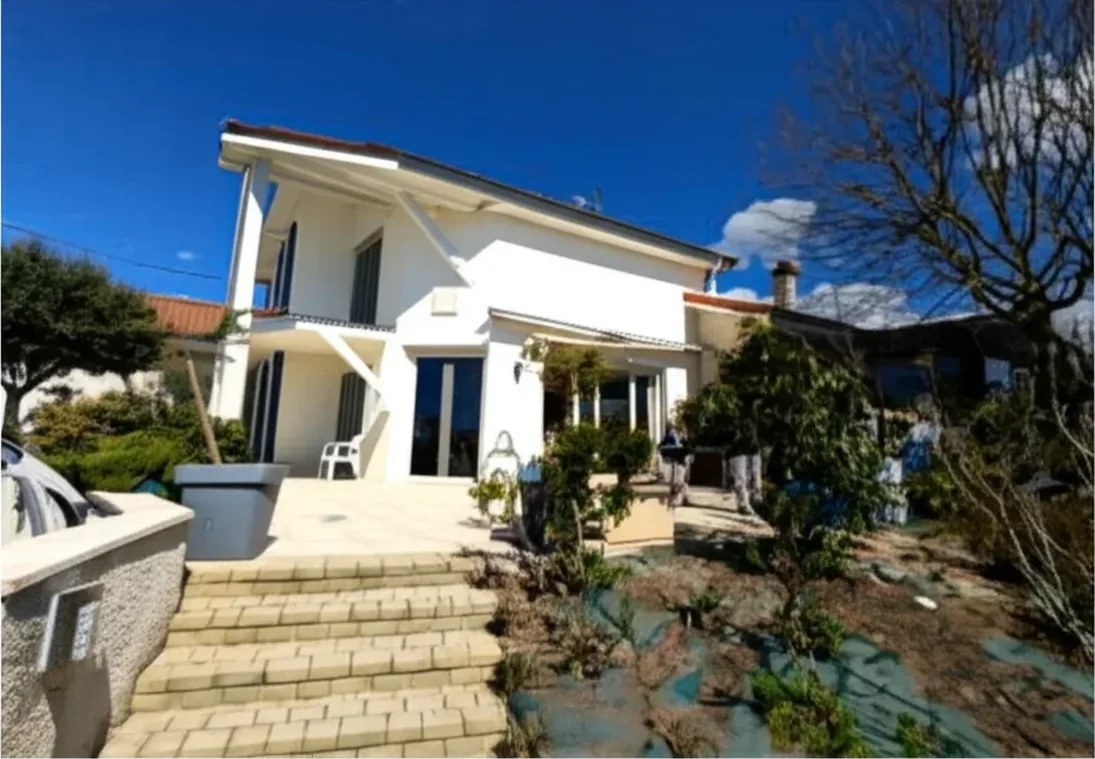
Try it on your house

Looking for honest pricing on exterior painting Detroit homeowners can trust? Detroit's humid continental climate, brutal Great Lakes winters, and unique architectural legacy, from the 1905 mansions of Boston-Edison to the Tudor Revivals of Indian Village and the gilded estates of Palmer Woods, demand a different approach than warmer markets. This guide breaks down real prices, the local factors no national calculator captures, and the trending colors Detroit painters Detroit Michigan homeowners actually book in the field.
Want to preview Detroit-trending palettes on your own home first? Try our free AI paint visualizer in under 30 seconds. For full citywide benchmarks, see the exterior house painting cost by city guide and our complete 2026 exterior painting cost guide.
From our team at FacadeColorizer: We have run more facade color simulations than any other free tool on the market, and that direct testing experience shapes every guide on this site.
How Much Does Exterior Painting Cost in Detroit in 2026?
The average cost per square foot for exterior house painting in Detroit ranges from $3.30 to $5.70, placing Motor City notably above the national average. Why? A painfully short painting window (May through September) concentrates demand into 5 months, labor rates have climbed with the city's revitalization, and pre-war housing stock requires extensive surface preparation, including lead-safe protocols on the thousands of homes built between 1905 and 1950. Most Detroit homeowners pay $6,500 to $11,500 for a full repaint on a typical 2,000-2,500 sq ft home, with historic mansions in Boston-Edison or Palmer Woods running $14,000 to $28,000+. Want a number tailored to your own home before you start calling around? Our exterior painting cost calculator converts your Detroit square footage into a quick budget range you can measure every bid against.
| Home Size | Exterior Sq Ft | Pro Cost (Detroit) | DIY Cost |
|---|---|---|---|
| Small bungalow (1,000-1,400 sq ft) | ~900-1,200 sq ft | $3,200 - $5,500 | $750 - $1,200 |
| Medium (1,500-2,500 sq ft) | ~1,300-2,100 sq ft | $6,500 - $11,500 | $1,200 - $2,000 |
| Large (2,500-3,500 sq ft) | ~2,100-2,900 sq ft | $10,000 - $17,000 | $2,000 - $3,200 |
| Historic mansion (Boston-Edison, Palmer Woods 3,500+ sq ft) | ~3,000-5,000+ sq ft | $14,000 - $28,000+ | Not recommended |
| Birmingham / Grosse Pointe upscale | ~2,500-4,500 sq ft | $11,000 - $22,000+ | Not recommended |
Try it on your house
No photo? Try a sample
Detroit Pro Tip
Most Detroit quotes look low until you read the prep line. Demand a written scope that itemizes hand-scraping, lead-safe containment (mandatory for pre-1978 homes), epoxy wood filler on freeze-thaw damaged trim, and at least two coats of premium acrylic. A cheap bid that skips containment is not a bargain, it's a future $5,000-$10,000 EPA violation waiting to happen.
The Detroit Market: Climate Meets Pre-War Architecture
Detroit sits squarely in the humid continental zone, which means hot, sticky summers (peaks around 90°F with 70%+ humidity), brutally cold winters (single-digit lows, multi-day below-freezing stretches), and over 80 freeze-thaw cycles every year. Layer that climate over a housing stock dominated by 1900-1950 construction and the painting equation gets complicated fast. Detroit isn't just one market, it's a patchwork of architectural eras and neighborhood standards:
- Boston-Edison (1905-1925): One of the largest historic districts of pre-1925 homes in the United States. Stately mansions, brick masonry, ornate wood trim, fascia, and soffit, originally home to Henry Ford and the auto-industry elite.
- Indian Village (1895-1929): Tudor Revival, Colonial Revival, and Arts and Crafts mansions. Heavy half-timbered wood facades and decorative stucco panels are extremely paint-intensive.
- Palmer Woods (1916-1940): 295 large estates designed in English Tudor, Colonial, and Mediterranean Revival styles, lush canopy that holds moisture against north-facing walls.
- Corktown, Woodbridge, West Village: 1880s-1920s Victorians, Italianates, and workers' cottages with ornate trim that drives multi-color jobs.
- Birmingham, Grosse Pointe, Royal Oak suburbs: Affluent suburban markets with stricter HOA rules, premium contractor pricing, and a heavier mix of Colonials and mid-century brick ranches.
This blend of old-growth wood trim, masonry, and freeze-thaw exposure is exactly why generic national pricing fails in Detroit. For a sister Midwest perspective, compare our Chicago exterior painting cost guide.
5 Detroit Cost Factors No National Calculator Captures
These are the local variables that swing your final invoice by thousands. A quality painting contractor in Detroit will price each one explicitly.
1. Boston-Edison Preservation District (1905-1925 Mansions)
Boston-Edison is a designated Detroit historic district, exterior color changes on contributing structures must go through review with the Detroit Historic District Commission. The neighborhood guidelines steer homeowners toward period-appropriate palettes (deep greens, slate blues, warm putty, mahogany) and away from anything jarringly modern. Expect a $1,500-$3,500 premium on a typical Boston-Edison mansion repaint, larger crews, custom scaffolding for 3-story facades, and meticulous brushwork on ornate trim, fascia, and bracketed eaves are non-negotiable. Many homeowners pair their repaint with a Victorian exterior color study before submitting plans.
2. Indian Village Tudor Revival Detailing
Indian Village's defining Tudor Revival homes feature half-timbered facades, decorative stucco panels between dark wood beams, and steeply pitched roofs with ornate dormers. Tudor repaints are labor-intensive, the contrast between dark beams and lighter stucco panels means tight cut-lines, multiple paint products (acrylic on wood, masonry-grade on stucco), and often a color consultation to balance both elements. Budget a 20-30% premium versus a comparably sized colonial. For palette inspiration, browse our Tudor style paint colors guide.
3. Brutal Winter, Brutally Short Paint Window (May-September)
Paint will not properly cure below 50°F. In Detroit, that means a reliable painting window from roughly mid-May through late September, just 4.5 months. Demand spikes hard from April booking through August. The best Detroit crews are typically booked 6-10 weeks out by mid-April. Book in March if you want first pick of crews and dates. Painting in October is a gamble, an early frost or sudden cold snap can ruin a fresh coat overnight.
4. Motor City Industrial Heritage Paint Layers
Older Detroit homes were originally painted with lead-based formulations through 1978, and many have been repainted half a dozen times since. That stack of old paint, often with industrial-era soot baked into the layers, becomes a chalking, peeling, and adhesion nightmare. Quality Detroit contractors budget extra time for power washing, scraping, and bonding primer. EPA-certified lead paint abatement is legally required on any pre-1978 home disturbance, never hire a contractor who skips this step.
5. Freeze-Thaw Siding Damage Repairs
80+ freeze-thaw cycles per year wreck unprotected wood. Water seeps into hairline cracks in paint, freezes, expands, and pries the coating off. By the time most Detroit homeowners call a painter, there's already wood rot in soffit edges, window sills, and trim corners. Expect $400-$1,500 in carpentry replacement and epoxy wood filler work added to most Detroit quotes. A reputable crew flags every soft spot before scope is finalized, not after work begins. For more on protective coatings in cold climates, see our best exterior paint colors 2026 guide.
Hiring Painters in Detroit Michigan: Networks and Vetting
Detroit's contractor market mixes long-tenured family operations (some with three generations of crews on Boston-Edison and Indian Village restorations) with newer crews that have sprung up alongside the city's revitalization. Vetting matters because cheap bids in this market often skip lead-safe protocols entirely. Here's how to filter painters Detroit Michigan homeowners actually trust:
- Licensed, bonded, insured: Michigan requires a Residential Builder or Maintenance & Alteration Contractor license for jobs over $600. Verify license status through the State of Michigan LARA database. Minimum $1 million in general liability and active workers' compensation coverage is the floor, not a nice-to-have.
- EPA RRP-certified for lead-safe work: Any contractor disturbing painted surfaces on a pre-1978 Detroit home must hold a current EPA Lead-Safe certification. Ask to see the firm number and the certified renovator's card on day one.
- Local references from your neighborhood: A contractor who has worked in Boston-Edison, Indian Village, or Palmer Woods will know the historic guidelines and the typical wood trim conditions on those homes. Ask for 3 references on streets you can drive past.
- Detailed written estimates: A real Detroit free estimate separates labor, paint, primer, scaffolding, repairs, and lead-safe containment. Lump-sum napkin quotes hide problems.
- Workmanship warranty: 3-5 year labor warranty is standard for premium Detroit contractors. Anything shorter doesn't survive the freeze-thaw test.
- BBB and Detroit-area review platforms: Cross-reference reviews on multiple platforms. A single 5-star Google review burst is a red flag.
Reading detailed neighborhood color guides before requesting bids gives you a sharper conversation with contractors. Our charcoal house with wood accent guide and HOA-approved exterior colors guide both inform suburban Detroit choices.
Trending Detroit Exterior Colors for 2026
Detroit's color trends in 2026 lean heavily into deep, moody historical palettes that flatter the city's pre-war architecture without falling into period-piece cosplay. After running thousands of AI simulations on Michigan-specific homes (we directly tested Benjamin Moore Wrought Iron paired with Wedding Veil on a Boston-Edison mansion facade and Bracken Brown on an Indian Village Tudor), these are the palettes Detroit homeowners are actually choosing:
- BM Wrought Iron (2124-10) + Wedding Veil (2125-70): The signature Boston-Edison combo. Wrought Iron is a near-black with cool blue-gray undertones that anchors brick mansions and brings ornate millwork forward. Wedding Veil is a barely-there warm white, perfect for window sashes and decorative trim against the dark body. The contrast is dramatic without being garish, exactly what historic district reviewers approve.
- BM Bracken Brown (1530): The new go-to for Indian Village Tudor Revival half-timbering. A deep, warm chocolate brown that reads richer than basic black on the dark beams, paired with creamy off-white stucco panels and a contrasting wrought-iron-style accent on doors and shutters.
- SW Iron Ore (SW 7069) + SW Snowbound (SW 7004): The modern Detroit charcoal-and-warm-white pairing that works equally well on Birmingham colonials and Grosse Pointe Tudors. Iron Ore reads soft black in shade, warm graphite in sun.
- BM Hale Navy (HC-154): A perennial favorite on Boston-Edison brick mansions for shutters, doors, and accent trim. Reads true navy without going aggressive.
- BM Revere Pewter (HC-172): The safe Birmingham and Royal Oak choice when HOA-driven neutrality is required, warm enough to feel inviting against snow, neutral enough to satisfy any covenant committee.
Want to A/B test Wrought Iron vs Bracken Brown on your own facade before paying for sample pots? Upload a photo to our visualizer and preview both in under a minute.
Detroit Pricing Matrix: Cost per Square Foot by Surface
Different surfaces require different products, prep, and labor hours. Here's how to read a Detroit contractor's line-item quote:
| Surface Type | Detroit Cost / Sq Ft | Notes |
|---|---|---|
| Wood lap siding (pre-war homes) | $3.50 - $5.20 | Heavy prep, lead-safe protocols on pre-1978 stock |
| Brick (typically not painted) | $2.80 - $4.40 | Painting brick is permanent, cleaning is usually preferred |
| Stucco panels (Tudor / Spanish Revival) | $3.20 - $4.80 | Masonry-grade elastomeric paint, lower coverage per gallon |
| Tudor half-timbering (dark beams) | $5.50 - $7.50 | Hand-brushed, tight cut-lines on stucco contrast |
| Vinyl siding (suburbs) | $2.20 - $3.40 | Requires vinyl-safe formulations |
| Trim, soffit, fascia (linear ft) | $2.00 - $3.80 per linear ft | Often quoted separately, semi-gloss recommended |
DIY vs Pro: When Does Painting Your Detroit Home Yourself Make Sense?
DIY can work for a single-story ranch in a Detroit suburb where the surfaces are simple, the home is post-1978 (no lead concerns), and the ladder work stays under 20 feet. For most pre-war Detroit homes, DIY is a false economy. Here's the honest breakdown:
- DIY makes sense if: single-story suburb home, vinyl or post-1978 wood siding, no significant rot, you own (or can borrow) pressure washing equipment and a 20-ft extension ladder, and you can dedicate 7-10 full days in the May-September window.
- Hire a pro if: multi-story, pre-1978 construction, ornate Victorian or Tudor trim, historic district approval needed, or significant freeze-thaw wood filler repairs are visible.
- DIY savings: Realistically 50-65% off a pro quote, BUT add in equipment rental ($400-$700 for pressure washer, sprayer, scaffolding), premium paint ($300-$700 for two coats), and 80-120 labor hours of your own time. The real net savings on a medium home is often $2,500-$4,000, not the $6,000+ the math initially suggests.
- Hidden DIY risks: Failed adhesion forces a complete redo within 2-3 winters. Lead exposure on pre-1978 homes can trigger EPA violations and serious health risks. Falls from extension ladders are the #1 cause of homeowner emergency room visits during painting season.
Surface Preparation and Product Selection for Detroit's Climate
The single biggest predictor of paint longevity in Detroit is surface preparation, not the brand on the can. Power washing removes salt residue, mildew, and decades of industrial particulate. All peeling and cracking paint must be scraped to a sound substrate. Bare wood gets a bonding primer before topcoat. Gaps around windows, doors, siding, trim, fascia, and soffit need fresh caulking with a flexible polyurethane sealant rated for freeze-thaw. Rotted boards are replaced or repaired with epoxy wood filler.
Professional Detroit crews spray large siding sections, then back-brush for adhesion on the wood grain, and finally use a roller on stucco panels. A two-coat system is the minimum, with three coats recommended on north-facing walls that hold moisture longer. The right paint sheen matters: satin for the body (good mildew resistant properties, easier cleanup), semi-gloss for trim and shutters. For Detroit's freeze-thaw extremes, choose premium acrylic latex from Sherwin-Williams Duration or Emerald, Benjamin Moore Aura or Regal Select, PPG Timeless, Behr Marquee (Home Depot), or Valspar Duramax. These products deliver fade resistance, flexibility through 130°F temperature swings, and coverage per gallon of 350-400 sq ft on smooth siding, dropping to 250-300 on stucco. Always paint within proper weather conditions: surface temp above 50°F, humidity below 75%, no rain forecast for 24 hours, and finish by mid-afternoon so the coating skins over before evening dew.
Detroit Historic Districts and Permitting
Detroit has multiple designated local historic districts that regulate exterior changes. The Detroit Historic District Commission reviews color changes in districts including Boston-Edison, Indian Village, West Canfield, Brush Park, and others. For full district maps and review procedures, consult detroitmi.gov. In Birmingham and Grosse Pointe, color changes are typically governed by neighborhood HOA architectural review boards rather than municipal commissions.
For Detroit-area homes outside designated historic districts, no painting permit is required. Repainting in an existing color does not typically trigger review even in historic districts, but any color change should be submitted before work begins. Your contractor should know these procedures cold, if they don't, find another contractor.
Detroit Suburbs: Birmingham, Grosse Pointe, and Royal Oak
Outside the city limits, the Detroit metro paints a different picture. Birmingham, Bloomfield Hills, Grosse Pointe Park, Grosse Pointe Farms, and Royal Oak each have their own market dynamics, paint contractor pools, and color norms. Pricing in these affluent suburbs typically runs 15-25% higher than equivalent jobs in Detroit proper, reflecting both larger homes and stricter quality expectations from buyers in those markets.
- Birmingham: Traditional colonials and Tudor revivals dominate. HOAs are less prevalent here, but neighborhood architectural review boards keep an eye on character. Expect $11,000-$22,000 for a typical 3,000-4,000 sq ft colonial repaint.
- Grosse Pointe (all five communities): The lakefront mansions and shore-adjacent Tudors require contractors comfortable with lake-effect humidity and stricter Pointes architectural standards. Premium pricing, premium results.
- Royal Oak and Ferndale: A blend of 1920s craftsman bungalows and post-war ranches. Trending colors in these eclectic neighborhoods lean modern (charcoals, sage greens, warm whites) and homeowners often paint at the more accessible end of the Detroit metro range.
- Bloomfield Hills: Large estate homes, custom architecture, and often mature landscaping that means scaffolding access is the main cost driver. Budget accordingly.
Suburban homes outside the city's historic districts typically have more flexibility to embrace modern palettes. Review our HOA-approved exterior colors guide before submitting your community's architectural review.
Boost Your Detroit Home's Property Value
A quality exterior repaint is consistently one of the highest-ROI improvements in Detroit's recovering real estate market. Homes in Boston-Edison and Indian Village that present immaculate, period-appropriate exteriors regularly sell at 8-15% premiums over comparable homes with deferred maintenance. Curb appeal multiplies in markets where buyers can drive entire historic blocks comparing facades. National data shows exterior paint returns 60-100% of the investment at resale, and in Detroit's recovering market, that ROI often skews even higher because buyers are actively shopping by neighborhood character. For additional inspiration before booking your repaint, review HGTV's exterior color guides and Better Homes & Gardens exterior resources.
For comparable Midwest and national benchmarks, also browse our Chicago cost guide and the master city-by-city pricing index.
Preview Detroit-trending colors on your home, free
Upload a photo to FacadeColorizer and preview Benjamin Moore Wrought Iron, Bracken Brown, Sherwin-Williams Iron Ore, or any other color on your actual Detroit home in seconds. The fastest way to lock in your color consultation before requesting free estimates from local painters.
Frequently asked questions
How much does exterior painting cost in Detroit, MI in 2026?
When is the best time to paint a house exterior in Detroit?
How do I find reliable painters in Detroit Michigan?
What are the trending exterior paint colors for Detroit homes in 2026?
Do I need a permit to paint my Detroit house?
Why is exterior painting more expensive in Detroit than national average?
Should I paint or clean my Detroit brick home?
How long does exterior paint last on a Detroit home?
Trademarks mentioned (Sherwin-Williams, Benjamin Moore, Behr, Caparol, Brillux, Sto, Alpina, Valspar, PPG, Glidden, Dulux, Crown Trade, Sandtex, Farrow & Ball, Johnstone's, Leyland) are property of their respective owners. FacadeColorizer is independent and not affiliated with any of them. Nominative fair use under Lanham Act §1125.