Try it on your room

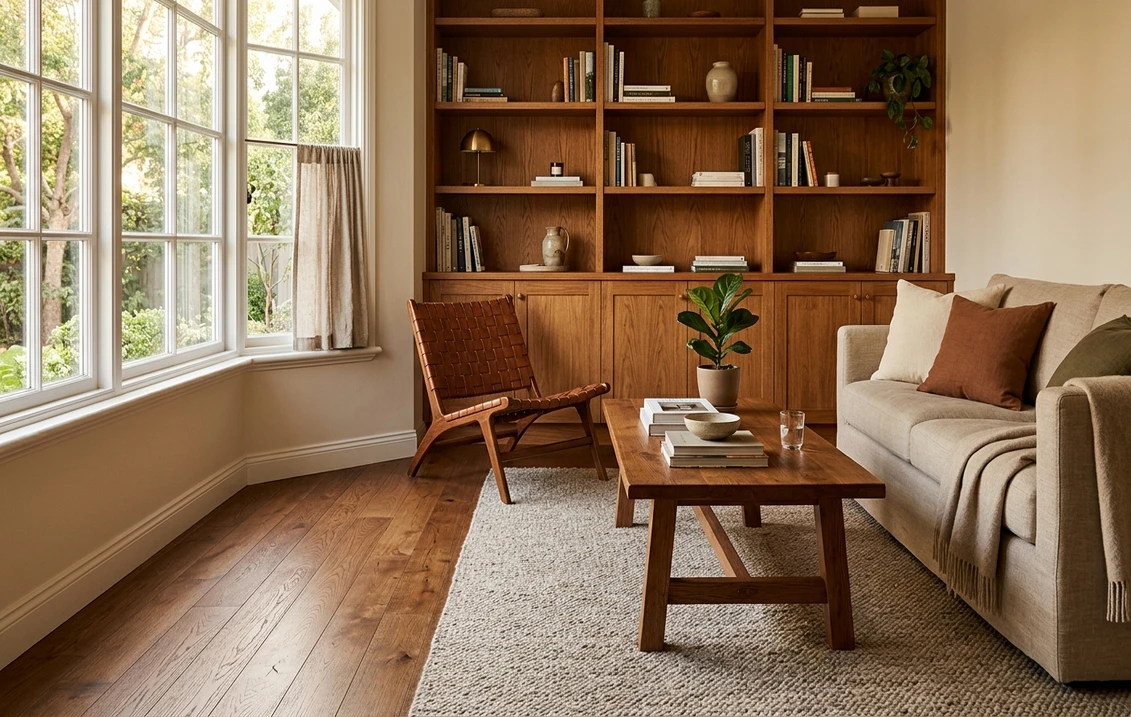
Late-afternoon sun rakes low across an oak floor finished in Golden Oak (210B), lighting it to a warm honey-amber that drops back to plain brown the instant the light slides off the boards. That shift, from glowing to flat in the same room within an hour, is the whole challenge of choosing a wood stain. Minwax alone publishes dozens of interior stain colors, and the chip on the rack almost never matches what lands on your actual board. The wood species, the grain, the number of coats, and whether you conditioned the surface first all push the final tone lighter, darker, redder, or grayer than the label. This pillar is the browse-and-decide map: it groups the most-used Minwax interior stains by tone family, gives you the real stain codes, and points you to the deeper guides for testing, pairing, and budgeting your project.
Wood stain is its own discipline, separate from wall paint. A stain soaks into the grain and lets the wood texture show through, where paint sits on top and hides it. That is why a single Minwax color can read totally differently on red oak versus pine versus maple. Below, we walk every major tone family (light naturals, warm mediums, rich darks, modern grays, and reds), then cover the species effect, the conditioning step that prevents blotchy pine, and how to test before you commit a whole floor.
Upload a photo of your room and preview warm-wood and modern-gray finishes in 30 seconds, free, before you buy a single can.
What Minwax interior stain actually is
Minwax is owned by Sherwin-Williams and is the best-selling consumer wood-finish brand in the United States. The interior line most people mean by "Minwax stain colors" is Wood Finish, the classic penetrating oil-based stain sold in the familiar squat cans. It is a one-coat, wipe-on, wipe-off product that colors the wood in roughly five minutes of dwell time. Minwax also sells a Water-Based Wood Stain (lower odor, faster dry, raises the grain slightly) and the Gel Stain, which sits more on the surface and is the go-to for blotch-prone woods and for staining over an existing finish.
Three things are worth knowing before you scan the color list. Stain is not a topcoat. It adds no protection, so you seal afterward with polyurethane or a similar clear finish. The published color chips are shown on a neutral wood, usually pine or oak, and your own species will shift the result. And two thin coats deepen the tone, so the same color can land light or rich depending on technique. If you are also choosing wall colors for the same room, our best interior paint colors for 2026 guide pairs nicely with the wood tones below.
Minwax interior stain colors by tone family
The fastest way to shop Minwax is by where a color sits on the light-to-dark scale and whether it leans warm (red/orange/yellow) or cool (gray/ash). Here are the most popular Wood Finish interior stains, grouped by family, with their Minwax color numbers.
| Tone family | Popular Minwax colors (code) | Reads as | Best for |
|---|---|---|---|
| Light natural | Natural (209), Golden Oak (210B), Ipswich Pine (221), Puritan Pine (218) | Pale honey to soft amber | Keeping a room bright, cottage and farmhouse looks |
| Warm medium | Early American (230), Provincial (211), Special Walnut (224), Gunstock (231), Honey (272) | Classic warm brown with amber depth | Floors, trim, traditional furniture |
| Rich dark | Dark Walnut (2716), Jacobean (2750), Espresso (273), Ebony (2718) | Deep coffee to near-black brown | Dramatic floors, modern and transitional pieces |
| Cool / gray | Classic Gray (271), Weathered Oak (270), Pickled Oak (260), White Wash Pickling Stain (263) | Driftwood gray to soft greige | Coastal, Scandinavian, contemporary rooms |
| Red / warm-deep | Red Mahogany (225), Sedona Red (222), Cherry (235), Red Oak (215) | Warm reddish-brown to true mahogany | Antique-style furniture, formal trim, mahogany matches |
Try it on your room
No photo? Try a sample
Color names and Minwax stain numbers per Minwax Wood Finish published color guide 2026. Final appearance varies by wood species and number of coats.
If you are weighing stain against painting the same woodwork or built-ins, the trade-off is mostly cost and maintenance, and we break that down in the 2026 interior house painting cost guide. Stain plus topcoat is usually cheaper in material than two coats of premium paint, but it is less forgiving of surface flaws.
Light naturals: Golden Oak, Natural, Ipswich Pine
Light stains keep a room feeling open and let the grain do the talking. Natural (209) barely adds color, just a touch of warmth and depth, and is the classic choice when you love the raw wood and only want to seal it. Golden Oak (210B) is the all-time best seller: a warm honey-amber that flatters red oak floors and builder-grade trim, which is exactly why so many 1990s and 2000s homes are full of it. Ipswich Pine (221) and Puritan Pine (218) are lighter, slightly cooler honey tones designed to look good on knotty pine without going orange.
Watch the orange. Light warm stains on yellow-toned woods like pine and oak can drift toward a dated orange cast under warm bulbs. If you want light wood without the orange, lean toward Weathered Oak or a touch of Classic Gray mixed in, both covered below. Light tones also show less of the contrast between sapwood and heartwood, so they hide species mismatches better than dark stains.
Warm mediums: the most-painted floor and trim tones
The medium-brown family is the heart of Minwax and the safest middle ground for floors, stair treads, and traditional furniture. Special Walnut (224) is the crowd favorite for a reason: a balanced medium brown with just enough gray to avoid looking orange, which makes it read current rather than dated. Provincial (211) is a slightly cooler, grayed medium brown that designers reach for when they want warmth without amber. Early American (230) is a touch lighter and warmer, a true colonial brown. Gunstock (231) leans a little redder, and Honey (272) is the warmest, most golden of the group.
For new oak floors, the most popular 2026 combinations are Special Walnut for a warm-neutral brown, Provincial when the room already has a lot of warm light, and a custom 50/50 mix of the two for something in between. These mediums photograph well in real-estate listings because they read as intentional and hold up against changing wall colors. To see how those wall colors group together, our interior paint color families guide maps the warm and cool wall families that sit best against a medium-brown floor.
Free AI visualizer. Upload your real photo and compare warm-medium and rich-dark wood finishes side by side.
Rich darks: Dark Walnut, Jacobean, Espresso, Ebony
Dark stains are dramatic and modern, but they are also the least forgiving. Every scratch, sanding swirl, and bit of dust shows on a dark floor, and dark wood absorbs light, so a small or low-light room can feel smaller. Used well, they are stunning. Dark Walnut (2716) is the classic deep cool brown, the most popular dark floor stain in the country. Jacobean (2750) is a touch warmer and a hair darker, a near-espresso with a brown-black base that designers love for a high-contrast look. Espresso (273) is a soft, slightly warmer dark brown, and Ebony (2718) is the true black-brown for an almost-black finish.
Three rules make darks succeed. Sand thoroughly and evenly, because dark stain magnifies every flaw. Apply two even coats rather than one heavy one, which prevents a muddy, opaque look. And pair dark floors with lighter walls and plenty of light to keep the room from feeling cave-like. A popular 2026 high-contrast scheme is a Dark Walnut or Jacobean floor under a crisp warm-white wall, which is exactly the kind of pairing decision the Sherwin-Williams vs Benjamin Moore interior comparison helps you settle when you are choosing which brand of white to put above the wood.
Modern grays: Classic Gray, Weathered Oak, Pickled Oak
The gray and driftwood family is the newest part of the Minwax interior range and the answer to "light wood without the orange." Classic Gray (271) is a soft, true gray that gives oak a weathered, beachy look and reads cool and contemporary. Weathered Oak (270) is the most useful of the group: a pale greige that takes the yellow out of oak and lands somewhere between natural and gray, perfect when you want light wood that still looks like wood. Pickled Oak (260) is a whitewashed, limed effect that leaves a faint white in the grain for a Scandinavian or coastal feel.
Grays behave differently from warm browns. They look best on open-grain woods like oak and ash where the stain can settle into the grain lines, and they can look flat or chalky on tight-grain woods like maple. They also fight orange undertones in the wood itself, so a quick test board is essential. Many people layer a gray over a light coat of Weathered Oak to neutralize stubborn yellow before adding the gray on top.
Reds and mahoganies: Red Mahogany, Sedona Red, Cherry
The red family has fallen out of fashion for floors but remains essential for furniture, formal trim, and matching antique or mahogany pieces. Red Mahogany (225) is a rich, warm reddish-brown that mimics true mahogany. Sedona Red (222) is brighter and more orange-red. Cherry (235) is a softer warm red-brown that deepens beautifully over time. Reach for these when you are matching an existing red-toned wood rather than starting fresh. Fighting red undertones with a brown stain rarely works cleanly, so it is easier to lean into the red than to cancel it. Restoring a specific piece? A small test sample is non-negotiable.
Why the same Minwax color looks different on your wood
If you remember one thing from this page, make it this one. Minwax color chips are shown on one or two reference woods, but your boards will react to the stain based on their own density and grain. The same can produces noticeably different results across species:
- Red oak and white oak: open grain, takes stain evenly and predictably. Most chips are calibrated to oak, so oak gives you close to the label color.
- Pine: soft and uneven density, so it drinks stain unevenly and blotches without a conditioner. Pine also pushes warm stains more orange and dark stains more muddy.
- Maple and birch: tight, dense grain that resists stain and is highly prone to blotching. Dark stains on maple often look splotchy unless you use a gel stain or a pre-stain conditioner.
- Poplar: common in trim, but its green-gray streaks fight warm stains. Many pros paint poplar rather than stain it.
- Existing finished wood: a penetrating stain cannot soak through an existing topcoat. Use a gel stain on top, or sand to bare wood first.
So never trust the chip. The color you pick is only a starting point, and the species, the conditioner, and the coat count are what decide where it actually lands. That is why the testing step below matters more than the color name itself.
The wood is only half of it, though. The light in the room finishes the job, and a north-facing room is the hardest case for stained wood: it gets ambient sky light only, never a direct warm beam, so it works like a soft gray filter that mutes warm undertones and drops lightness a notch below the sample you approved in the store. A golden or amber stain that looked right on the board can settle into a flat gray-brown once the trim is up. Our guide to paint colors for north-facing rooms breaks down that light in detail, and the same reasoning applies to a floor or a run of trim: in a room with no direct sun, choose a stain a step warmer than the one that looked perfect under shop lights.
Conditioning, coats, and sealing
On soft or blotch-prone woods (pine, maple, birch, fir), apply Minwax Pre-Stain Wood Conditioner first. It partially seals the wood so the stain absorbs evenly instead of pooling in soft spots. Skipping it is the number-one cause of ugly, blotchy results. Use the oil-based conditioner under oil-based stain and the water-based conditioner under water-based stain.
For depth, two thin coats beat one thick coat every time. The first coat sets the base, the second deepens it and evens out absorption. Let each coat dry per the can before recoating. Then, because stain offers no durability on its own, seal with a clear topcoat: oil-based polyurethane for warmth and toughness on floors, water-based polyurethane (or Minwax Polycrylic) when you want minimal yellowing over light and gray stains. Note that oil-based poly adds a warm amber cast, which can nudge a gray stain back toward beige, so test your stain and topcoat together, not just the stain.
How to choose and test before you commit
A whole floor or a full set of cabinets is too big a commitment to guess. Use this sequence to land the right color the first time:
- Narrow by tone family first. Decide light, medium, dark, gray, or red from the table above, then pick two or three candidates inside that family.
- Test on your actual wood, not a chip. Buy small sample cans and stain a scrap board of the same species, or an inconspicuous patch (inside a closet, the underside of a tread). The chip is calibrated to a different wood than yours.
- Include the conditioner and the topcoat in the test. Condition the test board, apply one and two coats side by side, then brush your chosen sealer over half of it. This is the only way to see the real final color.
- View it in your room light. Check the sample in morning daylight, afternoon light, and under your evening bulbs. Warm stains shift most under incandescent and warm LED light.
- Preview the room digitally first. Before you buy several sample cans, use an AI visualizer on a photo of your actual room to see how a warm-brown versus a gray floor changes the whole space. It narrows the field fast and saves you buying cans you will not use.
Preview first, then test: it is the same habit whether you are picking a stain for a floor, choosing the wall colors around it, or pricing out the whole job. Our best interior paint colors for 2026 and interior color families guide handle the wall side, and the interior painting cost guide handles the budget side, so the wood, the walls, and the wallet all line up.
Compare warm walnut, rich espresso, and modern gray finishes on your own room before buying a single sample can.
Frequently asked questions
What is the most popular Minwax interior stain color?
For floors and traditional furniture, Special Walnut (224) and Dark Walnut (2716) are the two most popular Minwax interior stains, with Golden Oak (210B) close behind as the classic warm honey on oak. Special Walnut wins for being a balanced medium brown that avoids looking orange, while Dark Walnut leads the dramatic dark-floor category. Provincial (211) is the designer favorite when a slightly cooler, grayed brown is wanted.
How do I get light wood without an orange tone?
Choose from the gray and driftwood family rather than the warm honey family. Weathered Oak (270) is the most useful, a pale greige that takes the yellow out of oak while still looking like wood. Classic Gray (271) goes cooler and beachier, and Pickled Oak (260) leaves a whitewashed, limed effect. Seal with a water-based topcoat (Polycrylic) instead of oil-based polyurethane, because oil-based poly adds a warm amber cast that can push a light or gray stain back toward orange.
Why does my Minwax stain look blotchy?
Blotching happens on soft or dense woods (pine, maple, birch) that absorb stain unevenly. The fix is to apply Minwax Pre-Stain Wood Conditioner before staining, which partially seals the wood so the color absorbs evenly. On highly blotch-prone maple and birch, a gel stain (which sits more on the surface) gives the most even result. Always condition under the matching base, oil conditioner for oil stain and water-based conditioner for water-based stain.
Do I need a topcoat over Minwax stain?
Yes, always. Minwax Wood Finish adds color but no protection or durability of its own, so the wood needs a clear topcoat over it. Use oil-based polyurethane for maximum toughness and a warm finish on floors, or a water-based polyurethane or Minwax Polycrylic when you want minimal yellowing over light and gray stains. One caution: test the stain and the topcoat together, because the sealer can shift the final color, especially oil-based poly over cool or gray tones.
See warm-brown, rich-dark, and modern-gray wood tones on your actual photo before you commit to a floor or cabinet color.
Disclaimer: Minwax and the Minwax color names and numbers referenced here are trademarks of the Minwax Company (a Sherwin-Williams brand). FacadeColorizer is an independent paint and finish visualization service and is not affiliated with, endorsed by, or sponsored by Minwax, Sherwin-Williams, Benjamin Moore, or Behr. Stain colors shown on screens approximate the manufacturer chips; final appearance depends heavily on wood species, grain, number of coats, conditioner, and topcoat, so always confirm with a manufacturer sample on your own wood before purchase. Sources: Minwax Wood Finish published color guide 2026, Minwax application instructions and technical data sheets, and finishing references from The Spruce and Family Handyman.
Trademarks mentioned (Sherwin-Williams, Benjamin Moore, Behr, Caparol, Brillux, Sto, Alpina, Valspar, PPG, Glidden, Dulux, Crown Trade, Sandtex, Farrow & Ball, Johnstone's, Leyland) are property of their respective owners. FacadeColorizer is independent and not affiliated with any of them. Nominative fair use under Lanham Act §1125.
