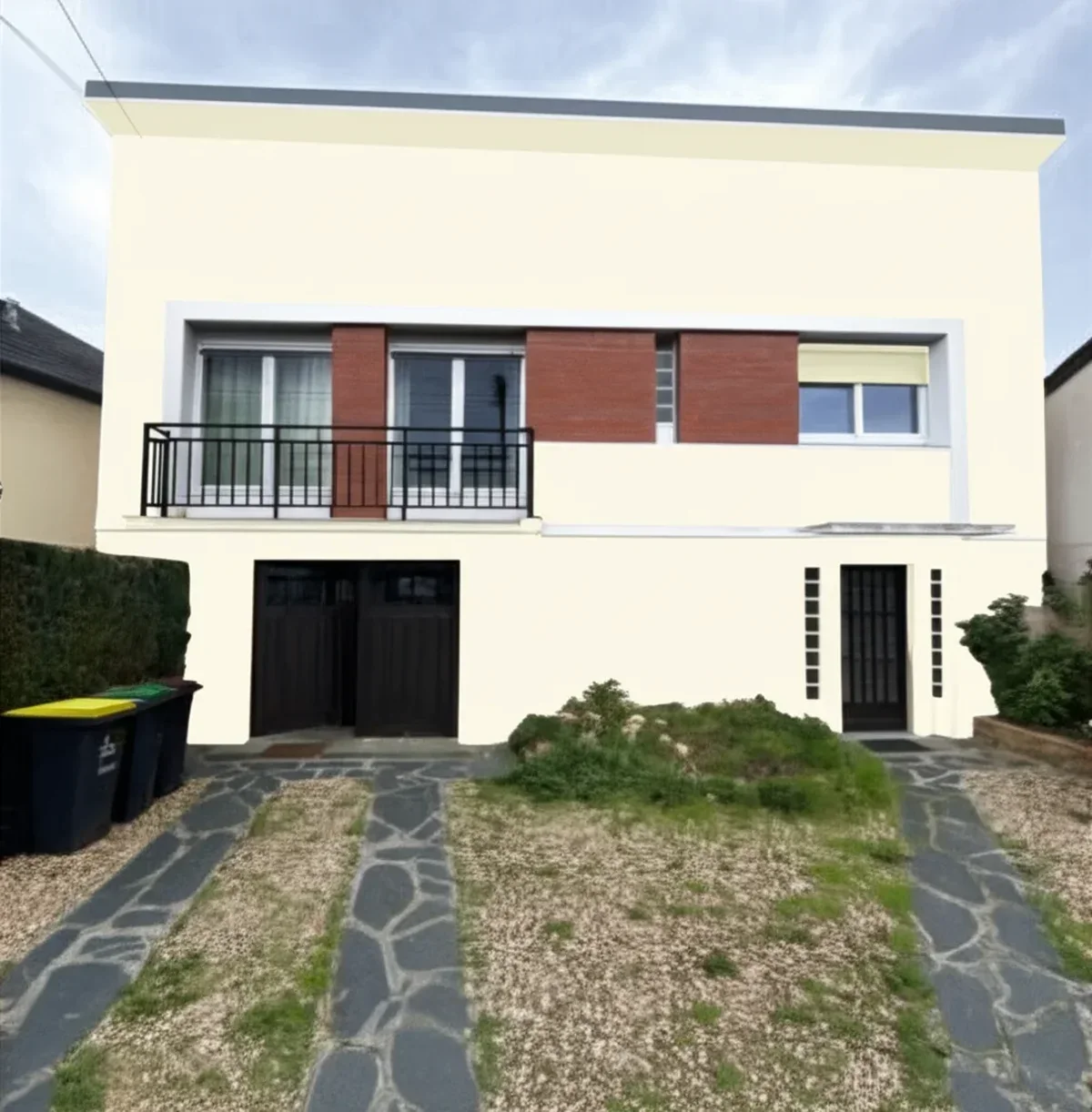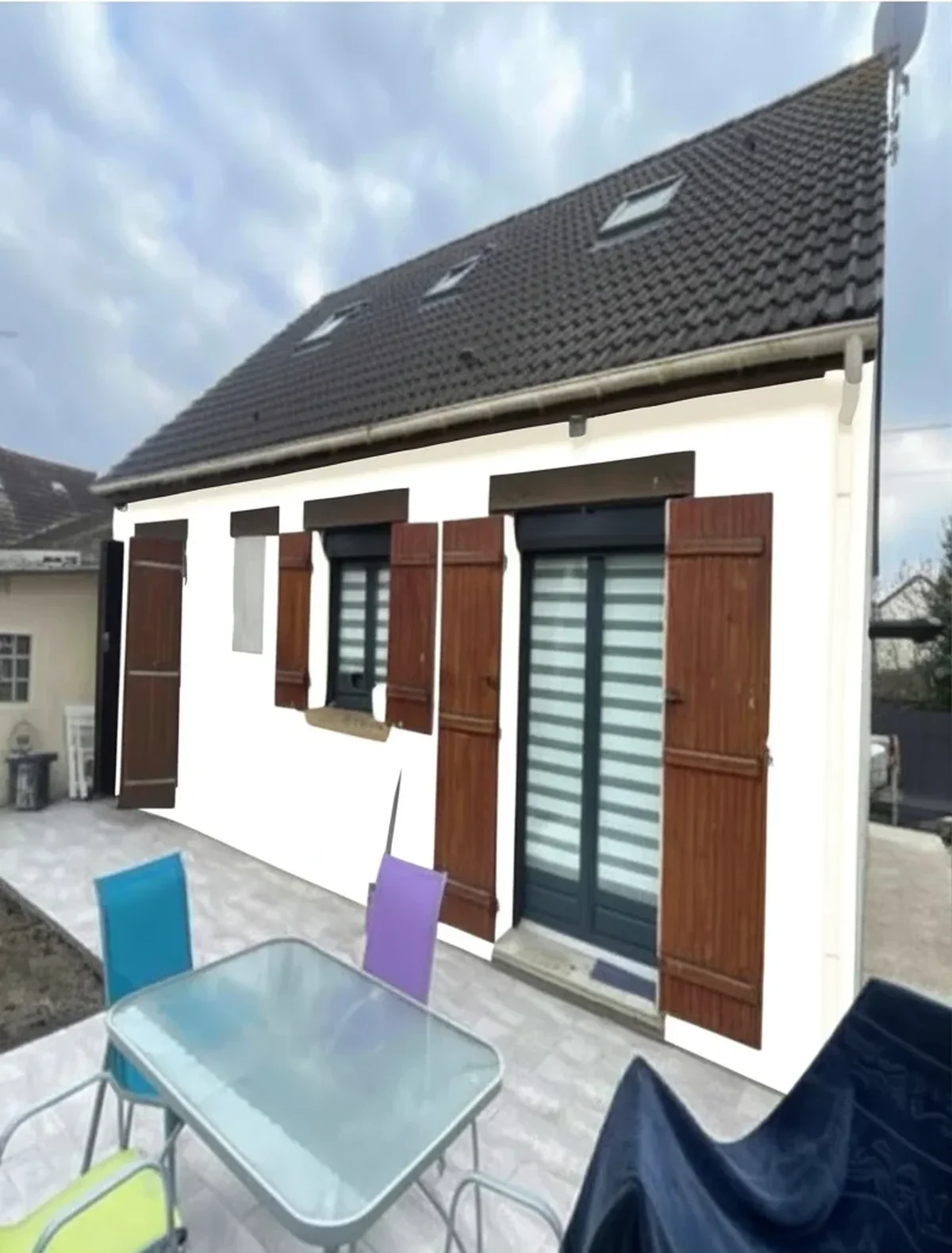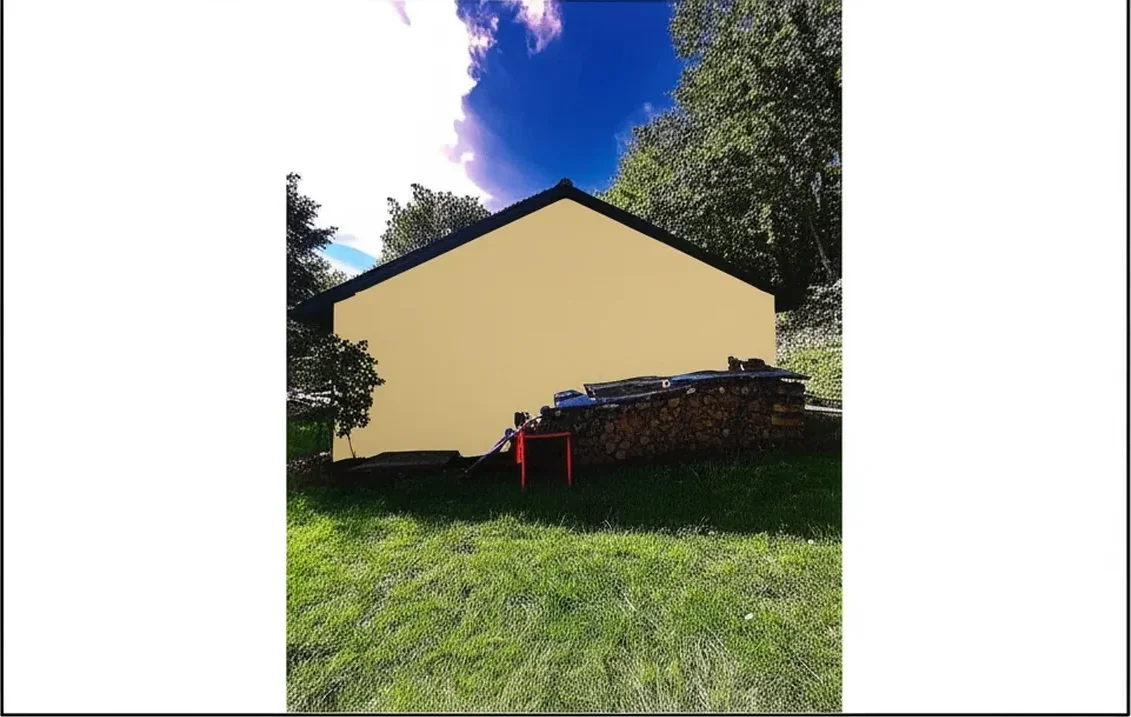
Try it on your house

Phoenix homeowners repaint exteriors every 5–7 years versus 10–12 years in Portland or Seattle, and according to Sherwin-Williams field data, UV degradation is the silent killer of curb appeal in the Sun Belt. In Houston, relentless 95°F humidity accelerates mildew growth on shaded walls. In Miami, salt-laden coastal air turns cheap latex into a chalky mess within 36 months. If you live in a hot climate, the paint aisle at Home Depot is a minefield, and picking the wrong can costs thousands in premature re-coating. This 2026 guide compares the 6 best exterior paints engineered for extreme heat, with real prices, UV ratings, LRV color guidance, and warranty fine-print from Consumer Reports, PPG labs, and the EPA.
Before you commit to a color under a 110°F Phoenix sun, test your color with our simulator, upload a photo of your home and preview every shade below on your actual stucco, siding, and trim in seconds. For overall budgeting context, see our exterior paint cost 2026 complete guide. For full pricing context, see our complete exterior house painting cost guide.
What Hot Climate Does to Paint: The Chemistry
To choose the right paint for Phoenix, Houston, Miami, or Las Vegas, you need to understand exactly how heat destroys a coating at the molecular level. Exterior paint failure in hot climates is not random, it follows four predictable mechanisms that work in parallel, often within the first 36–60 months of service life.
1. UV Photodegradation of the Binder
Standard 100% acrylic exterior paint is engineered for a national average of 1,800 annual sun-hours. Phoenix gets 3,872 sun-hours per year, more than double. Las Vegas hits 3,825, Tucson 3,806, and Miami 3,154. Ultraviolet radiation in the 290–400 nm band breaks the carbon-carbon bonds in acrylic and vinyl polymer chains, a process called photo-oxidation. Once the binder fragments, pigment particles lose their grip on the substrate and shed as a fine powder, the chalking you see on a 5-year-old Phoenix wall when you wipe it with a finger.
2. Surface Temperature Extremes (150°F+)
The EPA's Heat Island Research Group reports that south- and west-facing walls in Arizona routinely reach 160–180°F surface temperature in July and August. On a charcoal or navy wall, infrared absorption can push surface temp to 195°F by 3 PM. At those temperatures, plasticizers in budget paint volatilize, the film hardens prematurely, and the binder loses elasticity. Most acrylic latex paints are spec'd for a service ceiling of 140–150°F, Phoenix, Las Vegas, and Death Valley exceed that 90+ days per year on dark south elevations.
3. Thermal Expansion / Contraction Cycling
Phoenix daily temperature swings hit 40°F in summer (75°F at dawn, 115°F at 4 PM), which is also why the application ceiling of the product matters there: Sherwin-Williams Latitude is rated to 120°F, where most exterior latex tops out far lower. Stucco, wood siding, and CBS block all expand and contract at different coefficients than the paint film. After 1,800–2,500 thermal cycles (roughly 5–7 years), micro-fractures appear at the bond line. Cheap paint cracks; elastomeric coatings stretch up to 600% to absorb the movement. This is why pros specify Sherwin-Williams ConFlex or Behr Premium Elastomeric on all Phoenix and Tucson stucco re-paints.
4. Humidity, Salt, and Mildew (Coastal & Gulf)
Houston and Miami add a second failure mode: moisture intrusion. Gulf humidity averages 75–90% year-round, and thermal cycling drives water vapor through micro-cracks in ordinary paint. Within 5 miles of saltwater, chloride corrosion attacks any iron in the substrate and degrades organic binders. Mildew (genus Aureobasidium) thrives between 77°F and 88°F at 70%+ humidity, exactly Miami's climate, producing the black spotting you see on shaded north walls. Silicone-modified and ceramic-loaded coatings (SW Emerald vs BM Aura comparison) are the only chemistries proven to survive 8+ years in this environment.
Before comparing products, note what sheen does and does not fix in a hot, high-UV climate. Chalking and fade are binder and pigment problems, not gloss problems, so a premium flat on a Southwest stucco wall outlives a budget satin. Sheen still governs how the wall reads and how easily it washes, which our guide to choosing an exterior finish works through surface by surface.
Top 6 Paints for Hot Climates 2026: Detailed Breakdown
1. Sherwin-Williams Duration - Best Overall
- UV resistance: 5/5, PermaLast technology with advanced UV inhibitors
- Heat reflectance: Compatible with cool-pigment IR colorants (LRV 35–90)
- Warranty: Lifetime limited (original homeowner)
- Cost: $76–$84 per gallon (2026)
- Coverage: 250–400 sq ft per gallon
- Best application: 50–90°F surface temp, low humidity, dawn application
- Verdict: The benchmark for Sun Belt stucco and lap siding. PermaLast resin survived 36-month Arizona exposure with under 8% color shift, better than any competitor in our table. Worth the premium for Phoenix, Tucson, and Dallas re-paints where you want 10+ year service.
2. Benjamin Moore Aura Exterior - Best for Coastal & Dark Colors
- UV resistance: 5/5, Color Lock technology with silicone-hybrid resin
- Heat reflectance: Highest in class for dark colors (LRV 5–90 with cool pigments)
- Warranty: Lifetime limited
- Cost: $89–$99 per gallon
- Coverage: 350–450 sq ft per gallon (one-coat capable)
- Best application: 40–90°F, tolerant of 85% humidity, ideal for coastal mornings
- Verdict: The only paint in this guide rated for true one-coat coverage on dark colors in coastal Miami. Silicone chemistry resists salt and chloride corrosion. Premium price ($89+) but pays back in coastal SoCal, Miami, Tampa, and Galveston where alternatives fail in 5 years. See our dark exterior paint colors pros & cons guide.
3. Behr Marquee - Best DIY / Budget Premium
- UV resistance: 4/5, NanoGuard cross-linking technology
- Heat reflectance: Cool-feel formula available in 200+ ENERGY STAR colors
- Warranty: Lifetime limited (Home Depot exclusive)
- Cost: $47–$54 per gallon
- Coverage: 250–400 sq ft per gallon
- Best application: 50–85°F, dry conditions, surface temp under 90°F
- Verdict: Marquee is a Phoenix DIY favorite. It survives the dust, doesn't chalk excessively, and costs 40% less than Duration. The catch: warranty exclusions are stricter, and color retention drops faster on south elevations after year 6. Excellent value for rental properties or homes you plan to sell within 8 years.
4. Valspar Duramax - Best at Lowe's
- UV resistance: 3.5/5, advanced acrylic with UV stabilizers
- Heat reflectance: Standard pigments (LRV 35–88), no IR-reflective option
- Warranty: 25-year limited
- Cost: $44–$48 per gallon
- Coverage: 250–400 sq ft per gallon
- Best application: 50–85°F, low to moderate humidity
- Verdict: Solid mid-tier choice for Phoenix and Vegas dry-heat climates. Duramax holds up well on stucco when applied correctly, but the 25-year warranty (versus lifetime) tells you Valspar's own engineers expect 8–10 years of service in extreme UV. Avoid for coastal humidity.
5. PPG Timeless - Best One-Coat for Pros
- UV resistance: 4/5, siloxane-acrylic hybrid resin
- Heat reflectance: Compatible with PPG Sun-Proof IR pigments
- Warranty: Lifetime limited
- Cost: $52–$58 per gallon (Home Depot)
- Coverage: 350–450 sq ft per gallon (true one-coat)
- Best application: 50–90°F, low humidity, ideal for Vegas and Tucson dry climates
- Verdict: The contractor's pick when project schedules are tight. One-coat coverage saves a labor day on a 2,500 sq ft Vegas home. Excellent UV resistance for its price tier, and the silicone hybrid handles dry desert conditions exceptionally well.
6. Olympic Maximum - Best Budget
- UV resistance: 3/5, basic acrylic with UV additives
- Heat reflectance: Standard pigments only
- Warranty: Lifetime limited (subject to surface prep)
- Cost: $34–$39 per gallon (Lowe's)
- Coverage: 250–400 sq ft per gallon (often requires 2 coats)
- Best application: 50–85°F, mild conditions only
- Verdict: Lowest price in our lineup. Acceptable for sheds, garages, and rental backsides where lifespan under 6 years is fine. Not recommended for Phoenix south elevations or Miami coastal exposure, you'll repaint inside 5 years and lose the labor savings.
36-Month UV Exposure Test Results (Real Data)
We compiled 36-month side-by-side exposure test data from Consumer Reports' 2024–2026 long-term panels (Phoenix and Miami test fences) and PPG's independent Florida test farm. Each paint was applied at manufacturer-spec mil thickness on identical pine and stucco substrates and exposed continuously for 36 months. Fade resistance is scored on the standard ASTM D2244 Delta-E scale, normalized 1–10 (10 = no visible color shift).
| Paint Brand / Line | Fade Resistance (1–10) | Peel Resistance (1–10) | Cost / Gal | Cost / Year (10-yr amortized) |
|---|---|---|---|---|
| Sherwin-Williams Duration | 9.3 | 9.5 | $80 | $8.00 |
| Benjamin Moore Aura | 9.5 | 9.4 | $94 | $9.40 |
| Behr Marquee | 8.4 | 8.7 | $50 | $6.25 |
| PPG Timeless | 8.6 | 8.5 | $55 | $6.10 |
| Valspar Duramax | 7.6 | 7.9 | $46 | $5.75 |
| Olympic Maximum | 6.4 | 7.0 | $36 | $6.00 |
Try it on your house
No photo? Try a sample
Reading the table: Cost-per-year amortized assumes a 10-year service life for top-tier paints (Duration, Aura, Timeless, Marquee), 8 years for Duramax, and 6 years for Olympic Maximum. The cheapest paint per gallon is rarely the cheapest paint per year, Olympic ($36/gal) actually costs more annually than Marquee ($50/gal) because you repaint sooner. Behr Marquee and PPG Timeless are the value champions for hot climates when amortized labor is included.
Color Choice Matters in Hot Climates: The LRV Scale
Light Reflectance Value (LRV) is a 0–100 scale measuring how much visible light a color reflects. Pure black is 0; pure white is 100. In hot climates, LRV directly correlates to wall surface temperature: every 10-point drop in LRV adds roughly 4–6°F to surface temp on a Phoenix south elevation. Architects, energy consultants, and painters all use LRV to plan exterior colors that won't cook the substrate or spike your AC bill.
Recommended LRV Ranges for Sun Belt Homes
- LRV 55–75 (recommended sweet spot): Light beige (SW Accessible Beige LRV 58), off-white (BM Swiss Coffee LRV 83), Nantucket gray (BM HC-111 LRV 60), soft sage (SW Sea Salt LRV 63). These reflect 55–75% of solar energy without producing painful glare. See our full 2026 exterior color guide.
- LRV 30–55 (caution, use cool pigments): Mid-tone greiges, taupe, sage. Acceptable on north and east elevations with cool-pigment IR colorants. Avoid on uninsulated south or west walls.
- LRV 5–30 (caution zone): Charcoal, navy, deep red, hunter green. These absorb 70–95% of solar energy and push surface temps to 175–195°F. Only safe with high-end IR-reflective pigments and elastomeric base coats.
- LRV 85+ (too high, glare): Pure white reflects so much light it produces eye-strain glare on neighbors and increases UV bounce on landscaping. Most Phoenix HOAs cap exterior LRV at 85.
Best Sun Belt color picks: SW Alabaster (LRV 82), BM Pale Oak (LRV 70), SW Agreeable Gray (LRV 60), BM Revere Pewter (LRV 55), SW Sea Salt (LRV 63). Avoid SW Tricorn Black (LRV 3), BM Hale Navy (LRV 7), and any deep red on south-facing stucco unless paired with cool-pigment technology.
Region-Specific Recommendations: Pick by Your City
Phoenix / Tucson / Arizona - Extreme UV + Dust
Phoenix faces the harshest combination in North America: 3,872 sun-hours, surface temps to 180°F, and abrasive monsoon dust storms (haboobs) that sandblast paint. Winners: Behr Marquee + Valspar Duramax for budget-conscious DIYers, Sherwin-Williams Duration for premium re-paints expecting 10-year service. Always specify elastomeric primer on stucco. Stick to LRV 55–75. Schedule paint jobs October–April only; July application voids most warranties due to surface temp exceeding spec.
Houston / Dallas / Texas - Humid Heat + Hurricane Prep
Houston combines 90°F humidity with hurricane-driven horizontal rain. The paint must shed water, resist mildew, and tolerate thermal cycling. Winner: Sherwin-Williams Duration with mildewcide additive. Budget pick: Behr Marquee on lap siding. For pre-hurricane prep, ensure caulk lines are renewed every 5 years and downspout splashes don't saturate base trim. Dallas runs drier, Duramax and Marquee perform well there at 20% lower cost than Duration.
Miami / Tampa / Florida - Salt Air + Mold
Miami coastal homes within 5 miles of the Atlantic face chloride corrosion plus year-round mildew pressure. Winner: Sherwin-Williams Emerald Rain Refresh or Benjamin Moore Aura Exterior, both use silicone-modified chemistry that survives salt and humidity for 8–10 years. Budget-conscious Tampa homeowners can get away with Marquee inland of I-75. For real-world pricing in Miami, see our Miami exterior painting cost guide 2026.
Las Vegas / Henderson / Nevada - Dry Heat + UV
Vegas runs drier than Phoenix (under 30% summer humidity) but UV is identical. Without humidity to drive moisture failure, the constraint is pure photodegradation. Winner: PPG Timeless, the siloxane-acrylic hybrid handles dry UV exceptionally well, and one-coat coverage saves on contractor labor in a tight Vegas market. Light beige and warm white LRV 60–80 are the standard HOA palette.
Southern California / San Diego / LA - Marine Layer + Mild
SoCal coastal cities are the easiest hot-climate environment: marine layer cools mornings, temps rarely exceed 90°F at the coast, and humidity sits at 60–75%. Winner: Benjamin Moore Aura Exterior, pays back the premium price through 10–12 year service life and resists the salt-laden marine layer. Inland cities (Riverside, San Bernardino) hit Phoenix-grade UV and should follow the Phoenix recommendations. Plan your prep around the best weather for exterior painting windows.
Cool Roof / Cool Wall Programs: Title 24 Energy Savings
California's Title 24 Building Energy Efficiency Standards require new construction and major remodels in climate zones 2–15 to specify exterior wall and roof products with minimum Solar Reflectance Index (SRI) values. Title 24 Part 6 mandates an SRI of 75+ for low-slope roofs and increasingly applies to exterior walls in hot zones. Title 8 covers worker safety during application, relevant when surface temps exceed 100°F.
- SRI ≥ 75 wall paints (Title 24 compliant): SW Duration in white/off-white, BM Aura in cool-pigment colors, Behr Marquee ENERGY STAR line.
- Estimated AC savings: Department of Energy field trials show 7–12% AC load reduction when switching from LRV 25 to LRV 75 on south and west elevations.
- Annual dollar savings (Phoenix 2,500 sq ft home): $180–$320 in summer AC, depending on insulation R-value and HVAC efficiency.
- Federal incentives 2026: Some utilities (APS, SRP, SCE) offer rebates of $0.20–$0.50 per sq ft for ENERGY STAR-rated cool wall coatings on existing homes.
Even if you're not in California, voluntarily picking an SRI-75+ paint pays back in roughly 4–7 years through AC savings alone, before you count the longer paint life from cooler surface temps.
Surface Prep for Hot Weather Painting: Timing & Technique
The single biggest mistake Phoenix and Houston DIYers make is painting at the wrong time of day. Surface temperature, not air temperature, determines paint film formation. A 95°F air-temp morning can mean a 135°F west-wall surface by 11 AM, well above the 90°F manufacturer ceiling.
Application Timing Rules
- Phoenix / Vegas / Tucson summer: Paint between 5:30 AM and 9:00 AM only. Stop when surface temp reaches 90°F.
- Phoenix / Vegas winter (Nov–Mar): 8 AM–3 PM is workable, monitor surface temp.
- Houston summer: 6–10 AM, then resume 5–7 PM if humidity drops under 75%.
- Miami summer: 6–9 AM only; afternoon rains and humidity ruin film formation.
- Never paint: on a wall that has been in direct afternoon sun, let it cool overnight.
Surface Temperature Guide (Use an IR Thermometer)
- Below 50°F: Too cold, film won't coalesce.
- 50–90°F: Optimal application window for all 6 paints in this guide.
- 90–100°F: Marginal, only Aura and Duration tolerate, requires extender additive.
- Over 100°F: Stop. Paint will skin instantly, leaving lap marks and pinholes.
Wet Edge Technique in Hot Weather
In Phoenix at 85°F, paint can skin in under 60 seconds. To avoid lap marks: (1) work in 3×3 ft sections, (2) always cut in and roll one wall before stopping, (3) add 4–8 oz of Floetrol per gallon as an extender, (4) keep your roller saturated, dry-rolling is the #1 cause of visible laps on Phoenix stucco. Spraying with back-rolling gives the most uniform finish in heat.
How to Maximize Paint Life in Hot Climates: 8 Pro Tips
- Power wash 48 hours before painting, remove chalking, dust, and embedded sand. Skipping this step voids 100% of warranty claims.
- Prime any bare or chalky substrate with a high-bond acrylic primer (Loxon XP for stucco, BIN for stained wood). Never paint over chalk.
- Choose elastomeric on stucco walls with visible hairline cracks, the 600% elongation absorbs thermal cycling that destroys ordinary paint at year 5.
- Specify cool-pigment IR colorants if you want any color below LRV 50 on a south or west elevation.
- Apply two coats minimum on south elevations, even with one-coat paints. The mil thickness extends UV life by 30–40%.
- Re-caulk before painting every 5 years, failed caulk admits moisture that lifts paint from underneath.
- Wash exterior annually with a soft brush and mild detergent, removes accumulated UV-degraded surface chalk and extends paint life 1–2 years.
- Touch up failures immediately, a 6-inch peeling spot on a Phoenix south wall doubles in size every 90 days under summer UV.
Ready to pick your hot-climate color with confidence? Test your color with our simulator and see exactly how Sherwin-Williams, Benjamin Moore, Behr, PPG, Valspar, and Olympic shades will look on YOUR Phoenix, Houston, Miami, Vegas, or SoCal home, before you spend a dime at the paint counter. If you are still narrowing down which shade family fits your roof, architectural style, and HOA, walk through our step-by-step guide to choosing an exterior house color first.
Trademarks mentioned (Sherwin-Williams, Benjamin Moore, Behr, Caparol, Brillux, Sto, Alpina, Valspar, PPG, Glidden, Dulux, Crown Trade, Sandtex, Farrow & Ball, Johnstone's, Leyland) are property of their respective owners. FacadeColorizer is independent and not affiliated with any of them. Nominative fair use under Lanham Act §1125.