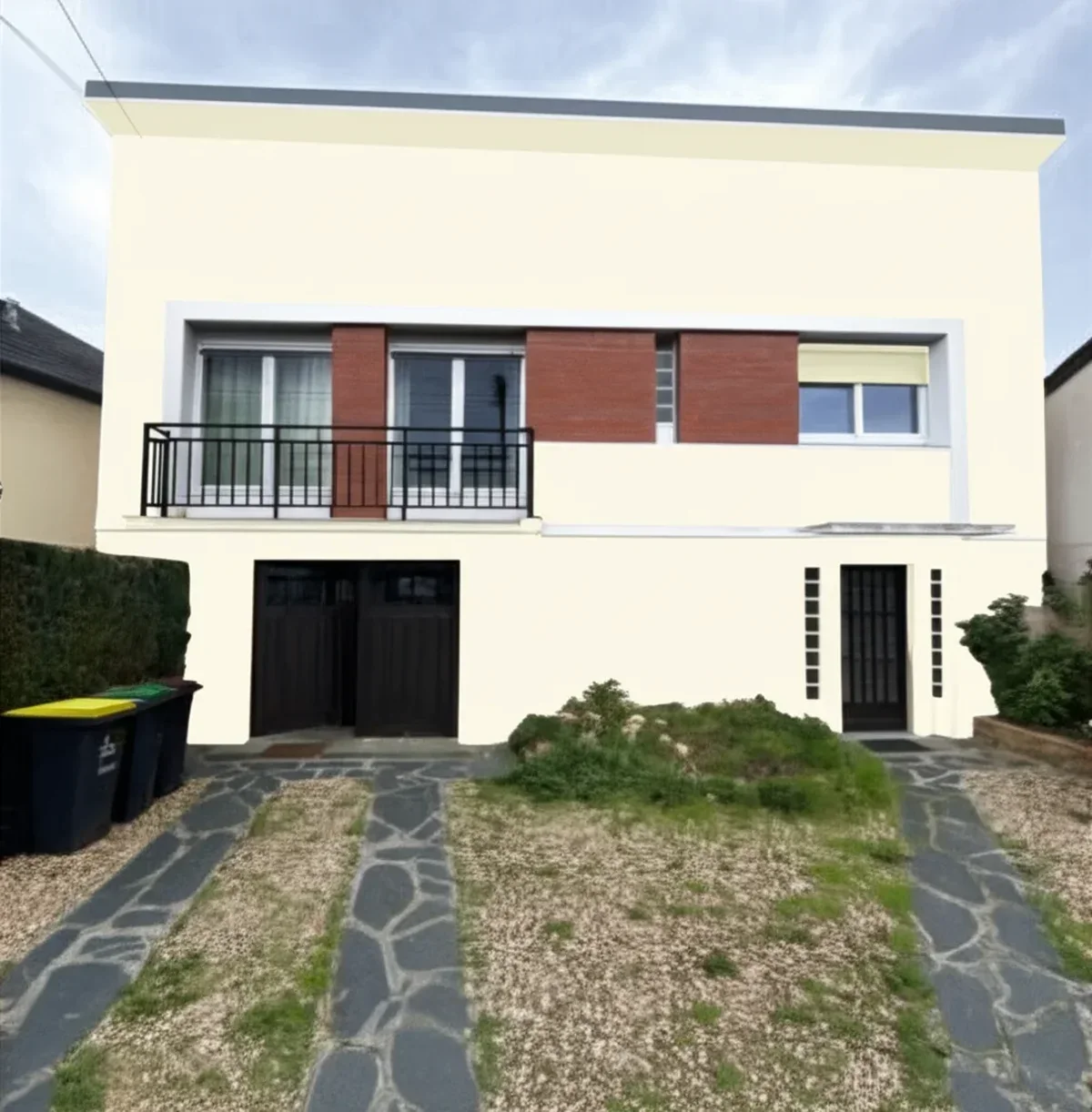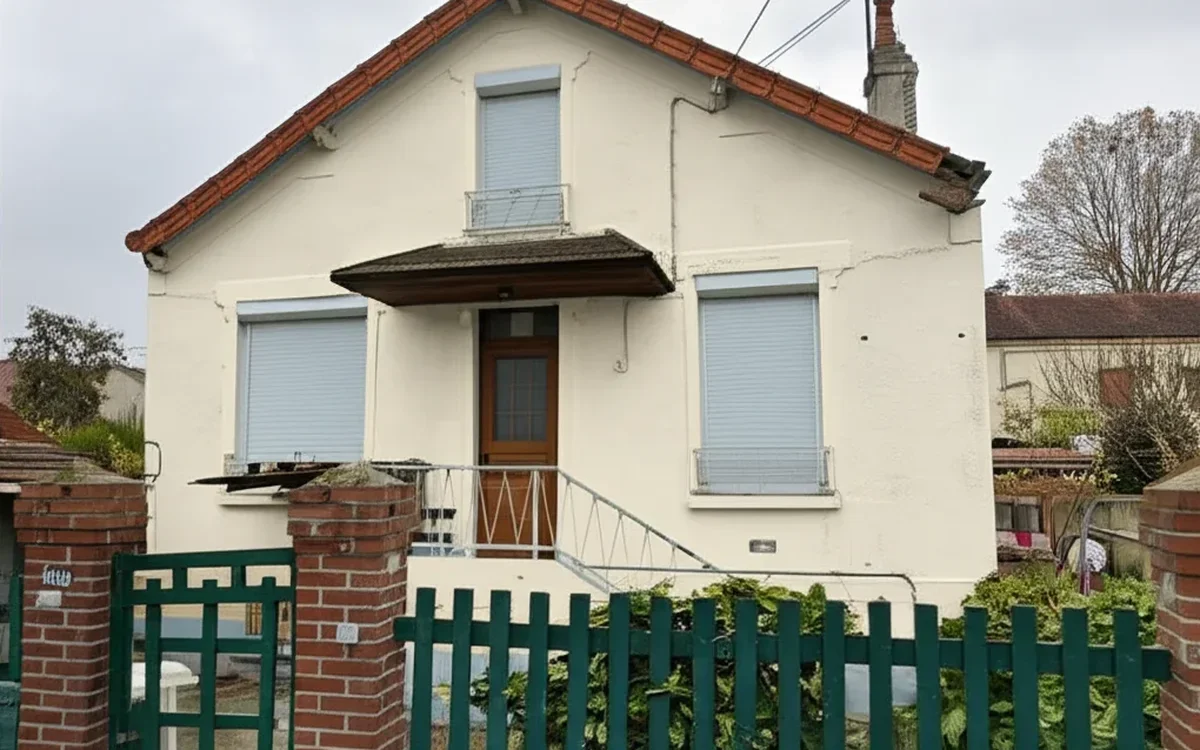
Try it on your house

According to PPG Technical Bulletin TB-100, ASTM D3924 standard application conditions, and NOAA 2026 climate data, more than 40% of exterior paint failures within the first two years trace back to one root cause: the coating was applied in the wrong weather. Blistering, cracking, chalking, and color shift usually are not paint defects. They are chemistry reacting to conditions it was never designed to tolerate.
This deep-dive guide walks homeowners and contractors through the actual science of exterior painting weather in 2026: air and surface temperature, humidity and dew point, wet-film thickness, paint chemistry for latex and oil-based systems, regional climate realities across the U.S., and the ASTM standards that professional painters use to protect their work. For full pricing context, see our complete exterior house painting cost guide.
Why weather dictates paint chemistry
Modern exterior paint is an engineered system. Latex (acrylic) paints cure through coalescence: water evaporates, then tiny polymer particles fuse together into a continuous film. Oil-based (alkyd) paints cure through oxidative cross-linking: the binder reacts with oxygen to form a hardened film. Both reactions are highly sensitive to temperature, humidity, and substrate conditions. Which of the two belongs on your siding in the first place, including the water-borne alkyd hybrids that now sit between them, is a separate decision worked through in our latex vs oil-based exterior paint guide.
If latex paint dries too fast in extreme heat, the water flashes off before polymer particles can coalesce. Result: a porous, chalky film that fails in 18 to 36 months. If oil-based paint is applied below 50 degrees Fahrenheit, oxidation nearly stops and the film stays tacky for days, attracting dust and insects. Weather is not a scheduling preference. It is part of the chemistry.
Weather failures show up in the sheen before they show up anywhere else. Surfactant leaching, flashing over an unevenly primed board and patchy gloss are all read by the eye as a bad paint job, and the higher the sheen, the more visible they are. Knowing which finish you are putting up changes how much margin you have: see our flat vs satin vs semi-gloss guide.
Temperature science: why 50 to 85 F is optimal
The 50 to 85 F window is not arbitrary. It is the temperature band in which acrylic latex polymer particles can both flow into a continuous film and retain enough plasticity to coalesce before water fully evaporates. Below 50 F, the polymers harden before they fuse, producing a powdery surface that washes off in the first rain. Above 85 F, water evaporates faster than coalescence can complete, producing a porous, micro-cracked film.
Paint film formation chemistry happens in three stages, each tied to a different temperature dependency:
- Stage 1 (water evaporation): Bulk water leaves the wet film. At 75 F, 50 percent RH, this stage takes 20 to 30 minutes for a 5 mil wet film. At 95 F it can finish in 8 minutes, too fast for the next stage.
- Stage 2 (particle compaction): Polymer particles pack together as the binder concentration rises. Capillary forces pull them into close contact. This stage requires the film to remain plastic, which is why temperature must stay between the binder's minimum film-forming temperature (MFFT), typically around 40 to 50 F, and roughly 90 F.
- Stage 3 (coalescence and cure): Polymer chains diffuse across particle boundaries to form the final continuous film. This phase continues for 7 to 14 days, and is why surface dryness in 2 hours does not mean the film is fully cured.
The dew point math matters because every degree of cooling toward dew point increases condensation risk. If air is 75 F at 65 percent RH, dew point sits at roughly 62 F. A west-facing wall painted at 4 p.m. may cool to 60 F by 7 p.m., dropping below dew point and absorbing invisible moisture before the binder sets. The result is surfactant leaching, blistering, or full delamination weeks later.
Latex film formation and minimum application temperature (MFFT)
The number that decides whether a latex coat lives or dies in cold weather is the minimum film-forming temperature (MFFT), measured per ASTM D2354 on a temperature-gradient bar. MFFT is the lowest temperature at which the polymer particles are soft enough to deform and fuse into a continuous, crack-free film. Apply below it and the dispersion dries to a chalky, discontinuous powder that never coalesces, no matter how long you wait. This is why a paint can read "dry to touch" at 40 F and still be a guaranteed failure: surface water left, but the film never formed.
Manufacturers solve cold-weather application two ways: by lowering the binder MFFT through softer monomers, and by adding coalescing solvents (temporary plasticizers that evaporate slowly, holding the particles soft long enough to fuse, then leaving). A paint labeled for 35 F application is not magic. It simply pairs a low-MFFT binder with a high-boiling coalescent, and it assumes the surface holds above that label temperature for the full coalescence window, not just at the moment you open the can. The 2026 reference values below are the practical thresholds painters use to map a product label to a real on-site decision.
| Coating system | Typical MFFT (ASTM D2354) | Safe minimum surface temp | Below this temp: failure mode |
|---|---|---|---|
| Standard 100% acrylic exterior | Roughly 40 to 50 F | 50 F and rising | Chalking, powdering, mud-cracking, no UV film |
| Low-temp acrylic (35 F labeled) | Roughly 30 to 36 F | 35 F and rising | Incomplete coalescence, soft film, early washoff |
| Vinyl-acrylic (budget body paint) | Roughly 50 to 55 F | 55 F and rising | Brittle film, poor adhesion, cold cracking |
| Elastomeric (masonry / stucco) | Roughly 45 to 55 F | 55 F and rising | Loss of elongation, bridging cracks reopen |
| Oil / alkyd (oxidative cure) | Not applicable (no coalescence) | 45 F and rising | Oxidation stalls, stays tacky, traps dust and bugs |
Try it on your house
No photo? Try a sample
Two rules turn this table into field practice. First, MFFT governs the coldest point in the cycle, not the warmest: a wall that hits 55 F at 2 p.m. but drops to 38 F overnight has spent its critical coalescence hours below the threshold for a standard acrylic, and the film suffers even though the daytime reading looked fine. Second, the relevant ASTM D3924 standard atmosphere (73 F, 50 percent RH) is a laboratory baseline, not a tolerance band; real jobs drift, so build margin by treating the label minimum as a floor you stay 5 F above, never a target you flirt with. When the forecast cannot guarantee the surface holds above the safe-minimum column for a continuous 36 hours, the honest call is to wait, not to gamble on a borderline can.
Some lines are formulated around exactly this problem: Sherwin-Williams Latitude is sold on an application range of 35°F to 120°F and a rain-ready time of about 30 minutes, which widens the workable days in shoulder seasons.
Optimal temperature and humidity ranges
Manufacturers publish narrow application windows for a reason. Here is the 2026 consensus range backed by ASTM D3924 standard atmospheric conditions, PPG, Sherwin-Williams, and Benjamin Moore technical data sheets.
| Parameter | Minimum | Ideal | Maximum |
|---|---|---|---|
| Air temperature (latex) | 50 F | 60 to 80 F | 85 F |
| Air temperature (oil-based) | 45 F | 55 to 80 F | 90 F |
| Surface temperature | 50 F | 60 to 90 F | 95 F |
| Relative humidity | 40 percent | 50 to 60 percent | 70 percent |
| Wind speed | 0 mph | Under 10 mph | 15 mph |
A few newer low-temp latex formulations (labeled for 35 F application) extend the season, but they still require a stable 36-hour window with no condensation. Always read the label. Do not assume.
Humidity impact: what happens above 70 percent RH
Below 70 percent relative humidity, latex paint coalescence proceeds on schedule and oil-based oxidation is not significantly impaired. Above 70 percent, every additional 5 percent of humidity slows drying time noticeably and introduces specific failure modes documented in ASTM D3924 testing protocols.
- 70 to 80 percent RH: Drying time increases 30 to 50 percent. Sheen development is uneven. Surfactant leaching becomes likely after the first rain (those glossy streaks running down siding). Recoat windows extend from 4 hours to 6 to 8 hours.
- 80 to 85 percent RH: Coalescence is materially compromised. The film stays soft for 24 to 48 hours, attracting dust and insects. Mildew can colonize the wet film before it cures. Dark colors show pronounced lap marks.
- Above 85 percent RH: ASTM D3924 specifies that paint application is non-conforming. Blistering appears within 2 to 14 days as trapped moisture pushes the film off the substrate. Peeling follows within 6 to 18 months. Warranty claims are typically denied because conditions were outside the manufacturer's documented spec.
Real testing data from PPG laboratory work (TB-100, 2024 update) shows that latex applied at 85 percent RH on a 70 F substrate developed visible blisters in 8 of 12 test panels within 30 days. The same paint applied at 55 percent RH on the same substrate showed zero blistering at 12 months. Humidity is not a minor variable, it is the second most decisive factor after temperature.
Surface temperature vs air temperature
This is the single most overlooked factor in exterior painting. A wall in direct afternoon sun on a 78 F day can easily reach 125 F on dark siding. Paint applied to that surface flashes instantly, trapping solvents and forming a skin before the film can level. Brush and roller marks become permanent. Sprayed finishes get dry spray texture.
Use an infrared surface thermometer (around $30) and check the substrate every couple of hours. Follow the sun: paint the west wall in the morning while it is still shaded, paint the east wall in the afternoon. Never paint a surface that is 5 F hotter than air temperature or hot to the touch.
Upload a photo of your home, test colors in 30 seconds, free
Dew point: the hidden failure factor
Dew point is the temperature at which moisture in the air condenses on a surface. If you paint when the surface temperature is within 5 F of the dew point, invisible moisture forms under the film, causing surfactant leaching (those glossy streaks after the first rain), blistering, and adhesion failure.
ASTM E337 is the standard test method for measuring humidity using a psychrometer, and it underpins every professional dew-point reading. Contractors who take warranty claims seriously log dew point three times a day.
Dew Point Quick Formula (Magnus approximation)
Td = T - ((100 - RH) / 5)
Where Td is dew point in Celsius, T is air temperature in Celsius, RH is relative humidity in percent. Accurate within 1 degree when RH is above 50 percent.
Example: Air 22 C (72 F), RH 65 percent. Td = 22 - (35 / 5) = 15 C (59 F). If your siding measures 62 F, you are only 3 F above dew point. Do not paint. Wait for afternoon when the wall warms up.
Dew point vs surface temperature: condensation-risk reference
Rather than recompute the Magnus formula on every wall, most crews carry a quick lookup. The number that matters is the margin between measured surface temperature and dew point. The table below converts that margin directly into a condensation verdict, so an apprentice with an infrared thermometer and a psychrometer can make the same call as the foreman. It is built around the professional 5 F-above-and-rising rule and aligns with the moisture limits in ASTM D3924.
| Surface temp minus dew point | Condensation risk | Trend matters? | Verdict |
|---|---|---|---|
| Below 0 F (surface at or under dew point) | Active condensation on the wall now | No, already wet | NO-GO |
| 0 to 3 F | Very high, invisible film moisture likely | Critical | NO-GO |
| 3 to 5 F | Marginal, leaching and streaking probable | Paint only if rising fast | CAUTION |
| 5 to 10 F | Low if surface is warming through the coat window | Yes, must be rising not falling | GO IF RISING |
| 10 to 20 F | Minimal, comfortable working margin | Confirm no evening crossover | GO |
| Above 20 F | Negligible (watch heat, not dew) | Shift focus to surface-temp ceiling | GO |
The trend column is the part DIY painters miss. A 6 F margin at 9 a.m. on a warming east wall is a clean GO, because the surface is climbing away from dew point all morning. The identical 6 F margin at 6 p.m. on a west wall is a NO-GO, because the surface is cooling toward dew point and will cross it within hours, after you have already laid the coat. Always pair the margin reading with the direction of travel: a number alone never decides the job.
The dew point rule: 5 F above, calculation walkthrough
The professional rule is precise: surface temperature must be at least 5 F above dew point and rising at the moment of application, and remain above dew point for the full coalescence window (typically 4 to 6 hours after final coat). Here is how a contractor walks through the calculation on site, three real examples.
Example A: Spring morning in Boston (GO)
- Air temperature: 68 F (20 C). RH: 55 percent.
- Td = 20 - (45 / 5) = 11 C, or roughly 52 F.
- Surface temperature on shaded north wall: 64 F.
- Margin above dew point: 64 - 52 = 12 F. Safe.
- Forecast shows surface warming through the morning. Paint.
Example B: Summer evening in Atlanta (CAUTION)
- Air temperature: 81 F (27 C). RH: 78 percent.
- Td = 27 - (22 / 5) = 22.6 C, or roughly 73 F.
- Surface temperature on west siding at 6 p.m.: 79 F and falling.
- Margin above dew point: 79 - 73 = 6 F, but trending down.
- By 9 p.m. surface will likely cross dew point. Stop painting at 6 p.m. or earlier.
Example C: Cool morning in Seattle (NO-GO)
- Air temperature: 58 F (14.4 C). RH: 88 percent.
- Td = 14.4 - (12 / 5) = 12 C, or roughly 54 F.
- Surface temperature on north wall at 8 a.m.: 55 F.
- Margin above dew point: 55 - 54 = 1 F. Far too tight.
- Do not paint. Wait for surface to reach 60 F minimum, ideally 11 a.m. or later.
Rule of thumb: the surface must be at least 5 F above the dew point and rising, not falling. Evening applications are risky because surfaces cool toward dew point as the sun sets.
Best months by U.S. region (12 months × 6 regions)
Built from NOAA 2026 monthly climate normals and adjusted for typical morning RH and overnight low patterns. GO = good window most years. CAUTION = workable but watch dew point and storms. NO-GO = paint failures statistically likely.
| Month | Northeast | Southeast | Midwest | Texas | Mountain | Pacific |
|---|---|---|---|---|---|---|
| Jan | NO-GO | CAUTION | NO-GO | CAUTION | NO-GO | CAUTION |
| Feb | NO-GO | CAUTION | NO-GO | GO | NO-GO | CAUTION |
| Mar | CAUTION | GO | CAUTION | GO | CAUTION | CAUTION |
| Apr | GO | GO | GO | GO | CAUTION | CAUTION |
| May | GO | GO | GO | GO | GO | GO |
| Jun | GO | CAUTION | GO | CAUTION | GO | GO |
| Jul | GO | CAUTION | GO | NO-GO | GO | GO |
| Aug | GO | CAUTION | GO | NO-GO | GO | GO |
| Sep | GO | GO | GO | CAUTION | GO | GO |
| Oct | GO | GO | GO | GO | CAUTION | GO |
| Nov | CAUTION | GO | CAUTION | GO | NO-GO | CAUTION |
| Dec | NO-GO | CAUTION | NO-GO | CAUTION | NO-GO | CAUTION |
Regional notes: Northeast (Boston, NYC, Philadelphia) peaks May to October. Southeast (Atlanta, Charlotte, Florida) avoids July storm/RH peaks. Midwest (Chicago, Indianapolis, Minneapolis) is shorter, May to September is most reliable. Texas (Dallas, Houston, Austin) flips, with February to early May and October to November as the safer windows around the punishing summer. Mountain (Denver, Salt Lake) is constrained to late May through September. Pacific (Seattle, Portland, San Francisco) is wide but rain-checked, July to September is the dependable core. For a month-by-month planning view that pairs with these regional windows, see our breakdown of the best time of year to paint your house exterior.
Wet-film thickness and weather
Paint manufacturers specify a wet-film thickness (WFT) usually between 4 and 6 mils for exterior latex. Apply too thin and the film lacks UV and weather protection. Apply too thick in hot weather and the top skins over while the underlying film stays soft, trapping solvents and causing blistering weeks later.
Use a wet-film thickness gauge (a $5 notched card per ASTM D4414) as you work. In hot, dry, or windy conditions, back off 10 to 15 percent on coverage and plan an extra coat rather than pushing thickness. In cool, humid weather, maintain full spec thickness and extend recoat time to 6 to 8 hours instead of 4.
Weather apps painters use in 2026
A general weather app is not enough. Exterior painters need hourly dew point, surface temperature estimates, and radar precision to schedule application windows. Here is the 2026 short list with how each one is used on a real job.
| App | Cost | Best for | Painter rating |
|---|---|---|---|
| DTN MyWeather (formerly WeatherSentry) | $15-30/mo | Job-site dew point alerts, lightning, soil temp | 9/10 pro |
| Weather Underground | Free / $4 ad-free | Hyperlocal PWS data, hourly dew point | 8/10 |
| NOAA / Weather.gov | Free | Authoritative 7-day forecast, raw data, point forecasts | 9/10 |
| AccuWeather Professional | $10-25/mo | MinuteCast precipitation, RealFeel surface estimate | 7/10 |
| PaintCoach / WeatherTRAK Paint | $5-12/mo | Painting-specific GO/NO-GO scoring, label-tied alerts | 8/10 |
Recommended stack for a 2026 exterior crew: NOAA point forecast for the planning baseline, Weather Underground PWS for real-time RH on the block, and either DTN or a painting-specific app for dew point alerts during application.
Watch: painting weather science explained in 4 minutes
Painting weather science explained in 4 minutes
How to pivot when weather changes mid-job
Even with the best forecast, conditions shift. Pros do not pack up at the first cloud, they rotate strategies. Six tactics that protect both the schedule and the warranty.
- Move to the lee side. When wind picks up above 12 mph, switch to the wall sheltered from the wind. Overspray drops by 70 percent and wet-edge time triples.
- Cover scaffolding with breathable shrouds. Light rain shrouds (Coverall or equivalent) shed water without trapping humidity. Buys 2 to 4 hours of working time during a passing system.
- Reschedule prep, not painting. Caulking, sanding, scraping, and wood repair tolerate marginal weather. Move all paint application to the next clean day and burn the marginal day on prep so the schedule stays. The same coalescence physics apply to a film-forming solid color deck stain, so hold that coat for a clean, dry window too.
- Switch to primer in cooler hours. Most modern primers (Sherwin-Williams Loxon, PPG Seal Grip) tolerate 45 F application and dry on humid surfaces. If a topcoat window closes, get primer down so the next dry day is purely topcoat.
- Drop coverage by 10 to 15 percent in heat surges. If the forecast missed and the surface jumps to 92 F, thin the application slightly and plan a third coat. Better than pushing thickness and watching it blister in 3 weeks.
- Stop, document, photograph, and resume next day. If conditions move outside spec mid-coat, stop at a logical break (corner, trim line). Photograph the wet edge with a timestamp. ASTM D3924 documentation protects the warranty if the seam shows later.
- Rotate the crew indoors. A washed-out exterior day is a usable interior day, but the clock does not simply reset. The same 85 F that ends an exterior session flash-dries an interior wall and leaves lap marks that never level, and indoor humidity above 70 percent can leave latex tacky at 24 hours in a closed room. Read the room before you commit the day to it: interior paint drying times depend on the same three variables you are already tracking outside.
Climate change impact on painting schedules in 2026
NOAA 2026 climate data shows measurable shifts that contractors and homeowners are now planning around. The exterior painting calendar is no longer the same calendar it was in 2010.
- Spring is starting earlier. Across the Northeast and Midwest, the first reliable run of overnight lows above 50 F now arrives 10 to 14 days sooner than the 1991-2020 normal. Many crews are booking April starts where they used to book early May.
- Summer extremes are pushing more days outside spec. The number of days exceeding 90 F has risen across the South and West. In Phoenix, Dallas, and Houston, the 2026 outlook adds 8 to 12 days where surface temperatures put paint application out of compliance with manufacturer spec.
- Fall windows are extending. First-frost dates have shifted later by an average of 7 to 10 days nationally. October is now the most consistently safe painting month across most of the country.
- Storm intensity is more disruptive than storm frequency. The 7-day forecast still holds, but the 14-day plan is less reliable. Booking with 2 weather backup days per project is now the norm.
- Pacific Northwest atmospheric rivers shrink the late-summer window. The reliable July-September dry block is narrower than a decade ago. Crews are starting jobs by June 25 to capture the full window.
Practical takeaway: book exterior projects 2 to 3 weeks earlier in spring than you used to, build 2 contingency days into every multi-day job, and weight October over July if the schedule allows. NOAA's 2026 seasonal outlook is the most authoritative free planning input available.
Free weather checklist download
Print this checklist and run it before every coat. It collapses everything above into a 2-minute on-site decision.
Pre-Coat Weather Checklist (Print and Pin to Truck)
- [ ] Air temperature 50 to 85 F (latex) or 45 to 90 F (oil), within manufacturer label spec.
- [ ] Surface temperature measured (IR thermometer), at least 5 F above dew point and rising.
- [ ] Relative humidity under 70 percent, ideally 50 to 60 percent.
- [ ] Dew point calculated (psychrometer or Magnus formula), surface margin at least 5 F.
- [ ] Wind speed under 15 mph, working downwind of clean area.
- [ ] No rain in 7-day forecast for 24 hours after final coat (NOAA point forecast).
- [ ] Overnight low above 50 F for next 36 hours (latex coalescence window).
- [ ] Wood substrate moisture meter under 15 percent EMC.
- [ ] Wet-film thickness gauge available (ASTM D4414).
- [ ] Readings logged on job sheet with timestamp (ASTM E337).
Regional climate considerations across the U.S.
National paint labels give general windows, but the United States contains at least four distinct exterior-painting climates. Each has its own failure modes and its own sweet spot.
Southwest: Phoenix, Las Vegas, Albuquerque
The enemy here is extreme surface heat and low humidity. Summer stucco can hit 150 F. Latex paint flashes in under 3 minutes, leaving lap marks on every wall over 100 square feet. Paint in late October through April, start at sunrise, stop by noon. Look for elastomeric coatings rated for 100+ F application and add a wet-edge extender like Floetrol at the label-recommended ratio.
Pacific Northwest: Seattle, Portland
The enemy is persistent humidity and surprise rain. Even in July, dew point can sit within 3 F of morning surface temperature. Ideal windows are mid-July through mid-September, with a checked forecast showing 48 hours of dry weather and overnight lows above 50 F. Moisture-tolerant acrylic primers (such as Sherwin-Williams Loxon or PPG Seal Grip) are essential on siding with even slight EMC (equilibrium moisture content).
Northeast: Boston, New York, Chicago
The enemy is cold nights and short shoulder seasons. Day temperatures in late April or October can look perfect at 65 F, but overnight lows below 40 F will halt coalescence. Aim for Memorial Day through late September. Check the 7-day forecast for overnight lows to stay above 50 F. If you must paint in the shoulder season, use a 35 F low-temp latex and apply before 2 p.m. to maximize curing daylight.
Southeast and Gulf Coast: Atlanta, Houston, Miami
The enemy is high humidity plus afternoon thunderstorms. Relative humidity often exceeds 80 percent by 10 a.m. Paint in late fall and spring, start early, stop 2 hours before the typical storm window (usually 3 p.m.). Mildew-resistant paints with mildewcide additives (ASTM D3273 rated) are not optional, they are the minimum.
Ideal paint-window planner by region (2026)
The month grid earlier in this guide answers "is this month safe?" The planner below answers the booking question: "when should I actually schedule the work, and which months do I refuse?" Each row pairs the prime window (lowest failure risk) with a usable shoulder window and the single climate factor that controls the calendar. Built from NOAA 2026 climate normals and typical morning dew-point spreads.
| Region (key cities) | Prime window | Workable shoulder | Avoid | Controlling factor |
|---|---|---|---|---|
| Northeast (Boston, NYC, Philadelphia) | May to early Oct | Late Apr, late Oct | Dec to Mar | Overnight lows below 50 F |
| Southeast (Atlanta, Charlotte, Orlando) | Apr to May, Sep to Nov | Mar, early Dec | Jul to Aug (storm RH peak) | Afternoon humidity and storms |
| Midwest (Chicago, Indianapolis, Minneapolis) | May to Sep | Late Apr, early Oct | Nov to Mar | Short season, cold nights |
| Texas / South Central (Dallas, Houston, Austin) | Mar to early May, Oct to Nov | Feb, early Dec | Jul to Aug (heat ceiling) | Surface temp over 95 F |
| Southwest (Phoenix, Las Vegas, Albuquerque) | Late Oct to Apr | Early Oct, early May (AM only) | Jun to Sep midday | Flash-off from extreme heat |
| Mountain (Denver, Salt Lake City) | Late May to Sep | Mid-May, early Oct | Nov to Apr | Wide day-to-night temp swing |
| Pacific NW (Seattle, Portland) | Jul to mid-Sep | Late Jun, late Sep | Oct to May (rain, RH) | Persistent humidity, narrow dry block |
| California coast (LA, San Francisco, San Diego) | May to Oct | Apr, Nov | Marine-layer mornings year-round | Morning fog and dew burn-off timing |
Read the controlling-factor column first. It tells you what to watch on the daily forecast once you have picked a window: a Texas crew lives by the surface thermometer, a Pacific Northwest crew lives by the dew-point margin, and a Northeast crew lives by the overnight low. The marine-layer note for the California coast is the easy one to miss: the air can read a perfect 68 F at 8 a.m. while the wall is still wet from fog, so wait for the layer to burn off (usually 10 to 11 a.m.) before the first coat.
ASTM standards every exterior job should follow
ASTM International publishes the standards that test labs, manufacturers, and top contractors rely on. Knowing them gives you leverage in any warranty dispute.
- ASTM D3924: Standard atmospheric conditions for paint application and testing (73 F, 50 percent RH baseline).
- ASTM D2354: Minimum film-forming temperature (MFFT) of latex emulsions, the cold-weather application threshold.
- ASTM E337: Measuring humidity with a psychrometer (dew point calculation).
- ASTM D3273: Mildew resistance testing for exterior coatings.
- ASTM D4414: Wet-film thickness measurement by notch gauge.
- ASTM D7091: Non-destructive dry-film thickness measurement.
- ASTM D4258: Surface cleaning of concrete prior to coating.
- ASTM D4263: Plastic sheet moisture test for masonry substrates.
If your contractor cannot name the first three standards on this list, you are not hiring a pro. You are hiring labor.
The 48-hour rule
Latex paint reaches about 60 percent of its final film properties in the first 48 hours. During that window you need: no rain, no dew condensation, no temperature drop below 50 F, and no direct hose-down. Plan around a forecast that gives you two full dry days and two dry nights after the final coat. When in doubt, wait one more day. The paint chemistry does not negotiate.
Latex vs oil-based: the chemistry trade-off
Homeowners still ask whether to choose latex or oil-based for exterior work. In 2026, the answer for nearly all siding, trim, and masonry is 100 percent acrylic latex. Modern acrylic binders outperform alkyds on UV resistance, color retention, flexibility during thermal expansion, and repaintability. Oil-based coatings still have niche uses (rust-bound metal primers, high-traffic doors) but their slower oxidative cure makes them brittle over time and prone to chalking and yellowing.
From a weather standpoint, the difference matters. Latex is water-borne, so it is vulnerable to rain and dew during the coalescence phase but tolerates humidity up to 70 percent well. Oil-based is solvent-borne, so it resists light rain much sooner after application but requires warmer temperatures and low humidity to oxidize evenly. If you expect unstable weather, latex is the safer bet because a missed window can be recoated in 4 hours. An oil-based coat that skins in bad conditions is a sanding project.
Tools every serious exterior job needs
Whether you are DIY or hiring out, these five tools separate a professional job from a gamble. None of them costs more than $50, and together they eliminate most weather-related paint failures.
- Infrared surface thermometer ($25-35): measures actual substrate temperature, the single most important number.
- Digital psychrometer ($25-50): gives you air temperature, RH, and dew point in one reading, ASTM E337 aligned.
- Wet-film thickness gauge ($5): notched card per ASTM D4414 to verify you are hitting spec as you paint.
- Moisture meter ($30-60): essential on wood siding and masonry. Wood above 15 percent EMC will not hold paint. The same rule governs horizontal surfaces, which is why our deck stain colors guide stresses checking board moisture before any stain goes down.
- Weather app with hourly dew point (free): NOAA, Weather Underground, or Windy all display dew point and overnight lows.
A contractor who shows up with these tools and logs readings on your invoice is protecting your warranty and theirs. Ask to see the readings before each coat.
Related reading
- Best exterior paint for hot climates 2026 guide
- Exterior paint cost 2026: complete US guide
- Best exterior paint colors 2026
- Sherwin-Williams vs Benjamin Moore exterior comparison
- DIY vs professional exterior painting cost
- Free painting estimate calculator
Frequently asked questions
What is the ideal temperature range for exterior painting?
For modern latex (acrylic) paints, the ideal air temperature is 50 to 85 degrees Fahrenheit, with a sweet spot of 60 to 80 F. Oil-based paints tolerate slightly cooler starts (45 F). What matters most is the surface temperature, which in direct sun can run 30 to 50 F hotter than air, and the overnight low, which must stay above 50 F for at least 36 hours after application to allow proper coalescence.
What temperature is too hot to paint exterior?
Above 85 F air temperature or 95 F surface temperature is outside the ASTM D3924 spec for most acrylic latex paints. The film flashes faster than the polymer particles can coalesce, leaving a porous, lap-marked surface. In the Southwest and Texas, this means stopping by 11 a.m. in summer or moving the entire job to late October through April.
Can you paint exterior in winter?
Only with a low-temp latex labeled for 35 F application, only on days where the air and surface stay above 35 F for the full 36-hour cure window, and only south of roughly the Mason-Dixon line in the U.S. Most winter days in the Northeast, Midwest, and Mountain regions are NO-GO. Schedule winter painting only when a stable warm spell is forecast and overnight lows hold above 35 F.
Will dew ruin fresh paint?
Yes, if dew condenses on a still-curing film within the first 4 to 6 hours after application. Latex paint is especially vulnerable: dew causes surfactant leaching (glossy streaks), uneven sheen, and in severe cases blistering. Stop painting at least 2 hours before sunset so the surface stays above dew point through the cooling phase.
What if it rains 2 hours after I paint?
For most modern acrylic latex paints, light rain at 2 hours causes surfactant leaching streaks visible after the surface dries. The film usually still adheres if the rain is brief and light. Heavy rain at 2 hours can wash off uncured paint, requiring a full recoat. Best practice: confirm 24 dry hours after final coat, ideally 48.
How long before rain can I paint?
Aim for 24 hours dry minimum after the final coat, with 48 hours strongly preferred. Most acrylic latex labels specify 4 to 6 hours of rain resistance, but that is the minimum to avoid washoff, not the threshold for a perfect finish. Check NOAA point forecast and Weather Underground hourly precipitation probability before starting.
Best month to paint house exterior in the U.S.?
October is the most consistently safe month nationwide, followed by May. October has lower humidity than summer, stable nights above 50 F across most of the country, and far fewer storm days than late spring. Region-specific: April-October Northeast/Midwest, March-November Southeast (avoiding July-August storms), February-May plus October-November Texas, May-September Mountain, July-September Pacific Northwest.
Should I paint in direct sun or shade?
Always follow the shade. Direct sun on dark siding can push surface temperature 30 to 50 F above air, flashing latex paint and locking in lap marks. Plan rotation: east walls in the early morning, north walls midday, west walls afternoon, south walls last. Use an IR thermometer to confirm substrate is under 90 F.
How does humidity affect drying time?
At 50 percent RH a 5 mil wet film of acrylic latex dries to touch in 1 to 2 hours. At 75 percent RH the same film takes 3 to 5 hours. At 85 percent RH it can stay tacky for 8 to 12 hours, attracting dust and risking mildew growth in the wet film. Above 70 percent RH, extend recoat time from 4 hours to 6 to 8 hours minimum.
How do I calculate dew point before painting?
Use the Magnus approximation: Td = T - ((100 - RH) / 5) where T is air temperature in Celsius and RH is relative humidity in percent. The surface you are painting must be at least 5 F above the dew point and rising, not falling. ASTM E337 is the formal standard, but a $25 digital psychrometer from any paint store gives a direct reading in seconds. Check three times daily on every exterior job.
Can professional painters work in rain with covers?
Yes for prep work (caulking, scraping, sanding) under breathable shrouds. No for paint application: ASTM D3924 explicitly excludes wet-substrate application from compliance. Even under a tarp, ambient humidity and surface moisture push the job out of warranty spec. Pros use covers to protect the work from sudden showers, not to paint through them.
How to save a job that started in bad weather?
If conditions move out of spec mid-job: (1) stop at a logical break and document with timestamped photos, (2) let the partial film cure 24 hours, (3) inspect for blistering, surfactant leaching, or sheen variation, (4) if defects appear, scuff-sand and recoat the affected area in good weather, (5) if the film is sound, feather the next coat across the seam. Full repaint is rarely required if the issue is caught within 48 hours.
Can I paint my house exterior in humid weather?
Up to 70 percent relative humidity is workable if the surface stays above dew point. Above 70 percent, latex paint dries slowly, surfactant leaching becomes likely, and mildew can bloom before the film fully cures. In humid regions like the Southeast or Pacific Northwest, paint during lower-humidity windows (late morning to mid-afternoon in July-September), use mildew-resistant formulations rated to ASTM D3273, and confirm 48 hours of dry forecast before starting.
Free preview - No signup - Test any color on your home
Expertise: Three Federal and Standards References Every Spec Cites
Every weather-window claim in this guide reconciles three primary sources: ASTM D3924 (application conditions, 50 to 90 degrees F surface, 5 degrees F above dew point), the NOAA National Weather Service hourly point forecast (24 to 48 hour dry-window confirmation), and the EPA RRP Rule for any pre-1978 home (lead-safe certification mandatory before sanding or scraping disturbs paint). ASTM D3924 (official), NOAA Point Forecast, and EPA RRP Program are the three references every reputable contractor cites in writing on the job spec.
Trust and methodology: Last updated June 21, 2026. Weather window recommendations were cross-checked against NOAA 2026 climate normals (CONUS), PPG Technical Bulletin TB-100, and Sherwin-Williams Emerald Exterior product datasheets. Regional examples reflect 30-year climate averages, not single-year anomalies.
Weather is the invisible ingredient in every exterior paint job. Get it right and a quality coating lasts 10 to 15 years. Get it wrong and the best paint on the market fails in two. Before you commit to a color for those dry-weather days, test your palette on a real photo of your house with our free AI paint visualizer. Sources: ASTM International (D3924, E337, D3273, D4414), NOAA 2026 climate normals and seasonal outlook, PPG Technical Bulletin TB-100, Sherwin-Williams exterior technical data sheets, Benjamin Moore application guidelines.
Trademarks mentioned (Sherwin-Williams, Benjamin Moore, Behr, Caparol, Brillux, Sto, Alpina, Valspar, PPG, Glidden, Dulux, Crown Trade, Sandtex, Farrow & Ball, Johnstone's, Leyland) are property of their respective owners. FacadeColorizer is independent and not affiliated with any of them. Nominative fair use under Lanham Act §1125.