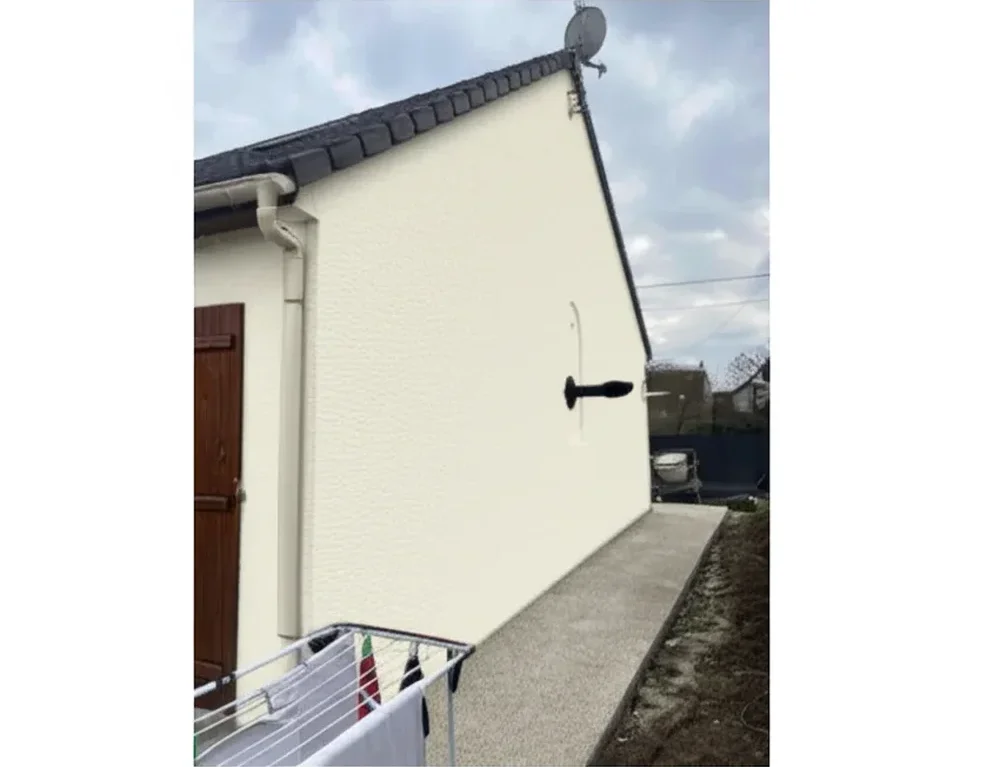
Try it on your house

According to the EPA, the wrong application method can waste up to 30% of your paint-and on a 2,000 sq ft exterior, that is hundreds of dollars literally blowing in the wind. After 15 years as a painting contractor, I get one question more than any other from DIY homeowners: should I rent a paint sprayer or just grab a roller? The honest answer is, "it depends"-but not on what most YouTube videos tell you.
In this 2026 comparison, I will break down real prices from Home Depot and Sherwin-Williams, actual coverage rates from PPG and Angi field data, and the finish-quality trade-offs that separate a $500 paint job from a $5,000 curb-appeal upgrade. By the end, you will know exactly which tool belongs in your garage this weekend. For full pricing context, see our complete exterior house painting cost guide.
Paint Sprayer vs Roller: Head-to-Head Comparison
Before we dive into the nuances, here is the side-by-side that matters. These numbers reflect 2026 pricing from Home Depot, Sherwin-Williams, and contractor surveys published by HomeAdvisor and Angi for a typical two-story 2,000 sq ft home with lap siding.
| Factor | Airless Paint Sprayer | Roller (and Brush) |
|---|---|---|
| Speed | 500–1,500 sq ft/hr | 150–250 sq ft/hr |
| Cost (tool + paint, 2,000 sq ft) | $65–$95/day rental + 20–30% paint waste | $35–$50 for quality roller setup |
| Coverage (paint waste) | 20–30% overspray/waste | 5–10% waste |
| Finish quality | Smoothest; factory-like on siding | Good; visible stipple texture |
| Setup / cleanup time | 2–4 hours (masking + flushing) | 15–30 minutes |
| Best for | Large homes, stucco, textured siding, fences | Small homes, trim, touch-ups, windy days |
| Skill required | Intermediate to advanced | Beginner friendly |
Try it on your house
No photo? Try a sample
The takeaway: sprayers win on speed and finish, rollers win on cost, control, and ease of use. But raw numbers only tell half the story-the right choice depends on your siding type, home size, and how much prep you are willing to do.
The application method interacts with the finish you chose. A higher sheen is less forgiving of lap marks and back-rolling seams, so a semi-gloss trim run rewards a sprayer with a clean tip far more than a flat body coat does. If the sheen is still open, settle it first with our flat vs satin vs semi-gloss guide.
When a Paint Sprayer Makes Sense
An airless paint sprayer is the right call when you have a lot of square footage, textured surfaces, or intricate architectural detail that a roller simply cannot reach. On a recent Craftsman repaint in Denver, my crew covered 2,400 sq ft of cedar shake siding in 4.5 hours using a Graco Magnum X7-a job that would have taken 2 full days with a roller. That is the real power of spray: it turns a weekend into an afternoon.
Choose a sprayer when:
- Your home is over 1,800 sq ft and single or two stories.
- You have stucco, cedar shake, board-and-batten, or heavily textured siding where a roller leaves holidays.
- You are painting a fence, deck balusters, or shutters with lots of edges.
- You want a factory-smooth finish on doors and trim.
- You have time to mask windows, landscaping, cars, and walkways properly.
Rental pricing in 2026 runs $65–$95 per day for a contractor-grade airless at Home Depot or Sherwin-Williams ProServices, or roughly $225–$325 for a long weekend. Budget an extra $30–$60 for tips, filters, and pump armor if you are using thicker acrylics recommended by PPG for stucco. One caveat: sprayers waste 20–30% of your paint to overspray, so buy 1–2 extra gallons up front.
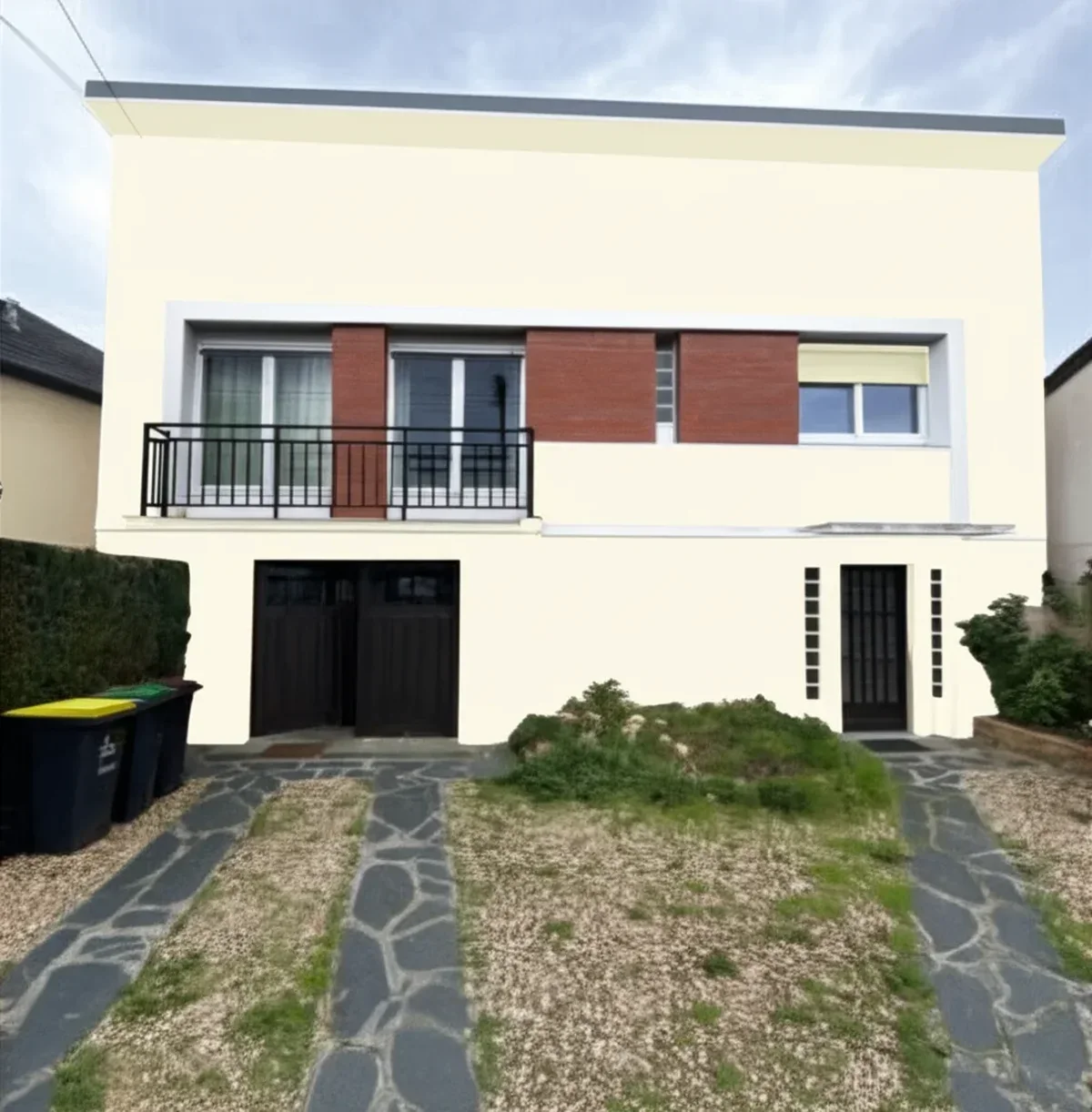
Not sure what color you want to commit gallons of paint to? Visualize your paint color on a photo of your actual house in under 30 seconds-it is the cheapest way to avoid a $3,000 mistake.
When a Roller Is the Better Choice
Rollers are underrated. For most single-story homes under 1,500 sq ft, a quality 9-inch roller with a 3/4-inch nap sleeve, a 4-foot extension pole, and a 2.5-inch angled sash brush for cutting in will outperform a rented sprayer on total cost, cleanup time, and do-over risk. The whole kit from Home Depot or Sherwin-Williams runs $35–$50-less than a single day of sprayer rental.
Choose a roller when:
- Your home is 1,500 sq ft or smaller, with smooth lap siding or Hardie board.
- You live in a tight neighborhood where overspray could hit neighboring cars or windows.
- It is even mildly windy-anything above 10 mph ruins spray consistency.
- You are doing touch-ups, a single accent wall, or trim only.
- You are a first-time DIY painter and want the most forgiving method.
Rollers also produce a thicker, more uniform paint film per pass. Sherwin-Williams and PPG both publish data showing rolled applications deliver 4–6 mils of wet film thickness versus 3–5 mils for spray-meaning a single rolled coat often outlasts a single sprayed coat. That is why most pros actually back-roll after spraying (more on that below). And because waste is only 5–10%, you rarely buy an extra gallon you do not need.
Whatever the tool, the weather window sets the schedule; lines built for wide temperature ranges such as Sherwin-Williams Latitude are the ones crews reach for when the forecast is unstable.
Our Verdict: What Pros Actually Use
Here is the industry secret Angi and HomeAdvisor surveys consistently confirm: roughly 80% of professional exterior painters use a hybrid "spray-and-back-roll" method. One painter sprays a 10-foot section, a second painter immediately follows with a roller to push paint deeper into the grain and even out the film. You get sprayer speed and roller film thickness-the best of both worlds.
For DIY homeowners, my honest recommendation in 2026 is simpler:
- Home under 1,500 sq ft, smooth siding: roller + brush. Save the rental fee.
- Home 1,500–2,500 sq ft or textured siding: rent a sprayer, but mask like your life depends on it and back-roll every section.
- Home over 2,500 sq ft or two-plus stories: hire a licensed contractor. The rental plus ladder plus scaffolding plus your weekends rarely beats a $4,000–$6,000 quote.
Whichever tool you pick, the single biggest predictor of a 10-year paint job is prep: power wash, scrape, caulk, and prime before you open a single topcoat can. That holds true for every siding type and every finish on the Sherwin-Williams, Benjamin Moore, and PPG color decks.
Pick the perfect color before you pick the tool.
Upload a photo of your home and test unlimited 2026 exterior colors in seconds-free, no signup.
Try the Color Visualizer →Frequently Asked Questions
Is it cheaper to spray or roll exterior paint?
Rolling is cheaper for most DIY projects. A complete quality roller setup costs $35–$50, while an airless sprayer rental runs $65–$95 per day at Home Depot or Sherwin-Williams. Sprayers also waste 20–30% of paint to overspray versus 5–10% for rollers, so you typically buy 1–2 extra gallons at $40–$70 each. Spraying only wins on cost when you factor in your time on homes larger than 2,000 sq ft.
Do professional painters use sprayers or rollers?
Most professionals use both in a technique called "spray-and-back-roll." One painter sprays a section for speed, and a second immediately back-rolls to drive paint into the siding grain and build film thickness. Angi and HomeAdvisor surveys show roughly 80% of exterior contractors use this hybrid method because it combines sprayer productivity with roller durability.
How much paint does a sprayer waste compared to a roller?
Airless paint sprayers waste approximately 20–30% of paint to overspray, drift, and line priming, according to EPA and PPG field data. Rollers waste only 5–10%, mostly from tray evaporation and sleeve absorption. On a 2,000 sq ft exterior using 12 gallons, that is roughly 3 wasted gallons with a sprayer versus less than 1 gallon with a roller.
Can a beginner use an airless paint sprayer?
A beginner can use an airless sprayer, but there is a real learning curve. Common mistakes include lap marks, runs, clogged tips, and overspray damage to windows and cars. Sherwin-Williams recommends practicing on scrap cardboard for 15–30 minutes, masking everything within 10 feet, and always back-rolling after each section. If you have never sprayed before, a roller will give you a better finish on your first exterior job.
Related application guides
Sorting out how to apply the paint is only part of the job. These companion comparisons cover the rest of the method decision:
- Airless, HVLP or pneumatic sprayer, once you have decided to spray, which type fits the project.
- Doing it yourself versus hiring a pro, the labor-cost side of the same choice.
Before you rent a rig or book a crew, preview the color on your house so the method question is the only one left.
Trademarks mentioned (Sherwin-Williams, Benjamin Moore, Behr, Caparol, Brillux, Sto, Alpina, Valspar, PPG, Glidden, Dulux, Crown Trade, Sandtex, Farrow & Ball, Johnstone's, Leyland) are property of their respective owners. FacadeColorizer is independent and not affiliated with any of them. Nominative fair use under Lanham Act §1125.