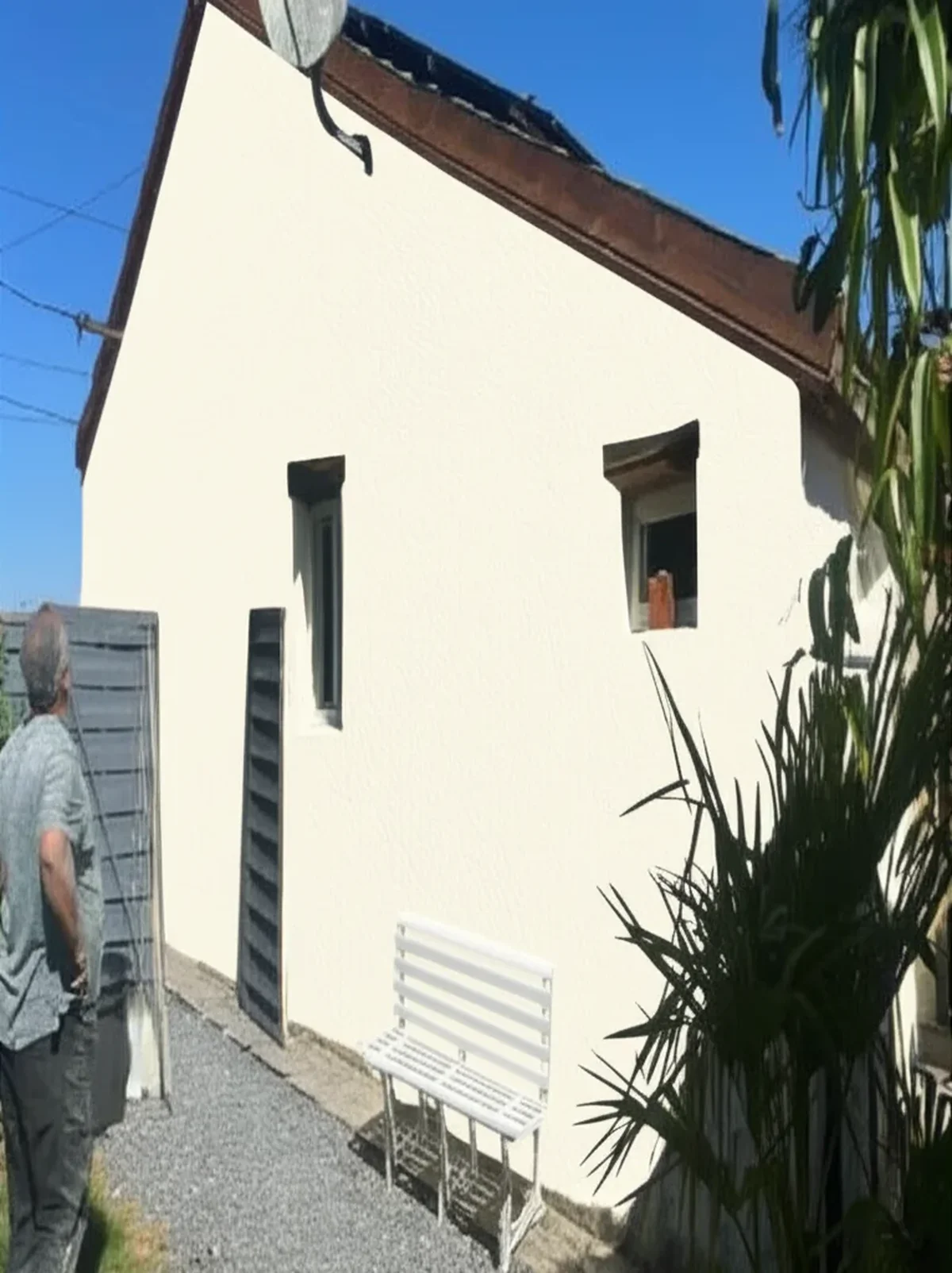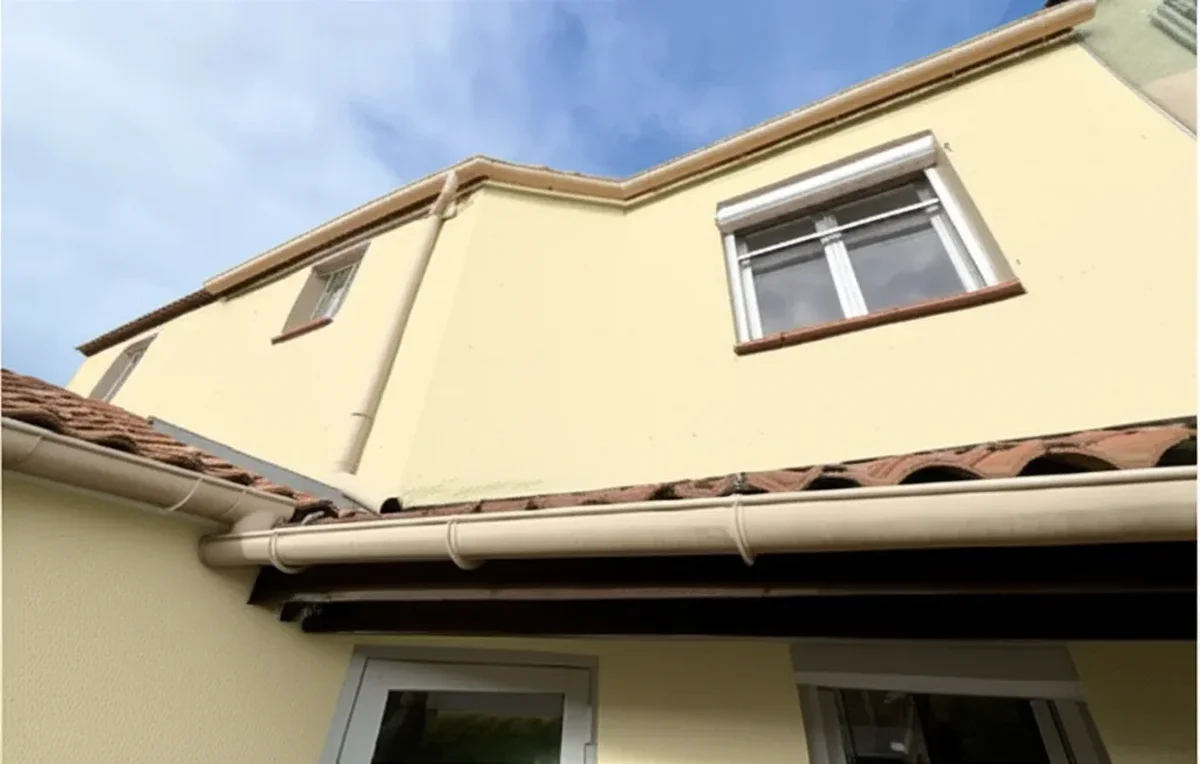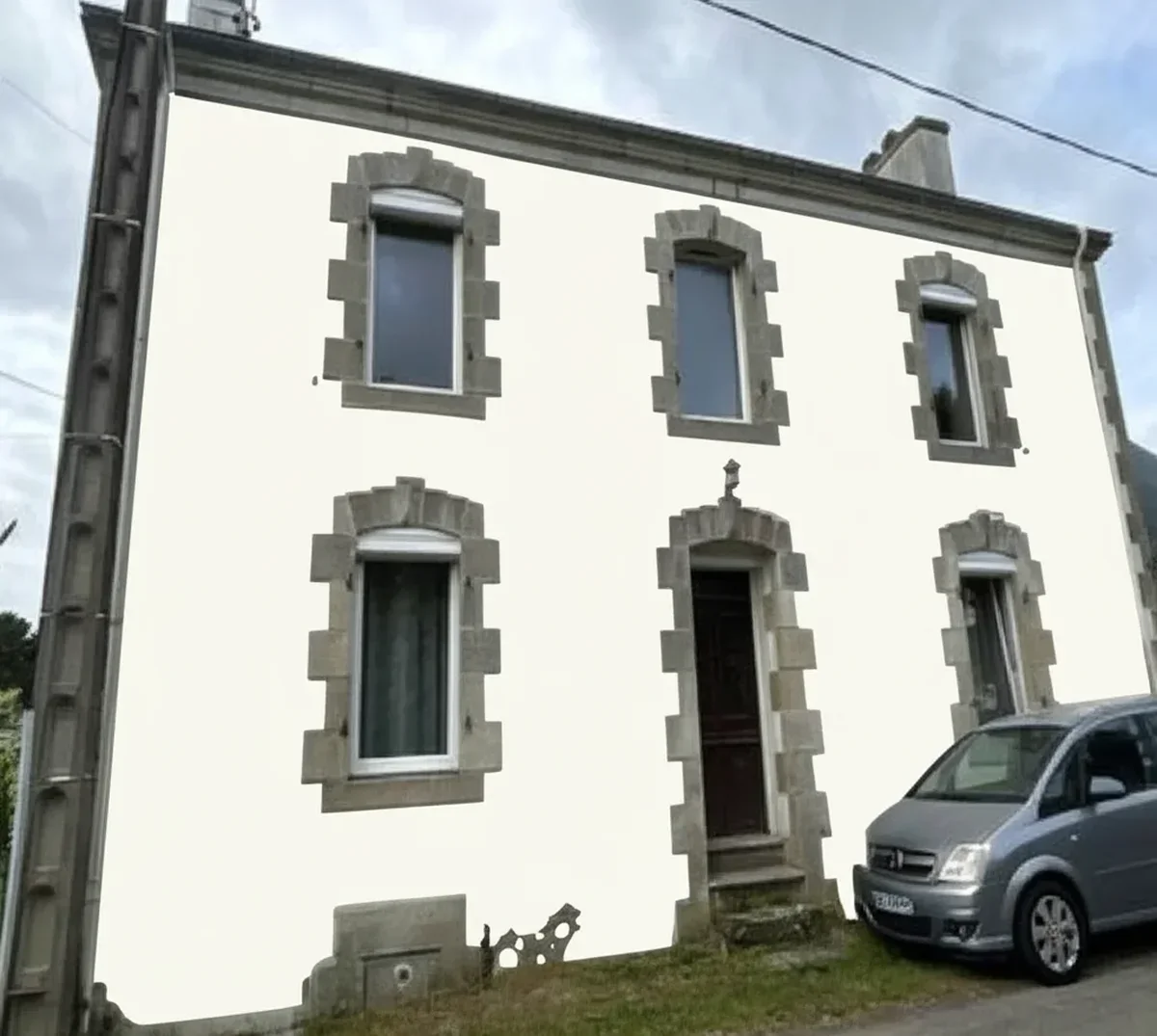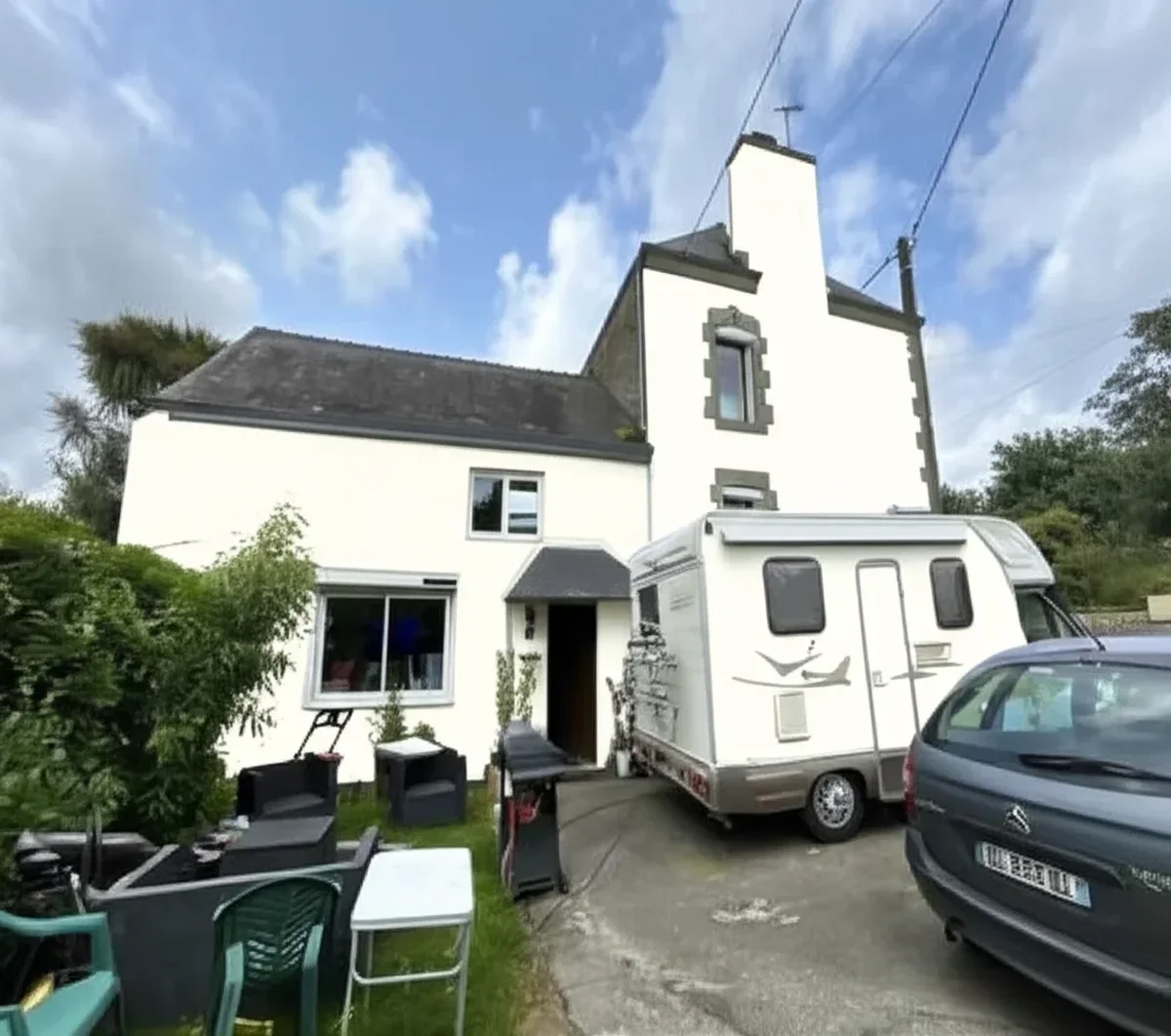
Try it on your house

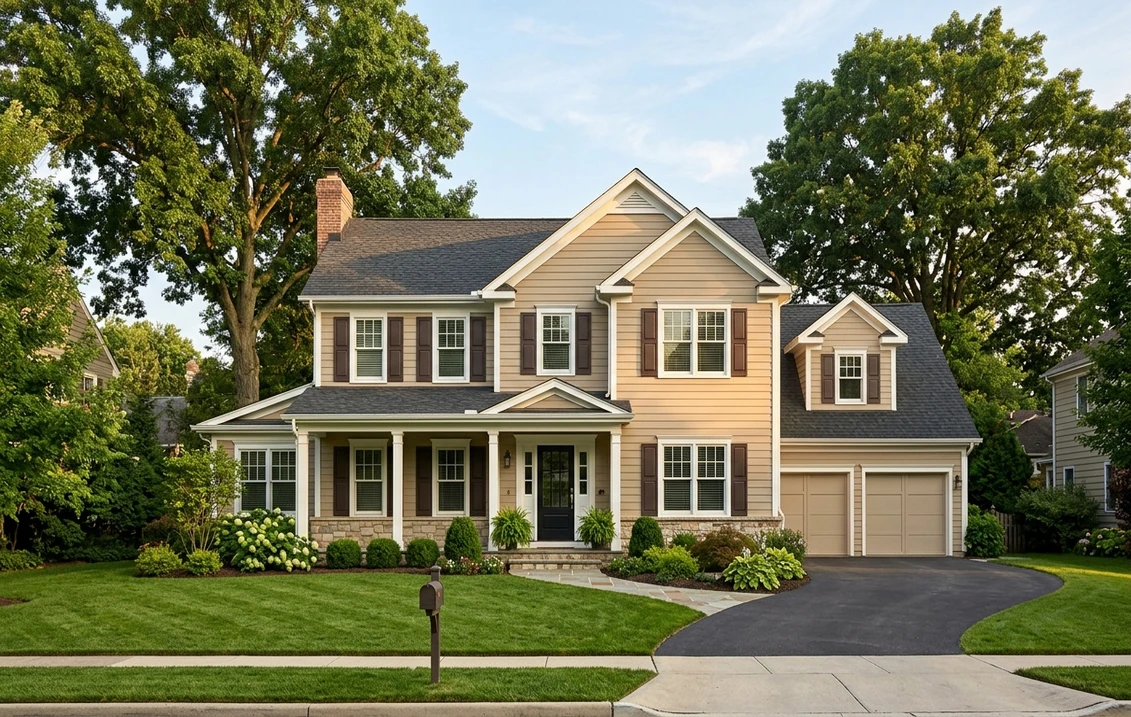
A beige house is the easiest facade to add shutters to and the easiest to get slightly wrong, because beige is not one color. A yellow-beige, a gray-beige and a pink-beige each want a different shutter, and the roof color decides the rest. This guide gives you eight shutter pairings for a beige house, brown, black, dark green, navy and white, with verified Sherwin-Williams and Benjamin Moore codes and Light Reflectance Values, the undertone logic that makes each one work, and the two situations where a dark shutter is not an option at all.
Upload one photo and see brown, black, green or navy shutters on your own facade in about 30 seconds, free.
Start with the beige, not the shutter
The three beiges most often found on American houses behave differently, and the differences are measurable. Accessible Beige SW 7036, whose Sherwin-Williams color page files it among the neutrals, has an LRV of 58 and a balanced gray-yellow base; it is the beige that tolerates the widest range of shutter colors. Its warmer cousin Kilim Beige SW 6106, LRV 57, carries a red-yellow undertone that leans toward adobe and wants warm shutters. Latte SW 6108, LRV 47, is deeper and more golden, a true tan. On the Benjamin Moore side, Bleeker Beige HC-80 is the reference greige-beige; Kylie M Interiors gives its LRV as 52.58 and notes that it "offers more contrast with white trim" than the lighter beiges.
The rule that follows: a gray-leaning beige (Accessible Beige, Bleeker Beige) takes cool and warm shutters alike; a yellow or red-leaning beige (Kilim Beige, Latte) wants warm shutters, brown or warm green, and fights with blue-blacks. If you are not sure which beige you have, hold a sheet of pure white paper against the siding in daylight: the color the beige "turns" next to the white, yellow, pink or gray, is its undertone. Our Accessible Beige versus Kilim Beige comparison shows the two most common beiges side by side.
The 8 shutter pairings, with codes and LRV
| # | Shutter color | LRV | Best beige | Best roof |
|---|---|---|---|---|
| 1 | Tobacco Brown SW 6049 | 8 | Accessible Beige | Brown asphalt |
| 2 | Bittersweet Chocolate SW 6019 | 8 | Latte | Terracotta tile |
| 3 | Sequoia SW 6313 | 9 | Kilim Beige | Clay or brown tile |
| 4 | Bracken Brown BM HC-78 | 11 | Bleeker Beige | Cedar shake, slate |
| 5 | Iron Ore SW 7069 | 6 | Accessible Beige, Bleeker Beige | Gray or black asphalt |
| 6 | Tricorn Black SW 6258 | 3 | Accessible Beige | Black asphalt, standing seam |
| 7 | Pewter Green SW 6208 | 12 | Any beige, best with Kilim Beige | Brown or weathered wood |
| 8 | Naval SW 6244 | 4 | Accessible Beige, Bleeker Beige | Gray asphalt |
Try it on your house
No photo? Try a sample
The LRV figures come from the manufacturers' color pages and from the color reviewers who publish them, including The Heathered Nest on Pewter Green (LRV 12) and the Benjamin Moore Bleeker Beige page. On a shutter, LRV matters less for heat than on siding, because the surface is small, but it still governs contrast: against a beige body at LRV 50 to 58, a shutter below LRV 12 reads as a strong dark accent, and one around LRV 20 to 30 reads as a soft tone-on-tone.
Brown shutters: the warm, forgiving choice
Brown is the traditional shutter color for beige for a practical reason: a brown shutter shares the beige's warm base, so the pair never clashes, and the dark surface hides pollen, dust and rain streaks far better than black does. Tobacco Brown SW 6049 (LRV 8), whose color page places it among the deep neutrals, is the all-purpose brown: red-leaning enough to feel rich, dark enough to read from the street. Bittersweet Chocolate SW 6019 (LRV 8) is cooler and more espresso, which keeps a golden beige like Latte from going entirely yellow. Sequoia SW 6313 (LRV 9) is the brown-red for a Southwestern or Mediterranean house in Kilim Beige with a clay roof. On the Benjamin Moore side, Bracken Brown HC-78 (LRV 11) is the Historical Collection chocolate that pairs with Bleeker Beige and suits heritage neighborhoods with strict review boards.
The caution with brown is the roof. Brown shutters under a gray or black roof split the house into a warm half and a cool half; brown shutters under a brown, terracotta or cedar roof tie it together. If the roof is gray, move to the black or navy options below, or choose a brown with gray in it. For the whole-house version of this palette, see our guide to a brown house with cream trim.
Black shutters: crisp, but choose the right black
Black shutters on a beige house are the colonial standard, and they work on a gray-leaning beige under a gray or black roof. The choice is between a soft black and a true black. Iron Ore SW 7069 (LRV 6) is the soft black with a faint warmth that sits comfortably next to beige; Tricorn Black SW 6258 (LRV 3) is the true black for a crisp, formal look on a two-story colonial with white trim. On a yellow or red beige, both blacks can look harsh, and Iron Ore is the safer of the two. Our Iron Ore exterior guide covers the color in detail. One maintenance note that is real rather than folklore: black shutters show pollen film and water spotting faster than brown ones, so plan on a rinse each spring.
Dark green shutters: the pairing that flatters every beige
Dark green is the shutter color that works on nearly every beige, because green sits opposite the red in a warm beige on the color wheel and quietly balances it. Pewter Green SW 6208 (LRV 12), described by The Heathered Nest as a deep, muted green with cool gray undertones and "a weathered, natural appearance", is the modern version: gray enough not to look like a golf course, green enough to read as color. It pairs with brown roofs, weathered wood and brass hardware, and it is the choice on a wooded lot where the shutters should talk to the trees. For a full scheme built on the tan-and-green idea, our tan house with green shutters guide goes room by room.
Navy shutters: for gray-beige under a gray roof
Navy is the newest of the classic shutter colors on beige and the most sensitive to undertone. Naval SW 6244 (LRV 4) is a deep, nearly black navy that reads as blue only in sunlight; on Accessible Beige or Bleeker Beige under a gray roof it gives a coastal-colonial look that black cannot. On Kilim Beige or Latte it looks like a mistake, because the blue pulls the yellow in the beige forward. Treat navy as the gray-beige option only.
White or cream shutters: the low-contrast alternative
Not every beige house wants dark shutters. On a small ranch or a cottage, white shutters in the trim color, Alabaster SW 7008 (LRV 82) or the existing trim white, make the windows look larger and the house taller, at the price of less drama. The one rule is to match the trim exactly rather than introducing a second white; two whites on one facade always look like a mismatch. Our exterior trim color guide explains how to pick the trim white for a beige body.
Trim: the third color that makes or breaks the pairing
Shutters never sit alone; they sit inside a frame of trim, and the trim white decides whether the shutter color looks intentional. With brown or green shutters on a warm beige, a warm white trim (Alabaster SW 7008, LRV 82, or a comparable cream) keeps the whole facade in one temperature. With black or navy shutters on a gray-leaning beige, a cleaner white (Pure White SW 7005, LRV 84) sharpens the lines and reads more colonial. The mistake to avoid is a cool, blue-tinged trim white next to a yellow beige and brown shutters: the trim turns the beige dingy and the brown muddy at the same time. If the existing trim is vinyl-clad and cannot be repainted, choose the shutter to suit the trim you have rather than the trim you wish you had.
Shutter size and proportion matter too. Decorative shutters that are too narrow to cover the window if closed look pasted on whatever their color; on a facade with undersized shutters, a tone-on-tone color such as a mid-brown or Pewter Green hides the proportion problem better than a hard black, which outlines it. Where shutters are the right width, a strong dark reads as architecture rather than decoration.
Two cases where a dark shutter is not an option
Vinyl shutters. Most shutters bolted to suburban houses since the 1980s are molded vinyl, and vinyl softens and warps when a dark color makes it too hot in the sun. The rule is the same as for vinyl siding: do not repaint darker than the factory color with ordinary paint. The way around it is Sherwin-Williams' VinylSafe palette, 100 colors formulated for vinyl and mixed into SnapDry or an exterior line, which we cover in the VinylSafe colors guide. Wood, composite and aluminum shutters have no such limit; our exterior shutter paint colors guide explains how the substrate changes the paint choice.
HOA palettes. Many subdivisions publish an approved list of body, trim and shutter colors, and a navy or a green that is not on it will be refused regardless of how good it looks. Check the architectural guidelines before buying paint; our guide to HOA-approved exterior colors lists the pairings that pass most boards.
Regional habit plays a part as well, and it is worth knowing which convention your street follows before you break it. In the Southeast and Mid-Atlantic, brown and black shutters on beige colonials and ranches are the default and a green shutter reads as a deliberate choice; in New England, black and dark green on beige clapboard are both traditional; in the Southwest and Florida, where terracotta roofs dominate, the brown-red Sequoia family and a wood-stained shutter are the norm and a navy would look imported. None of this is a rule, but a shutter color that matches the neighborhood's logic ages better in resale photos than one that argues with it.
Matching the roof and the front door
The roof is the largest colored surface on the house and it should agree with the shutters: brown, terracotta and cedar roofs take brown or green shutters; gray and black roofs take black, navy or Pewter Green. Our guide to paint colors for brown-roof houses works through the warm-roof case. The front door can then either match the shutters, the quiet option, or step away from them: a black door with brown shutters, a wood-stained door with black or green shutters, or a muted red with Pewter Green. Keep it to three colors in total on the facade, body, trim and one accent, and let shutters and door share the accent or sit one step apart. The exterior house color combinations guide sets out that three-color rule with examples.
How to test a shutter color before you buy
- Photograph the house from the street in flat daylight and upload it to the simulator. Render brown, black and green shutters on the same photo; the undertone question answers itself on your own beige.
- Check the roof in the render: if the shutters and the roof look like two different houses, change the shutter family, not the shade.
- Buy a quart of the finalist and paint one shutter completely, not a scrap. Hang it back up and look at it from the sidewalk in morning and afternoon light.
- If the shutters are vinyl, confirm the color is in the VinylSafe palette or lighter than the current color before you paint anything.
Free preview on your photo, no account needed for the first simulation.
Sources and references
- Sherwin-Williams, Accessible Beige SW 7036 and Tobacco Brown SW 6049 color pages: official family listings for the reference beige and the reference brown.
- Benjamin Moore, Bleeker Beige HC-80: official color page for the Benjamin Moore beige.
- Kylie M Interiors, Bleeker Beige review: LRV 52.58 and undertone behavior.
- The Heathered Nest, Pewter Green review: LRV 12 and undertone of the green shutter option.
Frequently asked questions
What color shutters go best with a beige house?
Brown or black shutters on a beige house?
Can I paint vinyl shutters a dark color?
Do navy shutters work on a beige house?
Trademarks mentioned (Sherwin-Williams, Benjamin Moore, Behr, Caparol, Brillux, Sto, Alpina, Valspar, PPG, Glidden, Dulux, Crown Trade, Sandtex, Farrow & Ball, Johnstone's, Leyland) are property of their respective owners. FacadeColorizer is independent and not affiliated with any of them. Nominative fair use under Lanham Act §1125.