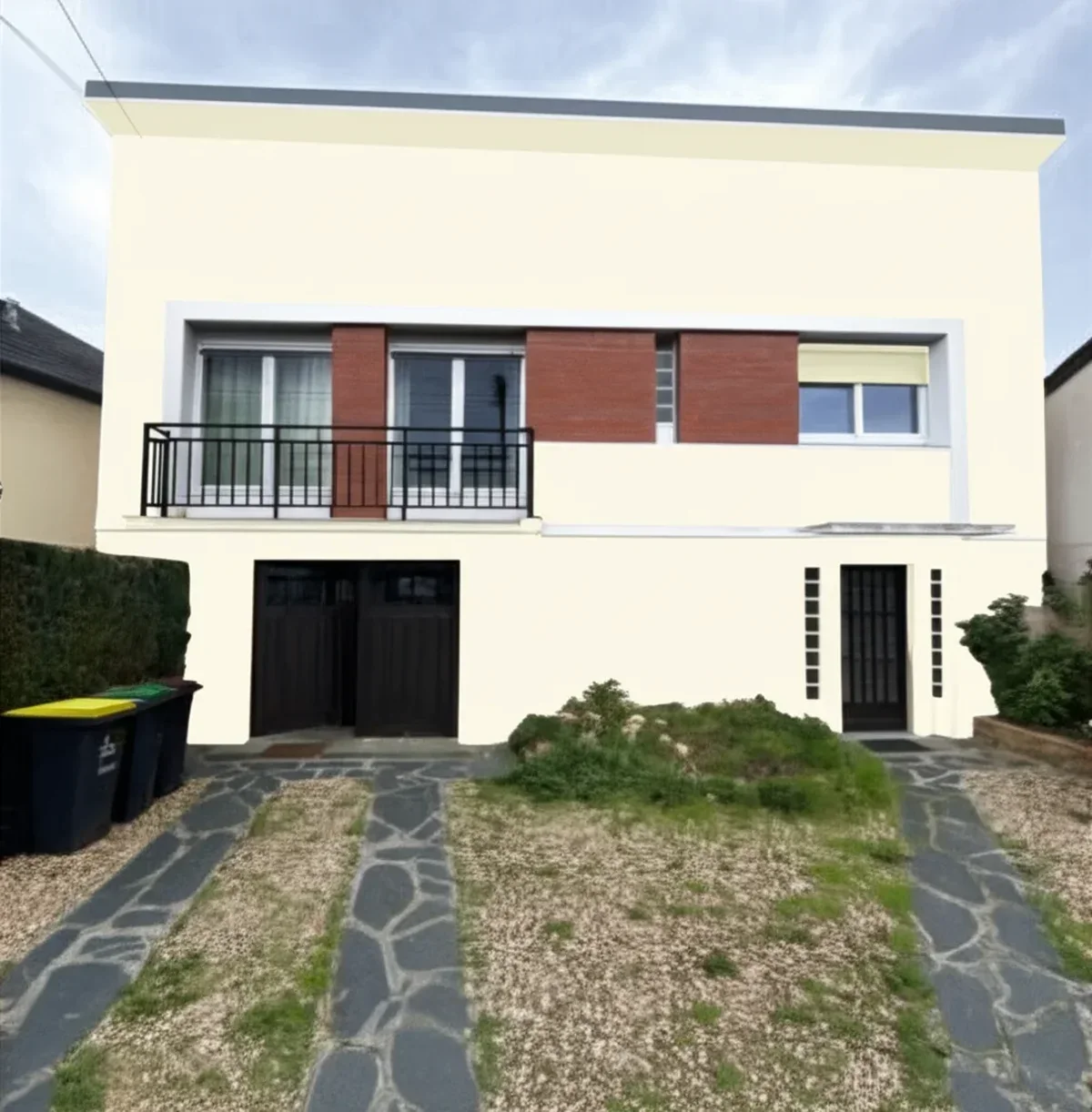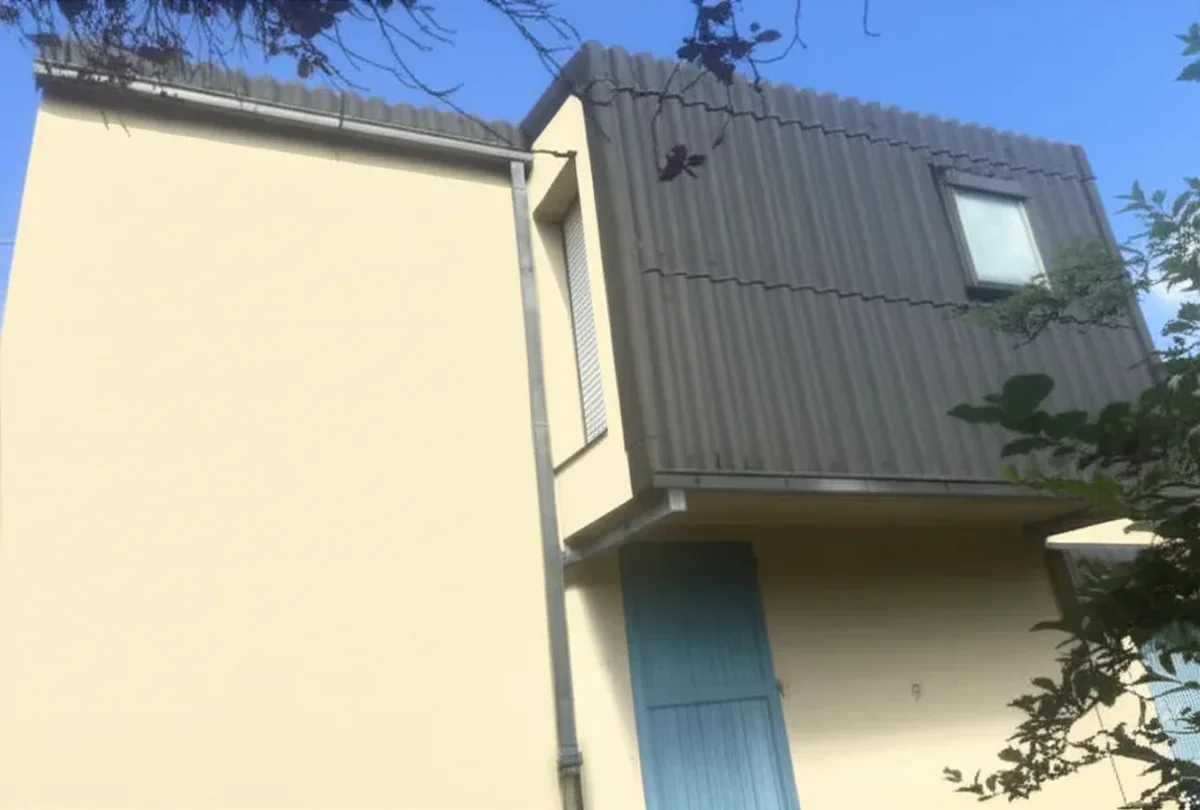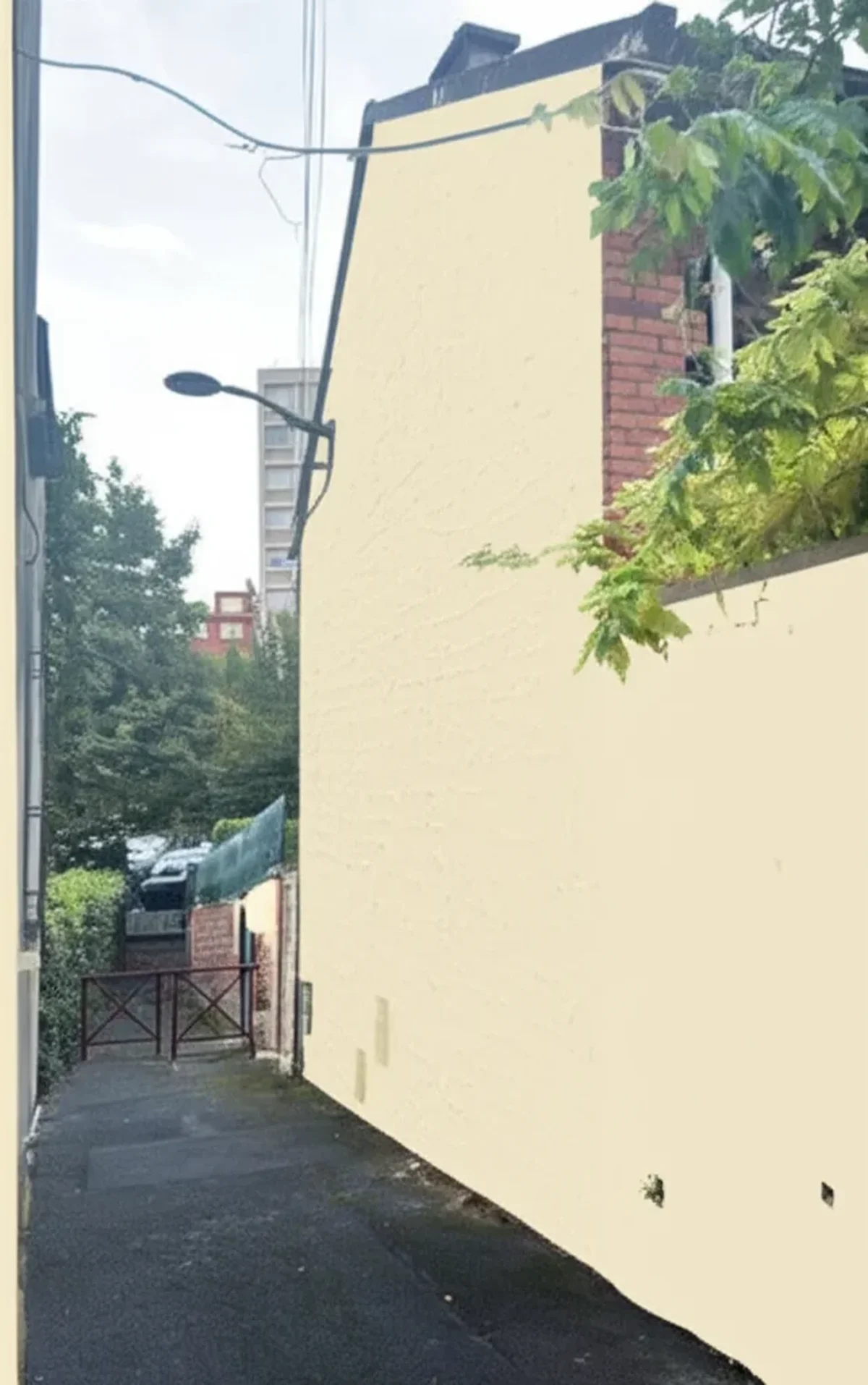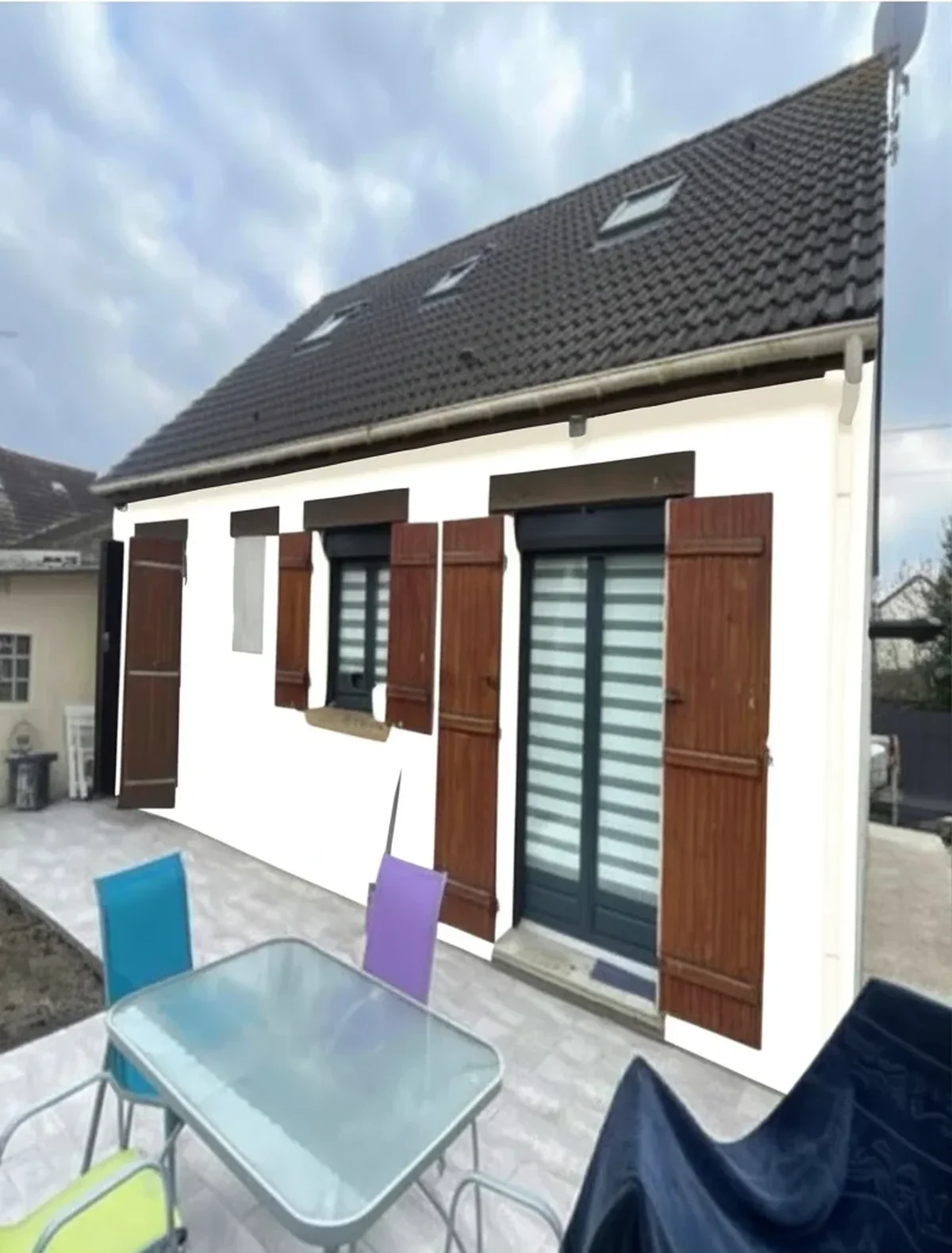
Try it on your house

Mid-Century Modern (MCM) architecture was born between 1945 and 1969, when architects like Richard Neutra, Albert Frey, Joseph Eichler, and the Case Study Houses program reimagined the American home around horizontal lines, flat or low-slope roofs, floor-to-ceiling glass, and an honest relationship between indoors and outdoors. From Palm Springs to the Bay Area, MCM homes share a color language: warm off-whites that reflect desert sun, charcoal woods that ground the silhouette, teal and mustard accents that celebrate post-war optimism, and terracotta or olive that echo the landscape. This 2026 guide presents the 15 best exterior paint colors for Mid-Century Modern houses, with Sherwin-Williams and Benjamin Moore codes, hex values, and the architectural context behind every choice.
How to identify a Mid-Century Modern home
Before picking paint, confirm the style. True MCM homes share five visual markers: a low-slope or flat roof (often with deep overhangs), a strong horizontal emphasis with long siding runs, post-and-beam construction exposing rafters and beams, floor-to-ceiling glass walls (often clerestory windows above lower siding), and minimal ornament relying on material contrast for interest. Siding is usually vertical T1-11, horizontal board-and-batten, stucco, or slump-block masonry. If your home has three of these five features, the MCM palette below will serve it well. Fewer than three and it is most likely a traditional 1960s tract ranch rather than a Mid-Century Modern: the same decade, a different vocabulary, with a low-pitch gable or hip roof, an attached front garage, and original aluminum windows in place of post-and-beam glass. A palette written for glass walls and exposed beams goes thin on that elevation, so start instead from our before and after repaints of 1960s ranch houses, which carries eight of them with full body, trim, and door codes. For broader outside house color inspiration for mid-century homes and adjacent styles, see our cross-style guide. For full pricing context, see our complete exterior house painting cost guide.
Famous examples include the Frey House II (1964, Palm Springs) with its corrugated metal and rock-face stucco, the Kaufmann House (1946, Richard Neutra) with its crisp whites and aluminum fins, and the thousands of Joseph Eichler tract homes across California that popularized redwood siding, radiant-heat slabs, and vibrant accent doors. All three references will reappear throughout this palette guide.
The 15 best Mid-Century Modern exterior paint colors for 2026
- Warm White - Sherwin-Williams Alabaster SW 7008 (hex #EDEAE0). The single most popular MCM siding white in 2026. Slightly warm, never cold, it reads as desert sun on stucco and post-war optimism on board-and-batten. Pair with charcoal fascia and a teal or mustard door. Ideal for Kaufmann-inspired flat-roofed homes in Palm Springs, Tucson, and Albuquerque.
- Creamy Off-White - Benjamin Moore White Dove OC-17 (hex #F0EDE1). Slightly creamier than Alabaster, White Dove softens harsh sun exposure and keeps the house feeling warm at golden hour. Preferred on Eichler-style homes with redwood accents and black aluminum window frames.
- Teal Accent - Sherwin-Williams Aqueous SW 9044 (hex #5E8B8E). The hero Mid-Century teal. Use it on a front door, carport beam, or single accent wall to channel the Palm Springs breeze-block look. A signature color of Alexander Homes in the Twin Palms neighborhood.
- Mustard Yellow Door - Benjamin Moore Dalila 325 (hex #D7A03A). The quintessential Eichler door color. Warm, saturated, and unapologetically 1960s. Works on any MCM with white or charcoal siding and is especially striking against redwood grain.
- Charcoal Siding - Sherwin-Williams Iron Ore SW 7069 (hex #43464B). For a moody, low-slung silhouette. Iron Ore grounds a low-slope roof and makes clerestory windows glow at night. Pair with warm white fascia and a mustard or terracotta door.
- Soft Black - Benjamin Moore Onyx 2133-10 (hex #353839). A true modern black with just enough warmth to avoid reading blue. Excellent on vertical T1-11 and on flat-roofed cubic volumes influenced by the Case Study Houses.
- Terracotta - Sherwin-Williams Cavern Clay SW 7701 (hex #B67459). Pulled straight from the desert floor. Cavern Clay nods to Frank Lloyd Wright's Taliesin West and works beautifully as an accent wall, chimney mass, or front door. Pairs with warm whites and olive greens.
- Olive Green - Benjamin Moore Forest Moss 2145-20 (hex #6B7156). The reluctant MCM neutral. Olive reads as desert sage and California live-oak canopy. Use as main siding on a home surrounded by mature landscaping, or as a beam and fascia color.
- Redwood Stain Alternative - Sherwin-Williams Rookwood Red SW 2802 (hex #7A3D31). When original redwood siding is too weathered to restore, Rookwood Red preserves the Eichler DNA. Deep, saturated, never bright. Holds up well under UV in California and Arizona.
- Desert Tan - Benjamin Moore Manchester Tan HC-81 (hex #D6C6A8). The Palm Springs stucco default. Manchester Tan sits perfectly between white and terracotta, reflects heat, and lets teal or turquoise accents dominate. Great on slump-block walls and courtyard enclosures.
- Steel Gray - Sherwin-Williams Gauntlet Gray SW 7019 (hex #746C63). A modernist mid-tone that bridges charcoal and warm white. Pairs well with natural wood garage doors and aluminum window frames. Reads as industrial without being cold.
- Turquoise Door - Benjamin Moore Mexicali Turquoise 662 (hex #4FAAA6). A more playful cousin of Aqueous. Perfect on a 1959 ranch or a Frey-inspired carport. Always pair with desert tan or warm white siding.
- Sunset Orange Accent - Sherwin-Williams Obstinate Orange SW 6884 (hex #D7471F). Rare but transformative. Use only on a single door or carport beam for a Case Study House #22 Stahl House energy. Deeply saturated and sunset-ready.
- Avocado Green - Benjamin Moore Dill Pickle 2147-40 (hex #99A664). The 2026 revival shade. Avocado has come back as a serious MCM hue, especially on garage doors, planters, and single volumes within a multi-material facade. Pairs with warm white and charcoal.
- Natural Wood Stain - Cabot Semi-Transparent Redwood 6306 (hex #8B5A3C). Not technically paint, but no MCM palette is complete without the honest wood-grain tone that defined the era. Use on vertical siding, overhead beams, or a single feature wall to restore the Eichler and Neutra spirit.
Upload a photo of your Mid-Century home and preview all 15 colors in 30 seconds.
MCM architectural principles that drive color choice
Mid-Century Modern color is never arbitrary. It serves the architecture. Understanding four principles will help you avoid the most common repaint mistakes.
Horizontal emphasis. MCM homes are long, low, and ground-hugging. Your siding color should reinforce that horizontal line, not fight it. That is why warm whites, tans, and charcoals dominate: they read as a single continuous band. Avoid busy two-tone siding splits on a true MCM home.
Low-slope and flat roofs. Without a dominant gable, the fascia and roofline become critical. A dark fascia (Iron Ore, Onyx) draws a crisp horizontal line against a lighter sky. A light fascia makes the roof disappear. Choose based on whether you want the roof to read or recede.
Material honesty. The MCM movement rejected applied ornament. If your home has natural stone, slump block, or brick, do not paint over it. Let the material stay raw and paint only the siding and trim around it. Frey House II is the canonical example: rock wall, aluminum, and glass, each speaking for itself.
Accent discipline. One saturated accent color per facade. Not two, not three. Pick your door color (mustard, teal, orange, avocado) and let it do the work. Multiple accents break the clean-line discipline that defines the style.
Trim and accent rules for MCM homes
Trim on a Mid-Century Modern home is minimal by design. There are no crown moldings, no elaborate window casings, no gingerbread details. What trim exists is usually a narrow aluminum window frame, a fascia board, and occasionally a garage door frame. Follow these rules:
- Window frames are typically left as natural anodized aluminum (silver or black). If they must be painted, match them to the fascia.
- Fascia and soffit should either match the siding (for a seamless look) or contrast sharply (charcoal on white siding) to emphasize the roofline.
- Garage doors can match siding (to recede) or become a second accent (Dill Pickle, Cavern Clay) if the facade is otherwise quiet.
- Front doors are always the hero. Never the same color as the siding.
- Carport beams and posts often match the fascia color for structural clarity.
| Element | Recommended Color | SW / BM Code |
|---|---|---|
| Main siding (desert) | Warm white | SW 7008 Alabaster |
| Main siding (moody) | Charcoal | SW 7069 Iron Ore |
| Fascia on white siding | Soft black | BM 2133-10 Onyx |
| Front door (Eichler) | Mustard yellow | BM 325 Dalila |
| Front door (Palm Springs) | Teal | SW 9044 Aqueous |
| Chimney / accent mass | Terracotta | SW 7701 Cavern Clay |
Try it on your house
No photo? Try a sample
Want to test one of these exact pairings? Enter any SW or BM code from this guide and see it rendered on a photo of your own facade, siding and door included.
Common mistakes on MCM repaints
Three mistakes recur on Mid-Century Modern repaints. The first is too many colors. Victorian houses wear five colors with pride; MCM homes want two plus an accent. Adding a third siding shade kills the horizontal line. The second is fake shutters. Shutters belong on Colonials and Cape Cods, not on a 1962 post-and-beam ranch. Remove them during the repaint. The third is picking a door color that clashes with the era. A bright coral or a dusty rose may be on-trend in 2026, but it will not read as MCM. Stick to teal, mustard, orange, avocado, terracotta, or black.
A fourth mistake worth flagging: painting over natural materials. If your MCM home has exposed concrete block, slump block, fieldstone, or original redwood siding in usable condition, resist the temptation to paint it uniform. The movement was built on honest material expression, and covering a stone chimney or a weathered wood wall erases the most valuable architectural asset on the property. Clean, reseal, or stain instead of paint whenever possible.
Regional adaptations of the MCM palette
The same 15 colors behave differently by region. In Palm Springs and the Coachella Valley, Alabaster stucco with teal or turquoise doors dominates because the desert sun bleaches anything darker within three years; Cavern Clay and Manchester Tan are second-tier favorites. In the San Francisco Bay Area and Marin County, Eichler territory, Rookwood Red or natural redwood stain with Dalila mustard doors remains the signature look. In Denver, Phoenix, and Tucson, Iron Ore and Forest Moss anchor homes that want to blend into mountain and mesa landscapes. In the Midwest and Northeast, where MCM ranches sit among older colonials, Manchester Tan and Gauntlet Gray help the home fit the streetscape while still reading as MCM through roofline and door color choices.
California carries enough of that variation on its own to need separate treatment: an Eichler in Palo Alto, a Case Study house in the Hollywood Hills, and a butterfly-roof house in Palm Springs sit in three different palettes despite sharing a decade. Our guide to mid-century modern paint colors in California splits those three archetypes, traces the Eichler body and door combinations back to the 1960 to 1963 builder catalogs, and covers the HOA approval question that tracts like Greenmeadow still enforce on front doors.
Frequently asked questions
What is the most authentic Mid-Century Modern exterior color?
A warm white siding like Sherwin-Williams Alabaster SW 7008 or Benjamin Moore White Dove OC-17, paired with a charcoal fascia and a single saturated accent door (teal, mustard, or orange), is the most historically accurate choice. This scheme appears on Kaufmann House, countless Alexander Homes in Palm Springs, and the original Case Study Houses. It reflects desert sun, emphasizes horizontal lines, and lets the accent color carry the personality of the home.
Can I paint a Mid-Century Modern house dark gray or black?
Yes, but with care. Dark MCM homes (Iron Ore SW 7069 or Onyx 2133-10) absorb heat, which can be a problem in desert climates like Phoenix or Palm Springs. If you are in a moderate climate (Pacific Northwest, Bay Area, Denver), a charcoal MCM works beautifully, especially when paired with warm wood accents, bright clerestory windows, and a mustard or terracotta door. Always confirm your HOA allows dark exteriors before committing.
How do I choose between Eichler and Palm Springs palettes?
Your climate and siding material decide. Eichler palettes (redwood stain or Rookwood Red, mustard door, white trim) suit homes in Northern California with vertical wood siding and deep overhangs. Palm Springs palettes (Alabaster stucco, teal door, slump-block accents) suit desert climates with flat roofs and masonry walls. If your home is a 1960s ranch in the Midwest or Northeast, a hybrid approach with Manchester Tan siding and an olive or mustard door works best. Test the combination on a photo of your actual facade before committing.
Free, no signup, all 15 MCM colors ready to preview on your home.
A Mid-Century Modern repaint rewards restraint. Choose one siding color, one fascia contrast, and one saturated accent door, then let the architecture speak. See these colors on your house in our exterior paint visualizer before you buy a single gallon, and your 2026 MCM repaint will look as fresh in 2046 as the Kaufmann House does today. Sources: Sherwin-Williams, Benjamin Moore, Palm Springs Modern Committee, Case Study House Program archives.
Trademarks mentioned (Sherwin-Williams, Benjamin Moore, Behr, Caparol, Brillux, Sto, Alpina, Valspar, PPG, Glidden, Dulux, Crown Trade, Sandtex, Farrow & Ball, Johnstone's, Leyland) are property of their respective owners. FacadeColorizer is independent and not affiliated with any of them. Nominative fair use under Lanham Act §1125.