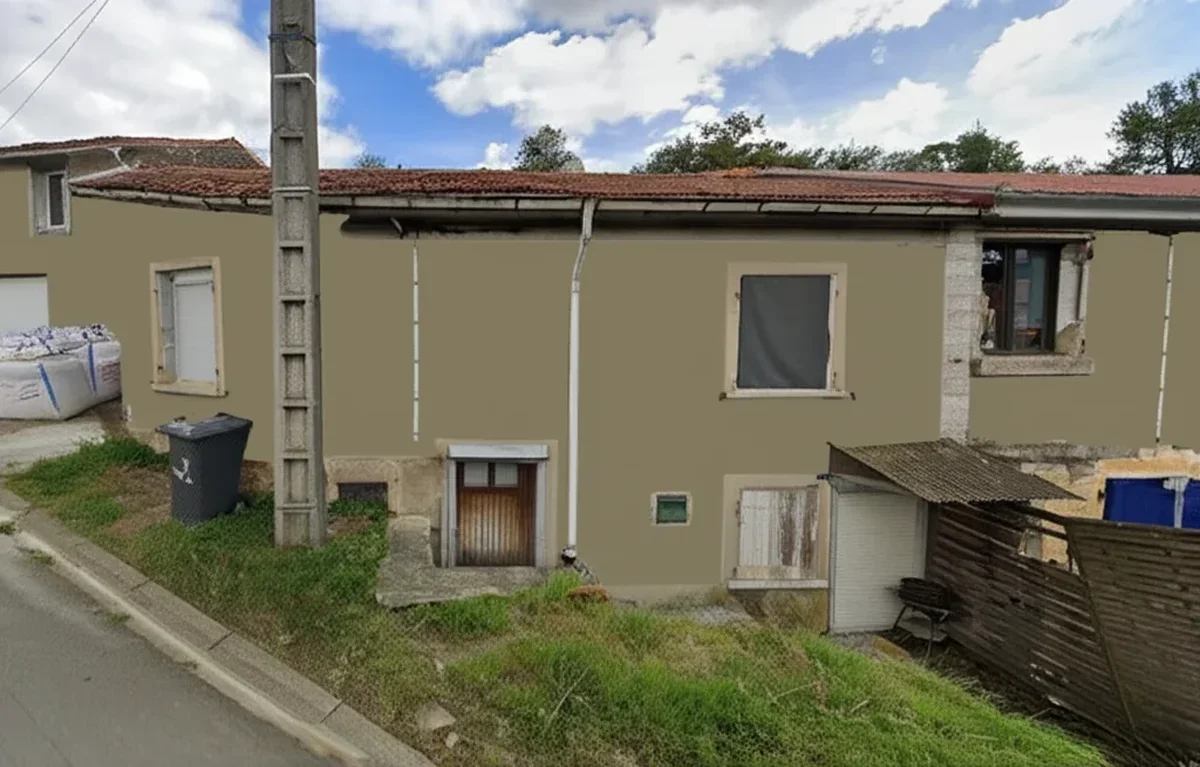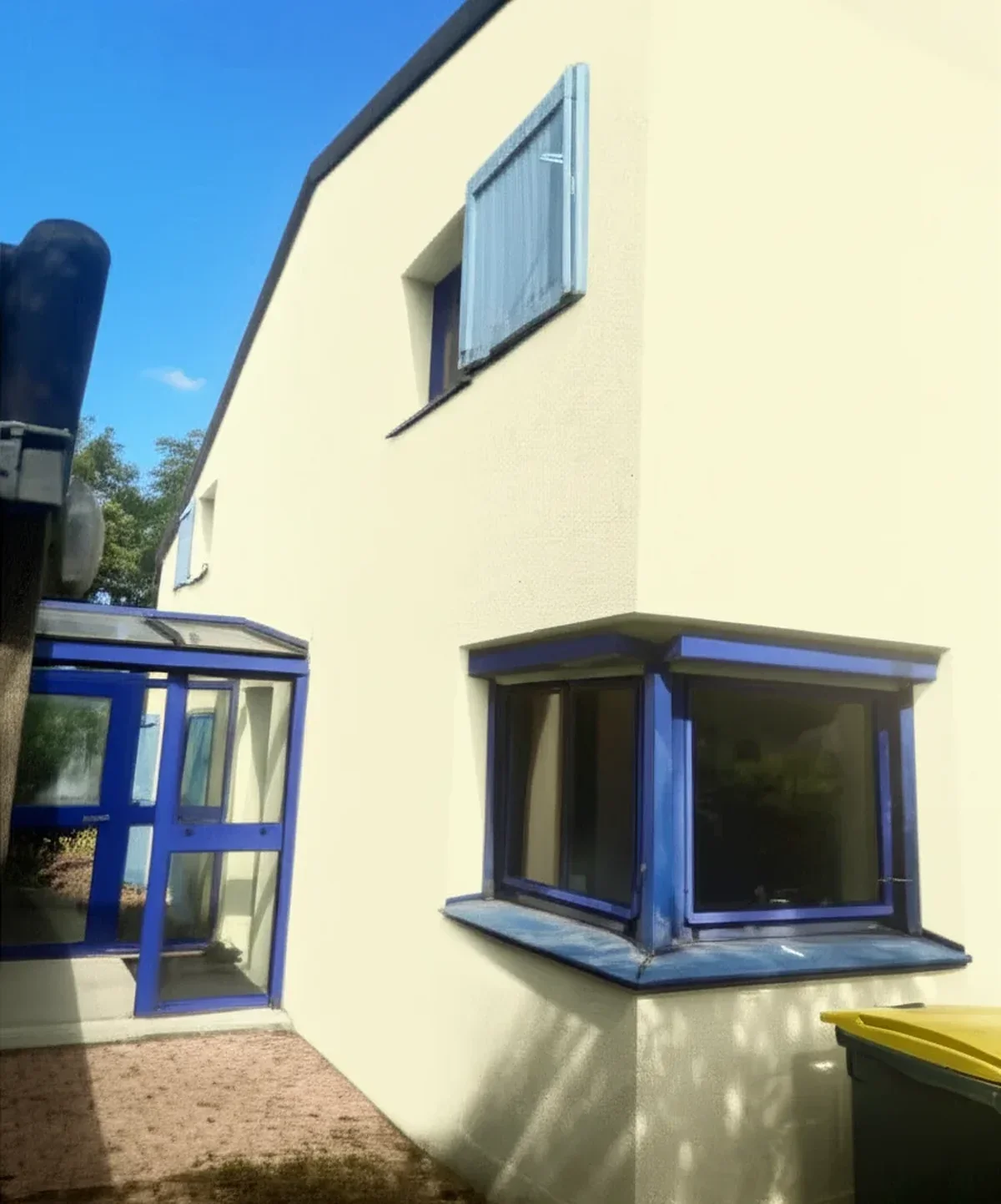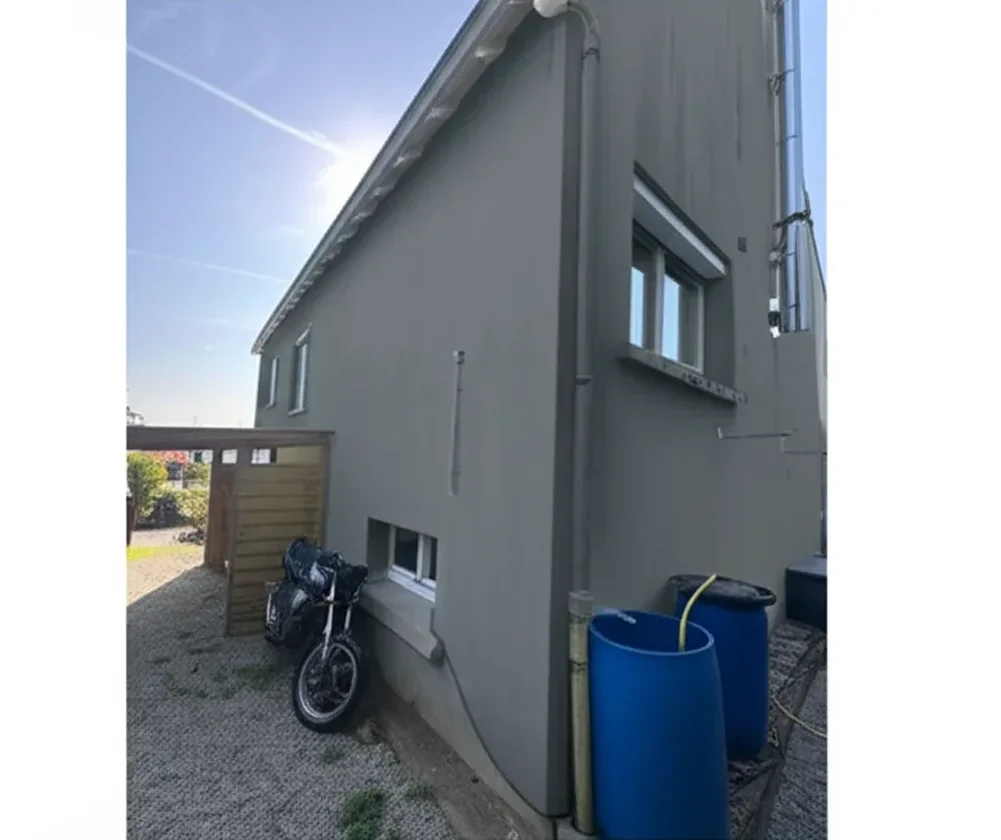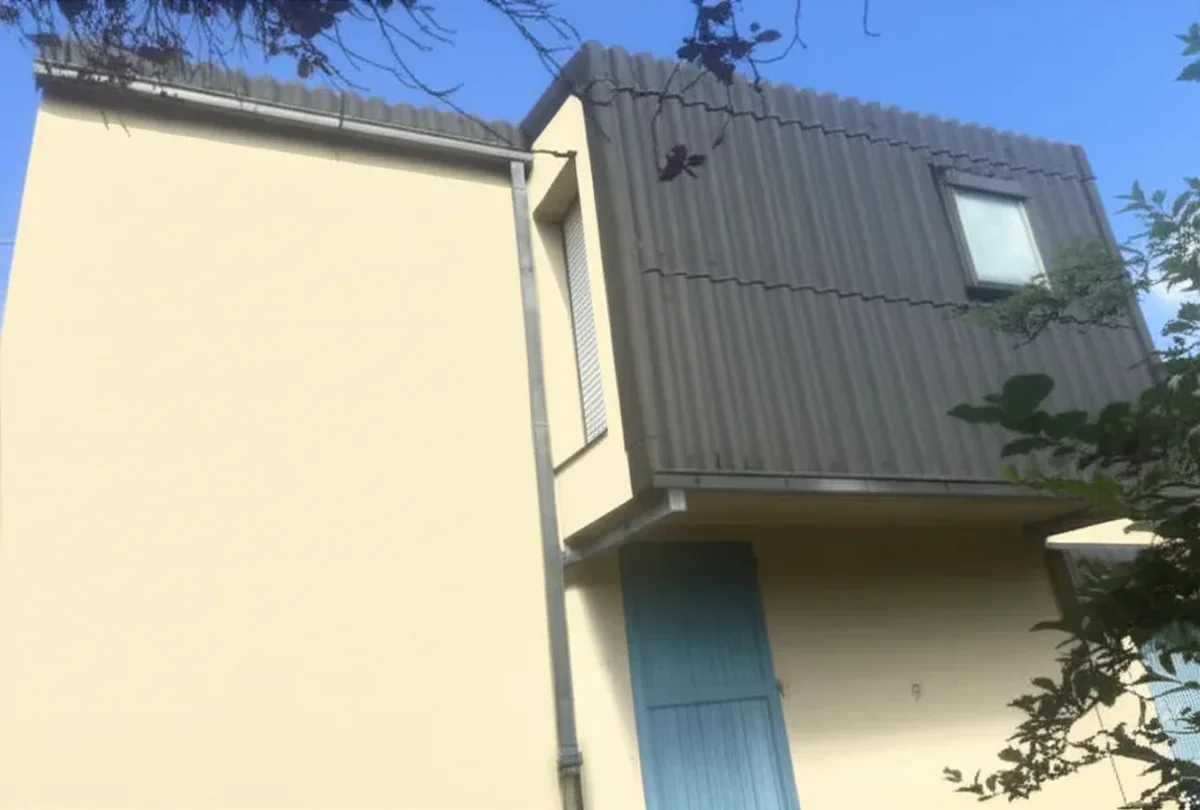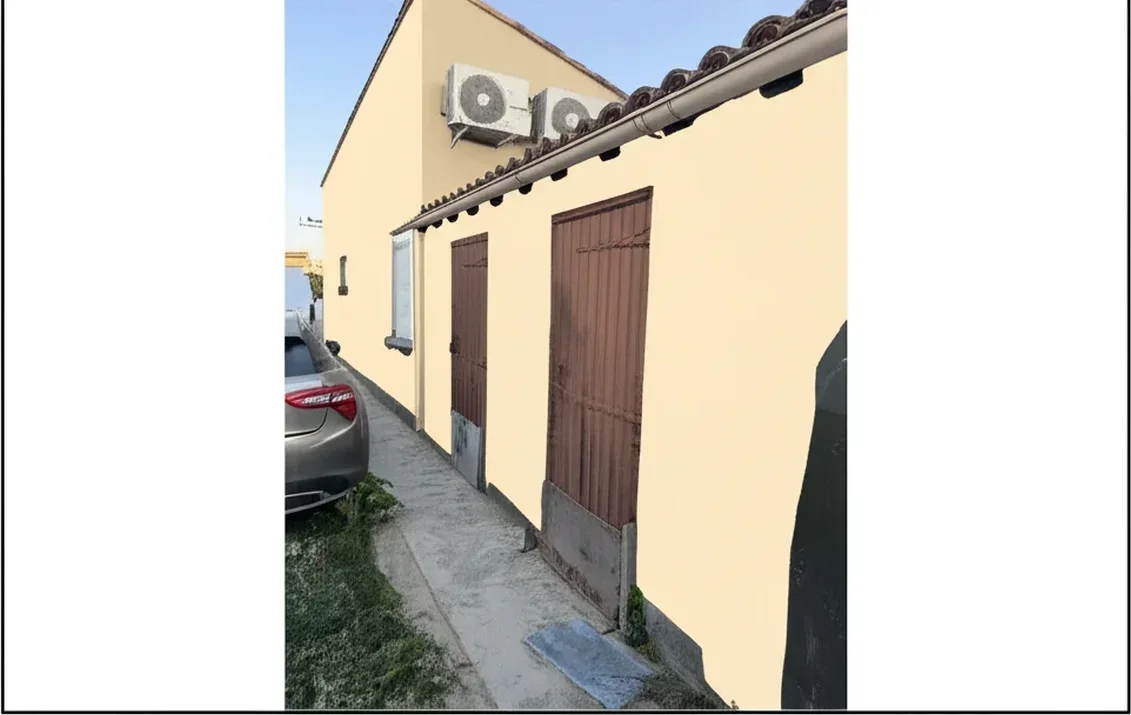
Try it on your house

Quick answer: The best olive green + white trim pairings for 2026: (1) SW Olive Grove 9410 + Pure White 7005 (Mediterranean classic), (2) BM Mediterranean Olive AF-475 + Simply White OC-117 (Tuscan villa), (3) SW Avocado 6707 + Snowbound 7004 (mid-century retro), (4) BM Olive Branch 2143-30 + Cloud White OC-130 (Spanish revival), (5) SW Garden Sage 7736 + Alabaster 7008 (transitional). Pair with terracotta tile roof, copper sconces, natural wood door. Test all five free on your house in 30 seconds.
If you have driven through a recently renovated Mediterranean neighborhood in 2026, you have noticed a quiet revolution: olive green house exteriors with white trim are pulling buyers and remodelers away from a decade of beige stucco and cool gray fiber cement. Olive sits in a sweet spot the cooler sages cannot reach, it carries warmth, depth, and old-world authority while still reading as a sophisticated neutral. In this guide, we break down the top 5 olive + white pairings (codes, undertones, real prices), explain how olive differs from sage, map the style fits, and show the door, roof, and metal accents that finish the look. Updated June 2026.
Why Olive Green Is the 2026 Mediterranean Revival Color
The Mediterranean revival of 2026 is not a Pinterest fad, it is a documented shift. Behr's Hidden Gem (smoky jade), Valspar's Warm Eucalyptus, and Benjamin Moore's October Mist have all leaned the green family warmer this year, and homeowners have responded. According to a 2026 Houzz Home Design Trends report, warm green-family exterior projects rose 34% year-over-year, with olive and ochre tones leading the surge. The reasons are practical: olive green camouflages pollen, road dust, and Southwestern red soil far better than white or pale gray; it photographs richly under harsh midday sun (the curse of Arizona, New Mexico, Texas, and Florida facades); and it sits comfortably on stucco, fiber cement, board-and-batten, and even hand-troweled lime plaster.
Olive also has cultural weight. It pulls visual references from Tuscany, Andalusia, and the Greek islands, places where the color has decorated shutters, doors, and accent walls for centuries. For a 2026 American homeowner restoring a Spanish colonial bungalow or building a new Mediterranean revival, olive green delivers instant authenticity in a way that imported sage or muted jade cannot. If you want to see how olive compares against deeper forest, gray-sage, and cool blue-greens, our guide to the full range of green exterior paint colors by undertone maps the whole family. For a broader shortlist of green winners, see our best exterior green paint colors of 2026.
Top 5 Olive Green + White Trim Pairings (Tested)
Not every olive green works with every white. A warm olive against a cool blue-white can read green-gray and muddy; a cool olive against a creamy ivory can feel chalky. These five pairings have been tested on real homes in our simulator and at scale by working painting contractors, they hold up across the country, from Tucson to Tampa.
| Olive Body | White Trim | Style Fit | LRV (Olive) | Price/Gallon (Olive) |
|---|---|---|---|---|
| SW Olive Grove 9410 | SW Pure White 7005 | Mediterranean / Tuscan | 19 | $64 – $86 |
| BM Mediterranean Olive AF-475 | BM Simply White OC-117 | Tuscan villa / Italianate | 22 | $70 – $90 |
| SW Avocado 6707 | SW Snowbound 7004 | Mid-century modern / retro | 36 | $64 – $86 |
| BM Olive Branch 2143-30 | BM Cloud White OC-130 | Spanish revival / Colonial | 25 | $70 – $90 |
| SW Garden Sage 7736 | SW Alabaster 7008 | Transitional / soft Mediterranean | 42 | $64 – $86 |
Try it on your house
No photo? Try a sample
SW Olive Grove 9410 + Pure White 7005 remains the most popular combination in our simulator data for stucco Mediterranean homes. Olive Grove sits at LRV 19, dark enough to feel anchored on a sun-blasted facade in Tucson AZ or Scottsdale AZ, light enough to never read black in shade. Pure White (LRV 84) has just enough warmth to feel Mediterranean rather than clinical. For homeowners on a tighter budget, SW Avocado 6707 in Duration ($80.99/gal) delivers the same depth at lower premium than Emerald-tier paint.
Benjamin Moore Mediterranean Olive AF-475 from BM's Affinity collection is the pairing painters reach for on Tuscan and Italianate restorations where the olive needs to feel hand-mixed and slightly weathered. Pair with Simply White OC-117 for a creamier, less surgical white that flatters lime plaster and natural stone. For a deeper, more dramatic Spanish revival look on adobe or stucco, BM Olive Branch 2143-30 (LRV 25) reads as sun-darkened olive bark against Cloud White OC-130 trim. If your home leans transitional rather than traditional, SW Garden Sage 7736 at LRV 42 is the lightest olive on this shortlist, more sage-leaning, and pairs beautifully with Alabaster 7008 for a soft Mediterranean look without committing to the deeper saturation.
For a deeper dive into pairings with crisp white trim on the cooler end of the green spectrum, see our companion guide on sage green exterior paint, and the upcoming sage green house with white trim and black door palette guide.
Olive vs Sage: What Is the Real Difference?
Homeowners often use "olive" and "sage" interchangeably, but on a facade the difference is significant. Sage carries a higher gray content; olive carries a higher yellow content. That single shift, more yellow, less gray, changes how the color behaves under sunlight and what trim, door, and roof colors will harmonize.
- Olive green is warmer. Yellow undertones make olive read closer to mustard or khaki at midday. In overcast or shaded light it deepens into a forest-leaning bronze. Sage, by contrast, stays cooler and more neutral, almost dust-gray in shade.
- Olive has more yellow saturation. If you mix a true olive in a paint tray, you can see distinct mustard pigment. Sage skews blue-gray with only a trace of green-yellow. This is why olive feels Mediterranean and sage feels New England.
- Olive carries less gray. A muted olive (Olive Grove, Olive Branch) still reads as olive. A muted sage (Evergreen Fog, October Mist) reads as gray-green or near-neutral. Gray content is the single biggest reason sage works in colder climates and olive owns warm ones.
- Olive needs warm trim. Crisp blue-whites (BM Chantilly Lace, SW High Reflective White) can fight olive's yellow undertone. Cream-warm whites (Pure White, Simply White, Alabaster) bridge the warmth and let olive sing.
- Olive shifts more in light. Because of the yellow content, olive looks significantly different at 8am, noon, and 5pm. Always test patches on multiple elevations before committing.
Style Fit: Where Olive Green + White Trim Belongs
Olive green is not a universal exterior color. It belongs on specific architectural styles where its warmth, history, and old-world cues feel native. Our simulator data shows the strongest preview-to-execution conversion rates on these four styles:
- Mediterranean revival. Stucco bodies, low-pitch terracotta tile roofs, arched windows, wrought-iron details. Olive Grove or Mediterranean Olive sits perfectly here. For a wider treatment of the style, see our Mediterranean revival exterior paint colors guide.
- Tuscan and Italianate villas. Hand-troweled lime plaster, deep eaves, exposed cedar beams. Mediterranean Olive AF-475 with Simply White trim feels like it was always there. Add unfinished cedar or natural pine for shutters.
- Spanish colonial / Spanish revival. Adobe stucco, red clay tile roof, courtyard walls. Olive Branch 2143-30 pairs with Cloud White and terracotta door accents for an authentic Old California feel, see also our Santa Fe and Southwest adobe exterior paint colors guide.
- Mid-century modern with a retro nod. 1960s ranch homes, low rooflines, large picture windows. SW Avocado 6707 brings the era-correct warmth, paired with Snowbound trim and a teak or walnut door, the result feels intentionally vintage rather than dated.
Olive green is less successful on Cape Cod, Colonial saltbox, Victorian, and pure modern minimalist homes, where cooler sages or grayed greens carry more historical or stylistic weight. For broader pairings across warm earth-tone palettes (terracotta, ochre, sand, sienna), see our warm exterior paint colors of 2026 deep-dive, and for a full ranking of whole-house green options (sage, olive, forest) see green house paint colors 2026: 15 best shades tested.
Door Accents That Finish the Look
The front door is where olive green earns its old-world stripes. Skip the matte black trend that works for sage and modern farmhouse, on an olive body, black reads cold and stops the eye. Instead, lean into one of these three accent paths:
- Terracotta door. A muted brick-red or burnt-clay door (SW Cavern Clay 7701, BM Audubon Russet HC-51) picks up the warm tile roof and door-pot terracotta planters and creates a true Mediterranean trio: olive, terracotta, white.
- Copper or aged-bronze hardware + natural wood door. Skip painted color and let a stained mahogany, walnut, or oiled cedar door bring its own depth. Add antiqued copper sconces, house numbers, and a copper mailbox. This is the highest-end finish for olive + white.
- Soft cream-on-cream (white door). If you want the body to dominate, paint the front door in the same trim white. The result feels villa-like and uncluttered, common on Italianate and Mediterranean revival homes from the 1920s.
Avoid bright reds, royal blues, and yellows on doors with olive green bodies, they fight the yellow undertone in olive and create a clash. If you have to use a cool accent, navy is the only blue that holds up, and only on Spanish revival homes with deep terracotta tile to balance it. See our sage green + white + black door palette for a cooler alternative that does pair with black successfully.
Roof Colors That Work With Olive Green
Roof color is rarely repainted, so it has to be chosen with the same care as siding. Two roofing options dominate the olive-green palette in 2026:
- Terracotta tile (clay or concrete). The historically correct choice. The warm orange-red of terracotta locks into olive green's yellow undertone and creates the unmistakable Mediterranean signature. Works with Olive Grove, Mediterranean Olive, and Olive Branch.
- Charcoal asphalt shingle. The modern, cost-effective alternative. A medium-to-dark charcoal (not pure black) reads as deep slate and adds visual weight without stealing focus. Best with Garden Sage 7736 or Avocado 6707 on mid-century or transitional homes.
- Avoid: Brown asphalt (clashes with olive's yellow), bright red (too saturated), bright blue or green metal (competes for attention). Standing-seam metal roofs in matte black or warm bronze are acceptable but less classic.
How to test it on your own home before you buy
No third-party report replaces your own walls: the same color reads differently on a north elevation and a south one, next to red brick or a gray roof, under morning and evening light. Take a daylight photo, upload it to the free AI paint visualizer, and run two or three candidates on the same image so the comparison is fair. Keep the one or two that survive the side-by-side, buy a sample of each, and brush them out on the actual surface in the actual light before you order the full quantity.
Application Tips for Olive Green Exteriors
Olive green is unforgiving when applied poorly. Yellow-based pigments are notoriously prone to streaking, lap marks, and uneven sheen if the application is rushed or the prep is half-finished. These tips come from licensed contractors who have painted dozens of olive facades in 2025 and 2026:
- Tint your primer to 50% of the olive formula. A white primer under a saturated olive (LRV under 25) will telegraph through coats one and two. Ask your paint store to tint the primer halfway to the body color. This is non-optional for Olive Grove and Olive Branch.
- Two coats minimum, three on harsh sun elevations. South and west-facing walls in warm climates need a third coat to lock in pigment depth that resists UV fade. Skipping this step shortens the repaint cycle by 3 to 5 years.
- Use satin sheen for stucco, semi-gloss for trim. Flat finishes show streaks; high-gloss reflects too much warm sunlight and creates a glare. Satin is the proven middle ground for olive bodies. Semi-gloss on white trim adds the crisp boundary needed to separate the two colors visually.
- Mind temperature and humidity. Acrylic latex olive paints set best between 55 and 85 degrees Fahrenheit with humidity below 80%. In hot Southwestern climates, start painting at sunrise and stop by 11 AM on south and west walls. Continue on shaded elevations until early afternoon.
- Buy 10% extra paint. Olive shades, especially custom-tinted ones like Olive Grove, can vary slightly between batches. Order all your paint in one batch from a single store, and keep one unopened gallon for touch-ups within the first year.
What to Avoid: Pale Washed-Out Olive in Cool Light
The single biggest failure mode for olive green exteriors is choosing a too-light olive on a north-facing wall or in a cool, overcast climate. Light olives (LRV above 50) lose their yellow saturation in flat, gray light, the eye reads the green as gray-beige, the warmth disappears, and the facade feels muddy. We have seen this happen repeatedly in Seattle, Portland, San Francisco, and the Pacific Northwest, where painted olive samples that looked perfect on a sunny showroom turned dull on the actual house.
The fix is to choose an olive with an LRV between 19 and 30, dark enough to hold pigment depth in cool light, light enough to avoid reading near-black in shade. Olive Grove (LRV 19), Mediterranean Olive (LRV 22), and Olive Branch (LRV 25) all sit safely in this range. If you live in a sun-saturated climate (Arizona, Texas, Florida, Southern California), you can push lighter into Garden Sage or even Avocado territory because midday sun reactivates the yellow. Always paint a 3'x3' test patch on the elevation you doubt the most, observe at 8am, noon, and 5pm before committing.
Visualize Olive Green on Your Home - Free
Olive green is unforgiving when it goes wrong, and beautiful when it goes right. Skip the sample-pot guesswork. Upload a photo of your home to our free AI exterior paint visualizer and see photorealistic results in under 30 seconds. Test Olive Grove, Mediterranean Olive, Olive Branch, or any shade you like, on your siding, trim, shutters, and front door, before spending a dollar on paint. Try the free paint visualizer →
For more exterior color inspiration, browse our Best Exterior Paint Colors 2026 roundup and our Exterior House Painting Cost Guide. For authoritative color libraries, see Sherwin-Williams Olive Grove 9410, Benjamin Moore Mediterranean Olive AF-475, and HGTV green exterior gallery.
Frequently asked questions
Does olive green house exterior work with white trim?
What is the difference between olive green and sage green for exteriors?
What architectural styles suit an olive green exterior?
What door color goes best with olive green and white trim?
What roof color works with an olive green house?
Will olive green look washed out on my house?
How much does it cost to paint a house olive green with white trim?
Can I preview olive green on my house before painting?
Trademarks mentioned (Sherwin-Williams, Benjamin Moore, Behr, Caparol, Brillux, Sto, Alpina, Valspar, PPG, Glidden, Dulux, Crown Trade, Sandtex, Farrow & Ball, Johnstone's, Leyland) are property of their respective owners. FacadeColorizer is independent and not affiliated with any of them. Nominative fair use under Lanham Act §1125.