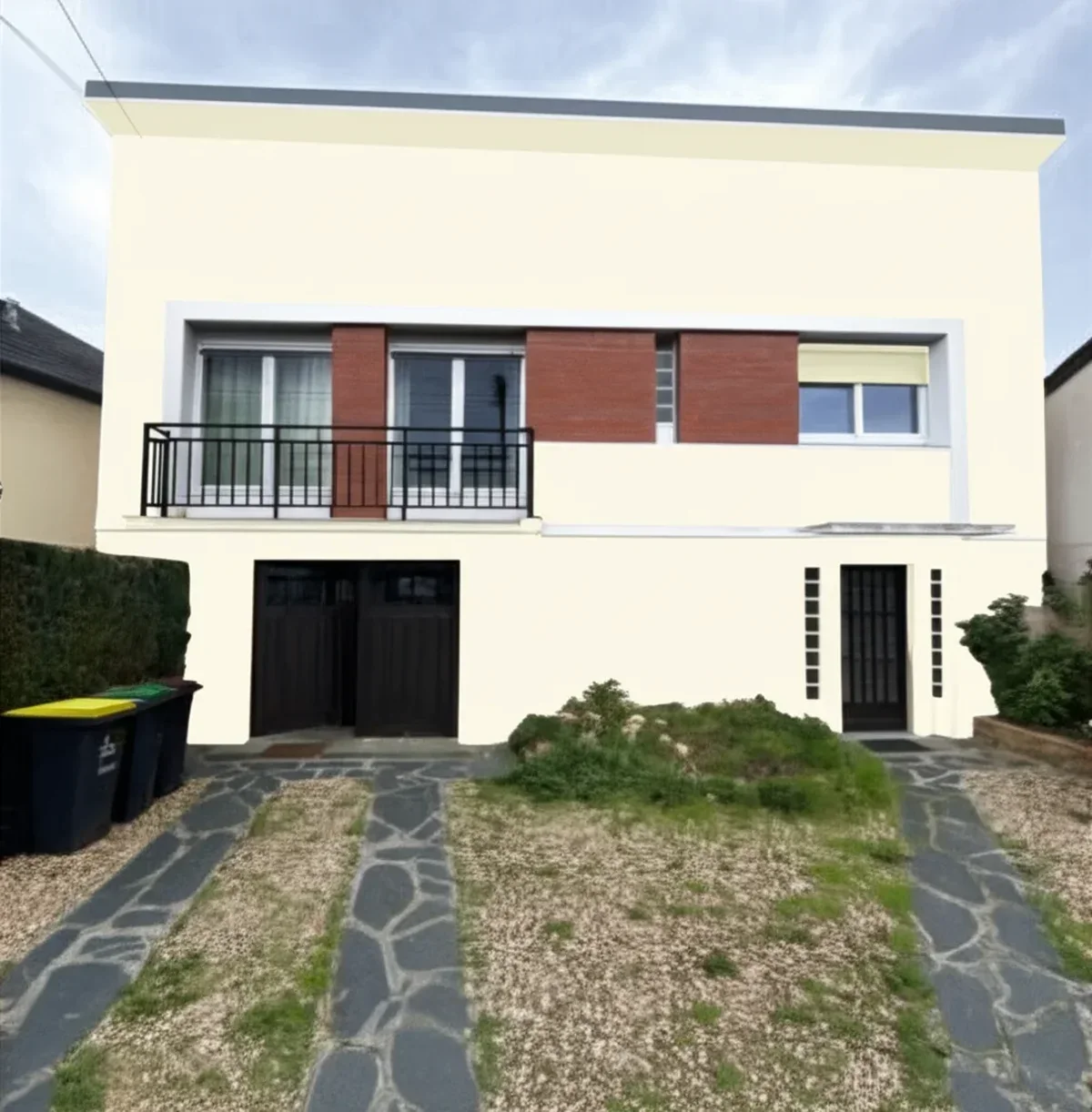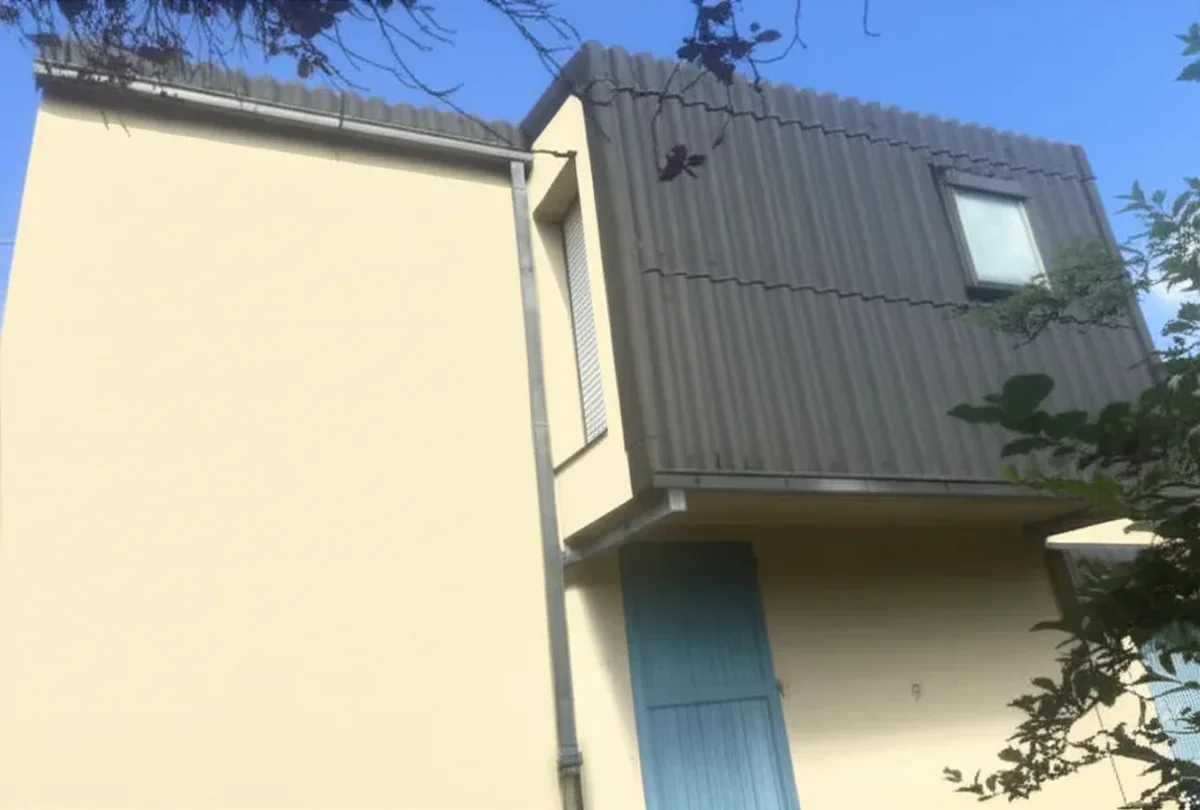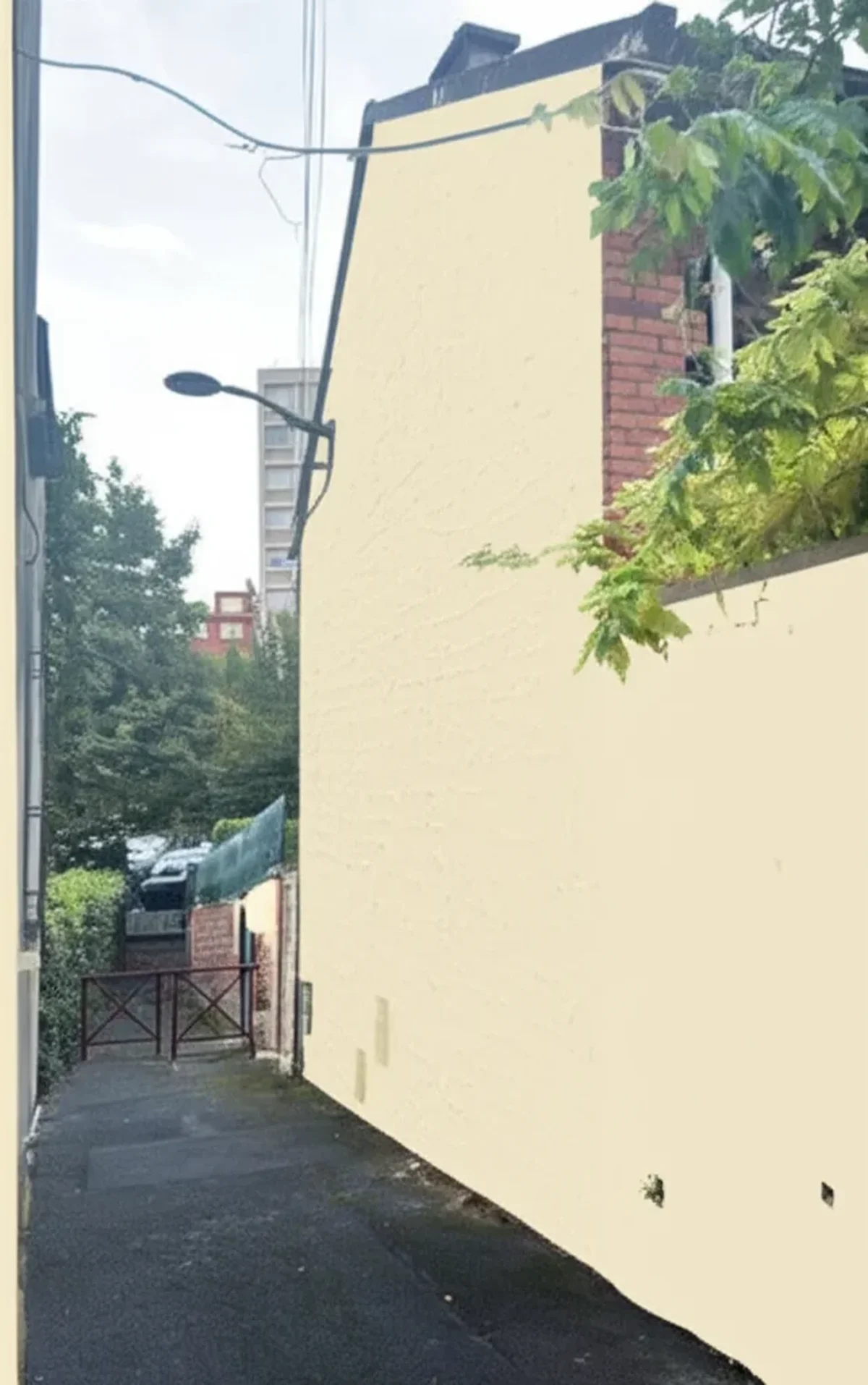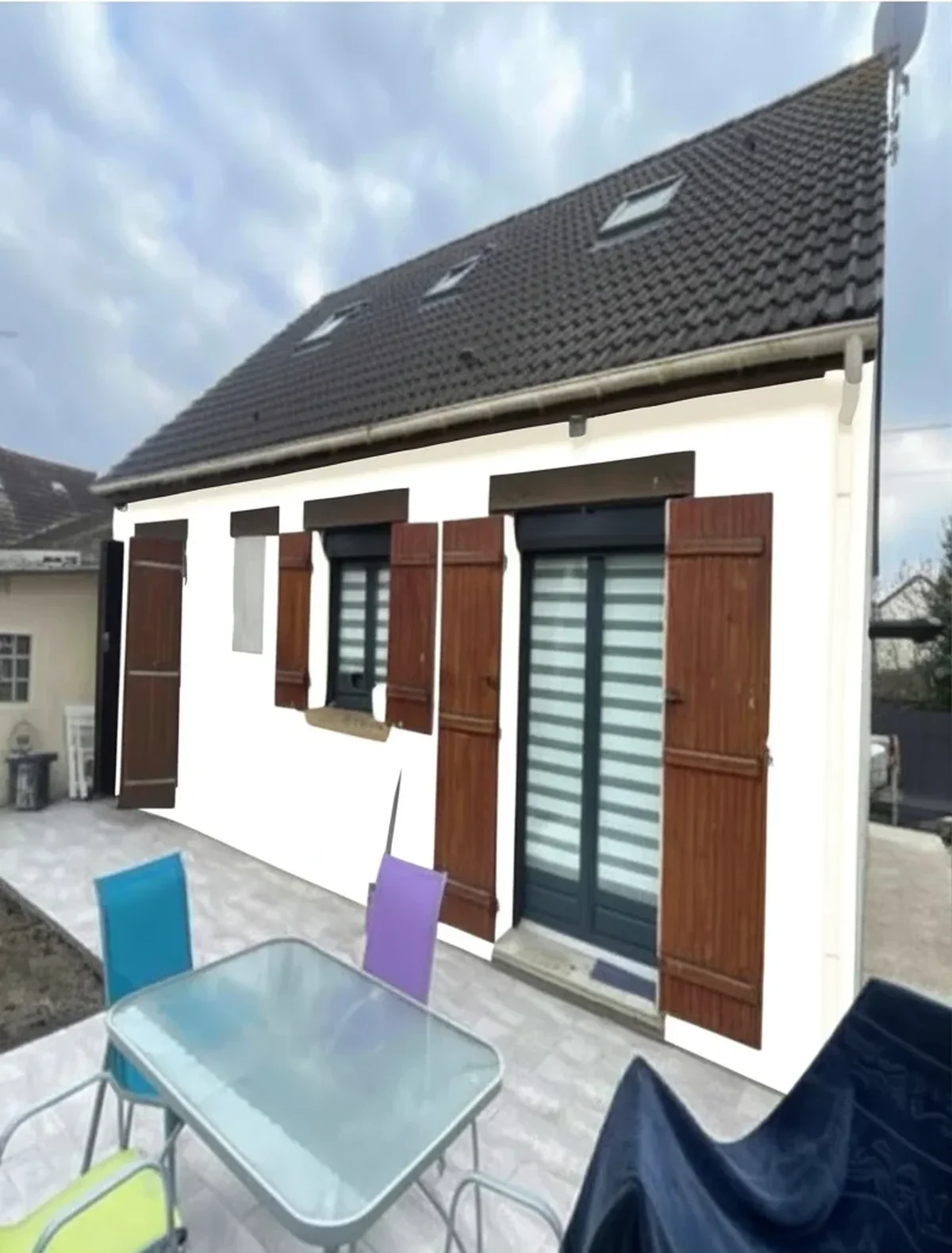
Try it on your house

Santa Fe is the only US city with a binding palette ordinance for exterior walls. Since 1957, the Historic Districts Ordinance has limited adobe and adobe-style stucco facades to a narrow band of earth tones: brown, tan, beige, and natural mud-plaster shades. Stray outside that band and you can be denied a Certificate of Appropriateness by the city's Historic Districts Review Board. This guide lists the 12 most authentic Santa Fe adobe exterior paint colors for 2026, with Sherwin-Williams, Benjamin Moore, and Behr matches, plus the door-accent rules that make Pueblo-revival homes pop without breaking the code. Pair it with our Southwest ranch palette guide if you live outside the Historic District.
What makes a Santa Fe adobe color authentic
Authentic adobe color is not a Pantone choice; it is the color of the mud. Traditional Santa Fe adobe walls were finished in tierra blanca, tierra amarilla, or tierra rosa mud plasters, pigmented by the iron oxides and clays of the surrounding Sangre de Cristo foothills. The result is a narrow band of warm, low-chroma earth tones with chroma values typically between 2 and 6 on the Munsell scale. Anything more saturated reads as modern, anything cooler reads as out of place against the high-desert light.
The visual rules that separate authentic from off-key Santa Fe color are simple:
- Hue family: red-yellow earth tones (Munsell 5YR to 10YR). No greens, no blues, no pure grays on the body.
- Low chroma: Munsell chroma 2 to 6. The color should look dusty, not candy.
- Warm undertone: pink, peach, or yellow undertones; never cool gray or violet.
- LRV range: most authentic shades fall between LRV 35 and LRV 65, matching dried mud plaster.
- Matte or low-sheen finish: gloss reads as plastic and kills the adobe illusion.
Upload a photo of your Santa Fe home and preview all 12 authentic adobe colors in 30 seconds.
Historic Santa Fe palette and city ordinance
Santa Fe Municipal Code Chapter 14, Article 14-5.2 (Historic Districts) is the source document. It defines two protected styles relevant to color choice: Old Santa Fe Style (Spanish-Pueblo Revival) and Recent Santa Fe Style (Territorial Revival). For exterior walls, the ordinance states: "Wall colors shall be limited to natural earth tones representative of the surrounding landscape, including mud-plaster browns, tans, and beiges. White, gray, and brightly saturated colors are prohibited on primary wall surfaces."
The Historic Districts Review Board (HDRB) reviews every exterior repaint inside the five protected districts: Downtown, Westside-Guadalupe, Don Gaspar, Eastside, and Historic Transition. Submission requires a 4 by 4 inch wet sample on the actual wall, a brushed drawdown, and the manufacturer's name plus color code. Approval typically takes 20 to 30 days. Painting without approval can trigger fines of 500 to 5,000 dollars per violation and a forced repaint at owner cost.
For a wider view of warm earth tones gaining traction nationwide, our 2026 colors of the year preview covers the broader trend. Outside the historic districts, the rules relax but the visual language stays. Most Santa Fe HOAs (Las Campanas, Aldea, Casas de San Juan) maintain their own pre-approved adobe palettes that echo the city ordinance. See our shortlist of the best HOA-approved exterior paint colors for 2026 for cross-regional context. If your home sits inside any HOA, check our HOA-approved exterior colors guide before purchasing paint.
12 recommended authentic Santa Fe adobe colors
1. Pueblo Tan (Sherwin-Williams SW 7572 Belvedere Cream)
The Santa Fe default. A warm pinkish tan that mirrors weathered mud plaster on Canyon Road galleries. LRV 62. HDRB-approved without modification in over 90 percent of submissions. Pairs with portal beams stained dark walnut and a turquoise or hand-forged iron door.
2. Adobe White (Benjamin Moore HC-37 Monroe Bisque)
Despite the "white" label, this is the lightest adobe-approved shade: a warm cream with a peach whisper. LRV 71. The cleanest backdrop for blue door accents and red chile ristras. Avoid pure whites (Chantilly Lace, Pure White) inside the historic district; they read as gray and trigger HDRB rejection.
3. Warm Cream (Behr PPU7-13 Mineral Yellow)
The most budget-friendly authentic option, available at Home Depot. A soft yellow-tan that captures tierra amarilla mud. LRV 59. Behr Marquee Exterior holds this pigment for 8 to 10 years in Santa Fe's 7,200-foot UV. Specify a matte or low-lustre finish.
4. Adobe Dust (Benjamin Moore 2175-40)
The classic Pueblo-revival pink-tan with a measurable rose undertone. LRV 49. Reads beautifully against vigas (exposed ceiling beams) stained natural cedar. The signature color of dozens of restored haciendas in the Eastside historic district.
5. Tucson Coyote (Benjamin Moore 1220)
A deeper, browner adobe. LRV 32. Works best on north and east elevations or on smaller casita additions where the lower LRV will not overheat under the 320-day Santa Fe sun. Pairs with a saguaro green or oxblood accent door.
6. Cavern Clay (Sherwin-Williams SW 7701)
SW's 2019 Color of the Year, still the most popular adobe terracotta in 2026. LRV 36. Captures the warm clay of Plaza Hotel walls at golden hour. Use mineral-pigment formulations (see climate section) to slow UV fade.
7. Sante Fe Tan (Sherwin-Williams SW 7547 Sandbar)
A literal name match. A muted tan-beige with a soft yellow undertone. LRV 56. Excellent for primary walls; pre-approved by Las Campanas and Aldea ARCs. Pair with Pueblo Tan trim and a teal or cobalt door for contrast.
8. Mesa Brown (Behr S260-5 Dried Chamomile)
A warm medium brown that recalls fired clay storage jars. LRV 41. Works as a primary color on smaller Pueblo-style homes or as a deep accent band beneath portal roofs. Behr's mineral-loaded exterior formulas hold this shade well in high UV.
9. Tierra Rosa (Benjamin Moore 1191 Foothills)
A pinkish tan with a stronger rose lift than Adobe Dust. LRV 52. The exact hue of sunlit Eastside adobe in late afternoon. Best on west-facing walls where afternoon light intensifies the pink undertone.
10. Old Mud Plaster (Sherwin-Williams SW 6112 Biscuit)
A soft sand-cream that reads as freshly mixed mud. LRV 66. The most-approved shade in Westside-Guadalupe historic submissions during 2024 to 2025. Reflective enough for full south elevations.
11. Canyon Road Beige (Benjamin Moore HC-79 Greenbrier Beige)
A taupe-leaning beige with the faintest green-gray whisper that mimics weathered mud after monsoon rains. LRV 47. Works on Territorial Revival homes with red-brick coping. Always submit a drawdown; the green undertone occasionally triggers HDRB pushback.
12. Caliche Cream (Behr PPU7-11 Calming Tea)
A light warm cream that nods to caliche limestone substrate visible in Santa Fe arroyos. LRV 68. The highest-reflectivity adobe-approved shade in the Behr lineup, best for west-facing walls that bake from 2 to 6 pm in summer.
| # | Color Name | Manufacturer Code | LRV | HDRB Status |
|---|---|---|---|---|
| 1 | Pueblo Tan | SW 7572 Belvedere Cream | 62 | Pre-approved |
| 2 | Adobe White | BM HC-37 Monroe Bisque | 71 | Pre-approved |
| 3 | Warm Cream | Behr PPU7-13 Mineral Yellow | 59 | Pre-approved |
| 4 | Adobe Dust | BM 2175-40 Adobe Dust | 49 | Pre-approved |
| 5 | Tucson Coyote | BM 1220 Tucson Coyote | 32 | Approved with drawdown |
| 6 | Cavern Clay | SW 7701 Cavern Clay | 36 | Approved with drawdown |
| 7 | Santa Fe Tan | SW 7547 Sandbar | 56 | Pre-approved |
| 8 | Mesa Brown | Behr S260-5 Dried Chamomile | 41 | Approved with drawdown |
| 9 | Tierra Rosa | BM 1191 Foothills | 52 | Pre-approved |
| 10 | Old Mud Plaster | SW 6112 Biscuit | 66 | Pre-approved |
| 11 | Canyon Road Beige | BM HC-79 Greenbrier Beige | 47 | Drawdown required |
| 12 | Caliche Cream | Behr PPU7-11 Calming Tea | 68 | Pre-approved |
Try it on your house
No photo? Try a sample
Preview all 12 Santa Fe adobe shades on YOUR home before you submit to HDRB.
Door accents that pop without breaking the code
The Historic Districts Ordinance restricts primary wall colors. Doors, gates, window frames, and portal trim are explicitly allowed in saturated traditional accents. This is where Santa Fe homes come alive. Two color families are historically correct and consistently approved:
Turquoise (Spanish colonial, Pueblo folk). Traditional New Mexican folklore holds that turquoise wards off evil spirits at thresholds. The closest matches: Sherwin-Williams SW 9135 Drizzle, Benjamin Moore Santa Monica Blue 776, and Behr M460-4 Maya Blue. LRV ranges 26 to 40 depending on the exact shade. Best paired with Pueblo Tan, Adobe White, or Old Mud Plaster bodies.
Oxblood and deep red (territorial, Spanish colonial). A nod to dried-blood plaster and ristra red. The closest matches: Benjamin Moore CC-62 Caliente, Sherwin-Williams SW 6328 Fireweed, and Behr PPU2-01 Tibetan Orange. LRV 8 to 18. Best on hand-carved wood doors against Adobe Dust or Tierra Rosa bodies.
Other historically defensible accents include saguaro green (SW 6179 Artichoke), cobalt blue (BM 794 Old Glory) on shutters, and unstained raw cedar on lintels and corbels. Avoid pastel pinks, bright yellows, and any color above Munsell chroma 10 on visible surfaces; HDRB rejects them on style grounds.
See SW Drizzle turquoise and BM Caliente oxblood doors against your Pueblo Tan walls in seconds.
Climate considerations: UV, mineral pigments, and adobe substrate
Santa Fe sits at 7,199 feet of elevation with 320 sunny days per year. UV intensity at altitude rises roughly 10 to 12 percent per 1,000 feet above sea level, which means a Santa Fe wall sees about 70 percent more effective UV than a Houston wall. Standard exterior latex with organic colorants will fade in 4 to 6 years. The fix is mineral-pigmented or inorganic-pigmented exterior paint.
Mineral pigments (iron oxide, titanium dioxide, ochre) are chemically inert under UV. They do not bleach. Three product families dominate Santa Fe re-paints in 2026: Benjamin Moore Aura Exterior (Gennex waterborne colorants, delta-E shift of 1.4 over 5 years), Sherwin-Williams Emerald Rain Refresh (newer mineral-loaded formula, delta-E 1.6), and specialty silicate "potassium silicate" paints like KEIM Soldalit, which chemically bond to adobe and lime stucco substrates and carry 20-year color warranties. For hard-coat stucco homes outside the historic district, our guide to Sherwin-Williams stucco paint colors and Loxon products covers the masonry-specific lineup.
The adobe substrate itself matters. Traditional adobe is alkaline (pH 9 to 11) and breathes. Sealing it with a hard acrylic film traps moisture, causes spalling, and creates the "popcorn" failure visible on dozens of mis-repainted casitas around the Plaza. The right system: a breathable mineral primer (potassium silicate or limewash) followed by two coats of mineral-pigmented exterior paint or limewash. For elastomeric-coated stucco homes outside the historic district, our elastomeric paint for stucco guide covers the alternative.
How to test adobe colors on YOUR Santa Fe home
Santa Fe light shifts dramatically between 10 am (clear cool) and 5 pm (warm gold). A color that reads as perfect Pueblo Tan at noon can swing toward salmon at sunset. Test correctly:
- Order peel-and-stick samples (Samplize, Color Lab) for each of your top 4 candidates. Live brush-outs damage adobe substrate.
- Place samples on three elevations: south (full sun), east (morning light), and north (shaded). The same color reads differently on each.
- Photograph at three times of day: 10 am, 2 pm, and 5 pm. Compare on the same screen.
- Park samples next to fixed materials: your roof tile, your portal beams, your gravel xeriscape. The color must work with all three.
- For final candidates, order a 16 by 16 inch drawdown card in the actual brand and sheen, not just the Samplize sticker.
If you want a faster preview before ordering physical samples, use an AI exterior paint visualizer. Upload a daytime photo of your home to our house paint visualizer and preview all 12 Santa Fe adobe shades plus turquoise and oxblood doors in roughly 30 seconds. It will not replace a wet sample for HDRB submission, but it will narrow your top 4 from 12 candidates in minutes. Start your free Santa Fe adobe preview now.
Free. 30 seconds. All 12 authentic Santa Fe adobe colors included.
For 2026 nationwide exterior trends and how Santa Fe earth tones fit the bigger picture, see our best exterior paint colors 2026 guide. For homes with traditional Mediterranean stucco rather than Pueblo adobe, the Mediterranean Revival palette is a closer fit. And for full project budgeting, the 2026 exterior house painting cost guide covers Santa Fe per-square-foot pricing.
No signup. No credit card. Get your top 4 candidates before scheduling HDRB submission.
Frequently asked questions
Are there legally required exterior paint colors in Santa Fe?
Yes, inside the five Historic Districts. Santa Fe Municipal Code Chapter 14, Article 14-5.2 limits primary wall colors to natural earth tones (browns, tans, beiges) representative of the surrounding landscape. White, gray, and high-chroma colors are prohibited on primary surfaces. The Historic Districts Review Board (HDRB) reviews every repaint, and unauthorized colors can trigger fines of 500 to 5,000 dollars plus a forced repaint.
What is the most authentic Santa Fe adobe color?
Pueblo Tan (closest match: Sherwin-Williams SW 7572 Belvedere Cream, LRV 62) is the most popular authentic adobe color, mirroring weathered mud plaster on Canyon Road. Adobe Dust (BM 2175-40, LRV 49) and Old Mud Plaster (SW 6112 Biscuit, LRV 66) are the next most common. All three are pre-approved by HDRB without modification in over 90 percent of submissions.
Can I paint my Santa Fe adobe house turquoise?
Not on primary walls. Turquoise is prohibited as a wall color inside the historic districts because it sits outside the natural earth-tone band. However, turquoise is explicitly allowed on doors, window frames, gates, and shutters as a traditional Spanish-colonial accent. The closest authentic matches are Sherwin-Williams SW 9135 Drizzle, Benjamin Moore Santa Monica Blue 776, and Behr M460-4 Maya Blue.
Do I need approval to repaint my Santa Fe home?
If you are inside any of the five historic districts (Downtown, Westside-Guadalupe, Don Gaspar, Eastside, Historic Transition), yes. You must submit to the Historic Districts Review Board with a wet sample, drawdown card, manufacturer name, and color code. Approval takes 20 to 30 days. Outside historic districts, most HOAs (Las Campanas, Aldea, Casas de San Juan) maintain their own ARC submission process with similar requirements.
Why do bright white exteriors fail in Santa Fe?
Two reasons. First, the HDRB prohibits pure white on primary walls inside historic districts because it falls outside the earth-tone band. Second, at 7,199 feet of elevation, UV intensity is 70 percent higher than at sea level, and pure white exteriors reflect blue under the high-altitude light, reading as cold gray against the warm desert landscape. Warm creams like Adobe White (BM HC-37 Monroe Bisque) or Caliche Cream (Behr PPU7-11) read as authentic instead.
What paint product holds color longest in Santa Fe?
Mineral-pigmented and inorganic-pigmented exterior paints. The three best performers in 2026 Santa Fe field tests are Benjamin Moore Aura Exterior (Gennex colorants, delta-E 1.4 over 5 years), Sherwin-Williams Emerald Rain Refresh (delta-E 1.6), and silicate paints like KEIM Soldalit, which chemically bond to adobe and lime stucco and carry 20-year color warranties. Avoid bargain organic-colorant latex; it fades in 4 to 6 years at 7,200 feet.
Can I use elastomeric paint on traditional adobe in Santa Fe?
Generally no on raw adobe. Elastomeric coatings form a thick film that traps moisture inside the alkaline adobe substrate, causing spalling and "popcorn" failure. The right system on adobe is a breathable mineral primer (potassium silicate or limewash) followed by two coats of mineral-pigmented exterior paint or traditional limewash. Elastomeric is appropriate for hard-coat stucco homes outside the historic district, not for traditional mud-plaster adobe.
Trademarks mentioned (Sherwin-Williams, Benjamin Moore, Behr, Caparol, Brillux, Sto, Alpina, Valspar, PPG, Glidden, Dulux, Crown Trade, Sandtex, Farrow & Ball, Johnstone's, Leyland) are property of their respective owners. FacadeColorizer is independent and not affiliated with any of them. Nominative fair use under Lanham Act §1125.