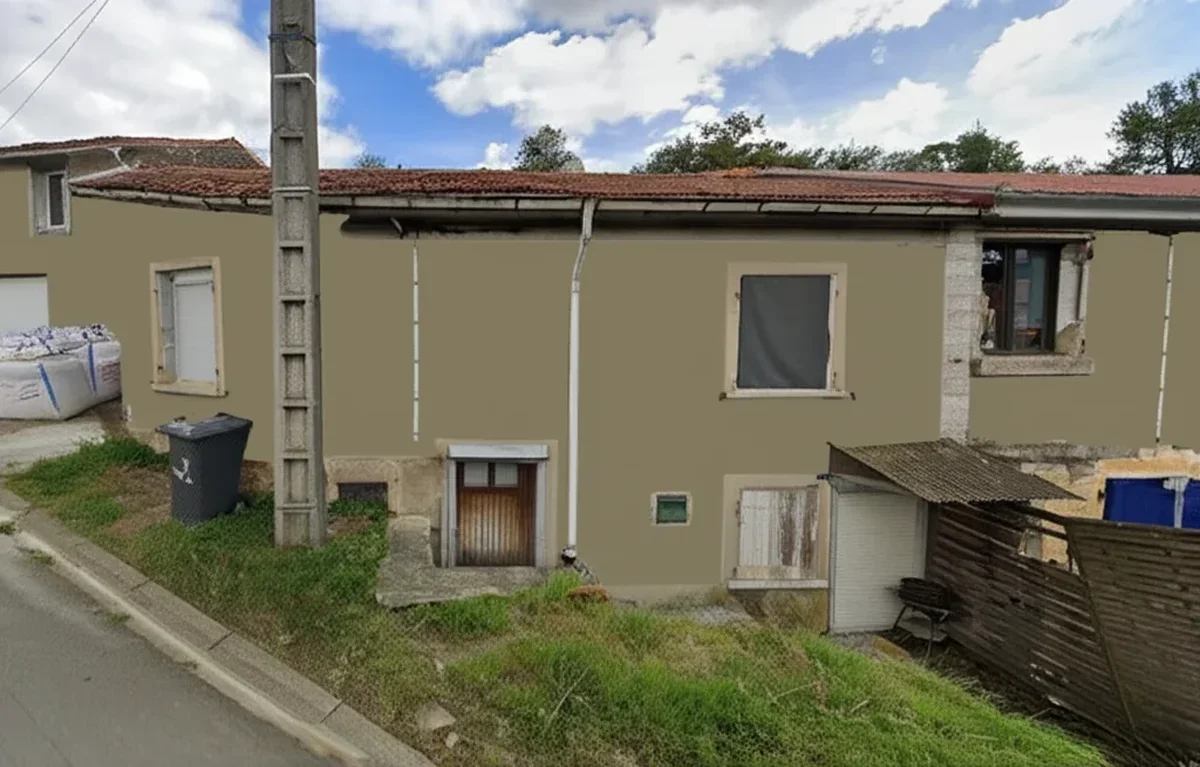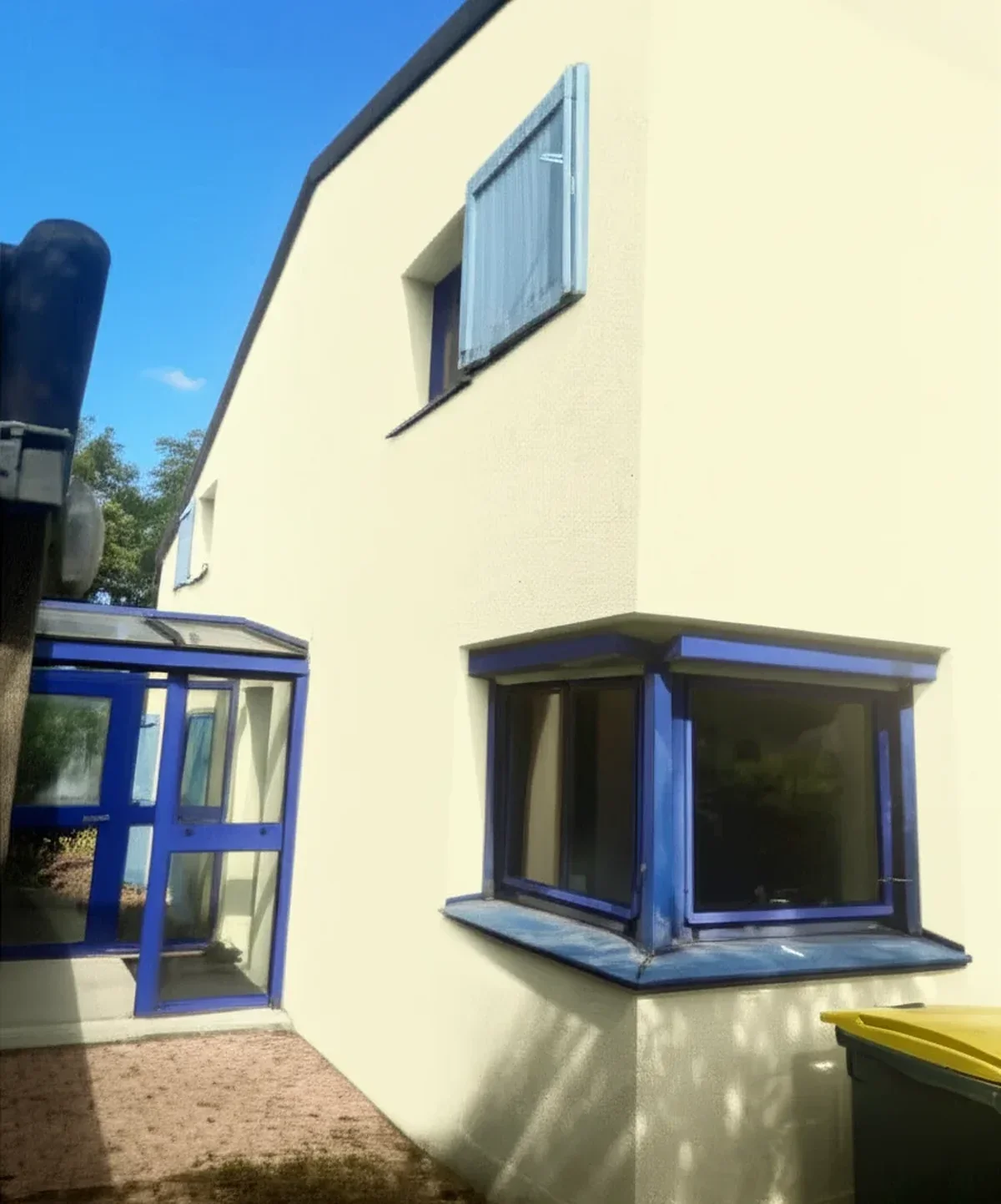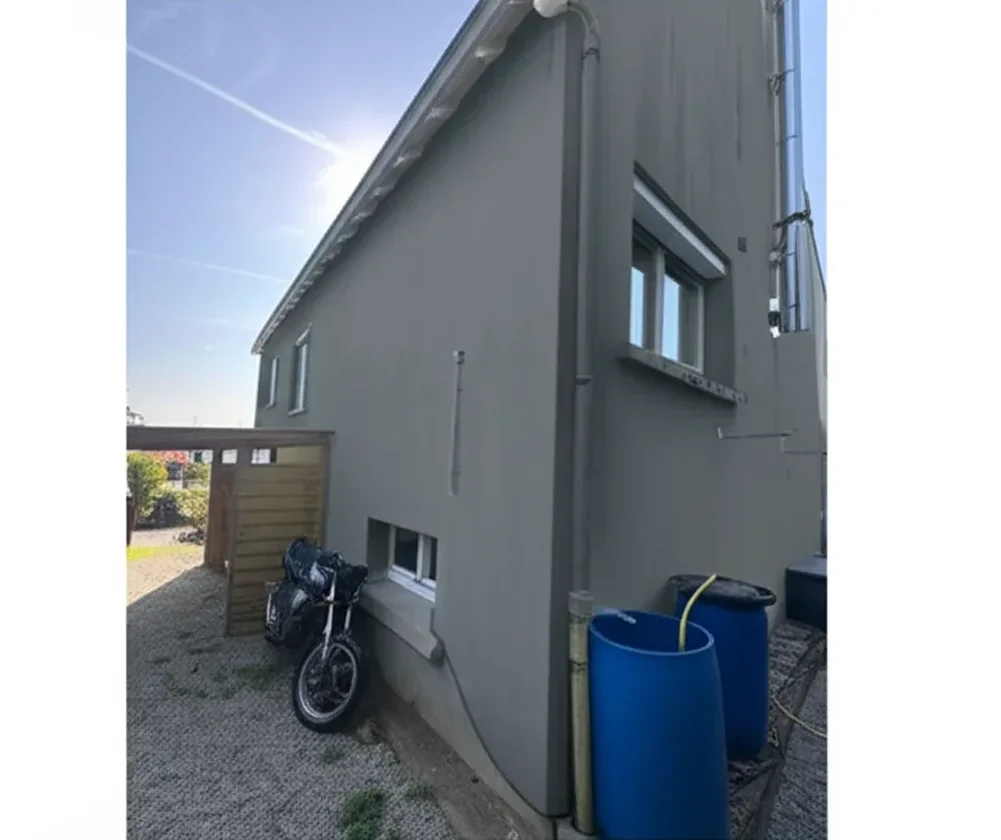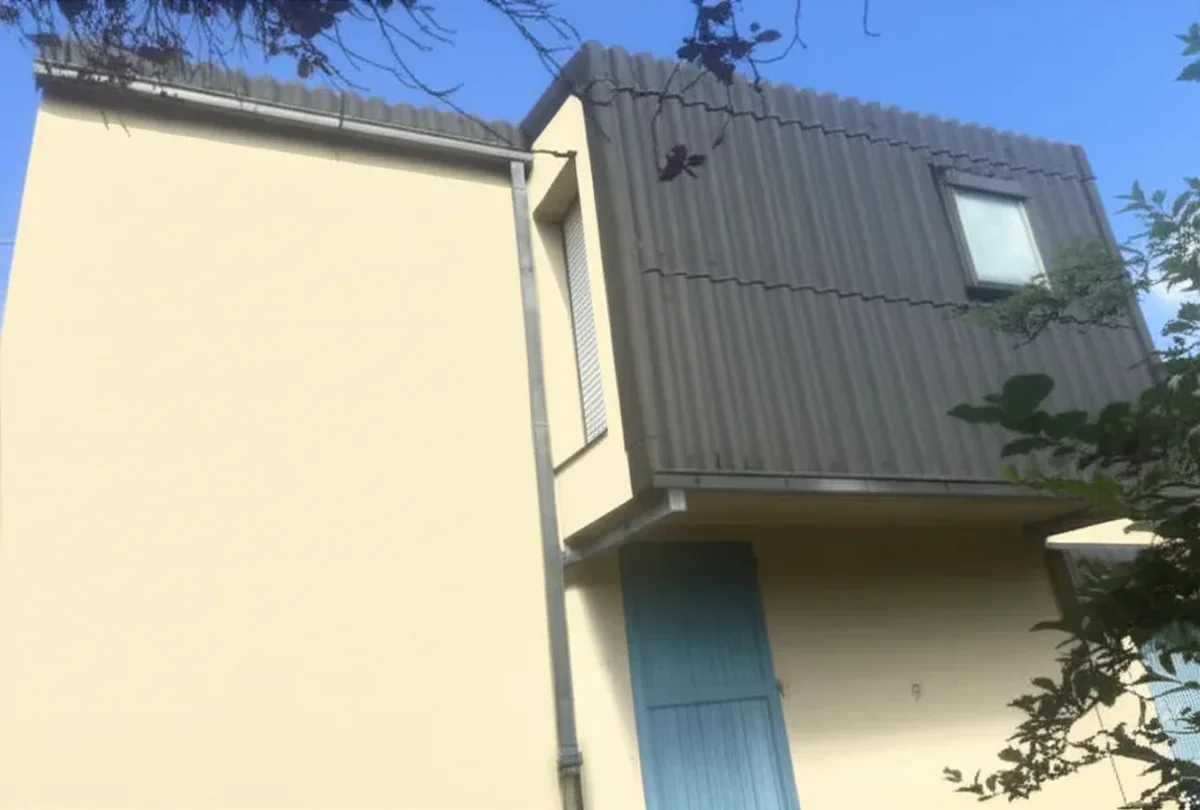
Try it on your house

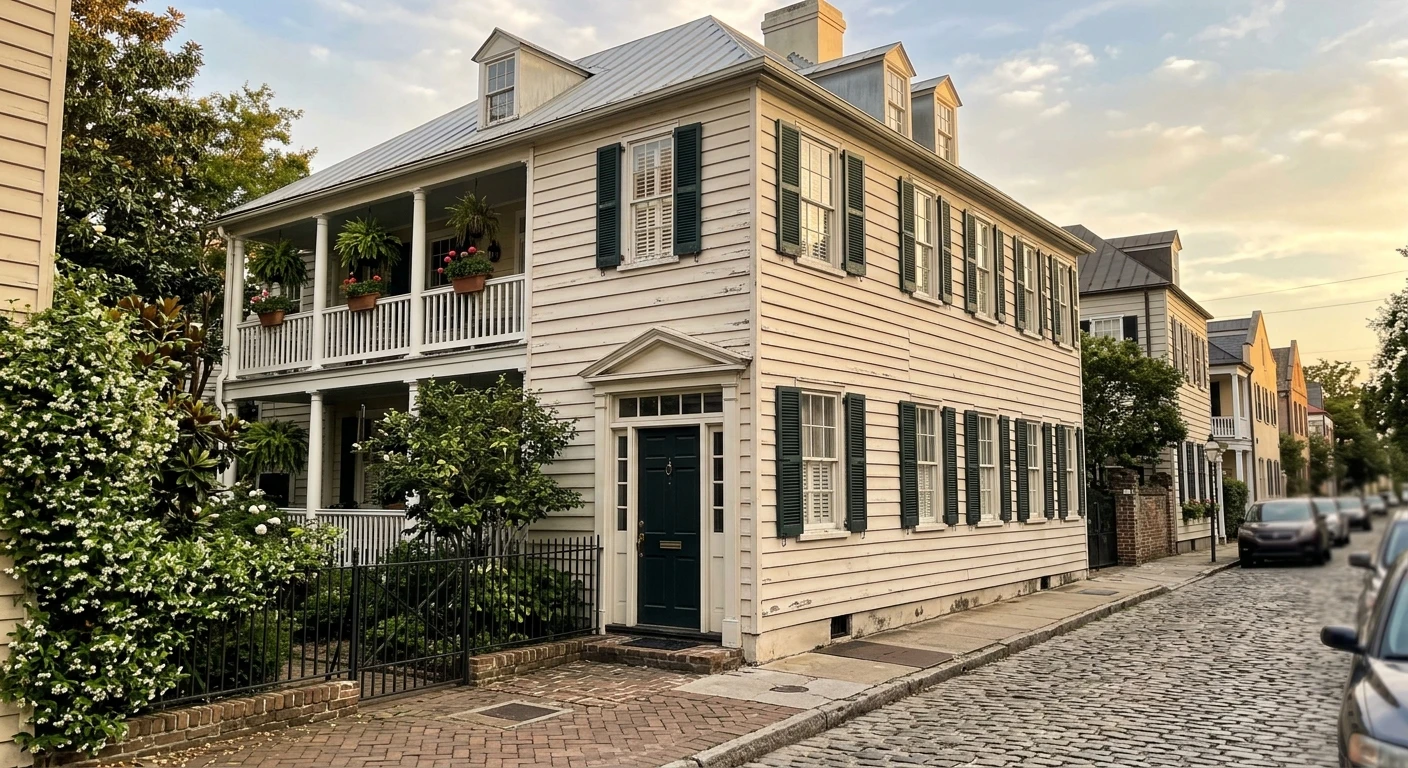
Charleston Green is the historic almost-black green of Charleston, South Carolina, the deep, near-black green you see on the city's louvered shutters, window sashes, and paneled front doors. From across the street it reads as flat black. Step closer, catch it in low raking light, or set it beside a true black, and it resolves into a dark forest-green with a quiet, smoky soul. Technically it behaves like a near-black: approximate hex #23312A, RGB near 35, 49, 42, and a very low LRV in the 4 to 6 range. That combination is exactly why it has endured for more than a century, it gives you the drama and contrast of black with a fraction of a degree more warmth and depth, so trim and brick read richer rather than harsh.
This 2026 guide answers the practical question, "Is Charleston Green the right almost-black green for my shutters, front door, or accents, and which paint do I actually buy?" Below you will find the Charleston origin story, the full technical spec, the closest Benjamin Moore®, Sherwin-Williams®, and Fine Paints of Europe® equivalents, a decision table against Black Forest Green and Essex Green, the best architectural uses, and a step-by-step way to test it. For the broader family map, see our green exterior paint colors 2026 pillar and the best exterior green paint colors 2026 shortlist. For the pure-black side of the decision, compare our black exterior paint colors guide 2026.
Upload one photo, get a photorealistic almost-black green preview in 30 seconds. No signup.
1. The history: why Charleston paints its shutters almost-black
Charleston Green is the rare paint color that is genuinely tied to a place rather than a marketing campaign. The widely repeated origin story holds that after the Civil War, the federal government distributed black paint to the war-damaged South. Charleston residents, the legend goes, found pure black too severe for their Lowcountry sensibility and cut it with a small amount of green and a touch of yellow, producing a softened near-black that flattered the city's stucco, brick, and cypress shutters. Whether that account is precise history or local folklore, the result is undeniable: a deep, almost-black green that became the signature color of the Historic District's shutters, gates, piazza ceilings (paired with the famous "haint blue" overhead), and doors.
There is no single registered formula for Charleston Green the way there is for a numbered fan-deck color. It is a color tradition that the major brands have each interpreted, which is why you will see slightly different hex values and product names depending on whose deck you pull. What all the interpretations share is the same visual behavior: near-black at a distance, deep green in the hand. That is the defining test. If a swatch reads as a clear, recognizable green from ten feet away, it is too light to be authentic Charleston Green.
2. Charleston Green at a glance: the spec block
Because Charleston Green is a tradition rather than one fixed code, the figures below are representative central values. Treat the hex and LRV as approximate, the practical reality is that any reading in the LRV 4 to 6 band with a green-charcoal undertone qualifies.
| Attribute | Value |
|---|---|
| Common name | Charleston Green (also "Historic Charleston Green") |
| Color family | Almost-black green / near-black charcoal-green |
| Approximate hex | #23312A |
| Approximate RGB | 35, 49, 42 |
| LRV (Light Reflectance Value) | Very low, approximately 4 to 6 |
| Undertone | Cool green over a charcoal-black base, faint warm cast |
| Reads as | Black at distance, deep forest-green up close and in raking light |
| Closest Benjamin Moore | Essex Green, or Black Forest Green 2047-10 |
| Closest Sherwin-Williams | Dard Hunter Green SW 0041, or Rookwood Shutter Green SW 2809 |
| Closest Fine Paints of Europe | Charleston Green (Hollandlac Brilliant, traditional high-gloss) |
| Best uses | Shutters, front doors, ironwork, garage doors, accent trim |
| Best sheen | Satin to high-gloss on shutters and doors; flat reads too dead |
Try it on your house
No photo? Try a sample
Source: Historic Charleston Foundation color tradition, manufacturer fan-deck interpretations (Benjamin Moore, Sherwin-Williams, Fine Paints of Europe), FacadeColorizer dark-color facade rendering notes. Hex, RGB, and LRV are approximate digital values, a physical drawdown is the only authoritative reference.
The very low LRV is the headline. Anything below LRV 10 absorbs almost all visible light, which is why Charleston Green behaves like black and why it works as an accent rather than a whole-house body color in most climates. On a south or west elevation in a hot region, a near-black like this runs hot and stresses the substrate, so the traditional and still-correct use is on shutters, doors, and trim where surface area is small. For the full pros-and-cons of going dark, see our dark exterior paint colors pros and cons 2026 guide.
3. Brand equivalents: what to actually buy
Every major brand interprets Charleston Green a little differently. If your store can match a hex or a physical chip, ask for a custom match to #23312A in your chosen exterior product. Otherwise, the named colors below are the closest off-the-shelf stand-ins, ranked by how faithfully they reproduce the near-black-green behavior.
| Brand | Color / code | How it differs from Charleston Green |
|---|---|---|
| Benjamin Moore | Essex Green | Slightly more recognizably green at distance, the classic shutter green; the closest BM "feel" |
| Benjamin Moore | Black Forest Green 2047-10 | Darker and more black-leaning than Essex Green, very near Charleston in low light |
| Sherwin-Williams | Dard Hunter Green SW 0041 | Historic-collection deep green, a touch greener and lower-gloss in feel |
| Sherwin-Williams | Rookwood Shutter Green SW 2809 | Arts-and-Crafts shutter green, slightly warmer and more clearly green |
| Fine Paints of Europe | Charleston Green (Hollandlac Brilliant) | The named, traditional high-gloss interpretation; the most period-accurate on a door |
For a true period door in the Charleston manner, Fine Paints of Europe Charleston Green in their high-gloss Hollandlac is the connoisseur's pick, the depth of pigment plus mirror gloss is exactly the look on the Historic District's doors. For shutters and broader exterior work where you want the durability and color-stability of a mainstream exterior line, Benjamin Moore Essex Green or Black Forest Green 2047-10 and Sherwin-Williams Dard Hunter Green are the practical, widely available choices. If you are cross-shopping a true black instead, our SW Tricorn Black 6258 exterior guide covers the pure-black benchmark.
See the almost-black greens side by side on your own home. Free, 30 seconds.
4. Charleston Green vs Black Forest Green vs Essex Green
These three are the trio people cross-shop, because all three are deep, near-black greens used on the same surfaces. The differences are subtle in a swatch and obvious on a wall. Picking the wrong one is the most common error we see in dark-green facade renders, so use the table as a decision tool rather than a spec sheet.
| Attribute | Charleston Green | Black Forest Green 2047-10 | Essex Green |
|---|---|---|---|
| Reads as | Black, green only up close | Near-black, faint green | Clearly dark green at distance |
| Approx hex | #23312A | #27302B | #234138 |
| Approx LRV | 4 to 6 | 5 | 6 to 7 |
| Undertone | Charcoal-black with green, faint warm | Cool black-green | True forest green |
| Best for | Period-accurate Charleston look | Modern "black that is secretly green" | Traditional shutter green you want to read as green |
| Pairs with | Stucco, brick, haint-blue ceilings, brass | White trim, warm wood, black hardware | Cream, white, natural cedar |
The rule of thumb: if you want people to recognize the color as green, choose Essex Green. If you want a black that quietly resolves into green only for those who look closely, choose Charleston Green or its close cousin Black Forest Green 2047-10. Charleston Green is the most "black" of the three and the most place-specific. For broader pairing guidance on any of these deep greens, see our colors that go with dark green 2026 companion.
5. Where Charleston Green works best
Because of the very low LRV, Charleston Green is an accent color first. The traditional Charleston applications are also the technically smart ones, small surfaces that benefit from depth and contrast without the heat-load and fade risk of a near-black whole-house body.
Shutters: the signature use
Louvered or paneled shutters are the canonical Charleston Green surface. Against a white, cream, stucco, or warm-brick body, the near-black green frames each window and gives the elevation its rhythm. Run the shutters in satin or semi-gloss so the louvers catch light and reveal the green, a flat finish on dark shutters reads as a dead void. This is the single most flattering, lowest-risk way to use the color on almost any traditional, Colonial, or Lowcountry home.
Front doors: the period statement
A Charleston Green front door in high-gloss is the Historic District look, and it is where Fine Paints of Europe Charleston Green in Hollandlac Brilliant earns its premium. The mirror finish makes the door read jewel-deep and shows off panel shadows and brass or oil-rubbed bronze hardware. Pair with a white or warm-cream surround and the door becomes the focal point without shouting. It works equally well on a modern home as a sophisticated alternative to a flat-black door.
Accents, ironwork, and garage doors
Use it on wrought-iron gates and railings, lantern brackets, window boxes, pergolas, and even a recessed garage door you want to visually disappear. On these small, often-shadowed surfaces the green reads as a refined near-black that ties the palette together. It is also a strong choice for a single accent gable or a porch-ceiling beam where you want depth without committing the whole structure to a dark color.
Whole-house body: only with caution
Charleston Green as a full siding color is a striking, moody choice and increasingly popular on modern farmhouses and contemporary homes, but it carries the standard near-black caveats: significant heat absorption on sun-loaded walls, faster visible fade on south and west elevations, and a need for premium exterior product and careful substrate. If you love the look for a whole house, specify a top-tier exterior line, plan for the heat load, and preview it on your actual elevation first. Our dark exterior paint colors pros and cons 2026 guide walks through the trade-offs in detail.
Upload one front-elevation photo. Free AI render, 30 seconds.
6. How to test Charleston Green before you commit
Dark, near-black colors are the hardest to judge from a chip, the swatch always looks blacker and flatter than the finished, light-reflecting surface. Two methods, combined, remove the guesswork before you buy a near-black gallon.
Method A, the AI photo render (15 minutes, free)
- Take one front-elevation photo in soft, even light, on an overcast day or in open shade. Harsh direct sun flattens dark greens into pure black on camera and hides the very effect you are testing.
- Upload to FacadeColorizer's free AI exterior visualizer. No signup required for the first render.
- Enter Charleston Green as a custom hex value (#23312A), or test the named equivalents Essex Green and Black Forest Green 2047-10 side by side.
- Apply it to shutters and the door first, then optionally to the body, so you can see the accent use before deciding whether to go further.
- Re-render at a second time of day to confirm the green reads the way you want in both flat and raking light.
Method B, the physical drawdown (3 days)
- Buy a sample of your chosen product (Essex Green, Black Forest Green 2047-10, Dard Hunter Green, or a custom match to #23312A) and roll two coats on a 24 x 36 inch primed board in the same sheen you plan to use.
- Hold the board against an actual shutter or beside the door, never judge a dark color flat on a table.
- Observe in direct sun, in shade, and at dusk. Charleston Green should read black in sun and reveal green in shade and low light. If it never shows green, the match is too black; if it reads clearly green in full sun, it is too light to be authentic.
- Test the sheen specifically, a near-black changes character dramatically between flat and gloss.
Test Charleston Green vs Essex Green vs Black Forest Green on your facade. Free.
7. Frequently asked questions
What color is Charleston Green exactly?
Charleston Green is an almost-black green, a very dark charcoal-green that reads as black from a distance and resolves into deep forest-green up close or in low, raking light. The representative digital value is approximately hex #23312A (RGB near 35, 49, 42) with a very low LRV in the 4 to 6 range. It is a color tradition tied to Charleston, South Carolina rather than a single fixed formula, so brand interpretations vary slightly.
What is the LRV of Charleston Green?
Approximately LRV 4 to 6, depending on the specific brand interpretation. That places it firmly in the near-black band where the surface absorbs nearly all visible light. The low LRV is why Charleston Green behaves like black and why it is traditionally used on small surfaces like shutters and doors rather than full south or west-facing walls in hot climates.
What is the closest Benjamin Moore color to Charleston Green?
Benjamin Moore Essex Green is the closest in feel, the classic deep shutter green, while Black Forest Green 2047-10 is darker and more black-leaning and reads even closer to Charleston Green in low light. For an exact look, ask a Benjamin Moore store to custom-match approximately #23312A in Aura® Exterior or Regal® Select Exterior.
Is there a Sherwin-Williams Charleston Green?
Sherwin-Williams does not sell a fan-deck color literally named "Charleston Green," but Dard Hunter Green SW 0041 from the historic collection and Rookwood Shutter Green SW 2809 are the closest off-the-shelf stand-ins. Any Sherwin-Williams store can also spectrophotometer-match the Charleston Green tradition to a custom formula in Duration® or Emerald® exterior at high accuracy.
Does Fine Paints of Europe make Charleston Green?
Yes. Fine Paints of Europe offers a named Charleston Green, most associated with their high-gloss Hollandlac Brilliant. For a period-accurate Charleston front door, the deep pigment plus mirror gloss is the most faithful interpretation of the Historic District look, which is why it is the connoisseur's pick for doors specifically.
Charleston Green vs Black Forest Green, what is the difference?
Both are near-black greens and the two are easy to confuse. Black Forest Green 2047-10 is a Benjamin Moore fan-deck color that reads as a cool black-green; Charleston Green is the broader place-based tradition that leans charcoal with a faint warm cast. In practice they look very similar at a distance, and Black Forest Green 2047-10 is one of the closest off-the-shelf ways to get the Charleston look from a mainstream brand.
Can I use Charleston Green on my whole house?
You can, and it is increasingly popular on modern farmhouses and contemporary homes, but treat it as a near-black. Expect significant heat absorption and faster visible fade on south and west elevations, specify a premium exterior line, and preview it on your actual facade first. The traditional and lowest-risk use is on shutters, doors, ironwork, and accents where the surface area is small.
What sheen should I use for Charleston Green shutters and doors?
Satin to semi-gloss on shutters so the louvers catch light and reveal the green, and high-gloss on a period front door for the classic Charleston depth. Avoid flat on dark surfaces, it reads as a dead black void and hides the green undertone that makes the color worth choosing in the first place.
Test Charleston Green on your home photo. 1 HD render + 3 variations, no signup.
Bottom line. Charleston Green is the historic almost-black green of Charleston, near-black at a distance and deep forest-green up close, at an approximate hex of #23312A and a very low LRV of 4 to 6. Buy it as Benjamin Moore Essex Green or Black Forest Green 2047-10, Sherwin-Williams Dard Hunter Green SW 0041, Fine Paints of Europe Charleston Green for a period door, or a custom match to #23312A. Use it where it shines: shutters, front doors, ironwork, and accents, in satin to high-gloss, and only on a whole house if you accept the near-black heat and fade trade-offs. Test it on a photo of your own facade, in your own light, before you commit. Authoritative outbound references: the Benjamin Moore color site, Sherwin-Williams, and Fine Paints of Europe.
Trademark notice. Benjamin Moore®, Essex Green®, Black Forest Green®, Aura®, and Regal® Select are trademarks of Benjamin Moore & Co. Sherwin-Williams®, Dard Hunter Green®, Rookwood Shutter Green®, Duration®, and Emerald® are trademarks of The Sherwin-Williams Company. Fine Paints of Europe®, Hollandlac®, and Charleston Green® (as applied to their product) are trademarks of Fine Paints of Europe. FacadeColorizer is not affiliated with, endorsed by, or sponsored by Benjamin Moore & Co., The Sherwin-Williams Company, Fine Paints of Europe, or the Historic Charleston Foundation. References to brand and product names are made for descriptive and editorial purposes only, consistent with nominative fair use under the Lanham Act (15 U.S.C. § 1125). Color hex, RGB, and LRV values are approximate digital renderings; the only authoritative reference is a physical paint drawdown applied per manufacturer instructions.
Trademarks mentioned (Sherwin-Williams, Benjamin Moore, Behr, Caparol, Brillux, Sto, Alpina, Valspar, PPG, Glidden, Dulux, Crown Trade, Sandtex, Farrow & Ball, Johnstone's, Leyland) are property of their respective owners. FacadeColorizer is independent and not affiliated with any of them. Nominative fair use under Lanham Act §1125.