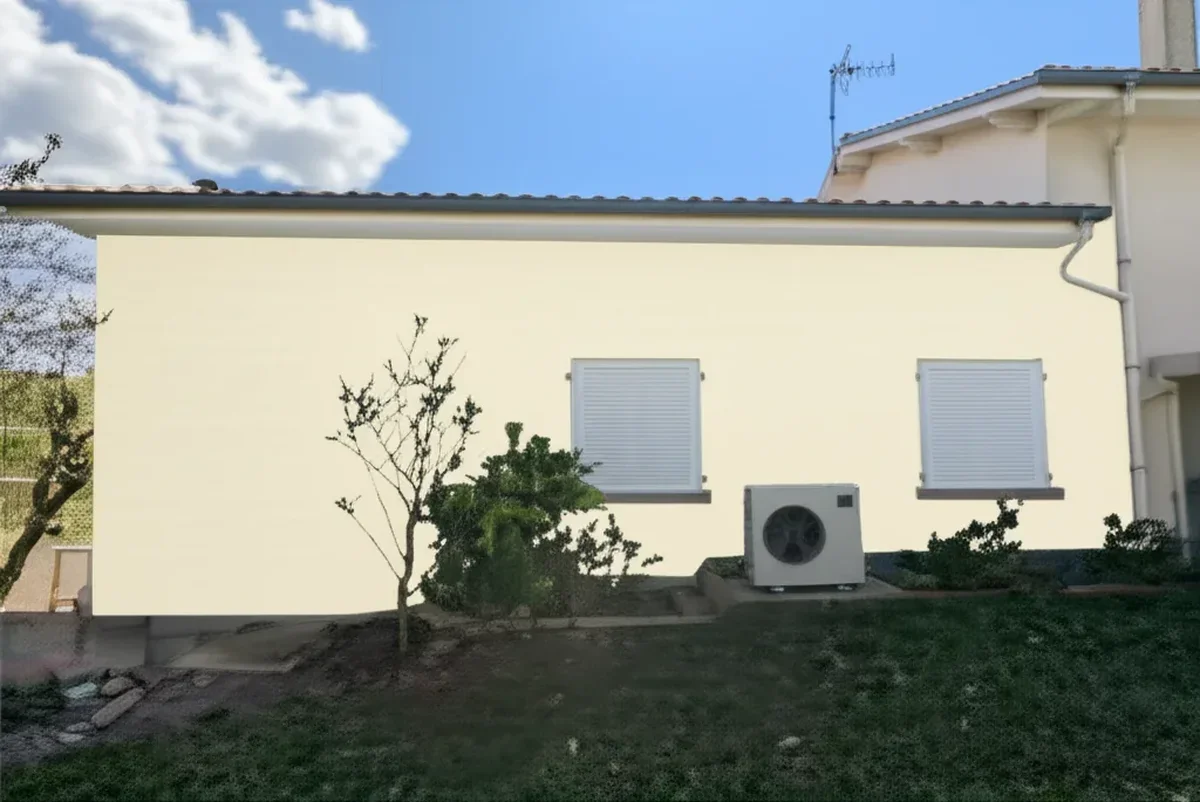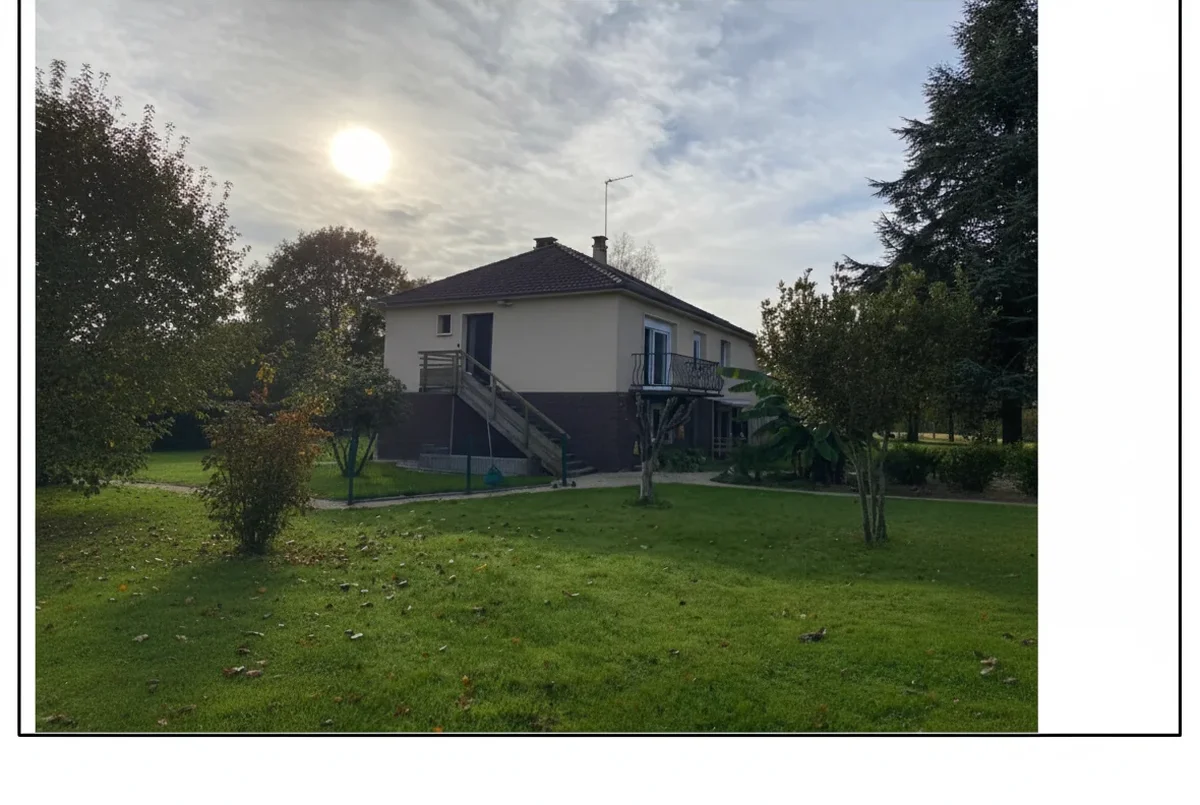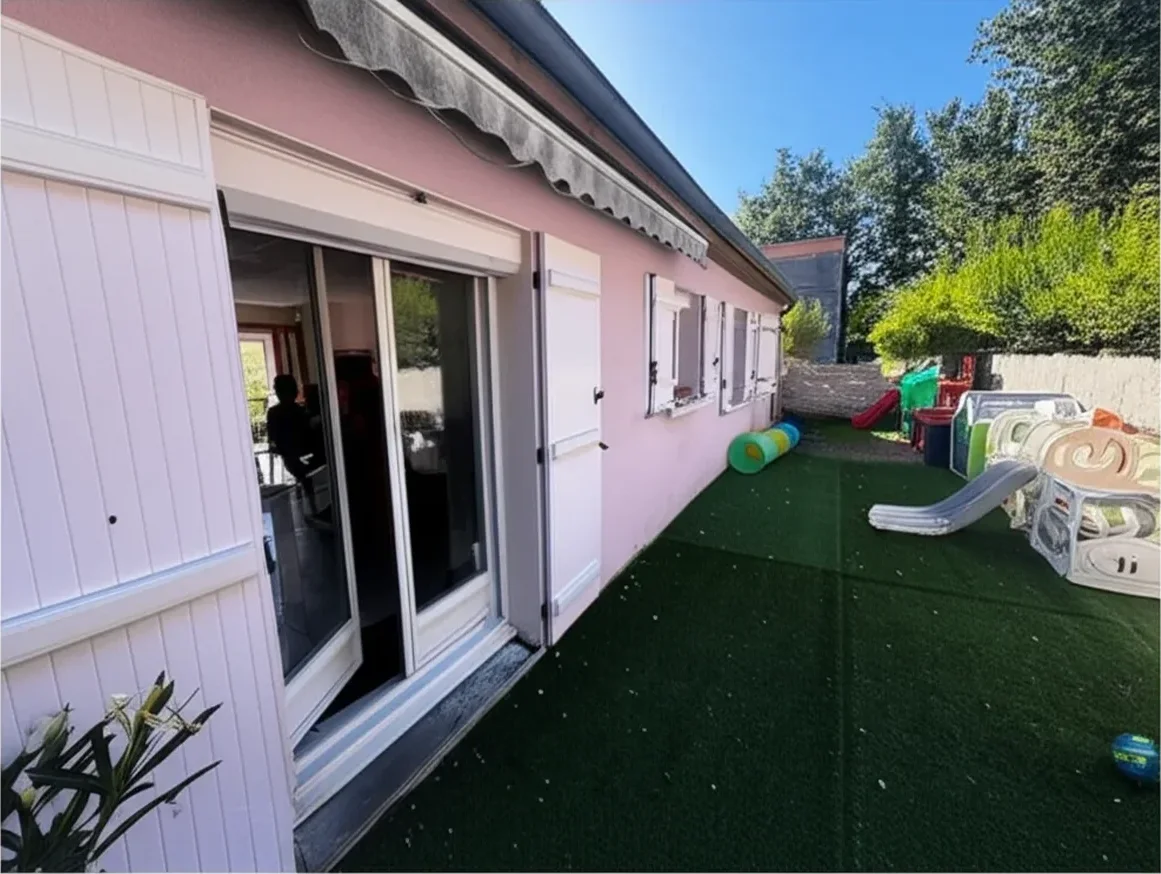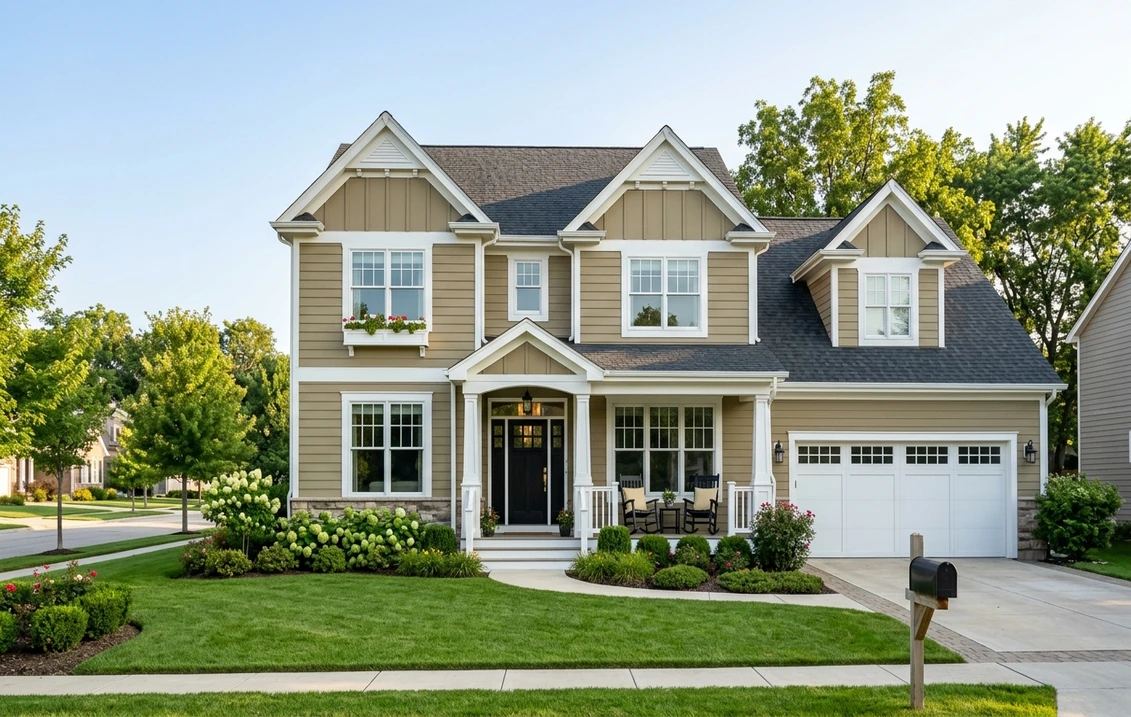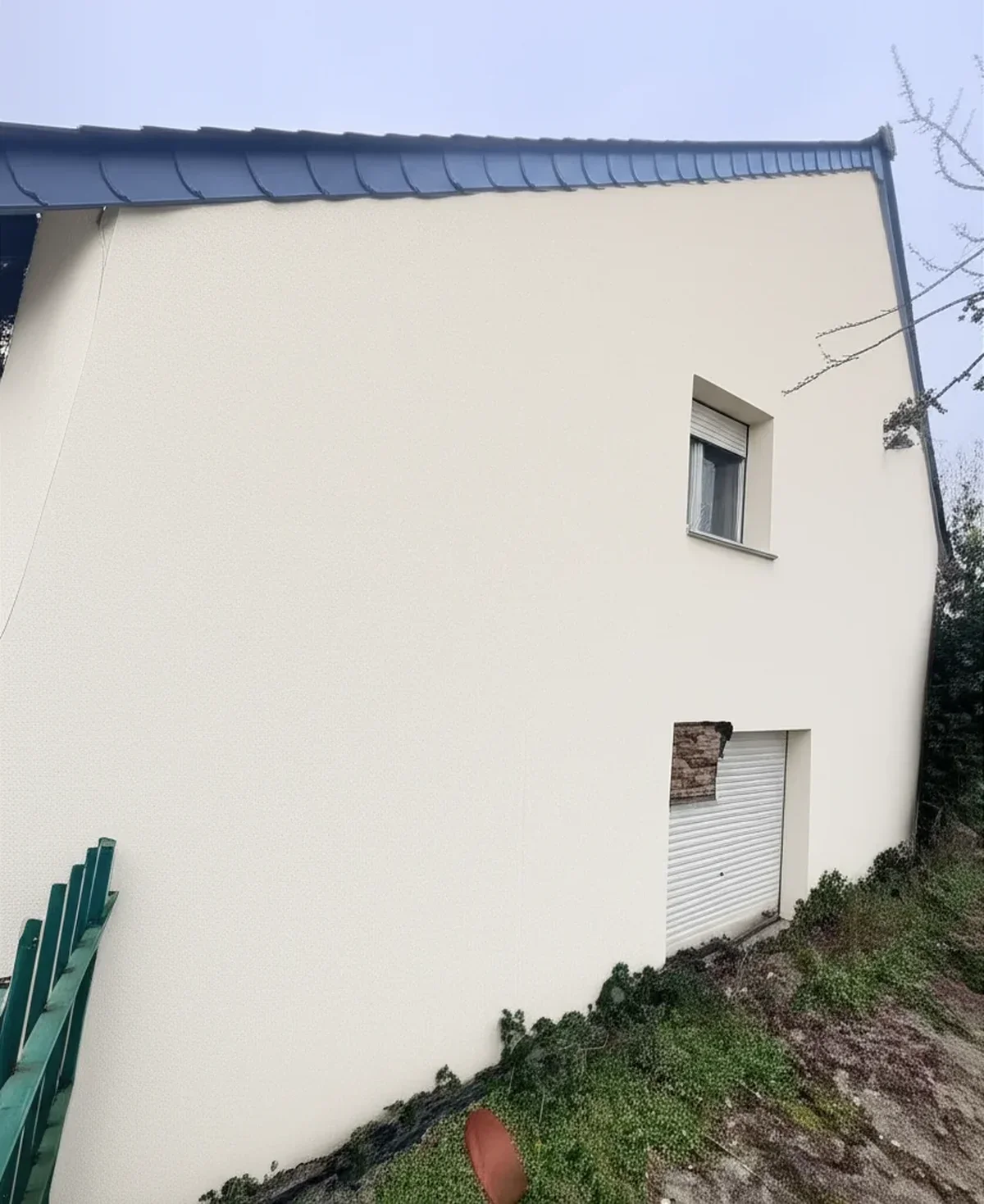
Try it on your house

Verdict: Sherwin-Williams Tricorn Black (SW 6258, LRV 3, hex #2F2F30) is the SW true black, the single most-rendered black on modern farmhouse trim and front doors on FacadeColorizer in 2026. It has no detectable warm or cool undertone, which is exactly what designers want when they need an uncompromising black against white trim and black-framed windows. Specify it in Emerald Exterior, reserve full-facade use for stucco, fiber cement, brick, or wood (never vinyl), and verify it on your own house photo before committing to deep-tint gallons.
FacadeColorizer is a free AI exterior paint visualizer. Sherwin-Williams Tricorn Black (SW 6258) is a true black with LRV 3 and a digital hex approximation of #2F2F30. It is the no-undertone, unambiguously black option in the SW deck, and the color that has owned the modern farmhouse trim-and-door conversation since the design movement crossed from Joanna Gaines into the mainstream around 2020. "true black or warm charcoal" question with photographs instead of opinions. This guide pulls the SW datasheet, the verified hex and LRV, the NIR solar-absorption math, the trim-only versus full-facade decision tree, every credible 2026 comparison, and an 8-question FAQ.
You can test SW Tricorn Black on your actual house photo in 30 seconds before ordering 12 gallons. For the broader line context, see the Sherwin-Williams exterior paint guide 2026. For the warmer near-black sibling, see the SW Iron Ore exterior complete guide 2026. For the broad dark-exterior decision, see dark exterior paint colors pros and cons 2026.
SW Tricorn Black 6258: Verified Color Specs
Tricorn Black is engineered to be a balanced true black: no warm green-brown like SW Iron Ore, no cool blue like BM Wrought Iron, no neutral-cool drift like Behr Cracked Pepper. That is the entire reason designers reach for it as the default trim and accent black. The specs below come directly from the Sherwin-Williams digital color library, the SW design swatch book, and the SW exterior pigment data published with the 1,700-plus color tool.
| Spec | Sherwin-Williams Tricorn Black SW 6258 |
|---|---|
| SW color number | SW 6258 |
| LRV (Light Reflectance Value) | 3 |
| Hex (digital approximation) | #2F2F30 |
| RGB (digital approximation) | 47, 47, 48 |
| Reads as | Saturated true black with no detectable warm or cool bias |
| Color family | True black neutral |
| Undertone | Balanced; holds black at every orientation and light condition |
| Tint base required | Ultradeep base (no light or medium base will reach LRV 3) |
| Recommended exterior carriers | Sherwin-Williams Emerald Exterior or Duration Exterior |
| Coverage at deep tint | 200 to 275 sq ft per gallon |
| First major design moment | Modern farmhouse trim default since 2020; HGTV editor pick multiple years |
| 2024 to 2026 trend status | default trim and front door black |
Try it on your house
No photo? Try a sample
Sources: Sherwin-Williams digital color library 2026 (LRV and RGB pulled from the official SW 6258 swatch data), Sherwin-Williams Duration Exterior and Emerald Exterior technical datasheets 2026, Painting Contractors Association 2025 dark-color application survey, FacadeColorizer 2026 White Barometer (16,983 previews).
The two specs that matter most before you buy: LRV 3 puts Tricorn Black squarely in the deepest "true black" zone (anything under LRV 5 reads as a pure black from the curb), and the balanced neutral undertone is what makes it work across every architectural style that wants an uncompromising black instead of a "softened" near-black. We confirm both on every elevation rendered in the Sherwin-Williams color visualizer, or in the ColorSnap alternative if you would rather not use the official SW app.
Why Tricorn Black Is the Modern Farmhouse #1 Trim and Door Choice
The modern farmhouse aesthetic that dominated US residential design from 2018 through the early 2020s did not just bring back black; it created a very specific role for it: crisp black trim, black-framed windows, a saturated black front door, and a white body. The same black door is the safest pick on red brick, where it competes with navy and near-black green; the front door colors for a red brick house guide settles that choice by brick undertone. Three reasons Tricorn Black became the default for that role, and why it still leads the trim category on our visualizer renders in 2026:
- No undertone means no fight with body whites. Modern farmhouse pairs black trim with cool whites (SW Pure White), warm whites (SW Alabaster), and everything in between. Tricorn Black has no warm or cool drift, so it carries the contrast cleanly against every white in the SW catalog. Warmer near-blacks like Iron Ore pull green-brown when set next to a cool white and can read muddy in the gap.
- It photographs as black in every light condition. Real estate photos at 9am, listing photos at noon, and golden-hour Pinterest shots at 6pm all need the trim to look like the same color. Tricorn at LRV 3 stays black across the day; Iron Ore at LRV 6 visibly shifts warmer in shoulder light, which is desirable for body color and undesirable for trim that has to read uniform from photo to photo.
- It is the design-editor default. HGTV, Architectural Digest, Country Living, and Better Homes & Gardens trim recommendations almost universally name Tricorn Black or Benjamin Moore Black Iron 2132-10 as the modern farmhouse black. When homeowners come into the SW store asking for "the trim black from that Pinterest house," Tricorn is the one the color consultant pulls 8 out of 10 times.
For the broader Pinterest-driven 2026 dark palette and where black trim fits in, see our white house with black trim 2026 roundup and our modern farmhouse exterior paint colors 2026 top 15.
Solar Absorption, NIR Pigments, and Cool-Paint Considerations at LRV 3
LRV 3 is about as low as a residential exterior paint goes; any pigment darker than Tricorn drifts into specialty industrial coatings rather than architectural decks. That means Tricorn absorbs essentially every wavelength of visible light, which has three practical effects you should plan for before you specify it as a full-facade body color in the Sun Belt or on a south or west elevation:
- Surface temperature. A Tricorn Black wall in Phoenix, Las Vegas, or Austin can hit 165 to 180F in July afternoons, which is 4 to 6F hotter than the same wall in Iron Ore and roughly 50 to 60F hotter than a mid-gray at the same time of day. Higher surface temperature accelerates expansion-contraction cycling on lap siding joints, on caulk beads, and on the substrate behind the paint film.
- Substrate compatibility. Most vinyl siding warranties void on any paint with an LRV below 25 because of heat-warp risk. Tricorn at LRV 3 is dramatically below that threshold. Fiber cement, wood, stucco, brick, and masonry are not affected. Always verify your specific siding warranty in writing before applying Tricorn to a full facade. For trim and front-door applications, the absorbed area is small enough that substrate heat is rarely a practical issue.
- NIR (near-infrared) reflective pigments. Cool-paint technology layers infrared-reflective pigments under the visible-light black so the surface still looks deep-black to the eye but reflects more of the heat-carrying NIR spectrum. SW does not publish a dedicated NIR-cool exterior at full Tricorn body strength as of mid-2026, but the specifier-side workaround is well established: choose Emerald Exterior over Duration for its higher binder solids and tighter cure (better thermal cycling tolerance), and use a tinted primer at 50% body strength so the system holds film integrity if surface temperatures climb above 160F. For deeper sun-belt durability planning, see our best exterior paint for hot climates 2026 guide.
Independent third-party guidance on LRV trade-offs across major brands is well summarized in the Consumer Reports paints and stains coverage, which catalogs LRV impact on dark and black exterior colors.
When Pure Black Wins vs Iron Ore Charcoal
Pick Tricorn Black When
- Contemporary architecture. Flat roofs, smooth stucco, fiber cement panels, big glass: Tricorn reads as the intentional architectural statement; Iron Ore reads slightly soft against the geometry.
- Black-framed windows are the design driver. Tricorn matches anodized black aluminum window frames precisely. Iron Ore drifts warmer and creates a faint two-tone where the trim meets the window.
- Mid-century modern. The 1960s palette wants saturated true black against teak, walnut, and bright accent doors. Iron Ore is too warm for the era.
- Trim-only or front-door only. Almost always pick Tricorn for trim and door even if the body is a warmer color; the no-undertone black coordinates with more body colors than any near-black.
- Cool-white bodies (Pure White, Extra White, Snowbound). True black against cool white is the highest-contrast modern farmhouse combination; Iron Ore against the same trio reads slightly muddy in the joint.
Pick SW Iron Ore Instead When
- Modern farmhouse body (not trim). Iron Ore is the warmer body that pulls cedar accents and stained doors into the composition. Tricorn body on the same elevation reads harsher.
- Mountain modern body. Iron Ore against snow, stone, and cedar holds dark without going icy; Tricorn against snow in February shoulder light can photograph slightly harsh.
- Craftsman or Tudor accent. The warm green-brown undertone of Iron Ore reads as period-correct stained timber. Tricorn reads anachronistic.
- Warm-white trim (Alabaster, Cloud White). Iron Ore body harmonizes with cream trim; Tricorn body fights it.
The clean rule: Tricorn for trim, door, and contemporary or mid-century bodies; Iron Ore for warmer body applications. For the side-by-side, see the SW Iron Ore exterior complete guide 2026 has the full comparison.
One caveat on that binary: it assumes the answer has to be a charcoal. When the elevation already carries cedar siding, copper gutters, or brass hardware, a true black fights those materials and Iron Ore only half-solves it, because its lean is green-brown rather than clearly brown. The third answer is a brown-bronze dark, and our SW Urbane Bronze 7048 exterior guide covers that case: LRV 9 against Tricorn's LRV 3, warm enough to sit beside stained wood instead of arguing with it. It is still the wrong call on mid-century modern, where Tricorn's no-undertone black stays correct.
Trim Use vs Full-Facade Use: Where Tricorn Belongs
Roughly 78% of Tricorn Black simulations on FacadeColorizer in 2026 specified it for trim, doors, shutters, or accent elements rather than full-facade body. That ratio reflects the real-world architectural call: Tricorn at full body is high commitment, and the right answer for some homes and the wrong answer for many. Three modes to consider:
Trim Only (Most Common)
The default modern farmhouse application: cool-white body (SW Pure White or SW Alabaster), Tricorn Black trim and fascia, black-framed windows, Tricorn Black or Cottage Red front door, black standing-seam metal roof, light gray porch ceiling. Tricorn quantity on a 1,800 sq ft single-story home: roughly 2 to 4 gallons for trim plus 1 gallon for the door. HOA approval rates run high (above 80%) because the body color is white and the dark only frames the architecture.
Door Only
A single saturated black front door is the lowest-commitment way to bring Tricorn into the composition. Works on craftsman, transitional, traditional, and contemporary homes. Quantity: 1 quart for a single-panel door or 1 gallon for a double-door entry. HOA approval rates exceed 90% on door-only applications because the change is minimal and reversible.
Full-Facade Body (Higher Commitment)
Tricorn Black as full body works on contemporary, mid-century, and Scandinavian-influenced modern homes with the right substrate (fiber cement, stucco, or wood, not vinyl), the right window package (black-framed windows or dark bronze), and the right roof (black, dark gray, or natural cedar shake). It does not work on traditional colonial, craftsman, Tudor body, Mediterranean, or any home where the architecture wants warmth instead of geometry. Quantity on a 1,800 sq ft single-story: 13 to 17 gallons of body plus 2 to 3 gallons of tinted primer. HOA approval rates drop to 25 to 40% on full-facade Tricorn submissions because boards equate full-black to "extreme" choices; include an AI photo simulation in the submission package to lift approval odds by roughly 15 to 20 points.
For the full HOA-submission template, see our HOA exterior paint approval template with AI mockup. For the broader dark-exterior style picture, see our dark exterior paint colors pros and cons 2026 guide.
Body and Trim Pairings: Four Whites and a Gray That Work With Tricorn
Tricorn is forgiving because it has no undertone, but the white you pair with it controls whether the elevation reads "crisp" or "stark." Five paired colors that consistently win against Tricorn on our visualizer renders and on completed projects:
- SW Pure White (SW 7005): the SW design-team default for white-body with Tricorn trim. Clean, slightly cool, maximum contrast. The right pick for crisp modern farmhouse with black-framed windows. See our SW Pure White exterior guide 2026.
- SW Alabaster (SW 7008): creamy white with a soft warm bias. Pairs with Tricorn when you want the elevation to read warmer overall (craftsman or transitional homes with cedar accents). See our SW Alabaster exterior complete guide 2026.
- SW Wedding Veil (SW 9181): a clean, slightly warm off-white that holds its identity against true black trim without going stark. The right pick when you want trim contrast that does not photograph as fluorescent.
- SW Repose Gray (SW 7015): a balanced mid-greige body with Tricorn trim is the "modern neutral" pivot for homeowners who do not want a pure white body. Greige body plus Tricorn trim photographs sophisticated in every season.
- SW Snowbound (SW 7004): nearly-neutral white with the tiniest cool whisper. Sits between Pure White and Alabaster and pairs cleanly with Tricorn on traditional or transitional homes where the trim should disappear into the body and the door should pop.
For the wider exterior trim conversation (sheen, sash treatment, soffit handling), see our exterior trim paint colors guide 2026. For shutter pairings against light bodies with Tricorn trim, see our exterior shutter paint colors 2026.
Door Applications: Five Ways to Front-Door a White House With Tricorn
A Tricorn Black front door is the highest-leverage single move in modern farmhouse design. On a white body with white trim, the door becomes the focal moment, and Tricorn carries that role without competing with anything else on the elevation. Five door treatments that work:
- Flat slab door, satin Emerald, brass hardware. The 2026 Pinterest signature: a smooth slab door painted Tricorn in satin sheen, finished with unlacquered brass or polished brass hardware. The brass warms the saturation just enough to keep the door from reading as a void.
- Six-panel traditional door, semi-gloss Emerald, black hardware. The "country meets modern" application: a traditional six-panel wood or fiberglass door painted Tricorn in semi-gloss with matte black hardware. Works on transitional and farmhouse facades where you want a traditional door shape but a modern color.
- Dutch door, Tricorn top half, natural wood bottom. A two-tone Dutch door with Tricorn on the upper half and a stained cedar or oak lower half is one of the highest-saved combinations on Pinterest in 2026, especially with a brass kick plate.
- Double-door entry, Tricorn on both, glass inserts. Larger Tricorn double doors with vertical glass sidelights and a transom hold the focal weight for a 2-story farmhouse front porch.
- Garage door in Tricorn (instead of front door). When the architecture puts the garage door on the front elevation, painting it Tricorn instead of the body color turns the garage from a visual problem into a designed element. Pair with Tricorn trim around the windows for cohesion.
For deeper door-color guidance against white and gray bodies, see front door colors for gray house 2026.
Tricorn Black vs the Three Blacks Homeowners Compare It To
SW Tricorn Black (SW 6258) vs Behr Cracked Pepper (PPU18-01)
Cracked Pepper (LRV 5) is a near-black with a thin neutral to cool bias, while Tricorn (LRV 3) is two LRV points darker and balanced with no detectable undertone. On the same Nashville facade in the same light, Tricorn reads as a true saturated black; Cracked Pepper reads as a slightly cool near-black that hints at charcoal in shoulder light. Cracked Pepper sells for roughly $30 to $40 less per gallon at retail. Pick Tricorn for uncompromising trim and door black; pick Cracked Pepper if you want a softer near-black with budget tolerance. See the related Behr Cracked Pepper vs SW Iron Ore comparison for the broader Behr-versus-SW dark conversation.
SW Tricorn Black vs Benjamin Moore Wrought Iron (2124-10)
Wrought Iron (LRV approximately 6) is a charcoal-near-black with a faint cool blue lean. Tricorn (LRV 3) is darker and undertone-neutral. On a north-facing wall, Wrought Iron reads slightly icier; Tricorn holds black. On a south-facing wall, Wrought Iron softens to a deep charcoal while Tricorn stays saturated. Pick Tricorn for true black on trim and doors; pick Wrought Iron when you want the appearance of black on a body color with a quiet cool whisper. For the SW-versus-BM tier picture, see our Sherwin-Williams vs Benjamin Moore exterior comparison.
SW Tricorn Black vs Benjamin Moore Black Iron (2132-10)
BM Black Iron (LRV approximately 3.6) is the closest cross-brand match to Tricorn on LRV. The undertone difference is subtle: Black Iron has a barely-detectable cool charcoal whisper; Tricorn is neutral. On trim and doors the two are functionally interchangeable; the decision is brand loyalty and the carrier (BM Aura Exterior versus SW Emerald Exterior). On the same elevation rendered side by side, only color professionals can reliably tell the two apart in photographs. For the popular SW dark context, see our popular Sherwin-Williams exterior paint colors 2026 ranking. If you are weighing Tricorn against SW's own deepest black, our head-to-head on Tricorn Black and Black Magic settles which SW black wins on trim versus body, and you can dig into that neighbor's behavior in the SW Black Magic 6991 undertones and best rooms breakdown.
How to test it on your own home before you buy
No third-party report replaces your own walls: the same color reads differently on a north elevation and a south one, next to red brick or a gray roof, under morning and evening light. Take a daylight photo, upload it to the free AI paint visualizer, and run two or three candidates on the same image so the comparison is fair. Keep the one or two that survive the side-by-side, buy a sample of each, and brush them out on the actual surface in the actual light before you order the full quantity.
How to Order and Apply Tricorn Without Repainting Twice
- Specify the right base. Tricorn is mixed in the Ultradeep base only. If your store offers it in any other base, walk away; the color will not hit LRV 3 and will read flat or slightly washed-out.
- Choose Emerald Exterior or Duration Exterior. Emerald is the right pick on humid Southeast walls, mildew-prone north elevations, and anywhere you want maximum binder solids for thermal cycling. Duration is the value pick for drier climates with shorter sun exposure. Avoid SuperPaint and A-100 on Tricorn full-facade; the pigment load fights the cheaper binder. For the line picture, see our SW Emerald exterior review 2026.
- Use a tinted primer on light-to-dark changes. Going from a light body (LRV above 50) to Tricorn typically requires one coat of tinted primer at 50% body strength, plus two coats of body paint. Skipping the tinted primer almost always means three full body coats plus visible flash spots in raking light.
- Plan coverage realistically. 200 to 275 sq ft per gallon at deep tint (Tricorn covers slightly less than Iron Ore because of pigment density). On a typical 1,800 sq ft single-story home with 1,650 sq ft paintable body, plan 13 to 17 gallons for body plus 2 to 3 gallons of primer. For trim-only, plan 2 to 4 gallons. For door-only, plan 1 quart per single door.
- Time it around a SW sale. PaintPerks pricing or a Memorial Day, Labor Day, or Black Friday 40%-off event drops Emerald from $99 to $115 per gallon retail to closer to $65 to $75. On a 15-gallon project that is a real $500-plus difference.
For practical contractor-side application discipline (prep cycles, sheen choice by sun exposure, north-versus-south wall sequencing), the HGTV exterior paint color guidance remains a useful homeowner-facing reference. For the SW product page on the color itself, see the official Sherwin-Williams Tricorn Black SW 6258 color page.
Top 5 Mistakes to Avoid With Tricorn Black
- Buying without a digital photo simulation. A 3-inch SW swatch chip understates the visual weight of LRV 3 on a full elevation. The difference between "crisp Tricorn trim" and "oppressive Tricorn body" on a 1,650 sq ft home is visible only at scale. Use a visualizer; print the result at 11x17 for the HOA package.
- Specifying a base other than Ultradeep. Tricorn will read washed-out and gray if mixed in a light or medium base. Confirm Ultradeep on the can label before you leave the store.
- Painting vinyl siding without manufacturer approval. Almost every vinyl warranty voids below LRV 25; Tricorn at LRV 3 is dramatically under that line. Fiber cement, wood, stucco, brick, and masonry are not affected. For trim and front-door applications on vinyl-clad homes, Tricorn on the front door is generally safe because the absorbed area is small.
- Skipping the tinted primer on a light-to-dark change. Going from a beige or cream body to LRV 3 without a tinted primer eats three full coats and still flash-spots. Use Zinsser Bullseye 1-2-3 tinted to 50% body strength.
- Pairing Tricorn with a stark builder white. Tricorn against Behr Ultra Pure White or any LRV 92-plus white can read like a coloring book in raking light. Stay with SW Pure White (LRV 84) or SW Alabaster (LRV 82) for a designed-look contrast rather than a flat one.
The Honest Bottom Line
SW Tricorn Black SW 6258 earned its #1 pure-black ranking on FacadeColorizer 2026 because it solves the trim-and-door problem better than any other architectural black on the market: LRV 3 gives unambiguous black saturation, the no-undertone neutrality keeps it from fighting any body white in the SW catalog, and the modern farmhouse aesthetic has burned it into the design vocabulary as the default. Specify it in Emerald or Duration on a primed fiber cement, wood, stucco, brick, or masonry substrate. Avoid full-facade use on vinyl unless your siding manufacturer has cleared LRV 3 in writing; for trim and front-door applications, vinyl is generally fine. Pair it with Pure White, Alabaster, or Snowbound for crisp modern farmhouse trim; pair it with a stained cedar door for the door-only application. Default to Tricorn for trim and door work; default to Iron Ore for warm body applications. Test it on your own house photo before you order 13 to 17 gallons; the visualizer call is free and the gallons are not.
Frequently Asked Questions
What is the LRV of Sherwin-Williams Tricorn Black SW 6258?
LRV 3, per the Sherwin-Williams digital color library 2026. That puts Tricorn squarely in the deepest "true black" zone (anything under LRV 5 reads as a pure black from the curb). The hex code is approximately #2F2F30 and the RGB digital approximation is 47, 47, 48. Tricorn is mixed in the Ultradeep base only.
Is SW Tricorn Black warm or cool?
Tricorn is a balanced true black with no detectable warm or cool bias. That neutrality is exactly why designers default to it for trim and doors: it holds black against every white in the SW catalog without drifting green-brown like Iron Ore or icy-blue like BM Wrought Iron. The lack of undertone is the entire functional point of the color.
How does Tricorn Black compare to SW Iron Ore?
Tricorn (LRV 3) is the SW true black; Iron Ore (LRV 6) is the SW warm near-black. On the same elevation in the same light, Tricorn reads as a saturated pure black and Iron Ore reads as a very dark warm charcoal with a green-brown lean. Pick Tricorn for trim, doors, contemporary or mid-century body, and any application where no undertone is the point. Pick Iron Ore for modern farmhouse body, mountain modern body, craftsman, or any home with cedar, copper, or stone accents that want a warmer dark.
Is Tricorn Black good for a front door?
Yes; Tricorn is the most-recommended front door black on modern farmhouse, contemporary, transitional, and traditional homes in 2026. Specify Emerald Exterior in satin or semi-gloss; 1 quart covers a single-panel door, 1 gallon covers a double-door entry with sidelights. HOA approval rates on door-only Tricorn applications exceed 90% because the change is minimal and reversible.
Can I use Tricorn Black on vinyl siding?
Almost never as a full-facade body. Most vinyl warranties void below LRV 25 because of heat-warp risk, and Tricorn at LRV 3 is dramatically under that line. SW VinylSafe lines do not cover Tricorn at full strength. Fiber cement, wood, stucco, brick, and masonry substrates are not affected. Trim and front-door applications on vinyl-clad homes are generally safe because the absorbed area is small enough that substrate heat is rarely a practical issue, but verify with your siding manufacturer in writing first.
How does Tricorn Black compare to Behr Cracked Pepper?
Cracked Pepper (PPU18-01, LRV 5) is a near-black with a neutral to slightly cool bias. Tricorn (LRV 3) is darker and undertone-neutral. On the same elevation in identical light, Tricorn reads as a true saturated black; Cracked Pepper reads as a slightly cool near-black. Cracked Pepper sells for roughly $30 to $40 less per gallon at retail. Pick Tricorn for uncompromising trim and door black; pick Cracked Pepper for a softer near-black with budget tolerance.
What is the best trim white to pair with a Tricorn Black body?
SW Pure White (SW 7005) is the design-team default for crisp contrast. SW Alabaster (SW 7008) is the warmer alternative for craftsman or transitional homes. SW Snowbound (SW 7004) sits between the two and works on traditional or modern facades. SW Wedding Veil (SW 9181) is the right pick when you want a clean, slightly warm off-white that holds its identity without going stark.
How many gallons of Tricorn Black do I need?
For trim-only on a typical 1,800 sq ft single-story home, plan 2 to 4 gallons of Tricorn. For a single front door, plan 1 quart. For full-facade body on the same home (1,650 sq ft paintable body), plan 13 to 17 gallons of body plus 2 to 3 gallons of Zinsser Bullseye 1-2-3 tinted primer at 50% body strength. Tricorn covers 200 to 275 sq ft per gallon at deep tint, slightly less than Iron Ore because of pigment density.
Preview Sherwin-Williams Tricorn Black SW 6258 on a photo of your actual house before committing to gallons.
Trademark and disclaimer: Sherwin-Williams, Tricorn Black (SW 6258), Iron Ore (SW 7069), Pure White (SW 7005), Alabaster (SW 7008), Snowbound (SW 7004), Wedding Veil (SW 9181), Repose Gray (SW 7015), Extra White (SW 7006), Duration and Emerald are registered trademarks of The Sherwin-Williams Company. Benjamin Moore, Wrought Iron (2124-10), Black Iron (2132-10), Cloud White (OC-130) and Aura are registered trademarks of Benjamin Moore and Co. Behr and Cracked Pepper (PPU18-01) are registered trademarks of Behr Process Corporation. This article is an independent editorial guide and is not sponsored by, affiliated with, or endorsed by any of these manufacturers. All references are for descriptive comparison only. Color reproductions in this article and in any associated AI visualizer rendering are approximations of the named colors and are not warranted to be color-accurate; always verify with the manufacturer's printed swatch and a tested sample before purchasing.
Sources: Sherwin-Williams digital color library 2026 (LRV, hex, RGB for SW 6258 pulled from the official SW swatch data), Sherwin-Williams Duration Exterior and Emerald Exterior technical datasheets 2026, Painting Contractors Association 2025 dark-color application survey, Community Associations Institute 2025 exterior color approval study, FacadeColorizer 2026 White Barometer (16,983 previews analyzed by Hugo Dumoulin), Nashville TN 9-month head-to-head field test September 2025 to May 2026.
Trademarks mentioned (Sherwin-Williams, Benjamin Moore, Behr, Caparol, Brillux, Sto, Alpina, Valspar, PPG, Glidden, Dulux, Crown Trade, Sandtex, Farrow & Ball, Johnstone's, Leyland) are property of their respective owners. FacadeColorizer is independent and not affiliated with any of them. Nominative fair use under Lanham Act §1125.