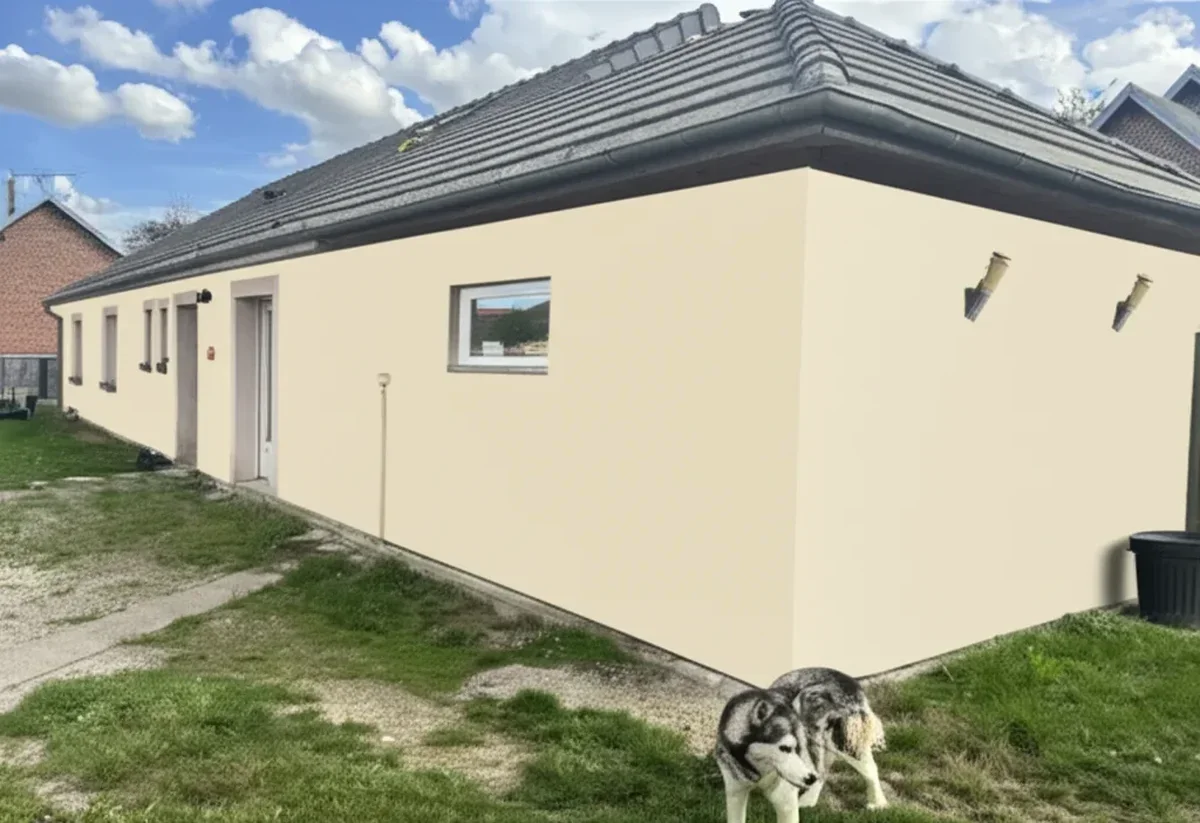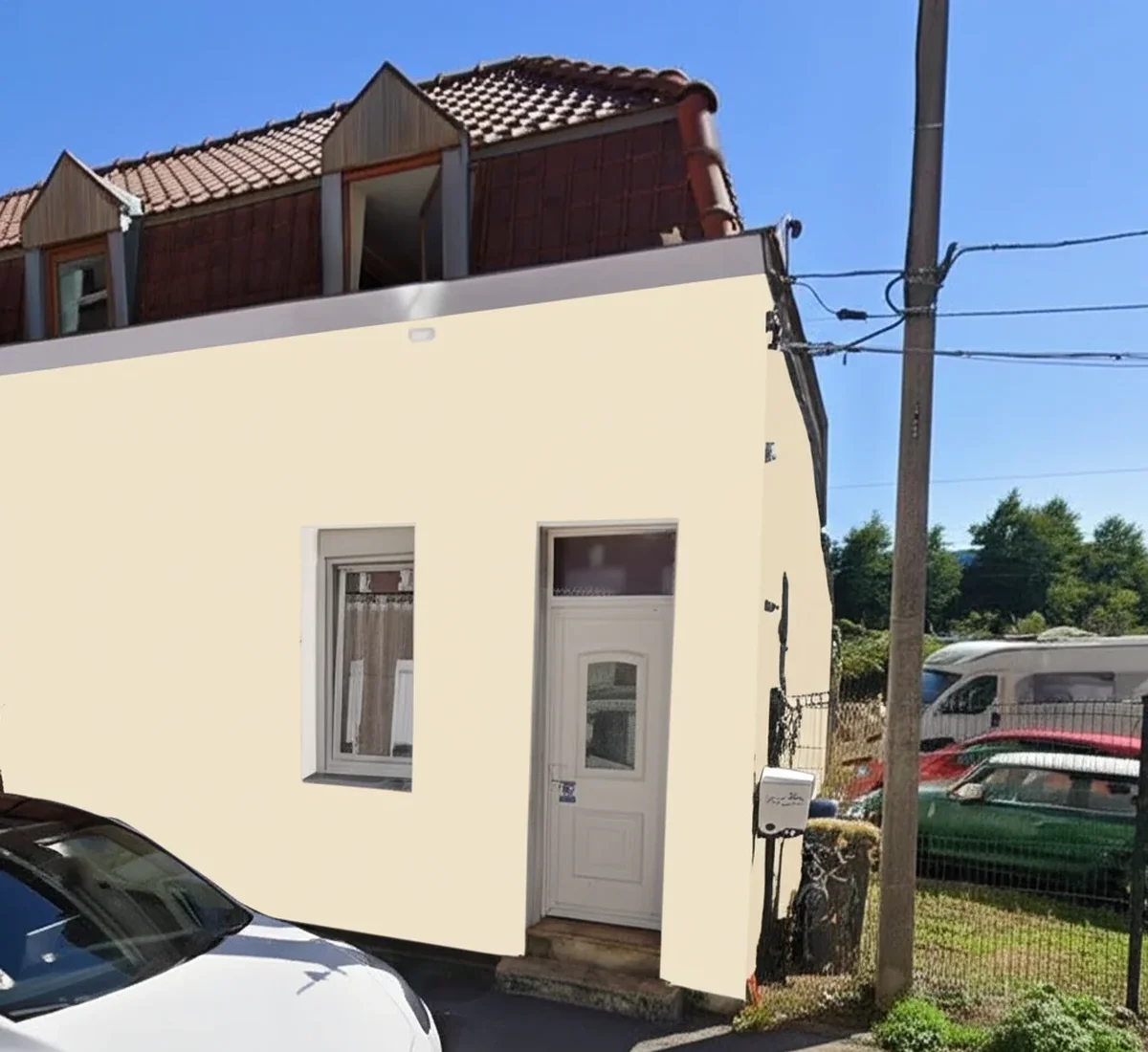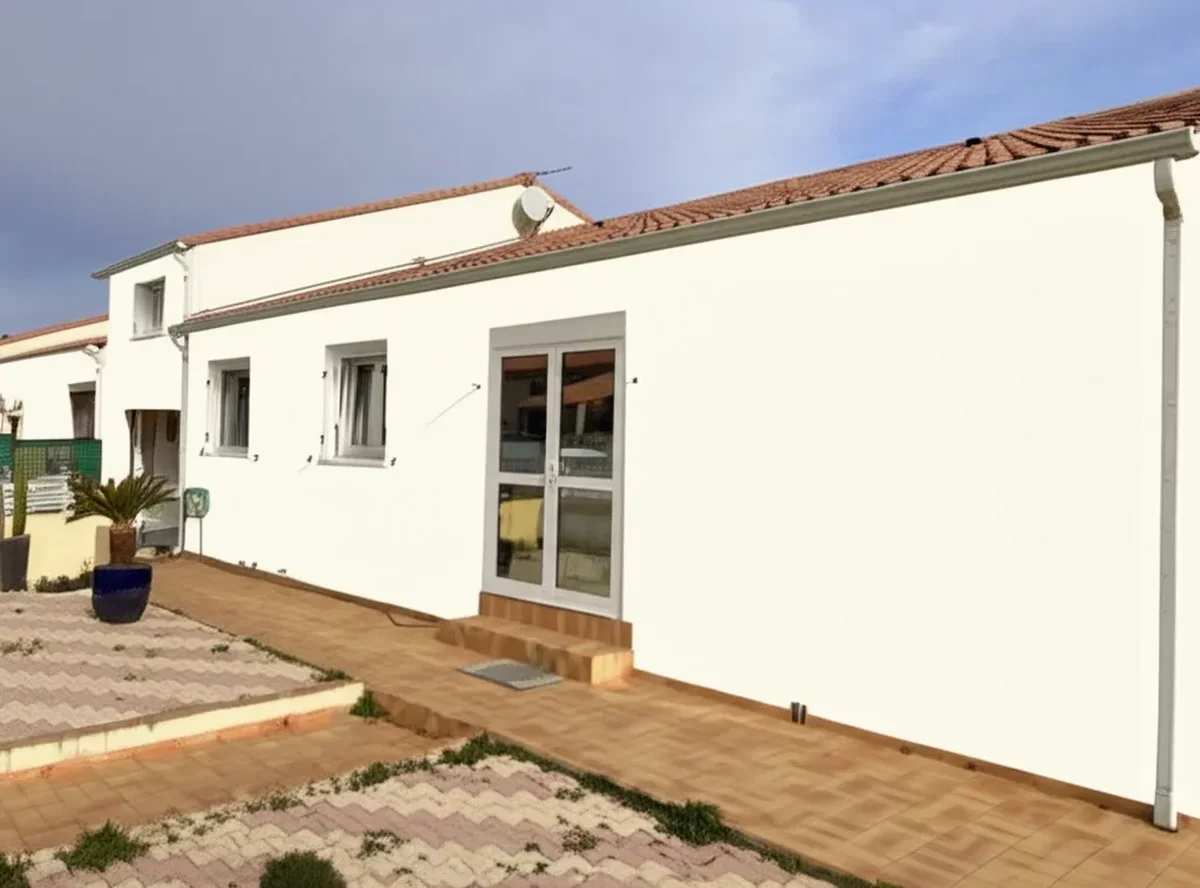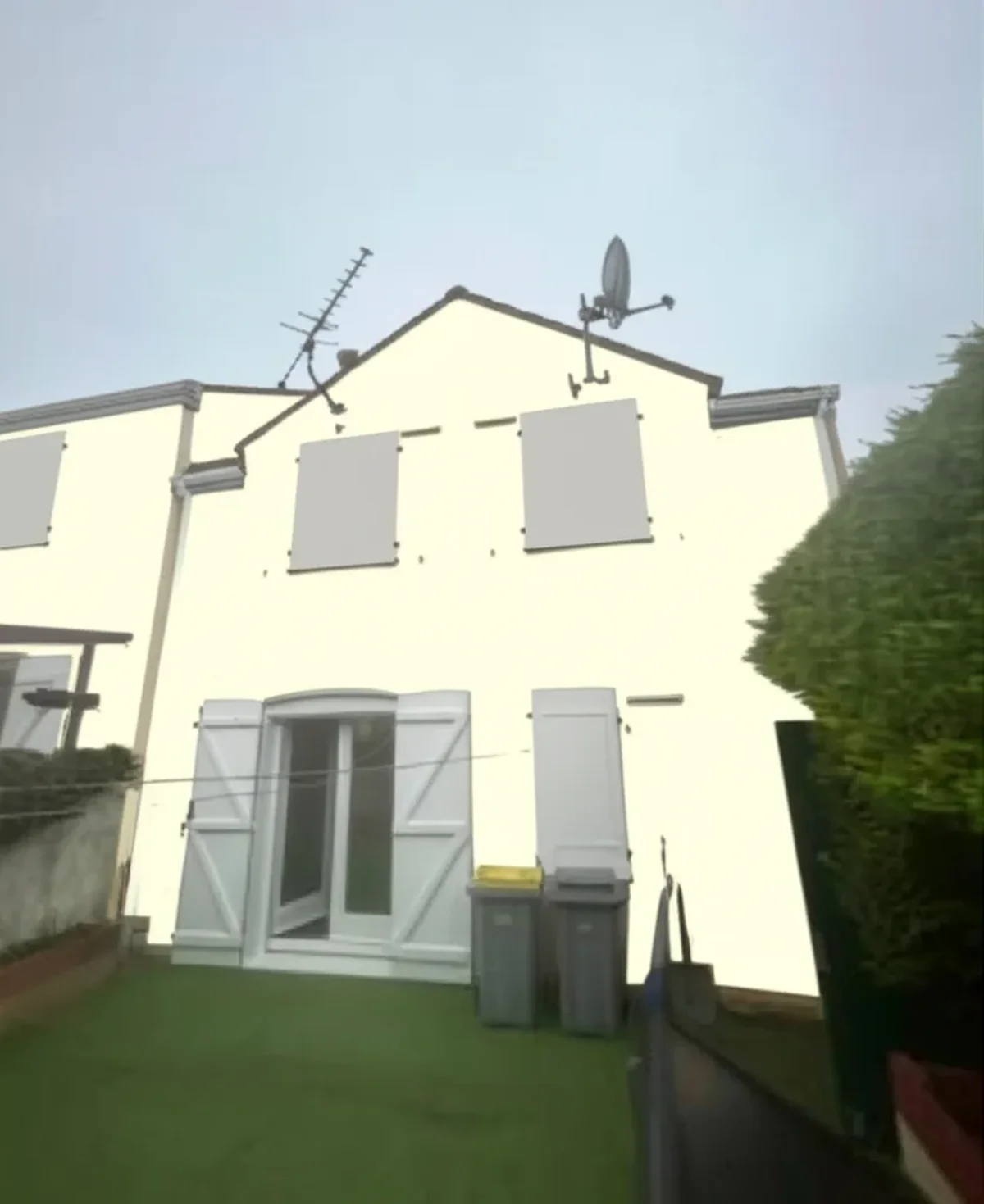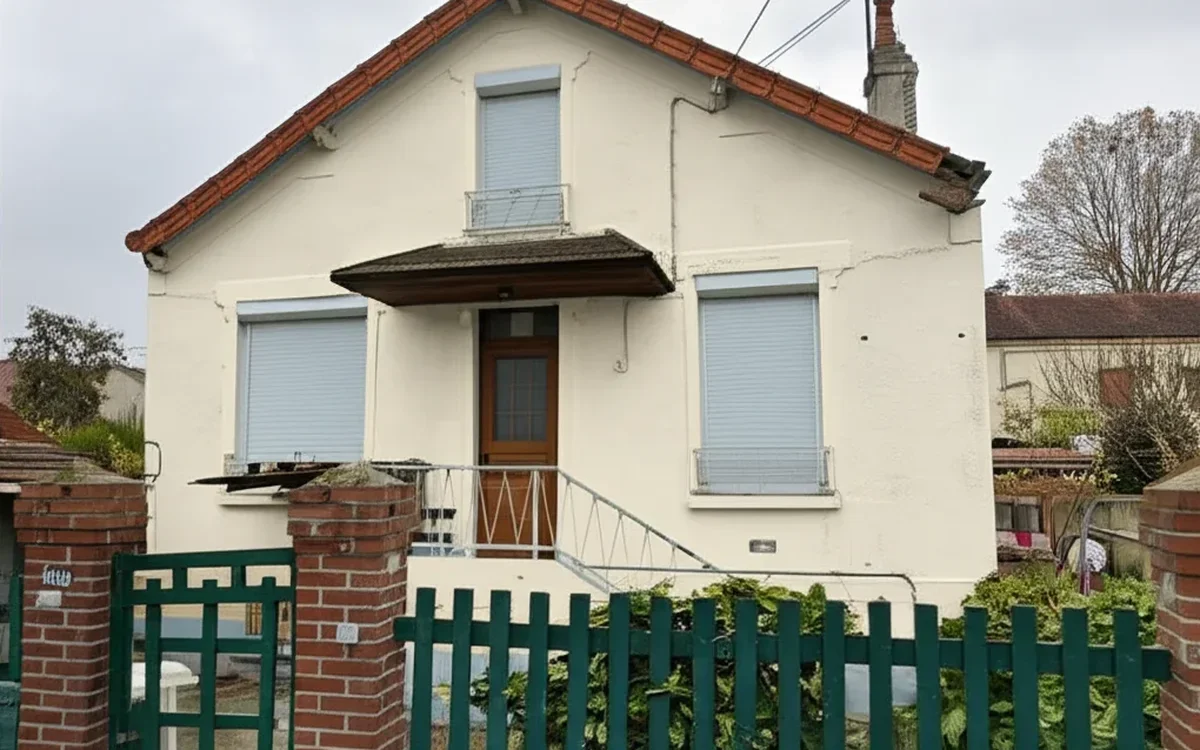
Try it on your house

HOA Exterior Paint Approval Guide 2026: Submission Template + AI Mockup Workflow
If you live in a planned community, repainting your house exterior is not a weekend decision. It is a paperwork sprint that ends with a written approval from your Architectural Review Committee (ARC). Skip the form, choose the wrong shade, or miss a color sample, and you risk a violation notice, a daily fine, or in the worst case a lien on your title. The good news: most rejections come from three avoidable mistakes, and you can pre-empt all of them with a complete submission packet and a realistic mockup of your home. This 2026 guide gives you a free downloadable ARC template, the exact state-by-state deadlines, and the AI workflow that boards consistently approve on the first attempt.
For the broader landscape of HOA color policy, start with our pillar resource on HOA exterior paint color rules, then return here to build your submission packet.
1. 35% of US homes need HOA approval before repainting
The numbers behind HOA exterior color enforcement are larger than most homeowners realize. According to the Foundation for Community Association Research 2025 Statistical Review (Community Associations Institute), the US now has 373,000 community associations housing 78.1 million residents across 29.6 million housing units. That is roughly 27% of the entire US population and, when you adjust for owner-occupied detached and attached single-family housing, an estimated 35% of homeowners must obtain ARC approval before any exterior color change. Florida, California, Texas, Arizona, North Carolina, Virginia, and Colorado together account for more than 60% of those associations.
| Metric (US 2025) | Value | Source |
|---|---|---|
| Community associations | 373,000 | Foundation for Community Association Research, 2025 Fact Book |
| Residents in HOAs | 78.1 million | Foundation for Community Association Research, 2025 |
| Housing units in HOAs | 29.6 million | Foundation for Community Association Research, 2025 |
| Share of US population in HOAs | ~27% | FCAR + US Census 2024 |
| Owner-occupied homes needing ARC approval | ~35% | FCAR weighted by US Census ACS 2024 housing tenure |
Try it on your house
No photo? Try a sample
Translation: if you bought a home built after 1980 in a developer-planned subdivision, master-planned community, condominium project, or gated neighborhood, you are statistically more likely to need paint approval than not. Even seemingly informal "voluntary" associations in older suburbs often have recorded CC&Rs with binding color clauses. The first step is confirming whether your property is encumbered. Search your county recorder's deed records for "Declaration of Covenants, Conditions and Restrictions" or check the Community Associations Institute directory. Once you confirm you are inside an HOA, every paint discussion that follows runs through the ARC.
2. The 3-step ARC submission workflow
Strip away the form variations across 373,000 associations and the underlying ARC workflow is nearly identical: read, document, submit. Here is the structure that maps to virtually every HOA in the US.
Step 1 - Read your CC&Rs and design guidelines
Pull your governing documents from the HOA portal, property management company, or county recorder. Look for the article on architectural review, the approved color palette section, and any addendum that lists pre-approved Sherwin-Williams, Benjamin Moore, or Behr schemes. Note the exact submission deadlines, fees, required samples (some boards demand 8x10 painted boards, others accept printed chips), and whether digital submissions are permitted. Highlight the review window: many CC&Rs specify a default approval if the ARC does not respond within 30 or 45 days, but this only triggers if your application was complete.
Step 2 - Build your documentation packet
A defensible submission contains: the modification request form (signed and dated), physical or printed color samples for body, trim color, accent color, front door, shutters, and garage door, the paint brand and product line with sheen for each surface, a current photo of all four elevations of your home, a labeled diagram showing exactly which surface gets which color, and the contractor's license and insurance certificate if your community requires licensed labor. The single highest-leverage addition is a realistic AI mockup of your home in the proposed colors. Boards approve what they can visualize.
Step 3 - Submit and follow up
File at least 14 days before the next ARC meeting. Send digitally and keep a date-stamped receipt. Email the property manager 7 days later to confirm receipt and ask whether anything is missing. Most rejections that survive appeal trace back to a missed deadline or an unanswered clarification request; staying responsive solves both.
3. State-by-state rules: FL, TX, AZ and what they really mean
HOA color review is governed by state statute as much as by your community's CC&Rs. The most frequently litigated states have specific clauses you can cite directly in your submission cover letter.
| State | Statute | What it requires for paint approval |
|---|---|---|
| Florida | Fla. Stat. §720.3035 | ARC must approve or deny in writing within 30 days (some communities 45). Silence past the deadline is automatic approval. Standards must be objective and previously published. |
| Texas | Tex. Prop. Code Ch. 209 (Texas Residential Property Owners Protection Act) | Owner must submit a written application; HOA must follow its own published rules and provide written reasons for denial. Hearing rights protected. |
| Arizona | A.R.S. §33-1817 | Decisions must be made in good faith and not unreasonably or capriciously. ARC must apply standards consistently across the community. |
| California | Davis-Stirling Act, Civ. Code §4765 | Procedure must be fair, in good faith, and not unreasonable. Written decision required; member can request reconsideration. |
| Virginia | Va. Code §55.1-1819 | HOA may regulate architectural style, paint colors, and other exterior matters; decisions must follow due process under the association's rules. |
The Florida auto-approval clause under Fla. Stat. §720.3035 is particularly powerful. If your ARC does not issue a written decision within the statutory window, your submission is deemed approved by operation of law. Document your submission date with email timestamps and certified mail receipts, and the burden shifts to the board if they later try to challenge the color. Texas and Arizona do not have an auto-approval clock, but both states' statutes give homeowners strong appeal rights when the board cannot articulate which published standard the proposal violates.
4. Penalties for unauthorized repainting: notice, fines, liens, court
Skipping the ARC and repainting on your own escalates through four enforcement stages. The exact thresholds depend on your CC&Rs and state law, but the sequence is consistent across the country.
| Stage | Typical penalty | Timeline |
|---|---|---|
| 1. Violation notice (cure period) | Written notice with demand to repaint to compliant color; no fine yet | Within 14-30 days of discovery |
| 2. Monetary fine | $25 to $200 per day in most states, often capped (Florida caps at $1,000 aggregate unless CC&Rs say otherwise) | After the cure period expires |
| 3. Lien on title | HOA records a lien for unpaid fines and assessments; blocks refinance and sale | 60-180 days of accumulated fines |
| 4. Court action | Injunction forcing repaint plus attorney fees; in extreme cases, foreclosure on the lien | After lien remains unsatisfied |
The Florida case Killearn Acres v. Keever and the Texas Court of Appeals decision in Brooks v. Northglen Association both upheld HOA enforcement of color covenants when the association followed its own published procedure. The lesson is simple: courts back the HOA when documentation is consistent. Your single best defense is to never paint until you hold a written approval letter referencing your specific application.
5. The free workflow: AI mockup to ARC submission (downloadable PDF template)
Here is the exact end-to-end workflow that homeowners and painting contractors use to get first-attempt ARC approval. It pairs a free downloadable HOA Paint Approval Submission Template with the AI mockup that boards expect in 2026. If you are working from a phone, the paint-my-house app that runs in the browser covers steps 3 and 4 below without installing anything.
- Locate your community's approved palette. Pull the list from your HOA portal or call the property manager. If the community uses a brand-specific archive (Sherwin-Williams HOA Color Archive, Behr Pro), bookmark it.
- Shortlist three combinations. Pick one safe option (clear match to the palette), one stretch option (a slight variation you would prefer), and one creative option (for negotiation leverage). Keep all three within neutral or earth-tone families unless your guidelines explicitly permit bold accents.
- Upload a photo of your home to FacadeColorizer. Use a sunny, front-elevation photo for the body color. Run a Sherwin-Williams color visualizer pass and a FacadeColorizer exterior preview for each of your three shortlisted combinations.
- Download the high-resolution renders. Save each AI mockup as a PDF page or attach the JPGs to the submission packet. Label them clearly: "Option A - SW 7036 Accessible Beige body, SW 7757 High Reflective White trim".
- Fill the submission template. Use the field structure below. Every box must be answered; blank fields are the top cause of board rework requests.
- Attach the contractor's license, insurance, and projected start date. Even if you DIY, list yourself with a written start date and a 90-day projected completion window.
- Submit digitally and in print. Send the PDF via the HOA portal and drop a printed copy at the property manager's office. Get a date-stamped receipt for both.
- Follow up in writing 7 days later. Confirm receipt and ask whether the ARC needs anything else before the next meeting.
HOA Paint Approval Submission Template - field structure
| Section | Required fields |
|---|---|
| Homeowner identity | Full legal name, property address, lot/unit number, phone, email, HOA member ID |
| Current colors | Body, trim, accent, front door, shutters, garage door (brand + product + sheen if known) |
| Proposed colors | Same surface list, exact SW/BM/Behr code, sheen, brand line, attached chip |
| Justification | Reference to palette section, paragraph citing the approved scheme, statement that proposed colors match community design intent |
| Visual evidence | AI mockup PDF (FacadeColorizer render), four-elevation photos, labeled diagram, paint chips |
| Contractor information | Company name, license #, certificate of insurance, projected start and completion date |
| Signatures | Homeowner signature, co-owner signature if applicable, date |
6. Common rejection reasons (and how to neutralize them up front)
Across thousands of ARC decisions logged in the Foundation for Community Association Research surveys, three categories account for the bulk of denials: color violations, missing submissions, and incomplete paperwork. Anticipate them and your approval letter shows up on schedule.
| Rejection reason | How to neutralize it |
|---|---|
| Color too bright or saturated | Stay within LRV 35-75 for body; reserve saturation for front-door accent only |
| Doesn't match approved palette | Cite the exact palette code in the cover letter; attach the chip |
| No submission filed | Always file even if you think the color is exempt; written approval is your shield |
| Too similar to adjacent house | Walk the street, photograph neighbors, propose a contrasting trim or accent |
| Incomplete contractor info | Attach license, insurance certificate, and projected dates upfront |
| Missing chips or unrealistic preview | Include both physical chips and an AI mockup PDF showing the home in the proposed scheme |
| Trim/accent mismatch | Use a paint visualizer to confirm body, trim, and accent harmonize before submitting |
For a deeper dive into which palettes consistently sail through ARC review in 2026, see our companion post on the best HOA-approved exterior paint colors of 2026.
7. How to use FacadeColorizer for your HOA submission
The single highest-impact piece of evidence in your ARC packet is a photorealistic rendering of your home in the proposed colors. It removes the board's biggest source of doubt: imagining how a paint chip will look on a 1,800 sq ft elevation. FacadeColorizer was built for this exact use case.
- Take a clean front-elevation photo of your home in indirect daylight (10am or 4pm works best). Capture the full facade with no parked cars or branches blocking the trim.
- Upload to FacadeColorizer. Visit our upload page and select your photo. The free tier renders one HD preview plus three free tests.
- Apply your shortlisted body color. Choose from the Sherwin-Williams, Benjamin Moore, or Behr libraries. Use the dedicated Sherwin-Williams color visualizer if your HOA's palette is SW-based.
- Iterate on trim and accent until you have a coordinated three-color scheme. Save renders for each combination.
- Download the HD render and attach it to your ARC submission packet. Label it with the exact SW/BM/Behr codes used.
- Share with your spouse and the HOA cover letter. Boards approve faster when both household decision-makers are clearly aligned in the submission.
For homeowners managing multiple properties or contractors handling ARC packets at scale, paid plans on our pricing page add unlimited HD renders without watermark.
8. Frequently asked questions
Do I really need HOA approval to repaint the same color?
In most communities, yes. Even a same-color refresh typically requires a written notice or expedited ARC submission because the board needs to verify the brand and sheen still match the approved palette. Some HOAs publish an exempt category for "in-kind repaints" but the burden is on you to confirm it in writing.
What happens if my HOA never responds to my submission?
In Florida, Fla. Stat. §720.3035 grants automatic approval if the ARC fails to respond in writing within the statutory window (often 30 or 45 days depending on the CC&Rs). Other states do not auto-approve, but most allow you to escalate to the board of directors and ultimately to mediation or court. Keep date-stamped proof of every submission.
How long does ARC paint approval usually take?
The median window is 30 days from a complete submission. Boards that meet monthly typically deliver a written decision within 14 to 45 days; revision cycles add another 7 to 14 days per round. Submit at least 14 days before the next meeting to land on the agenda.
Can my HOA force me to repaint after I already finished the job?
Yes, if you skipped ARC approval and the color violates the CC&Rs. Courts in Florida, Texas, and California have upheld forced repainting orders, plus fines and attorney fees. The only protection is a pre-approval letter or, in Florida, documented proof that the ARC missed its statutory response window.
Do I need a contractor's license to submit?
Most HOAs require the licensed and insured contractor's information when the job involves exterior work above a dollar threshold (often $500 to $1,000). DIY repaints below that threshold are typically permitted, but you must still list yourself, your projected start date, and any required permits.
Is an AI mockup actually accepted by HOAs?
Yes. Architectural review committees increasingly request digital visualizations because they are easier to evaluate than paint chips alone. The 2025 Foundation for Community Association Research board survey reported that 41% of ARCs now expect or strongly prefer visual previews. A FacadeColorizer render attached to your packet shortens the review cycle.
How much does HOA paint approval cost?
Most ARC reviews are free or charge a nominal $25 to $75 processing fee. A small minority of luxury or master-planned communities charge $150 to $300 for expedited review. Always confirm the fee schedule in your CC&Rs before submitting.
What if I disagree with the ARC's denial?
Request the written denial citing the specific CC&R section. Gather evidence (comparable approved homes, AI mockups, palette code citations) and file an internal appeal to the HOA board. If that fails, most states require or encourage mediation before litigation. California's Davis-Stirling Act, Arizona's A.R.S. §33-1817, and Texas's Property Code Chapter 209 all support alternative dispute resolution.
Ready to submit an ARC packet your board approves the first time?
Generate your free HD mockup, attach it to the submission template, and walk into the next ARC meeting with a complete visual proof.
Get started freeOfficial sources
To verify the regulatory information in this guide at the primary source:
- US EPA : Lead-safe (RRP) rules for homes built before 1978
- U.S. Department of Energy : Energy-efficient exterior and coating guidance
- International Code Council : Model building codes adopted by most US jurisdictions
External links. FacadeColorizer is not affiliated with these bodies and their guidance may change over time.
Trademarks mentioned (Sherwin-Williams, Benjamin Moore, Behr, Caparol, Brillux, Sto, Alpina, Valspar, PPG, Glidden, Dulux, Crown Trade, Sandtex, Farrow & Ball, Johnstone's, Leyland) are property of their respective owners. FacadeColorizer is independent and not affiliated with any of them. Nominative fair use under Lanham Act §1125.