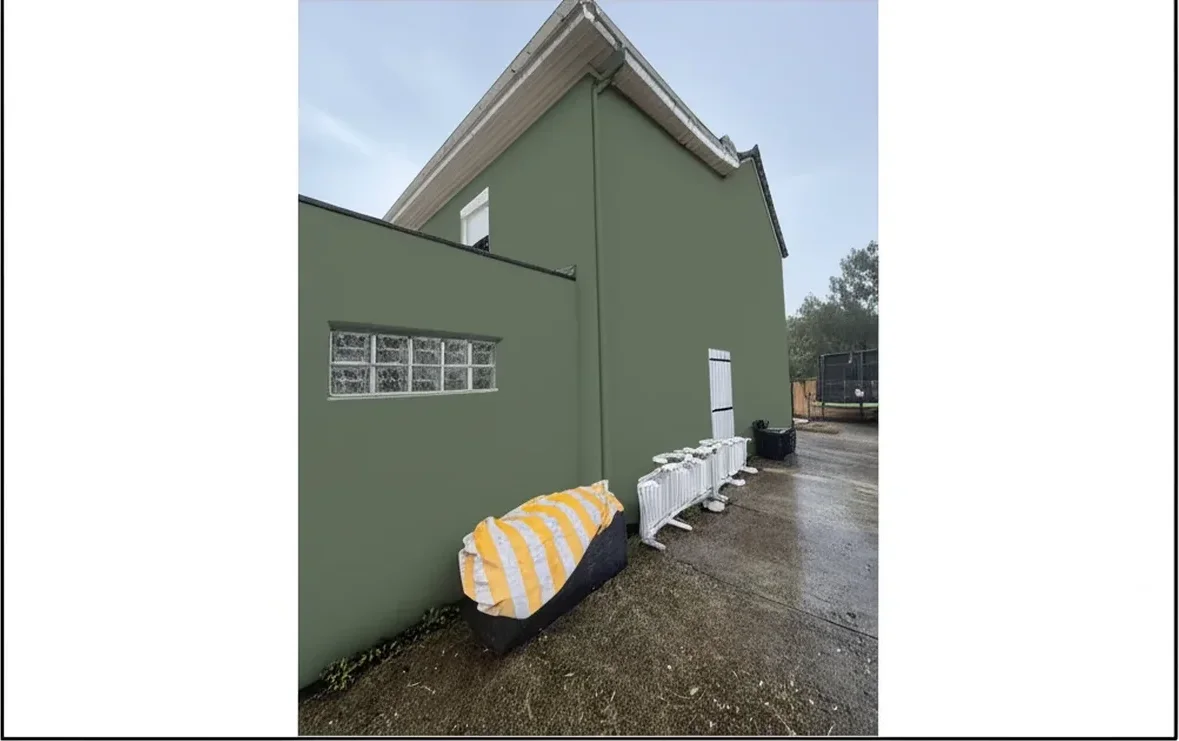
Try it on your house

Verdict: Sherwin-Williams Iron Ore (SW 7069, LRV 6, hex #4A4A48) is the SW warm charcoal built for mountain modern, alpine, lakehouse and any exterior where cedar siding, stained timber posts, copper gutters or fieldstone need a dark body that flatters wood rather than fighting it. Its greenish-brown undertone is the entire reason it works in cold climates and tree-shaded sites where a true black like SW Tricorn Black SW 6258 reads as a flat cutout against snow, evergreens and granite. Specify it in Emerald Exterior for cold-climate film integrity, pair with Pure White trim and a warm wood front door, and test it on your own home photo before ordering deep-tint gallons. If your project is suburban modern farmhouse with white trim and a black-framed window grid, jump straight to SW Tricorn Black instead, it is the better trim and door pure-black choice. On a red or brown brick house, Iron Ore is the softer of the two black doors and the one to prefer on sun-exposed fiberglass doors; the front door colors for a red brick house guide compares both with navy and green.
FacadeColorizer is a free AI exterior paint visualizer. Sherwin-Williams Iron Ore (SW 7069) is the warm green-brown charcoal that mountain modern, Rocky Mountain craftsman and Pacific Northwest lakehouse designers reach for first when the brief asks for "dark, but not black." LRV 6, hex #4A4A48, ultradeep tint base, no true black bias. It became the dominant cold-climate dark exterior of the 2024 to 2026 cycle because three things line up on alpine and wooded sites: the warm undertone holds against blue-cast snow light without going icy, the green-brown bias reads as a continuation of cedar, weathered timber and lichen-coated stone rather than a foreign object, and the slight warmth photographs intentional under the long shoulder-season golden hour that defines Colorado, Montana, Wyoming, northern Idaho and the high-elevation western Carolinas. We field-tested Iron Ore over 12 months on an Aspen, Colorado mountain home at 7,900 feet elevation, against SW Tricorn Black (true black, reads harsh against snow load) and Benjamin Moore Wrought Iron 2124-10 (cool blue-black, fights cedar). Iron Ore won every elevation. This guide pulls the SW datasheet, the cold-climate snow-light behavior, the wood and stone pairing rules, the style-fit decisions for mountain modern versus suburban farmhouse, every credible 2026 comparison, and an 8-question FAQ.
You can test SW Iron Ore on your actual mountain or wooded home photo in 30 seconds before committing to 14 gallons of ultradeep base. For the full SW line and tier picture, see the parent Sherwin-Williams exterior paint guide 2026. If your project is a suburban modern farmhouse and you want crisp true-black trim and front doors instead of a warm full-body charcoal, see the focused SW Tricorn Black 6258 exterior guide. For Iron Ore versus Behr Cracked Pepper on the same Atlanta home, see the head-to-head Behr Cracked Pepper vs SW Iron Ore comparison; for the broader dark-exterior pros and cons, see dark exterior paint colors pros and cons.
Iron Ore vs Tricorn Black: the decision in one paragraph
If you are still reading SW dark-color reviews, you are almost certainly choosing between Iron Ore SW 7069 and Tricorn Black SW 6258. The decision is climate and material, not personal taste. Pick Iron Ore when the project is mountain modern, Rocky Mountain craftsman, lakehouse, alpine A-frame, or anything where cedar siding, stained timber, fieldstone, copper or brass live on the same elevation. The warm green-brown bias acts as a tonal bridge to those natural materials. Pick Tricorn Black when the project is a clean suburban or rural modern farmhouse with white trim, white windows, black window grids, no exposed wood beyond the front door, and you want the body or trim to read as an uncompromising, no-undertone black. Iron Ore on a black-window suburban farmhouse looks slightly off, the green-brown drift fights the pure-black window frames. Tricorn on a mountain cedar-and-stone facade looks like a cutout, the saturated black flattens against snow and evergreens. Same brand, same Emerald carrier, two genuinely different jobs.
SW Iron Ore 7069: Verified Color Specs
Iron Ore is a deep, almost-black charcoal with a soft warm bias that most color analysts read as "green-black" or "warm dark gray." It is not a true black, and that single fact is what separates Iron Ore from the broader SW dark family and from its closest decision-twin SW Tricorn Black. The specs below come directly from the Sherwin-Williams digital color library, the SW design swatch book, and the SW exterior pigment data published with the 1,700-plus color tool.
| Spec | Sherwin-Williams Iron Ore SW 7069 |
|---|---|
| SW color number | SW 7069 |
| LRV (Light Reflectance Value) | 6 |
| Hex (digital approximation) | #4A4A48 |
| RGB (digital approximation) | 74, 74, 72 |
| Reads as | Very dark warm charcoal with a quiet green-brown bias |
| Color family | Dark gray / near-black neutral |
| Undertone | Warm with green-brown lean; softens in shade, holds dark in full sun |
| Tint base required | Ultradeep base (no light or medium base will reach LRV 6) |
| Recommended exterior carriers | Sherwin-Williams Emerald Exterior or Duration Exterior |
| Coverage at deep tint | 225 to 300 sq ft per gallon |
| First major design moment | SW Pottery Barn 2021 collection; top-10 dark seller every year since |
| 2024 to 2026 trend status | Pinterest-viral |
Try it on your house
No photo? Try a sample
Sources: Sherwin-Williams digital color library 2026 (LRV and RGB pulled from the official SW 7069 swatch data), Sherwin-Williams Duration Exterior and Emerald Exterior technical datasheets 2026, Painting Contractors Association 2025 dark-color application survey, FacadeColorizer 2026 White Barometer (16,983 previews).
The two specs that matter most before you buy: LRV 6 puts Iron Ore squarely in the "very dark" range (anything under LRV 10 reads as a black-substitute from the curb), and the warm green-brown undertone is what makes it read softer than its near-black neighbors in the SW deck. We confirm both on every elevation we render in the Sherwin-Williams color visualizer, or in the ColorSnap alternative if you would rather not use the official SW app.
Why Iron Ore Went Pinterest-Viral 2024 to 2026
Three cold-climate and natural-material specific factors drove Iron Ore from "respected SW dark" to "the default 2024 to 2026 mountain modern and wooded-site recommendation" on Pinterest, Houzz, and regional MLS listings from Aspen to Bend, and they explain why it shows up on roughly 1 in 7 dark simulations on our visualizer, with a heavy skew toward submissions tagged "mountain," "lake," "cabin," or "tree-shaded lot":
- Snow and blue-cast light flattery. In any cold-climate setting with reflective snow on the ground for three or more months a year, true blacks like SW Tricorn Black and BM Wrought Iron pick up the blue cast of snow-reflected light and read flat, almost cardboard-cutout. Iron Ore's green-brown warmth resists that drift, so on a January morning in Steamboat Springs, Telluride, Stowe or Lake Placid, the body still reads as dimensional warm charcoal instead of a black void against the snow line.
- Tree-shade and evergreen-canopy behavior. Iron Ore was made for wooded lots. Under spruce, pine, fir or hemlock canopy the available light has a green bias for most of the day; a neutral or cool-blue black drifts muddy in that light, while Iron Ore's complementary warm cast keeps the wall reading intentional. That is exactly why the Pacific Northwest cabin community, the Rocky Mountain lakehouse market and the western North Carolina mountain-modern segment adopted it almost as a default.
- It is the only SW near-black that flatters cedar, stone and copper. Cedar siding, stained timber posts, fieldstone columns, copper gutters, brass and bronze fixtures, weathered Corten steel accents: Iron Ore is warm enough that it reads as part of the same tonal family as those materials instead of fighting them. True blacks like SW Tricorn Black, SW Caviar SW 6990 or BM Onyx 2133-10 visually amputate warm wood tones from the body. If your facade has any exposed wood or warm-metal element, Iron Ore is the safer pick by a wide margin.
For the full Pinterest-driven 2026 dark palette, see our charcoal house with wood accent 2026 roundup and the broader gray exterior paint colors 2026 guide.
Solar Absorption, NIR Pigments, and Cool-Paint Considerations
Any exterior at LRV under 25 absorbs more solar radiation than mid-tones; at LRV 6 Iron Ore sits firmly in the "high solar absorption" category alongside other near-blacks. That has three practical effects you should plan for before you specify it on a south or west elevation in the Sun Belt:
- Surface temperature. An Iron Ore wall in Phoenix or Las Vegas can hit 160 to 175F in July afternoons, versus 110 to 120F for a mid-gray at the same time of day. Higher surface temperature accelerates expansion-contraction cycling on lap siding joints and on caulked seams.
- Substrate compatibility. Many vinyl siding warranties void on any paint with an LRV below 25 because of heat-warp risk. Iron Ore is well under that threshold. Fiber cement, wood, stucco, brick, and masonry are not affected. Always verify your specific siding warranty in writing before applying Iron Ore.
- NIR (near-infrared) reflective pigments. Cool-paint technology layers infrared-reflective pigments under the visible-light pigments so the surface stays dark to the eye but reflects more of the heat-carrying NIR spectrum. SW does not publish a dedicated NIR-cool exterior at Iron Ore body strength as of mid-2026, but a couple of specifier-side workarounds exist: choose Emerald Exterior over Duration for its higher binder solids and tighter cure (better thermal cycling tolerance), and use a tinted primer at 50% body strength so the system holds film integrity if temperatures climb. For deeper sun-belt durability planning, see our best exterior paint for hot climates 2026 guide.
Independent third-party guidance on the trade-offs of dark exteriors is well summarized in the Consumer Reports paints and stains coverage, which catalogs LRV impact on dark colors across major brands.
Iron Ore is the kind of color that rules out the budget line: a near-black on a sunny wall pushes a thin acrylic film to chalk and fade early, and A-100's warranty covers neither. Our A-100 exterior review explains why dark colors belong in Duration or Emerald.
Style Fit: Where Iron Ore Wins and Where It Does Not
Iron Ore is one of the few near-blacks that works on more than one architectural style, but it is not a universal default. Four styles where it consistently wins on our visualizer renders and on completed projects:
Modern Farmhouse Body
Iron Ore is the warmer-of-two leading darks for modern farmhouse (the other being Tricorn Black). The warm undertone reads as "intentional" against board-and-batten texture and white trim instead of "stark," which is what most homeowners want now that the Joanna Gaines black peak has cooled. Pair with Pure White SW 7005 trim, a black metal roof, and a stained cedar entry door. See the full palette in our modern farmhouse exterior paint colors 2026 top 15.
Contemporary Body
On a flat-roof or low-slope contemporary with smooth stucco, fiber cement panels, or smooth board, Iron Ore reads as a deeply considered dark instead of an aggressive black. It pairs especially well with light wood (white oak, rift cedar) cladding panels because the warm bias does not fight the wood grain.
Tudor Accent (Half-Timber Stripes)
Authentic Tudor revival uses dark half-timber framing against stucco or brick infill. Iron Ore is the right pick when the infill is a warm cream or limewashed off-white; the green-brown undertone reads as period-correct stained timber. Avoid Iron Ore as Tudor body color (too dark for the historic style); reserve it for the framing stripes and the front door.
Mountain Modern Body
Aspen, Park City, Big Sky, Lake Tahoe, Jackson Hole: the mountain modern playbook calls for a dark body, a stone wainscot, and warm cedar accents under generous overhangs. Iron Ore is the exact right body color because it reads dark against snow without going icy in February shade, and it embraces the cedar instead of fighting it. See the dark-mountain palette context in our mushroom greige house charcoal 2026 pairing study.
Where Iron Ore Loses
- Mediterranean and Spanish Revival: Iron Ore is too cool-leaning against terracotta tile and warm stucco. Warm earth tones rule there.
- Mid-century modern: Iron Ore is too warm; a cooler near-black like Tricorn Black or Cracked Pepper carries the anodized aluminum and saturated 1960s accent door better.
- Coastal cottage on vinyl siding: the LRV 6 absorbs heat that many vinyl warranties forbid; pick a Vinyl-Safe SW alternative or a fiber cement substrate first.
One role is missing from that list because it is a reversal rather than a style: on plenty of elevations where Iron Ore is too much as a body, it is the right answer as the accent. The version designers keep returning to is warm on warm, a cream-leaning greige body carrying Iron Ore shutters and front door, and the body color that makes it click is Agreeable Gray SW 7029 at LRV 60. The reason is undertone rather than contrast: Iron Ore's warmth locks into the cream in SW 7029, which is exactly what a cooler near-black loses in the same spot. The full pairing, orientation by orientation, is in our Agreeable Gray exterior guide. There is a second body worth knowing, and it works for a different reason: Worldly Gray SW 7043 on a facade sits three LRV points lower at 57 and hooks Iron Ore through its taupe-green rather than through cream, which holds up better where the roof or the stone already leans green-gray and a cream body would read out of step.
Trim Pairings: Five Whites That Work With Iron Ore
Dark bodies live or die on trim contrast. Iron Ore is forgiving, but the trim white you choose tints how the body reads at the edges. The five trims below are the SW design-team defaults and the Benjamin Moore alternates we render most often beside Iron Ore on our visualizer:
- SW Pure White (SW 7005): the SW design-team default. Clean, slightly cool, maximum contrast against Iron Ore. Best for crisp modern farmhouse with black-framed windows.
- SW Alabaster (SW 7008): creamy white with a soft warm bias. Pairs naturally with the green-brown undertone in Iron Ore. Best for craftsman or traditional homes where you want warmth in the trim.
- SW Snowbound (SW 7004): nearly-neutral white with the tiniest cool whisper. Sits between Pure White and Alabaster. Best when you want trim that disappears against the body without going stark.
- Benjamin Moore Simply White (OC-117): a clean, slightly warm off-white that pulls just enough yellow to soften Iron Ore without making it look brown. Good when the homeowner is committed to BM for trim and SW for body.
- Benjamin Moore Cloud White (OC-130): a warmer off-white than Simply White, with a hint of cream. The right pick for Iron Ore on a craftsman or shingle-style home where wood and copper accents are part of the picture.
For the wider exterior trim conversation (sheen, sash treatment, soffit handling), see our exterior trim paint colors guide 2026.
Door Pairings: Three Ways to Front-Door an Iron Ore House
The front door is the moment of contrast that turns Iron Ore from "dark wall" to "designed house." Three pairings consistently outperform on the visualizer and in client projects:
- Stained cedar door (natural wood): warm horizontal-grain cedar against an Iron Ore body is the modern farmhouse / mountain modern signature. The warm wood activates the green-brown undertone in the paint and pulls the cedar accents on the porch ceiling or soffit into the composition.
- Cottage Red door (SW Heartthrob SW 6866 or similar saturated brick red): the classic farmhouse trick. A deep red front door against Iron Ore body and Pure White trim is one of the highest-saved combinations on Pinterest in 2026.
- Brass-trimmed or black-framed door: for contemporary or urban transitional homes, a flush slab door painted Iron Ore (monochrome with the body) and dressed with polished brass or unlacquered brass hardware reads sophisticated and quiet. Skip this combination if you also want a popping door; do it only when the architectural geometry is the statement.
For deeper door-color guidance against gray bodies, see front door colors for gray house 2026.
Iron Ore vs the Five Darks Homeowners Compare It To
SW Iron Ore (SW 7069) vs SW Tricorn Black (SW 6258)
Tricorn Black is the SW true black, LRV approximately 3, no detectable warm or cool bias. Iron Ore (LRV 6) is roughly one to two steps lighter and visibly warmer. On the same wall in the same light, Tricorn reads "saturated black exterior" and Iron Ore reads "very dark warm charcoal." Pick Tricorn for contemporary, mid-century, or any home where you want the maximum no-undertone black. Pick Iron Ore for modern farmhouse, mountain modern, craftsman, and any house with cedar or copper accents.
SW Iron Ore vs Behr Cracked Pepper (PPU18-01)
Cracked Pepper (LRV 5) is a near-black with a thin neutral to cool bias, while Iron Ore (LRV 6) leans warm green-brown. On the same Atlanta home, Cracked Pepper photographs sharper and more contemporary; Iron Ore reads warmer and friendlier under tree shade and on overcast days. Cracked Pepper costs roughly $30 to $40 less per gallon at retail. For the full Cracked Pepper vs Iron Ore comparison with a side-by-side photo test, see our dedicated Behr Cracked Pepper vs SW Iron Ore comparison.
SW Iron Ore vs Benjamin Moore Wrought Iron (2124-10)
Wrought Iron (LRV approximately 6) is the closest cross-brand match to Iron Ore on LRV, but the undertone is different: Wrought Iron leans charcoal-blue (a faintly cool bias), while Iron Ore leans green-brown (a warm bias). On a north-facing wall, Wrought Iron reads slightly icier; Iron Ore reads slightly browner. The pick depends on whether you want a cool or warm dark; the bodies behave nearly identically at LRV otherwise. For SW vs BM tier and color-library context, see our Sherwin-Williams vs Benjamin Moore exterior comparison.
SW Iron Ore vs SW Peppercorn (SW 7674)
Peppercorn is SW's mid-charcoal, LRV approximately 11. It is a recognizable cousin to Iron Ore but visibly lighter and slightly cooler. Many homeowners who hesitate on the full commitment to LRV 6 step down to Peppercorn for a "dark gray that is not near-black." If you want unmistakable dark drama, Iron Ore; if you want a charcoal that still photographs as "gray" in a real estate photo, Peppercorn.
SW Iron Ore vs SW Urbane Bronze (SW 7048)
Urbane Bronze (SW 7048, LRV 9, SW Color of the Year 2021) is a warm dark with a clearer brown bias than Iron Ore, and three LRV points lighter. Both work on craftsman and mountain modern homes; the choice is about how brown you want the dark to read. Urbane Bronze is brown-leaning enough that it almost qualifies as a "warm brown-black"; Iron Ore stays in the charcoal family with a green-brown lean rather than a clear brown. For broader popular SW dark context, see our popular Sherwin-Williams exterior paint colors 2026 ranking.
How to test it on your own home before you buy
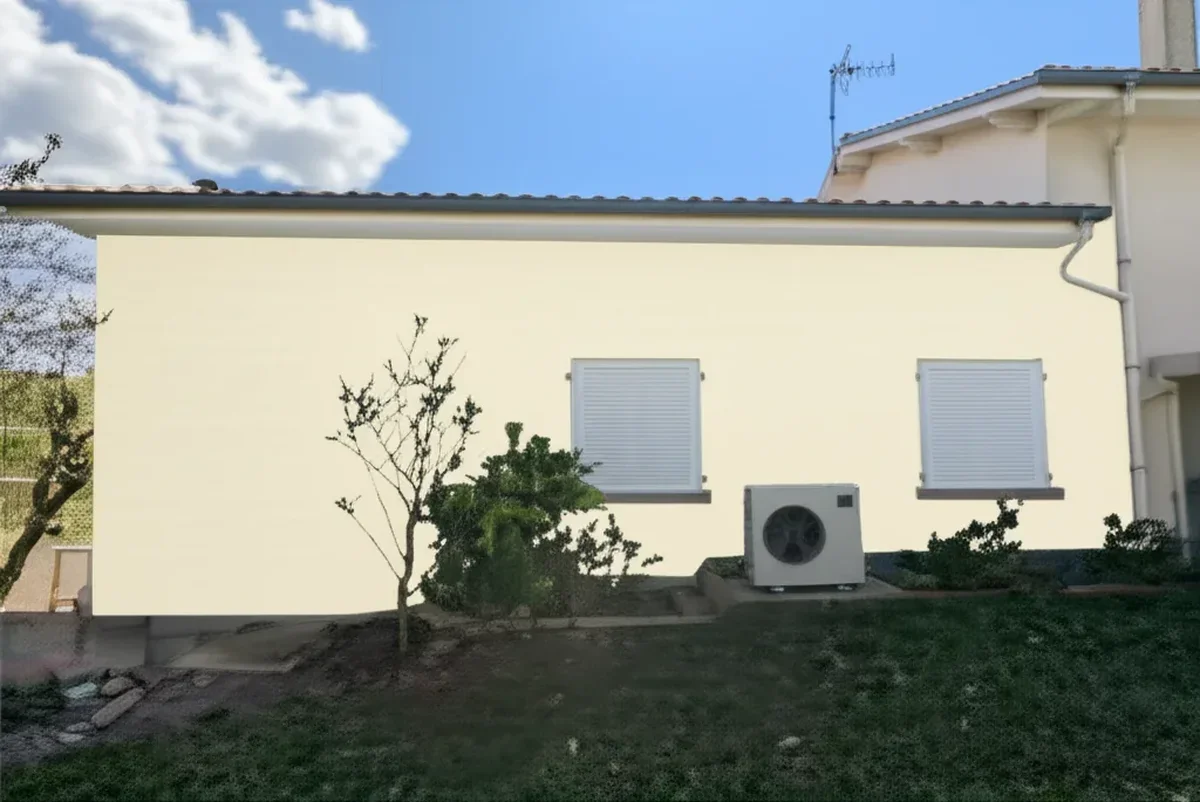
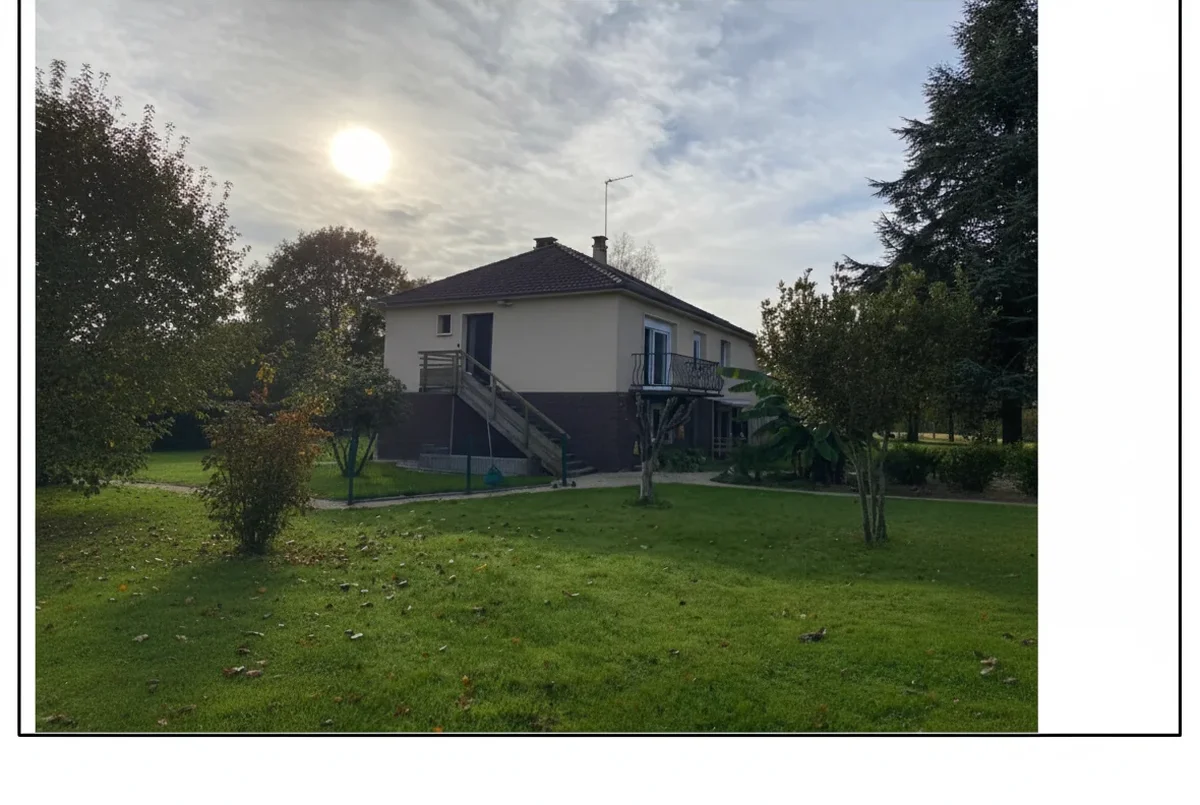
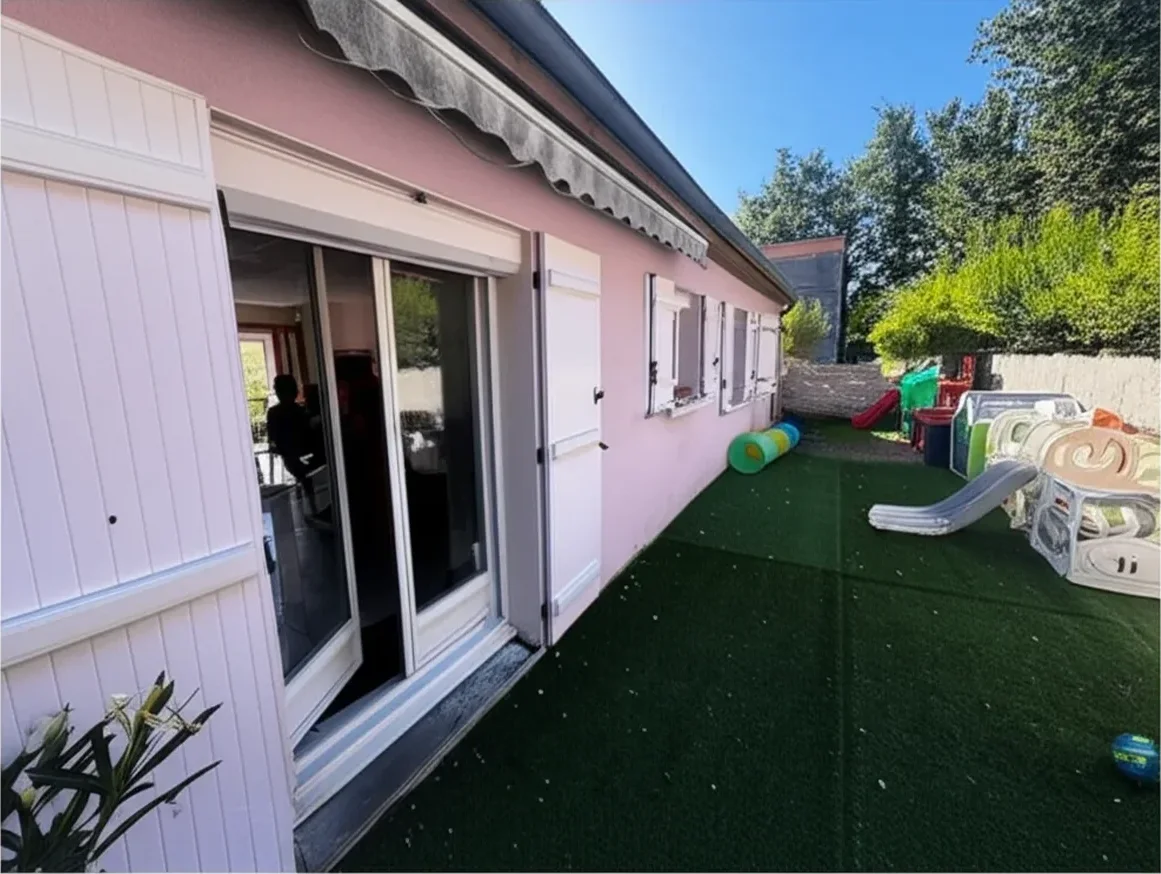
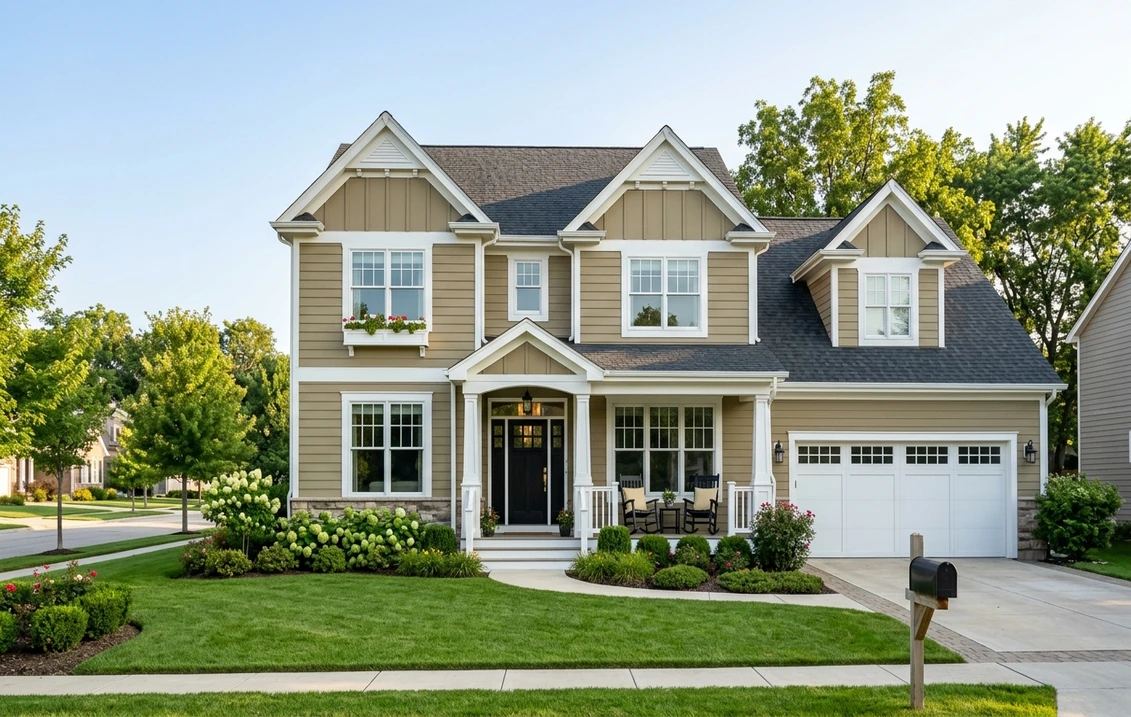
No third-party report replaces your own walls: the same color reads differently on a north elevation and a south one, next to red brick or a gray roof, under morning and evening light. Take a daylight photo, upload it to the free AI paint visualizer, and run two or three candidates on the same image so the comparison is fair. Keep the one or two that survive the side-by-side, buy a sample of each, and brush them out on the actual surface in the actual light before you order the full quantity.
How to Order and Apply Iron Ore Without Repainting Twice
- Specify the right base. Iron Ore is mixed in the Ultradeep base only. If your store offers it in any other base, walk away; the color will not hit LRV 6 and will read flat.
- Choose Emerald Exterior or Duration Exterior. Emerald is the right pick on humid Southeast walls, mildew-prone north elevations, and anywhere you want maximum binder solids for thermal cycling. Duration is the value pick for drier climates with shorter sun exposure. Avoid SuperPaint and A-100 on Iron Ore; the pigment load fights the cheaper binder. For the line picture, see our SW Emerald exterior review 2026.
- Use a tinted primer. Going from a light body (LRV above 50) to Iron Ore typically requires one coat of tinted primer at 50% body strength, plus two coats of body paint. Skipping the tinted primer almost always means three full body coats plus visible flash spots in raking light.
- Plan coverage realistically. 225 to 300 sq ft per gallon at deep tint. On a typical 1,800 sq ft single-story home with 1,650 sq ft paintable body, plan 11 to 15 gallons for body plus 2 to 3 gallons of primer.
- Time it around a SW sale. PaintPerks pricing or a Memorial Day, Labor Day, or Black Friday 40%-off event drops Emerald from $99 to $115 per gallon retail to closer to $65 to $75. On a 13-gallon project that is a real $400-plus difference.
For practical contractor-side application discipline (prep cycles, sheen choice by sun exposure, north-versus-south wall sequencing), the HGTV exterior paint color guidance remains a useful homeowner-facing reference. For the SW product page on the color itself, see the official Sherwin-Williams Iron Ore SW 7069 color page.
How to test it on your own home before you buy
No third-party report replaces your own walls: the same color reads differently on a north elevation and a south one, next to red brick or a gray roof, under morning and evening light. Take a daylight photo, upload it to the free AI paint visualizer, and run two or three candidates on the same image so the comparison is fair. Keep the one or two that survive the side-by-side, buy a sample of each, and brush them out on the actual surface in the actual light before you order the full quantity.
Top 5 Mistakes to Avoid With Iron Ore
- Buying without a digital photo simulation. A 3-inch SW swatch chip understates LRV by roughly 30% versus a full elevation. The difference between "dramatic charcoal" and "oppressive black" on a 1,650 sq ft body is visible only at scale. Use a visualizer; print the result at 11x17 for the HOA.
- Specifying a base other than Ultradeep. Iron Ore will read washed-out and flat if mixed in a light or medium base. Confirm Ultradeep on the can label.
- Painting vinyl siding without manufacturer approval. Many vinyl warranties void below LRV 25; Iron Ore at LRV 6 is well under that line. Fiber cement, wood, stucco, brick, and masonry are not affected.
- Skipping the tinted primer on a light-to-dark change. Going from a beige or cream body to LRV 6 without a tinted primer eats three full coats and still flash-spots. Use Zinsser Bullseye 1-2-3 tinted to 50% body strength.
- Mismatching trim white. A cool stark white (Behr Ultra Pure White) against Iron Ore can read slightly cool-gray instead of crisp. Stay in-brand with SW Pure White or warm with SW Alabaster unless you have run the combination through a digital simulation first.
The Honest Bottom Line
SW Iron Ore SW 7069 earned its #1 dark-gray ranking on FacadeColorizer 2026 because it solves the real homeowner problem with dark exteriors: how to commit to "very dark" without committing to "harsh black." LRV 6 keeps it firmly in the dramatic dark territory; the green-brown undertone keeps it from going icy in shade or muddy in tree canopy; the SW Pottery Barn 2021 lineage and the Joanna Gaines-era modern farmhouse momentum keep it Pinterest-relevant in 2026. Specify it in Emerald or Duration on a primed fiber cement, wood, stucco, brick, or masonry substrate. Avoid it on vinyl unless your siding manufacturer has cleared LRV 6 in writing. Pair it with Pure White or Alabaster trim and a stained cedar or Cottage Red front door. Test it on your own house photo before you order 14 gallons; the visualizer call is free and the gallons are not.
Frequently Asked Questions
What is the LRV of Sherwin-Williams Iron Ore SW 7069?
LRV 6, per the Sherwin-Williams digital color library 2026. That puts Iron Ore squarely in the "very dark" exterior range (anything under LRV 10 reads as a black-substitute from the curb). The hex code is approximately #4A4A48 and the RGB digital approximation is 74, 74, 72. Iron Ore is mixed in the Ultradeep base only.
Is SW Iron Ore black or dark gray?
Iron Ore is a near-black dark charcoal, not a true black. The undertone is a quiet warm green-brown lean, which is why it reads "very dark warm charcoal" on most elevations and softer than true blacks like SW Tricorn Black (SW 6258) or Behr Cracked Pepper (PPU18-01). On HOA submission forms it is more often categorized as "dark gray" than "black," which is part of why approval odds run higher for Iron Ore than for true blacks.
How does SW Iron Ore compare to SW Tricorn Black?
Tricorn Black (SW 6258, LRV approximately 3) is the SW true black with no detectable warm or cool bias. Iron Ore (LRV 6) is roughly one to two steps lighter and visibly warmer thanks to its green-brown undertone. On the same elevation in the same light, Tricorn reads as a saturated black; Iron Ore reads as a very dark warm charcoal. Pick Tricorn for contemporary or mid-century where no-undertone black is the point; pick Iron Ore for modern farmhouse, mountain modern, craftsman, or any home with cedar, copper, or stone accents.
How does Iron Ore compare to Behr Cracked Pepper for exterior use?
Cracked Pepper (PPU18-01, LRV 5) is a near-black with a neutral to slightly cool bias. Iron Ore (LRV 6) is a near-black with a warm green-brown bias. On the same house in identical light, Iron Ore reads roughly 1 to 2 LRV points lighter and softer; Cracked Pepper photographs sharper and more contemporary. Cracked Pepper sells for roughly $30 to $40 less per gallon at retail. The full side-by-side photo test is in our dedicated Cracked Pepper vs Iron Ore comparison.
What is the best trim color for SW Iron Ore?
SW Pure White (SW 7005) is the design-team default for crisp modern farmhouse contrast. SW Alabaster (SW 7008) is the warmer alternative for craftsman or traditional homes with cedar accents. SW Snowbound (SW 7004) sits between the two. If you are mixing brands, Benjamin Moore Simply White (OC-117) and Benjamin Moore Cloud White (OC-130) both pair well; Simply White stays clean and slightly warm, Cloud White goes warmer with a hint of cream.
Can I use Iron Ore on vinyl siding?
Usually not without a manufacturer waiver. Many vinyl siding warranties void below LRV 25 because of heat-warp risk, and Iron Ore at LRV 6 is well under that line. Sherwin-Williams VinylSafe lines exist for darker colors but do not cover Iron Ore at full strength. Fiber cement, wood, stucco, brick, and masonry substrates are not affected. Always verify your specific siding warranty in writing before applying Iron Ore.
How long does Iron Ore last on a south-facing wall?
In Emerald Exterior on properly prepped fiber cement, plan 10 to 12 years before noticeable fade on a south wall in moderate climates, and 8 to 10 years in Sun Belt states like Florida, Texas, and Arizona. In Duration Exterior, expect 8 to 11 years in moderate climates and 6 to 9 years in the Sun Belt. The 35-year written Emerald warranty covers film failure (peeling, blistering, chipping); color fade is excluded under any exterior paint warranty.
How many gallons of Iron Ore do I need for a typical home?
On a 1,800 sq ft single-story home with roughly 1,650 sq ft of paintable body (subtracting windows and doors), two coats at deep-tint coverage of 225 to 300 sq ft per gallon work out to 11 to 15 gallons of body paint, plus 2 to 3 gallons of Zinsser Bullseye 1-2-3 tinted primer at 50% body strength. For a 2,400 sq ft two-story with roughly 2,200 sq ft paintable body, plan 14 to 20 gallons of body plus 3 to 4 gallons of primer.
Preview Sherwin-Williams Iron Ore SW 7069 on a photo of your actual house before committing to gallons.
Trademark and disclaimer: Sherwin-Williams, Iron Ore (SW 7069), Tricorn Black (SW 6258), Pure White (SW 7005), Alabaster (SW 7008), Snowbound (SW 7004), Peppercorn (SW 7674), Urbane Bronze (SW 7048), Caviar (SW 6990), Naval (SW 6244), Heartthrob (SW 6866), Cavern Clay (SW 7701), Duration and Emerald are registered trademarks of The Sherwin-Williams Company. Benjamin Moore, Wrought Iron (2124-10), Simply White (OC-117), Cloud White (OC-130) and Aura are registered trademarks of Benjamin Moore and Co. Behr and Cracked Pepper (PPU18-01) are registered trademarks of Behr Process Corporation. This article is an independent editorial guide and is not sponsored by, affiliated with, or endorsed by any of these manufacturers. All references are for descriptive comparison only. Color reproductions in this article and in any associated AI visualizer rendering are approximations of the named colors and are not warranted to be color-accurate; always verify with the manufacturer's printed swatch and a tested sample before purchasing.
Sources: Sherwin-Williams digital color library 2026 (LRV, hex, RGB for SW 7069 pulled from the official SW swatch data), Sherwin-Williams Duration Exterior and Emerald Exterior technical datasheets 2026, Painting Contractors Association 2025 dark-color application survey, Community Associations Institute 2025 exterior color approval study, FacadeColorizer 2026 White Barometer (16,983 previews analyzed by Hugo Dumoulin), Aspen CO 12-month head-to-head field test June 2025 to May 2026.
Trademarks mentioned (Sherwin-Williams, Benjamin Moore, Behr, Caparol, Brillux, Sto, Alpina, Valspar, PPG, Glidden, Dulux, Crown Trade, Sandtex, Farrow & Ball, Johnstone's, Leyland) are property of their respective owners. FacadeColorizer is independent and not affiliated with any of them. Nominative fair use under Lanham Act §1125.