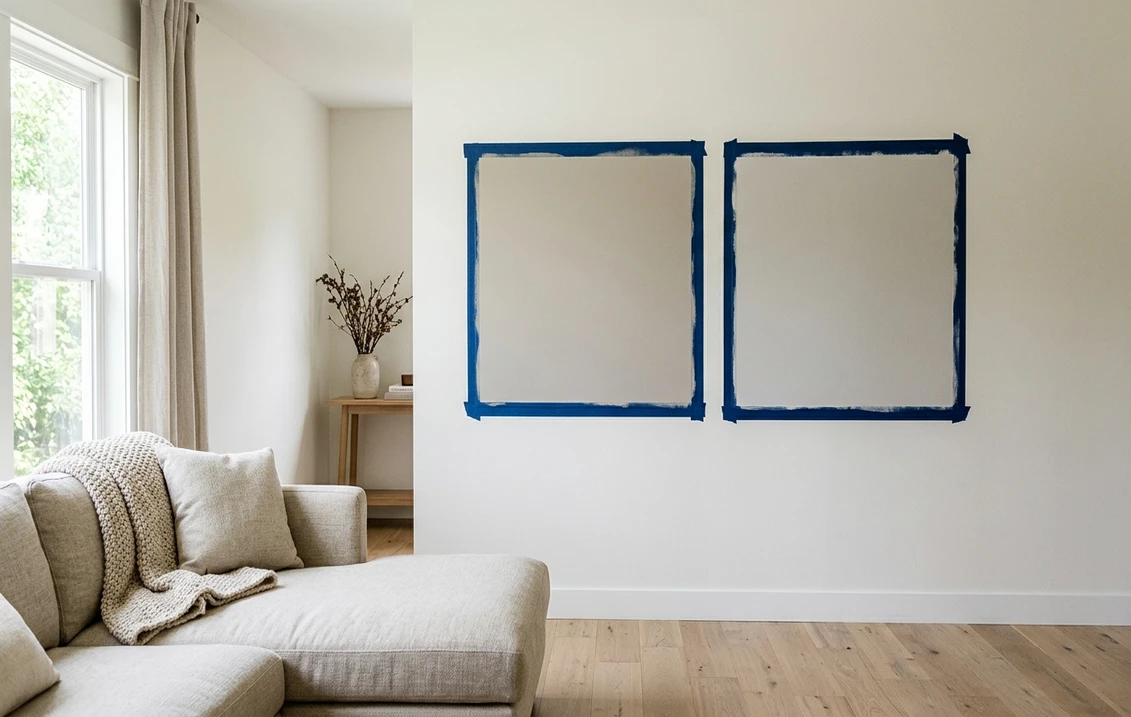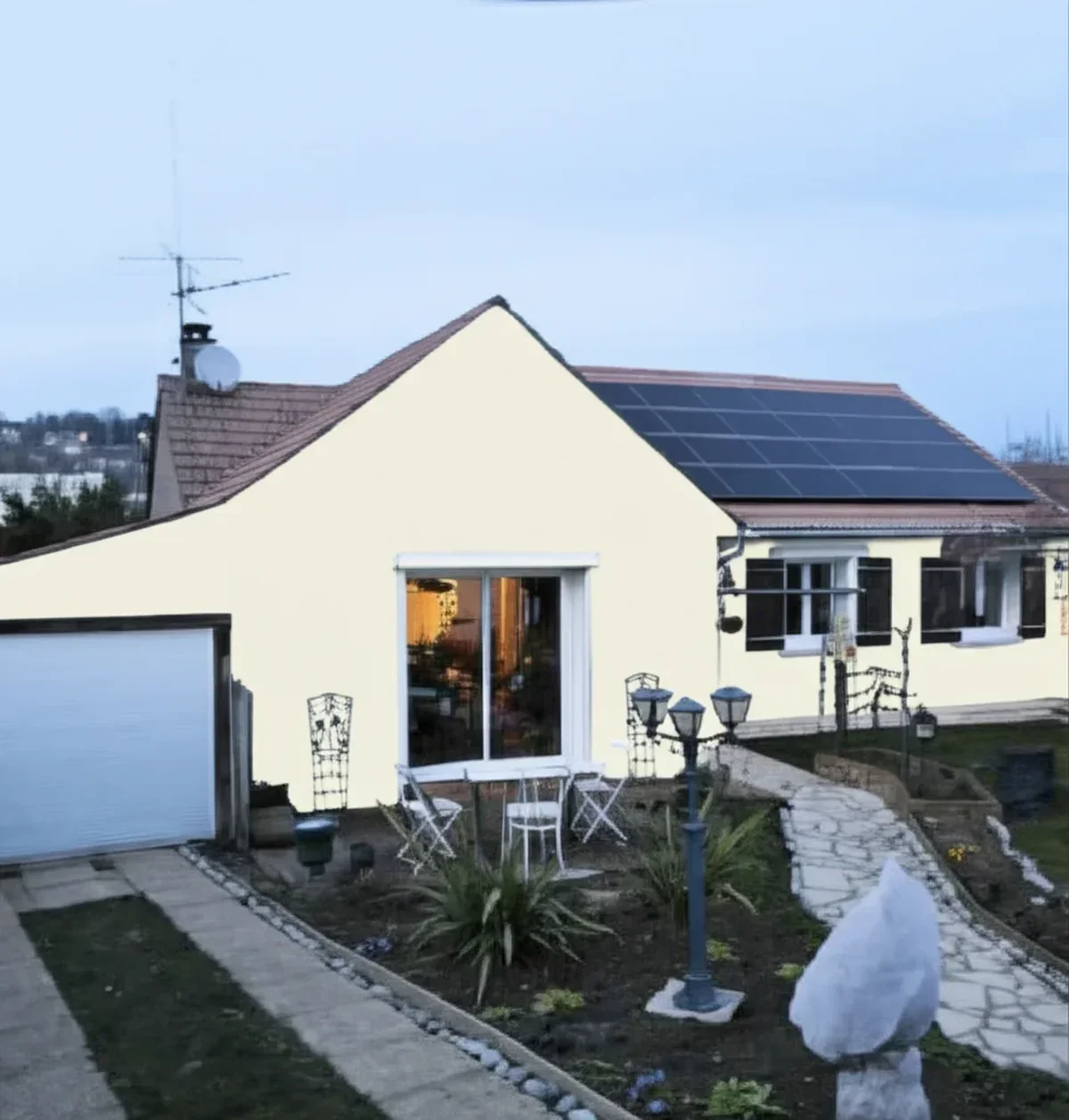
Try it on your house

The verdict in three lines. White Dove OC-17 (LRV 85.38) is the softer white: warm but muted, with a whisper of gray that keeps walls, trim, and cabinets from ever looking stark.
Simply White OC-117 (LRV 89.52) is the brighter white: cleaner and more luminous, with a subtle yellow-leaning warmth that keeps kitchens, trim, and ceilings crisp.
Unlike most duels, the 4-point LRV gap here is visible on a wall: Simply White reads lighter. Undertone still picks the winner, so the real tiebreaker is seeing both on a photo of your own room.
Benjamin Moore White Dove (OC-17) and Simply White (OC-117) are the two best-selling whites in the Benjamin Moore deck, and the pair designers get asked about most. Both are warm whites, both show up on cabinets, trim, and whole-house palettes across the US, and on a small chip they can pass for twins. On a full wall they behave differently. This head-to-head puts the numbers side by side, walks the duel room by room and exposure by exposure, and tells you exactly when each white wins. For the general method behind any two-color decision, start with our side-by-side method for comparing any two paint colors.
The numbers side by side
| Attribute | White Dove OC-17 | Simply White OC-117 |
|---|---|---|
| Family | Soft warm white | Bright warm white |
| LRV | 85.38 | 89.52 |
| Approximate hex | #F0EFE6 | #F7F7EE |
| Approximate RGB | 240, 239, 230 | 247, 247, 238 |
| Undertone | Muted warmth softened by a touch of gray | Cleaner warmth with a slight yellow lean |
| Loves | Oak floors, linen, brass, aged finishes, low sheen | Bright counters, colored walls as trim, high light bounce |
| Watch out for | Can flatten toward gray in dim rooms | Can flash yellow in strong sun or next to cooler whites |
| Overall vibe | Soft, calm, forgiving | Fresh, luminous, crisp |
Try it on your house
No photo? Try a sample
LRV values are the published Benjamin Moore figures. Hex and RGB are approximate digital renderings; the authoritative reference is a physical Benjamin Moore chip or sample pot.
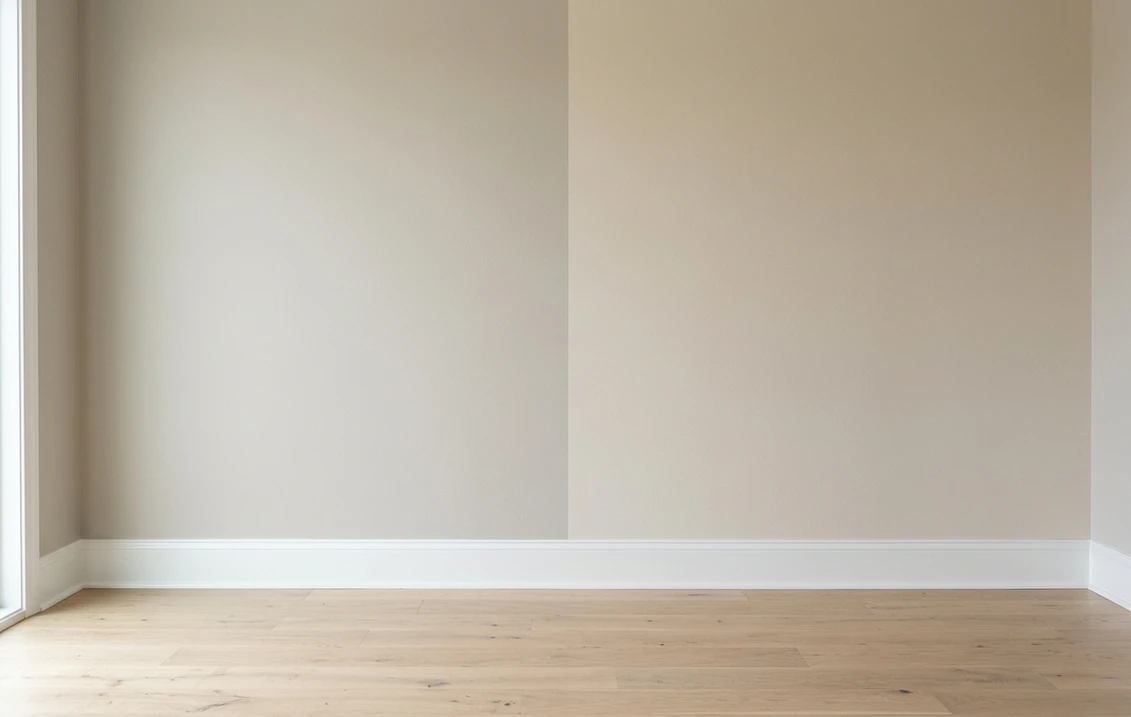
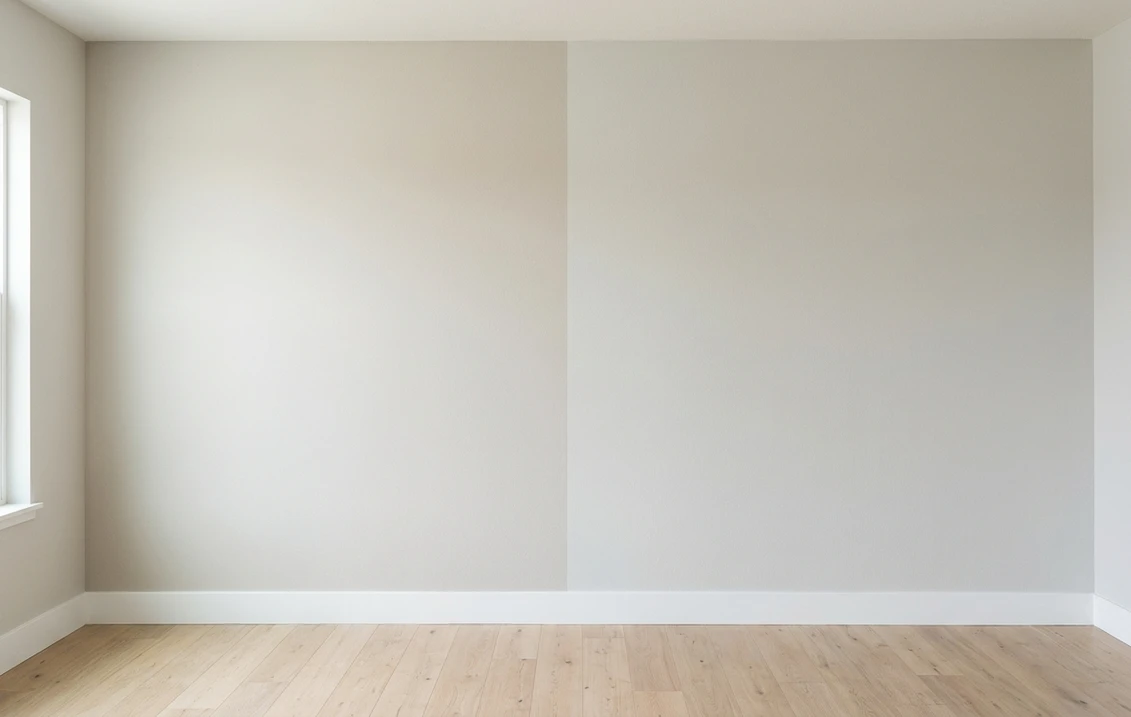
Read that table once and the shape of the duel is clear. This is not a depth tie: at LRV 89.52 versus 85.38, Simply White bounces measurably more light, and on two halves of the same wall most people can point to the brighter one. The undertone row explains the rest. White Dove folds a touch of gray into its warmth, which is why it reads muted and never brassy. Simply White skips the gray and leans gently yellow, which is why it reads fresher in most rooms and slightly creamy in full sun. Hold each chip against a plain sheet of white printer paper: White Dove shows its soft gray-warm cast, Simply White shows brightness with a faint yellow edge. That white-paper trick, plus the two-coat sample rule, comes straight from the comparison method in the pillar guide linked above.
Upload one photo, get a photorealistic render, then swap to Simply White in one click. Free, no signup.
Room by room, exposure by exposure
Because both whites are warm, the same room can crown either one depending on its light and its fixed finishes. Here is how the duel typically plays out across the most common situations.
| Situation | Usual winner | Why |
|---|---|---|
| Bright south-facing room | White Dove | Strong sun amplifies Simply White's yellow lean; White Dove stays muted and calm |
| Dim or north-facing room | Simply White | The higher LRV keeps the room luminous where White Dove can flatten toward gray |
| Kitchen with bright white counters | Simply White | Its clean brightness sits next to white quartz without looking dingy |
| Kitchen with oak, butcher block, or brass | White Dove | The muted warmth joins wood and warm metals instead of outshining them |
| Trim and ceilings over colored walls | Simply White | Crisp contrast against saturated or mid-tone wall colors |
| Walls, trim, and cabinets all one white | White Dove | Soft enough to wrap an entire room without glare |
If the shortlist crosses brands, two sibling duels pick up where this one leaves off: the Alabaster vs White Dove duel pits today's contender against Sherwin-Williams' best-selling warm white, and the Swiss Coffee vs Alabaster comparison covers the creamier end of the white aisle.
When to choose White Dove
- You want white walls without the gallery-stark look. The gray softening in White Dove reads as quiet warmth, not yellow, so rooms feel finished rather than clinical.
- Your fixed finishes are warm and lived-in. Oak or walnut floors, linen, brass, travertine, aged bronze. White Dove joins that family; a brighter white would compete with it.
- You are painting walls, trim, and cabinets the same color. At LRV 85.38 it is soft enough to wrap a whole room, which is exactly why it is the default whole-house white in so many designer palettes.
- The room gets strong direct sun. Full southern light keeps White Dove creamy and composed while it pushes Simply White visibly yellow.
For its full undertone breakdown, best rooms, and trim pairings, see the dedicated White Dove OC-17 undertones and rooms profile.
When to choose Simply White
- The room is starved for light. North-facing, small windows, or a windowless hallway: the extra light bounce of LRV 89.52 is the whole point there.
- You want the crispest trim and ceiling white that still feels warm. Against colored walls, Simply White outlines rooms cleanly where White Dove can read slightly dusty.
- You are after a bright, fresh kitchen. With white counters and plenty of task lighting, Simply White on cabinets delivers the clean look most kitchen renovations are chasing.
- White Dove sampled dingy in your light. In dim rooms the gray in White Dove takes over. Simply White is the standard next move up in brightness without jumping to a cold white.
The full room-by-room treatment, including its lighting behavior and companion shades, lives in the complete Simply White OC-117 review.
Neither of these whites usually ends up alone: once the trim is settled, the rooms that are not painted white need a wall color, and in most US whole-house schemes that means a light greige. The pairing is not free. Benjamin Moore's two default greiges split the same way this duel does, Edgecomb Gray HC-173 (LRV 63) sitting warm and asking for cream-side trim, Balboa Mist OC-27 (LRV 67) sitting cooler with a faint gray-violet cast that suits a crisper white. Our Edgecomb Gray versus Balboa Mist comparison is the companion decision.
The colored-wall case above is where the gap between these two opens widest, and a deep navy is the extreme version of it. Against a wall that reads near-black in low light, the gray softening in White Dove shows up as the slightly dusty edge it never has on its own, while Simply White holds the outline of the casing. That is why deep navies are specified against crisp bright whites as a matter of course, and why the depth of the wall changes how much crispness you need: our Naval vs In the Navy comparison shows how much further the deeper of the two pushes that contrast requirement.
Same wall, both whites, your actual light. Free render in about 30 seconds.
Frequently asked questions
What is the real difference between White Dove and Simply White?
Brightness and undertone. Simply White OC-117 (LRV 89.52) is measurably brighter and carries a cleaner, slightly yellow-leaning warmth. White Dove OC-17 (LRV 85.38) is softer and more muted because a touch of gray tempers its warmth. On the same wall, Simply White reads lighter and fresher while White Dove reads calmer and quieter.
Is Simply White too yellow?
In most rooms, no: it reads as a clean, bright white. Its yellow lean shows in two situations, strong direct sunlight and side-by-side contact with a cooler white such as Chantilly Lace. If your room is flooded with southern sun, sample it on that wall first or pick the more muted White Dove instead.
Which is better for kitchen cabinets, White Dove or Simply White?
Both are proven cabinet whites, so let the counters and light decide. Bright white quartz and good lighting favor Simply White, whose clean brightness matches them. Wood counters, brass hardware, or a softer transitional kitchen favor White Dove, which flatters warm materials instead of competing with them.
Can I use White Dove and Simply White together?
Yes, and it is a classic pairing: White Dove on the walls or cabinets with Simply White on trim and ceilings. The roughly 4-point LRV gap gives a gentle, deliberate contrast, and because both whites are warm, neither one makes the other look yellow or gray.
Settle it on your photo
Chips lie, screens lie, and white paint lies most of all: no color family shifts harder with light than whites do. The fastest honest answer to White Dove vs Simply White is to test both on a photo of your actual room and let your own windows, floor, and counters pick the winner.
1 HD render plus 3 free color variations. Start with White Dove, swap to Simply White in one click.
Trademark notice. Benjamin Moore®, White Dove®, Simply White®, Chantilly Lace® and Cloud White® are trademarks of Benjamin Moore & Co. FacadeColorizer is not affiliated with, endorsed by, or sponsored by Benjamin Moore & Co. Brand and color names are used for descriptive and editorial purposes only, consistent with nominative fair use. Hex and RGB values are approximate digital renderings; the only authoritative reference is a physical Benjamin Moore color sample.
Trademarks mentioned (Sherwin-Williams, Benjamin Moore, Behr, Caparol, Brillux, Sto, Alpina, Valspar, PPG, Glidden, Dulux, Crown Trade, Sandtex, Farrow & Ball, Johnstone's, Leyland) are property of their respective owners. FacadeColorizer is independent and not affiliated with any of them. Nominative fair use under Lanham Act §1125.