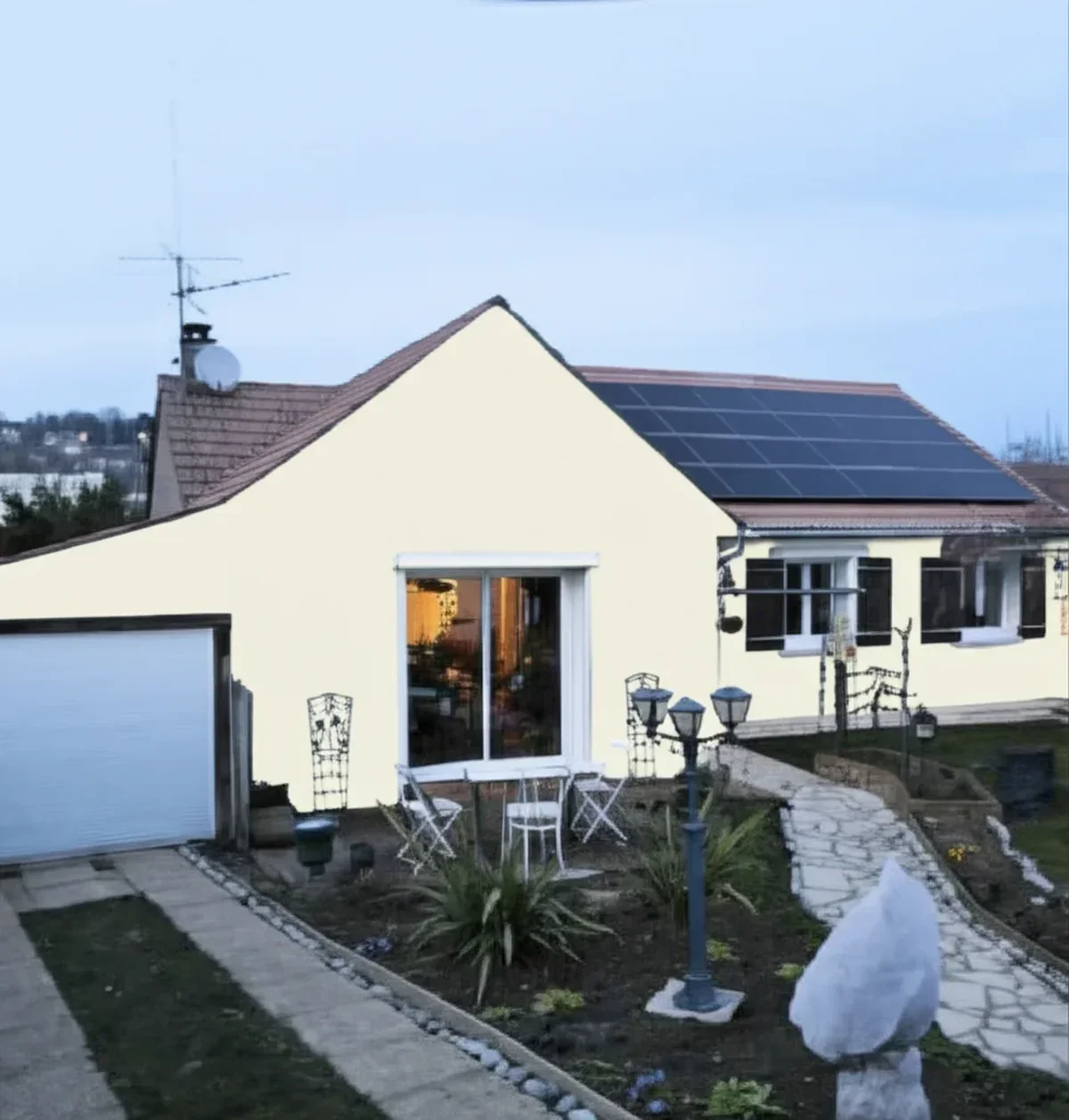
Try it on your house

The verdict in three lines. Alabaster SW 7008 (LRV 82) is the softer, more muted warm white: a whisper of gray keeps it calm and famously hard to get wrong.
Greek Villa SW 7551 (LRV 84) is a breath lighter and a touch more yellow: it reads creamier and cozier, which flatters low-light rooms but can drift buttery in strong sun.
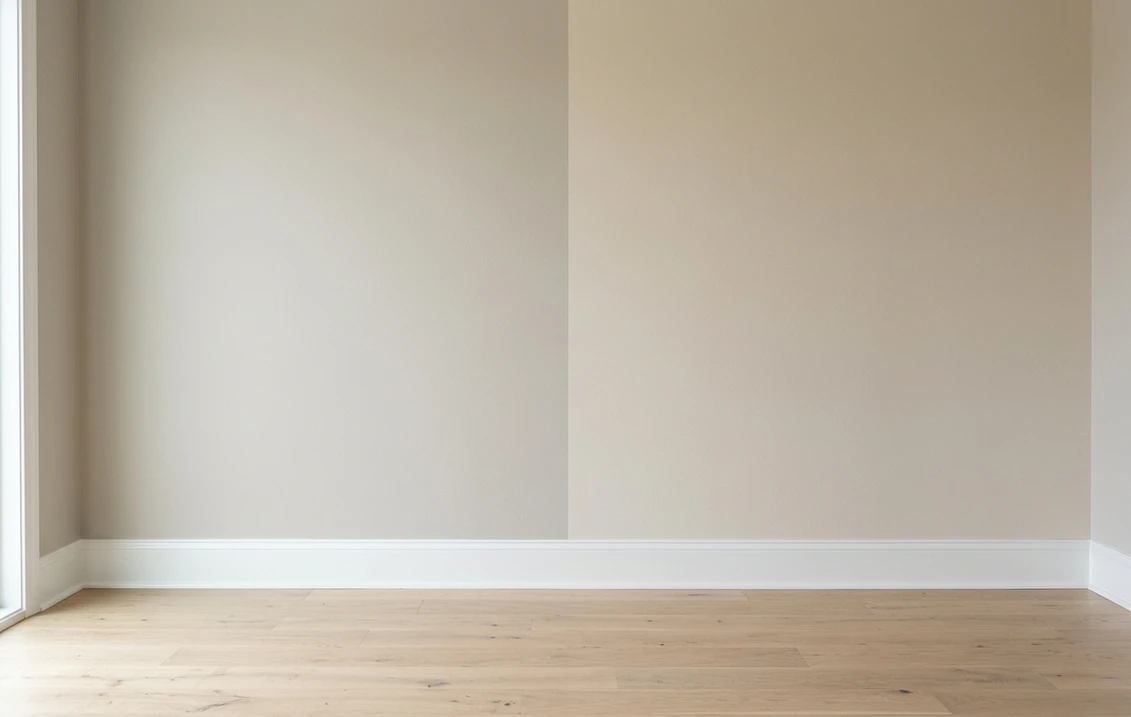
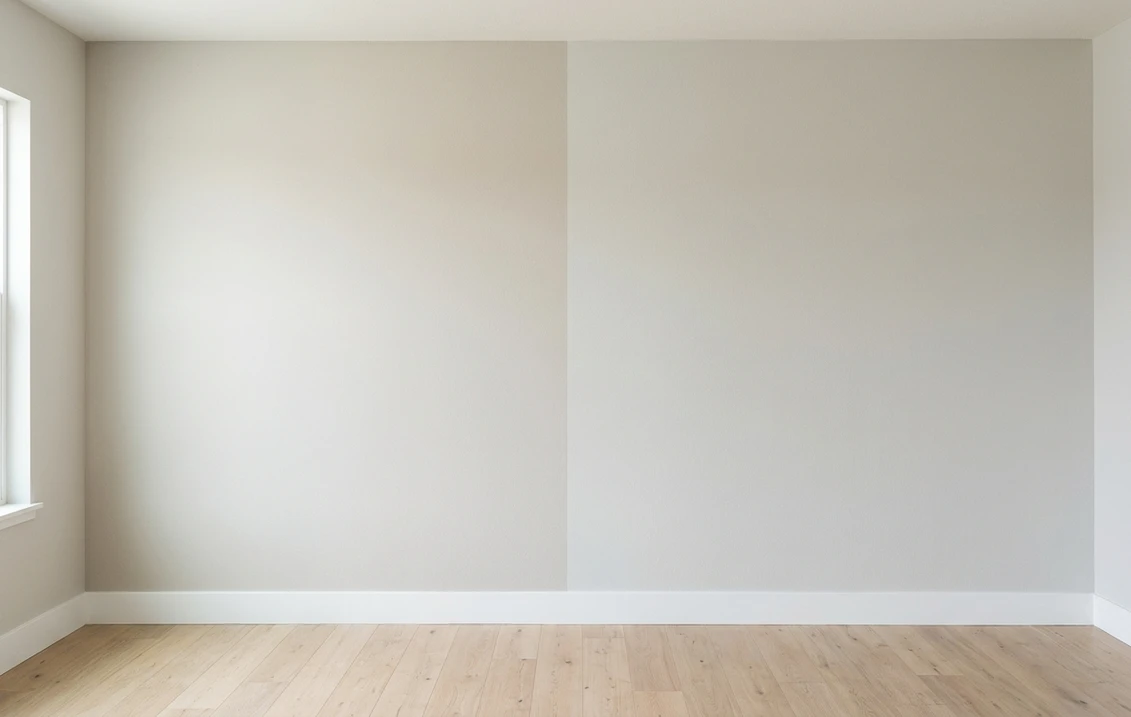
The 2-point LRV gap is invisible on a full wall. Undertone decides this duel, so the only real tiebreaker is seeing both on a photo of your own room.
Sherwin-Williams Alabaster (SW 7008) and Greek Villa (SW 7551) are two of the most cross-shopped warm whites in the Sherwin-Williams deck, and on paper they are near twins. Both sit at the bright end of the white band, and on small chips most people cannot tell them apart. On a full wall a real difference emerges: Alabaster stays muted while Greek Villa leans cream. This head-to-head puts the numbers side by side and tells you exactly when each white wins. For the general playbook behind any two-color decision, start with our side-by-side method for comparing two paint colors.
The numbers side by side
| Attribute | Alabaster SW 7008 | Greek Villa SW 7551 |
|---|---|---|
| Family | Muted warm white | Creamy warm white |
| LRV | 82 | 84 |
| Approximate hex | #EDEAE0 | #F0ECE2 |
| Approximate RGB | 237, 234, 224 | 240, 236, 226 |
| Undertone | Soft beige warmth tempered by a whisper of gray | Slightly stronger yellow-cream, less gray in the base |
| Loves | Crisp white trim, natural wood, linen, black metal accents | Cream trim, brass, terracotta, rattan, warm textiles |
| Watch out for | Can look flat or slightly dingy in dim north light | Can drift buttery in strong afternoon sun |
| Overall vibe | Calm, muted, modern farmhouse staple | Softer, sunnier, a touch more traditional |
Try it on your house
No photo? Try a sample
LRV values are the published Sherwin-Williams figures. Hex and RGB are approximate digital renderings; the authoritative reference is a physical Sherwin-Williams chip or peel-and-stick sample.
Read that table once and the shape of the duel is clear. Brightness is a tie: at LRV 82 versus 84, both whites bounce back almost the same share of light. Everything that matters happens in the undertone row. Alabaster carries its warmth with a whisper of gray that keeps it composed. Greek Villa skips most of that gray and lets a little more yellow through, which is exactly why it reads creamier on a wall. Hold each chip against a plain sheet of white printer paper and the difference jumps out in seconds: Greek Villa flashes its cream, Alabaster stays quieter. That white-paper trick, plus the two-coat sample rule, comes straight from the comparison method in the pillar guide linked above.
Upload one photo, then swap between both whites in one click. Free, no signup.
Room by room, exposure by exposure
Because the brightness gap is negligible, the same room can crown either white depending on its light and its fixed finishes. Here is how the duel typically plays out.
| Situation | Usual winner | Why |
|---|---|---|
| North-facing living room | Greek Villa | Its extra cream pushes back against cool, flat light; Alabaster can go slightly gray and dingy |
| Bright south-facing room | Alabaster | Strong sun amplifies Greek Villa's yellow; Alabaster's gray tempering keeps it composed |
| Whole-house interior white | Either, pick by finishes | Both work on walls, trim, and ceilings; match the undertone to what stays in the house |
| Kitchen with brass and warm wood | Greek Villa | The creamier base flatters warm metals, butcher block, and rattan |
| Modern room with black accents | Alabaster | The quieter, grayer base reads crisper next to black metal and cool stone |
| Exterior body color | Alabaster, usually | It is a modern farmhouse standard outdoors; full sun mutes its warmth gracefully |
Outdoors the same logic applies with much harsher light, and Alabaster is the one with the long exterior track record. If your shortlist is for siding rather than walls, the complete Alabaster exterior guide covers every orientation and trim pairing in detail.
When to choose Alabaster
- The room gets real sunlight. South or west exposure rewards Alabaster: the gray tempering keeps it from turning yellow in full sun.
- You want the safest single white for the whole house. Its muted warmth sits comfortably next to almost any floor, counter, or trim.
- Your accents lean modern or cool. Black window frames, matte-black hardware, and gray-veined stone read sharper against a white that holds a little gray of its own.
- You dislike obviously creamy walls. If "warm but not yellow" is the brief, Alabaster is that exact chip.
One honest caveat: in a dim, cool-light space Alabaster can lose its glow. Before committing it to a low-light room, read the profile of Alabaster in north-facing rooms: it covers the exact undertone shift and the trim pairings that keep those walls from looking dingy.
When to choose Greek Villa
- The room is starved of light. North-facing or heavily shaded rooms flatten most whites; Greek Villa's extra cream keeps a warm glow where Alabaster can fall flat.
- Your palette is warm from the start. Cream trim, brass or bronze hardware, terracotta, rattan, and warm oak all sit naturally beside Greek Villa's sunnier base.
- Alabaster sampled a touch gray on your wall. Greek Villa is the logical next test: one small step lighter and warmer without jumping to an obvious yellow cream.
- You want one soft white on walls, trim, and ceiling. Its gentle warmth wraps a room without a sterile edge.
For its full lighting behavior, best rooms, and companion shades, see the dedicated Greek Villa undertones and best rooms guide. That third bullet, "it sampled a touch gray, so step one shade warmer," is not a Sherwin-Williams quirk: Benjamin Moore has the identical fork, where White Dove OC-17 is the white calmed by gray and Cloud White OC-130 is the step warmer taken for exactly that reason, and our White Dove vs Cloud White comparison works it through in the BM deck.
Same wall, both whites, your actual light. Free render in about 30 seconds.
Frequently asked questions
What is the real difference between Alabaster and Greek Villa?
Undertone, not brightness. Alabaster SW 7008 (LRV 82) tempers its warmth with a whisper of gray and stays muted, while Greek Villa SW 7551 (LRV 84) lets a little more yellow through and reads creamier. On a chip they look nearly identical; on a full wall Greek Villa feels softer and sunnier, Alabaster calmer and more neutral.
Is Greek Villa lighter than Alabaster?
Yes, by a breath. Greek Villa's published LRV is 84 against 82 for Alabaster, so it reflects slightly more light. In practice a 2-point gap at the bright end of the scale is invisible on a wall; the visible difference between the two is Greek Villa's creamier, more yellow cast, not its brightness.
Which is better for a north-facing room, Alabaster or Greek Villa?
Greek Villa, in most homes. North light is cool and flat, and it can push Alabaster toward a gray, slightly dingy reading. Greek Villa carries enough extra cream to keep a warm glow in the same light. If the room's finishes are strongly cool and you prefer a muted look, Alabaster can still work, but sample it on that specific wall first.
Can I use Alabaster and Greek Villa together in the same house?
You can, but keep them in separate zones. They are too close in depth to work as a wall-and-trim pair: side by side they look like a mismatched batch rather than a deliberate contrast. A cleaner plan is one white per zone, for example Greek Villa in the darker rooms and Alabaster where the sun does the warming.
Settle it on your photo
Chips lie, screens lie, and even honest sample patches sit on someone else's wall in someone else's light. The fastest honest answer to Alabaster vs Greek Villa is to test both whites on a photo of your actual room and let your own trim, floor, and windows pick the winner. If the shortlist reaches across brands, the Alabaster vs White Dove duel runs the same head-to-head against Benjamin Moore's classic, and the Swiss Coffee vs Alabaster comparison covers the cream-white matchup.
1 HD render plus 3 free color variations. Start with Alabaster, swap to Greek Villa in one click.
Trademark notice. Sherwin-Williams®, Alabaster®, Greek Villa®, Pure White® and Shoji White® are trademarks of The Sherwin-Williams Company. FacadeColorizer is not affiliated with, endorsed by, or sponsored by The Sherwin-Williams Company. Brand and color names are used for descriptive and editorial purposes only, consistent with nominative fair use. Hex and RGB values are approximate digital renderings; the only authoritative reference is a physical Sherwin-Williams color sample.
Trademarks mentioned (Sherwin-Williams, Benjamin Moore, Behr, Caparol, Brillux, Sto, Alpina, Valspar, PPG, Glidden, Dulux, Crown Trade, Sandtex, Farrow & Ball, Johnstone's, Leyland) are property of their respective owners. FacadeColorizer is independent and not affiliated with any of them. Nominative fair use under Lanham Act §1125.