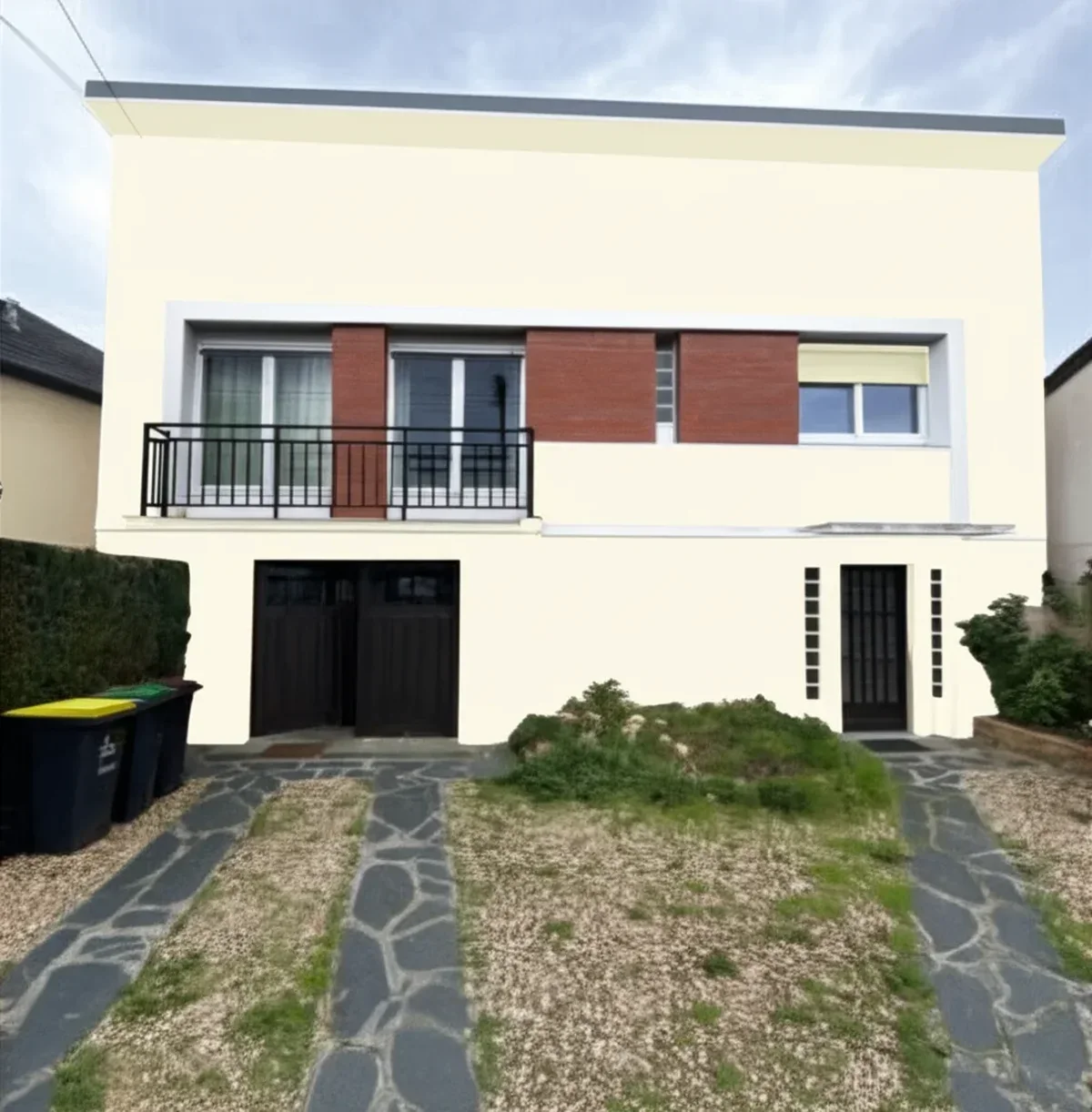
Try it on your house

If your home was built before 1 January 1978, federal law assumes the paint contains lead until you prove otherwise. Lead paint testing is the gateway to almost every repaint, renovation, or sale decision on an older US home, and the cost of getting it wrong has climbed sharply in 2026. Civil EPA penalties for violations of the Renovation, Repair and Painting (RRP) Rule now reach $41,093 per violation per day, while HUD lead-hazard disclosure failures carry separate fines up to $21,039 per violation.
This guide walks through the full 2026 testing-to-removal sequence: DIY swabs, professional inspections, the four lead-removal methods, EPA RRP and HUD rules, state overlays, and the certified-contractor surcharge. Before you spend a dollar, upload a photo to our free AI color preview so you can decide whether full removal or encapsulation makes more sense for the look you want.
Why Pre-1978 Matters: The Federal Cutoff Explained
In 1978, the Consumer Product Safety Commission banned lead-based residential paint. The legal cutoff is not the year a home was occupied, it is the year the paint left the can. Three federal statutes treat 1978 as a hard line:
- EPA Renovation, Repair and Painting (RRP) Rule, 40 CFR Part 745. Triggers certified-firm work practices whenever paid contractors disturb more than 6 sq ft interior or 20 sq ft exterior in pre-1978 housing.
- HUD Lead Disclosure Rule (Section 1018 of Title X). Requires sellers and landlords to disclose known lead-based paint hazards and provide the EPA "Protect Your Family From Lead in Your Home" pamphlet at lease signing or contract.
- Lead-Based Paint Poisoning Prevention Act (LBPPA). Authorizes federal abatement standards for housing that receives HUD assistance, including most Section 8 properties.
According to the EPA's lead source guidance, deteriorating lead paint and lead-contaminated dust are the most common sources of childhood lead exposure in the US. The CDC, in its lead prevention overview, notes that no level of lead in a child's blood is considered safe, with action thresholds set at 3.5 micrograms per deciliter.
Step 1: DIY Lead Paint Testing Kits ($25 to $50)
DIY lead testing is a low-cost first screen. Three product categories own the 2026 retail shelf:
- 3M LeadCheck Swabs ($25 to $35 for an 8-pack). EPA-recognized for spot testing under 40 CFR Part 745. Swab a fresh scratch that exposes every paint layer down to the substrate. A pink-to-red color change within 30 seconds indicates lead at or above 0.5% by weight. Best for red, yellow, orange, and brown paint; less reliable on pure white finishes.
- D-Lead Paint Test Kit ($30 to $45). Two-step liquid reagent test, EPA-recognized, lower false-positive rate on light-color paint than swabs. Includes positive and negative confirmation cards.
- Mail-in lab analysis ($30 to $80 per sample). Pry a quarter-sized chip with all paint layers, ship to an EPA-accredited lab (Eurofins, LabCor, EMSL Analytical). Returns a quantitative result in 5 to 10 business days. The most defensible result if a dispute is possible.
DIY tests are a screen, not an official inspection. They cannot satisfy HUD disclosure when selling a home, and they do not waive EPA RRP work practices on a paid renovation. If you are repainting your own home and the swab reads clean, you have done due diligence. If you are selling, renovating, or have children under 6, move to Step 2.
Step 2: Professional Lead Paint Inspection ($300 to $700)
A certified Lead Inspector or Risk Assessor produces the document of record. Two service levels matter in 2026:
| Service | What You Get | 2026 Cost | Turnaround |
|---|---|---|---|
| Lead-based paint inspection (XRF scan) | Surface-by-surface lead presence map | $300 to $500 | Same day or 1 to 3 days |
| Lead risk assessment | Inspection plus dust-wipe and soil testing, hazard scoring | $500 to $700 | 5 to 10 days |
| Combined inspection plus assessment | Both reports in one visit | $650 to $1,100 | 5 to 10 days |
| Post-abatement clearance testing | Independent dust-wipe sampling per HUD protocol | $250 to $500 | 2 to 5 days |
Try it on your house
No photo? Try a sample
XRF (X-Ray Fluorescence) scanning is the dominant 2026 method because it is non-destructive and reads through multiple paint layers in seconds. A typical 1,800 sq ft single-family home scan takes 90 to 180 minutes and produces a written report with the exact lead concentration (in milligrams per square centimeter) at every tested surface.
For renovation planning, a basic inspection is sufficient. For families with young children, a property in pre-sale, or a structure receiving HUD assistance, the full risk assessment is the safer document because it scores active hazards (peeling paint, dust loading, soil contamination) rather than simply mapping lead presence. Some metros with concentrated pre-1978 stock layer this into the broader repaint quote; our Detroit MI exterior painting cost guide walks through how inspection costs flow into the project budget.
EPA RRP Rule (40 CFR Part 745): What Triggers, What Costs
The EPA Renovation, Repair and Painting Rule is the single most important compliance lever for any paid renovation on pre-1978 housing. The trigger thresholds in 2026 are unchanged from the original 2010 rule:
- Interior disturbance over 6 sq ft per room. Triggers full RRP work practices.
- Exterior disturbance over 20 sq ft. Triggers full RRP work practices.
- Any window replacement. Always triggers regardless of size.
- Demolition of painted surfaces. Always triggers.
Once triggered, the contractor must be an EPA Lead-Safe Certified Firm, have at least one EPA Certified Renovator on site, provide the EPA "Renovate Right" pamphlet to the homeowner, and follow lead-safe work practices including 6-mil plastic containment, HEPA vacuum cleanup, and signed records kept for 3 years. Our deeper EPA RRP 2026 contractor compliance visualizer includes the daily-log template and a photo-preview tool clients sign off on before work starts.
2026 RRP Penalty Schedule
Civil penalties: up to $41,093 per violation per day. Criminal penalties: knowing or willful violations carry up to $50,000 per day and possible imprisonment under TSCA Section 16. Contractors with three or more violations in 12 months face EPA firm decertification and a 60-month rebar from re-applying.
Certified Contractor Surcharge ($600 to $3,000)
Hiring an EPA Lead-Safe Certified Firm costs more than hiring an uncertified painter, but the gap is narrower than most homeowners assume. Typical 2026 markups on a repaint quote:
- Small interior project (one to two rooms): +$600 to $1,200.
- Single-room window replacement: +$400 to $900 per window.
- Whole-house exterior repaint, single story: +$1,500 to $2,400.
- Whole-house exterior repaint, two-story Victorian or Colonial: +$2,400 to $3,000.
The surcharge covers containment materials (6-mil plastic, masking film, tack mats), HEPA-vacuum rental or amortization, certified renovator labor premium ($8 to $14 per hour over standard painter rates), and lead-bearing waste disposal at $400 to $1,200 per 55-gallon drum. Our DIY vs professional exterior painting cost breakdown places the certified surcharge in the broader hire-or-DIY math.
The 4 Lead-Paint Removal Methods (2026 Pricing)
Once a property tests positive, the next decision is response strategy. The 2026 menu has four practical options ordered from least to most invasive:
| Method | Best For | 2026 Cost / sq ft | Lifespan |
|---|---|---|---|
| 1. Containment (paint in place) | Stable, intact paint with no peeling | $0 (monitoring only) | Until next repaint |
| 2. Encapsulation (sealant overcoat) | Sound paint surfaces, interior trim | $1.00 to $3.00 | 10 to 20 years |
| 3. Enclosure (overlay materials) | Siding, windows replaced with new envelope | $4.00 to $10.00 | 20+ years |
| 4. Full abatement (removal) | Selling, severe peeling, children under 6 | $8.00 to $15.00 | Permanent |
1. Containment (Leave Paint In Place)
If the existing paint is intact, well-adhered, and not on a high-friction surface (windows, doors, stair treads), the cheapest legal response is to leave it alone and monitor. Wipe dust regularly with damp cloths, repaint over the existing surface with a high-quality exterior or interior primer-plus-topcoat system, and disclose the lead presence if you sell. Containment requires no contractor and produces no waste.
2. Encapsulation ($1 to $3 per sq ft)
Encapsulation applies an EPA-approved liquid sealant over sound lead-painted surfaces. The encapsulant chemically bonds with the existing paint and seals it under a flexible membrane. Three products dominate 2026:
- Fiberlock LBC ($65 to $85 per gallon, covers 100 to 150 sq ft). The market leader. Tinted in white, off-white, or clear. Listed under ASTM E1795 and E2799 encapsulant standards.
- ECOBOND LBP ($80 to $110 per gallon). Soybean-derived, low VOC, EPA-recognized. Best for exterior wood siding.
- Lead Stop Tough Coat ($45 to $60 per gallon). Budget option for interior trim and stair stringers. Requires two coats and a primer first.
Encapsulation must be applied by an EPA Lead-Safe Certified Firm if the work is paid. Lifespan ranges 10 to 20 years, with regular dust-wipe monitoring required if the property houses children under 6. For exterior wood siding repaints, our exterior primer types guide 2026 covers how to integrate encapsulants into a multi-coat primer-and-finish system.
3. Enclosure ($4 to $10 per sq ft)
Enclosure covers lead paint with a new physical barrier: vinyl siding over lead-painted clapboard, drywall over lead-painted plaster, new flooring over lead-painted treads. Enclosure does not remove the lead, it isolates it. Material costs run $2 to $4 per sq ft and labor adds $2 to $6 per sq ft. Enclosure must be permanent (not removable) to qualify as an EPA-recognized lead-safe intervention.
4. Full Abatement ($8 to $15 per sq ft)
Abatement is the permanent removal of lead-painted components or paint coatings. It is the most expensive option but the only path that fully eliminates the lead hazard. Three sub-methods dominate 2026:
- Component replacement. Strip lead-painted windows, doors, and trim entirely and install new units. Common on full-gut renovations.
- On-site chemical or heat stripping. Detailed in our paint stripping cost exterior guide 2026, with chemical methods ranging $1.50 to $3.50 per sq ft plus the RRP surcharge for lead-positive work.
- Vacuum-shrouded sanding and HEPA-blasting. Specialty abatement firms use OSHA-compliant tooling that captures dust at the source. Most expensive at $10 to $15 per sq ft because of equipment and labor intensity.
Full abatement requires a state-licensed lead abatement contractor (a separate certification from EPA RRP firm status). Each state maintains its own roster; check the EPA Office of Pollution Prevention and Toxics state contact list to confirm your local licensing authority.
HUD Lead Rules: Disclosure and Section 8 Housing
HUD enforces two separate frameworks beyond the EPA RRP Rule:
- HUD Lead Disclosure Rule (24 CFR Part 35 Subpart A). Applies to all pre-1978 housing sales and leases. Sellers and landlords must disclose known lead hazards, provide records of any past lead testing, and deliver the EPA "Protect Your Family From Lead in Your Home" pamphlet before contract signing. Violations carry penalties up to $21,039 per violation plus treble damages.
- HUD Lead Safe Housing Rule (24 CFR Part 35 Subparts B through R). Applies to federally assisted housing (Section 8, public housing, project-based vouchers). Requires visual assessment for deteriorated paint, EPA-certified risk assessment in higher-tier properties, and stabilization or abatement of any identified hazards before initial occupancy.
HUD's lead-based paint program portal publishes the current penalty schedule, sample disclosure forms, and the searchable directory of HUD-funded lead hazard control programs. If you own a pre-1978 rental property in any US market, both HUD frameworks apply on top of EPA RRP.
State Lead Regulations: Five Key Overlays
Five US states impose lead requirements that go beyond federal minimums in 2026:
- Massachusetts. Lead Law (Chapter 111, Section 199A) requires deleading of any pre-1978 home where a child under 6 resides. Owner-occupants performing limited deleading must complete state moderate-risk worker training (8 hours).
- Maryland. Reduction of Lead Risk in Housing Act requires registration and risk reduction certificates for all pre-1950 rental units. Annual MDE registration fee $30 per unit.
- Rhode Island. Lead Hazard Mitigation Act extends mitigation requirements to all pre-1978 rentals; owners must obtain a Certificate of Conformance after lead-safe training and a baseline inspection.
- Vermont. Essential Maintenance Practices (EMP) rule applies to all pre-1978 rentals, requires annual filings, visual inspections, and stabilization of any deteriorated paint within 30 days.
- New Jersey. P.L. 2021, c.182 requires triennial inspections of all pre-1978 single-family and two-family rentals at the lesser of every three years or at tenant turnover.
- Other states. Illinois, Michigan, Connecticut, Wisconsin, and California each have city or county overlays (notably Chicago, Detroit, Hartford, Milwaukee, and Los Angeles County). Check your local health department before committing to any removal method.
For property owners in the Northeast, lead overlays often add 10 to 25% to total project pricing compared to a similar pre-1978 home in a non-overlay state.
Decision Framework: Test, Encapsulate, or Abate?
The right choice depends on three factors: occupants under 6, the property's stage in your ownership, and the condition of the paint. Use this matrix:
| Scenario | Recommended Path | Typical 2026 Total |
|---|---|---|
| Empty-nest owner, paint intact, repaint planned | DIY swab + containment + standard repaint | $25 to $80 (testing) + repaint cost |
| Young family moving in, paint sound | Pro inspection + encapsulation interior trim | $300 to $700 + $1,500 to $5,000 |
| Peeling exterior, two-story Victorian | Risk assessment + full exterior abatement | $500 to $700 + $12,000 to $25,000 |
| Pre-sale, no children, intact paint | Disclosure only, no removal required | $0 (disclosure form) |
| Section 8 rental, pre-1950 unit | Risk assessment + stabilization or full abatement | $500 to $700 + $4,000 to $18,000 |
Whichever path you choose, the post-removal color decision still matters. Our best exterior paint colors 2026 guide shows which finishes hold up best on freshly-stripped wood and brick, and our Federal-style paint colors New England 2026 and Victorian paint colors Boston 2026 articles cover historically accurate palettes for the home eras most often affected by lead.
Hiring an EPA Lead-Safe Certified Firm: 7 Questions to Ask
- What is your EPA firm certification number? Verify on the EPA RRP locator before signing anything.
- Who is your on-site EPA Certified Renovator? A certified renovator must be physically present (or assigned to verify work) during all lead-disturbing activity.
- For full abatement: do you hold state lead abatement licensure? Separate from RRP firm certification. Required in every state for full abatement projects.
- What containment will you use? 6-mil plastic minimum, sealed with painter's tape and weighted at edges; HEPA-filtered vacuum tooling for sanding.
- How will you log daily work? Photo logs, signed daily checklists, and a copy of every signed pamphlet receipt and form 700-X.
- Where will lead waste go? Names of TSDF facilities, transport vendor, and copies of waste manifests at project closeout.
- What does clearance testing look like? Independent third-party dust-wipe sampling per HUD protocol, with pass-fail thresholds in writing before occupancy resumes.
After Removal: Picking the Right Color and Finish
A successful abatement or encapsulation only delivers its visual payoff if the topcoat does the home justice. For Victorian and Federal-era homes most often affected by lead, color choice is itself part of property value. Our exterior house painting cost 2026 guide and exterior house painting cost by city 2026 reference walk through repaint pricing once removal is complete. Before you commit, run a free preview on your photo to confirm the color reads correctly under real light.
Frequently Asked Questions
1. How accurate are 3M LeadCheck swabs?
3M LeadCheck swabs are EPA-recognized for spot screening at the 0.5% by weight threshold. They run roughly 92 to 96% accurate on red, yellow, and orange paints; reliability drops to 80 to 85% on pure white finishes. False negatives are more common than false positives. For sale, lease, or renovation involving children under 6, follow up any swab result with a professional XRF inspection or lab analysis.
2. What is the difference between an inspection and a risk assessment?
An inspection maps lead presence (which surfaces test positive). A risk assessment also evaluates hazard severity (peeling, dust loading, soil contamination) and produces prioritized recommendations. Inspections cost $300 to $500. Risk assessments cost $500 to $700. For renovation planning, an inspection is sufficient. For pre-purchase, families with children under 6, or HUD-assisted housing, a risk assessment is the safer document.
3. Can I encapsulate lead paint myself?
Owner-occupants performing DIY encapsulation on their own home are federally exempt from EPA RRP firm certification. Several states (MA, MD, RI, VT, NJ) impose their own lead-safe training requirements on DIY work. Encapsulation products like Fiberlock LBC retail at $65 to $85 per gallon and cover 100 to 150 sq ft per gallon. Always wear an N100 respirator, eye protection, and Tyvek suit, and contain dust with 6-mil plastic.
4. Does encapsulation count as official lead-paint removal?
No. Encapsulation is an EPA-recognized interim control and a permanent lead-safe intervention when applied correctly, but the lead is still in the wall. State sale disclosures generally require you to report that encapsulation has been applied (rather than full removal). For property sale and full HUD compliance in Section 8 housing, abatement is the only path that fully eliminates the lead hazard.
5. How long does a full lead abatement project take?
A whole-house abatement on a 1,800 sq ft pre-1978 home typically runs 3 to 5 weeks: 2 days for testing and report turnaround, 1 week for containment setup, 1 to 3 weeks for removal and stabilization, 2 to 3 days for clearance testing and re-inspection, and 1 week for repainting. Single-room interior abatements run 4 to 10 working days.
6. Will homeowners insurance cover lead-paint removal?
Standard homeowners policies generally exclude lead-paint remediation as a maintenance expense. Some policies cover lead-related medical claims (typically capped at $25,000 to $100,000) if a child is poisoned on the property, but the remediation itself is the owner's responsibility. Federal tax deductions are limited to medically necessary abatement when a child has a documented elevated blood lead level; check IRS Publication 502 with a tax preparer before claiming.
7. What records must I keep after lead-paint work?
EPA RRP requires contractors to retain records for 3 years: the pre-renovation pamphlet receipt, the signed renovation notification (form 700-X), certified renovator training certificates, daily work logs, dust-wipe clearance results if performed, and waste disposal manifests. HUD disclosure records must be retained for 3 years by sellers and landlords. Several states (MA, NJ, RI) require longer 10-year retention on full abatement records.
8. Can I rent out my pre-1978 home without testing for lead?
Yes, federal law does not require testing before rental, only disclosure of any known lead hazards plus delivery of the EPA "Protect Your Family From Lead in Your Home" pamphlet at lease signing. However, several states (MD, NJ, RI, VT) require either registration plus periodic inspection or a Certificate of Conformance. If you rent to families with children under 6, a proactive risk assessment is strongly recommended to limit liability if blood-lead claims emerge.
Bottom Line: 2026 Lead Paint Testing and Removal Cheat Sheet
- Pre-1978 = lead presumed. Test before any paid renovation, sale, or move-in with young children.
- DIY swabs $25 to $50. Best for owner-occupant screening, not for sale or HUD compliance.
- Pro inspection $300 to $700. XRF for inspection, full risk assessment for sale or families.
- EPA RRP triggers at 6 sq ft interior or 20 sq ft exterior disturbance. Penalty $41,093 per violation per day.
- Certified contractor surcharge $600 to $3,000. Built into a properly priced repaint quote, not a separate line item.
- Encapsulation $1 to $3 per sq ft, abatement $8 to $15 per sq ft. Pick the response that matches your property's stage.
- Always test the new color first. Upload a photo to our free AI preview before any removal decision.
Official sources
To verify the regulatory information in this guide at the primary source:
- US EPA : Lead-safe (RRP) rules for homes built before 1978
- U.S. Department of Energy : Energy-efficient exterior and coating guidance
- International Code Council : Model building codes adopted by most US jurisdictions
External links. FacadeColorizer is not affiliated with these bodies and their guidance may change over time.