Try it on your room

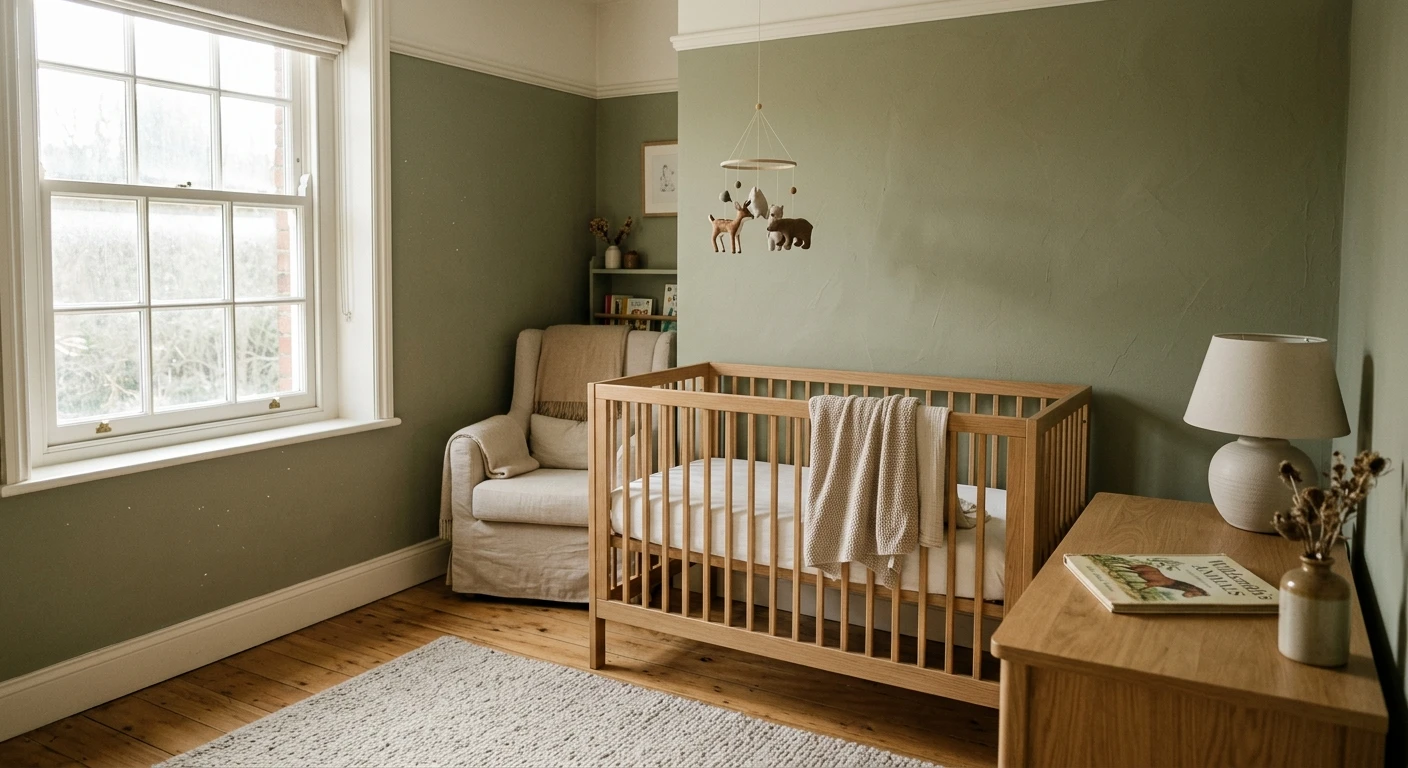
The first nursery I ever painted, the parents had picked a green off a one-inch fan chip and a phone screenshot. By the second coat it had gone full split-pea, and the mom stood in the doorway near tears. A lighter, grayer sage two days later took the room from cafeteria to calm in one afternoon. That whiplash is the whole story of a green nursery: the right green is one of the most soothing, gender-flexible choices for a baby room, and the wrong one reads sour under a north window. Below are 12 green nursery ideas that hold up in a real room, with the shade, the LRV, and how each one behaves once it is on the wall.
Why green for a baby's room? It sits in the middle of the warm-cool seesaw, leaning neither pink nor blue, which makes it the quiet favorite for parents who do not want a coded room. It also borrows calm from nature without the chill some blues carry at night. If you are still weighing the decision, our gender-neutral nursery paint guide maps the full neutral-and-pastel field, and our broader interior green paint shades guide covers the family from mint to forest. This page stays tight on green, done right.
Upload a photo of the actual room and preview these greens under your own window light in about 30 seconds, free.
How to pick a nursery green that does not go sour
Before the gallery, three rules I give every new parent. They are the difference between a green that soothes and a green that the camera (and grandma) hates.
- Stay above LRV 55 for walls. Light Reflectance Value is how much light a color bounces back. A nursery wants to feel open, so keep the four walls light (sage and mint usually land LRV 55 to 70). Save anything darker for a single accent wall, never the whole box.
- Watch the yellow. Greens with a strong yellow undertone (apple, chartreuse) turn acidic under cool north light and harsh under LED. A gray-based or blue-leaning sage is far more forgiving and reads softer at every hour.
- Test at nap time, not just noon. A nursery is used at dawn, dusk, and 2 a.m. under a lamp, so check your green at those hours. Warm 2700K bulbs push green cozy and slightly yellow; cool bulbs push it crisp and gray.
One painter habit worth stealing: cut in a foot-square patch on two different walls, because the same green reads warmer on the sunny wall and grayer on the shaded one. Now, the 12 looks.
12 green nursery ideas, shade by shade
1. Soft sage on all four walls
The default for a reason. A light, gray-based sage like Sherwin-Williams Clary Sage (SW 6178) wraps the room in calm without dimming it. It flatters white cribs, natural wood, and rattan equally. This is the safe, grown-up green that the baby will not outgrow at age three.
2. Green-blue, the in-between everyone loves
Sea Salt (SW 6204) sits on the fence between green and blue, shifting with the light. At LRV 63 it stays airy and spa-soft, which is why it is one of the most popular baby-room colors in America. If you cannot decide between green walls and blue, this is the honest compromise, and it leans neutral enough to dodge gender coding.
3. Mint accent wall behind the crib
Keep three walls a warm off-white and paint the crib wall a clean light mint. The single plane of color frames the crib like a headboard and keeps the room bright. For how to size and place that wall, our accent wall color strategy guide covers the rules so it reads intentional, not random.
4. Sage walls with crisp white trim
The most timeless formula: soft sage on the walls, bright white on the baseboards, casing, and closet doors. The white frames the green and keeps it fresh rather than heavy. A warm white like SW Alabaster flatters the green's gray; a cooler white sharpens it. Cut in the trim crisply and the room looks finished.
5. Greige-green, for parents who fear too much color
If full sage feels like a commitment, drop to a greige that only hints green. It reads as a warm neutral from across the room and shows its green lean only up close. This is the stealth version: it satisfies the want for nature without announcing itself, and it pairs with any crib bedding.
6. Deeper sage on the lower wall, white above
A two-tone wall, deeper green on the bottom third with a chair-rail line and white above, grounds the room and hides scuffs at toddler height. Evergreen Fog (SW 9130) is perfect here: too deep for four walls, but gorgeous as the lower band. The white top keeps the ceiling feeling tall.
7. Olive-sage with warm wood and cream
For a cozier room, a soft olive-sage with cream bedding and oak furniture reads earthy and warm, almost retro in the best way. Keep the LRV up so it does not darken the space, and let natural wood do the contrast work instead of stark white.
8. Eucalyptus green with brass and linen
A cool, dusty eucalyptus green next to brass hardware and natural linen is the modern boutique-hotel nursery. The green stays quiet so the textures carry the room, and it skews more sophisticated than playful, suiting a space meant to age into a big-kid room.
9. Color-drenched soft sage (walls plus trim)
The drench: same light sage on walls, trim, and ceiling. With no white breaks the room feels like a soft cocoon, genuinely calming for a baby. The trick is to stay light (LRV in the 60s) so a drenched room still feels open. Use matte on walls and eggshell on trim.
10. Sage with a soft white-and-tan palette
Sage walls, warm white trim, tan and cream textiles, a touch of black hardware: the gender-neutral nursery that works for a surprise arrival. Green leads, neutrals support, nothing codes pink or blue. For the supporting tones and one accent, our colors that go with green guide is the cheat sheet.
11. Two-color green and blush for a gentle girl's room
Sage and a barely-there blush are softer and less expected than the usual pink. Keep green as the larger field and let blush appear in the rug, a chair, or the crib skirt. It reads sweet without being saccharine, and the green keeps it from tipping fully feminine.
12. Sage and navy, for a calm boy-leaning room
Light sage walls with one navy element, a navy crib, a reading chair, or curtains, gives a boy-leaning room depth without going dark. Green softens navy's seriousness, and it grows up nicely into a toddler room. Keep navy to accents; a fully navy nursery reads heavy for a baby.
Green nursery shades compared: LRV, undertone, and how it reads
Here is the same information a painter would scribble on the back of an estimate. Use it to match a green to your room's light before you buy a sample.
| Shade | Approx LRV | Undertone | Best use in a nursery |
|---|---|---|---|
| Sea Salt (SW 6204) | 63 | Green-blue, soft gray | All four walls; the can't-decide green-or-blue pick |
| Clary Sage (SW 6178) | 42 | Muted sage, gray base | Walls in a bright room, or an accent wall in a darker one |
| Light mint | 65 to 72 | Cool, clean | Crib accent wall; keeps the room bright and fresh |
| Greige-green | 58 to 64 | Warm neutral with green lean | Whole room when full color feels like too much |
| Evergreen Fog (SW 9130) | 30 | Deep greige-green | Lower-wall band or one accent wall only, never four walls |
Try it on your house
No photo? Try a sample
Sources: Sherwin-Williams SW 6204, SW 6178, and SW 9130 color data 2026; The Spruce and Apartment Therapy nursery-color coverage; designer field reports compiled by FacadeColorizer. Mint and greige LRV are typical ranges, not a single product value.
Free AI visualizer. Test sage and mint on the real walls before buying a single sample pot.
Trim, ceiling, and decor for green nursery walls
A nursery green reads only as good as what surrounds it. These pairings keep it soft and intentional:
- Warm white trim (most forgiving): a soft cream-white like SW Alabaster flatters a gray-based sage and keeps the room cozy. This is my default for a baby room.
- Crisp white trim (cleaner): a brighter white sharpens mint and eucalyptus tones and reads more modern. Best when the green leans cool.
- Ceiling: keep it a clean white to bounce light, or, for a drenched look, carry the same light sage overhead. Avoid a heavy cool-white ceiling over a warm sage; it can flatten the green.
- Wood and rattan: oak, walnut, and natural rattan reflect warmth back onto green and bring out its softness. Wood is the single best partner for a nursery green.
- Metals and textiles: brass and natural linen read warm and calm; black hardware adds a grounding modern note without color.
For the bigger picture, our room-by-room paint color ideas guide shows how greens sit next to neutrals and accents in every other space, so the nursery agrees with the rest of the house.
See walls, trim, and furniture together in one preview, free.
How to test a green nursery color before you commit
Green is the trickiest hue to judge from a chip, because the undertone swings hardest with light. A one-inch sample on a fan deck has fooled more parents than any other color. Two better methods:
- Roll a real swatch: paint a foot-square patch on the sunny wall and the shaded wall, then look at it at dawn, midday, and at night under your nursery lamp. Watch for yellow turning acidic or sage going gray in the shade.
- Preview it digitally first: upload a photo of the actual room and try a light sage, a green-blue, and a mint side by side before buying samples. It narrows three contenders to one. For budgeting the job, our interior house painting cost guide covers what a small room runs.
Preview sage, mint, and green-blue against your real walls and crib, free.
Frequently asked questions
What is the best green for a nursery?
A light, gray-based sage is the safest green for a nursery because it stays calm and never turns acidic the way yellow-heavy greens can. Sea Salt (SW 6204) is a popular green-blue at LRV 63, and Clary Sage (SW 6178) is a muted true sage. Keep wall greens above LRV 55 so the room stays open, and save anything deeper, like Evergreen Fog, for one accent wall.
Is green a good color for a gender-neutral nursery?
Yes. Green sits between warm and cool, so it leans neither pink nor blue, which makes it one of the strongest gender-neutral nursery choices. Soft sage and green-blue shades pair with any bedding and grow into a toddler room without feeling coded. Adding wood, cream, and tan keeps the whole scheme neutral.
Does a green nursery make the room feel smaller?
Not if you keep the LRV high. A light sage or mint above LRV 60 reflects plenty of light and keeps a small nursery feeling open. Trouble starts only when you put a deep, low-LRV green on all four walls. For a dark green, use it on one accent wall or the lower third of the wall, with white above, so the room stays bright.
What trim color goes with green nursery walls?
A warm white like SW Alabaster is the most forgiving trim for a gray-based sage, keeping the room cozy. A crisper, brighter white sharpens cooler mint and eucalyptus greens and reads more modern. Natural wood and rattan are the best non-white partners, because they reflect warmth back onto the green and bring out its softness.
How do I keep a green nursery from looking too yellow?
Choose a green with a gray or blue base rather than a yellow one, and avoid apple or chartreuse tones that go acidic under cool light. Test the color at night under your nursery lamp, since warm 2700K bulbs push green toward yellow. Painting a foot-square swatch on both a sunny and a shaded wall before you commit reveals any yellow shift early.
Preview sage, mint, and green-blue on the actual walls under your own light before buying a single sample.
Disclaimer: Sherwin-Williams, Sea Salt (SW 6204), Clary Sage (SW 6178), Evergreen Fog (SW 9130), and Alabaster (SW 7008) are trademarks of The Sherwin-Williams Company. FacadeColorizer is an independent paint visualization service and is not affiliated with, endorsed by, or sponsored by Sherwin-Williams. Color reproduction on screens approximates the manufacturer's chip; always confirm with a manufacturer sample under your own light before purchase, and choose a low-VOC or zero-VOC formula labeled for use in occupied bedrooms. Sources: Sherwin-Williams SW 6204, SW 6178, and SW 9130 color data 2026, The Spruce and Apartment Therapy nursery-color coverage, designer field reports compiled by FacadeColorizer.
Trademarks mentioned (Sherwin-Williams, Benjamin Moore, Behr, Caparol, Brillux, Sto, Alpina, Valspar, PPG, Glidden, Dulux, Crown Trade, Sandtex, Farrow & Ball, Johnstone's, Leyland) are property of their respective owners. FacadeColorizer is independent and not affiliated with any of them. Nominative fair use under Lanham Act §1125.