Try it on your room

Sherwin-Williams Clary Sage (SW 6178) is the sage people reach for when a soft spa green feels too pale to count. With an LRV of about 41, it sits squarely in the mid-tone range: deep enough to wrap a room in color, light enough to keep it from going dark. That bit of extra depth is what separates it from the airier sages on the same deck, and it is a big reason the color keeps showing up on the most-saved green lists.
This single-color profile is for the homeowner who has narrowed the search to Clary Sage: the published specs, how its gray and yellow undertones trade off, the rooms it flatters, how it moves with the light, and the trim and decor that keep it intentional. It is one of the anchor greens in our wider Sherwin-Williams interior paint colors guide, and you can see how it ranks in our best interior paint colors for 2026 roundup.
Upload one photo and preview SW Clary Sage under your room's actual light in about 30 seconds, free.
Clary Sage SW 6178 by the numbers
The published figures tell you more than the fan-deck chip ever will. They come from the Sherwin-Williams color data:
| Spec | Value |
|---|---|
| SW code | SW 6178 Clary Sage |
| HEX (screen approximation) | #ACAD97 |
| RGB approximation | 172, 173, 151 |
| LRV (Light Reflectance Value) | 41 |
| Hue family | Warm gray-green sage, gray-dominant with a yellow lean |
| Closest SW cousins | Evergreen Fog (SW 9130), Pewter Green (SW 6208), Acacia Haze (SW 9132) |
Try it on your room
No photo? Try a sample
Sources: Sherwin-Williams SW 6178 Clary Sage color data, retrieved 2026; The Spruce and standard paint undertone references.
The LRV of 41 is the number to remember. It puts Clary Sage in the middle of the light scale: it will not wash out to a tinted white in a bright south room, yet it is not dark enough to close most rooms in, though it does lean moody in low light. That sits well below a pale spa hue like Sea Salt (LRV 63). For the airier end of the sage family, our profile of SW Sea Salt shows how a much lighter blue-green-gray reshapes the same spaces. The scale runs the other way too, and that half decides more than most homeowners expect: Evergreen Fog sits eleven points below at LRV 30 and Pewter Green at 12, deep enough to change what the room is for. Our roundup of the most popular green paint colors places all of them on one scale, so you can see at a glance whether 41 is the depth you actually want.
Reading the undertones: gray first, then yellow
Clary Sage is a green, but green is not really driving. Two quieter undertones do the steering, and reading them right is the difference between a sage that feels sophisticated and one that feels like split-pea soup.
- Gray is the dominant undertone. A heavy dose of gray mutes Clary Sage and keeps it neutral enough to behave like a soft color, which is why it reads grounded and grown-up and sits comfortably beside true neutrals.
- Yellow is the warming secondary. A mild yellow lean stops the gray from turning cold. That subtle warmth is why Clary Sage feels cozy and earthy rather than clinical, and why it flatters warm woods and brass so easily.
- The trap to watch. Push the warmth too far, with very warm bulbs or a strong west sunset, and the yellow can tip the wall toward olive. The fix is almost always the lighting, not the paint.
So that is the recipe: gray in charge, yellow softening it. The result holds steadier than the color-shifting neutrals, though no green is ever fully immune to the light it lives in. For a wider map of how greens, greiges, and warm neutrals relate, the interior color families guide is worth a read first.
How light and orientation change Clary Sage
Because the gray base anchors it, Clary Sage moves less across the day than a finely balanced hybrid. What changes most is its depth and the strength of that yellow warmth, by orientation:
| Room orientation | Daylight character | How Clary Sage reads |
|---|---|---|
| South-facing | Warm, abundant midday light | Its best light: clearly green, warm and lively, never washed out |
| West-facing | Cool by day, very warm at sunset | Balanced gray-green by day, glowing and slightly olive at sundown |
| East-facing | Warm early sun, neutral later | Warm and green in the morning, settling to a calmer gray-green after noon |
| North-facing | Cool, indirect, no direct sun | Grayest and deepest read, the green recedes and it can feel moody |
Sources: American Institute of Architects daylight reference; Sherwin-Williams SW 6178 color data; designer notes on sage greens.
A south or west room gives you Clary Sage at its warm, green best. A north room is where to be deliberate: cool indirect light pulls the green back and lets the gray take over, so the wall reads deeper than the chip suggested. Bulbs matter as much; warm 2700K lighting restores the green and the coziness, while cool 5000K daylight bulbs flatten it toward gray. For a neutral that holds far steadier across orientations, our profile of SW Repose Gray is the predictable counterpoint.
The rooms Clary Sage suits best
The mid-tone depth and earthy warmth steer Clary Sage toward rooms that want enveloping calm:
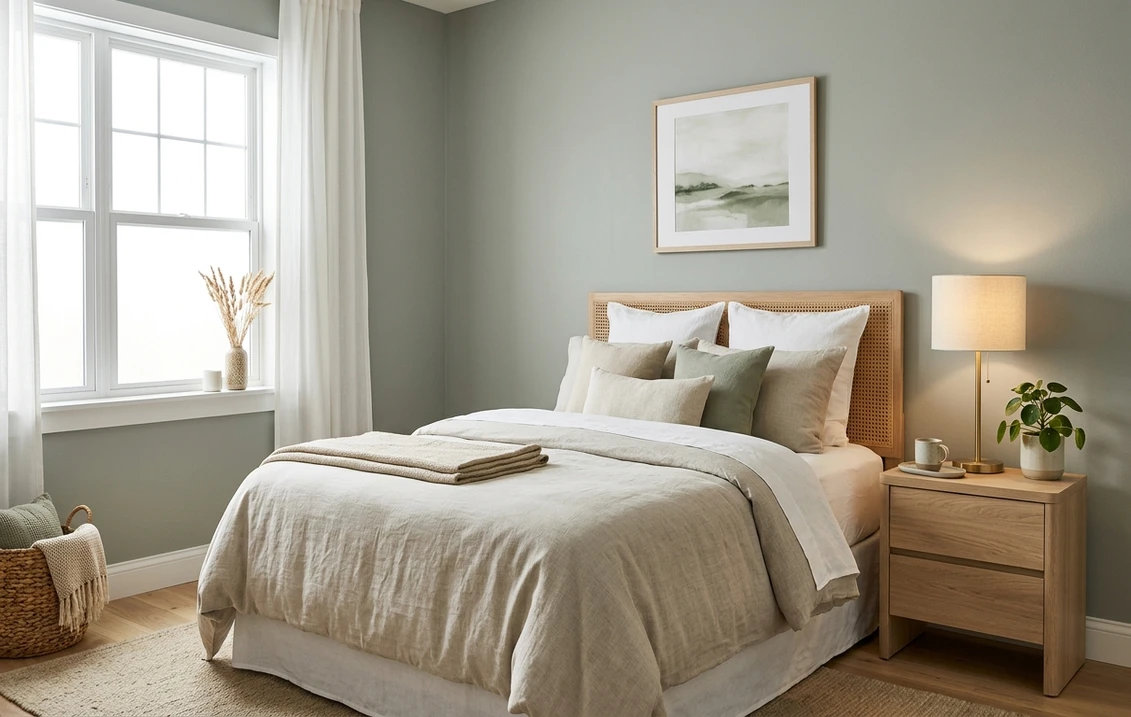
- Bedrooms: arguably its sweet spot. The muted, grounded green is genuinely restful and layers beautifully under white, cream, or natural-linen bedding with light oak.
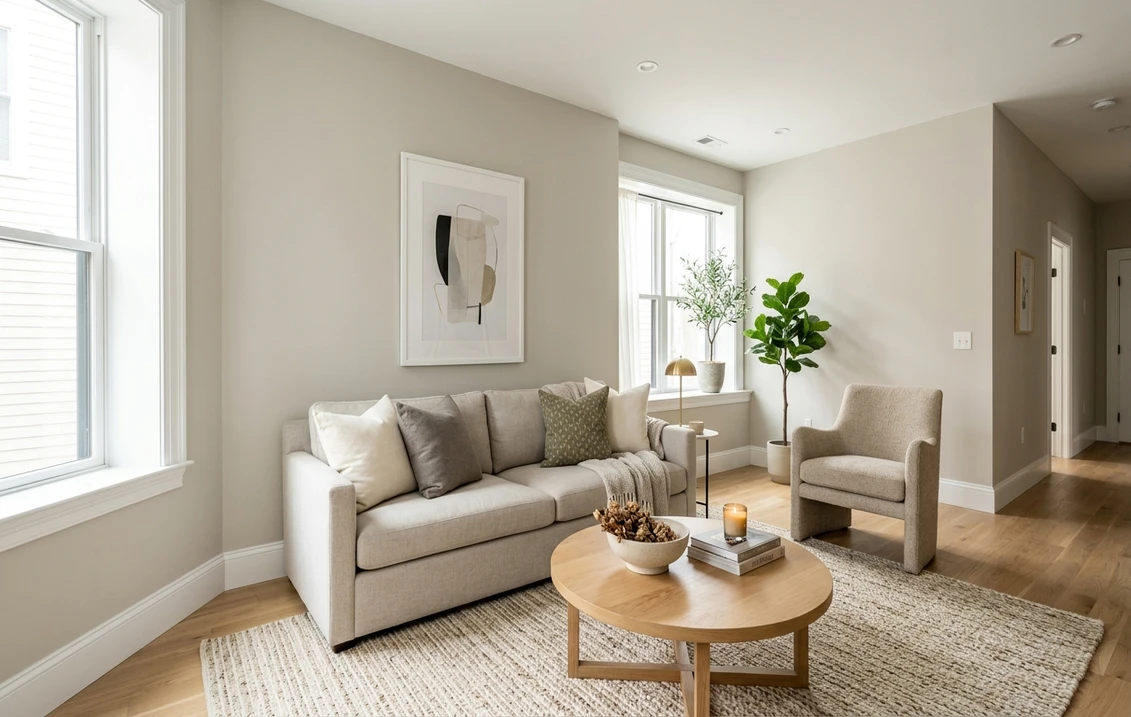
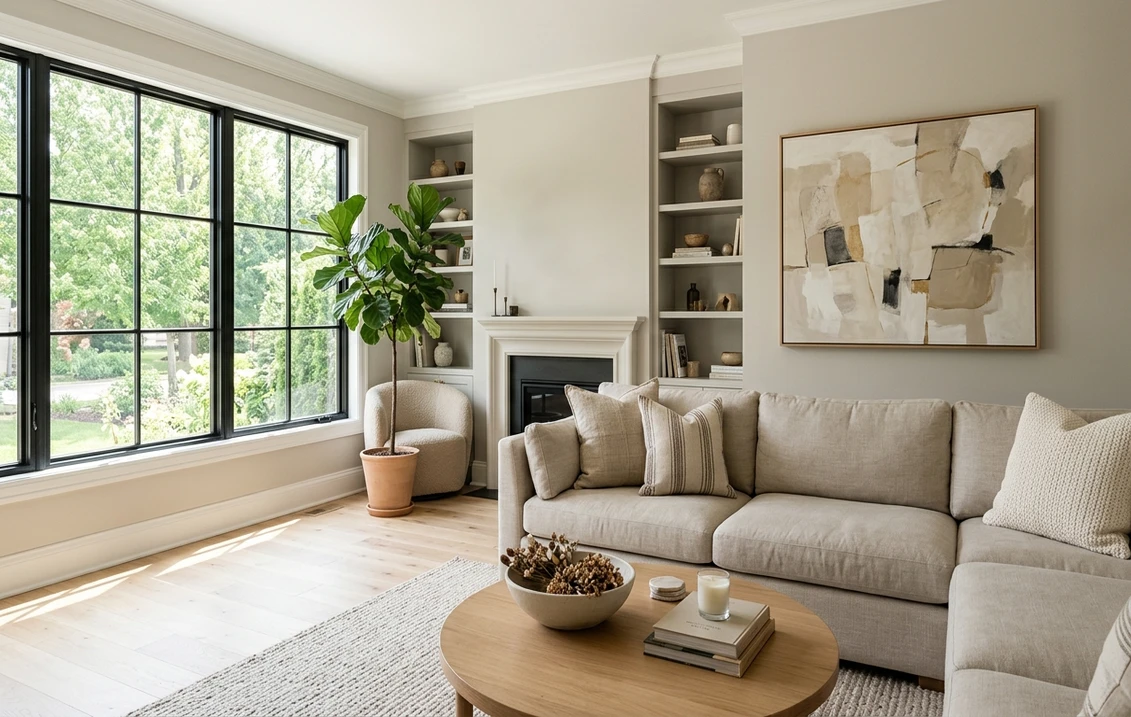
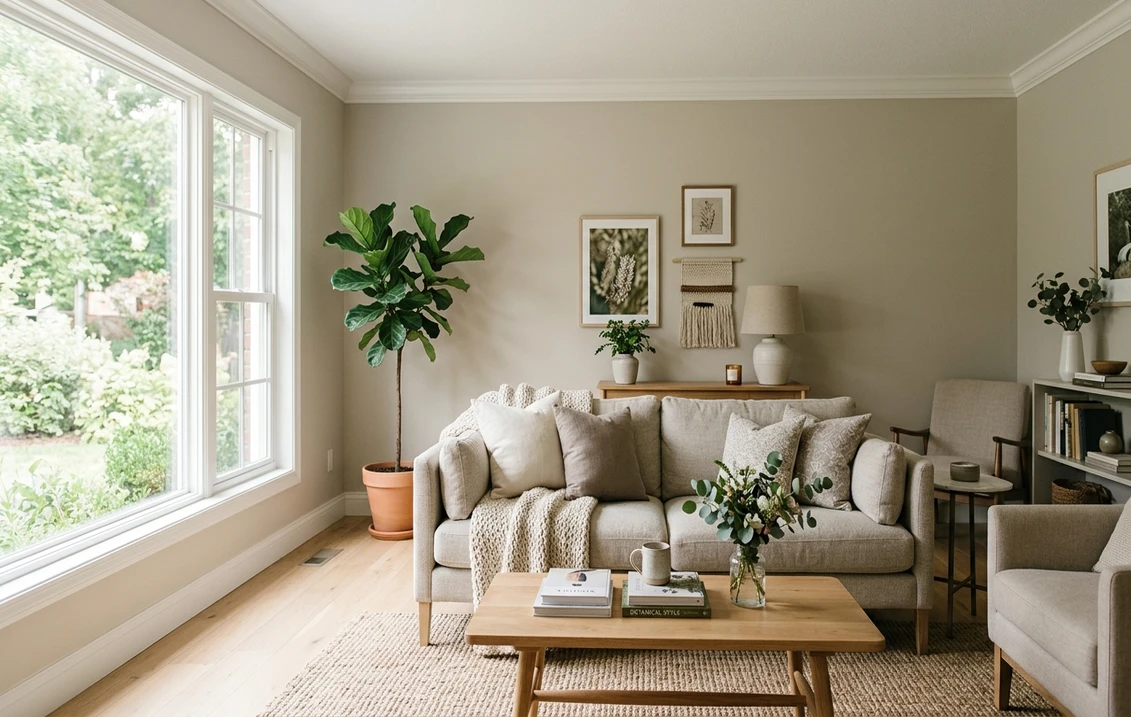
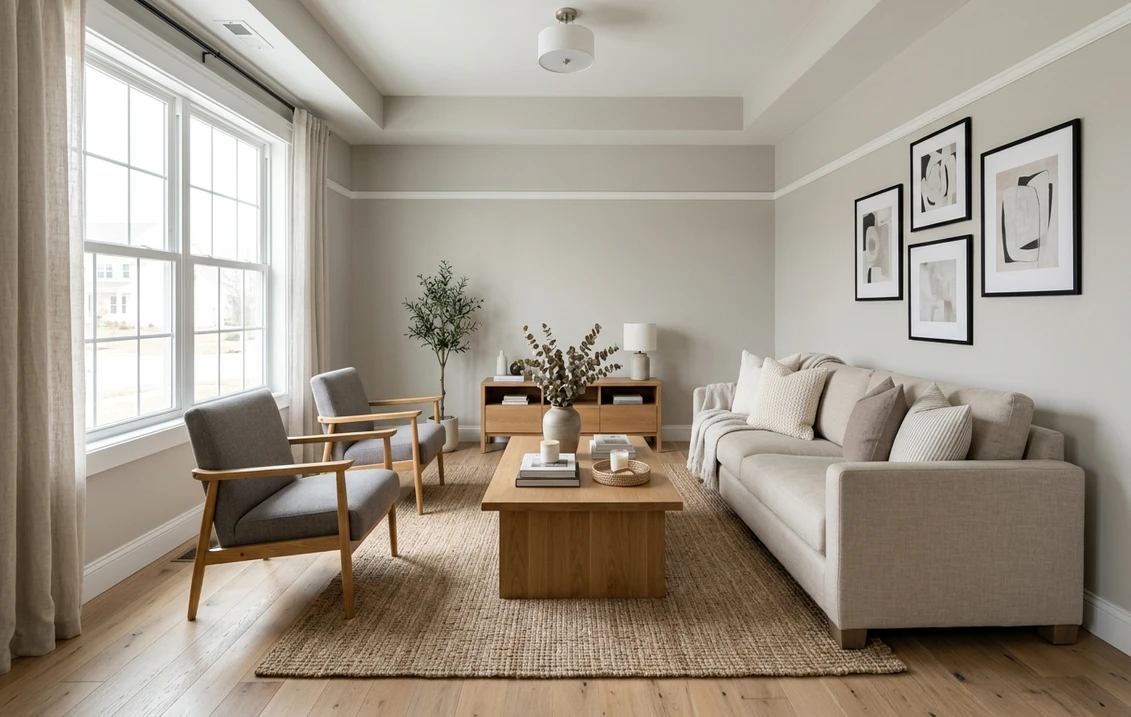
- Living rooms and dens: the LRV of 41 has enough body to carry a whole room without going flat, turning a living space into a soft, grounded retreat beside warm wood.
- Kitchen cabinetry: one of the most popular uses, on lower cabinets or an island against creamy uppers, white counters, and brass hardware for a farmhouse look that reads custom rather than trendy.
- Bathrooms and powder rooms: a spa-like, natural-stone calm with soft whites, greenery, and warm metals. In a small windowless bath, lean warm with the bulbs so it does not go too gray.
- Home offices and studies: the moodier north-room read is an asset here, giving a focused, library-like depth.
Where to slow down: a dark north room with cool bulbs can push Clary Sage toward gloomy, so sample the exact spot first. Whatever the space, our interior house painting cost guide covers what the repaint should run.
Free AI visualizer: test Clary Sage in a bedroom, living room, or on cabinets before you buy a sample.
Trim, ceiling, and decor that flatter it
Clary Sage is a warm color, so the white beside it should be warm too. A stark blue-white makes the sage look muddy; a creamy white lets the warmth read as intentional.
- Best all-around trim: Sherwin-Williams Alabaster (SW 7008, LRV 82). This creamy soft white is the natural partner; its warmth echoes the sage's yellow lean and keeps the scheme cohesive.
- For a slightly brighter frame: SW Greek Villa (SW 7551) or another warm white. Avoid crisp blue-whites like SW Extra White, which can leave the green looking dingy.
- Ceiling: a soft warm white keeps the room open. Clary Sage on the ceiling of a low room reads heavy, so reserve that for a deliberately cocooning study.
- Deeper coordinating tones: for an accent, a built-in, or a darker vanity, SW Pewter Green (SW 6208) steps down naturally within the family.
- Decor and finishes: warm woods, natural linen, rattan, jute, natural stone, and brass or gold hardware all flatter it. Cool chrome and gray-washed floors fight the warmth and pull it toward drab.
For adjoining rooms, Clary Sage flows best beside warm neutrals rather than cool grays. Our profiles of SW Accessible Beige and SW Agreeable Gray are both natural greige partners that carry a Clary Sage palette through a connected hallway or open plan without a jarring shift.
Clary Sage versus the colors people cross-shop
Clary Sage rarely gets picked in isolation. A few other sages usually end up taped to the wall right next to it, and here is where each one parts ways:
- vs SW Livable Green (SW 6176): the near-twin almost nobody flags. Two codes apart on the deck, Livable Green publishes at LRV 42 against Clary Sage's 41, and its screen hex (#ABAE96) lands within three RGB points of Clary Sage's #ACAD97. That difference is not reliably visible on a painted wall, so this is the one cross-shop where either answer is defensible: pick whichever the rest of your Sherwin-Williams scheme already coordinates with. Our Livable Green SW 6176 profile walks through its room-by-room behavior.
- vs SW Evergreen Fog (SW 9130): the most common comparison, and the 2022 Color of the Year. Evergreen Fog is deeper and grayer (LRV around 30), moodier and almost gray-green-blue. Clary Sage is lighter, a touch more clearly yellow-green, and warmer. Choose Evergreen Fog for drama, Clary Sage for a gentler, more livable sage.
- vs SW Dried Thyme (SW 6186): the earthier, more olive-leaning sibling on the same deck. If you are torn between the two, our Dried Thyme vs Clary Sage side-by-side settles the choice room by room.
- vs SW Sea Salt (SW 6204): two ends of the green spectrum more than rivals. Sea Salt is far lighter (LRV 63), cooler, and carries a blue side that shifts between sage and spa-blue. Clary Sage is darker, warmer, and far steadier. Pick Sea Salt for an airy, changeable feel, Clary Sage for grounded, consistent color.
- vs SW Halcyon Green (SW 6213): the other same-depth neighbor, and the one that separates on undertone rather than lightness. Sherwin-Williams Halcyon Green publishes the same LRV of 41, so swapping one for the other changes nothing about how much light the room keeps. What changes is direction: Clary Sage reads gray first, then yellow, while Halcyon Green holds a faint cool blue side. Tape them side by side and they read as two different rooms at identical depth, which is exactly why the LRV comparison is no help here.
- vs BM Saybrook Sage (HC-114) and October Mist (1495): the usual Benjamin Moore cross-shops. Saybrook Sage is the closest single match; October Mist (BM's 2022 Color of the Year) is a softer, slightly grayer neighbor. To weigh the two brands on more than color, our full Sherwin-Williams vs Benjamin Moore interior comparison covers how their formulas and finishes wear.
How to test Clary Sage before you commit
Sage greens are notorious for looking like one color on the chip and another on the wall, because a 3-inch chip is viewed under store light, isolated from the wood tones and furnishings that push the green warmer or cooler. What actually works is low-tech. Tape a large peel-and-stick sample to at least two walls and look at it three times across a day: mid-morning, mid-afternoon, and after dark under your normal bulbs. Watch the after-dark read especially, because warm bulbs can tip Clary Sage toward olive, the version you live with most evenings.
The faster, no-paint first pass is a digital visualizer: upload a photo of the room and apply Clary Sage beside a deeper option (Evergreen Fog) and a lighter one (Sea Salt) to see which depth your light calls for. No, it does not replace the final physical sample. What it does is clear out the colors that never stood a chance, so you only buy samples worth buying.
Preview Clary Sage beside a deeper and a lighter sage under your real light, free.
Frequently asked questions
What undertones does SW Clary Sage have?
Clary Sage (SW 6178) is a gray-green sage where gray is the dominant undertone and a mild yellow is the secondary. The heavy gray mutes the color and keeps it neutral and grown-up, while the soft yellow warms it so it reads earthy rather than cold. Watch for that yellow tipping toward olive under very warm light or a strong west sunset; the fix is usually the bulbs, not the paint.
What is the LRV of Clary Sage?
Clary Sage has a Light Reflectance Value of about 41, a true mid-tone. That is enough depth to carry a whole room as a real gray-green rather than fading to a tinted white in bright light, while staying light enough to avoid feeling dark in most spaces. It is deeper than a pale spa hue like Sea Salt (LRV 63) and lighter than a moody sage like Evergreen Fog (LRV 30).
What trim and white go with Clary Sage?
Because Clary Sage is warm, pair it with a warm, creamy white rather than a cool blue-white. Sherwin-Williams Alabaster (SW 7008, LRV 82) is the natural choice; its warmth echoes the sage's yellow lean and keeps the scheme cohesive. Greek Villa works for a slightly brighter frame. Avoid stark cool whites like Extra White, which make the green read dingy by contrast.
What is the difference between Clary Sage and Evergreen Fog?
Both are popular Sherwin-Williams sages, but Evergreen Fog (SW 9130) is deeper and grayer, around LRV 30, with a moodier, almost gray-green-blue character that made it the 2022 Color of the Year. Clary Sage (SW 6178) is lighter at LRV 41, a touch more clearly yellow-green, and reads warmer and softer. Choose Evergreen Fog for drama and depth, Clary Sage for a gentler, more easygoing sage.
See SW Clary Sage under your real light, beside a deeper and a lighter sage, before you buy.
Disclaimer: Sherwin-Williams and SW 6178 Clary Sage are trademarks of The Sherwin-Williams Company. Benjamin Moore and Behr are trademarks of their respective owners. FacadeColorizer is an independent paint visualization service and is not affiliated with, endorsed by, or sponsored by Sherwin-Williams, Benjamin Moore, or Behr. Screen color approximates the manufacturer's sample; always confirm with a physical sample before purchase. Sources: Sherwin-Williams SW 6178 Clary Sage color data 2026, Sherwin-Williams Alabaster SW 7008, Evergreen Fog SW 9130, and Pewter Green SW 6208 color data, Benjamin Moore Saybrook Sage HC-114 and October Mist 1495 color data, The Spruce paint undertone references, and designer notes on sage greens.
Trademarks mentioned (Sherwin-Williams, Benjamin Moore, Behr, Caparol, Brillux, Sto, Alpina, Valspar, PPG, Glidden, Dulux, Crown Trade, Sandtex, Farrow & Ball, Johnstone's, Leyland) are property of their respective owners. FacadeColorizer is independent and not affiliated with any of them. Nominative fair use under Lanham Act §1125.