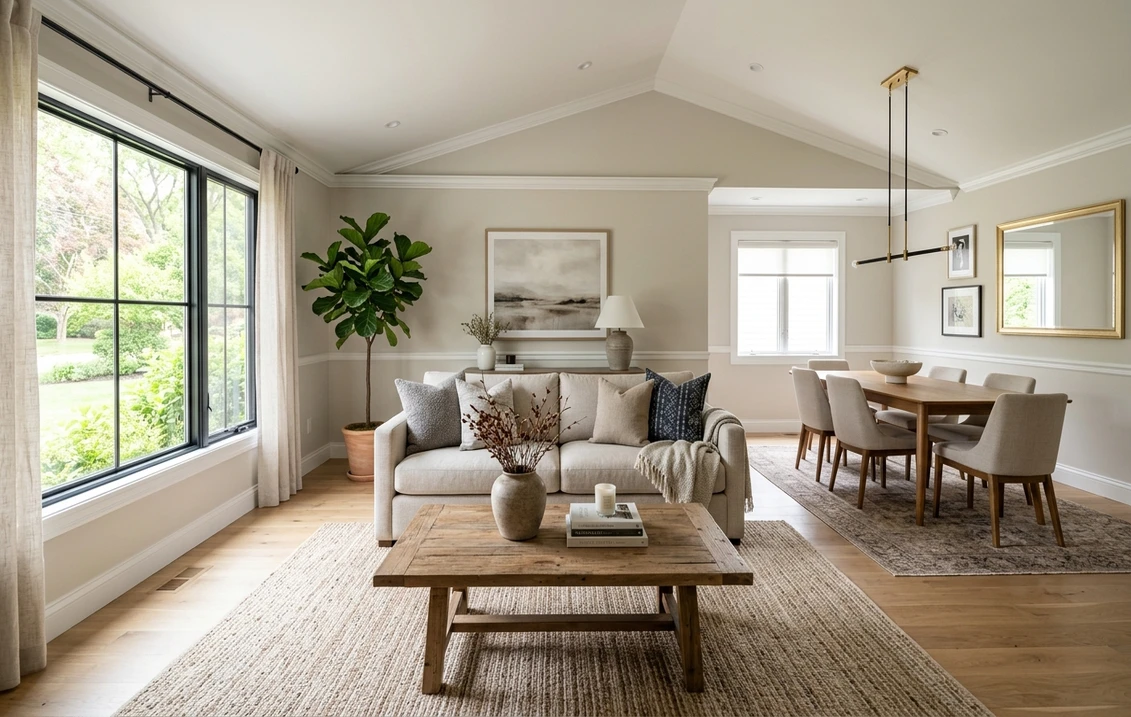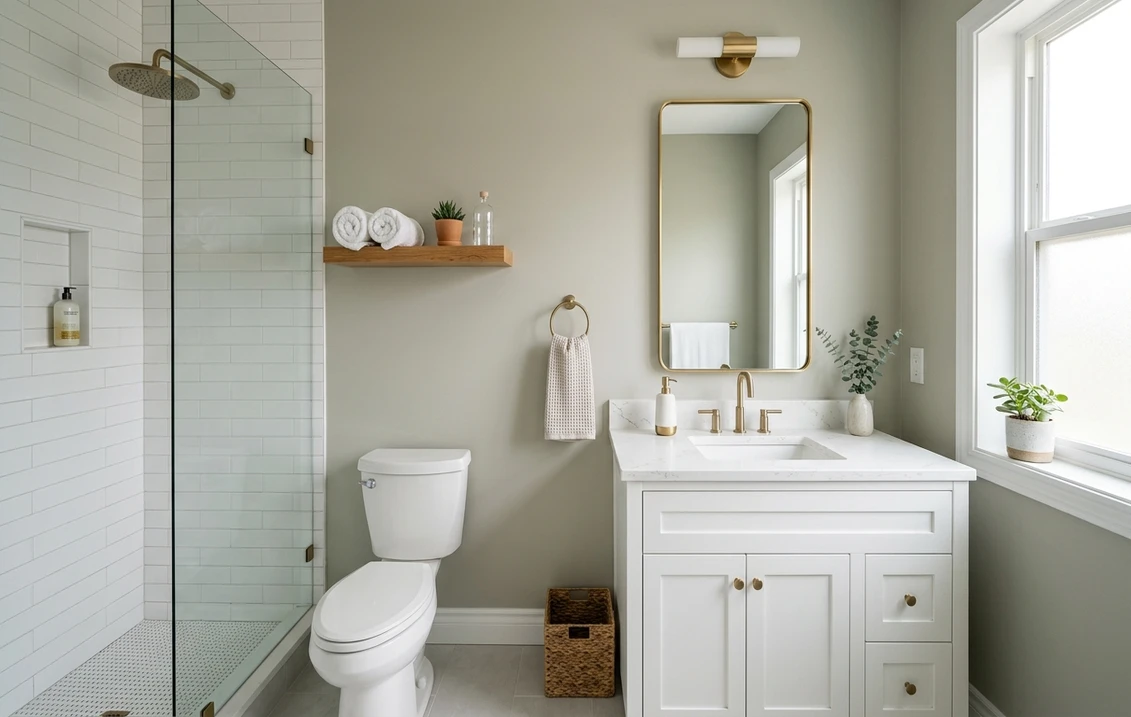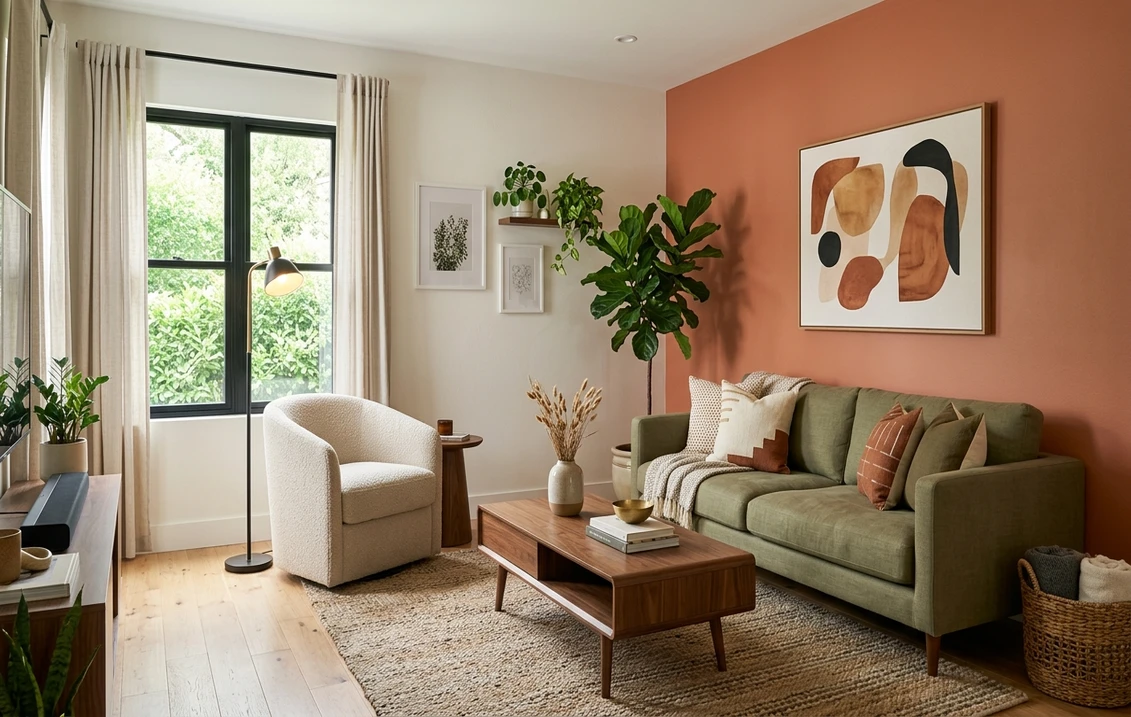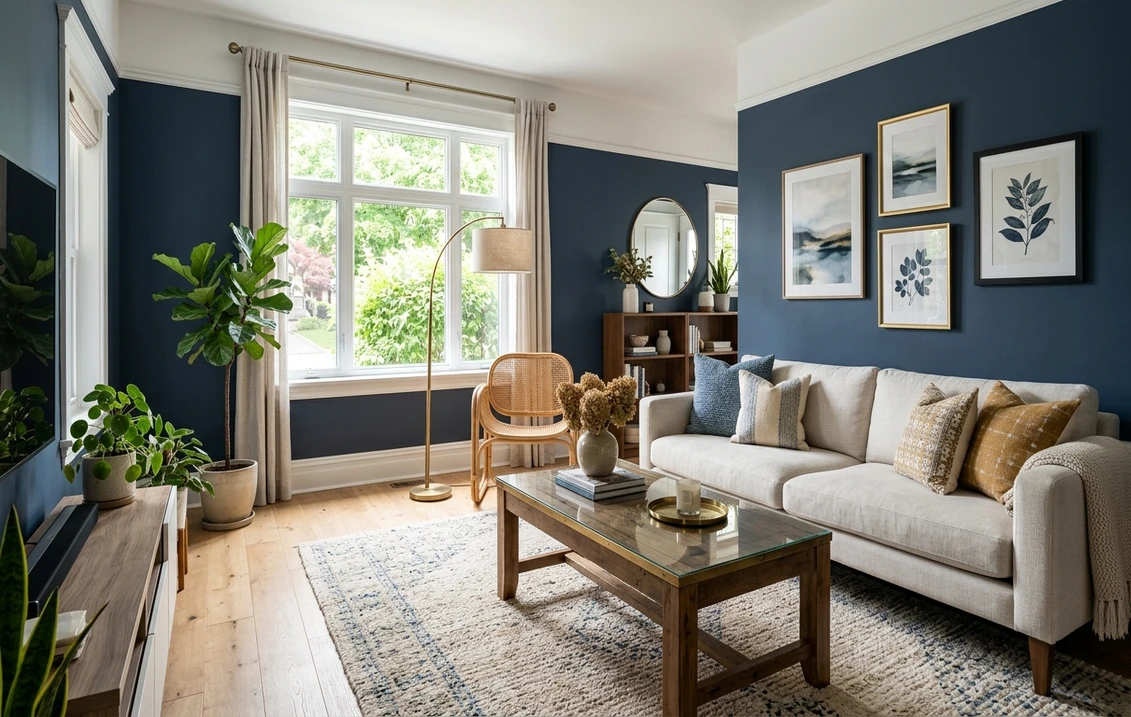
Try it on your room

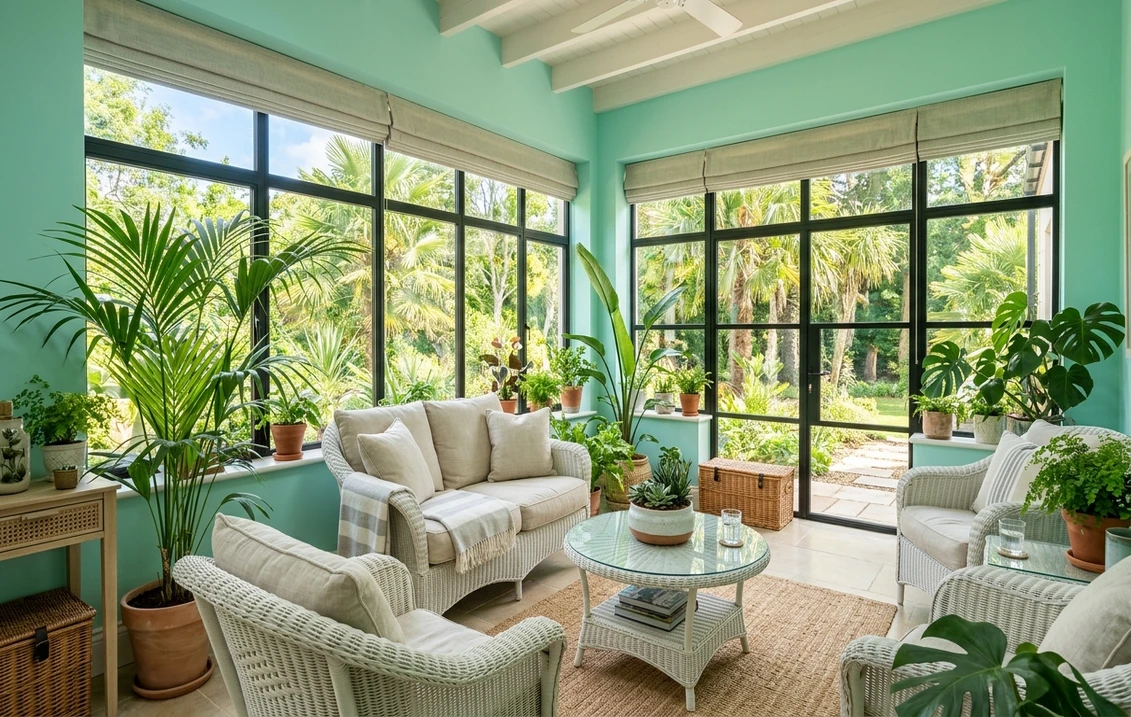
The sunroom is the one room where paint has to work three jobs at once: stay beautiful under eight hours of direct UV, feel like a soft transition between the living space and the garden, and keep the room from becoming a greenhouse by July. That is why generic interior whites fade to yellow and most builder-grade sunrooms look washed-out by year three.
This guide covers the 12 best-performing sunroom paint colors for 2026, pulled from Sherwin-Williams and Benjamin Moore trend data, plus UV-resistant paint recommendations. Every pick includes SW and BM codes, hex values, LRV, temperature impact, and adjacent-room continuity tips. Because the sunroom is a transition space, you lean brighter, cleaner, and cooler than the rest of the house. For full pricing context, see our complete interior painting cost guide.
Upload your sunroom photo and preview all 12 colors in 30 seconds
Why Sunroom Paint Is Not Regular Interior Paint
A sunroom receives 6 to 10 hours of direct sunlight daily, with UV exposure closer to an exterior wall than an interior one. Builder-grade interior paint fades, yellows, and chalks within 18 to 36 months under that load. Reds turn pink, navies turn gray-green, and yellows go bone-white. The 2026 sunroom palette therefore leans toward lighter, inorganic-pigment colors (whites, sea-salt neutrals, soft blues, seafoams) where fade is slower and less visible.
Pros specify one of two products: Sherwin-Williams SuperPaint Interior (roughly $62 a gallon) or Benjamin Moore Aura Interior with Color Lock technology (roughly $88 a gallon). Both beat standard ProMar 200 or Regal Select by two to three years of fade resistance. For trim and exposed wood, use SW Emerald Urethane Trim Enamel or BM Advance, which resist yellowing under UV far better than oil-based alkyds.
Temperature Management: Lighter Colors Stay Cooler
A dark-painted sunroom wall can absorb enough solar radiation to raise interior air temperature by 4 to 7 degrees Fahrenheit versus the same room in white, according to ASHRAE envelope data. Without dedicated HVAC, that is the difference between usable in August and unusable. The 2026 rule: aim for LRV 65 or higher on at least 75 percent of the wall surface. A second trick: cool-undertone whites and pale blues reflect infrared better than warm creams. In Phoenix, Tampa, Austin, or anywhere with summer highs above 95 degrees, stay on the cool side of the palette.
The 12 Best Sunroom Paint Colors for 2026
1. Sherwin-Williams Sea Salt (SW 6204) - Soft Seafoam Neutral
Hex: #CBD4C2 - LRV: 63. The most popular sunroom color in the US and still the 2026 benchmark. A whisper of seafoam-green on a warm gray base, calming and coastal without feeling themed. Adjacent room: pairs with SW Alabaster (7008) or SW Pure White (7005) interiors. Finish: eggshell walls, flat ceiling. System: SW SuperPaint Interior.
2. Benjamin Moore White Sand (OC-82) - Sea Salt White
Hex: #EAE4D4 - LRV: 75.75. A barely-there off-white that reads pure white in shade and soft cream in direct sun. Adjacent room: next to BM Simply White (OC-117) or BM Swiss Coffee (OC-45). Finish: eggshell walls, flat ceiling. System: BM Aura Interior. Best for north-light sunrooms.
3. Sherwin-Williams Rainwashed (SW 6211) - Seafoam Green-Blue
Hex: #BFD7D5 - LRV: 60. A soft seafoam that tips into aqua, ideal as a full-envelope color with white wicker or rattan. Adjacent room: flows from SW Sea Salt or SW Comfort Gray. Finish: eggshell walls, flat ceiling. System: SW SuperPaint Interior. Reads cooler at midday, warmer at sunset.
4. Benjamin Moore Palladian Blue (HC-144) - Pale Sky Blue
Hex: #C2D5D3 - LRV: 62.71. BM Historical Collection, pale sky-blue with a green whisper. Reflects the sky through the windows and extends the outdoors inward. Adjacent room: against BM Chantilly Lace (OC-65) or BM White Dove (OC-17). Finish: eggshell walls, flat ceiling. System: BM Aura Interior. Designer pick for Cape Cod and Hamptons sunrooms.
5. Sherwin-Williams Topsail (SW 6217) - Soft Sky Blue
Hex: #CDD9D2 - LRV: 65. A watery pale blue-green that holds up under full southern sun without going chalky. Adjacent room: SW Alabaster trim and SW Sea Salt walls. Finish: eggshell walls, flat ceiling. System: SW SuperPaint Interior. Ideal for Florida, Gulf Coast, and Carolina sunrooms.
6. Benjamin Moore Wythe Blue (HC-143) - Medium Seafoam
Hex: #B1C5B8 - LRV: 49. A deeper, more saturated seafoam that works as a full envelope or an accent wall behind a daybed. Adjacent room: next to BM Simply White trim and a BM White Dove living room. Finish: eggshell walls, flat ceiling. System: BM Aura Interior. Reserve for north- or east-facing sunrooms where heat gain is limited.
7. Sherwin-Williams Coral Reef (SW 6606) - Warm Coral
Hex: #E79C87 - LRV: 42. A bright, sun-warmed coral pink that feels tropical without veering into Pepto. Deploy as a single accent wall (behind a daybed or console) with the other walls in SW Alabaster or SW Sea Salt. Adjacent room: picks up warm tones from oak floors, brass lamps, and terracotta planters. Finish: eggshell wall, flat ceiling. System: SW SuperPaint Interior (coral pigments fade fastest).
8. Benjamin Moore Conch Shell (052) - Soft Peach-Coral
Hex: #F5CDBE - LRV: 67.04. Softer and airier than SW Coral Reef, light enough for all four walls without heat penalty. Adjacent room: next to BM White Dove and natural oak. Finish: eggshell walls, flat ceiling. System: BM Aura Interior. A 2026 favorite for tropical and boho-coastal sunrooms.
9. Sherwin-Williams Clary Sage (SW 6178) - Tropical Leaf Green
Hex: #A0A793 - LRV: 41. A grounded, gray-leaning tropical green that makes a sunroom feel like a conservatory. LRV 41 means accent wall or north-facing sunrooms only. Adjacent room: SW Alabaster trim, natural rattan, fiddle-leaf fig. Finish: eggshell wall, flat ceiling. System: SW SuperPaint Interior.
10. Benjamin Moore Guilford Green (HC-116) - Fresh Leaf Green
Hex: #B6B79F - LRV: 51.14. BM 2015 Color of the Year and still a top sunroom pick. A fresh leaf green with enough gray to stay grown-up. Adjacent room: against BM Simply White or BM Swiss Coffee. Finish: eggshell walls, flat ceiling. System: BM Aura Interior. Best in east- and west-facing sunrooms where softer light activates the green.
11. Sherwin-Williams Lemon Chiffon (SW 6686) - Soft Yellow
Hex: #F4E7C4 - LRV: 79. A pale buttery yellow that bounces morning light and keeps the room cheerful on gray winter days. Adjacent room: flows into SW Alabaster or SW Creamy. Finish: eggshell walls, flat ceiling. System: SW SuperPaint Interior (yellow pigments are UV-sensitive, premium is non-negotiable).
12. Benjamin Moore Terra Mauve (1202) - Soft Terracotta
Hex: #D9B7A5 - LRV: 50. A soft, dusty terracotta that brings Tuscan and southwest-desert warmth without the heat-gain penalty of a saturated terracotta. Adjacent room: BM White Dove walls, jute rugs, unglazed terracotta planters. Finish: eggshell walls, flat ceiling. System: BM Aura Interior. Best in Arizona, Nevada, and Texas sunrooms.
Sunroom Color Cheat Sheet by Exposure and Climate
Sunroom color performance depends heavily on orientation (north, south, east, west) and local climate. Match your setup to the right 2026 pick below.
| Color | SW / BM Code | Hex | LRV | Best Exposure | Climate Match |
|---|---|---|---|---|---|
| Sea Salt | SW 6204 | #CBD4C2 | 63 | Any | All climates |
| White Sand | BM OC-82 | #EAE4D4 | 75.75 | North, East | Cool and moderate |
| Rainwashed | SW 6211 | #BFD7D5 | 60 | South, West | Hot and humid |
| Palladian Blue | BM HC-144 | #C2D5D3 | 62.71 | Any | Coastal, humid |
| Topsail | SW 6217 | #CDD9D2 | 65 | South | Hot and sunny |
| Wythe Blue | BM HC-143 | #B1C5B8 | 49 | North, East | Cool and moderate |
| Coral Reef | SW 6606 | #E79C87 | 42 | Accent wall only | Tropical, coastal |
| Conch Shell | BM 052 | #F5CDBE | 67.04 | Any | All climates |
| Clary Sage | SW 6178 | #A0A793 | 41 | North, Accent | Moderate |
| Guilford Green | BM HC-116 | #B6B79F | 51.14 | East, West | Moderate |
| Lemon Chiffon | SW 6686 | #F4E7C4 | 79 | North, East | Cool and cloudy |
| Terra Mauve | BM 1202 | #D9B7A5 | 50 | South, West | Desert, southwest |
Try it on your house
No photo? Try a sample
Painted Ceiling vs White Ceiling in a Sunroom
The ceiling plays a larger role in light distribution here than in any other room. Three 2026 options cover every sunroom.
Option 1: Flat bright white ceiling. The highest-performance default. Use SW Extra White (SW 7006) or BM Chantilly Lace (OC-65) in flat. It bounces maximum light into the room and reads neutral against any wall color. Best for small sunrooms and cloudy-winter climates.
Option 2: Pale sky-blue ceiling. The Southern "haint blue" tradition, now a 2026 sunroom favorite. Use BM Palladian Blue (HC-144), SW Topsail (SW 6217), or the Charleston classic BM Copen Blue (HC-147). The pale blue extends the sky visually. Gorgeous in coastal, traditional, and Cape Cod sunrooms.
Option 3: Wall color continued onto ceiling. Only when the wall color is already very light (Sea Salt, White Sand, Conch Shell, Lemon Chiffon). Creates a cocoon effect but sacrifices light reflectance. Skip under 10-foot ceilings.
The Sunroom as a Transition Between Interior and Garden
A well-painted sunroom is a bridge, not a destination. It should nod toward your main-house palette on one side and echo the garden on the other. Three 2026 approaches work reliably:
The botanical bridge. Soft green walls (SW Sea Salt, BM Guilford Green, SW Clary Sage) pull a cue from the lawn or potted plants. Open the slider and the eye reads one continuous green plane from sofa to hydrangea.
The sky bridge. Soft blue walls (BM Palladian Blue, SW Topsail, SW Rainwashed) match the summer sky through the windows, so the room dissolves into the view.
The neutral bridge. Warm neutrals (BM White Sand, BM Conch Shell) bridge both living-room color and garden hardscape. The safest, most timeless approach for resale.
Adjacent Room Color Continuity
Treating the sunroom as an isolated color project creates a jarring edge where it meets the living room or kitchen. The 2026 rule: the sunroom wall color should be within two to three shades of the adjacent room, or share a common trim color. Three pairings that work every time:
SW Alabaster (7008) interior + SW Sea Salt (SW 6204) sunroom. A near-universal flow with a gentle green-cream lift. Both use Alabaster trim.
BM White Dove (OC-17) interior + BM Palladian Blue (HC-144) sunroom. The coastal and Cape Cod standard. White Dove trim throughout plus the sunroom ceiling gives seamless continuity.
SW Pure White (7005) kitchen + SW Rainwashed (SW 6211) sunroom. The eye reads the sunroom as a sky-touched continuation of the cabinetry.
How Much Paint You Need for a Sunroom
An average US sunroom is 150 to 250 square feet of floor space with 180 to 280 square feet of paintable wall. Budget 2 gallons of SW SuperPaint or BM Aura for two wall coats, 1 gallon of flat ceiling paint, and 1 quart of SW Emerald Urethane Trim Enamel or BM Advance for trim and mullions. Plan for $180 to $320 in paint for a single-color sunroom, or $240 to $420 with a haint-blue ceiling or coral accent wall.
Expect to repaint every 5 to 7 years with premium SW SuperPaint or BM Aura, versus every 3 years with builder-grade. The premium product pays for itself by the first repaint cycle.
One line most sunroom budgets forget: the white wicker and rattan that sit against these walls. Wall paint is the wrong product for slatted furniture, where every rung is an edge to cut in and a wax topcoat turns into an afternoon of work. A mineral furniture paint avoids both problems because the topcoat is built in and the finish self-levels as it dries. Casement is the warm soft white of that range, closer to old painted wicker than a cold builder white; the full palette is in our Fusion Mineral Paint colors guide.
Preview any SW or BM shade on your real sunroom walls before you buy
Frequently Asked Questions
What is the best paint color for a sunroom in 2026?
Sherwin-Williams Sea Salt (SW 6204) remains the single most popular sunroom color in the US for 2026, thanks to its soft seafoam neutrality, LRV of 63, and universal flow with any adjacent room. Benjamin Moore Palladian Blue (HC-144) is the designer-favorite alternative for coastal and Cape Cod sunrooms. For hot climates, SW Topsail (SW 6217) reflects heat while staying visually warm.
Do I need a special paint for a sunroom?
Yes. Sunrooms receive UV exposure closer to an exterior wall than a standard interior, and builder-grade paint will fade, yellow, or chalk within 18 to 36 months. Use Sherwin-Williams SuperPaint Interior or Benjamin Moore Aura Interior, both formulated with UV-resistant binders. For trim and exposed wood, use SW Emerald Urethane Trim Enamel or BM Advance, which resist yellowing under sunlight far better than oil-based alkyd enamels.
Does lighter paint really keep a sunroom cooler?
Yes. A dark-painted sunroom wall can absorb enough solar radiation to raise interior air temperature by 4 to 7 degrees Fahrenheit versus the same room in white. For 2026, aim for an LRV of 65 or higher on at least 75 percent of your wall surface to keep summer heat gain manageable, and favor cool-undertone whites and pale blues, which reflect infrared better than warm creams. You can still use a deeper accent color on a single wall without significant heat penalty.
Should I paint my sunroom ceiling white or sky blue?
A flat bright white ceiling (SW Extra White or BM Chantilly Lace) is the highest-performance default because it bounces maximum light back into the room. A pale sky-blue ceiling (BM Palladian Blue or SW Topsail), known as haint blue, is a Southern tradition and a 2026 favorite for coastal, Cape Cod, and traditional sunrooms. Both work; choose white for maximum brightness and cool reflectance, choose haint blue for atmosphere and a historic nod.
How do I make my sunroom color flow with the rest of the house?
Keep the sunroom wall color within two to three shades of the adjacent room and use the same trim color throughout. Three proven 2026 pairings: SW Alabaster + SW Sea Salt, BM White Dove + BM Palladian Blue, and SW Pure White kitchen + SW Rainwashed sunroom.
The right 2026 sunroom color reads soft at noon, glows at golden hour, and still looks fresh after five summers of UV. Preview all 12 picks on your real walls with our free AI interior paint visualizer, then order peel-and-stick samples of your top two and tape them up for a full sunny day before committing. Sources: Sherwin-Williams 2026 Colormix, Benjamin Moore Color Trends 2026, ASHRAE interior-envelope thermal data, Houzz 2026 US Home Design Trends Report.
Trademarks mentioned (Sherwin-Williams, Benjamin Moore, Behr, Caparol, Brillux, Sto, Alpina, Valspar, PPG, Glidden, Dulux, Crown Trade, Sandtex, Farrow & Ball, Johnstone's, Leyland) are property of their respective owners. FacadeColorizer is independent and not affiliated with any of them. Nominative fair use under Lanham Act §1125.