Exterior painters near me in Indianapolis, Indiana
Before you call a Indianapolis painter, upload one photo and preview real Sherwin-Williams, Benjamin Moore or Behr colors on your own facade in about 30 seconds. Free, no account, no obligation.
- No sign-up
- No card
- Result in ~30s
Your photo is private, used only to create your preview, never sold. You keep full ownership.
✓ No sign-up ✓ Result in ~30s
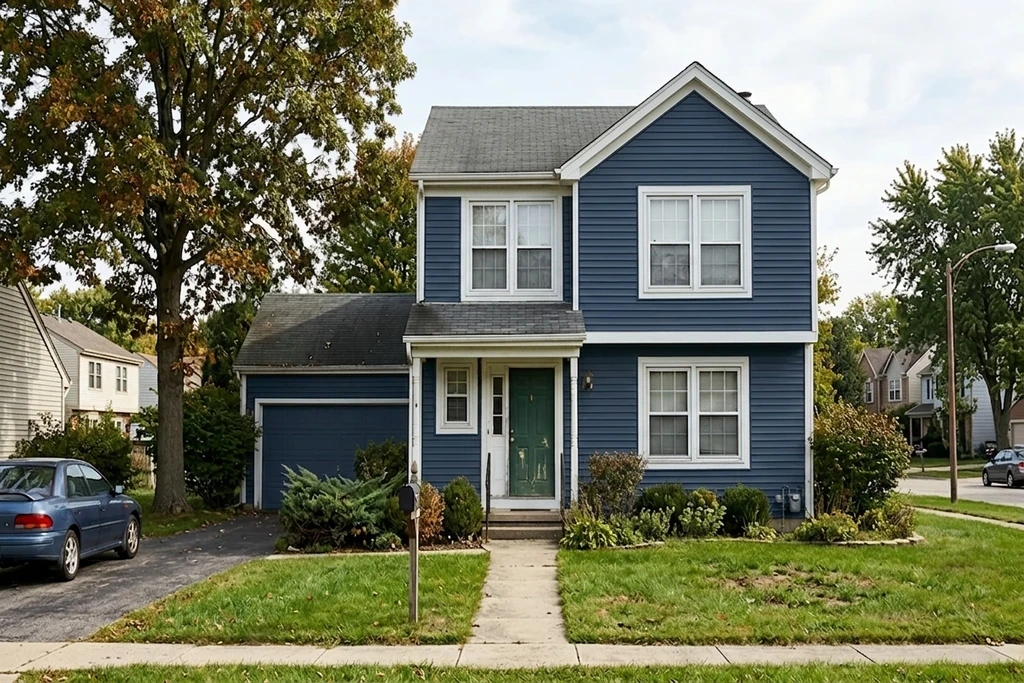
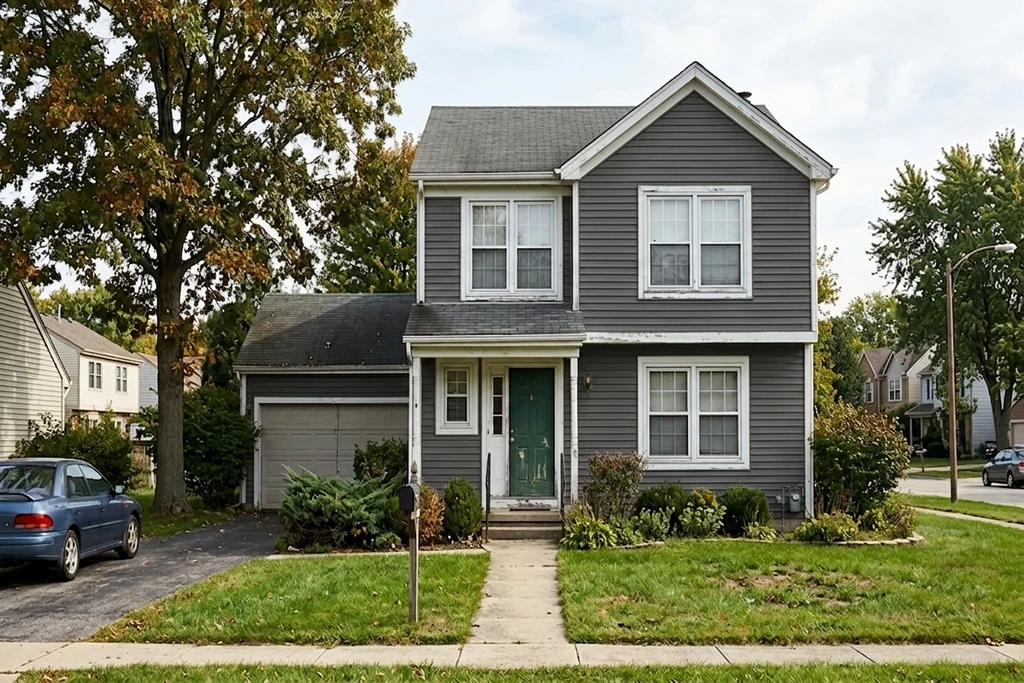
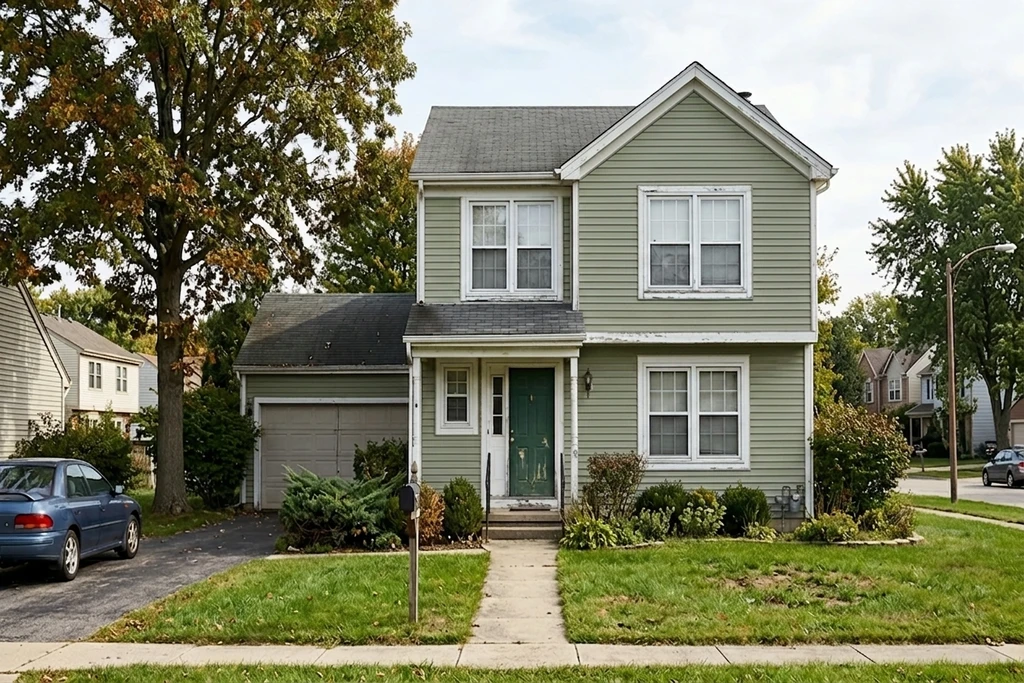
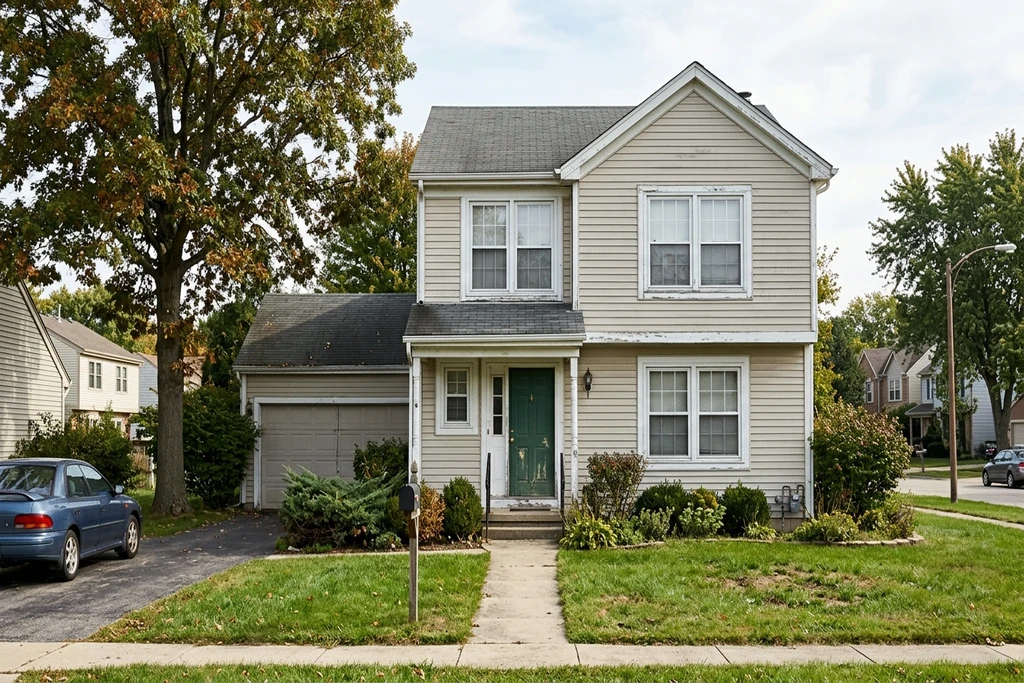
Real AI renders, your own photo, any shade
Try it on your house
No photo? Try a sample
Indianapolis painter wages and labor data (BLS, 2024)
Source: US Bureau of Labor Statistics, Occupational Employment and Wage Statistics (OEWS), May 2024. Wage figures are for the state as a whole; Indianapolis metro pricing typically tracks at or above the state mean.
Indianapolis climate and what it does to exterior paint
Humid continental climate with four hard seasons: 187 days with sun (88 fully clear, 99 partly), roughly 42 in of annual precipitation, and about 22 in of snow. Summers run hot and humid into the low 90s deg F, winters drop well below freezing.
The dominant failure mode in Indianapolis is not UV chalking but freeze-thaw and moisture. Roughly 100 to 120 freeze-thaw cycles a year pry at any film that traps water, so caulk joints split and paint peels off the north and east elevations first. High summer dew points feed mildew on shaded clapboard and brick, and the long wet spring keeps bare wood damp, which is why local crews moisture-meter the substrate before priming and schedule the bulk of exterior work for the dry window from late May through October.
Source: NOAA National Centers for Environmental Information, climate normals 1991 to 2020.
What Exterior Painting Actually Costs in Indianapolis in 2026
Indianapolis sits a touch below the national average for exterior house painting, and that is mostly a function of a lower regional cost of labor rather than easier work. Local crews price a two-coat acrylic system on the typical Marion County home at roughly $1.80 to $4.20 per square foot, which puts a standard 1,800 to 2,200 sq ft single-family house in the $3,400 to $9,800 band. The Bureau of Labor Statistics OEWS survey for May 2024 puts the Indiana painter wage at a $24.16 hourly median and a $50,260 annual median (SOC 47-2141), with the top decile clearing $69,520, so the painters who actually carry insurance and warranty their work bill toward the upper end of that range. Two-story homes in Meridian-Kessler and the older foursquares around Irvington trend into the $7,000 to $14,000 zone once you fold in scaffold time, soffit and fascia repair, and the lead-safe prep that pre-1978 housing stock demands. The single biggest swing factor here is substrate condition after a hard freeze-thaw winter, not the paint itself.
Indianapolis Climate: Freeze-Thaw, Humidity, and a Short Dry Window
Indianapolis runs a humid continental climate with 187 days of sun a year (88 clear and 99 partly, per NWS Indianapolis), about 42 inches of precipitation, and roughly 22 inches of snow. That profile is the opposite of a Sun Belt paint problem. UV is moderate, so color holds well, but the metro cycles through an estimated 100 to 120 freeze-thaw events between November and March. Every one of those cycles drives water into a hairline gap, freezes it, and levers the coating loose, which is why peeling shows up first on the shaded north and east walls and along horizontal trim that holds meltwater. The same physics attacks mortar: water that wicks into an unsealed brick joint and freezes is the leading cause of spalled faces and crumbling pointing on the older near-north stock, so a careful painter inspects the joints and flags repointing before any coating decision, not after. Layer on the muggy summer, when dew points sit in the high 60s deg F for weeks, and shaded clapboard, porch ceilings, and the mortar face of older brick grow mildew fast. The practical takeaway is a narrow reliable season: late May through October, with crews chasing two or three consecutive dry days because surfaces have to be genuinely dry, not just rain-free, before primer goes down. NOAA puts the metro in USDA hardiness zone 6a, a useful shorthand for just how cold the cure-killing nights get.
Brick, Clapboard, and Vinyl: The Indianapolis Substrate Mix
Indianapolis housing stock is dominated by masonry and wood, not the stucco you find out West, and that reshapes a quote. A large share of the city is painted brick or brick that owners are deciding whether to paint, plus wood-sided bungalows, American foursquares, and Tudor revivals across the older near-north and east-side neighborhoods. Painting brick is a one-way door, so a reputable painter will steer you toward a breathable mineral or 100 percent acrylic masonry coating that lets the wall release moisture rather than trap it behind a film that blisters at the first freeze. On wood, the bid line item that matters is prep: scraping, spot-priming bare cedar and pine, replacing rot-soft fascia, and re-caulking every joint that a winter split open. Homes built before 1978 across Meridian-Kessler, Irvington, Fountain Square, and Herron-Morton very likely carry lead paint in the older layers, which legally triggers EPA RRP-certified containment for any sanding or scraping. Mid-century ranch homes in Nora and the newer vinyl-and-fiber-cement builds out toward Geist need far less prep but still want a proper wash to strip the mildew film before recoating. One more Indianapolis-specific wrinkle: efflorescence, the chalky white salt bloom that surfaces on brick and foundation walls after a wet winter, has to be brushed off dry and the moisture source addressed, never just painted over, or it will push the new coating right back off the wall within a season.
HOA Color Approval Around Geist, the Reservoir, and Fishers
Older in-town Indianapolis neighborhoods are mostly free of design covenants, so homeowners in Broad Ripple or Fountain Square can usually paint without asking anyone. The picture flips on the northeast side around the water. The Geist Harbours Property Owners Association and the gated WatersEdge community along Geist Reservoir both run architectural guidelines that keep exterior body colors in a muted, lake-appropriate palette and require a submittal before you repaint, and smaller associations like Geist Woods near Fall Creek Road enforce similar review. The same pattern holds in the planned subdivisions that ring the metro out toward Fishers, Carmel, and Noblesville, where covenants on body and trim color are the norm rather than the exception. Approval windows commonly run two to four weeks, and committees turn down high-chroma or stark-white bodies that clash with the wooded setting. The fastest way to clear review is to attach a realistic mockup of your actual house in the proposed colors, which is exactly why many Geist-area owners run their two or three finalist palettes through the FacadeColorizer exterior paint visualizer before they fill out the architectural request form.
How to Vet an Indianapolis Painter When the State Will Not
Indiana does not license painters, and neither does the City of Indianapolis, so the burden of vetting falls entirely on you. That is not a reason to panic, but it does change the checklist. Ask every quote for proof the business is registered with the Indiana Secretary of State, a current general liability certificate of insurance with your property named, and a workers compensation policy so an injury on your roof never becomes your liability. Then ask for three references from brick or wood exterior jobs finished in the last 18 months in your zip code, ideally ones that have already survived a winter. A serious Indianapolis painter will specify a named two-coat system rather than "premium paint," will moisture-test the substrate before priming, and will put a written 4 to 7 year workmanship warranty in the contract. For any home built before 1978, confirm the crew is EPA RRP lead-safe certified before they touch a scraper. A quote that skips insurance proof and offers a one-year warranty is the one to drop.
The Best Months to Paint a House Exterior in Indianapolis
Unlike the year-round metros, Indianapolis has a genuinely short and weather-bound painting season, and timing it well is worth real money. The sweet spot runs from late May through early October, when daytime highs sit in the comfortable application range and overnight lows stay above the roughly 50 deg F floor that water-based coatings need to cure properly. April and early May are a gamble: the calendar reads spring, but the long wet stretch keeps wood damp and cold nights can stall a cure, so crews often slip start dates a week at a time waiting on the substrate to dry out. Mid-summer humidity is workable as long as the painter respects dew-point math and stops early on the muggiest afternoons. By late October the freeze risk returns and most reputable shops stop taking exterior work until spring. The upside of that compressed season is leverage: book in the winter for an early-summer slot and you will often catch sharper pricing than a homeowner scrambling for the last dry weeks of September, when every good crew in Marion County is already booked solid.
Where Indianapolis Painters Buy: Sherwin-Williams and Benjamin Moore
Indianapolis painters lean on a handful of supplier networks, and knowing which one your quote sources from tells you something about the finish. Sherwin-Williams runs the densest footprint in the metro, with the Nora store on Michigan Road and the East Washington Street location among the busiest contractor counters, and crews here most often specify SuperPaint, Duration, or the Loxon masonry line for painted brick. On the Benjamin Moore side, ICC Floors Plus on West 96th Street is the area signature dealer and stocks the full Aura and Regal Select lines that designers favor for richer, deeper colors. Most established painters hold a contractor account with a 20 to 35 percent trade discount at one supplier, and that product cost flows straight into your number, so it is fair to ask which store and which exact product line a quote is built on. A bid that names the store, the line, and the sheen is a bid you can actually compare against the next one, instead of guessing what "two coats of good paint" really means.
Top Indianapolis HOAs with exterior color approval rules
Before painting, confirm your HOA palette and submit your color selections to the architectural review committee. Most Indianapolis HOAs respond within 14 to 21 days.
Paint stores near Indianapolis
Painter licensing in Indiana
Indiana issues no statewide painting contractor license, and the City of Indianapolis (Marion County Business and Neighborhood Services) does not require a painter-specific license either. A legitimate painter still registers the business with the Indiana Secretary of State and carries general liability insurance plus workers compensation. Because the state will not vet your painter for you, ask every quote for a certificate of insurance naming your address and verify it before any deposit changes hands.
Frequently asked questions about Indianapolis exterior painting
How much does it cost to paint a house exterior in Indianapolis in 2026?
Most Indianapolis single-family homes run $1.80 to $4.20 per square foot for a two-coat acrylic system, putting a typical 1,800 to 2,200 sq ft home in the $3,400 to $9,800 band. Painted brick, heavy lead-safe prep on pre-1978 wood, and two-story foursquares push pricing toward the high end.
Do painters in Indianapolis need a license?
No. Indiana issues no statewide painting contractor license, and the City of Indianapolis does not require a painter-specific license either. Because nobody vets your painter for you, insist on proof of business registration, a general liability certificate of insurance naming your property, and workers compensation before you pay a deposit.
What is the best month to paint a house exterior in Indianapolis?
Late May through early October is the reliable window, when overnight lows stay above roughly 50 degrees so water-based paint cures properly. Spring is a gamble because of the long wet stretch, and most crews stop exterior work by late October once the freeze risk returns.
Should I paint the brick on my Indianapolis home?
It is a permanent decision, so weigh it carefully. If you do paint brick, use a breathable mineral or 100 percent acrylic masonry coating (such as a Loxon-class product) that lets the wall release moisture, because a non-breathable film traps water and blisters at the first hard freeze. Around Geist Reservoir, check your HOA palette before committing.
Want a deeper cost breakdown? Read our 2026 Indianapolis cost guide .
House painters in nearby metros
Popular exterior colors for Indianapolis homes
In Indianapolis's cold-winter climate, timeless grays, deep navy and barn red suit brick and clapboard exteriors.
Browse painting costs in other metros: all US city guides.