Exterior painters near me in Kansas City, Missouri
Before you call a Kansas City painter, upload one photo and preview real Sherwin-Williams, Benjamin Moore or Behr colors on your own facade in about 30 seconds. Free, no account, no obligation.
- No sign-up
- No card
- Result in ~30s
Your photo is private, used only to create your preview, never sold. You keep full ownership.
✓ No sign-up ✓ Result in ~30s
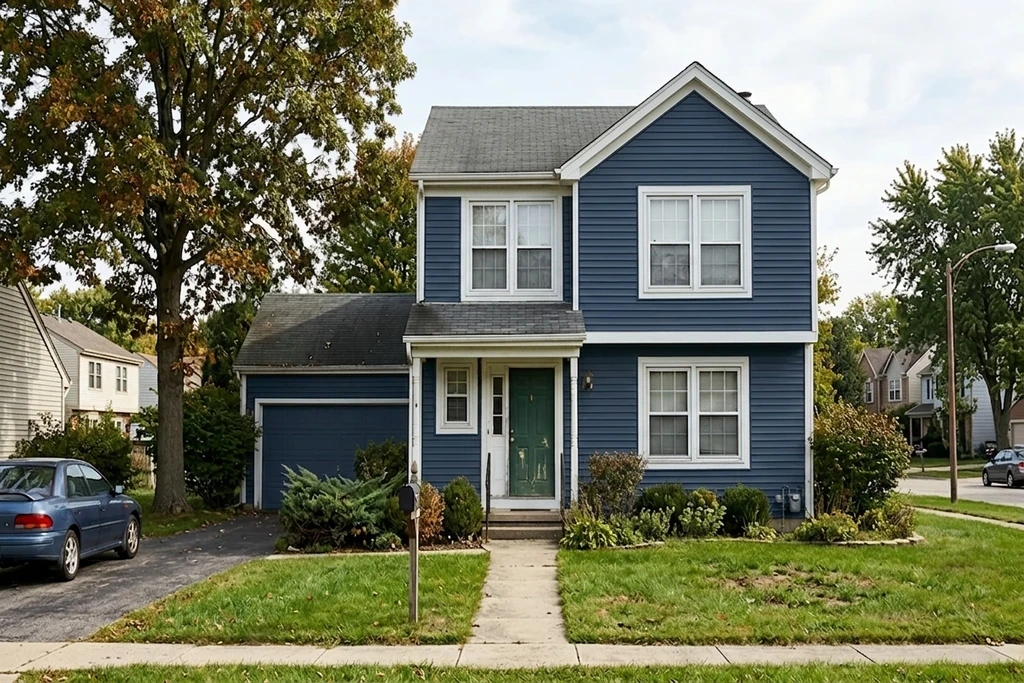
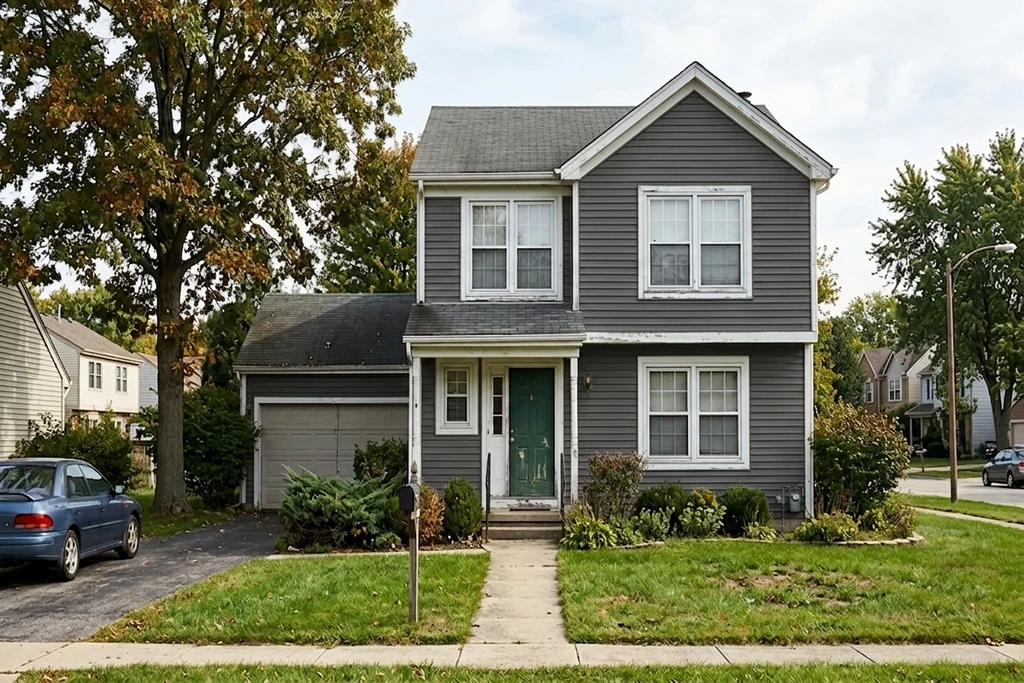
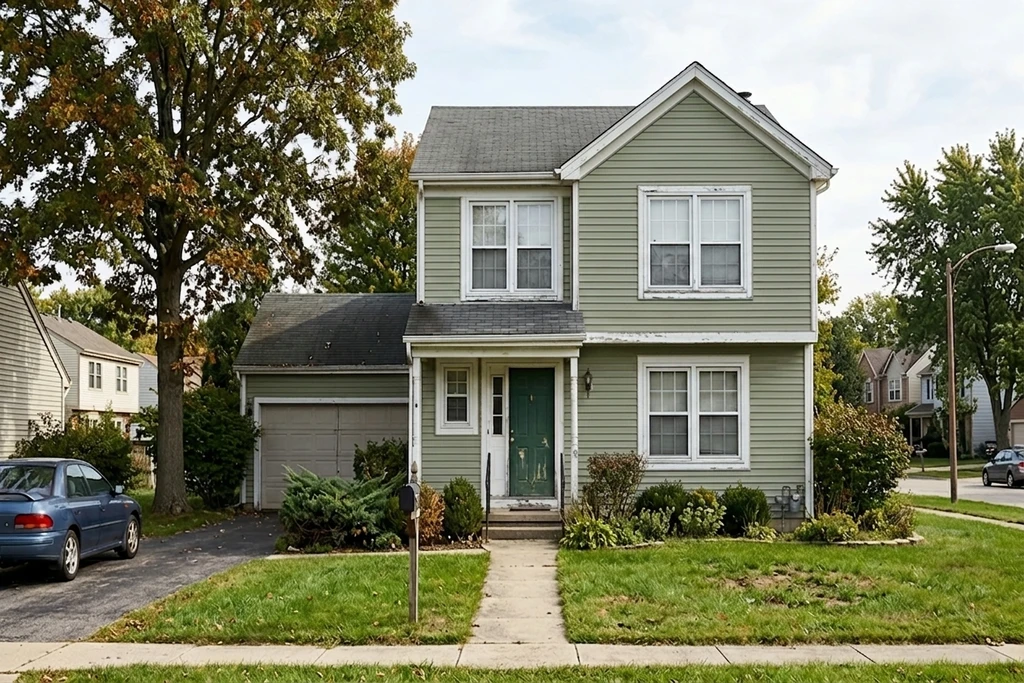
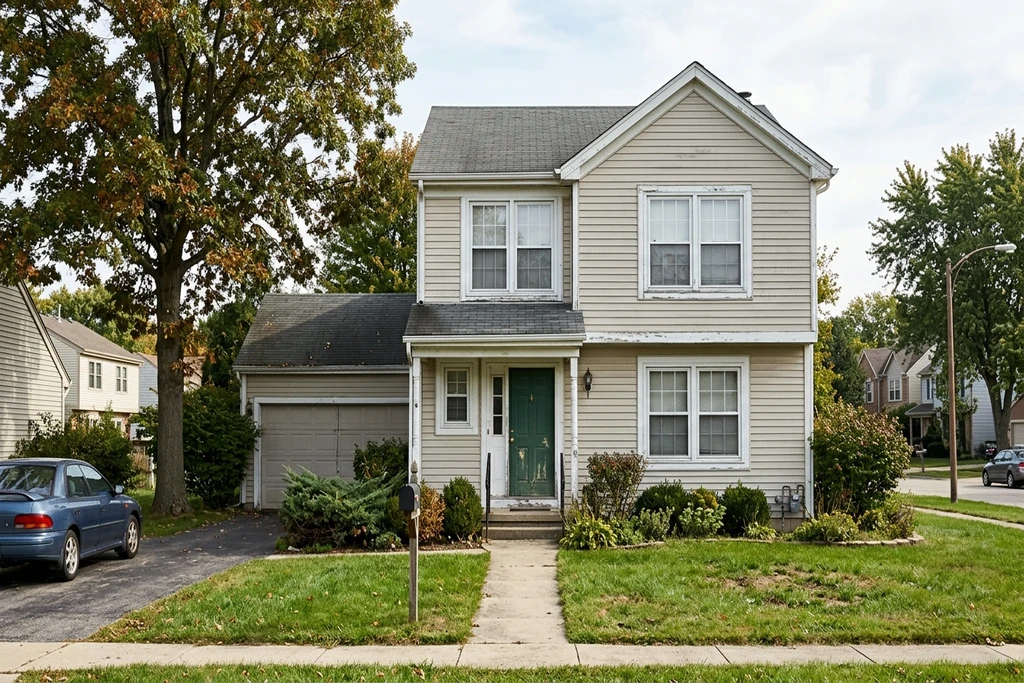
Real AI renders, your own photo, any shade
Try it on your house
No photo? Try a sample
Kansas City painter wages and labor data (BLS, 2024)
Source: US Bureau of Labor Statistics, Occupational Employment and Wage Statistics (OEWS), May 2024. Wage figures are for the state as a whole; Kansas City metro pricing typically tracks at or above the state mean.
Kansas City climate and what it does to exterior paint
Humid continental climate (Koppen Dfa) with about 215 sunny days per year, roughly 42 in of annual rainfall, and around 15 in of snow. July highs average near 90 deg F with heavy humidity, while January lows fall to about 22 deg F. The metro runs through dozens of freeze-thaw cycles every winter.
The real enemy here is not UV, it is water that freezes. Rain or snowmelt wicks into wood siding and masonry, then expands as it freezes overnight, lifting paint film off the substrate at the edges. Summer humidity in the 70 percent range slows cure times and feeds mildew on shaded north walls, so quality jobs specify a mildewcide additive and a flexible 100 percent acrylic topcoat that moves with the freeze-thaw cycle instead of cracking.
Source: NOAA National Centers for Environmental Information, climate normals 1991 to 2020.
What Exterior Painting Actually Costs in Kansas City
Kansas City sits below the national average for exterior house painting, and that is a genuine advantage for homeowners here rather than a sign of corner-cutting. Labor is the swing factor: the State of Missouri painter wage in the BLS May 2024 OEWS data runs near $22.97 an hour against a national median of $48,660 a year, so the crew line on your quote is meaningfully lighter than it would be in a coastal metro. Most Kansas City homeowners on a 1,800 to 2,400 sq ft home land in the $3,400 to $9,800 band for a full two-coat exterior, which works out to roughly $1.80 to $4.20 per square foot of paintable surface. Where the number climbs is prep, not paint. A brick four-square in Hyde Park with peeling wood trim, a two-story Tudor in Brookside with deep eaves and dormers, or any pre-1978 home that needs lead-safe scraping will push toward the top of the range because the careful work happens before the first gallon is opened. Single-story ranch homes in the Northland with vinyl-clad gables and minimal trim sit comfortably at the low end. The honest rule in this market: you are paying for surface preparation and a painter who understands freeze-thaw, far more than for the brand on the can.
The Freeze-Thaw Problem That Defines Every Kansas City Job
Kansas City has a humid continental climate with four hard seasons, and the single force that destroys exterior paint here is water that freezes. The metro logs about 42 inches of rain and 15 inches of snow a year, and it cycles through freezing and thawing dozens of times each winter as temperatures swing across 32 deg F from one day to the next. When rain or snowmelt soaks into wood siding, window sills, or porous brick mortar and then freezes overnight, it expands and physically pries the paint film loose from its edges. That is why local failures show up as peeling and flaking along board edges and trim, not as the chalky fade you see in the desert Southwest. The defense is a flexible, 100 percent acrylic topcoat that stretches and contracts with the substrate instead of going brittle, applied over a fully dry surface sealed with a quality primer. A painter who understands Kansas City will refuse to coat damp wood and will time the job around the forecast, because trapping moisture under fresh paint in October guarantees a callback by March.
Humidity, Mildew, and the Best Months to Paint Here
Summer is the busy season, but it carries its own trap. July and August highs hover near 90 deg F with relative humidity that climbs into the seventies, and that combination slows paint cure and feeds mildew on shaded north and east walls, under deep eaves, and behind overgrown foundation plantings. A careful Kansas City crew adds a mildewcide to the topcoat, pressure-washes and lets siding dry fully, and avoids painting in the dead-still humidity of a late-afternoon thunderstorm build-up. The most reliable window in this market is late spring through early fall, roughly mid-April into October, when daytime temperatures sit in the product range of 50 to 85 deg F and overnight lows stay above the dew-and-freeze threshold. Crews try to wrap exterior work before the first hard frost in November, because most acrylic exterior paints will not cure properly once surface temperatures drop below the mid-fifties overnight. If you want the sharpest pricing, book a quote in late winter for an early-spring slot before the summer rush fills painter calendars. Spring weather in the Kansas City metro also brings the regional risk of severe thunderstorms and hail, so an experienced crew watches the radar and will not open fresh primer or stage ladders on a day the National Weather Service has flagged for storms tracking up from the southwest.
Brick, Wood Siding, and the Historic Substrate Mix
Kansas City housing stock is a substrate puzzle, and that shapes how a good quote is written. The classic local home blends materials on a single facade: brick or limestone on the first floor with wood lap siding, cedar shingles, or stucco on the upper floors, a pattern you see across Hyde Park, Brookside, and Waldo. Many of these homes are the Kansas City Shirtwaist, the Tudor, the Craftsman bungalow, and the American Foursquare built from the 1900s through the 1950s, including the bulk Tudor neighborhoods Napoleon Dible developed in Brookside and Waldo. Painting brick is a one-way decision, so a reputable painter will talk you through breathable masonry coatings versus simply cleaning and repointing, and will price wood trim and stucco fields as separate scopes. Anything built before 1978 almost certainly has lead paint in the older layers, which is legal to coat over but requires EPA RRP lead-safe practices for any scraping or sanding. Newer Northland construction in Staley Farms and Staley Hills leans on fiber-cement and engineered wood siding, which paints predictably and holds a coat for eight to twelve years when the prep is done right.
Historic District Rules in Hyde Park and the Plaza
Color is not always a free choice in Kansas City, and the constraint here is historic-district review rather than a typical suburban HOA palette. Old Hyde Park and Central Hyde Park are listed on the National Register of Historic Places, and the Kansas City Historic Preservation Commission must approve exterior changes that are visible from the public street on locally designated properties. For a full exterior repaint in a color scheme that departs from the existing one, owners in these districts may need a certificate of appropriateness before work begins, and review favors period-correct schemes for the home era. Around the Country Club Plaza and in pockets of Brookside, overlay and conservation guidelines can apply as well. The practical move is to settle on your final scheme early and bring it to review with a clear visualization, which is exactly why many Kansas City homeowners preview body, trim, and accent candidates on a photo of their own house with the FacadeColorizer exterior paint visualizer before they submit paperwork or call a painter.
HOA Color Approval in Staley Farms, Staley Hills, and Ruskin Heights
Outside the historic core, the Northland and the southern suburbs are where formal homes associations govern color. Kansas City has a deep tradition of homes associations, with the Homes Associations of Kansas City network alliance covering dozens of neighborhoods. Staley Farms in the Northland is a golf-course master-planned community of roughly 600 single-family homes with an active homeowners association, and the nearby Staley Hills association governs about 400 homes and villas in the same well-regarded North Kansas City school district. To the south, the Ruskin Heights Homes Association is one of the older organized associations in the metro. In these communities, exterior color changes typically route through an architectural review or covenants committee, and approval is faster when you submit specific product names and a rendered mockup rather than a paint-chip name. Bringing an HOA-ready visualization to the table shortens the back and forth and keeps your painter from idling between color rounds.
How to Vet a Kansas City Painter Without a State License Number
Missouri is one of the states with no statewide painting or general contractor license, so you cannot simply look up a license number the way a San Diego homeowner verifies a C-33. That puts more weight on your own vetting. Insist on three things in writing: a current Kansas City business license, a general liability insurance certificate that names your address, and a workers compensation policy. For any home built before 1978, the painter must by law be EPA RRP certified for lead-safe work, so ask to see the RRP certificate, not just a verbal assurance. Beyond paperwork, a serious local crew will quote a clearly defined two-coat system, name the exact product line such as Sherwin-Williams SuperPaint, Duration, or Emerald, or a Benjamin Moore Aura or Regal Select stocked through Spectrum Paint, and back the work with a written multi-year workmanship guarantee. Ask for three references from exterior jobs completed in the last two winters in your zip code, because a paint job in Kansas City is only proven after it has survived a freeze-thaw season. One more local tell: ask how they handle the chalky residue on older painted brick and limestone, because a crew that knows this market will scrub-test and spot-prime chalky masonry rather than rolling fresh paint straight onto a powdery surface that guarantees adhesion failure by the next spring thaw.
Top Kansas City HOAs with exterior color approval rules
Before painting, confirm your HOA palette and submit your color selections to the architectural review committee. Most Kansas City HOAs respond within 14 to 21 days.
Paint stores near Kansas City
Painter licensing in Missouri
Missouri does not issue a statewide painting or contractor license, so there is no single number to verify the way California uses C-33. Painting is regulated at the city and county level: a Kansas City crew should hold a current city business license and carry general liability plus workers compensation. For any home built before 1978, the painter must be EPA RRP (Lead Renovation, Repair and Painting) certified by law. Ask for the RRP certificate, the liability certificate, and proof of city registration before you sign.
Frequently asked questions about Kansas City exterior painting
How much does it cost to paint a house exterior in Kansas City in 2026?
Most Kansas City single-family homes run $1.80 to $4.20 per square foot for a two-coat acrylic exterior, with an 1,800 to 2,400 sq ft home landing in the $3,400 to $9,800 band. Heavy lead-safe prep on pre-1978 wood trim, two-story Tudors and four-squares, and brick coating work push pricing toward the high end. Labor here sits below the national average, so prep quality is the main driver of the final number.
Do painters in Kansas City need a license?
Missouri has no statewide painting or contractor license, so there is no single number to verify. Painting is regulated locally: a Kansas City crew should hold a current city business license and carry general liability plus workers compensation. For any home built before 1978, the painter must be EPA RRP certified for lead-safe work. Ask to see all three documents before signing.
What is the best time of year to paint a house exterior in Kansas City?
Mid-April through October is the reliable window, when surface temperatures sit in the 50 to 85 deg F range and stay above the overnight freeze threshold. Crews aim to finish before the first hard frost in November because acrylic paint will not cure properly once overnight surface temperatures drop into the mid-forties. Booking a quote in late winter usually secures a sharper early-spring slot.
Do I need approval to repaint my house a new color in Kansas City?
It depends on where you live. In historic districts such as Old and Central Hyde Park, the Kansas City Historic Preservation Commission must approve street-visible exterior changes on designated properties. In homes associations like Staley Farms, Staley Hills, or Ruskin Heights, an architectural review committee approves color changes. Submitting a rendered visualization with specific product names speeds approval in both cases.
Want a deeper cost breakdown? Read our 2026 Kansas City cost guide .
House painters in nearby metros
Popular exterior colors for Kansas City homes
In Kansas City's cold-winter climate, timeless grays, deep navy and barn red suit brick and clapboard exteriors.
Browse painting costs in other metros: all US city guides.