Exterior painters near me in St. Louis, Missouri
Before you call a St. Louis painter, upload one photo and preview real Sherwin-Williams, Benjamin Moore or Behr colors on your own facade in about 30 seconds. Free, no account, no obligation.
- No sign-up
- No card
- Result in ~30s
Your photo is private, used only to create your preview, never sold. You keep full ownership.
✓ No sign-up ✓ Result in ~30s
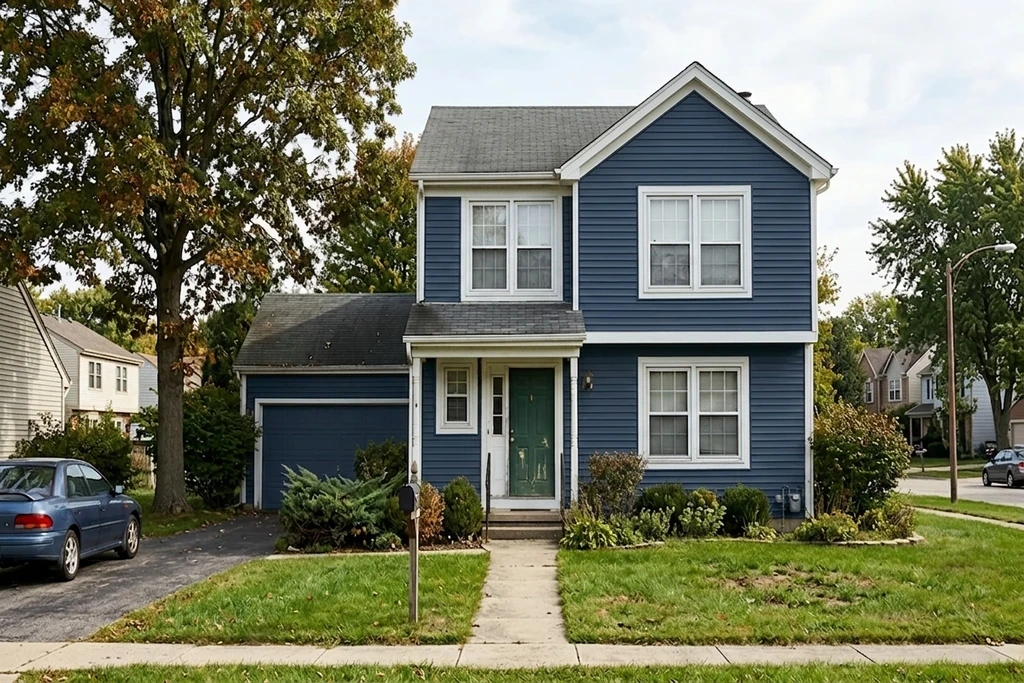
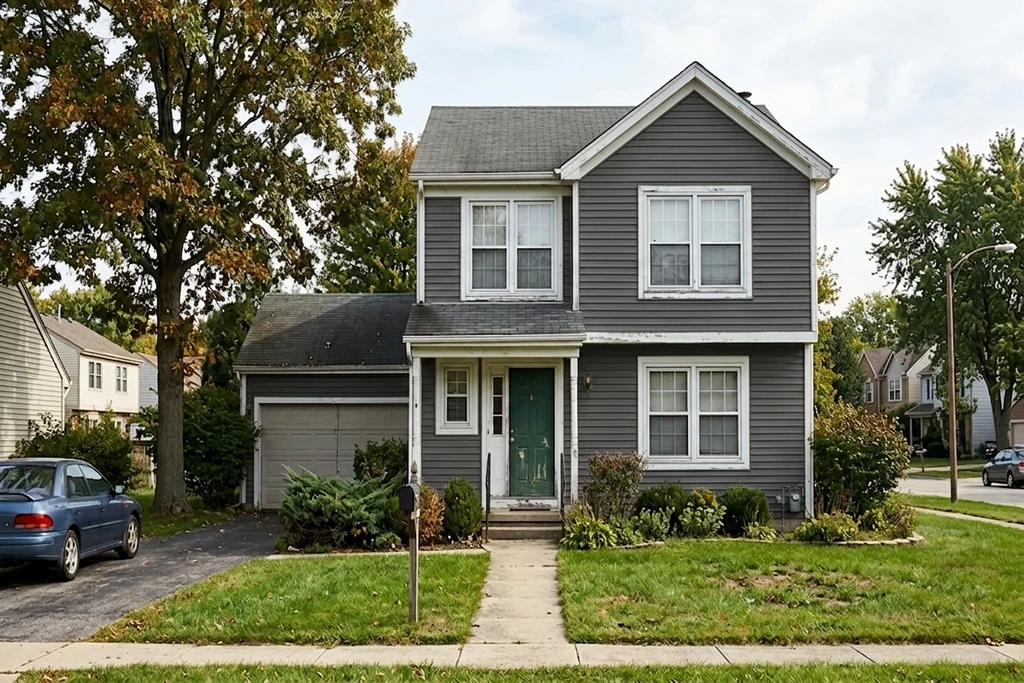
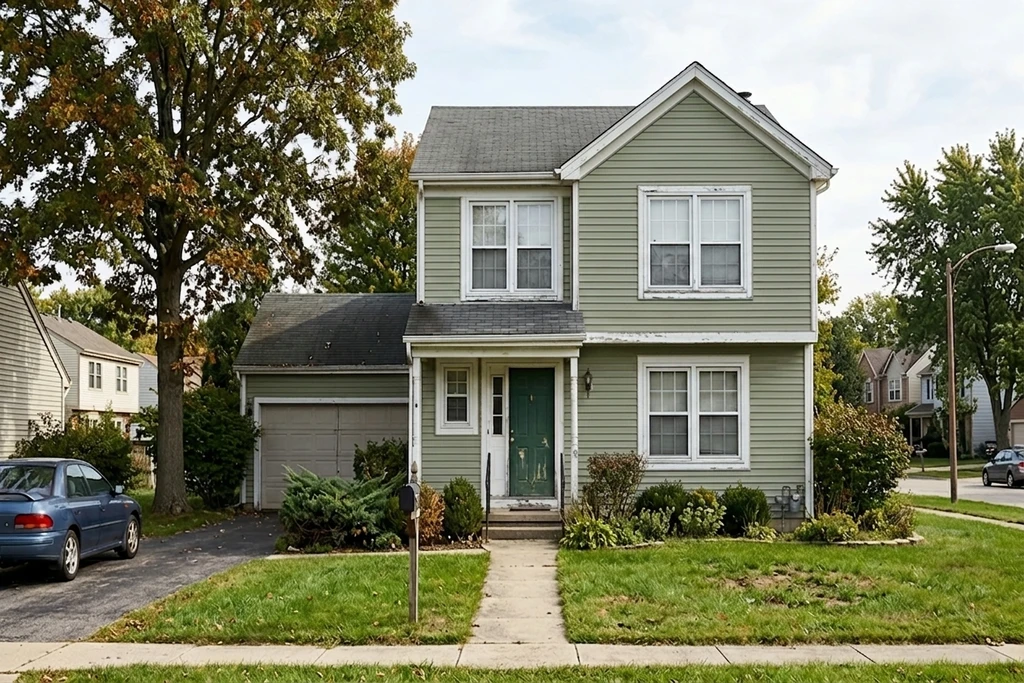
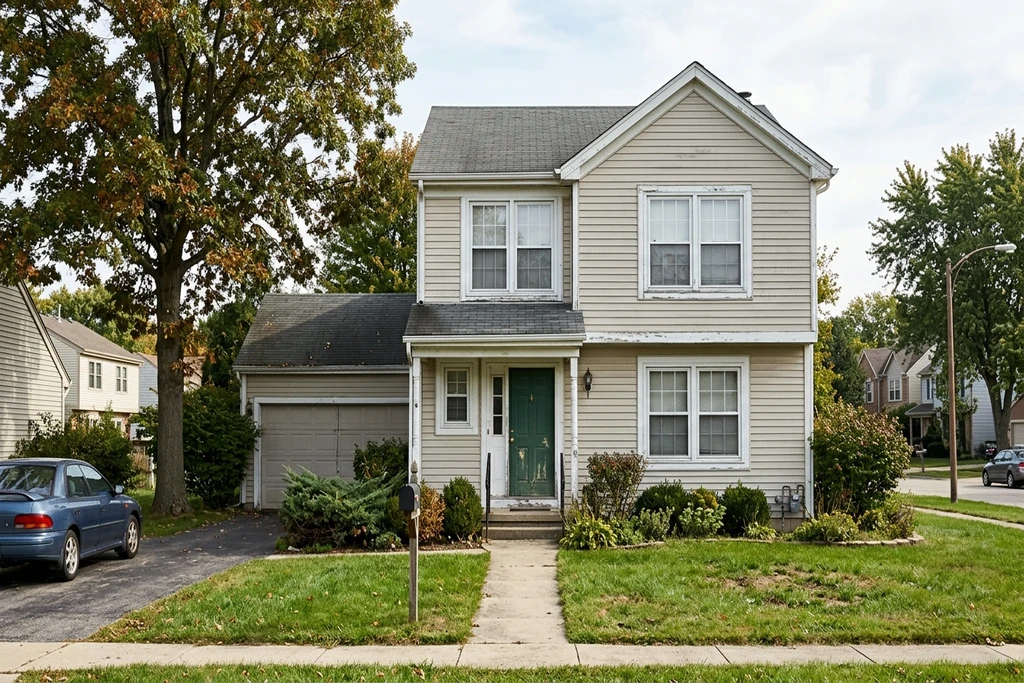
Real AI renders, your own photo, any shade
Try it on your house
No photo? Try a sample
St. Louis painter wages and labor data (BLS, 2024)
Source: US Bureau of Labor Statistics, Occupational Employment and Wage Statistics (OEWS), May 2024. Wage figures are for the state as a whole; St. Louis metro pricing typically tracks at or above the state mean.
St. Louis climate and what it does to exterior paint
Humid continental climate (Dfa) with about 202 sunny days per year, 41.7 in of annual rainfall, and roughly 16 in of snow. Summers run hot and humid into the upper 80s deg F; winters bring around 19 days that never climb above freezing. Spring is the wettest, stormiest season.
The dominant failure mode here is not UV chalking but freeze-thaw and moisture. Water that soaks into brick, mortar, or wood and then freezes on those 19-plus sub-freezing days expands and pops paint film off in sheets, so breathable masonry coatings and full caulk-and-prime cycles matter more than raw gallon count. Long humid summers above 70 percent relative humidity feed mildew on shaded north walls, which is why mildew-resistant additives and a power-wash plus mildewcide step are standard on St. Louis exteriors.
Source: NOAA National Centers for Environmental Information, climate normals 1991 to 2020.
Why St. Louis Exterior Painting Costs Sit Below the Coastal Benchmarks
St. Louis is one of the more affordable major metros to paint a house, and the reason is structural rather than promotional. Labor is the largest line on any exterior bid, and the Bureau of Labor Statistics puts the Missouri painter mean hourly wage at $22.83 in the May 2024 OEWS estimate, below the national mean of roughly $24.48 and far below California or coastal markets. That feeds a cost-per-square-foot band of about $1.80 to $4.30 for a two-coat acrylic system, with a typical 2,000 to 2,500 sq ft single-family home landing in the $3,500 to $10,500 range. Two things push a St. Louis quote toward the top of that band, and neither is the headline gallon price. The first is brick and masonry prep, because so much of the housing stock is solid brick that needs tuckpointing review, mortar repair, and a breathable coating rather than a film that traps moisture. The second is the region hard freeze-thaw cycle, which punishes any job that skipped caulking, priming, or a proper moisture-cure window. Homeowners who treat prep as the budget priority, not the paint brand, get the longest service life here.
St. Louis Climate: Freeze-Thaw, Humid Summers, and Spring Storms
St. Louis sits in a humid continental climate, classed Dfa, and the exterior-paint load looks nothing like a Sun Belt market. NOAA normals show about 202 sunny days, 41.7 inches of rain, and roughly 16 inches of snow a year, with around 19 days that never rise above freezing. The single most destructive force on local paint is the freeze-thaw cycle: moisture wicks into brick, mortar joints, and bare wood during wet autumn and winter weeks, then freezes and expands, levering coatings off the surface. That is why a credible St. Louis painter spends real time on moisture management, sealing cracks and bedding new mortar before any topcoat. The long, sticky summers, with July averages in the low-to-mid 80s deg F and humidity often above 70 percent, create the second problem: mildew and algae bloom on shaded north and east elevations, especially under tree canopy in Shaw and Tower Grove. Spring is the wettest and stormiest season, with thunderstorm trains that can wash out a wet film in minutes, so crews here watch the radar as closely as the calendar.
Brick, Mortar, and Wood Trim: the St. Louis Substrate Story
St. Louis is a brick city in a way few American metros are. Clay from the Mississippi River bottoms fed dozens of local brickyards, and the result is block after block of solid-masonry homes, two-family flats, and the famous red-brick four-families in neighborhoods like Soulard, Lafayette Square, and Tower Grove South. That substrate rewrites the painting scope. Sound, historic brick is often best left unpainted, but where brick has already been coated, or where a homeowner wants a limewash or mineral finish, the coating has to breathe so trapped water vapor can escape instead of spalling the brick face in the next freeze. Painting over sound brick is a one-way decision, so reputable crews talk you through it honestly. The paint work that almost every St. Louis home does need lives on the wood: cornices, dentil trim, window frames, soffits, fascia, porch columns, and the ornate millwork on Central West End and Compton Heights mansions. Most of that woodwork predates 1978, which means lead paint, EPA RRP-certified containment, and careful scrape-prime-paint rather than aggressive dry sanding.
HOA and Subdivision Color Rules in Chesterfield, Wildwood, and St. Charles
The historic city core runs largely on local historic-district design review rather than HOAs, but the suburban ring is a different world. In west St. Louis County, the Kehrs Mill Estates Residents Association near Chesterfield and Ballwin is run by an elected resident board that reviews exterior changes for neighborhood consistency. Out in Wildwood, the Villages of Cherry Hills Homeowners Association maintains bylaws and an approval process for exterior work. Across the Missouri River in Weldon Spring, the Whitmoor Homeowners Association governs a large golf-course community where exterior color and material changes go through the association. In each case the smartest move is to submit your proposed body, trim, and accent colors with a realistic visualization of your actual house rather than loose paint chips. Trustees and review boards approve faster when they can see how a color reads against your existing brick, roof, and the homes next door, which is exactly why many local homeowners render two or three finalist palettes through the FacadeColorizer exterior paint visualizer before they file the form.
Choosing a Licensed St. Louis Painter (License, RRP, Bonded, Insured)
Missouri does not hand out a statewide painting license, so screening is on you and it matters more here, not less. Inside the City of St. Louis, every contractor is required to carry a Graduated Business License through the License Collector, so ask for that number and confirm the firm is registered to work in the city. On any home built before 1978, which is the overwhelming majority of the historic core, the painter must be EPA Lead Renovation, Repair and Painting (RRP) certified, and a serious outfit will hand you the certificate without being chased. Beyond paperwork, a quality St. Louis quote names the exact product system by line (Sherwin-Williams SuperPaint, Duration, or a breathable masonry coating; Benjamin Moore Aura Exterior or Regal Select), specifies the prep scope on brick and wood separately, and offers a written multi-year workmanship guarantee. Confirm general-liability and workers compensation coverage that names your address before any ladder goes up.
Best Months to Paint in St. Louis (and the Two Pinch Points)
The St. Louis exterior season is real but shorter than the Sun Belt, and it has two natural pinch points. Late spring, roughly mid-May into June, and early-to-mid fall, September into October, are the sweet spots: warm enough for paint to cure, dry enough between fronts, and ahead of the first hard frost. The first pinch point is the wet, stormy heart of spring, when thunderstorm clusters can ruin a fresh coat before it sets, so crews keep an eye on radar and build in rain days. The second is the late-fall wall: most exterior acrylics need surface and overnight temperatures to stay above roughly 50 deg F to cure, and once October closes that window narrows fast toward the first freeze. High summer is workable but humid, so good crews start early, avoid painting in the muggiest afternoon hours, and lean on mildewcide prep. Booking in late winter for an early-spring slot is the move if you want the best crews, because the strong painters fill their May and June calendars first.
Two-Family Flats, Tall Brick Walls, and Access Surcharges in St. Louis
St. Louis has an unusually high share of two- and three-story brick flats and four-family buildings, especially in Soulard, Lafayette Square, Benton Park, and Tower Grove South, and that height drives a real surcharge above the headline cost-per-square-foot band. Tall, flat brick walls with deep cornices and bracketed eaves mean more staging: extension ladders, scaffolding for the upper trim runs, and sometimes a lift for a sheer street-facing wall. Expect that access work to add meaningfully to a quote on a tall flat versus a one-story ranch in the county. The ornamental woodwork that crowns these buildings, the dentils, brackets, and porch spindles, is slow detail work and is usually pre-1978 lead paint, so it carries both a labor premium and an RRP containment cost. When you compare quotes on a historic flat, make sure each painter has priced the same staging plan and the same trim scope, because a low bid that quietly skips the upper cornice or the lead-safe setup is not actually the cheaper job once you account for the rework.
Top St. Louis HOAs with exterior color approval rules
Before painting, confirm your HOA palette and submit your color selections to the architectural review committee. Most St. Louis HOAs respond within 14 to 21 days.
Paint stores near St. Louis
Painter licensing in Missouri
Missouri does not issue a statewide painting contractor license, so the real safeguard is local plus insurance. Inside the City of St. Louis every contractor must hold a Graduated Business License through the License Collector. On any home built before 1978, federal law requires the firm to be EPA Lead Renovation, Repair and Painting (RRP) certified. Ask every quote for its St. Louis business license number, its RRP certificate, and a current general-liability and workers compensation certificate naming your address.
Frequently asked questions about St. Louis exterior painting
How much does it cost to paint a house exterior in St. Louis in 2026?
Most St. Louis single-family homes run $1.80 to $4.30 per square foot for a two-coat acrylic system, with a 2,000 sq ft home landing in the $3,500 to $10,500 band. Tall brick flats, heavy mortar and tuckpointing prep, and lead-safe trim work on pre-1978 homes push pricing toward the high end.
Do St. Louis painters need a license?
Missouri has no statewide painting license, but inside the City of St. Louis every contractor must hold a Graduated Business License through the License Collector. On any home built before 1978, the firm must also be EPA Lead RRP certified. Ask for the city business license number, the RRP certificate, and proof of insurance before you sign.
What is the best month to paint a house exterior in St. Louis?
Late spring (mid-May into June) and early fall (September into October) are ideal: warm enough to cure and ahead of the first hard frost. Avoid the wettest, stormiest stretch of spring, and finish before late fall, when overnight temperatures dip below the roughly 50 deg F most exterior paints need to cure.
Should I paint the brick on my St. Louis house?
Painting sound, historic brick is a one-way decision, so weigh it carefully. If you do coat brick, use a breathable masonry or mineral product so trapped moisture can escape instead of spalling the face during a freeze. Most local exterior paint work belongs on the wood trim, cornices, and porches rather than the brick body itself.
Want a deeper cost breakdown? Read our 2026 St. Louis cost guide .
House painters in nearby metros
Popular exterior colors for St. Louis homes
In St. Louis's cold-winter climate, timeless grays, deep navy and barn red suit brick and clapboard exteriors.
Browse painting costs in other metros: all US city guides.