Exterior painters near me in Las Vegas, Nevada
Before you call a Las Vegas painter, upload one photo and preview real Sherwin-Williams, Benjamin Moore or Behr colors on your own facade in about 30 seconds. Free, no account, no obligation.
- No sign-up
- No card
- Result in ~30s
Your photo is private, used only to create your preview, never sold. You keep full ownership.
✓ No sign-up ✓ Result in ~30s
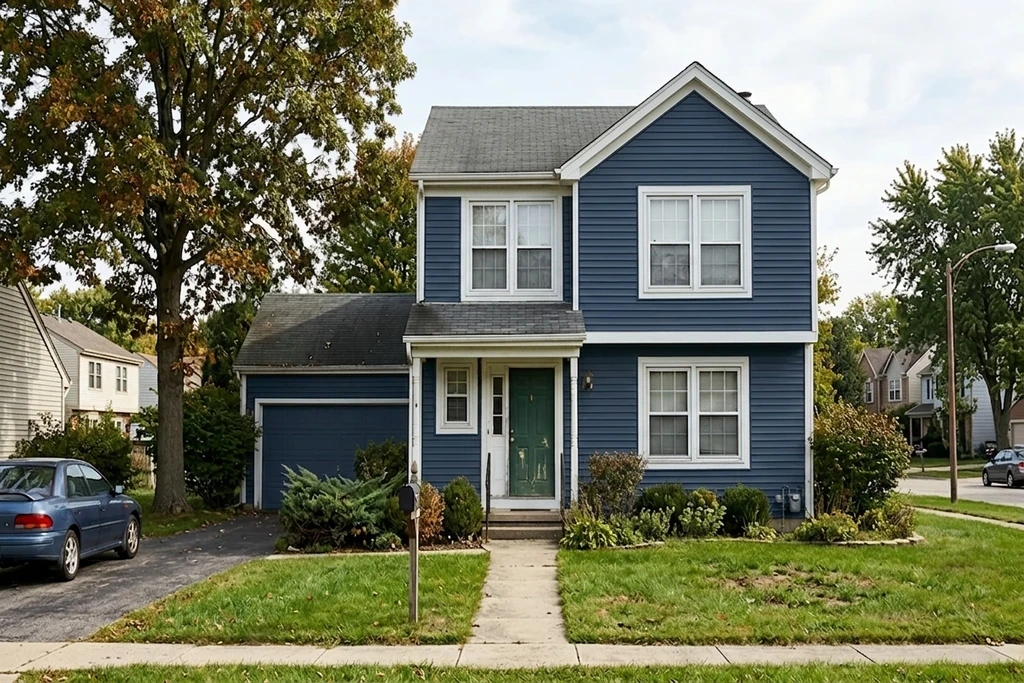
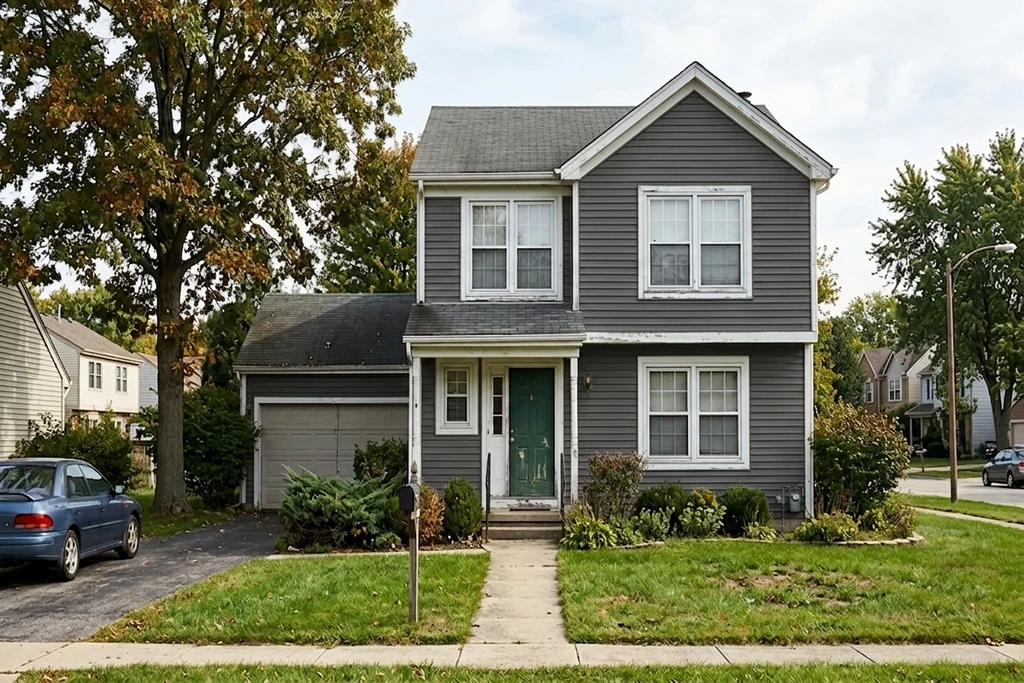
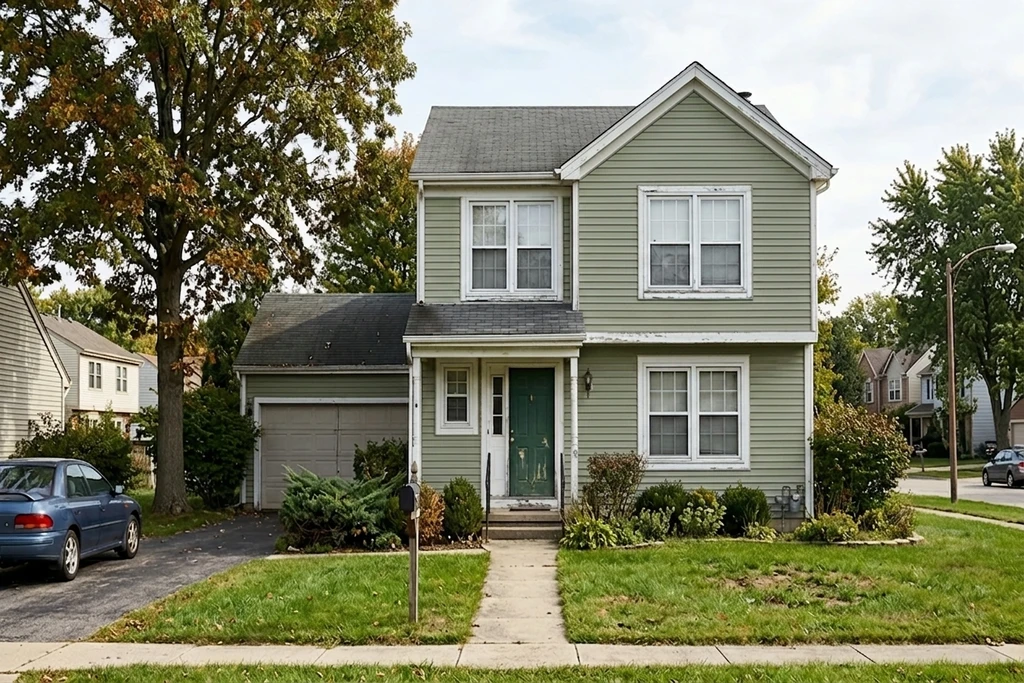
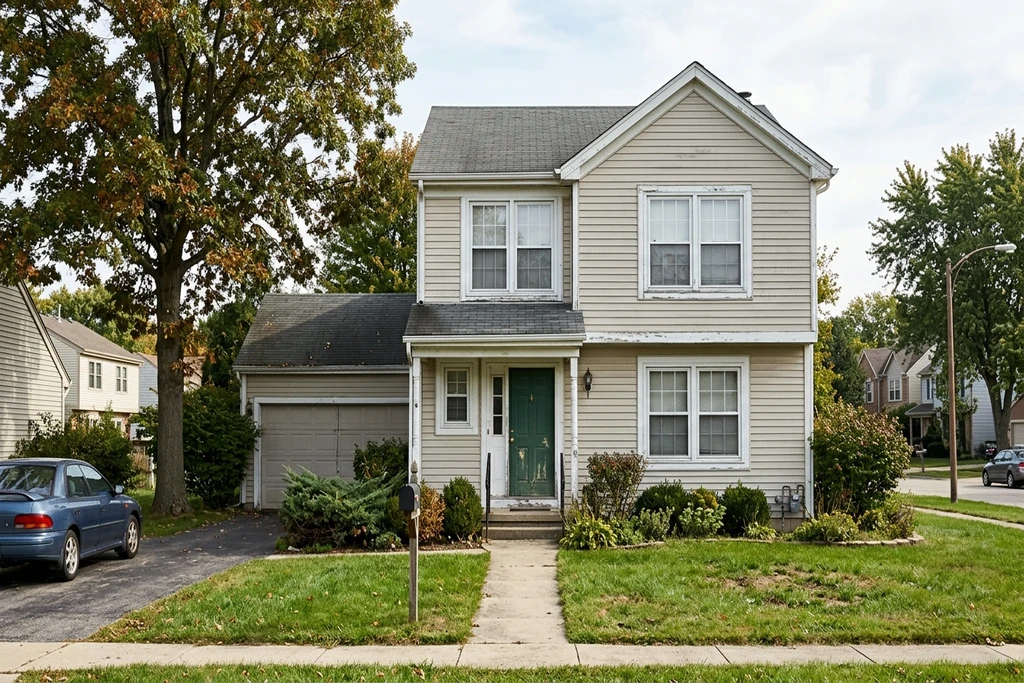
Real AI renders, your own photo, any shade
Try it on your house
No photo? Try a sample
Las Vegas painter wages and labor data (BLS, 2024)
Source: US Bureau of Labor Statistics, Occupational Employment and Wage Statistics (OEWS), May 2024. Wage figures are for the state as a whole; Las Vegas metro pricing typically tracks at or above the state mean.
Las Vegas climate and what it does to exterior paint
Hot desert climate (BWk, Mojave) with roughly 294 sunny days, just 4.2 in of annual rainfall, and single-digit summer humidity. July highs average near 104 deg F and the UV index peaks at 11 from May through August.
Bone-dry air and relentless clear-sky UV make fading and binder chalking the dominant failure mode: mid-grade acrylics lose visible color on south and west elevations in 3 to 5 years, while the rare desert downpour and a handful of overnight winter freezes drive thermal cycling that opens hairline stucco cracks. The very low relative humidity also flash-dries topcoats fast, so Las Vegas crews work to surface temperature and dew point, not the calendar, and add extender to slow the open time on summer afternoons.
Source: NOAA National Centers for Environmental Information, climate normals 1991 to 2020.
Why Las Vegas Exterior Painting Is Priced Below the Coasts (But the Spec Decides Everything)
Las Vegas labor sits well under the coastal benchmarks. The Bureau of Labor Statistics pegs the Nevada painter mean hourly wage at $28.11 in its May 2024 survey, with the Las Vegas-Henderson metro running a touch higher, so a 2,000 to 2,500 sq ft single-story home typically lands in the $3,600 to $10,800 band rather than the five-figure floor you see in California. The catch is the desert exposure cycle, which is brutal on cheap paint. A $35 per gallon builder-grade acrylic can chalk and fade visibly inside three to five years on a west-facing Summerlin elevation, while a $70 per gallon premium acrylic or elastomeric with a high titanium-dioxide load holds eight to twelve. The smart Las Vegas play is to bank the labor savings and spend them back on product grade and prep. Two-story homes in Summerlin, Anthem, and the Henderson hillsides push toward the top of the range once scaffolding, tile-roof access, and HOA color approval are folded into the bid.
The Mojave Exposure Cycle: 294 Sunny Days, 4 Inches of Rain, and a UV Index of 11
Las Vegas is the driest major metro in the continental United States. NOAA and the local National Weather Service office record roughly 294 sunny days a year against barely 4.2 inches of rainfall, so blistering and mildew, the enemies of paint in humid climates, are almost nonexistent here. Instead the load is photochemical: a clear-sky UV index that peaks at 11 from late spring through August degrades the resin in lower-grade coatings far faster than the national norm. July afternoon air temperatures average near 104 deg F, and dark cladding can read 150 deg F or hotter at the surface, which stresses the binder through daily thermal expansion. The flip side of the desert is humidity so low it routinely drops into single digits in summer, flash-drying topcoats before they can level. Add a handful of overnight winter freezes and the occasional violent monsoon cell in July and August, and the verdict is clear: spec a UV-stabilized, thermally flexible system, and let the crew chase dew point and surface temperature rather than a fixed start date. North-facing walls in the same house can outlast south and west elevations by years, so a good Las Vegas estimator will often recommend a heavier coat or a step up in product grade only on the sun-hammered sides, which is a sensible way to keep the bid in line without cutting corners where it shows.
Stucco, Block, and Sun-Baked Trim: the Las Vegas Substrate Mix
The overwhelming majority of Las Vegas valley homes wear traditional three-coat stucco, with a meaningful slice of 1990s and 2000s tract homes in Mountain's Edge, Aliante, and Centennial Hills carrying EIFS, the synthetic foam-backed stucco that needs a soft, flexible acrylic so it can move without cracking. Older central-valley and North Las Vegas homes often hide painted concrete block (CMU) that wants a block filler before any topcoat. Each substrate prices differently, and a serious Las Vegas painter will say which one you have and name the product by line, not just "two coats." Desert stucco also fails in a specific pattern: hairline map-cracking from thermal cycling and the rare hard rain, which is why elastomeric or high-build acrylic with proper crack chasing earns its premium here. The hardest-working surfaces are south and west fascia, garage doors, and wrought-iron gates and railings, where the sun is merciless and a rust-inhibitive metal primer is non-negotiable before the finish coat. One detail specific to the valley: a lot of homes have unpainted natural-tone stucco from the original builder, so the first repaint is also the first time the wall is sealed and coated, which means the prep scope (clean, patch, prime bare and chalky areas) is heavier than on a home that has been repainted before. Set expectations on that up front so the bid is not a surprise.
HOA Color Approval in Summerlin, Mountain's Edge, and Aliante
If your home sits inside a Las Vegas master-planned community, color is rarely a free choice. The Summerlin Council enforces one of the most detailed exterior palettes in the valley, with desert-toned bodies, defined trim ratios, and a modification application that runs through the architectural review committee on a multi-week cycle. Mountain's Edge applies a similar earth-tone scheme through its master association, and Aliante in North Las Vegas reviews body, trim, and accent combinations to keep streetscapes cohesive. In every case, submitting a realistic visualization of your own house, not just a fan deck of paint chips, speeds the decision, because reviewers can see how a body and trim pairing reads against your existing tile roof and the neighboring homes. It is also worth checking the bid for two-story access, because the Henderson hillsides, the Summerlin villages, and Anthem hold many two-story stucco homes where scaffolding, tile-roof valley access, and added fall-protection rigging fairly add a few hundred to a couple thousand dollars over the flat cost-per-square-foot rate. Many Las Vegas homeowners run their final two or three palette candidates through the FacadeColorizer exterior paint visualizer first, then attach that preview to the HOA modification form to cut a round of back-and-forth.
Choosing a Licensed Las Vegas Painter (NSCB C-4 + Bonded + Insured)
Nevada licenses painting contractors through the Nevada State Contractors Board. The relevant classification is C-4 Painting and Decorating, or the narrower C-4A Painting, and a license is required on any job over $1,000 or that needs a building permit, which covers essentially every whole-house repaint. Every quote you collect should list a current NSCB license number, a continuous surety bond, general liability insurance, and a workers compensation policy that names your address. Verify the license and bond on the NSCB lookup before you sign, and ask for three references from desert-stucco repaints completed in the last eighteen months in your zip code. A credible Las Vegas painter will price a two-coat system by product line (for example Sherwin-Williams SuperPaint, Duration, or Loxon, or Dunn-Edwards Evershield), state the surface-temperature and dew-point limits they will respect, and put a written five to ten year workmanship guarantee in the contract. Get the full scope in writing too: number of coats, whether trim and stucco get the same product, how many gallons are budgeted, who handles the HOA modification paperwork, and what surface prep is included. In a desert market the prep and the product grade, not the headline price, are what decide whether the finish lasts five years or fifteen, so compare bids on those line items, not just the bottom number.
Best Months to Paint in Las Vegas (and How Crews Beat the Summer Heat)
The prime painting window in Las Vegas runs October through April. Surface temperatures, dew point, and dust all sit comfortably inside product spec for the major brands, and walls cure evenly. The practical problem is capacity: every homeowner who has been putting off the job books in autumn, and the best crews fill their calendars fast for that six-month run, so reserve early. Summer work is entirely possible with a real plan. Crews start at first light, spray and back-roll the bodies before the surface climbs past roughly 95 deg F mid-morning, then pause through the worst of the afternoon and return for trim and detail in the cooler evening. The hazards to plan around are the July and August monsoon cells, which can throw blowing dust and a sudden downpour onto a wet wall with little warning, and the flash-drying low humidity, which a good crew offsets with paint extender. Winter is fine for application as long as the crew avoids the handful of mornings that dip below the product low-temperature limit before the wall warms in the sun.
Where Las Vegas Painters Buy: Sherwin-Williams, Dunn-Edwards, and Behr
Las Vegas crews lean on three main supply networks, and which one your painter buys from affects both product and price. Sherwin-Williams, with a busy store on West Sahara Avenue, is the default for SuperPaint, Duration, and Loxon, the lines most often specified on desert stucco. Dunn-Edwards, the Southwestern powerhouse with a location on South Decatur Boulevard, stocks Evershield and other formulas many local crews prefer for the way they hold up under high UV. Behr, sold through the Home Depot paint studios across the valley, is the value option a number of crews use on rental and flip work. Most professional painters carry a contractor account at one of the three with a 25 to 35 percent trade discount, so the per-gallon cost flows straight into your quote depending on where they source. It is a fair and useful question to ask: which store and which product line is in this bid?
Top Las Vegas HOAs with exterior color approval rules
Before painting, confirm your HOA palette and submit your color selections to the architectural review committee. Most Las Vegas HOAs respond within 14 to 21 days.
Paint stores near Las Vegas
Painter licensing in Nevada
Nevada requires a C-4 Painting and Decorating contractor license (or the narrower C-4A Painting classification) from the Nevada State Contractors Board (NSCB) on any job over $1,000 or that needs a permit. Ask every quote for the NSCB license number and bond, then verify both on the NSCB lookup at nvcontractorsboard.com before you sign.
Frequently asked questions about Las Vegas exterior painting
How much does it cost to paint a house exterior in Las Vegas in 2026?
Most Las Vegas single-family homes run $1.70 to $4.20 per square foot for a two-coat acrylic system on stucco, with a typical 2,000 sq ft home landing in the $3,600 to $10,800 band. Two-story homes, heavy stucco crack repair, premium UV-rated elastomeric, and HOA color approval push pricing toward the high end.
Do Las Vegas painters need a license?
Yes. Nevada requires a C-4 Painting and Decorating license (or the narrower C-4A) from the Nevada State Contractors Board on any job over $1,000 or that needs a permit. Verify the NSCB license number and surety bond at nvcontractorsboard.com before signing a contract.
What is the best month to paint a house exterior in Las Vegas?
October through April is ideal, when surface temperatures and dew point sit inside product spec and the best crews are still available. Summer work is possible if the crew starts at dawn, finishes the bodies before walls cross 95 deg F, and avoids the July and August monsoon dust and downpours.
How do I get HOA color approval in Summerlin or other Las Vegas communities?
Submit your proposed body, trim, and accent colors to the architectural review committee with a realistic visualization of your own home rather than loose paint chips. The Summerlin Council, Mountain's Edge, and Aliante review against a desert-toned approved palette, and a clear preview attached to the modification form typically speeds the decision.
Want a deeper cost breakdown? Read our 2026 Las Vegas cost guide .
House painters in nearby metros
Popular exterior colors for Las Vegas homes
In Las Vegas's hot, sun-intense climate, heat-reflective whites and desert-warm tones keep exteriors cooler and resist UV fade.
Browse painting costs in other metros: all US city guides.