Exterior painters near me in Cincinnati, Ohio
Before you call a Cincinnati painter, upload one photo and preview real Sherwin-Williams, Benjamin Moore or Behr colors on your own facade in about 30 seconds. Free, no account, no obligation.
- No sign-up
- No card
- Result in ~30s
Your photo is private, used only to create your preview, never sold. You keep full ownership.
✓ No sign-up ✓ Result in ~30s
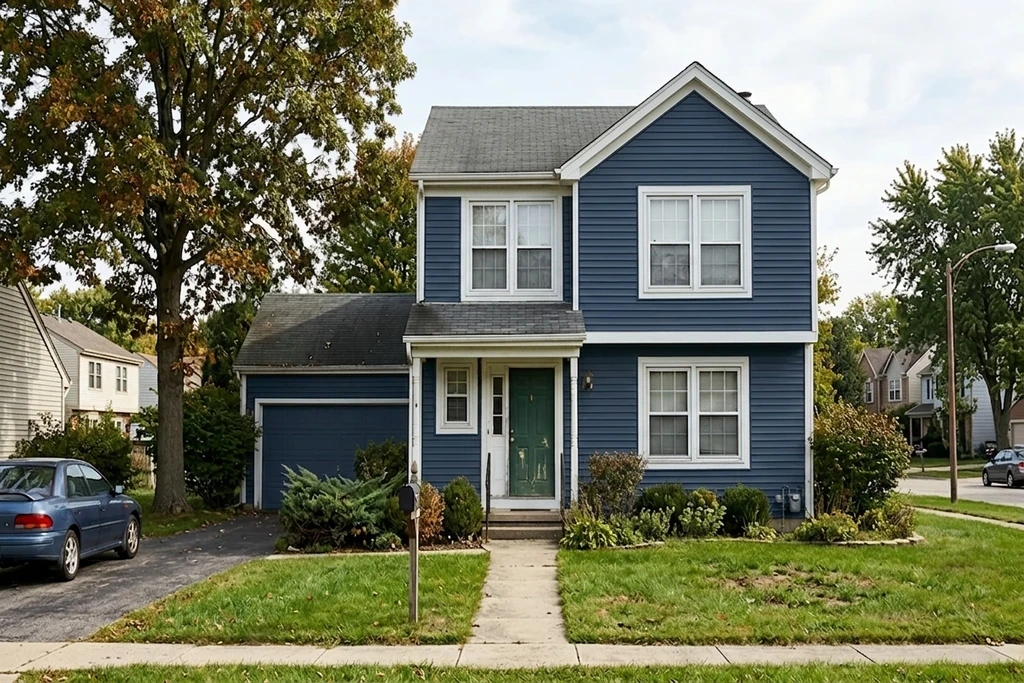
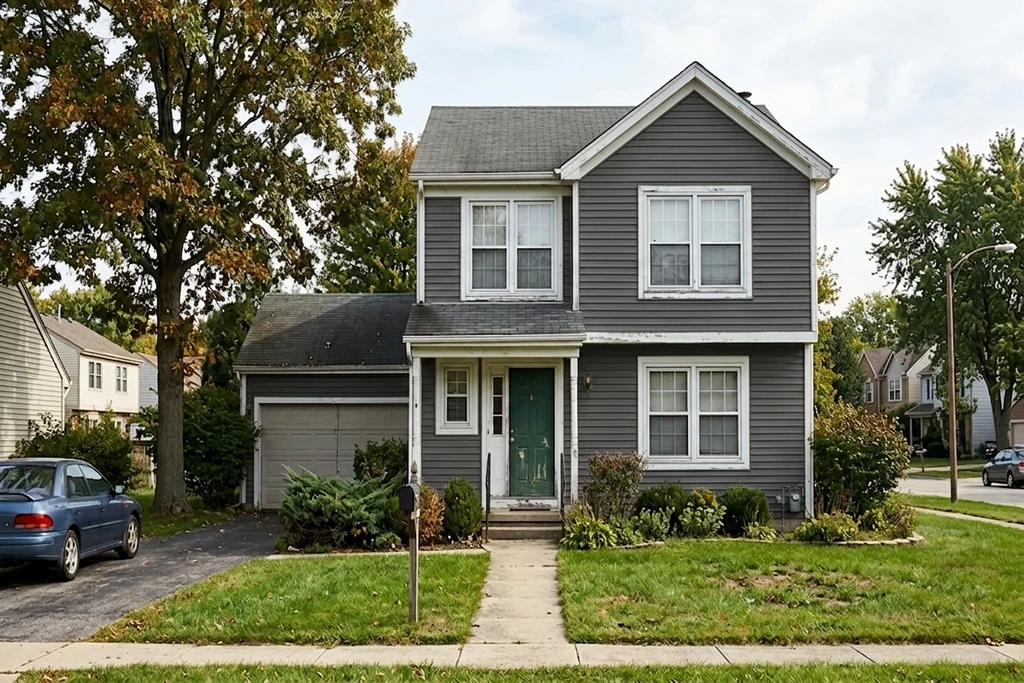
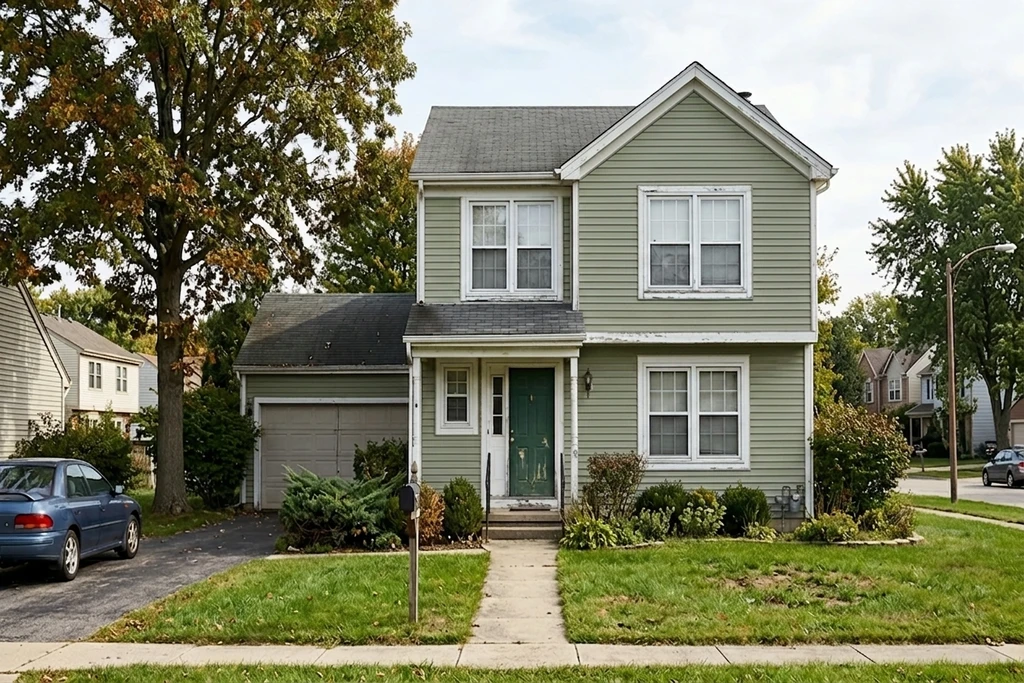
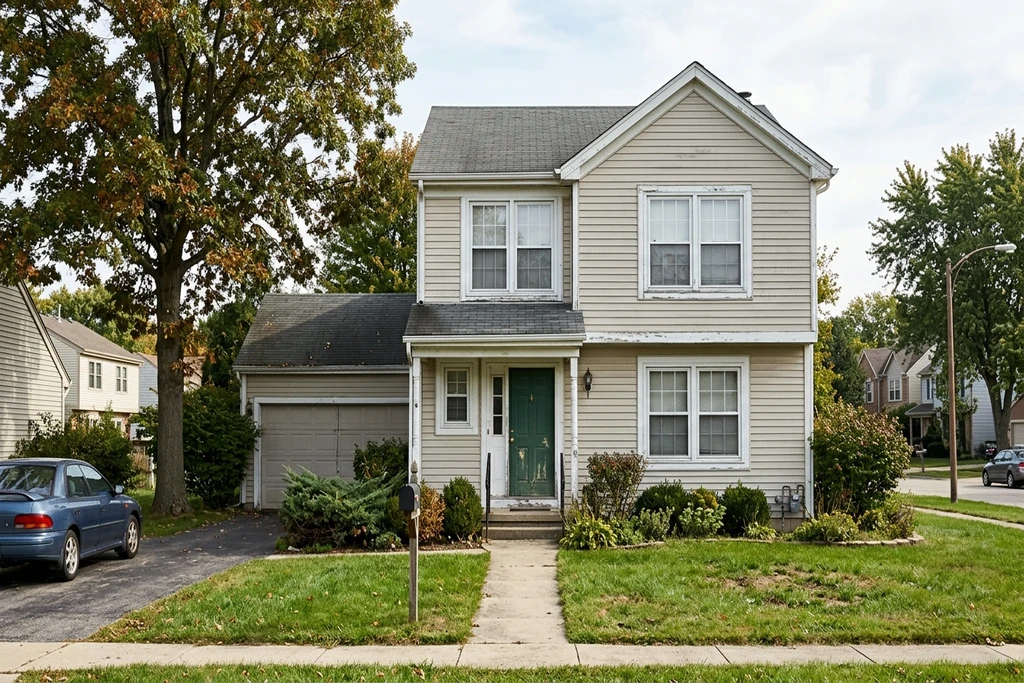
Real AI renders, your own photo, any shade
Try it on your house
No photo? Try a sample
Cincinnati painter wages and labor data (BLS, 2024)
Source: US Bureau of Labor Statistics, Occupational Employment and Wage Statistics (OEWS), May 2024. Wage figures are for the state as a whole; Cincinnati metro pricing typically tracks at or above the state mean.
Cincinnati climate and what it does to exterior paint
Humid continental climate with roughly 176 days of measurable sun, 45 inches of annual rainfall, and about 23 inches of snow. Summers run hot and muggy with dew points in the 70s, winters swing through dozens of freeze-thaw cycles around 32 deg F.
The Ohio River Valley traps humidity, so the dominant failure modes are mildew bloom on shaded north walls and adhesion loss where repeated freeze-thaw cycles work moisture behind the film. Old brick and lime mortar pull rain in and push it back out, which blisters any non-breathable coating, so mineral or elastomeric masonry paints and a hard cure before the first hard frost matter far more here than UV resistance does.
Source: NOAA National Centers for Environmental Information, climate normals 1991 to 2020.
Why Cincinnati Exterior Painting Is Priced Around the National Average
Cincinnati sits close to the national average for exterior house painting, and the reasons are local rather than national. Labor here is modestly priced: the Bureau of Labor Statistics OEWS survey (May 2024, SOC 47-2141) puts the Ohio painter median around $23.77 an hour, below high-cost coastal metros, which keeps day rates reasonable. What moves a Cincinnati quote is not the wage line, it is the substrate and the calendar. The metro is dense with century-old brick, lime mortar, and wood-trim housing that needs real prep, and the painting season is compressed into roughly seven dry-enough months. Most Cincinnati homeowners on a 1,800 to 2,400 sq ft home land in the $3,400 to $9,800 band for a quality two-coat exterior. Larger Hyde Park and Clifton four-squares with heavy trim, third-story dormers, and lead-safe scraping push into the $9,000 to $15,000 zone once staging and prep are priced in. The gap between a low bid and a fair bid here is almost always the amount of surface preparation written into the scope.
Cincinnati Climate: Humidity, the River Valley, and Freeze-Thaw
Cincinnati runs a humid continental climate, not a sun-baked one. NOAA normals (1991-2020, recorded at CVG) show about 45 inches of rain a year, near 23 inches of snow, and only around 176 days with meaningful sun. The Ohio River Valley funnels moisture, so summer dew points climb into the 70s and shaded north and east walls stay damp long enough to grow mildew. Winter is the real enemy of exterior coatings here: the temperature crosses 32 deg F dozens of times between December and March, and every freeze-thaw cycle expands any moisture trapped behind the paint film, popping it loose at the edges. That is why a Cincinnati painter cares more about a hard cure before the first deep freeze and a breathable system on masonry than about the UV-stabilizer talk you hear in desert markets. Paint applied too late in October, before it has fully cured, is the most common avoidable failure in this metro. Elevation and aspect matter too: hillside homes in Mount Adams and Mount Lookout that face the river catch fog and morning dew that lingers past 10 a.m. on cool days, so crews on those streets often lose the first working hour to surface moisture and plan their recoat times around it rather than fighting it.
Brick, Lime Mortar, and the Local Substrate Mix
Cincinnati was built on local clay, so brick is everywhere: solid masonry rowhouses in Over-the-Rhine and Mount Adams, brick four-squares in Hyde Park and Clifton, and brick-and-clapboard Victorians across East Walnut Hills. That changes how an honest quote reads. Soft historic brick laid in lime mortar has to breathe, so it should never be sealed under a hard acrylic or, worse, painted at all if it was originally bare because trapping moisture spalls the face off the brick in a few winters. Where brick is already painted, the correct fix is a mineral or masonry coating that lets vapor escape. Wood-heavy homes add a separate scope: most of the housing stock predates 1978, so lead testing, RRP-certified containment, scraping, spot-priming bare wood, and caulking every joint come before topcoat. A bid that skips straight to two coats of paint on 100-year-old wood without naming the prep is the bid to walk away from. One detail specific to this region: many older Cincinnati homes have painted limestone or sandstone foundations and water tables at grade level, where splash-back and rising damp peel coatings fastest, so a careful scope calls out a separate masonry primer and a breathable finish for that band instead of running the same body paint top to bottom and watching the bottom course fail first.
Historic District Color Approval in Mariemont, Glendale, and Wyoming
If your home sits in one of the metro's historic villages, color is not a free choice. The Village of Mariemont runs an Architectural Review Board, created by ordinance in 1983, that reviews exterior painting and staining inside the historic district and issues a Certificate of Appropriateness: the board meets the third Monday of the month, and requests must be filed in writing the prior month. Glendale, laid out in 1851 and recognized as the first planned community in Ohio (a National Historic Landmark since 1977), guards its Italianate and Second Empire palette through Glendale Heritage Preservation. Wyoming enforces period colors through its Historic Preservation Commission across the Wyoming Village Historic District. In all three, arriving with a clean exterior mockup speeds the review, which is why many homeowners run their two or three finalist colors through the FacadeColorizer exterior paint visualizer before they file the application. Outside the formal historic villages, neighborhood character still steers color: Hyde Park and Mount Lookout lean toward muted heritage bodies with crisp white or deep accent trim, while Over-the-Rhine and Mount Adams reward the bolder Italianate and painted-lady schemes the architecture was built for.
Choosing a Cincinnati Painter (No State License, So Verify Locally)
Ohio does not issue a statewide painting license, so the burden of vetting falls on you. The Ohio Construction Industry Licensing Board regulates trades like electrical and plumbing, but painting is left to local rules: in the City of Cincinnati that means a Vendor license and registration for permitted work. Every quote you collect should still list general liability insurance, a workers compensation policy that names your address, and, for any pre-1978 home, an EPA Lead RRP firm certification. Ask for three references from brick or historic-wood jobs completed in the last 18 months in your zip code. A serious Cincinnati painter will name the exact product line, specify a breathable system on masonry, and back the work with a written 5 to 7 year workmanship guarantee. The absence of a state license makes references and proof of insurance the real screen here, not a license number. It also means pricing varies more than in licensed states, because the barrier to calling yourself a painter is low, so collecting three quotes is less about haggling and more about spotting the bid that quietly omits prep, lead containment, or a real warranty. Cross-checking a firm against Hamilton County and City of Cincinnati permit and vendor records takes only minutes and filters out the seasonal operators who disappear before spring.
Best Months to Paint in Cincinnati (and the October Trap)
Cincinnati has a true painting season, and it is shorter than most homeowners expect. The reliable dry-and-warm window runs from late May through early October, when surfaces hold steady above the roughly 50 deg F minimum most exterior acrylics need to cure. May and June bring frequent passing rain, so crews build flex days into the schedule. July and August are the most stable for dry-down, though afternoon humidity can slow recoat times on shaded walls. September is the sweet spot: lower humidity, warm days, cool nights, and fewer storms. The classic local mistake is pushing a job deep into October to chase a lower off-season quote, because paint that has not fully cured before the first hard frost will fail at the edges by spring. Winter is effectively off-limits for exterior work, and the late-fall shoulder season only makes sense if the forecast gives you a clear, frost-free cure runway after the final coat.
Local Paint Stores: Sherwin-Williams Oakley, Benjamin Moore Norwood, Sherwin-Williams Eastgate
Cincinnati painters draw from a tight set of trade counters, and where they buy shows up in your quote. Sherwin-Williams on Ridge Avenue in Oakley is a central go-to for Duration, SuperPaint, and the Loxon masonry line that gets specified on the metro's painted brick. The Benjamin Moore counter on Montgomery Road in Norwood supplies Aura and Regal Select for crews who prefer that finish and color depth on historic trim. On the east side, the Sherwin-Williams on Glen Este-Withamsville Road in Eastgate serves the Clermont County suburbs and the newer subdivisions out toward Anderson and Batavia. Most established painters hold a contractor account at one of these with a 25 to 35 percent trade discount, so the product price flows through to your quote depending on who they buy from. Ask which store and which exact product line your bid is built on, especially for any masonry coat.
Top Cincinnati HOAs with exterior color approval rules
Before painting, confirm your HOA palette and submit your color selections to the architectural review committee. Most Cincinnati HOAs respond within 14 to 21 days.
Paint stores near Cincinnati
Painter licensing in Ohio
Ohio has no statewide painting license: the Ohio Construction Industry Licensing Board (OCILB) covers electrical, HVAC, plumbing, and a few other trades, but not painting. Locally, the City of Cincinnati expects contractors to hold a Vendor license and to register for work that pulls a permit. Any pre-1978 home also triggers federal EPA Lead Renovation, Repair and Painting (RRP) rules, so ask each quote for the firm Vendor number, the RRP certification, general liability, and workers compensation.
Frequently asked questions about Cincinnati exterior painting
How much does it cost to paint a house exterior in Cincinnati in 2026?
Most Cincinnati single-family homes run $1.75 to $4.25 per square foot for a quality two-coat exterior, with a typical 1,800 to 2,400 sq ft home landing in the $3,400 to $9,800 band. Heavy brick or lime-mortar prep, multi-story trim, and lead-safe scraping on pre-1978 wood push pricing toward the high end.
Do Cincinnati painters need a license?
Ohio does not issue a statewide painting license, so verification is on you. In the City of Cincinnati, painters are expected to hold a Vendor license and register for permitted work. Always confirm general liability insurance, workers compensation, and, on any pre-1978 home, an EPA Lead RRP firm certification before you sign.
What is the best month to paint a house exterior in Cincinnati?
Late May through early October is the reliable window, with September the sweet spot for low humidity and stable dry-down. Avoid pushing exterior work deep into October: paint that has not fully cured before the first hard frost tends to fail at the edges by spring.
How do I get color approval for a home in a Cincinnati historic district?
Villages like Mariemont, Glendale, and Wyoming review exterior colors through an architectural review or historic preservation board. Submit your proposed body, trim, and accent colors, ideally with a visualization mockup. Mariemont, for example, meets the third Monday of the month and issues a Certificate of Appropriateness before work begins.
Want a deeper cost breakdown? Read our 2026 Cincinnati cost guide .
House painters in nearby metros
Popular exterior colors for Cincinnati homes
In Cincinnati's cold-winter climate, timeless grays, deep navy and barn red suit brick and clapboard exteriors.
Browse painting costs in other metros: all US city guides.