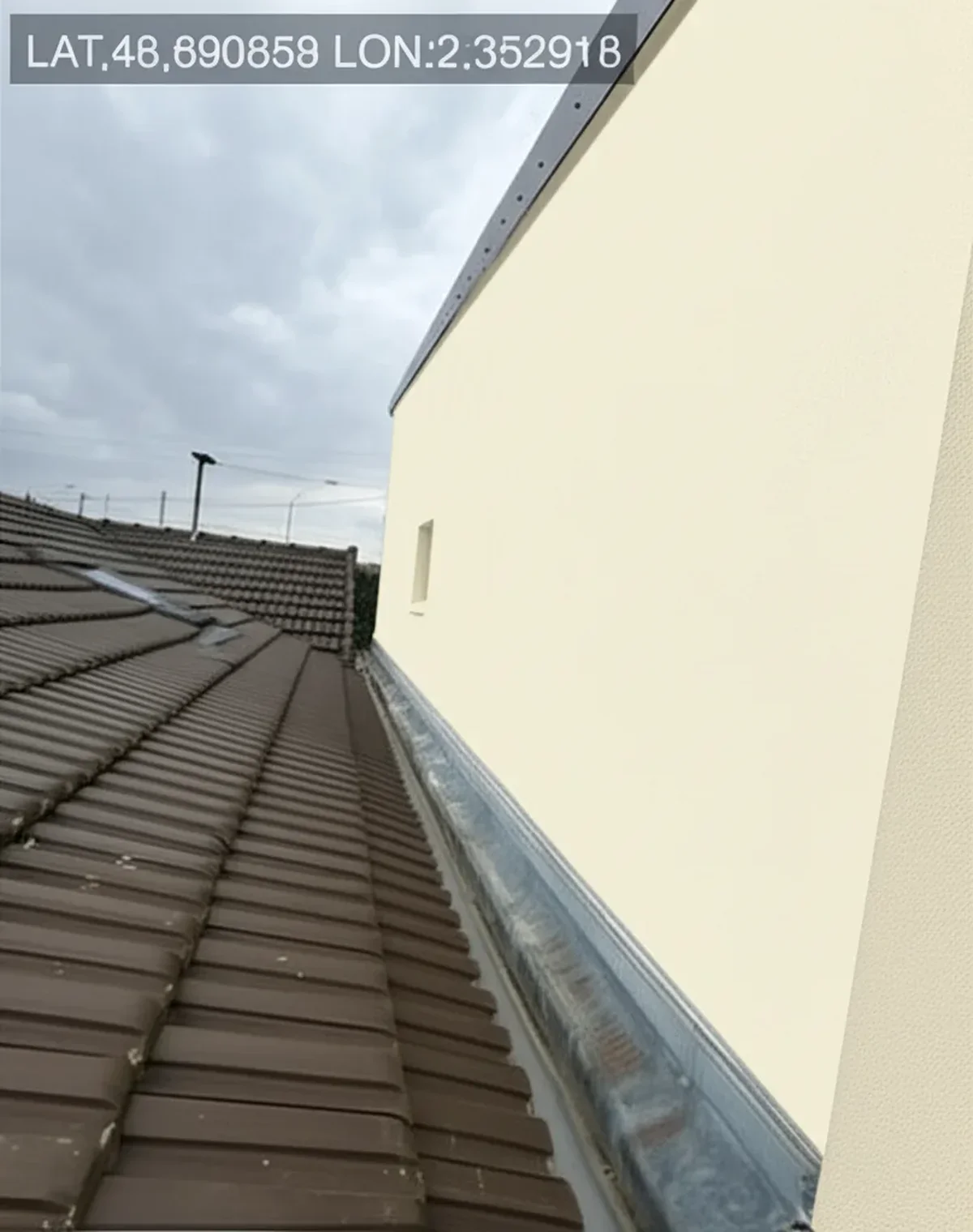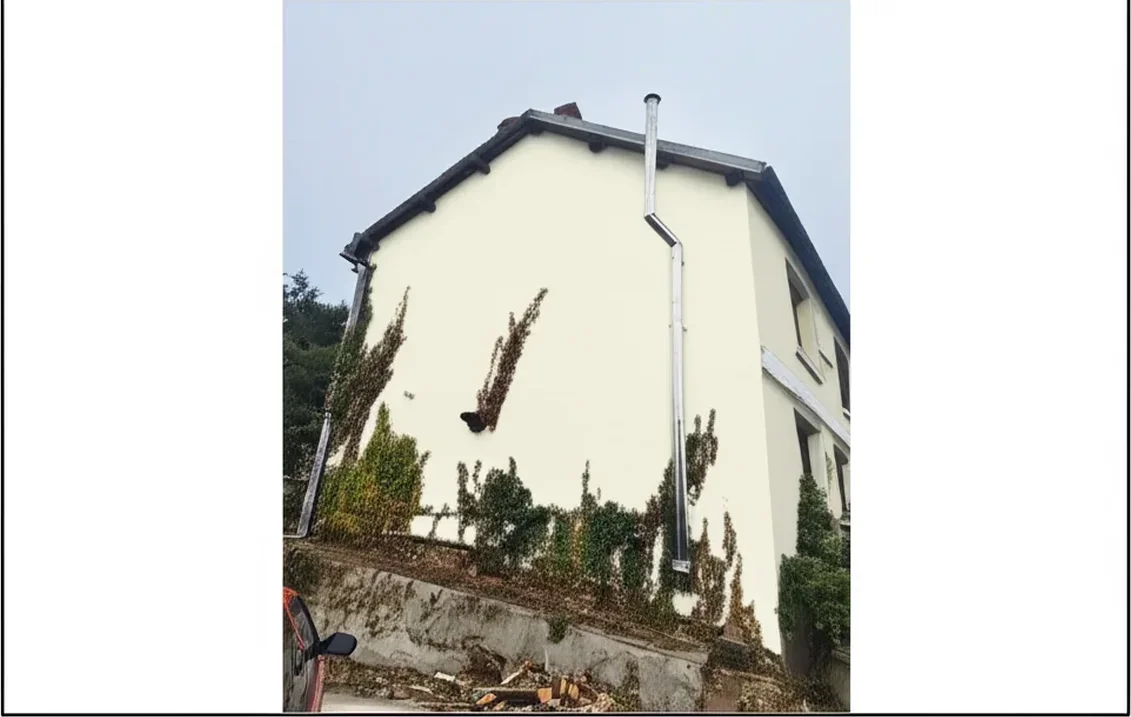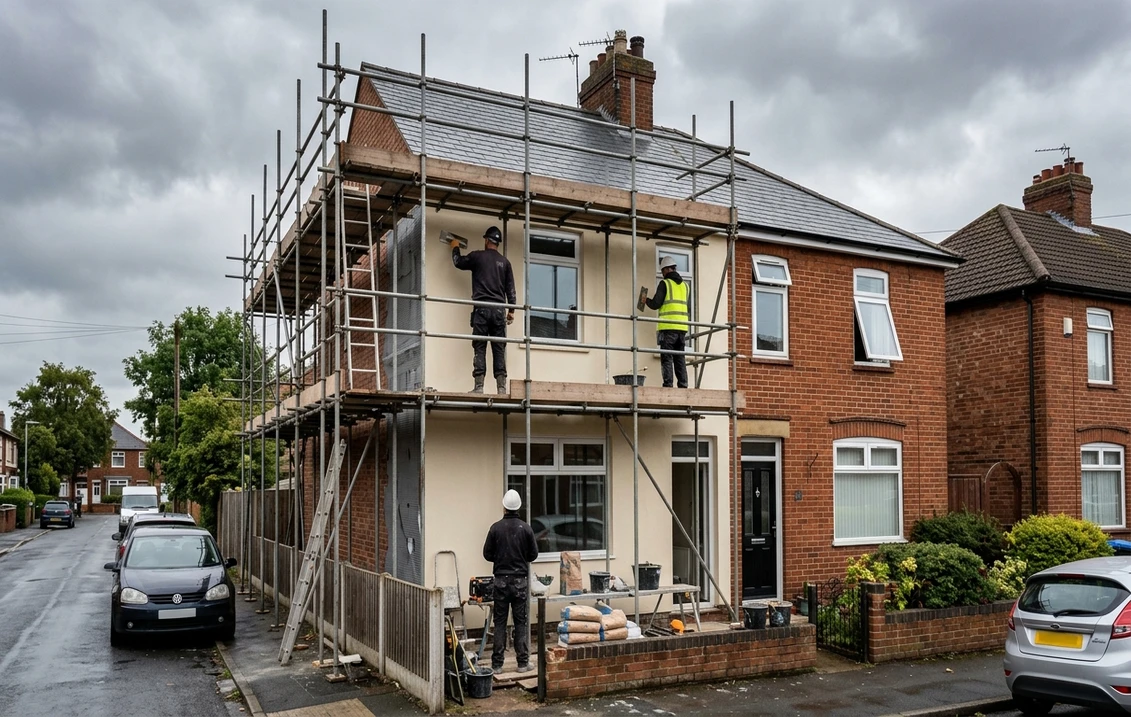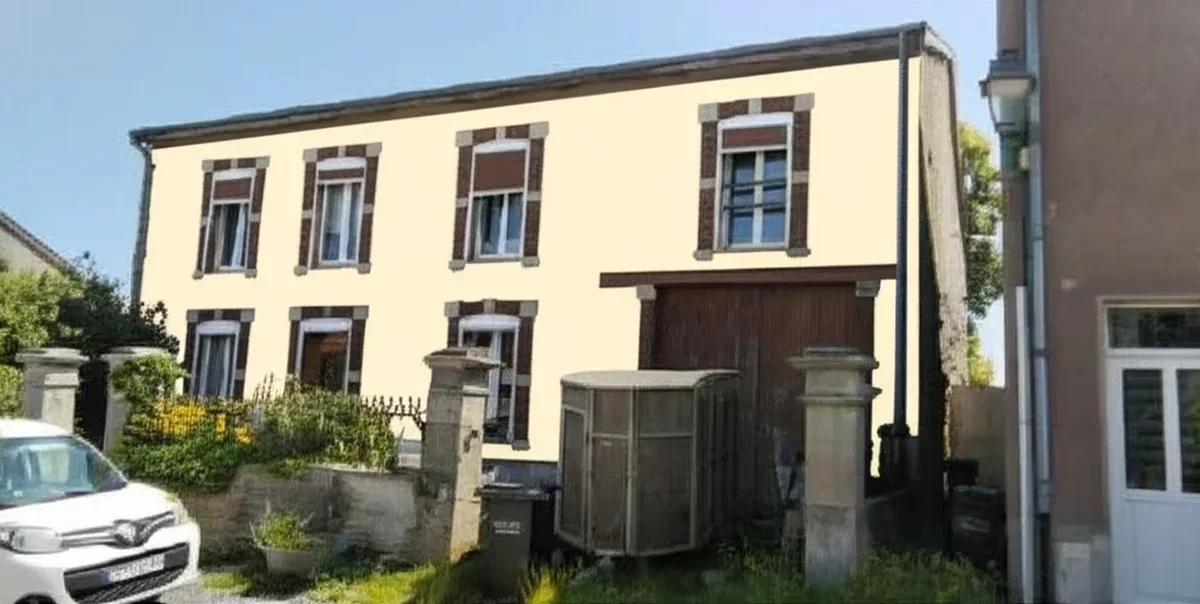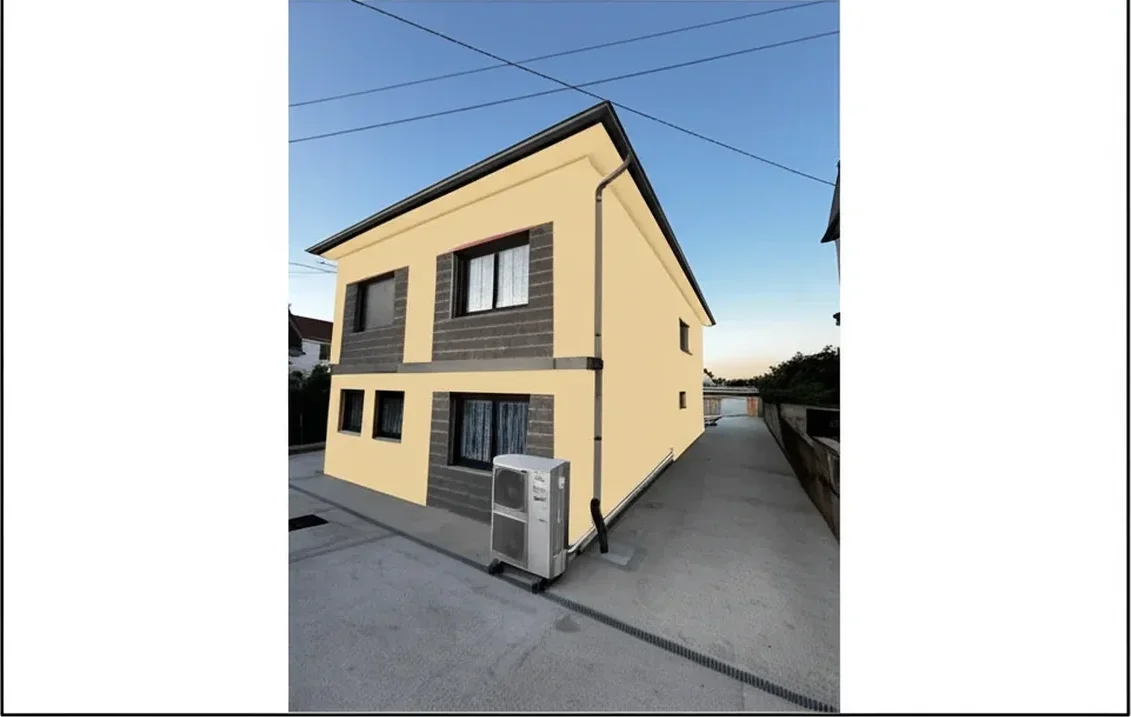
Try it on your house

When a UK homeowner decides to refresh a tired facade, the choice almost always narrows to two options: apply a high-performance exterior masonry paint directly to the existing brick, stone or old render (typically GBP 15-30 per square metre), or commission a full through-coloured silicone render such as K-Rend or Wetherby (typically GBP 50-90 per square metre).
As a chartered surveyor (MRICS) inspecting around 200 facades a year across England and Wales, I see both options succeed and fail. The right answer depends on the substrate, the property's breathability needs, your 30-year budget, and, increasingly, the rules of your conservation area. This guide benchmarks the two systems against BS 5262, manufacturer data from Dulux, Sandtex, K-Rend and Wetherby, and current RICS cost information.
Option 1: Exterior masonry paint on brick, stone or old render
Modern silicone-enhanced masonry paints such as Dulux Weathershield Smooth, Sandtex 10 Year and Sandtex Ultra Smooth have come a long way from the old cement paints of the 1970s. They are water-based, breathable (typically Sd value 0.1-0.3 m, Class V1 high vapour permeability) and self-cleaning on sheltered elevations.
Cost sits between GBP 15 and GBP 30 per square metre all-in for two coats plus preparation, with a mid-terrace typically coming in at GBP 1,800-3,500. Realistic repaint cycle is 10-15 years on sheltered southern elevations, 8-10 years on exposed northern or coastal walls. A manufacturer guarantee of 10-15 years (Weathershield, Sandtex 10 Year) is conditional on correct preparation, which is where most failures start.
When masonry paint is the right answer
Choose masonry paint when the existing substrate is sound: well-bonded sand-and-cement render, solid pebbledash, previously painted brick in good condition, or stone that is already coated. It is also the only sensible option if the property sits in a conservation area where planners refuse a wholesale change of texture or colour palette. Listed buildings almost always require mineral or lime paints rather than silicone finishes.
Preparation is where 80% of masonry paint failures start. Expect a competent decorator to spend a full day per elevation on jet-washing, fungicidal wash (dilute benzalkonium chloride), stabilising solution on chalky substrates, two-coat flexible filler on hairline cracks, and masking. Skimp on any of these and the 10-year guarantee is worthless. A credible quote should itemise preparation as a distinct line worth at least 25-35% of the total; anything less is a red flag.
Product tiers inside the masonry paint category
Not all masonry paints behave the same. Dulux Weathershield Smooth and Sandtex 10 Year sit in the mainstream silicone-acrylic tier, roughly GBP 70-90 per 10 L. Sandtex Ultra Smooth and Johnstone's Stormshield use a higher silicone loading for coastal and northern exposure. At the premium end, Keim Soldalit and Beeck Renosil are sol-silicate mineral paints that chemically bond to the substrate and last 15-20 years on correctly prepared masonry - these are the go-to choices for listed buildings and demanding heritage schemes.
Option 2: Through-coloured silicone render (K-Rend, Wetherby)
A modern silicone monocouche render is a complete facade system: base coat (often polymer-modified), alkali-resistant glass fibre mesh, and a 1.5-3 mm textured topcoat where the colour runs through the full depth. The two dominant UK brands are K-Rend Silicone K1 and Wetherby SBR/Silicone Top Coat, both compliant with BS EN 15824 and compatible with BS 5262 external rendering code of practice.
Installed cost is GBP 50-90 per square metre for a two-coat system on a prepared substrate, rising to GBP 90-130 per square metre if insulation (EWI) is incorporated. A typical three-bed semi lands at GBP 9,000-15,000. In return, you get a facade expected to last 25+ years before a first clean, with no repaint required over that period according to K-Rend's technical guide.
When render replacement is the right answer
A full silicone render is justified when the existing render is blown, cracked or debonded over more than 20% of the facade, when you are adding external wall insulation, when you want to eliminate repainting for a generation, or when you are upgrading a 1970s pebbledash that cannot be cleanly overpainted. It is rarely the right answer for solid brick Victorian properties, where it can trap moisture.
The three UK systems I specify most often are K-Rend Silicone K1 (the market leader with a 30+ colour palette and strong installer network), Wetherby Silicone TC (slightly more flexible, strong BBA certification) and Parex Monorex GF (a scratch-finish alternative popular in the south-east). All three carry BBA Agrement certificates, comply with BS EN 15824, and are compatible with EWI boards from EPS to mineral wool. Expect to add GBP 40-50 per square metre if you wrap the house in 90-100 mm of insulation during the render works - a sensible move if scaffolding is already up.
See Weathershield and K-Rend colours on your own house in under a minute
Head-to-head: 10 criteria compared
The table below summarises the ten criteria most UK homeowners weigh up in their initial conversation with a surveyor or contractor. Figures are based on RICS cost data, BS 5262 performance guidance and manufacturer technical data sheets.
| Criterion | Masonry paint (silicone) | Silicone render |
|---|---|---|
| Installed cost per sqm | GBP 15-30 | GBP 50-90 |
| Typical whole-house cost | GBP 1,800-3,500 | GBP 9,000-15,000 |
| Repaint/refresh cycle | 10-15 years | 25+ years (no repaint) |
| Breathability (Sd value) | 0.1-0.3 m (V1) | 0.05-0.2 m (V1) |
| Substrate preparation | Clean, fungicide, stabilise | Base coat + mesh required |
| Disruption on site | 3-5 days | 2-4 weeks |
| Colour change flexibility | High - repaintable | Low - through-coloured |
| Crack bridging | Hairline only | Up to 0.3 mm with mesh |
| Guarantee | 10-15 yr product | 25 yr system + installer |
| Conservation area friendliness | Usually acceptable | Often refused |
Try it on your house
No photo? Try a sample
30-year cost of ownership
For the render side of that sum, the 2026 trade figures are £45 to £65 per m² installed for K Rend silicone on Less.co.uk and £50 to £75 supply-and-fit on Trade2Base, with K1's own data sheet at 26 to 32 kg per m² in two passes; the full breakdown, scaffolding and removal included, is in our exterior rendering cost guide.
Headline prices mislead because the two systems have very different life cycles. The only fair comparison is a 30-year total cost of ownership on the same reference facade: a typical three-bedroom UK semi with 120 sqm of external walls (front, rear and two gables after openings).
| Year | Masonry paint scenario | Silicone render scenario |
|---|---|---|
| Year 0 - Initial works | GBP 2,700 (GBP 22.50/sqm) | GBP 8,400 (GBP 70/sqm) |
| Year 12 - Full repaint | GBP 3,600 (uplift +7% indexed) | GBP 0 |
| Year 20 - Render clean | GBP 0 | GBP 900 (softwash) |
| Year 24 - Second repaint | GBP 4,500 | GBP 0 |
| Year 30 - Total spent | GBP 10,800 | GBP 9,300 |
Over three decades the gap narrows dramatically. The render pulls marginally ahead on pure pounds and pence, but the paint route is far kinder to cash flow (three modest payments rather than one large one). The real decider is usually substrate condition and planning constraints, not headline cost.
One clarification before the caveats: this table deliberately pits the cheapest route against the most expensive one, and a middle tier sits between them. Textured masonry coatings and weatherproof or elastomeric systems go on over sound existing walls the way paint does, so they need no render strip-out, yet they are quoted with service lives of 10 to 25 years rather than a single repaint cycle. That makes them the honest answer for a wall with hairline cracking or a tired pebbledash that does not yet justify a new render, and it is the option most quotes leave out. We break down what exterior wall coatings cost in the UK system by system, with installed rates per m².
Two caveats worth flagging. First, these figures exclude scaffolding, which typically adds GBP 1,200-2,500 per repaint cycle on a two-storey semi; if you keep scaffolding up for roof work or gutters, the paint scenario improves further. Second, silicone render costs can balloon to GBP 12,000-18,000 on irregular facades with bay windows, multiple openings or awkward access - substantially narrowing the cost-parity gap in favour of masonry paint for character properties.
Breathability and moisture: the Victorian trap
Pre-1919 solid-wall properties were designed to breathe. Applying a low-permeability silicone render to a solid brick Victorian house is one of the most expensive mistakes I encounter: moisture migrates from inside to outside, hits the render barrier, and causes interstitial condensation, salt blooming and internal damp.
On these properties, stick with a silicate or lime-based masonry paint (such as Beeck or Keim mineral paints), which sits at Sd values below 0.1 m. On post-1930 cavity-wall homes, both silicone paint and silicone render perform well because the cavity breaks the moisture path.
The BS 5262 code of practice is explicit on this point: any external render applied to a solid wall should have a vapour resistance no greater than that of the substrate it covers. Lime render at roughly Sd 0.1 m passes that test on brick; dense silicone render at Sd 0.2 m rarely does. If a contractor dismisses this concern on a pre-1919 terrace, get a second opinion before signing.
Conservation areas and planning in 2026
Under the Town and Country Planning (General Permitted Development) Order, repainting a facade is usually permitted development. In a conservation area or on a listed building, however, an Article 4 direction or listed building consent can restrict both colour and material.
Applying a silicone render to a brick house in a conservation area almost always requires planning permission, and refusals are common. Before committing to render, check your local authority's Article 4 register and speak to the conservation officer. A sympathetic masonry paint in a heritage-approved colour palette is far more likely to win consent.
Typical heritage palettes favour off-whites (BS 10 B 15 Magnolia variants), warm stone tones (Farrow & Ball Clunch, Dulux Natural Wicker) and muted greens for rural settings. Where an Article 4 direction is in force, even repainting in the same colour can technically require an application, though enforcement varies. Budget GBP 206 for a householder planning application and 6-8 weeks for determination; engage a conservation-experienced architect if the property is listed or in a World Heritage buffer zone.
Verdict by property type
| Property type | My recommendation |
|---|---|
| Victorian/Edwardian solid-brick terrace | Mineral or silicone masonry paint |
| 1930s-1960s cavity-wall semi with pebbledash | Masonry paint if sound; render if blown |
| 1970s-1990s render that is cracked or patchy | Full silicone render replacement |
| New-build or EWI retrofit | Silicone render (part of the system) |
| Listed or conservation-area property | Heritage masonry paint, consult officer |
Frequently asked questions
Can I paint directly onto K-Rend or a silicone render?
Technically yes with a compatible silicone masonry paint, but you will void the 25-year through-colour benefit and introduce a 10-year repaint cycle. K-Rend's own technical guide discourages overcoating within the warranty period except for localised repairs. If the render colour is faded, a softwash clean is usually the correct first step rather than a repaint.
Is silicone render really maintenance-free for 25 years?
Very nearly. BS 5262 and manufacturer data support a 25-year service life before repainting, but a softwash clean every 7-10 years is recommended to remove algae on shaded elevations. Expect to spend around GBP 600-1,000 on a full facade softwash during that period. No scaffolding, no paint, no colour shift.
Will masonry paint or render add more value at resale?
RICS valuer feedback is consistent: a freshly painted facade typically returns 1.5-2x its cost in perceived value at sale, because it reads as "move-in ready". A new silicone render returns roughly its cost, because buyers treat it as a like-for-like replacement rather than an upgrade. For pure resale ROI, paint wins; for long-term ownership and no-hassle maintenance, render wins.
Test Dulux Weathershield, Sandtex and K-Rend shades on your property
Related UK finish comparisons
Choosing between paint and render is one decision in a chain. These related guides cover the others UK homeowners run into:
- Lime render against cement render, the breathability question that matters most on older walls.
- Sandtex versus Dulux Weathershield once you have settled on masonry paint.
- The wider UK exterior paint brand line-up compared on price and durability.
Before the scaffold goes up, preview the shade on your own property.
Whichever route you choose, validate the colour on a photo of your actual property before the scaffold goes up. Upload a picture to our free AI colour visualiser and preview 100+ UK masonry shades in seconds. Sources: BS 5262, K-Rend technical guide, Dulux Weathershield datasheet, Sandtex 10 Year datasheet, RICS cost data 2026.
Trademarks mentioned (Sherwin-Williams, Benjamin Moore, Behr, Caparol, Brillux, Sto, Alpina, Valspar, PPG, Glidden, Dulux, Crown Trade, Sandtex, Farrow & Ball, Johnstone's, Leyland) are property of their respective owners. FacadeColorizer is independent and not affiliated with any of them. Nominative fair use under Lanham Act §1125.