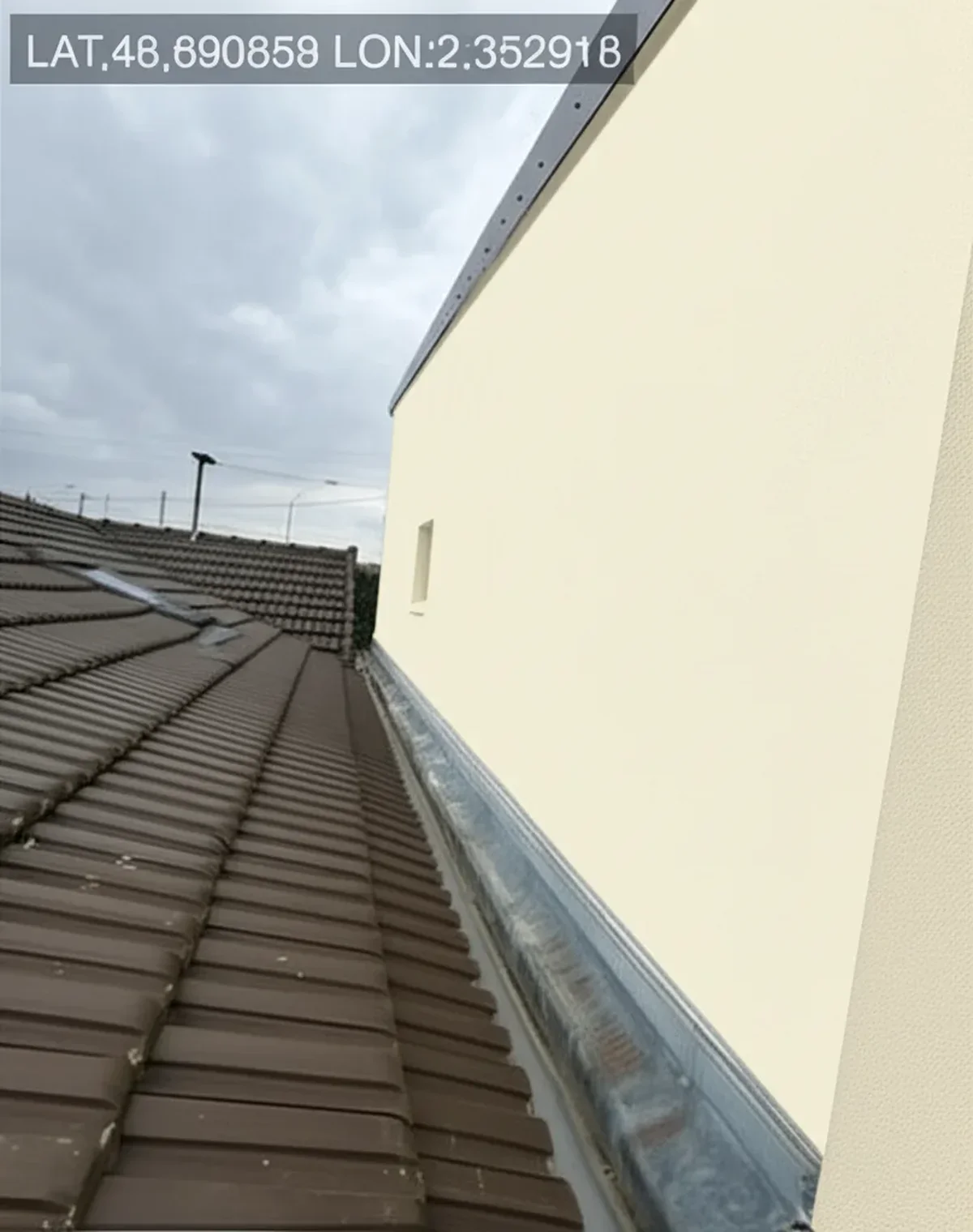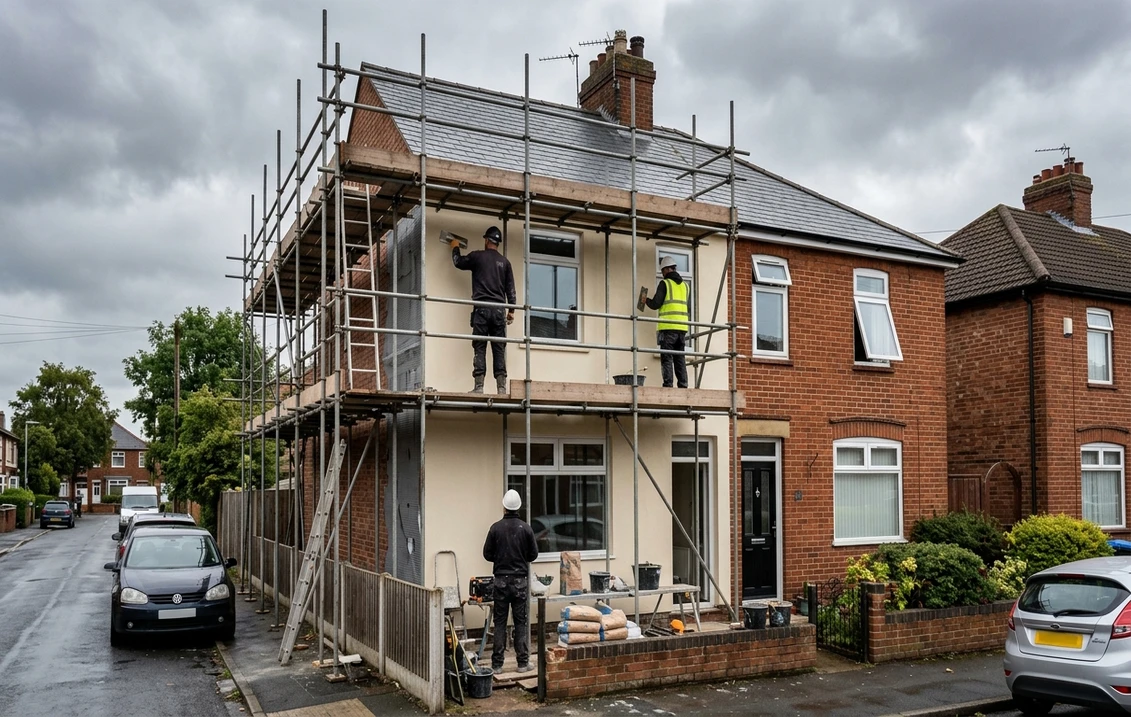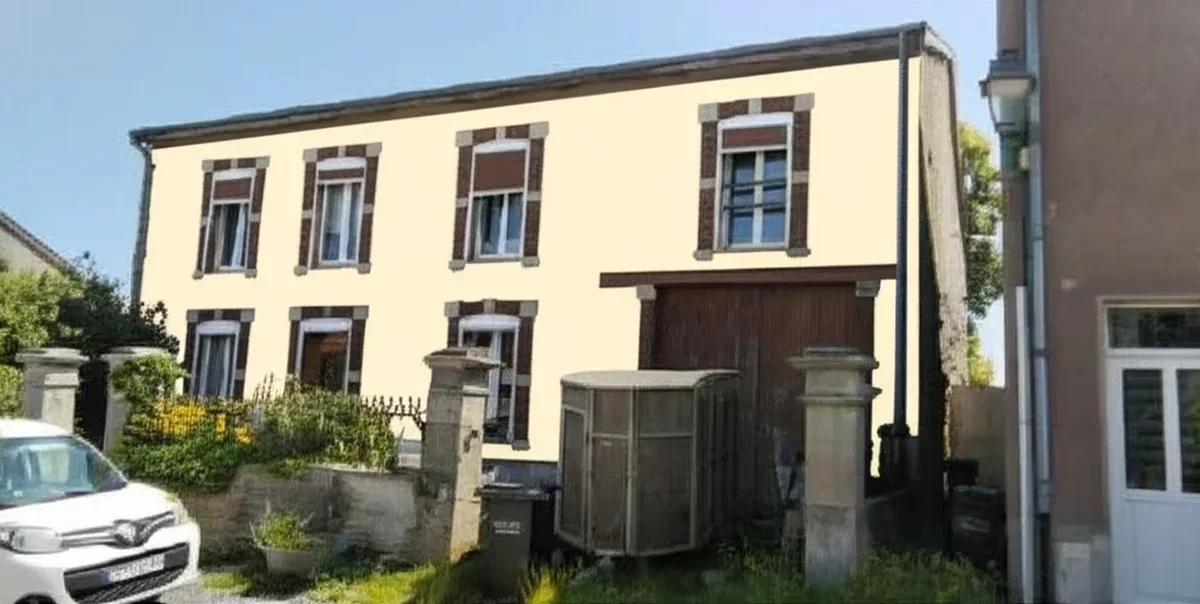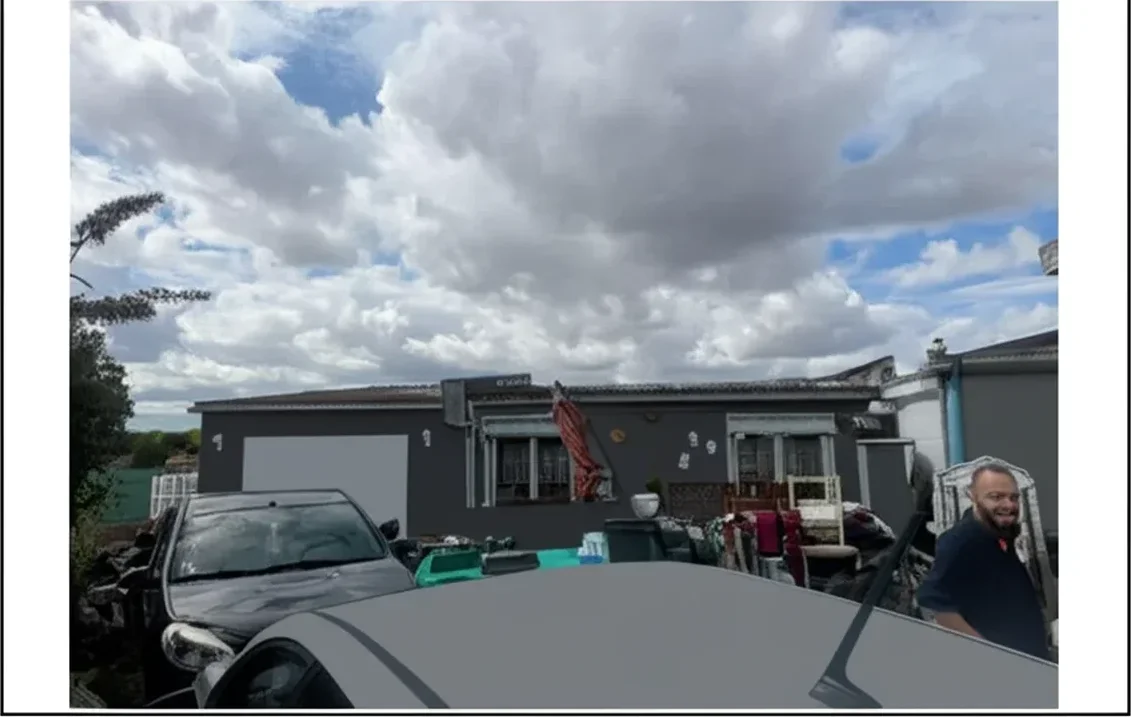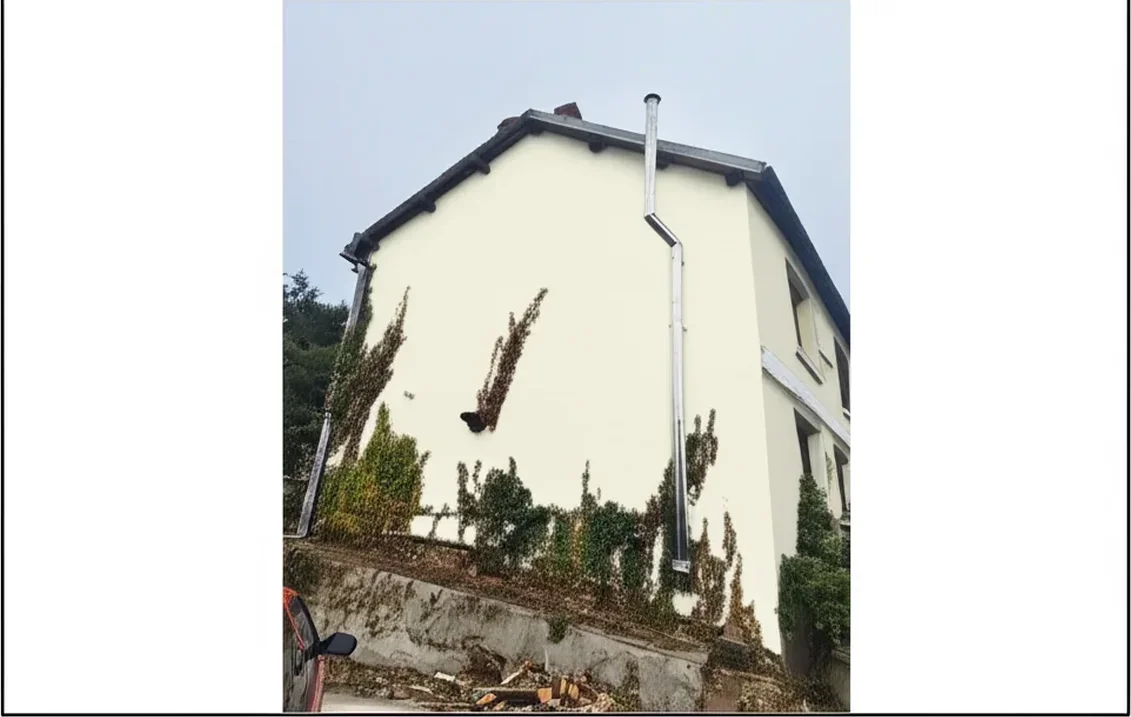
Try it on your house

Planning exterior rendering for your Brighton home? From iconic Regency stucco townhouses in Kemptown to Victorian terraces in Hanover and Edwardian semis across Hove, Brighton's diverse architecture demands specialist knowledge. The city's maritime location brings salt-laden winds and driving rain, choosing the wrong render system is a recipe for early failure.
This guide covers real 2026 cost per m² figures for Brighton, compares silicone render, lime render, and stucco restoration options, and explains planning permission rules across the city's 34 conservation areas. Before choosing a colour, try our free AI colour visualiser to preview any render shade on your property, no samples needed.
Rendering Costs per m² in Brighton
For the national picture these Brighton figures sit against, including K Rend K1's published consumption and the 2026 per-m² ranges from the trade guides, our UK rendering cost guide is the reference.
Brighton rendering prices are among the highest outside London, at £62-£88/m² for standard systems. High demand, specialist Regency stucco requirements, and South East labour rates all contribute. These figures include materials, labour, and standard scaffold hire:
One sanity check before committing to any of these numbers: re-rendering costs roughly three times what repainting a sound substrate does. UK masonry painting averages £18 to £30/m², with a small salt-air premium on the coast because decorators specify higher-spec paints against sea spray. So if the render is cracked, hollow, or blown, you re-render. If it is simply tired, chalky, or the wrong colour, a repaint gets you there for a fraction of the outlay. Our guide to exterior house painting costs across the UK breaks those rates down by property type and by city, Brighton included.
| Render Type | Cost per m² (Brighton) | Lifespan | Best For |
|---|---|---|---|
| Sand and cement render | £50 - £75 | 15-25 years | Budget non-coastal walls |
| Monocouche (K Rend / Weber) | £62 - £88 | 25-35 years | New builds, extensions |
| Silicone render | £78 - £120 | 30-40 years | Maritime exposure, seafront |
| Lime render / stucco restoration | £70 - £110 | 50+ years | Regency, listed buildings |
| EWI system (insulated) | £95 - £150 | 25-35 years | Energy efficiency upgrade |
Try it on your house
No photo? Try a sample
Total Project Costs by Property Type
Brighton's housing includes Regency townhouses (often tall, with large wall areas), Victorian terraces, and Edwardian and inter-war properties. Scaffold costs are higher than average at £700-£2,500 due to seafront exposure and multi-storey Regency facades:
| Property | Approx. Wall Area | Cost Range | Duration |
|---|---|---|---|
| 2-bed Victorian terrace | ~50-80 m² | £3,100 - £7,000 | 4-7 days |
| Regency townhouse | ~120-200 m² | £8,400 - £22,000 | 10-21 days |
| 3-bed Edwardian semi | ~90-130 m² | £5,600 - £11,400 | 7-12 days |
The re-render or repaint question above has a third answer that Brighton quotes rarely volunteer. Between thin masonry paint and a full strip-and-replace sit the built-up coating systems: textured masonry coatings, weatherproof coatings and elastomeric films, thick enough to bridge the hairline crazing that salt air and thermal movement leave on Regency and Victorian stucco, and flexible enough to keep bridging it as the wall moves. They go on over sound render, so the scaffold bill stays but the strip-out does not, and their quoted service lives run in decades rather than repaint cycles. Our guide to exterior wall coating costs in the UK sets out the installed rate and expected lifespan for each of those systems, which is the number to hold against the table above.
Local tip
Brighton renderers charge £200-£280 per day, close to London rates. Regency stucco restoration requires specialist lime render skills that few firms offer locally. Expect to pay a premium for genuine lime expertise. Get at least three quotes and verify experience with period stucco work before hiring.
Regency Stucco and Lime Render
Brighton is famous for its Regency stucco facades, the grand, cream-painted townhouses that define the seafront and Kemptown. These properties were originally finished with lime render and lime mortar, and any restoration work should use the same materials. Lime render is a fully breathable render that allows moisture to move through the wall, applying modern cement render over historic stucco traps moisture and causes catastrophic rising damp and structural damage.
Regency stucco restoration involves carefully matching the original lime mix, repairing mouldings and cornices, and finishing with specialist masonry paint, typically Farrow & Ball or traditional limewash. Conservation officers in Brighton are particularly strict about colour choices, often referencing BS 4800 standards or historic palettes. A condition report is essential before starting, it identifies delamination, render crack damage, and moisture issues.
Maritime Exposure and Material Choice
Brighton's maritime location is the single biggest factor in render selection. Salt-laden winds accelerate deterioration of traditional cement render and can cause render crack damage within a few years on seafront properties. Silicone render is the best modern option for exposed locations, its hydrophobic surface repels salt spray and rain whilst remaining flexible enough to resist cracking.
For non-heritage properties, K Rend and Weber monocouche render systems offer good performance. This self-coloured render uses render mesh for crack prevention, bellcast bead at the base, and stop bead profiles at edges. The scratch coat and top coat application ensures a durable bond even in exposed conditions. Polymer render is another option offering excellent frost resistance and flexibility.
Properties with existing pebble dash or roughcast can be over-rendered with silicone render, provided a property survey confirms the substrate is sound. Be aware that salt damage may have weakened the bond, a thorough inspection is essential before over-rendering on any seafront property.
Planning Permission and 34 Conservation Areas
Brighton & Hove has 34 conservation areas, one of the highest densities in England. With so much of the city covered, checking planning permission requirements before any rendering work is essential:
- Properties in a conservation area require prior approval, strict rules apply to colour, texture, and material changes on Regency stucco facades
- Listed building consent (Grade I, II*, or II) is mandatory, Brighton has hundreds of listed Regency and Victorian properties
- EWI systems are almost always refused in Brighton's conservation areas due to the impact on historic proportions and detailing
- Even minor repairs to Regency stucco on a listed building may require listed building consent
- Contact Brighton & Hove City Council planning department before starting any exterior work
Damp and Seafront Challenges
Damp is a major concern for Brighton properties, particularly those near the seafront. Rising damp affects many ground-floor walls in older buildings, and salt crystallisation can cause render to delaminate. A professional property survey or condition report before rendering is essential, not optional.
For the finishing stage on traditional sand and cement render, a skilled painter and decorator experienced with maritime environments is essential. Top masonry paint brands for Brighton include Dulux Trade Weathershield (marine-grade formulation), Sandtex Trade, Crown Trade, and Farrow & Ball Exterior for heritage work. Seafront properties may need repainting every 4-6 years rather than the standard 7-10.
Energy Efficiency and Grants in Brighton
EWI is challenging in Brighton due to conservation restrictions, but it is viable for post-war properties outside conservation areas. Combining rendering with external wall insulation improves your EPC rating by one or two bands. The ECO scheme (ECO4) and Great British Insulation Scheme fund insulation for qualifying households. Brighton & Hove City Council runs local Green Homes Grant successor programmes, contact them or your energy supplier for eligibility.
Getting the Best Price in Brighton
- Get 3-5 written quotes, prices vary significantly, especially for Regency stucco work
- Book in winter, demand drops November to February with discounts of 10-15%
- Coordinate with neighbours on terraced streets, shared scaffold saves £500-£1,000 each
- For Regency properties, only hire renderers with proven lime render experience, cheaper cement-based alternatives will cause long-term damage
- Check ECO4 eligibility for subsidised EWI on non-conservation properties
Whether you are restoring a Regency facade or modernising a Victorian terrace, getting the colour right is critical. A wrong shade on a large Brighton townhouse is an expensive mistake. Upload a photo of your Brighton home to FacadeColorizer and preview any render colour in seconds, free, instant, and far more reliable than a small paint swatch held against the wall.
Frequently asked questions
How much does exterior rendering cost in Brighton?
Can I use modern render on a Regency house in Brighton?
Do I need planning permission to render in Brighton?
What render is best for Brighton's seafront properties?
Trademarks mentioned (Sherwin-Williams, Benjamin Moore, Behr, Caparol, Brillux, Sto, Alpina, Valspar, PPG, Glidden, Dulux, Crown Trade, Sandtex, Farrow & Ball, Johnstone's, Leyland) are property of their respective owners. FacadeColorizer is independent and not affiliated with any of them. Nominative fair use under Lanham Act §1125.