Try it on your room

Picking the wrong paint colour is the single most expensive avoidable mistake in UK home decorating. A medium-sized lounge repaint costs roughly £450 in materials and decorator labour according to Checkatrade 2026 cost data, and a semi-detached exterior runs £1,800 to £4,000 once you add scaffolding and two coats of masonry paint. Get the shade wrong and you either live with it for a decade or pay the bill twice. The good news: there are five reliable ways to test paint colours on your walls before buying, and combining them properly costs under £30 and a fortnight of patience.
This guide is written for UK homeowners and decorators. It covers the traditional lining paper trick, modern peel-and-stick samples from Coat, Lick and Mylands, classic tester pots from Dulux, Farrow & Ball and Crown, the new generation of AI paint visualisers, and live AR apps. It also covers the one thing most tester guides ignore: how British light changes a colour from breakfast to bedtime, and how that single factor undoes a lot of confident decisions.
Why testing paint colours matters in the UK
Industry surveys including Saga Home Insurance and Which? consistently report that a majority of UK homeowners regret their first paint colour choice, with figures typically in the 55 to 65 percent range depending on the year and the sample. The reasons are predictable. Shoppers pick a colour on a 5 cm by 7 cm card under bright shop lighting, paint a single tester patch in the middle of an already-pale wall, fail to wait for the paint to dry properly, and never check the same patch at 8 in the morning, midday and 9 in the evening. The colour they bought is not the colour they put on the wall.
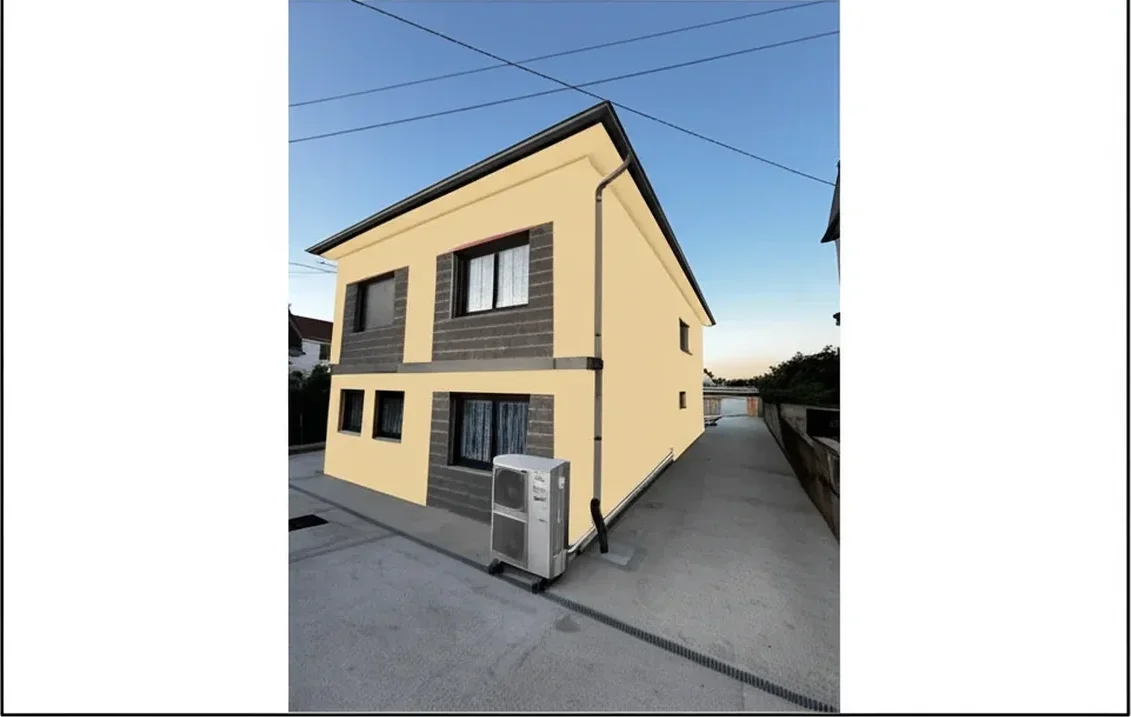
Try it on your house
No photo? Try a sample
The financial sting is real. The average UK household working through a single room buys 4 to 8 tester pots at £3 to £12 each, which is £40 to £80 in wasted spend before a single litre of finish paint enters the house. Add the unused 2.5 litre tin that gets opened, used once and abandoned in the shed because the shade was wrong, and the wasted figure climbs past £100 for the room and well past £150 if you also tested exterior masonry shades.
For context, Checkatrade and MyBuilder 2026 averages put a medium lounge interior repaint at £400 to £500 in labour plus £120 to £180 in paint, and a semi-detached exterior at £1,800 to £4,000 all-in. Testing properly is therefore a 1 to 2 percent rounding error against the total project cost, and an obvious win against the alternative of repainting a year later.
Method 1: The lining paper trick (the decorator's secret)
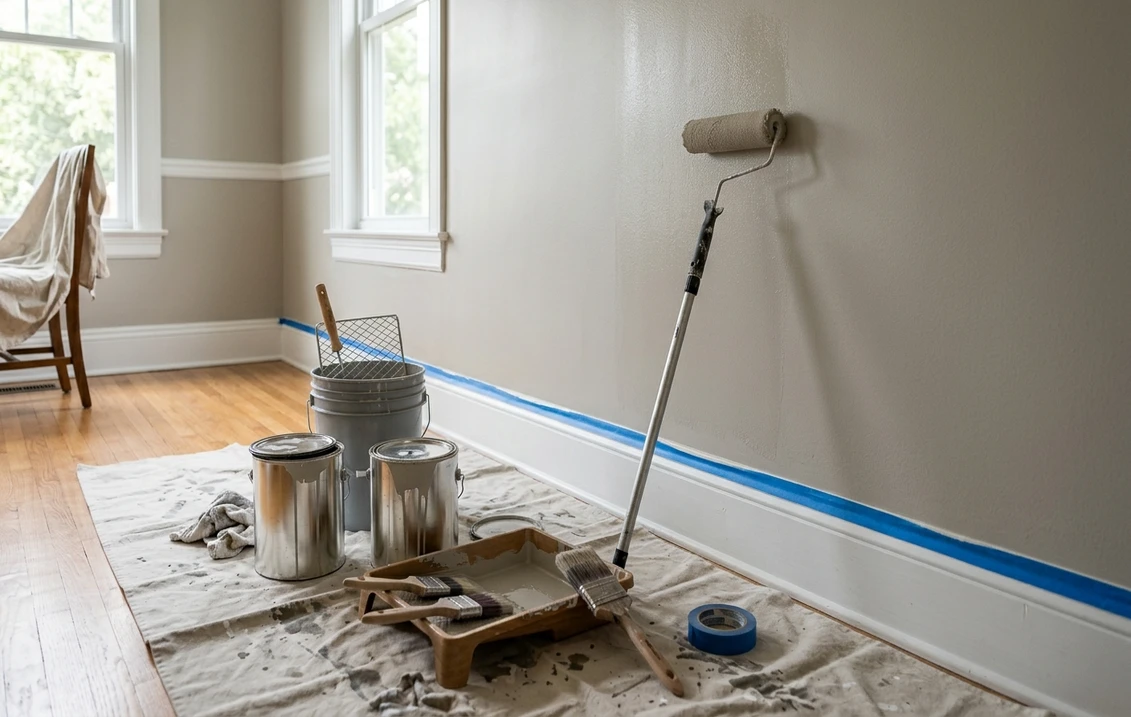
Professional decorators rarely paint a tester patch directly on the wall. The reason is simple: a small patch sits surrounded by the existing colour, which biases your eye and makes the new shade look colder, warmer or duller than it really is. The trick is to paint a large square of lining paper instead, around A2 or A1 size, and move it around the room.
Buy a roll of grade 1000 or 1200 lining paper from Wickes, B&Q or Toolstation for around £5 to £10. Cut it into 60 cm by 80 cm sheets and paint each one with two even coats of your candidate shade, edge to edge. Let the paper dry fully (24 hours is realistic in a centrally heated UK home). Then tape each sheet to a different wall, including north-facing, south-facing and a wall directly opposite the main window. Photograph each location at three times of day, ideally early morning, midday and after sunset under your usual evening lighting.
Cost: £5 to £10 for the paper plus the tester pot. Time: 2 hours to paint, plus 24 hours to dry, plus 48 hours of observation. Why it works: you are looking at a clean, isolated colour field, not a patch contaminated by the surrounding wall. You can also hold the sheet next to your sofa, your curtains and your favourite mug to check that the shade lives happily with the rest of the room.
Method 2: Peel-and-stick samples (Coat, Lick, Mylands)
The newest generation of UK paint brands has done away with the wet sample pot. Coat, Lick and Mylands all sell peel-and-stick samples: roughly A5-sized adhesive squares that are pre-painted with two coats of real paint and stick directly to your wall without leaving residue. Coat samples sit at around £2 each, Lick is similar, and Mylands premium samples are a little higher.
The advantages are obvious. No mess, no smell, no waiting for paint to dry, no opened tester pot drying out in a kitchen drawer six months later. You can order ten shades for under £25, have them delivered in 24 to 48 hours, and walk around the house sticking them in different places. They peel off cleanly, which makes them ideal for tenants and for anyone who hates the patchy wall look that tester pots leave behind.
The limits are equally honest. Peel-and-stick is locked to whichever brand made the sample, so if you want to compare a Farrow & Ball shade against a Dulux Heritage shade against a Crown Heritage shade in a single afternoon, you cannot do it. The sample area is smaller than a hand-painted lining paper sheet, which makes light-direction testing slightly less reliable. And not every brand offers peel-and-stick: Farrow & Ball, Dulux and Crown still rely on traditional sample pots. Cost: £2 to £10 per sample. Time: 24 to 48 hours shipping, then immediate to apply.
Method 3: Real tester pots (Dulux, Farrow & Ball, Crown)
The traditional tester pot remains the gold standard for final-stage colour confirmation, and every serious paint brand sells one. Dulux 250 ml tester pots cost roughly £3 to £5 at B&Q and Dulux Decorator Centres. Crown 250 ml testers run £3 to £4 at Wickes and Travis Perkins. Farrow & Ball 100 ml sample pots are the premium option at £8 to £12, and Little Greene sits at similar pricing. Mylands and Edward Bulmer specialist heritage testers run higher still.
The strength is unbeatable accuracy. A tester pot is identical in pigment, binder and finish to the litre tin you will eventually buy, so what you see on the wall is precisely what you will get. The depth-of-matt finish that gives Farrow & Ball Estate Emulsion its famous soft shadow can only be properly judged from a real painted patch, not from a screen or a printed card. For final decision-making before buying a 5-litre tin, the tester pot is irreplaceable.
The weaknesses are also well known. Four to eight pots is a typical full-house testing budget, which puts you in the £30 to £80 range for a complete project. Painted patches leave the wall mottled, which is a nuisance if you do not actually proceed with that shade. And tester pots need proper drying time: most emulsions dry visibly darker than they look wet, and the colour shifts can be 20 to 30 percent in apparent depth over 48 hours. Cost: £30 to £80 across a project. Time: budget 2 to 3 weeks for proper drying plus morning, midday and evening light observation across at least 5 days.
Method 4: AI paint visualiser (free, 30 seconds)
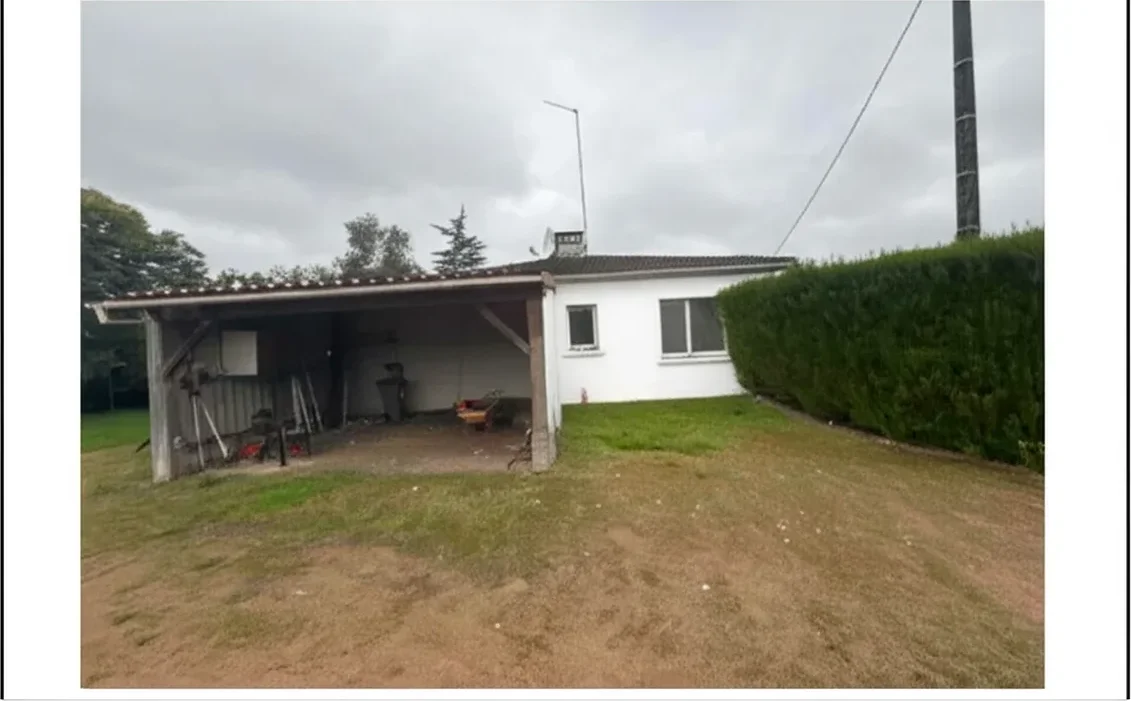
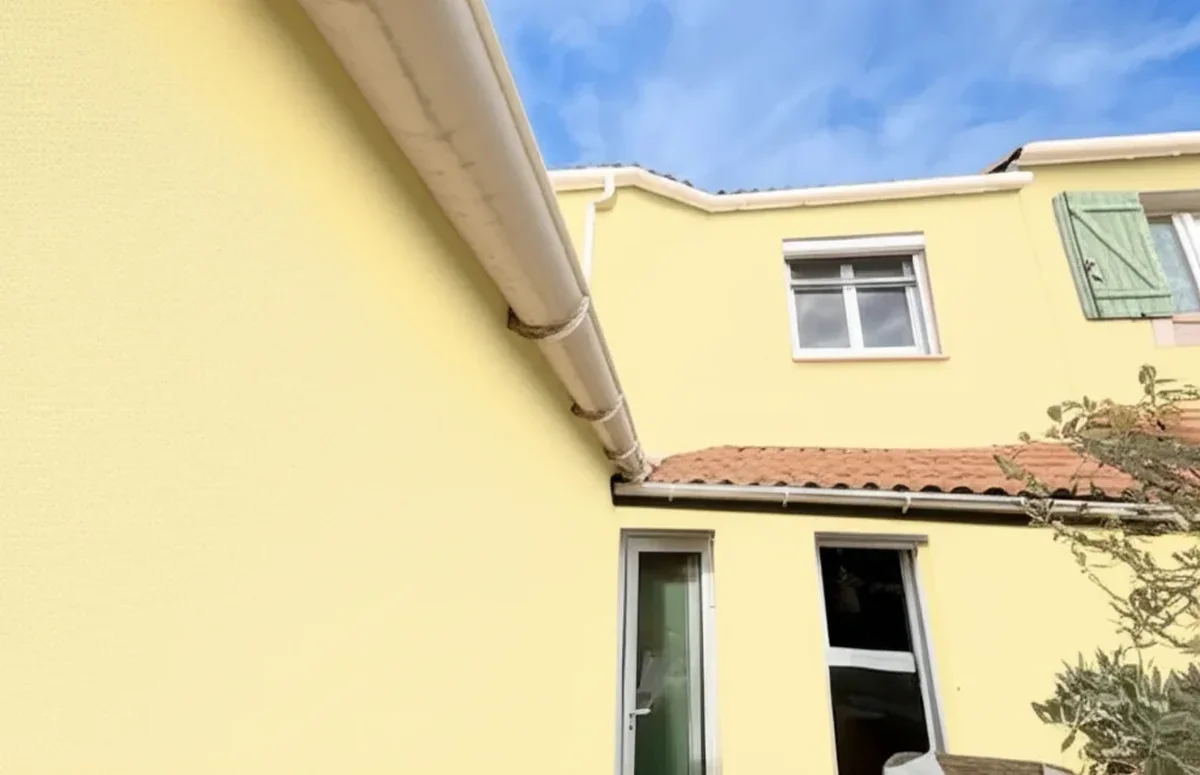
The newest option in the UK toolkit is the AI paint colour visualiser. You upload a photograph of your room or your house exterior, pick a shade from a palette of around 1,951 colours covering every major UK brand, and the AI renders a photo-realistic preview of your space in that colour in roughly 30 seconds. There is no painting, no waiting, no postage and no wall mess.
The right use case is shortlisting. Most homeowners start a redecoration project with a vague list of 15 to 25 candidate shades pinned from Pinterest, Houzz, Instagram and the brand catalogues. Walking that long-list down to a top 3 using tester pots costs serious money. Doing it on an AI visualiser costs nothing, takes an hour rather than three weekends, and runs across every brand in a single session: Farrow & Ball Hague Blue beside Little Greene French Grey Mid beside Dulux Heritage Cornforth Stone beside Crown Mellow Sage, on the same wall, in 4 minutes total.
The honest limits matter too. An AI visualiser is not a substitute for a real painted patch when it comes to final confirmation. Screen brightness varies by 30 to 50 percent across UK devices, colour temperature shifts by several hundred Kelvin between an iPhone and a laptop, and the depth-of-matt-finish quality of a premium emulsion cannot be captured on a screen. The right workflow is digital first to narrow the field, then physical to confirm the winner.
Try the FacadeColorizer AI visualiser. Upload one photo, test any colour, get a preview in 30 seconds. No signup, 1 free HD render plus 3 free variations per session.
Try it free on my photoCost: free for the first HD render plus 3 free variations per session, then Pack Colour at £8.90 unlocks 3 more HD images at full 4000 px resolution. Time: roughly 30 seconds per shade. For a longer comparison of the UK options, see our best house paint visualiser UK 2026 comparison and our Dulux Visualiser vs alternatives piece.
Method 5: AR live preview apps (Dulux, Tikkurila)
Augmented reality apps such as the Dulux Visualiser, the Crown MyRoomPainter and the Tikkurila ColourNow app overlay a paint shade onto your live camera feed, so when you point your phone at a wall you see it in the new colour in real time. The experience is genuinely impressive on a flat, well-lit interior wall, and the app integration with the brand catalogue means a single tap takes you to the order page for sample pots and litre tins.
The strengths are speed and immersion. Walking around a room with the camera on, watching the colour applied live to your actual sofa wall, is a more visceral experience than any static preview. For interior shortlisting on a flat painted wall, AR is a fast and free tool.
The limits are equally clear in honest testing. AR edge detection struggles on textured surfaces such as Anaglypta wallpaper, lining paper, lime render and pebbledash. The colour bleeds onto sash window frames, dado rails, soffits and downpipes. Exteriors are particularly weak because moving the phone around a facade introduces jitter. The shifting light of a real UK day fools the live feed within a few minutes. And every AR tool is locked to a single brand palette, which limits cross-brand comparison. Cost: free. Time: instant, but reliability varies.
The decorator's hybrid method (recommended UK workflow)
After testing all five methods against the same Edwardian semi-detached lounge and a Victorian terrace facade, the most efficient UK workflow combines three of them in sequence. None of the methods is optimal on its own. Combined properly, they cost £15 to £30 total against the £80-plus typical scattered approach, and they take under a fortnight from start to finish.
Step 1: AI visualiser, narrow 20 candidates down to 3. Take one good photograph of the room or facade in diffused daylight. Upload it to an AI visualiser. Run 20 to 25 candidate shades from Farrow & Ball, Little Greene, Dulux Heritage, Crown, Coat, Lick and Mylands through the tool in a single session. Eliminate anything that obviously fails on your space. Time: 1 hour. Cost: free, with optional Pack Colour at £8.90 for HD output if you want to print the finalists.
Step 2: 3 peel-and-stick samples (or 3 painted lining paper sheets). Order peel-and-stick samples of the 3 finalists from Coat, Lick or Mylands. If your finalists are Farrow & Ball, Little Greene or Dulux Heritage shades, paint 3 lining paper sheets with their tester pots instead. Move them around the room across 5 days, photograph them at 3 times of day, and pick a winner. Time: 1 week. Cost: £6 to £30.
Step 3: One winner, full-section real-paint test. Buy the winning tester pot. Paint a 1 m by 1 m section on the wall you spend the most time looking at, ideally next to the trim, the window and the most important piece of furniture. Wait 48 hours for proper drying. Confirm. Order the litre tins. Time: 1 week. Cost: £3 to £12.
Total: £15 to £30 and roughly 12 to 14 days, against the £80-plus and 3 to 4 weekends of a scattergun approach. The hybrid method also produces a documented decision trail with photographs, which is useful if you are a decorator running a tiered client quote or a homeowner submitting paperwork for a Conservation Area or Listed Building application.
Testing light direction (essential in the UK climate)
British light is the single biggest reason a paint colour looks different on your wall than it did in the shop. The UK sits at 51 to 58 degrees north, which means the sun is low in the sky for most of the year and the angle of incoming light shifts dramatically between rooms facing different directions. Farrow & Ball's in-house colour consultancy and Edward Bulmer Natural Paint both publish guidance on light direction, and the patterns are consistent.
North-facing rooms receive cool, blue-leaning light all day with no direct sunshine. Shades that look balanced in a south-facing kitchen will read distinctly cooler and greyer in a north-facing study. Compensate by choosing warmer undertones: a creamy off-white rather than a pure white, a stone with a hint of pink rather than a true grey-stone. Farrow & Ball Skimming Stone and Little Greene Slaked Lime tend to do better in north-light than colder neutrals like Cornforth White.
South-facing rooms get warm, direct sunlight for much of the day, which floods the space with golden tones. Pale shades read almost white in this light, and warm whites can tip into yellow. East-facing rooms catch bright, fresh light in the morning but turn cool and shadowed by mid-afternoon. West-facing rooms are the opposite: cool in the morning, golden in late afternoon. Always photograph and assess a candidate shade at the time of day you most use the room.
For exteriors, the same logic applies on a building scale. A north-facing facade in Manchester or Glasgow will read significantly cooler than a south-facing facade in Brighton or Bournemouth, even on the same day. Test painted lining paper or peel-and-stick samples on the actual elevation, not on an interior wall, and observe across at least three days of weather.
Common mistakes UK homeowners make when testing paint
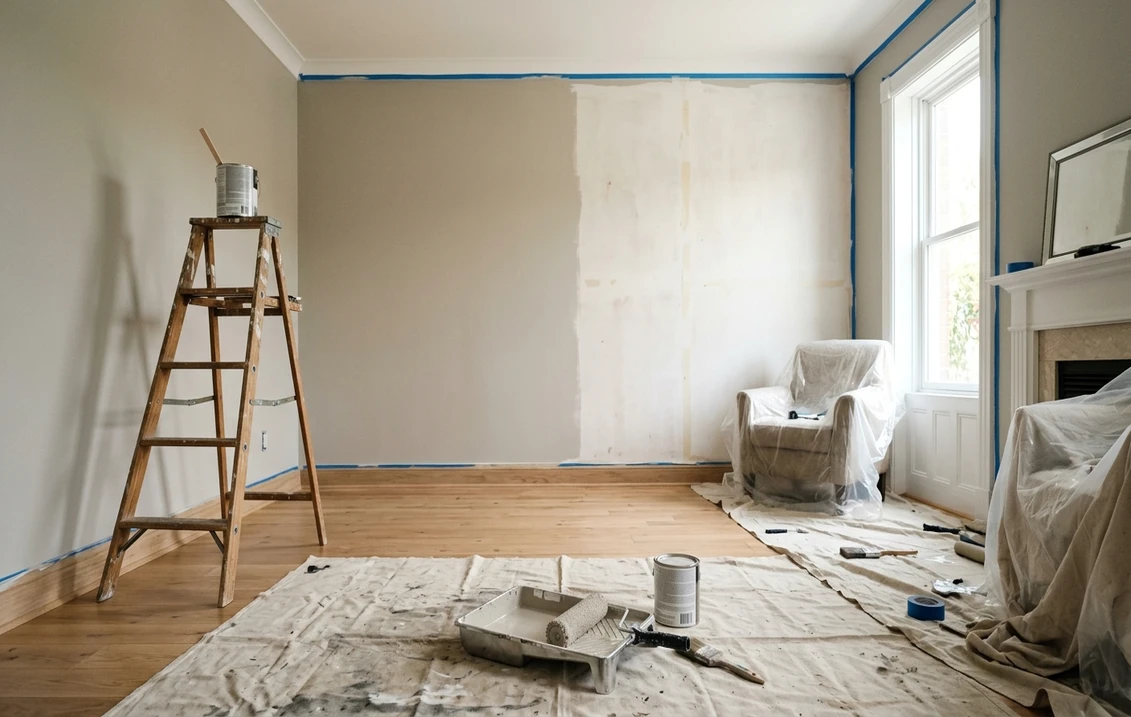
Painting one small patch in the middle of a wall. A 10 cm by 10 cm patch surrounded by the old colour will always look biased. Your eye reads the new shade relative to what is around it, so the test patch looks colder, warmer or duller than the real shade in isolation. Paint a 60 cm by 80 cm patch at minimum, and ideally use lining paper so the new colour is fully isolated.
Not waiting for the paint to dry properly. Most modern emulsions dry visibly darker than they look wet, with shifts of 20 to 30 percent in apparent depth over the first 48 hours. Judging a shade on the day you paint the patch is almost always wrong. Give the patch at least 24 hours, ideally 48, and re-check in different light before committing.
Testing under one light source only. A shade that looks beautiful at 11 in the morning under daylight can read entirely differently at 9 in the evening under warm LED, and again under cool kitchen task lighting. Photograph the test patch in the morning, at midday, in late afternoon and after dark. The right colour reads acceptably across all four conditions; the wrong colour falls apart in at least one.
Testing only on the largest wall. The largest wall in a room is often the easiest to paint, but it is rarely the wall you look at most. Test on the wall opposite the main window (which is where the eye lands when you walk in) and on the wall behind the sofa or the bed, not just the obvious feature wall.
Ignoring the existing trim, ceiling and flooring. A paint colour is not chosen in isolation: it has to live with your skirting boards, your ceiling shade, your floor and your curtains. Always hold the painted lining paper sheet or the peel-and-stick sample next to the trim and the floor before deciding. A perfect wall colour that fights with a yellow oak floor is the wrong wall colour.
Frequently asked questions
How much paint do I need to test a wall?
A standard 250 ml tester pot covers roughly 1 to 1.5 square metres in two coats, which is enough for two 60 cm by 80 cm lining paper sheets or a single 1 m by 1 m wall section. For a full-house testing programme covering 4 to 6 rooms, budget 4 to 8 tester pots. A 100 ml Farrow & Ball sample pot covers around 0.6 square metres in two coats, which is enough for one lining paper sheet.
Can I return Dulux tester pots if I do not like them?
Unopened tester pots can usually be returned to B&Q, Wickes and Dulux Decorator Centres within the standard return window (typically 30 days with receipt). Opened tester pots are not returnable for hygiene and trade reasons, which is consistent across Dulux, Crown, Farrow & Ball and Little Greene. Always confirm the specific store's policy before opening multiple pots if you anticipate returning some.
How accurate is an AI paint visualiser?
A modern AI visualiser captures roughly 95 to 98 percent of the visual character of a paint shade on a calibrated screen, which is more than sufficient for shortlisting from 20 candidates to 3. The remaining gap, particularly the depth-of-matt finish that premium emulsions like Farrow & Ball Estate Emulsion produce, can only be appreciated on a physical painted patch. The right workflow is digital for shortlisting and physical for final confirmation.
Which brand makes the best peel-and-stick paint samples in the UK?
Coat and Lick lead the UK peel-and-stick market with consistent A5 samples at around £2 each, free or low-cost shipping within 48 hours, and a clean peel-off without wall residue. Mylands sits at the premium end with heritage shade accuracy. Farrow & Ball, Dulux, Crown and Little Greene still rely on traditional sample pots rather than peel-and-stick, so for those brands you are back to lining paper or a painted patch.
How long should I leave paint testers on the wall before deciding?
Minimum 48 hours to allow proper drying, ideally 5 to 7 days to observe the patch across multiple weather conditions and at all four daily light phases (early morning, midday, late afternoon, evening under artificial light). Most modern emulsions dry 20 to 30 percent darker than they look wet, and the colour relationship with your existing trim, flooring and furniture only reveals itself across several days of normal use.
Can I test exterior paint colours the same way?
Broadly yes, with two adjustments. Use exterior masonry tester pots rather than interior emulsion (Dulux Weathershield, Crown Sandtex 365, Johnstone's Stormshield all sell testers). Apply the test patch to an inconspicuous section of the actual elevation, not to lining paper, because exterior light and texture interact differently. For multi-shade exterior shortlisting, an AI colour visualiser is particularly useful because you cannot easily move a peel-and-stick sample around a brick or rendered facade.
What is the cheapest way to test paint colours?
Start with a free AI visualiser to narrow 20 candidates down to 3 finalists at zero cost. Order 2 or 3 peel-and-stick samples at £2 each, or buy one budget Dulux or Crown tester pot at £3 to £5 and paint a single lining paper sheet. Total minimum spend: under £15. This sequence beats the random tester pot approach (4 to 8 pots, £30 to £80) on both cost and decision quality.
Test your paint colours today
The two cheapest, fastest and most reliable steps in the UK testing workflow are the AI visualiser shortlist and the lining paper trick. Start with the visualiser to walk a 20-shade Pinterest long-list down to 3 serious candidates in an hour. Move to peel-and-stick or lining paper testers for the finalists. Confirm the winner with a real painted patch on the actual wall, observed across 5 days. That sequence saves £50 to £150 against the typical UK approach and prevents the most common regret in domestic decorating.
For broader UK paint planning, see our free house colour visualiser UK 2026 guide, our interior paint visualiser page, our Dulux Visualiser alternative review, our best house paint visualiser UK 2026 comparison, and our Dulux Visualiser vs alternatives 2026 piece. Combined with a fortnight of patient observation, the right tool kit removes almost all the risk from a paint decision.
Ready to see your room or facade in any colour? Upload one photo to the FacadeColorizer AI paint visualiser and try Farrow & Ball, Little Greene, Dulux Heritage, Crown, Coat, Lick or Mylands shades in 30 seconds. 1 free HD render plus 3 free variations per session, Pack Colour from £8.90 for full 4000 px output. Secure payment, immediate activation, no commitment.
See my home in any colour. 30 seconds, no signup.
Try it free on my photoTrademarks mentioned (Sherwin-Williams, Benjamin Moore, Behr, Caparol, Brillux, Sto, Alpina, Valspar, PPG, Glidden, Dulux, Crown Trade, Sandtex, Farrow & Ball, Johnstone's, Leyland) are property of their respective owners. FacadeColorizer is independent and not affiliated with any of them. Nominative fair use under Lanham Act §1125.