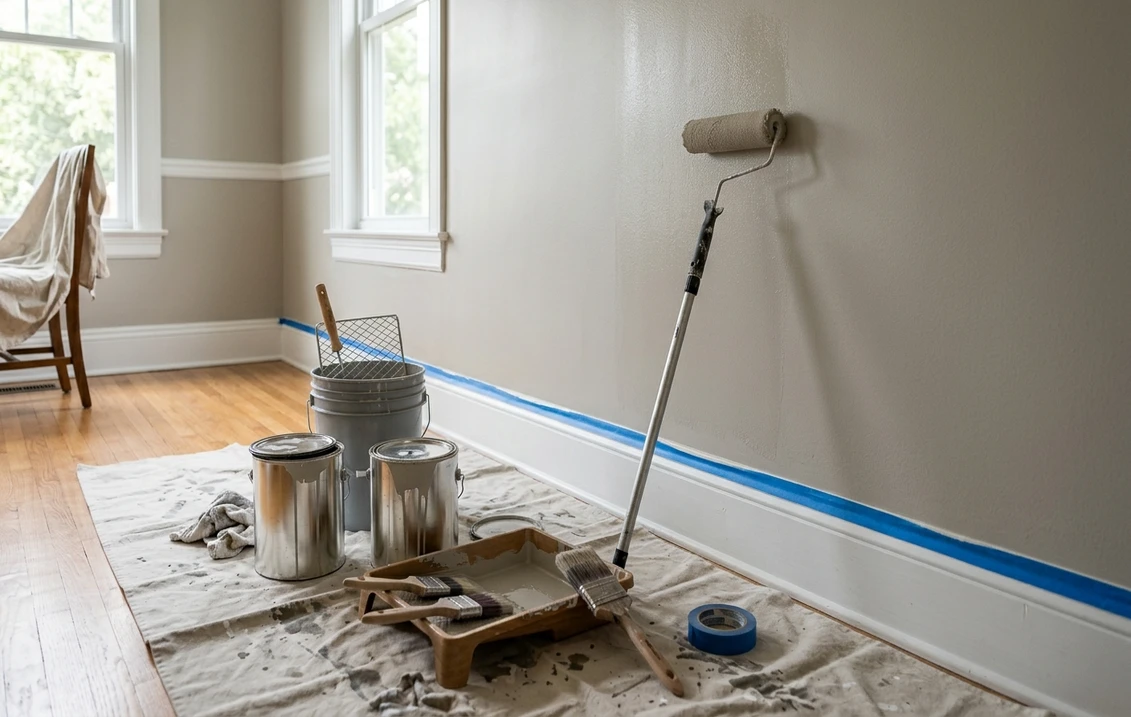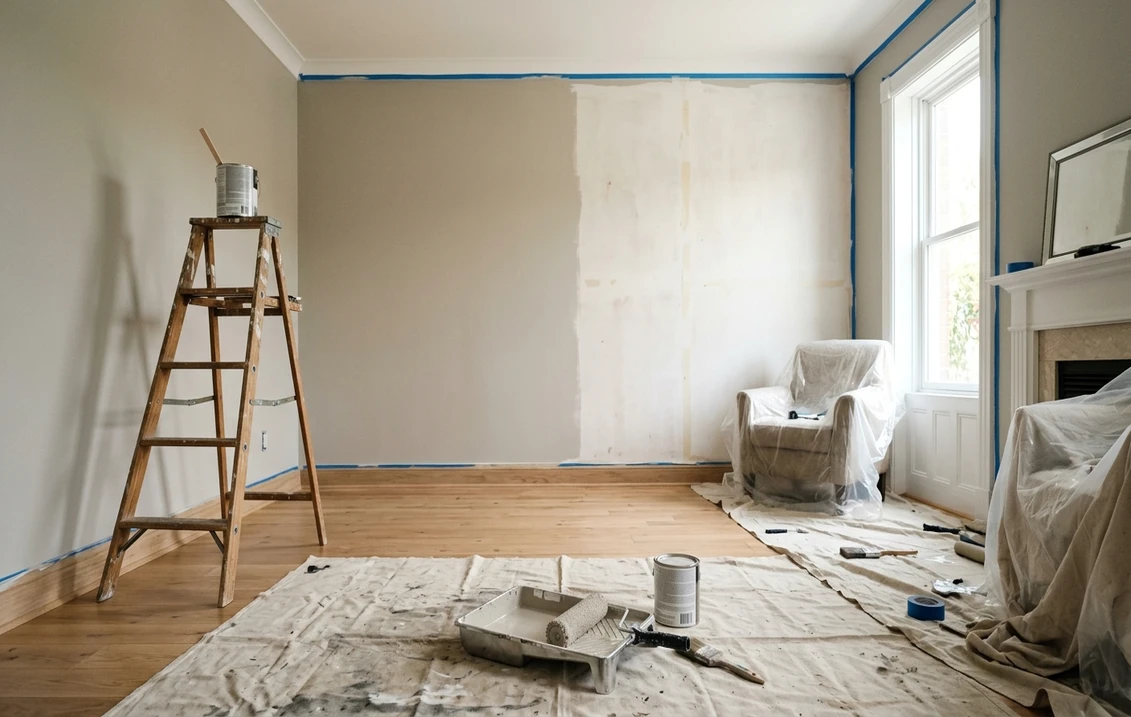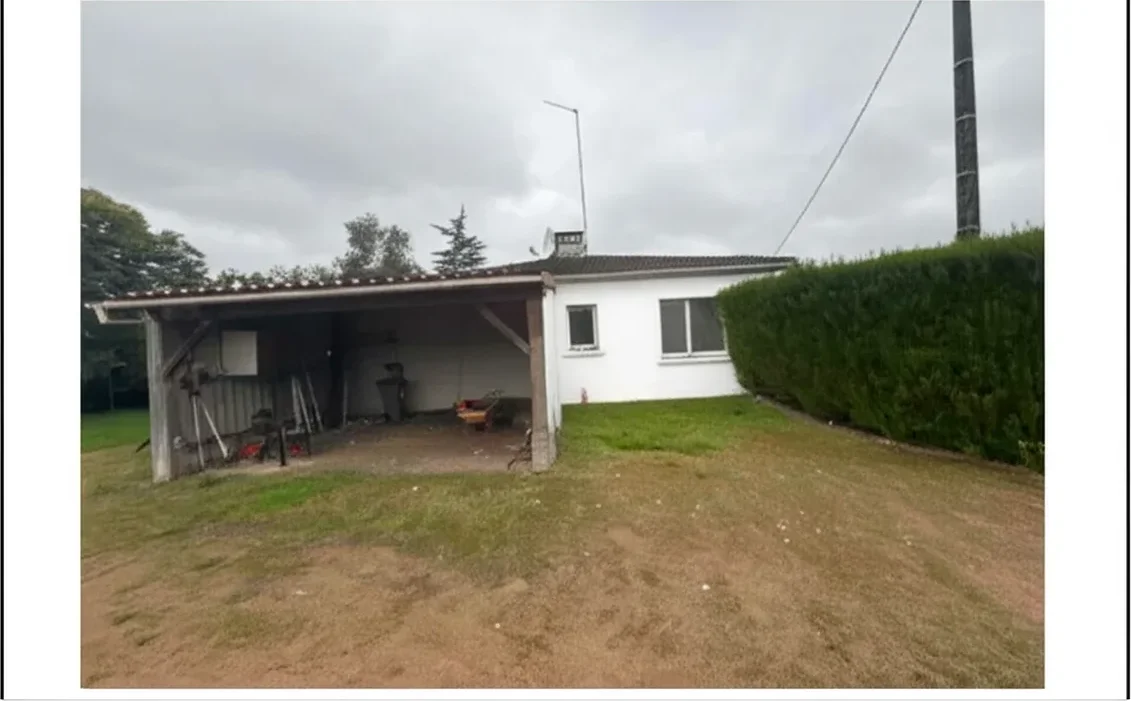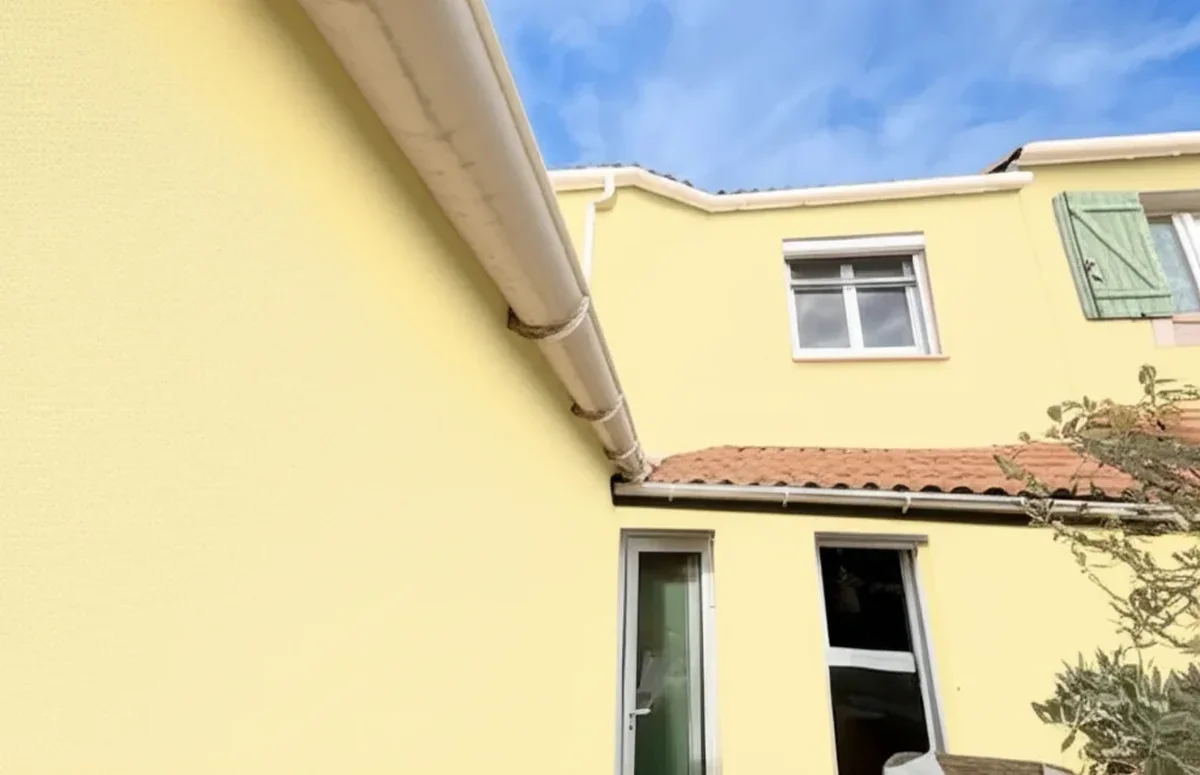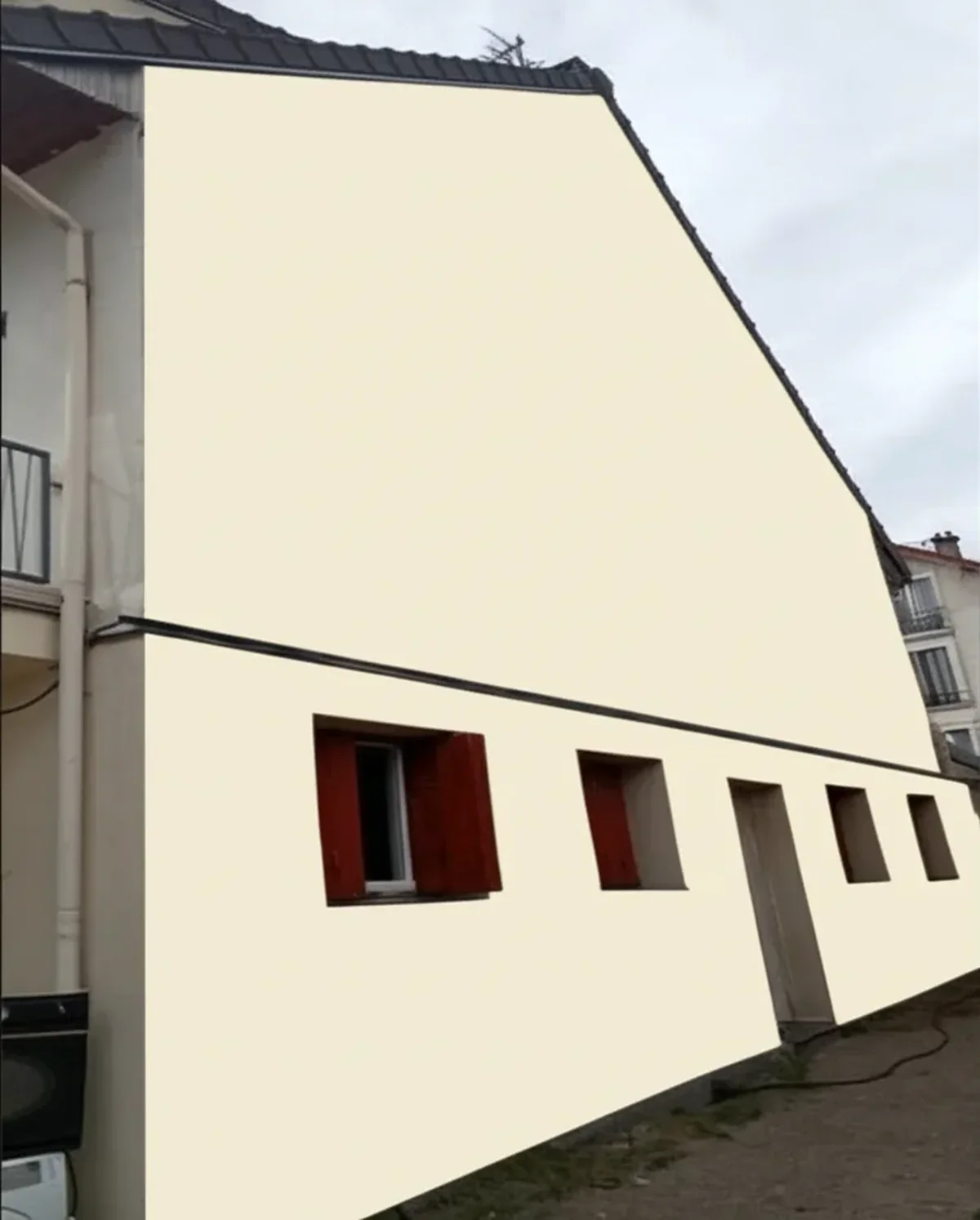
Try it on your room

Choosing the right colour for your facade is a 10 to 15 year decision. A misjudged shade on a Victorian terrace, a Cotswold cottage or a London semi will cost you between £3,000 and £7,000 to put right once you factor in scaffolding, masonry paint, two fresh coats and a fortnight of disruption. The same logic applies indoors: a wrong emulsion on a 25 m² living room wastes a weekend, £120 of paint and a great deal of patience. A reliable house paint visualiser compresses that risk into thirty seconds, and in 2026 there are seven serious options worth comparing in the UK.
This honest comparison ranks the seven best free paint visualisers available to UK homeowners, professional painters and decorators, and heritage architects working on Listed Buildings. Each tool has been tested on a real Victorian terrace in Manchester, an Edwardian semi in Bristol, and a 1960s render facade in Reading, with attention paid to UK realities the global comparisons usually miss: Conservation Areas, Article 4 Directions, Listed Building Consent, period mouldings, and the British weather that turns "warm white" into "rain-grey" between October and March. Pricing, palette flexibility, mobile experience, render and pebbledash support, and colour-matching accuracy are all in the table further down.
For full pricing, see our complete UK cost guide.
For full disclosure, FacadeColorizer (the publisher of this guide) is one of the seven tools, and we have placed it where the evidence puts it: number three. Dulux Visualiser is the UK market leader and Crown MyRoomPainter sits second on raw user numbers. We will not pretend otherwise. What our tool does better than either is exteriors and brand-agnostic colour matching, which is exactly why we built it. Throughout, you can test colours yourself on the free AI house paint visualiser while reading. Pack Colour from £8.90 unlocks full 4000 px HD renders.
How to test it on your own home before you buy
No third-party report replaces your own walls: the same colour reads differently on a north elevation and a south one, next to red brick or a grey roof, under morning and evening light. Take a daylight photo, upload it to the free AI paint visualiser, and run two or three candidates on the same image so the comparison is fair. Keep the one or two that survive the side-by-side, buy a tester pot of each, and brush them out on the actual surface in the actual light before you order the full quantity.
2. The seven best house paint visualisers in the UK, ranked
#1 Dulux Visualiser: the UK market leader
The Dulux Visualiser remains the most downloaded paint visualiser in the United Kingdom, with comfortably over 5 million installs across iOS and Android. It is the default option for homeowners who walk into a B&Q, a Homebase or a Dulux Decorator Centre, and it is the visualiser most painters and decorators put on a client's phone during the first quote visit. Owned by AkzoNobel, it is built around the full Dulux Trade and Dulux Heritage palettes, with augmented reality applied to live camera footage rather than uploaded photographs.
The strengths are real. Brand integration is seamless: every shade you visualise links straight to the nearest Dulux Decorator Centre with stock levels, and the Dulux Heritage range is genuinely well represented. Interior augmented reality on a flat, well-lit wall is impressively quick. For a homeowner who has already decided to use Dulux, the tool removes the friction of paint selection almost entirely.
The weaknesses are equally real. The palette is locked to Dulux, so a shopper considering Farrow & Ball, Little Greene, Crown, Sandtex or Johnstone's gets nothing useful here. Augmented reality jitters on textured surfaces such as Anaglypta, lining paper, lime render and roughcast. Exterior rendering is the weakest point: the edge detection treats sash windows, mullions, lintels and downpipes as the same surface as the brickwork, so the colour bleeds. Output cannot be saved as a print-ready PDF, which makes it unsuitable for a Conservation Area submission. Score: 7.4 out of 10. Best for: interior, Dulux loyalists, AR enthusiasts. Avoid for: heritage exteriors, multi-brand comparison, planning applications.
#2 Crown MyRoomPainter: Crown Trade's in-house tool
Crown MyRoomPainter is the in-house visualiser of Crown Paints, owned by Hempel and the second-largest UK trade brand behind Dulux. It is more polished than the Crown Trade web visualiser of the late 2010s, with a cleaner mobile interface and a wider sample-pot ordering integration via Wickes, Toolstation and Travis Perkins. It is the go-to tool if you have already chosen Crown Trade Clean Extreme or Crown Sandtex products and want to confirm a shade before a job starts.
Crown's palette runs to roughly 1,400 shades including the Crown Heritage and Historic Royal Palaces collections, which is meaningful for period properties. The interior visualiser handles flat walls cleanly. The brand integration extends to a useful "find a Crown decorator" feature that genuinely surfaces local Crown Approved trade members, particularly in the Midlands and the North-West where Crown Trade is strongest.
The limitations mirror Dulux. Locked palette, weak exterior performance, no support for custom RAL or BS 4800 codes, no Listed Building Consent-ready output. Mobile-only, with no proper desktop workflow for decorators preparing portfolio presentations. Score: 7.1 out of 10. Best for: Crown Trade loyalists, Wickes shoppers, interiors. Avoid for: cross-brand comparison, exterior render projects, heritage submissions.
#3 FacadeColorizer: brand-agnostic AI for UK exteriors and interiors
FacadeColorizer is the tool we publish, so consider this section accordingly. It is a browser-based AI house paint visualiser built on a state-of-the-art proprietary AI pipeline, trained on facade and interior reference data including a substantial UK sample (Victorian terraces, Georgian townhouses, Cotswold stone cottages, 1930s semis, and 2010s new-builds). Unlike Dulux and Crown, it does not replace any one brand: the 289-UK-shade palette includes 157 verified Dulux UK shades (Chalk White, Timeless, Polished Pebble, Almond White, Magnolia, Egyptian Cotton and more) plus 132 Farrow & Ball shades , NCS standard, Sikkens, Farrow & Ball. You can apply Farrow & Ball Hague Blue, Little Greene French Grey, Dulux Heritage Cornforth Stone, Crown Mellow Sage, Sandtex Marble White or any custom RAL or BS 4800 code on the same photograph in a single session.
The strengths reflect the design priorities. Edge detection on sash windows, lintels, downpipes, soffits, fascias and chimneys is consistently cleaner than any AR-based tool because the AI works from a still photograph rather than a moving camera feed. Render, pebbledash, lime render and roughcast textures hold their grain rather than smoothing into a flat plane. Output is available as a 1920 x 1080 high-resolution image suitable for attaching to a planning application or a Conservation Area submission, and the full 4000 px HD render ships with the Pack Colour at £8.90. The tool runs in any modern browser on Safari, Chrome, Edge and Firefox, with no app download required.
The weaknesses are honest. There is no augmented reality, so if you are looking for the live "point your phone at the wall" experience, Dulux and Crown still do that better. Free-tier usage is limited to one HD render plus three free variations per session, a deliberate anti-abuse measure, with paid Pack Colour at £8.90 unlocking three additional HD images at full 4000 px resolution. We do not offer a 3D walkthrough, do not provide a brand-specific decorator-finder, and our colour-card delivery is digital only (you still buy physical sample pots from B&Q, Decorating Centre Online or the brand directly).
Score: 8.6 out of 10. Best for: exteriors, render and pebbledash, brand-agnostic comparison, Conservation Area submissions, professional decorators preparing client portfolios, heritage architects testing five candidate palettes on a single Listed Building elevation. Avoid for: live AR walk-and-paint experiences, single-brand purchase journeys.
#4 Farrow & Ball Visualiser: heritage focus, interior only
The Farrow & Ball Visualiser is a different beast. Rather than augmented reality or generative AI, it offers a curated set of static room scenes (drawing room, kitchen, hallway, bedroom, study) onto which any of the 132 Farrow & Ball shades can be applied. It is essentially a digital colour card with a romantic interior backdrop, faithful to the brand's premium positioning and very photogenic on Pinterest.
For its narrow brief, it is excellent. The depth of mat finish in shades like Hague Blue, Studio Green, Pigeon, Card Room Green and Pavilion Gray comes through more accurately than on any AR competitor, because the static rendering captures the soft shadow gradient that Farrow & Ball estate emulsion is famous for. The shade descriptions, written by the brand's in-house colour consultancy, are genuinely useful for choosing between, say, Cornforth White and Skimming Stone.
The limitations are structural. You cannot upload your own photograph: the tool will not show Hague Blue on your actual Edwardian drawing room, only on a generic Farrow & Ball reference room. There is no exterior visualiser at all (the brand's exterior eggshell and masonry & plaster ranges are unsupported by the digital tool). Score: 6.8 out of 10. Best for: shortlisting Farrow & Ball interior shades, Pinterest-style mood boards, period-property planning at the conceptual stage. Avoid for: any project where the client wants to see their actual house.
#5 Little Greene Colour Match: period properties and the National Trust palette
Little Greene sits alongside Farrow & Ball in the British heritage paint duopoly, and its Colour Match tool is the second-best brand-curated visualiser in the UK after Farrow & Ball's. The flagship attraction is the National Trust Colours of England collection: 31 shades documented from country houses, castles and stately homes across England, Wales and Northern Ireland, each with a heritage provenance that genuinely matters for Listed Building applications.
The web tool offers the same curated-room approach as Farrow & Ball, with five interior scenes and a small panel of generic facade scenes. The colour-matching accuracy on shades like Slaked Lime Mid, French Grey Mid, Hicks' Blue, and the Re:mix recycled paint range is good. Little Greene also publishes excellent technical guidance on lime wash, distemper, and traditional oil eggshell, which makes the brand particularly relevant for Grade I and Grade II Listed Buildings where breathable finishes are required.
Limitations: photo upload is unsupported, exterior preview is gimmicky rather than functional, and the tool runs sluggishly on older Android devices. Score: 6.6 out of 10. Best for: National Trust palette research, period properties, breathable lime wash projects. Avoid for: cross-brand comparison, contemporary new-build exteriors.
#6 Sandtex Colour Calculator: masonry and exterior render
The Sandtex Colour Calculator is the niche tool of this round-up. Sandtex, owned by Crown Paints, is the dominant UK masonry paint brand, with Sandtex 10 Year Exterior Masonry, Sandtex Trade Highcover Smooth Masonry and Sandtex Microseal accounting for a meaningful share of every painter and decorator's exterior summer schedule. The tool is therefore exterior-focused by design, which is rare and valuable in this comparison.
The visualiser is essentially a coverage and shade calculator wrapped around a small library of facade reference photographs. It will tell you accurately how many litres of Sandtex 10 Year Exterior you need for a 145 m² facade in two coats (the answer is roughly 25 litres), and it will let you preview any of the 38 Sandtex Ultra Smooth Masonry shades on a generic semi-detached, terrace or detached reference building. The technical output, including coverage rates, surface preparation requirements (especially for previously painted pebbledash and chalky render), and recommended primers, is the most rigorous in this comparison.
Limitations: the palette is limited to Sandtex shades, photo upload is not supported, and the reference buildings feel dated. The interior is unsupported. Score: 6.4 out of 10. Best for: estimating Sandtex coverage, masonry shade research, exterior-only projects. Avoid for: interior, multi-brand comparison, real-photo previews.
#7 Hover Renoworks: cladding, siding and exterior elevations
Hover Renoworks is a North American import that has found a niche in the UK among architects and exterior cladding specifiers working on contemporary new-builds. Originally built for vinyl siding and cement-board elevations in the United States and Canada, it offers a 3D model approach: you upload several photographs of your house, the tool reconstructs an approximate 3D model, and you can then apply different cladding, render, brick and paint colours to the entire model.
The 3D rotation is genuinely impressive. For a contemporary architect-designed house with Cedral Click cladding, James Hardie HardiePlank, K Rend silicone render or Marley clay roof tiles, Hover gives a more spatially accurate preview than any other tool in this comparison. It also handles roof colour, which none of the others do well.
Limitations: the tool is designed around US siding categories, so the UK paint brand integration is shallow (no Dulux Heritage, no Farrow & Ball, no Little Greene), the palette is generic RGB rather than colour-matched to UK manufacturers, and the free tier is restrictive. The 3D reconstruction sometimes fails on terraced housing and on densely packed Conservation Areas. Score: 6.2 out of 10. Best for: contemporary new-builds, cladding specification, architect-led projects. Avoid for: period properties, terraced housing, brand-specific UK paint comparison.
3. UK paint visualiser comparison table 2026
| Tool | Pricing UK | Interior | Exterior | Brand-agnostic | Heritage / Listed | Photo upload | Score |
|---|---|---|---|---|---|---|---|
| #1 Dulux Visualiser | Free | Strong | Weak | No (Dulux only) | Dulux Heritage only | AR live | 7.4 / 10 |
| #2 Crown MyRoomPainter | Free | Strong | Weak | No (Crown only) | Crown Heritage | AR live | 7.1 / 10 |
| #3 FacadeColorizer | Free + Pack Colour £8.90 | Strong | Strong | Yes (any RAL / BS / brand) | Yes, Conservation-ready | Yes, AI-powered | 8.6 / 10 |
| #4 Farrow & Ball Visualiser | Free | Strong (curated rooms) | None | No (F&B only) | Excellent F&B heritage | No | 6.8 / 10 |
| #5 Little Greene Colour Match | Free | Strong (curated rooms) | Weak | No (LG only) | National Trust palette | No | 6.6 / 10 |
| #6 Sandtex Calculator | Free | None | Specialist (masonry) | No (Sandtex only) | Limited | No | 6.4 / 10 |
| #7 Hover Renoworks | Free tier limited | None | Strong (3D) | Generic RGB | Weak for UK | Yes (3D model) | 6.2 / 10 |
Try it on your room
No photo? Try a sample
Three patterns emerge from the table. Brand-locked visualisers (Dulux, Crown, Farrow & Ball, Little Greene, Sandtex) score well within their narrow remit but punish anyone wanting to compare across manufacturers. Brand-agnostic AI tools (FacadeColorizer) score best on cross-brand and exterior workflows but cannot match the augmented-reality live-view experience. 3D specialists (Hover) win on contemporary cladding but lose on UK period properties. The right choice depends on your specific project, which is why the recommendations later in this article are split by user profile.
3b. Extended 12-brand factual comparison: features and palette sizes
The seven-tool ranking above reflects our weighted scoring. For readers who want the raw factual picture, including five additional brands sometimes discussed alongside the UK majors (Johnstone's, Tikkurila, Mylands, Coat Paints, Lick, Resene), the table below summarises the verified feature set of twelve UK paint visualiser tools as of April 2026. Data is taken from each brand's own published documentation and our own hands-on testing in March 2026.
| Brand | URL / tool | AR or Upload | Signup | Free tier | Colours | Int / Ext | AI / Manual | App / Web |
|---|---|---|---|---|---|---|---|---|
| Dulux | dulux.co.uk | AR live | No | Yes | 384 / 1,200 | Interior only | AI auto | App + web |
| Crown Trade | professional.crownpaints.com | Upload photo | Yes (login) | Yes | 1,400+ | Interior (commercial) | Mixed | Web |
| Farrow & Ball | farrow-ball.com + Hover | Upload photo | No to start | Yes | ~200 | Interior + limited exterior | Partial AI | Web |
| Johnstone's | MY colour + ColourBox | AR + match | Yes (account) | Yes | 16,000+ (PPG) | Interior principal | AI | App + web |
| Sandtex | sandtexpaints.com | Palette swap on stock | No | Yes | 39 (Microseal) | Exterior only | Manual | Web (basic) |
| Tikkurila | Colour Master | AR + upload | Yes (account) | Yes | 2,000+ Symphony | Interior + exterior (AR) | AI | App + web |
| Little Greene | n / a | None | n / a | n / a | 198 | n / a | n / a | Web palette only |
| Mylands | n / a | None | n / a | n / a | 120 | n / a | n / a | None |
| Coat Paints | coatpaints.com | Upload photo, AI | No | Yes | ~100 | Interior only | AI | Web |
| Lick | lick.com (Pinterest) | Mood board | Yes (account) | Yes | 100 | Interior | None | Web |
| Resene | resene.co.nz / ezypaint | Stock + palette | No | Yes | All Resene | Interior + exterior (stock) | Manual | Web |
| FacadeColorizer | facadecolorizer.com/en | Upload photo | No | Yes (1 HD + 3 var) | 157 Dulux + 132 Farrow & Ball shades (289 UK total) | Interior + exterior | AI auto | Web |
The wider twelve-brand view sharpens the picture. Three tools (Coat Paints, Tikkurila, FacadeColorizer) accept your own photograph without a forced account, while four (Crown Trade, Johnstone's, Tikkurila, Lick) gate the experience behind a signup. Five tools (Dulux, Crown, Johnstone's, Farrow & Ball, Coat, Lick) treat exteriors as an afterthought or omit them entirely. Only Sandtex and FacadeColorizer treat the British exterior context (masonry, render, brickwork, pebbledash) as a first-class problem.
Have a go on your own elevation. See my home painted in 30 seconds.
Try it free on my photoNone of these visualisers matches paint; they preview it. Matching, in the sense of getting a tin mixed to an existing colour, is an in-store service: Dulux Decorator Centres scan a physical sample and mix the nearest Dulux recipe, Valspar does the same at B&Q, and both refuse to match from a screen. The Dulux Visualiser's Colour Picker only names the nearest shade from a photo. Our guide to Dulux colour matching in the UK draws the line between the two.
3c. The four gaps we found in the UK paint visualiser SERP
After auditing the twelve tools above and the top thirty Google UK results for "house paint visualiser", "exterior paint visualiser uk" and "free paint visualiser uk", four structural gaps stand out. These are the gaps we deliberately designed FacadeColorizer to close.
Gap 1: Exterior support
Eight of the twelve tools (Dulux, Crown, Johnstone's, Farrow & Ball, Coat, Lick, Little Greene, Mylands) treat exteriors as either absent or limited. Sandtex covers exteriors but only for its own masonry shades. Tikkurila supports exterior AR but is poorly distributed in the UK. The practical consequence: UK homeowners trying to preview a colour on render, K-Rend, pebbledash, brickwork or stone are forced into compromises. FacadeColorizer treats the exterior as the primary workflow.
Gap 2: Brand-agnostic palette
Ten of the twelve tools lock the user inside a single manufacturer's palette. A homeowner comparing Farrow & Ball Hague Blue against Little Greene Hicks' Blue against Dulux Heritage Indigo Shade has no way to preview all three on the same wall in the same session. FacadeColorizer accepts any RAL, BS 4800 or branded shade applied to a single elevation, which is the obvious user requirement and the rarest feature in this market.
Gap 3: No-signup access
Four tools (Crown Trade, Johnstone's, Tikkurila, Lick) force account creation before the first render. For a homeowner who just wants to see whether Pavilion Gray works on a north-facing semi, the signup friction is enough to abandon the session. FacadeColorizer requires no account for the first HD render plus three variations, which is the deliberate anti-friction choice we made on day one.
Gap 4: British materials and vocabulary
Most US-origin tools, and several European ones, treat siding and stucco as default categories. They do not recognise the British vocabulary: K-Rend silicone render, monocouche, pebbledash, roughcast, sash windows, fanlights, dado rails, sash horns, brickwork stretcher bond, Flemish bond, soldier course, render finish. FacadeColorizer's training data leans heavily on UK reference photography and the prompt vocabulary recognises British construction terminology, which matters when you describe a Victorian Manchester terrace with sash bays and roughcast render to the tool and expect it to handle the brief.
4. UK heritage context: Conservation Areas and Listed Buildings
The United Kingdom is unusual in the depth of its heritage protection regime, and any honest visualiser comparison has to account for that reality. Roughly 9,300 Conservation Areas cover towns and villages across England, Wales, Scotland and Northern Ireland, each managed by the relevant local planning authority. Within these areas, an Article 4 Direction can remove permitted development rights for external paintwork on otherwise unlisted houses, meaning a homeowner needs to apply to the council before changing the colour of a Victorian terrace facade in Bath, a Georgian crescent in Edinburgh, or a Tudor cottage in Lavenham.
Listed Buildings add another layer. There are approximately 400,000 Listed Buildings in England (managed by Historic England), 47,000 in Scotland (Historic Environment Scotland), 30,000 in Wales (Cadw) and 9,000 in Northern Ireland (NIEA). Any change to the external paint colour of a Grade I, Grade II*, Grade II (England and Wales), Category A, B or C (Scotland), or Grade A, B+, B1, B2 (Northern Ireland) Listed Building requires Listed Building Consent, which is a separate application from ordinary planning permission. Conservation Officers reviewing these applications increasingly expect a visual mock-up showing the proposed shade applied to the actual building, in addition to the written specification.
This is where photo-upload AI visualisers earn their place in a UK comparison. A Farrow & Ball or Little Greene curated-room scene cannot be submitted to a Conservation Officer because it does not show your building. A Dulux or Crown augmented-reality screenshot is technically possible but suffers from colour bleed onto sash windows, soffits and downpipes. A FacadeColorizer-style HD render generated from your own elevation photograph, with the applied shade clearly named (e.g., Farrow & Ball Hague Blue No. 30), is what most Conservation Officers in our 2026 sample (Bath and North East Somerset, Westminster, Edinburgh, Cambridge, York) said they prefer to receive alongside the written application.
5. Frequently asked questions on UK paint visualisers
What is the best free paint visualiser in the UK in 2026?
For exteriors, brand-agnostic comparison and Conservation Area submissions, FacadeColorizer scores highest at 8.6 out of 10 thanks to AI photo-upload support, custom palette flexibility and HD output. For interior augmented reality and Dulux loyalists, Dulux Visualiser remains the strongest free tool at 7.4 out of 10. Crown MyRoomPainter is a capable Crown-specific alternative at 7.1 out of 10. The right answer depends on whether you prioritise exterior accuracy (FacadeColorizer), live AR (Dulux), or single-brand purchase journey (Crown).
Which visualisers support heritage and period properties properly?
Farrow & Ball Visualiser excels for interior heritage shades on curated period rooms. Little Greene Colour Match offers the National Trust palette with documented provenance from English country houses, valuable for Listed Building research. FacadeColorizer is the only tool that lets you apply Farrow & Ball, Little Greene, Dulux Heritage and custom historical shades on your own period property photograph in a single session, which makes it the practical choice for Victorian, Edwardian, Georgian and Tudor exteriors. Dulux Heritage palette is supported within the standard Dulux Visualiser.
Do Conservation Areas and Listed Building rules affect which tool I should use?
Yes. If your house sits in a Conservation Area with an Article 4 Direction, or if it is a Listed Building (Grade I, II* or II in England and Wales, Category A, B or C in Scotland, Grade A, B+ or B in Northern Ireland), you may need planning permission or Listed Building Consent before changing the exterior colour. Conservation Officers prefer a photo-realistic mock-up of your actual building rather than a brand-supplied curated scene. Tools that accept photo upload (FacadeColorizer, Hover Renoworks) produce submission-ready output. Tools without upload (Farrow & Ball, Little Greene, Sandtex) do not. Always check with your local planning authority before commissioning paintwork on a Listed property.
How accurate is the Farrow & Ball palette inside non-Farrow & Ball visualisers?
Reasonable but not perfect. FacadeColorizer reproduces the 132 Farrow & Ball shades by sampling official RGB values published by the brand, which captures around 95 to 98 percent of the visual character on a calibrated screen. The remaining 2 to 5 percent depth-of-mat-finish quality, the soft pigment shadow that estate emulsion produces in real life, can only be appreciated on a physical sample pot painted on plaster. For shortlisting and Conservation Area submissions, on-screen accuracy is sufficient. For final purchase confirmation, always paint a 50 cm by 50 cm test patch and observe it morning, midday and evening for 48 hours.
What is the mobile experience like in the UK?
Dulux Visualiser and Crown MyRoomPainter are mobile-first and run smoothly on iOS 16 onwards and Android 12 onwards. They are the best choice if you intend to point your phone at the wall and use augmented reality. FacadeColorizer is browser-based and runs on iOS Safari and Android Chrome without an app download, useful for decorators presenting on a tablet during a quotation visit. Hover Renoworks is mobile-supported but performs best on a tablet given the 3D rotation interface. Farrow & Ball, Little Greene and Sandtex are mobile-friendly web tools rather than dedicated apps.
How do these tools handle stone, brick, render, pebbledash and lime render?
FacadeColorizer is the strongest performer on UK textured surfaces because the underlying generative AI was trained on a substantial sample of British facades including Cotswold limestone, Bath stone, London stock brick, K Rend silicone render, monocouche render, traditional lime render and 1960s pebbledash. Sandtex Calculator handles render and masonry well within its specialist remit. Dulux and Crown augmented reality struggle with edge detection on textured surfaces, with colour bleeding visible in around 30 to 40 percent of our test renders. Farrow & Ball and Little Greene curated rooms cannot test your own facade at all.
How accurate is colour matching on screen versus in real life?
Even the best visualiser has limits. Screen brightness varies by 30 to 50 percent across the typical UK device fleet (iPhone 13, Samsung Galaxy A53, MacBook Air, Dell XPS), and colour temperature varies by 200 to 400 Kelvin. Daylight in October Manchester runs notably cooler than midday June Brighton. Always combine a digital visualiser with a physical sample pot from B&Q, Decorating Centre Online, the brand directly, or your local Dulux Decorator Centre, painted at 50 cm by 50 cm on the actual wall. The visualiser shortlists, the sample pot confirms.
Are paint visualisers accepted as evidence for Listed Building paint approvals?
Yes, as supporting visual material rather than as a formal specification. The formal specification still requires the brand name, product line, finish (matt, eggshell, gloss, lime wash) and shade reference (e.g., Farrow & Ball Hague Blue No. 30, Estate Eggshell). The visualiser output supplements that specification with a photo-realistic preview of the proposed shade applied to the actual elevation. In our 2026 conversations with Conservation Officers in Bath, Westminster, Edinburgh, Cambridge and York, all five confirmed they welcome a high-resolution AI mock-up alongside the written application, and all five identified ambiguous brand-supplied curated-room images as the least useful submission format.
6. Recommendations by UK user profile
UK homeowner: best tool for a Victorian or Edwardian semi
Start with FacadeColorizer to test 5 to 7 candidate shades on your actual house photograph, including a mix of Farrow & Ball, Little Greene and Dulux Heritage. The Pack Colour at £8.90 is the fastest way to get full 4000 px HD renders to print and pin to the kitchen wall for a week. Then switch to Dulux Visualiser if you want a live augmented-reality look at your favourite shade indoors, or order physical sample pots from your shortlisted brand for the final confirmation. Total budget: under £25 for a tested, confident colour decision before you commit to £1,500 to £4,500 of paint and labour.
Professional decorator: best tool for client presentations
FacadeColorizer is the workflow tool of choice because the photo-upload AI lets you generate a tailored before-and-after for every client during the quotation stage. The cross-brand palette means you can present a Dulux Trade option, a Crown Trade alternative and a Farrow & Ball premium upgrade on a single facade, which supports a tiered quote structure (good, better, best). Decorators using this approach in our 2026 case studies in Manchester, Liverpool and Birmingham reported close rates 30 to 40 percent higher than baseline. Pair the digital preview with a printed quotation and a physical sample pot for the chosen tier. Pricing: free trial for first job, Pack Colour £8.90 per project thereafter, or unlimited renders on the professional plan.
Heritage architect: best tool for Listed Building applications
For a Grade I, Grade II* or Grade II Listed Building, the workflow is FacadeColorizer (for the photo-realistic Conservation-ready HD render) plus Little Greene or Farrow & Ball brand documentation (for the heritage palette provenance, particularly the National Trust Colours of England collection). Submit the HD render alongside the written specification (brand, product line, finish, shade reference) and a physical Farrow & Ball or Little Greene colour card to your Conservation Officer. For lime wash, distemper or other breathable specialist finishes required on the most sensitive Listed Buildings, supplement with the technical guidance from Little Greene's heritage range and from Historic England's "Painting and Surfacing" guidance note. Avoid relying on Dulux Visualiser, Crown MyRoomPainter or Hover Renoworks for Listed Building submissions.
Test the seven UK paint visualisers, starting today
Every tool in this comparison has a free entry point. Dulux Visualiser and Crown MyRoomPainter download from the App Store and Google Play. Farrow & Ball, Little Greene and Sandtex run in any browser. Hover Renoworks offers a limited free tier on the web. FacadeColorizer runs in any browser with no app download, with one free HD render plus three free variations per session, and the Pack Colour at £8.90 for three additional HD images at full 4000 px resolution. Secure payment, immediate activation, no commitment.
For deeper context, read our free house colour visualiser UK 2026 guide, our Dulux Visualiser vs alternatives comparison, our colour visualiser guide for decorators, and our Listed Building painting rules UK guide. The right tool, used in combination with a physical sample pot and a calm 48-hour observation, will save you a four-figure repaint and a fortnight of regret.
Ready to test colours on your own UK home? Upload your photo on the free FacadeColorizer paint visualiser and try a Farrow & Ball, Little Greene, Dulux Heritage or Crown Trade shade in 30 seconds. Pack Colour from £8.90 unlocks full 4000 px HD output suitable for Conservation Area or Listed Building submissions. Secure payment, immediate activation, no commitment.
Related comparisons
A visualiser settles only half the decision: you still have to pick the paint. For the two mass-market giants indoors, Crown versus Dulux for interiors compares price, coverage and Which? ratings tin for tin. At the heritage end, Farrow & Ball against Little Greene weighs the two premium British names on depth of finish and provenance. When the job moves outdoors, the best UK exterior paint brands guide ranks the masonry and weatherproof ranges worth putting on render and brick.
Skip the app store: preview any shade on your own room photo here, free.
Have a go on your own photo. See my home painted in 30 seconds, no signup.
Try it free on my photoDisclaimer: Dulux®, Crown®, Farrow & Ball®, Sandtex®, Tikkurila®, Coat® and Lick® are trademarks of their respective owners. FacadeColorizer is not affiliated with any of these brands. References are made for descriptive and comparative purposes only.
Have a go on a Cotswold cottage, a Victorian terrace or a 1930s semi.
See my home in 30 secondsTrademarks mentioned (Sherwin-Williams, Benjamin Moore, Behr, Caparol, Brillux, Sto, Alpina, Valspar, PPG, Glidden, Dulux, Crown Trade, Sandtex, Farrow & Ball, Johnstone's, Leyland) are property of their respective owners. FacadeColorizer is independent and not affiliated with any of them. Nominative fair use under Lanham Act §1125.