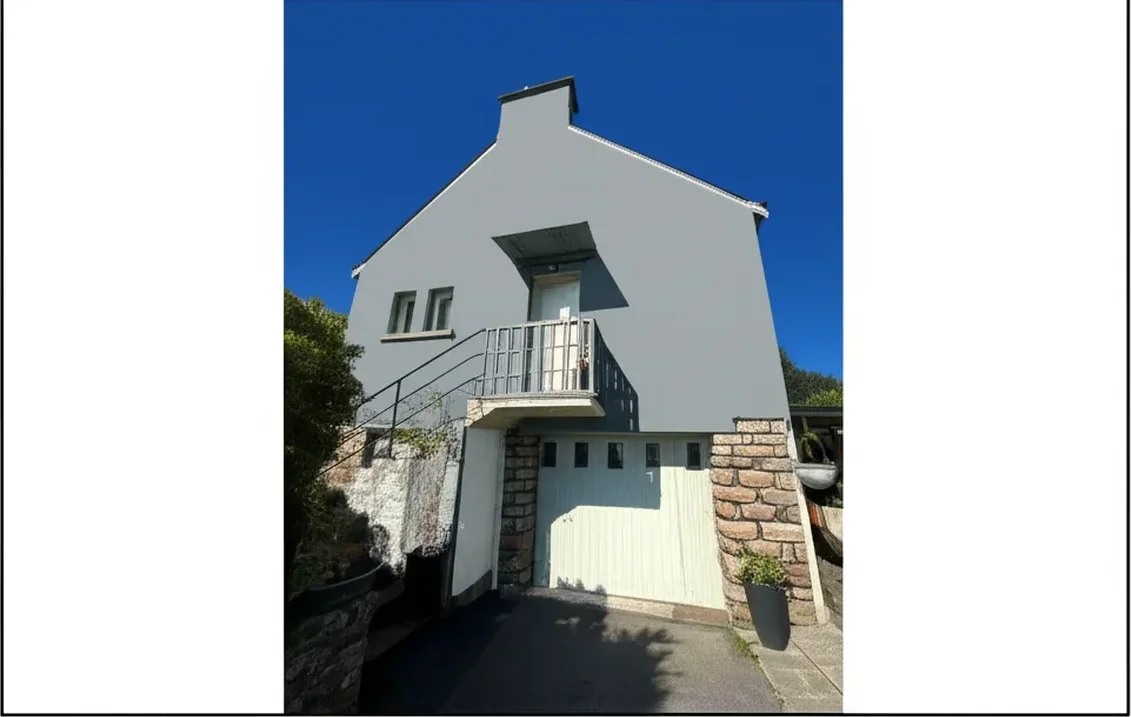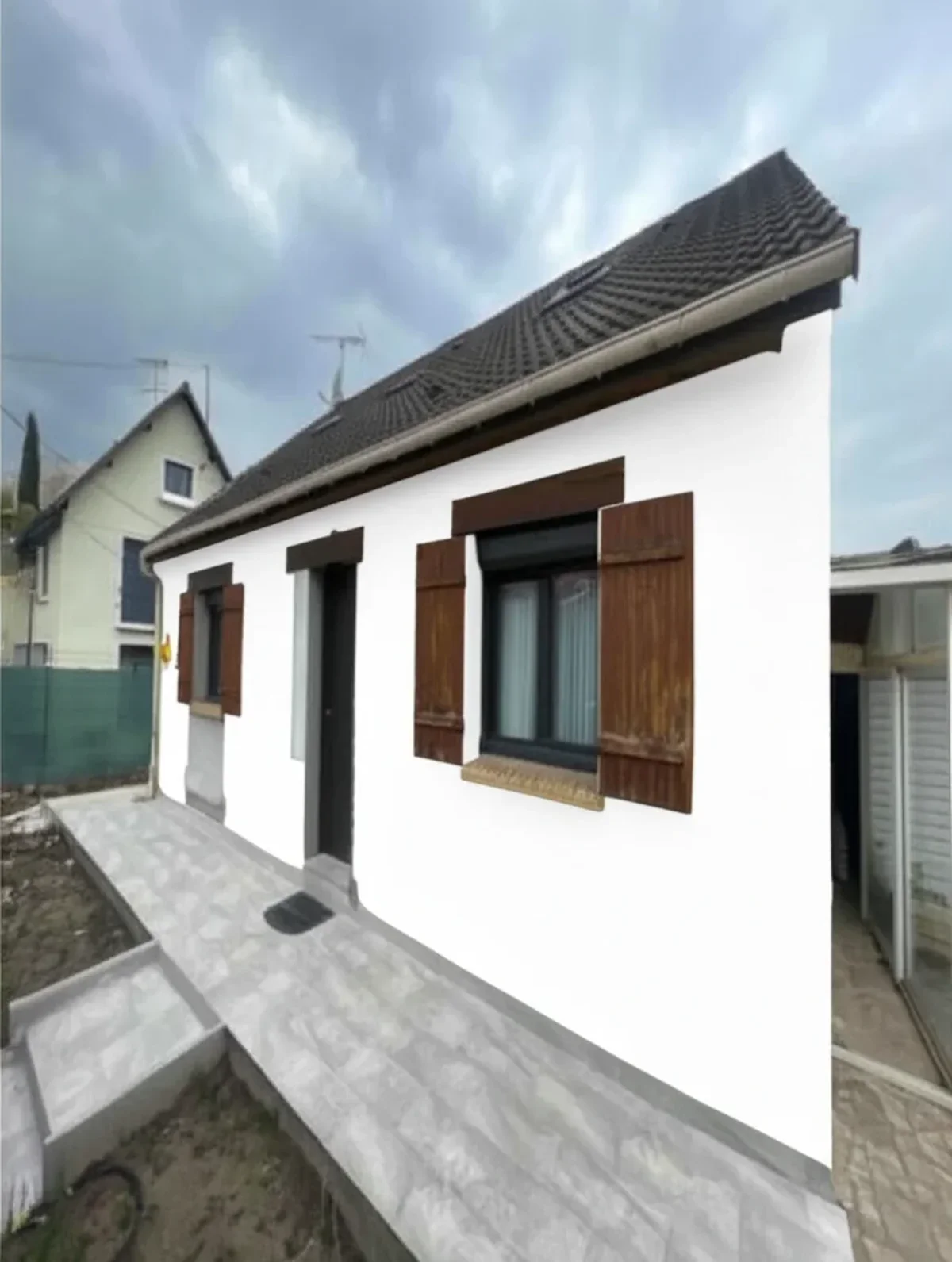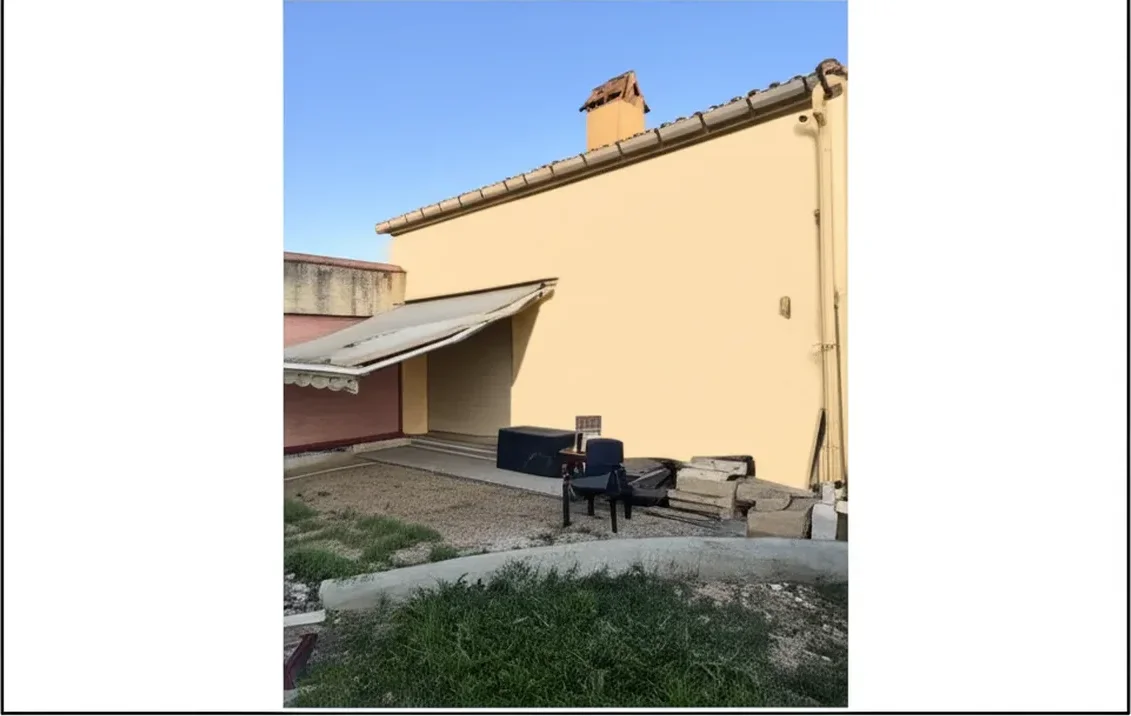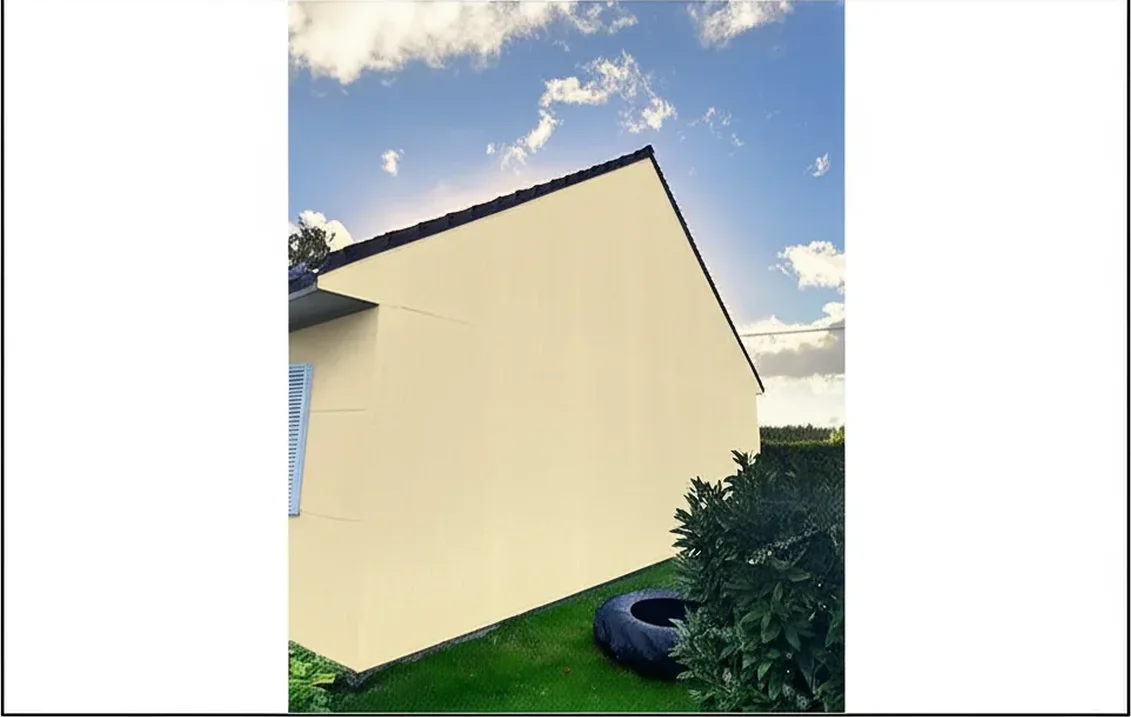
Try it on your house

Farrow and Ball and Dulux Heritage are the two most popular premium paint brands for UK heritage exteriors in 2026. Both promise period-accurate colours, durability across British weather, and a finish that makes a Georgian stucco or Victorian rendered facade look authentically historic. But they are not the same product. The differences in price, coverage, binder chemistry, and colour library are significant, and the right choice depends on your house, your budget, and your tolerance for maintenance. This guide compares both brands head to head using data from the Painters and Decorators Association, the British Coatings Federation, and real-world UK decorator feedback.
We will compare the two flagship exterior ranges: Farrow and Ball Exterior Masonry (and Exterior Eggshell for wood and metal) versus Dulux Heritage Velvet Sheen Exterior (and Weathershield Heritage). All figures are 2026 UK retail prices, verified with Leyland SDM, Brewers, and Johnstones trade counters in March 2026.
For full pricing, see our complete UK cost guide.
Quick verdict: which brand wins for what?
Before the detail, here is the short answer. Farrow and Ball wins on colour depth, pigment saturation, and the instantly recognisable heritage look. Dulux Heritage wins on price per litre, coverage, and durability in exposed coastal or northern conditions. If budget is no object and you want a show-stopping London townhouse, Farrow and Ball is worth the premium. If you own a Yorkshire terrace or a Cornish cottage exposed to driving rain, Dulux Heritage or Weathershield Heritage is often the smarter specification.
Price per litre: 2026 UK retail
Price is the first and most obvious difference. Farrow and Ball sits firmly in the super-premium bracket; Dulux Heritage is premium but noticeably more affordable.
| Product | 5 L retail (2026) | Price per litre | Coverage per litre |
|---|---|---|---|
| Farrow and Ball Exterior Masonry | GBP 205 | GBP 41 | 9 to 10 m squared |
| Farrow and Ball Exterior Eggshell | GBP 195 | GBP 39 | 12 m squared |
| Dulux Heritage Velvet Sheen Exterior | GBP 110 | GBP 22 | 14 m squared |
| Dulux Weathershield Heritage | GBP 95 | GBP 19 | 15 to 16 m squared |
Try it on your house
No photo? Try a sample
On a typical 120 m squared Victorian semi with two coats, you will need roughly 27 litres of Farrow and Ball Exterior Masonry (GBP 1,107) versus 17 litres of Dulux Heritage Velvet Sheen (GBP 374). That is a material cost difference of over GBP 700 for a comparable finish.
Colour palette: breadth and depth
For a front door the two brands' own blues show the difference in character: Farrow & Ball's Hague Blue, Stiffkey Blue and Railings against Dulux's Vast Lake and Teal Voyage, with Farrow & Ball's Exterior Eggshell at 32 m² per 2.5 litres per coat and Dulux's Quick Dry Gloss at up to 16 m² per litre; our blue front door colours guide quotes the makers' pages.
Farrow and Ball offers 132 core colours, all formulated with deep layered pigmentation that shifts in British daylight. The exterior-approved subset is around 90 colours. Dulux Heritage offers 112 curated heritage colours, organised into period collections (Georgian, Regency, Victorian, Edwardian, Arts and Crafts, Mid-Century).
Colour matching between the two is close but never identical. For example, Farrow and Ball Railings (No.31) has a slightly warmer blue-black than Dulux Heritage Graphite. Farrow and Ball Wimborne White is marginally creamier than Dulux Heritage White Lead. Most decorators agree Farrow and Ball pigments have a visibly richer quality at a distance, especially in North-facing or overcast conditions.
Durability and weather performance
Both products comply with BS EN 1062 for exterior masonry paints. Farrow and Ball Exterior Masonry is a water-based 100 percent acrylic system with a manufacturer-stated lifespan of 6 to 8 years on prepared render. Dulux Weathershield Heritage uses the Weathershield 15-year guarantee chassis with heritage pigments, offering up to 15 years against flaking and peeling when applied per the datasheet.
In exposure testing published by trade bodies, Dulux Weathershield consistently outperforms Farrow and Ball on chalking resistance, algae growth, and colour fade at the 7-year mark. Farrow and Ball holds its colour superbly for the first 4 to 5 years, then begins to chalk and dull more visibly, particularly on south-facing elevations.
Compatibility with period substrates
This is where the conversation gets nuanced. If your home is a listed building or pre-1919 solid-wall property with lime render, neither of these modern acrylic systems is ideal. Breathability matters. In that case, look at Farrow and Ball Limewash or specialist suppliers such as Rose of Jericho. For standard post-1920 cement render, concrete, brick, or modern monocouche, both brands perform well.
Conservation area rules rarely specify brand, only colour and sheen. Always check with your local planning authority before committing. The Painters and Decorators Association recommends a test patch of at least 1 m squared, viewed in all light conditions, before signing off on any heritage colour.
Preview F&B and Dulux Heritage on your facade photo, free, 30 seconds.
Compare both on my houseApplication and finish
Farrow and Ball Exterior Masonry is slightly thicker-bodied, brushes beautifully, and lays off without visible lap marks. It needs two full coats and a minimum 4-hour recoat window at 20 degrees. Dulux Heritage is thinner, sprays well, and accepts airless application more readily, which is why most professional decorators prefer it on large surfaces.
Both require proper preparation per BS 6150: pressure wash, treat any biological growth, make good cracks, apply a stabilising primer on chalky substrates, and allow render at least 28 days to cure before the first coat.
Full comparison table
| Criterion | Farrow and Ball | Dulux Heritage |
|---|---|---|
| Price per litre | GBP 39 to 41 | GBP 19 to 22 |
| Coverage per litre | 9 to 12 m squared | 14 to 16 m squared |
| Manufacturer lifespan | 6 to 8 years | Up to 15 years (Weathershield) |
| Colour count (exterior) | Around 90 | 112 |
| Pigment depth | Exceptional | Very good |
| Spray compatibility | Acceptable | Excellent |
| Best for | Show townhouses, southern England | Exposed sites, large surfaces |
Decorator view: what the trade actually specifies
According to Checkatrade data for 2025 to 2026, 62 percent of UK decorators specify Dulux Heritage or Weathershield on larger exterior jobs, citing cost, coverage and customer warranty. 28 percent specify Farrow and Ball when the client explicitly asks for it, usually in London, Edinburgh New Town, Bath, Brighton and the Cotswolds. The remaining 10 percent prefer Little Greene Intelligent Masonry, which sits between the two on price and performance.
Which should you choose?
- Choose Farrow and Ball if your home is in a conservation area with strong heritage character, you want the deepest pigmentation, and your budget tolerates a 2 to 3x price premium.
- Choose Dulux Heritage Velvet Sheen for a heritage look at a more realistic price, on any modern-built or mid-20th century home, especially with large rendered surfaces. If you are weighing up Dulux for interiors too, our Crown Paint vs Dulux interior comparison for budget-conscious homeowners is a useful companion read, and the same two brands as here meet again indoors in Dulux Heritage vs Farrow and Ball, where the price gap narrows to 35 to 40 percent on a 2.5 L tin rather than the 2 to 3x premium outside.
- Choose Dulux Weathershield Heritage for exposed, coastal or northern locations where a 15-year guarantee will outperform the premium option on total cost of ownership.
Frequently asked questions
Is Farrow and Ball really worth the price for exterior painting?
For a highly visible heritage property in London, Bath or Edinburgh where pigment depth matters and repainting every 6 to 8 years is acceptable, yes. For exposed sites, large surfaces or tight budgets, Dulux Heritage or Weathershield Heritage delivers 85 percent of the aesthetic result at less than half the material cost, with a longer guarantee.
Can I colour match Farrow and Ball shades in Dulux Heritage?
Dulux Heritage can mix visually close matches to most Farrow and Ball colours at any Dulux Trade Centre. The match is usually within 3 to 5 percent on an L, a, b colour scale, which is imperceptible on a large facade. The binder and pigment quality will still differ, so the finish sheen and weathering behaviour will not be identical.
Do I need planning permission to paint my house with Farrow and Ball or Dulux Heritage?
Brand never triggers planning permission. What matters is whether you are changing colour in a conservation area, painting a listed building, or repainting an area covered by an Article 4 direction. In those cases you need listed building consent or planning permission from your local authority, regardless of brand. Always check before you buy paint.
Which brand lasts longer on a UK exterior?
Dulux Weathershield Heritage, typically 12 to 15 years against flaking and peeling. Farrow and Ball Exterior Masonry is rated 6 to 8 years and tends to show chalking earlier on south-facing walls. Both assume correct preparation to BS 6150 and two full coats applied within specified temperature and humidity windows.
Related exterior comparisons
Heritage is only one corner of the UK exterior market. If your shortlist runs wider than these two brands, these guides pick up where this one leaves off:
- Crown versus Dulux Weathershield, the everyday masonry battle on price and coverage.
- Sandtex against Dulux Weathershield, the two trade favourites for exposed British walls.
- the full UK exterior brand ranking, all six masonry brands scored on price, coverage and warranty.
See both heritage exteriors on your own house photo before you buy, free.
Preview F&B and Dulux Heritage on your facade photo, free, 30 seconds.
Compare both on my houseBefore committing to either brand, test your shortlisted colours on a real photo of your home. Our free AI colour visualiser previews Farrow and Ball and Dulux Heritage palettes in seconds. Sources: Painters and Decorators Association, British Coatings Federation, BS EN 1062, BS 6150, Checkatrade 2025 to 2026 decorator survey.
Trademarks mentioned (Sherwin-Williams, Benjamin Moore, Behr, Caparol, Brillux, Sto, Alpina, Valspar, PPG, Glidden, Dulux, Crown Trade, Sandtex, Farrow & Ball, Johnstone's, Leyland) are property of their respective owners. FacadeColorizer is independent and not affiliated with any of them. Nominative fair use under Lanham Act §1125.