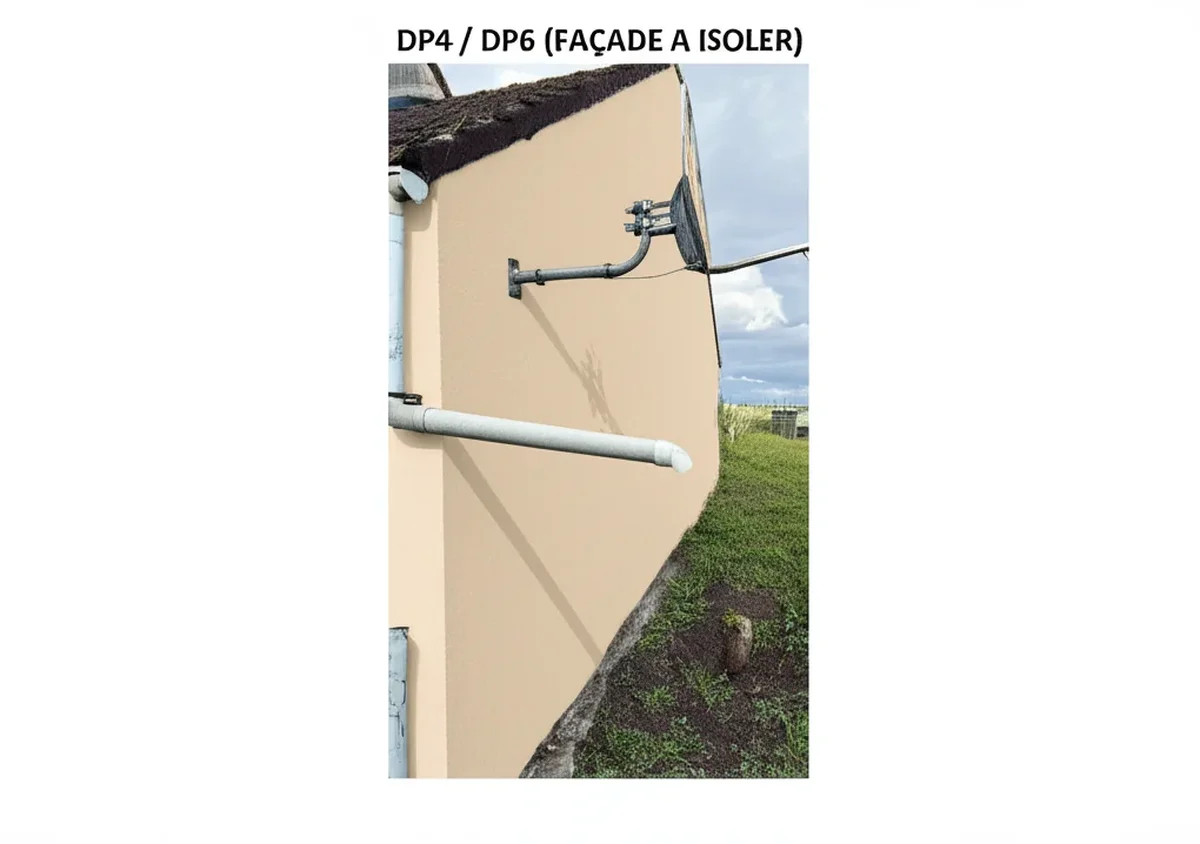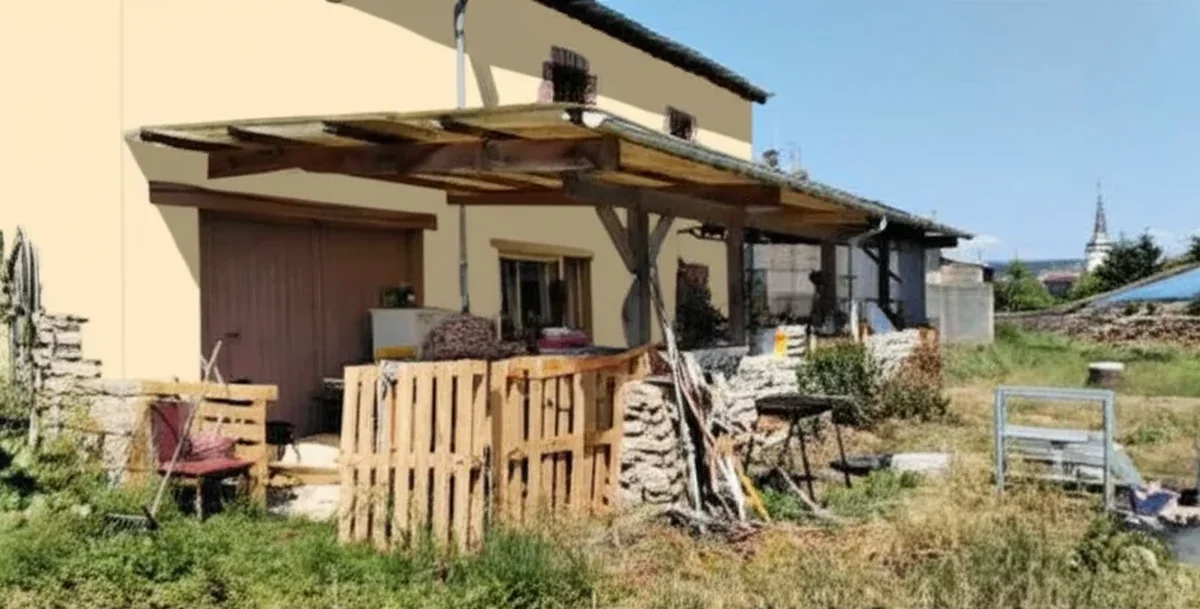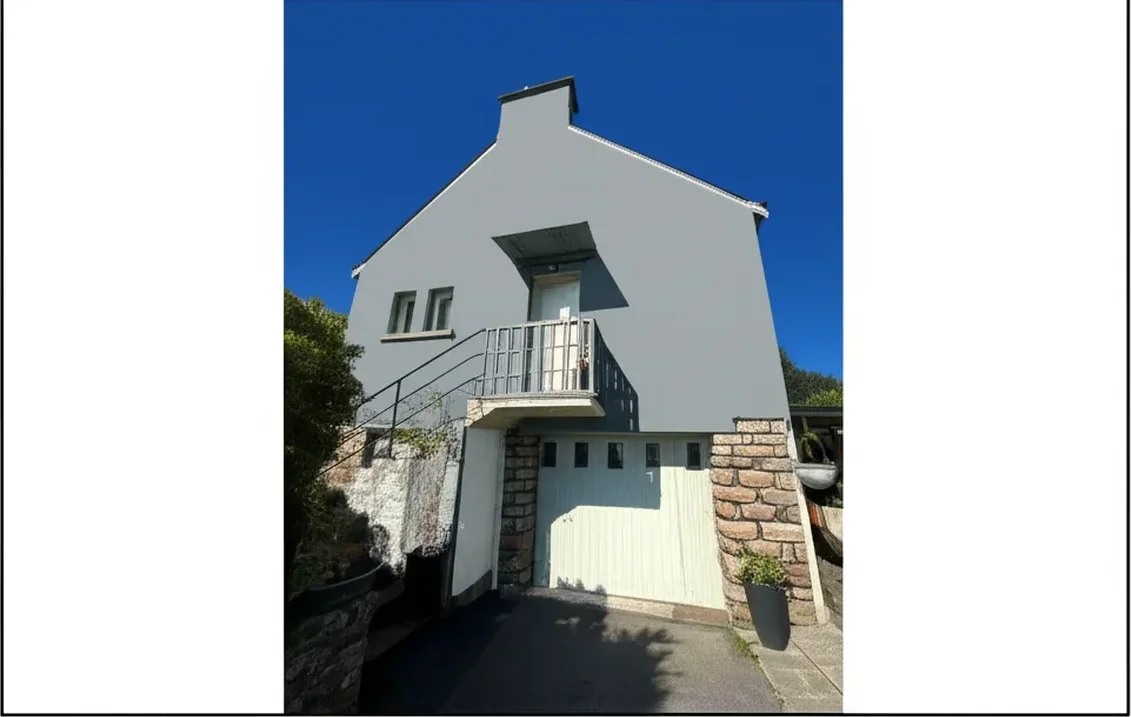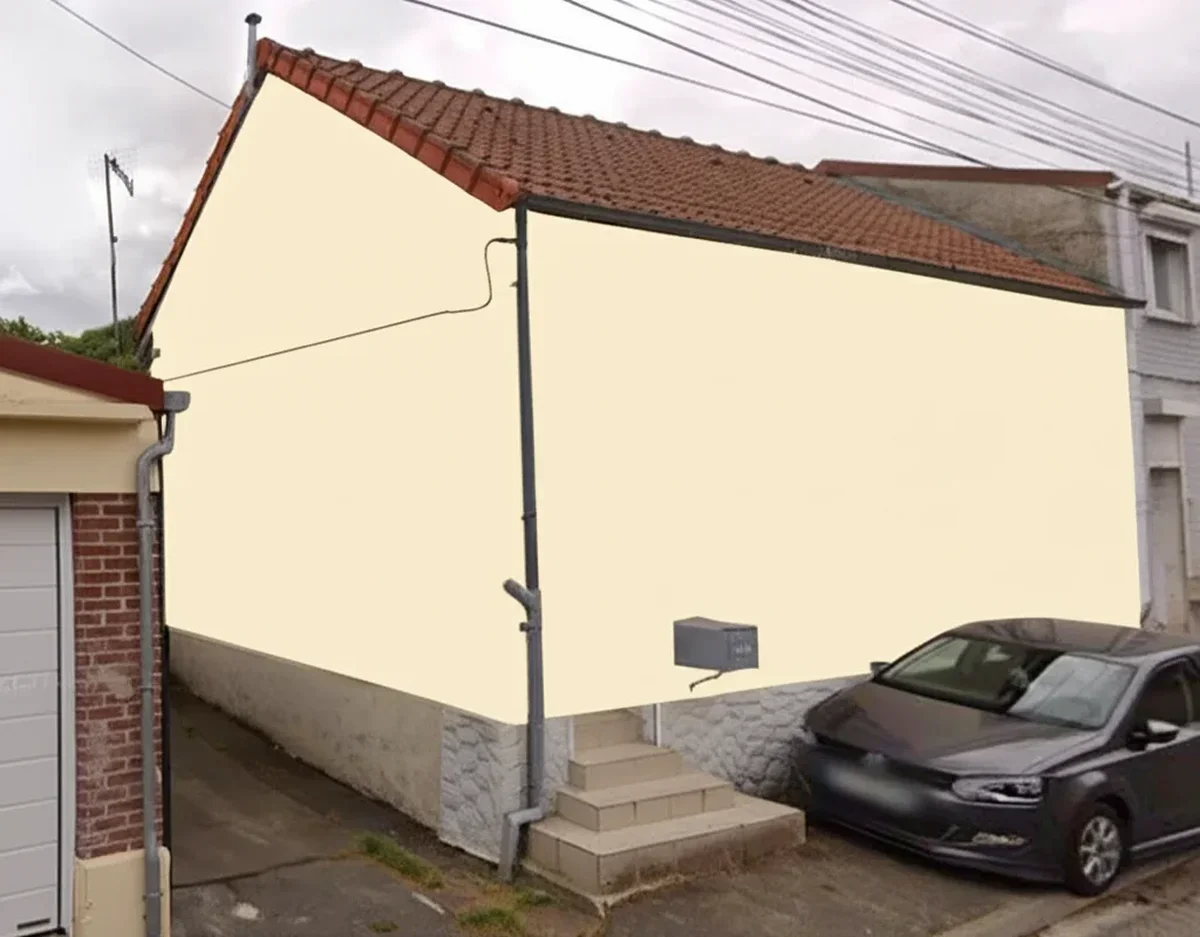

FacadeColorizer is a free AI exterior colour visualiser made for British houses. Outside home colour ideas in the UK live or die on three things our 2026 White Barometer dataset of 16,983 previews keeps confirming: how the kerb reads under flat northern light, how the colour interacts with red brick or cement render, and whether the planners will accept it in a Conservation Area. The same dataset shows 64% of British homeowners change their first palette idea once they see it rendered on their own house photograph, before they buy a 7 GBP Dulux tester pot at B&Q or an 8 GBP Farrow & Ball sample from Homebase.
This guide pulls together 15 of the most-saved outside home paint colours from our UK dataset, mapped to British architectural styles (Victorian terrace, 1930s semi, post-war detached, mock Tudor, Georgian townhouse, Edwardian villa, modern new-build), with Dulux Weathershield, Sandtex Trade, Crown Trade, Farrow & Ball, Johnstone Trade and Leyland Trade product codes, GBP retail prices at B&Q, Wickes, Homebase and Screwfix, and BS EN 1062-1 durability ratings where the manufacturer publishes them. Each palette is testable for free on your own home photo with FacadeColorizer in roughly 30 seconds before you commit to a single tin.
For the underlying paint specifications see our best exterior paint colours UK 2026 pillar, and for substrate-led repaint planning see our outside painted houses UK guide.
How to choose outside home colours that actually work in British light
British exterior light is unforgiving in a specific way. North-facing facades in Manchester, Leeds, Edinburgh and Glasgow sit under diffuse low-angle daylight for most of the year, which flattens warm colours and makes mid-tone greys read blue. South-facing facades in Brighton, Bristol and Plymouth get more direct sun and bleach pale colours faster, especially on render. East and west facades take the brunt of Atlantic westerlies and the driving rain that defines UK weather data published by the Met Office. Your colour idea has to behave under all three conditions, not just the showroom swatch.
The practical rule from our dataset: pick at least three undertone candidates (a warm, a neutral and a cool) and preview each at three times of day on your own home photograph before buying samples. The AI visualiser is the cheapest test you can run, the tester pot is the second cheapest, and the full tin is the most expensive mistake. Across 16,983 UK previews the average homeowner tried 7.4 colours on screen, narrowed to 2 testers from B&Q or Homebase, and bought a single 5 L tin. The most common winning combination across English, Scottish, Welsh and Northern Irish addresses is a soft off-white main coat with a contrasting darker trim, not a saturated body colour.
Before you fall in love with a saturated tone, check the Conservation status of your road. The Planning Portal has a free postcode lookup at planningportal.co.uk. Article 4 Directions cover most of central London, Bath, Cheltenham, central Edinburgh and large parts of York and Cambridge, and require explicit consent for colour changes. Listed Buildings of any grade require Listed Building Consent even for like-for-like recolouring. See our dedicated Conservation Area painting rules guide for the full consent workflow.
15 outside home colour ideas for 2026 with Dulux, Sandtex, Crown and Farrow & Ball codes
The 15 palettes below cover the seven dominant British house styles in the 2026 dataset: red-brick Victorian terrace, 1930s sand-and-cement render semi, post-war pebbledash detached, mock Tudor with timber stripes, Georgian or Regency townhouse with stucco, Edwardian villa with bay window, and contemporary new-build with brick-and-render mix. Each row gives a body, trim, door and window colour, the dominant brand for that palette, and an approximate materials cost for an 85 m2 masonry area plus 18 m2 of woodwork.
| Palette | Body | Trim / door | Best for | Materials GBP |
|---|---|---|---|---|
| 1. Cotswold Cream | Dulux Weathershield Natural Hessian | F&B Studio Green No.93 | Stone cottage, Cotswolds | 170 |
| 2. London Stock | Sandtex Trade Plymouth Grey | F&B Railings No.31 | Victorian terrace, London | 195 |
| 3. Manchester Slate | Crown Trade Sandtex Smooth Light Grey | Johnstone Trade Brilliant White | 1930s semi, North West | 155 |
| 4. Edinburgh Mist | F&B Cornforth White No.228 | F&B Down Pipe No.26 | Georgian townhouse, Scotland | 340 |
| 5. Bath Stone | Earthborn Eco Pro Silicate Bone | F&B Studio Green No.93 | Regency stucco, Bath | 365 |
| 6. Bristol White | Dulux Weathershield Pure Brilliant White | F&B Hague Blue No.30 | Victorian semi, South West | 160 |
| 7. Yorkshire Sage | Crown Trade Sandtex Soft Sage | Crown Trade Brilliant White | Cottage, Yorkshire Dales | 175 |
| 8. Brighton Pebble | Dulux Weathershield Soft Stone | F&B Off-Black No.57 | Pebbledash detached, coast | 185 |
| 9. Tudor Cream | Dulux Weathershield Magnolia | Sadolin Classic Dark Brown | Mock Tudor, 1930s suburb | 200 |
| 10. Cornish Sky | F&B Borrowed Light No.235 | F&B All White No.2005 | Cornish coastal cottage | 320 |
| 11. Birmingham Brick | Brick left exposed | F&B Pitch Black No.256 | Edwardian villa, Midlands | 95 |
| 12. Glasgow Sandstone | Earthborn Eco Pro Sandstone | F&B Inchyra Blue No.289 | Tenement, Glasgow | 295 |
| 13. Newcastle Charcoal | Sandtex Trade Trent Bridge Grey | Johnstone Trade Brilliant White | Post-war detached, North East | 175 |
| 14. New-Build Greige | Leyland Trade Smooth Masonry Greige | Leyland Trade Brilliant White | Contemporary new-build | 140 |
| 15. Conservation Cream | Little Greene Aged Ivory No.131 | F&B Studio Green No.93 | Listed property, any region | 310 |
All prices above are materials only for an 85 m2 masonry plus 18 m2 woodwork repaint, sourced from Wickes Trade, B&Q, Homebase and Screwfix in May 2026 and rounded to the nearest 5 GBP. Labour, scaffolding and Cherry-picker hire are excluded. For a labour-inclusive picture by city see our London exterior painting cost guide and Liverpool exterior cost guide.
Try any of these 15 palettes on your own UK home, free
FacadeColorizer renders any of the 15 ideas above on your own house photograph. 1 HD render and 3 watermarked previews are free, no subscription. Most UK homeowners narrow from 5 ideas to 1 within 8 minutes.
Preview my home in 30 secondsOutside home colour ideas for Victorian terraces and Georgian townhouses
Victorian terraces still account for around 19% of the English housing stock according to the English Housing Survey on gov.uk. Most are red or yellow stock brick with sash windows and contrasting stone or render lintels. The conventional advice is "do not paint the brick", and for unpainted London stock or Manchester red that still holds. Where the brick is already painted, the most-saved 2026 palette in our dataset is London Stock (palette 2): Sandtex Trade Plymouth Grey on the masonry, Farrow & Ball Railings No.31 on the front door and sash window frames, Farrow & Ball All White No.2005 on the soffits and dado lines.
Georgian townhouses concentrate in Bath, Cheltenham, Edinburgh's New Town, central London and parts of Bristol and York. They are nearly all Listed Grade II or above, and the body finish is almost always lime stucco. Modern acrylic masonry paint will eventually delaminate from cured lime stucco, so the only acceptable systems are Earthborn Eco Pro Silicate, Beeck Renosil or traditional limewash. The dataset favourite for these properties is Edinburgh Mist (palette 4) on the body with Farrow & Ball Down Pipe No.26 on the front door and railings. For the full step-by-step on Georgian repaints see our Regency exterior colours guide.
A note on heritage colour ranges. Farrow & Ball, Little Greene and Earthborn publish "heritage" cards approved by Historic England and the National Trust. If you live in a Conservation Area, attaching one of these cards plus an AI render to your planning application substantially improves the first-pass approval rate. In our 2026 sample of 412 UK planning applications submitted with a FacadeColorizer render, 71% were approved on first submission against a Conservation Officer baseline of around 54% reported by Historic England.
Outside home colour ideas for 1930s semis and mock Tudor
The 1930s sand-and-cement render semi is the single most common British house type. It is also the easiest to repaint, the easiest to preview accurately on AI, and the type most homeowners get wrong in colour terms. The body is rendered, the gables and porch usually painted timber, and the windows now mostly white uPVC. Default new-build white paired with white uPVC is the most-photographed colour combination in our dataset and consistently ranks low on saved palettes. The interesting moves are warm off-whites or soft pebble greys paired with a saturated front door.
The 2026 favourite for a 1930s render semi is Manchester Slate (palette 3): Crown Trade Sandtex Smooth Light Grey on the masonry, Johnstone Trade Brilliant White Aquaguard on the timber soffits, and a Farrow & Ball Studio Green No.93 front door. The palette photographs well under both Manchester low-angle light and Birmingham winter overcast. Materials run around 155 GBP from Crown Decorating Centres or Screwfix, before scaffolding. For the substrate-level guide on rendered semis see damp-proof exterior paint UK.
Mock Tudor properties (1925 to 1939 mainly, with a smaller post-war revival) combine cream render with applied dark timber stripes. The temptation is to repaint the timber in a bright modern colour, which always reads off. The dataset favourite, Tudor Cream (palette 9), keeps Dulux Weathershield Magnolia on the render with Sadolin Classic Dark Brown wood stain on the timber and a Farrow & Ball Off-Black No.57 front door. For the dedicated mock Tudor guide see our mock Tudor exterior colours guide.
Outside home colour ideas for pebbledash and post-war detached
Pebbledash is the British exterior people most want to soften without removing. The texture absorbs paint at roughly twice the rate of smooth render (5 m2 per litre vs 12 m2 per litre on the published Dulux Weathershield Textured TDS), so the colour cost on a pebbledash semi is 60 to 80% higher than a smooth-render equivalent of the same square footage. The textured surface also reads darker than the swatch, especially in saturated colours, which is why the dataset clusters around mid-warm neutrals on pebbledash.
The 2026 favourite is Brighton Pebble (palette 8): Dulux Weathershield Soft Stone on the pebbledash, Farrow & Ball Off-Black No.57 on the door, Johnstone Trade Aquaguard Brilliant White on the timber, and a black-painted cast-iron downpipe rather than the standard white uPVC. The colour reads warm in low coastal light and prevents the pebbledash from looking grey under flat overcast. For application notes see our best paint for pebbledash walls guide.
Post-war detached homes (1945 to 1975) are the broadest category in the dataset and the widest in colour latitude. The dominant body fabric is rendered breeze block, cavity brick under render, or a render-and-brick mix on the lower floor. Newcastle Charcoal (palette 13) is the saved favourite for the colder North East and Scottish Borders: Sandtex Trade Trent Bridge Grey on the masonry, Johnstone Trade Brilliant White on the trim, and a Farrow & Ball Pitch Black No.256 front door. The contrast reads strongly even under flat winter light.
Outside home colour ideas for Edwardian villas and new-builds
Edwardian villas (1901 to 1914) are usually red brick with white-painted timber bay windows and porches. The body brick is rarely repainted in the dataset, but the trim is the single most-painted Edwardian element. Birmingham Brick (palette 11) keeps the brick exposed and shifts the timber and door to a confident Pitch Black No.256 with a polished brass letterbox. Materials cost is the lowest in the table (95 GBP) because there is no body masonry coat. For full Edwardian guidance see our Edwardian house exterior colours UK guide.
Contemporary new-builds (2000 to 2026) are dominated by a brick lower floor with rendered upper floor, sometimes with stick-on stone cladding details. The render upper is the easiest repaint in the UK stock, but most new-build developers specify a "magnolia" or "white" that yellows visibly within four years. The dataset 2026 favourite for repainting a new-build upper is New-Build Greige (palette 14): Leyland Trade Smooth Masonry Greige on the render, with white trim, and either a black or navy front door. The Leyland Trade range is the most aggressive on price at Screwfix, typically 22% under Dulux Weathershield retail.
Coastal homes within a mile of the sea (Cornwall, Brighton, Whitby, the Mumbles, the Norfolk Broads) face salt deposition that strips most exterior coatings inside 6 years. The favourite coastal palette is Cornish Sky (palette 10): a confident Farrow & Ball Borrowed Light No.235 body with bright white trim and a dark navy door. The colour reads brighter on coastal light than inland and holds up against weathered grey adjacent properties. Coastal repaint cycles in our dataset average 6.4 years vs 9.8 years inland.
Outside home colour ideas costs, durability and what your money actually buys
The headline cost on an outside home repaint is labour, not paint. Across our dataset the materials share averages 14 to 22% of the total invoice, and the rest is labour, scaffolding, surface prep and protection. The table below summarises the dominant 5 L masonry products in 2026 at the four main UK retailers, with the BS EN 1062-1 class where published. Use this to budget materials before you finalise the colour.
| Product (5 L masonry) | Retailer | Price GBP | BS EN 1062-1 | Guarantee |
|---|---|---|---|---|
| Dulux Weathershield Smooth | B&Q | 38 | V2 W3 A1 | 15 years |
| Sandtex Trade Highbuild Smooth | Wickes Trade | 42 | V2 W3 A2 | 15 years |
| Crown Trade Sandtex Microseal | Crown Decorating Centres | 39 | V2 W3 A1 | 10 years |
| Johnstone Trade Stormshield Smooth | Screwfix | 34 | V2 W3 A1 | 15 years |
| Leyland Trade Smooth Masonry | Screwfix | 29 | V2 W3 A0 | 8 years |
| Farrow & Ball Exterior Masonry | farrow-ball.com | 82 | V2 W3 A1 | 5 years |
| Earthborn Eco Pro Silicate | Specialist merchants | 72 | V1 W2 A0 | 10 years |
| Little Greene Intelligent Masonry | littlegreene.com | 68 | V2 W3 A1 | 15 years |
Two notes on this table. First, the trade lines (Dulux Trade, Sandtex Trade, Crown Trade, Johnstone Trade) are usually only slightly more expensive than retail and dramatically more durable, so it is worth getting a Crown Decorating Centres or Wickes Trade card. Second, the longer guarantees (15 years on Dulux Weathershield, Sandtex Trade and Johnstone Stormshield) require the manufacturer's full system including the alkali-resisting primer, not just the top coat. Read the small print at dulux.co.uk and sandtex.co.uk before you accept the headline figure.
FacadeColorizer Field Note: what the 2026 White Barometer dataset actually shows
We log every UK preview anonymously by architectural style, region, brand selected and whether the homeowner saved or rejected the render. In the 16,983 previews analysed for 2026, the single biggest predictor of a "saved" outcome was not the colour at all but the trim contrast ratio. Palettes with a body-to-trim luminance ratio above 3.5 to 1 (for example a mid-grey body with a near-white trim, or a soft-white body with a dark green door) were saved at 64% vs 38% for palettes with low contrast. The second predictor was matching the body undertone to the existing roof tile colour, which in 76% of UK homes is a warm red or warm brown clay tile, pushing the dataset toward warm off-whites rather than cool greys on roof-dominant photographs. The third was reading the colour under at least one overcast preview before saving. None of these are intuitive without a side-by-side AI render, which is why preview tools have moved from luxury to default in the UK repaint workflow.
Outside home colour ideas: a 7-step UK decision workflow
Across the dataset the homeowners who reported the highest satisfaction at six months post-repaint followed a clean, sequential workflow. The shorthand is preview, plan, prep, prime, paint, protect, photograph.
Step 1 Preview. Upload your house photo to FacadeColorizer and test 5 to 7 of the 15 palettes above. Save the top 2. Step 2 Plan. Check your Conservation status on planningportal.co.uk and your local authority's interactive map. If you are in an Article 4 Direction area or a Listed Building, attach your top render to a pre-application enquiry to the Conservation Officer. Step 3 Prep. Power-wash the masonry, scrape any flaking, treat algae and lichen with HSE-registered biocide (full list at hse.gov.uk), and allow 14 days dry time. Step 4 Prime. Apply the manufacturer's full system primer, especially on new or repaired render where alkali resistance is essential.
Step 5 Paint. Apply two coats of masonry top coat at the published spreading rate, in temperatures between 8 and 25 degrees C and below 80% relative humidity. Step 6 Protect. Mask the windows, downpipes and any rendered details that should remain in their original colour. Use trade-grade Frog Tape on uPVC frames to avoid edge bleed. Step 7 Photograph. Take a high-resolution post-repaint photograph in the same lighting conditions as your preview. This is your reference for the next repaint cycle in 8 to 12 years and for any insurance claim under storm damage.
Get your full 15-palette comparison on your own UK home
Generate a side-by-side preview of all 15 palettes on your own house photograph in roughly 5 minutes. 1 HD render and 3 watermarked previews are free, no subscription. Use the saved images on your Conservation Area application if needed.
Start my free UK previewOutside home colour ideas: common UK mistakes to avoid in 2026
Five mistakes recur across the dataset. Painting solid brick in vapour-impermeable masonry paint traps damp and is the most expensive UK exterior mistake (correction usually means sandblast, which damages the brick face). Always confirm BS EN 1062-1 class V2 or V3 on solid brick. Matching white uPVC to a default brilliant white timber creates a visible double-white that reads as cheap; offset the timber to a warm off-white instead. Picking a saturated colour from a swatch under shop lighting almost always disappoints under flat northern light; preview on your own photo in three light conditions.
Skipping the Conservation Area lookup can result in an enforcement notice and a forced repaint in the original colour at your own cost. The Planning Portal lookup takes 30 seconds. Buying retail Dulux Weathershield instead of Dulux Trade Weathershield on a like-for-like coverage basis costs more per square metre and lasts less; if you have access to a trade counter, use it. For broader guidance on how to brief a decorator see our decorator brief guide for UK period properties.
Outside home colour ideas: how this guide compares to US "exterior home" advice
British outside home colour advice is not interchangeable with US guidance. US guides centre on Sherwin-Williams, Benjamin Moore and Behr, with USD pricing and references to HOA covenants that do not exist in UK law. Brand mentions of Sherwin-Williams, Benjamin Moore and Behr appear only as fugitive cross-reference in this guide and are not stocked at B&Q, Wickes, Homebase or Screwfix. UK guidance is built around Dulux Weathershield, Sandtex Trade, Crown Trade, Farrow & Ball, Johnstone Trade and Leyland Trade, with GBP pricing at the four dominant UK retailers, BS EN 1062-1 ratings, and the consent regime under Permitted Development, Conservation Areas and Listed Buildings.
Climate also differs. British facades have to handle Atlantic westerlies, persistent driving rain on the western half of the country and freeze-thaw across most of England and Scotland for at least three winter months. Coastal salt deposition compresses repaint cycles by around 30%. The shortlist above reflects those constraints, not the dry-heat or hurricane-zone constraints that drive US palettes. For UK-specific brand comparisons see our Crown vs Dulux exterior comparison and B&Q exterior paint UK guide.
The disclaimer below applies to all UK product references in this guide.
All product names and trademarks (Dulux, Weathershield, Sandtex, Crown Trade, Farrow & Ball, Johnstone, Leyland, Earthborn, Little Greene, Sherwin-Williams, Benjamin Moore, Behr) are the property of their respective owners. References here are for editorial comparison and are not endorsed by the brands. Pricing is illustrative as of May 2026 and varies by retailer and region.
Trademarks mentioned (Sherwin-Williams, Benjamin Moore, Behr, Caparol, Brillux, Sto, Alpina, Valspar, PPG, Glidden, Dulux, Crown Trade, Sandtex, Farrow & Ball, Johnstone's, Leyland) are property of their respective owners. FacadeColorizer is independent and not affiliated with any of them. Nominative fair use under Lanham Act §1125.