Exterior painters near me in Richmond, Virginia
Before you call a Richmond painter, upload one photo and preview real Sherwin-Williams, Benjamin Moore or Behr colors on your own facade in about 30 seconds. Free, no account, no obligation.
- No sign-up
- No card
- Result in ~30s
Your photo is private, used only to create your preview, never sold. You keep full ownership.
✓ No sign-up ✓ Result in ~30s
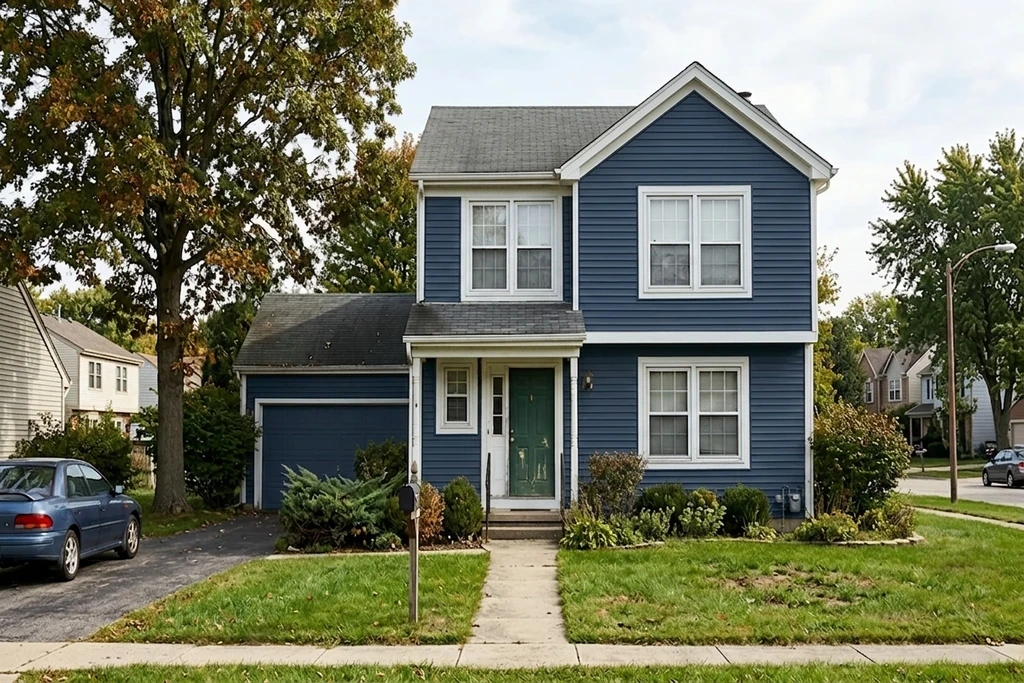
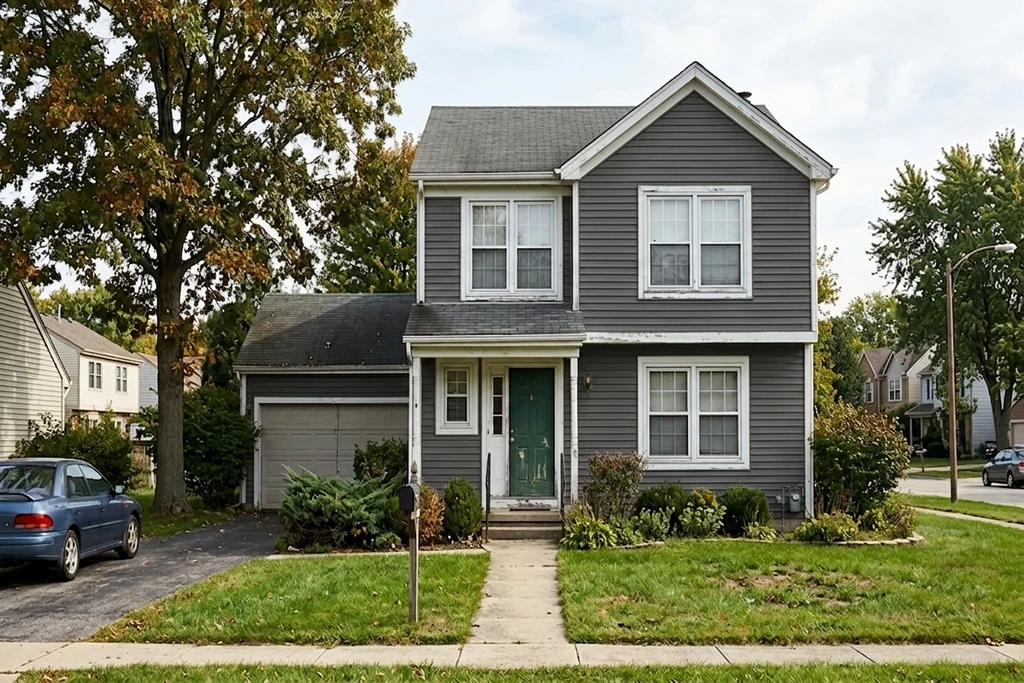
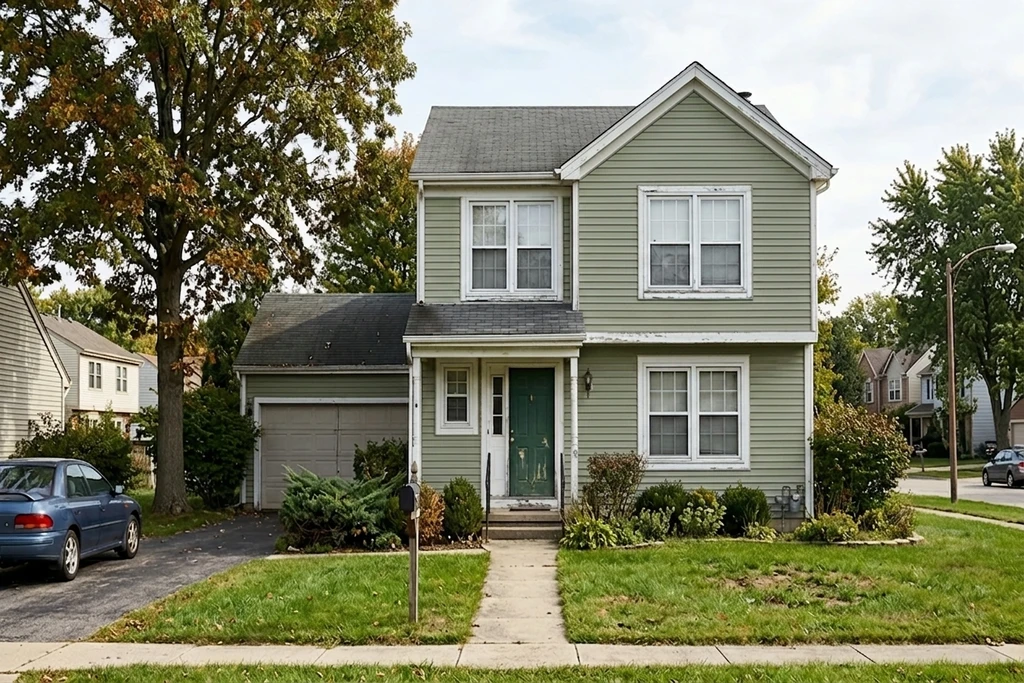
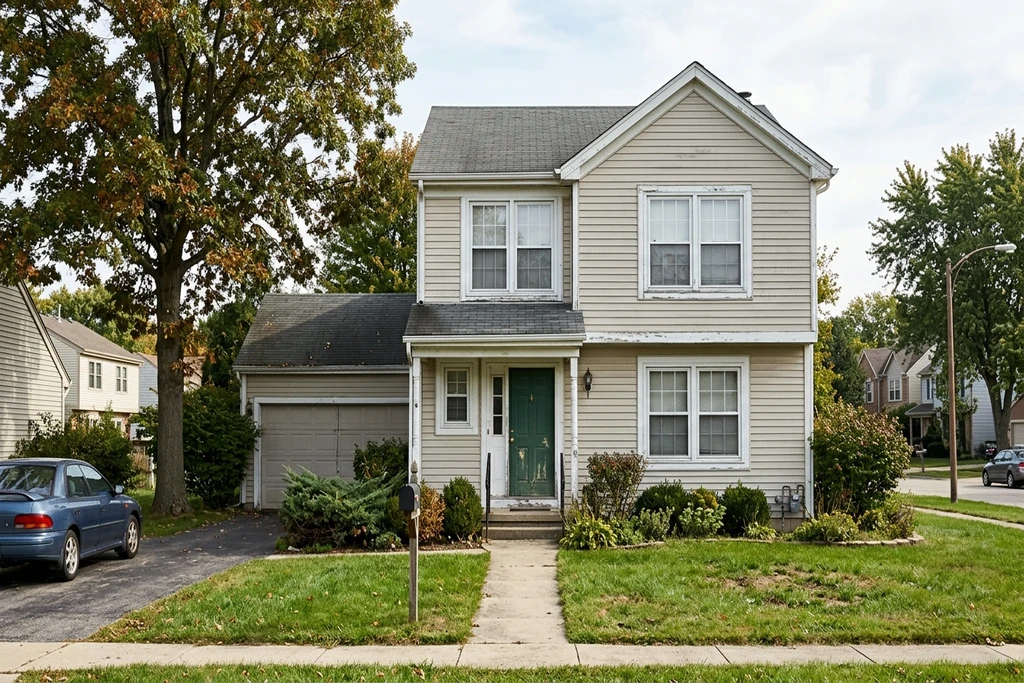
Real AI renders, your own photo, any shade
Try it on your house
No photo? Try a sample
Richmond painter wages and labor data (BLS, 2024)
Source: US Bureau of Labor Statistics, Occupational Employment and Wage Statistics (OEWS), May 2024. Wage figures are for the state as a whole; Richmond metro pricing typically tracks at or above the state mean.
Richmond climate and what it does to exterior paint
Humid subtropical climate (Koppen Cfa) with about 210 sunny days, 44 in of annual rainfall, and roughly 11 in of snow. Summers run hot and sticky (July highs near 90 deg F, August humidity around 77 percent), and winters cycle repeatedly above and below freezing.
The dominant failure modes in Richmond are mildew and moisture, not UV burn-off. Long humid summers feed mildew on shaded north walls and under porch eaves, so mildewcide-fortified topcoats are standard. The bigger structural enemy is the winter freeze-thaw cycle: the metro crosses 32 deg F dozens of times between December and February, and any moisture trapped behind film on brick, wood trim, or older siding expands and lifts the paint, which is why breathable coatings and proper dry windows matter more here than raw UV ratings.
Source: NOAA National Centers for Environmental Information, climate normals 1991 to 2020.
What Exterior Painting Actually Costs in Richmond in 2026
Richmond sits a little below the national average for exterior house painting, and the reason is mostly labor: BLS pegs the Virginia painter mean hourly wage at $22.82 (about $47,470 a year on the May 2024 OEWS figures), well under the coastal-California and Pacific-Northwest benchmarks. That keeps a typical 2,000 to 2,500 sq ft single-family home in the $3,400 to $9,800 band for a quality two-coat acrylic system. The wide spread is driven less by the city line and more by the substrate and the era of the house. A 1990s vinyl-and-Hardie home in a Chesterfield planned community paints fast and lands low in the range, while a century-old wood-and-brick Foursquare in Ginter Park or a Fan row house with painted brick, deep cornices, and decorative trim runs the labor line up quickly. Two-story properties, heavy carpentry repair, and lead-safe prep on pre-1978 woodwork push pricing toward the top of the band. Painted masonry is its own line item: stripping or re-coating old painted brick is slow, fussy work, and any reputable Richmond bid will call it out separately rather than burying it in a per-square-foot number.
Richmond Climate: Humidity, Mildew, and the Freeze-Thaw Problem
Richmond runs a humid subtropical climate (Koppen Cfa) with roughly 210 sunny days, about 44 inches of rain spread fairly evenly across the year, and around 11 inches of snow. That profile matters because it flips the usual paint-failure story. In Phoenix or coastal California the enemy is UV and heat; in Richmond it is water and temperature swing. Summers are hot and muggy, with July highs near 90 deg F and August relative humidity around 77 percent, which feeds mildew on shaded north elevations, under porch ceilings, and on anything close to tree cover in neighborhoods like Westover Hills and Forest Hill. Then winter does the structural damage: the metro crosses the 32 deg F line dozens of times between December and February, and every freeze-thaw cycle works on moisture trapped behind the paint film. On brick and on older wood siding that is the number-one cause of peeling and blistering in the city. NOAA places Richmond in USDA hardiness zone 7b, and the practical takeaway for homeowners is simple: spec a coating with a real mildewcide package and make sure the crew honors dry-down and dew-point windows instead of chasing the calendar.
Brick, Wood Siding, and Hardie: Richmond Substrate Mix
Richmond housing stock splits along a clear line, and that line decides how a quote should read. Inside the city core, the historic neighborhoods are dominated by brick and original wood. The Fan, Church Hill, Jackson Ward, and Oregon Hill are full of late-1800s and early-1900s row houses with load-bearing brick, painted-brick facades, wood cornices, and tall double-hung windows that all demand hand prep. Church Hill and Ginter Park add a heavy share of pre-1978 woodwork, which means lead testing and RRP-certified scraping are not optional. Out in the Henrico and Chesterfield suburbs (Wyndham, Brandermill, RounTrey, Short Pump), the mix shifts to vinyl siding, fiber-cement (Hardie) board, and brick veneer on newer builds, where the scope is more about clean, caulk, and two coats than about carpentry. A serious Richmond painter prices these worlds differently. On historic brick and wood you are paying for prep hours, breathable masonry coatings, and patience; on suburban Hardie and vinyl you are paying mostly for a quality topcoat and a tidy two-coat application. If a single per-square-foot number covers both without distinguishing them, ask why.
Historic District Color Rules and Suburban HOA Palettes
Color freedom in Richmond depends entirely on where you live, and it cuts two opposite ways. In the suburbs, planned communities run conventional palettes: the Wyndham association in Henrico, the Brandermill Community Association in Chesterfield, and the RounTrey Community Association all maintain approved body and trim colors and an architectural review step before you repaint, typically with a multi-week decision window. Inside the city, the constraint is historic, not HOA. Old and Historic District designations (the Fan, Church Hill, and others) and the Commission of Architectural Review govern exterior changes on contributing structures, and while paint color on already-painted surfaces is often the most flexible item, painting previously unpainted masonry is exactly the kind of change that draws scrutiny. In both worlds the move that saves time is the same: show the reviewer what the finished house will look like. Many Richmond homeowners render their final two or three color candidates on a photo of their actual facade using the FacadeColorizer exterior paint visualizer before they submit, so the committee is reacting to a realistic image instead of a paper swatch.
Hiring a Licensed Richmond Painter (DPOR Class C, Bonded, Insured)
Virginia is stricter than a lot of homeowners expect. DPOR requires a contractor license on any work valued at $1,000 or more, so for all but the smallest touch-up jobs your painter should hold a current license: a Class C covers single projects up to about $29,999, which is where most residential exterior work falls, ideally with the Painting and Wallcovering (PTC) specialty. Every quote you collect should list a DPOR license number, a general liability certificate, and a workers compensation policy. Verify the license number on the DPOR License Lookup before you sign, and on any pre-1978 home confirm the crew is EPA RRP lead-safe certified, because Richmond has a deep stock of early-1900s woodwork. Ask for three references from jobs finished in the last 18 months in your zip code, with at least one on the same substrate as yours (painted brick references for a Fan row house, Hardie references for a Short Pump build). A serious bid names the exact product line and offers a written multi-year workmanship guarantee; a vague one-coat quote with no license number is the flag.
Best Months to Paint in Richmond (Spring and Fall Win)
Richmond has a genuine painting season, unlike the year-round metros. The sweet spots are spring (mid-April through June) and fall (September into early November), when daytime temperatures sit in the comfortable 60s and 70s and overnight lows stay safely above the dew-and-freeze danger zone. High summer is workable but awkward: July and August bring 90 deg F afternoons and humidity near 77 percent, which slows cure, raises the mildew risk on a fresh film, and pushes good crews to start at dawn and stop before the afternoon sticky-heat and pop-up thunderstorms roll in. Winter is the real off-season here, and not just because of the cold: most exterior latex needs surface and air temperatures above roughly 50 deg F to cure properly, and Richmond crosses below freezing dozens of times from December through February. Painting on a marginal 40 deg F afternoon that drops below freezing overnight is how you get a film that never fully coalesces and peels the following spring. The shoulder weeks of March and late November can be fine, but they live and die by the seven-day forecast, so check the radar before you let a crew start.
Where Richmond Painters Buy: West Broad Street Paint Row
Most Richmond residential crews source from a tight cluster of stores along West Broad Street, and knowing the lineup helps you read a quote. The Sherwin-Williams store at 4918 W Broad St is the workhorse for SuperPaint, Duration, and Emerald, plus the masonry primers and Loxon that matter on the city brick stock. Spectrum Paint at 4307 W Broad St is a major Benjamin Moore dealer (also carrying PPG), the go-to when a homeowner wants Aura or Regal Select on trim and a deeper custom-tint bench. Virginia Paint Company, a Benjamin Moore retailer out on Midlothian Turnpike at 11201, serves the south-of-the-river and Chesterfield jobs. Painters usually run a contractor account at one of these with a 20 to 35 percent trade discount, and that choice flows into your price: a crew buying Aura is writing a different material line than one buying mid-grade contractor-series paint. Ask which store and which exact product line your quote is built on, and whether the masonry or trim is getting the premium tier or the builder tier.
Top Richmond HOAs with exterior color approval rules
Before painting, confirm your HOA palette and submit your color selections to the architectural review committee. Most Richmond HOAs respond within 14 to 21 days.
Paint stores near Richmond
Painter licensing in Virginia
Virginia requires a contractor license from the Department of Professional and Occupational Regulation (DPOR) on any painting work valued at $1,000 or more. A Class C license covers single projects up to about $29,999, with a Painting and Wallcovering (PTC) specialty. Ask every quote for the DPOR license number and verify it on the DPOR License Lookup before you sign.
Frequently asked questions about Richmond exterior painting
How much does it cost to paint a house exterior in Richmond in 2026?
Most Richmond single-family homes run $1.80 to $4.20 per square foot for a two-coat acrylic system, putting a typical 2,000 sq ft home in the $3,400 to $9,800 band. Older brick-and-wood homes in the Fan or Church Hill trend toward the high end because painted masonry and pre-1978 woodwork need far more prep than newer Hardie or vinyl in the suburbs.
Do painters in Richmond, Virginia need a license?
Yes. Virginia DPOR requires a contractor license on any work valued at $1,000 or more. A Class C license covers single projects up to about $29,999, ideally with the Painting and Wallcovering (PTC) specialty. Verify the license number on the DPOR License Lookup before you sign a contract.
What is the best time of year to paint a house exterior in Richmond?
Spring (mid-April through June) and fall (September into early November) are ideal, with mild temperatures and lower freeze risk. Avoid mid-winter, when Richmond drops below freezing repeatedly and latex cannot cure, and watch humidity and afternoon storms during the hot, sticky July and August stretch.
Can I paint over brick on a historic Richmond home?
Sometimes, but it is the most scrutinized change. In Old and Historic Districts like the Fan and Church Hill, painting previously unpainted masonry is reviewed by the Commission of Architectural Review, while re-coating already-painted brick is usually more flexible. Confirm the rules for your block first, and preview the result on a photo of your facade before committing.
Want a deeper cost breakdown? Read our 2026 Richmond cost guide .
House painters in nearby metros
Popular exterior colors for Richmond homes
In Richmond, warm greiges, heritage greens and colonial blues match the area's traditional, craftsman and brick homes.
Browse painting costs in other metros: all US city guides.