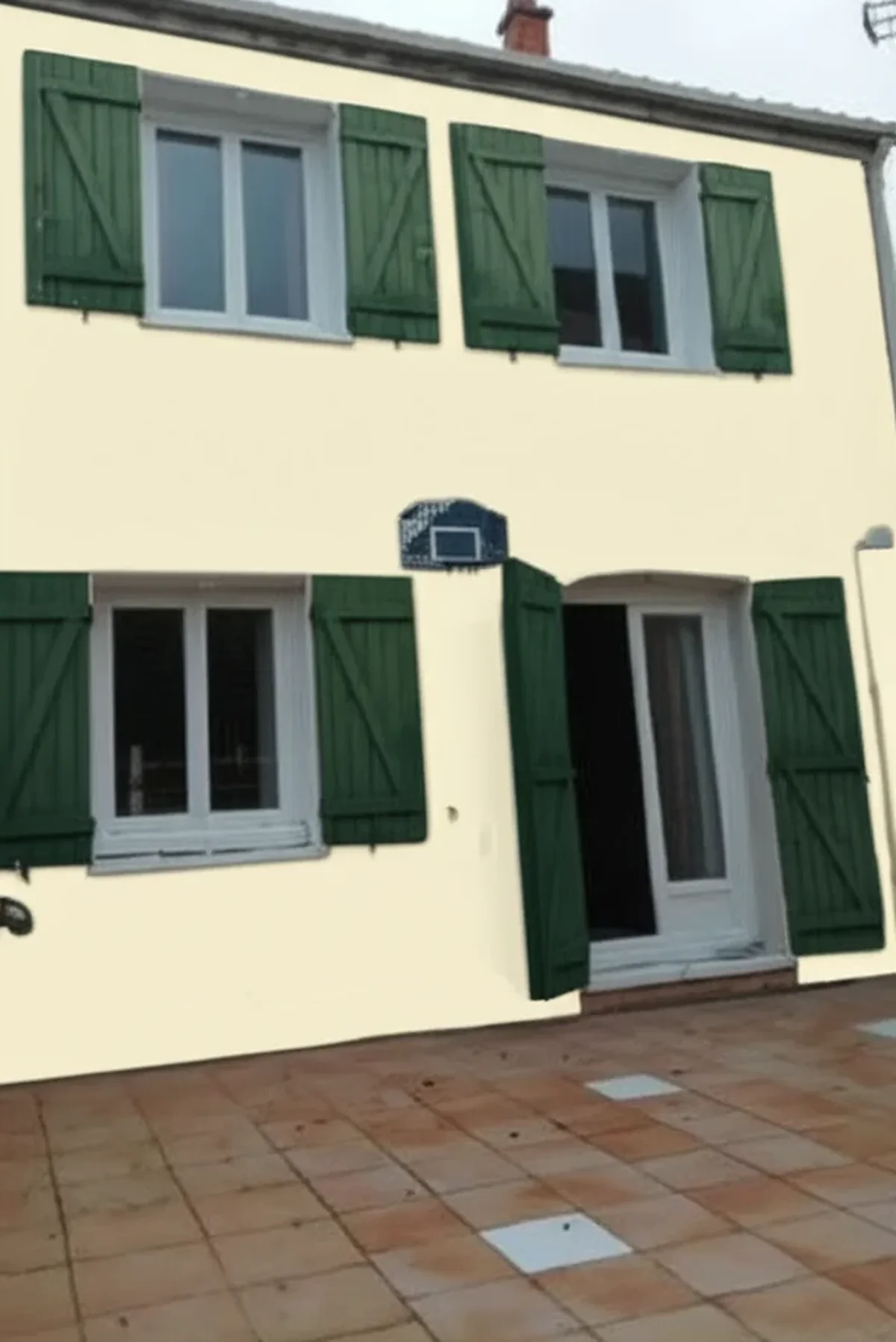
Try it on your house

Few American cities pack as much painted history into a few square miles as Richmond, Virginia. From the 1700s Federal townhouses crowning Church Hill, to the Italianate and Queen Anne Victorians lining the Fan District, to the 1920s Tudor revivals of the Museum District and the eclectic shotgun houses of Carytown, Richmond's housing stock spans two and a half centuries. That heritage looks beautiful, but it also makes exterior house painting in Richmond more expensive, more regulated, and more demanding than in almost any other Mid-Atlantic city. This guide breaks down the numbers, the neighborhood-by-neighborhood quirks, and the painter networks Richmond homeowners use.
The Richmond Market: Humid Subtropical, 1770s to 1920s Housing
Richmond sits at the fall line of the James River, where Tidewater Virginia meets the Piedmont. The result is a humid subtropical climate, hot, sticky summers averaging 75–85% relative humidity, mild winters with the occasional ice storm, and an active hurricane fringe from August through October. Combine that climate with a housing stock dominated by pre-1930 wood-trimmed brick rowhouses and frame Victorians, and you have a city where exterior painting is rarely a quick refresh.
Richmond's historic core is genuinely old. Church Hill contains some of the oldest standing wood-frame and brick Federal homes in the United States, with St. John's Church (where Patrick Henry delivered his "Give me liberty" speech in 1775) at its center. The Fan District, named for the way streets fan out from Monroe Park, was largely built between 1890 and 1920 and houses roughly 2,000 Italianate, Queen Anne, and Colonial Revival rowhouses. The Museum District grew up in the 1910s and 1920s around the Virginia Museum of Fine Arts and features brick Tudor revivals, Foursquares, and Dutch Colonials. Carytown, between the Fan and Museum District, mixes commercial storefronts with a dense layer of 1900s frame and brick residential. For citywide pricing benchmarks, see our exterior house painting cost by city guide.
How Much Does Exterior Painting Cost in Richmond VA?
Across Richmond and the immediate metro (Henrico, Chesterfield, Hanover), the average cost per square foot for professional exterior house painting ranges from $3.50 to $5.90 in 2026. For a typical city home (roughly 950–1,400 sq ft of paintable exterior on a 2-story rowhouse or 1,400–1,800 sq ft on a Fan single-family), total project cost lands between $3,300 and $8,300. Richmond costs run noticeably higher than the North Carolina Triangle (see our Charlotte NC cost guide) because of the age of the housing stock, lead-paint regulations, and the trim-heavy nature of Victorian and Federal facades.
| Home Type | Paintable sq ft | Cost / sq ft | Total Range |
|---|---|---|---|
| Carytown bungalow (trim only) | 600–900 | $4.20–$5.50 | $2,500–$4,900 |
| Church Hill Federal rowhouse | 950–1,300 | $4.50–$5.90 | $4,300–$7,700 |
| Fan District Italianate | 1,200–1,800 | $4.70–$5.90 | $5,600–$10,600 |
| Museum District Tudor / Foursquare | 1,400–2,000 | $3.80–$5.20 | $5,300–$10,400 |
| West End / Short Pump Colonial | 1,800–2,800 | $3.50–$4.80 | $6,300–$13,400 |
| Chesterfield / Midlothian new build | 2,200–3,200 | $3.50–$4.50 | $7,700–$14,400 |
Try it on your house
No photo? Try a sample
For a national reference point, see our 2026 exterior house painting cost guide. Richmond runs above the national median because so much of the city is wood-clad and pre-1978, which triggers EPA Lead-Safe RRP requirements (about $400–$900 added to a typical job). You can size up your own Richmond project in seconds with our painting estimate calculator, then hold that baseline up against your first contractor bid.
5 Richmond-Specific Factors That Move Your Price
Every city has quirks. Richmond has five that consistently swing exterior painting bids by 15–40% compared to the national baseline.
1. Fan District Italianate and Victorian Historic Palette Enforcement
The Fan District is a federally recognized historic district administered by the Richmond Commission of Architectural Review (CAR). Roughly 2,000 contributing structures within the district require a Certificate of Appropriateness for any visible exterior color change, including body, trim, doors, shutters, porches, and ornamental ironwork. Italianate cornices, Queen Anne spindlework, and Colonial Revival pilasters are all reviewed against period-appropriate palette guidance. Approval typically takes 4–8 weeks; painting in advance of approval can result in stop-work orders and a forced repaint. Contractors who specialize in Fan work commonly include CAR submission paperwork as a $150–$400 line item.
2. Church Hill 1700s Federal Colonial Heritage
Church Hill, one of Richmond's two oldest neighborhoods, sits within the St. John's Church Old and Historic District. Many homes here date to 1790–1860 and mix wood frame with handmade soft brick that demands gentle washing (no high-PSI pressure cleaning, which can spall the brick). Federal-style entries, six-over-six windows, and dentil-molding cornices require slow, brush-and-roller work, no spraying through ornamental detail. Expect Federal-restoration crews to charge a 10–20% premium versus an equivalent square footage of plain siding. Lead-paint testing is essentially mandatory; per EPA Lead Renovation, Repair and Painting (RRP) rules, any home built before 1978 with disturbed paint requires a certified firm.
3. James River Humidity, Moss, and Mold Risk
The James River sits one block south of much of Richmond's historic core and pumps warm, moist air over the city through most of the summer. North-facing walls in shaded blocks of the Fan District, Museum District, and Highland Park develop persistent mildew, algae, and even moss on porous trim. Without a proper sodium hypochlorite or trisodium phosphate (TSP) wash followed by a mildewcide-fortified primer, new paint will bloom within a single summer. Richmond pros typically charge $300–$700 specifically for mildew remediation on north-facing elevations, and quality Benjamin Moore Aura or Sherwin-Williams Duration formulations include the mildewcide additives needed for long-term protection.
4. Hurricane Season (August–October)
Richmond is roughly 75 miles inland but routinely catches Tropical Storm-grade weather from Atlantic hurricanes that track up the Chesapeake. Per NOAA climate data, Richmond averages two tropical-storm-force events per year between August and October. Paint applied in this window risks being washed off before it can cure to a rain-resistant stage (typically 4–6 hours for premium acrylics). Most experienced Richmond crews shift major exterior work to April–June or late September–mid November, when daytime temperatures stay in the 55–82°F range and storm risk drops sharply. Booking these windows requires 6–10 weeks of lead time.
5. Benjamin Moore Williamsburg Palette Popularity
More than any other Mid-Atlantic city, Richmond homeowners reach for the Benjamin Moore Williamsburg color collection, a 144-color palette researched alongside Colonial Williamsburg and grounded in 18th-century Virginia pigments. Codes start with CW (Colonial Williamsburg). Church Hill restorations, Fan Federal Revivals, and Museum District Colonials lean heavily on CW-150 (Bracken Slate), CW-15 (Geddy Blue), CW-95 (Foundation White), and CW-405 (Carter Saddle Brown). Sherwin-Williams equivalents come from the SW Historic Color Collection (e.g., SW 0036 Buckram Binding or SW 0049 Silver Gray).
Richmond Painter Networks: Who Paints What
Richmond's painting market splits roughly into three tiers, and matching the tier to your home type is the single biggest cost lever beyond home size.
- Historic specialists (top tier, $5.20–$5.90/sq ft): Crews that hold EPA Lead-Safe RRP certification, file CAR Certificates of Appropriateness, and have a working portfolio of Church Hill, Fan, and Jackson Ward restorations. These shops are often family-owned, 10–25 years old, and book out 8–14 weeks ahead in peak season.
- Mid-market generalists (mid tier, $4.00–$5.00/sq ft): Larger crews that handle Museum District, West End, and inner Henrico work. Capable of two-story spray-and-back-roll on fiber cement and wood siding, but typically not equipped for Federal-era ornamental woodwork or hand-pointed brick.
- Volume suburban painters (entry tier, $3.50–$4.30/sq ft): Crews focused on Short Pump, Glen Allen, Midlothian, and Chesterfield subdivisions where homes are post-1990 with simple rooflines and either vinyl, fiber cement, or LP SmartSide siding. Strong on price; not a fit for the Fan or Church Hill.
Sherwin-Williams Pro stores along West Broad Street and Midlothian Turnpike, plus the Benjamin Moore independent dealers in Carytown and the West End, are where the historic specialists buy paint and run free color consultations.
Trending Richmond Colors in 2026
- Church Hill, Benjamin Moore Williamsburg CW palette: CW-150 (Bracken Slate) on shutters, CW-15 (Geddy Blue) on entry doors, and CW-95 (Foundation White) or CW-100 (Tarpley White) on body trim is the most popular Federal combination. Pairs naturally with handmade soft brick and slate roofs.
- Museum District, Benjamin Moore Hale Navy + Simply White: A deeper, more contemporary move popular on 1920s Foursquares and Tudor Revivals. Hale Navy (HC-154) on shutters and entry doors, Simply White (OC-117) on trim, and warm gray-greens or limestone tones on stucco fields. Reads timeless without being literally colonial. Compare to our colonial paint colors New England 2026 and Victorian paint colors San Francisco 2026 guides for regional contrasts.
For broader 2026 trends nationally, see our best exterior paint colors 2026 guide. If you live under an HOA in Chesterfield, Henrico, or the West End, also review our HOA paint rules Virginia 2026 and HOA approved exterior colors 2026 guides before submitting to your Architectural Review Committee.
Richmond Pricing Matrix: What Drives the Quote
Two homes with identical square footage can produce bids that differ by $4,000 or more. Here is the line-item picture for a representative 1,500 sq ft Fan District Italianate rowhouse painted in 2026:
| Line Item | Typical Range | % of Total |
|---|---|---|
| Mobilization, setup, scaffolding | $400–$900 | 8–12% |
| Soft-wash, mildew remediation | $300–$700 | 6–9% |
| EPA Lead-Safe RRP containment (pre-1978) | $400–$900 | 8–12% |
| Scrape, sand, caulk, wood filler / fascia repair | $900–$2,000 | 18–25% |
| Premium primer (oil or hybrid) | $300–$600 | 5–8% |
| Two coats premium acrylic (Aura / Duration / Emerald) | $1,400–$2,400 | 22–30% |
| CAR Certificate of Appropriateness paperwork | $150–$400 | 2–5% |
| Total (1,500 sq ft Fan rowhouse) | $5,600–$10,600 | 100% |
If your contractor's free estimate does not break out prep, primer, RRP, and CAR paperwork as separate lines, eliminate that bid. Lump-sum quotes in the Fan or Church Hill almost always shortchange surface preparation, the single largest predictor of how long the finish will last in Richmond humidity.
DIY vs Pro: What Most Richmond Homeowners Should Know
For a single-story Carytown bungalow or a flat, post-1990 Chesterfield ranch with vinyl siding, DIY exterior painting is plausible. A weekend warrior who knows how to run a pressure washer, scrape with care, caulk window frames, and roll out two coats of Behr Marquee or Valspar Defense can plausibly save 50–65% versus a pro quote, at the cost of two or three weekends. Total DIY material outlay for a 1,200 sq ft single-story: roughly $700–$1,100 in paint, primer, caulk, brushes, rollers, drop cloths, plus $80–$150 in pressure-washer rental.
DIY is a bad idea for almost every Fan, Church Hill, or pre-1978 Museum District home. Reasons:
- Lead paint: Federal law (EPA Lead RRP) requires a certified firm to disturb pre-1978 paint that lives in a child-occupied facility or rental. Even for owner-occupied homes, DIY scraping can spread lead dust into neighboring properties.
- Two-story scaffolding: Fan rowhouses are typically 2.5 stories with parapet walls and ornamental cornices. Renting and erecting safe pump-jack scaffolding for a weekend rarely beats a pro quote on dollars per hour saved.
- Historic district review: If your home is in a CAR-regulated district, you still need the Certificate of Appropriateness, regardless of who applies the paint. Pros handle that paperwork as part of the job.
- Brick repointing: Many Church Hill brick facades need mortar repointing before or instead of painting. That is masonry work, not paint work.
A reasonable middle path: hire a pro for the body, scraping, and historic submission, and DIY the front door, mailbox post, and shutters once the heavy work is done. That keeps quality high and saves $300–$700 on accent labor.
Compare 3 free quotes from insured Richmond painters
Skip the back-and-forth and get 3 free quotes in 60 seconds from insured Richmond contractors who know CAR submissions, Fan Italianate trim, Church Hill Federal brick, and James River humidity scheduling.
Get 3 free Richmond painter quotesLocal Data Points That Anchor Richmond Pricing
Four Virginia-specific data references round out the picture for any Richmond homeowner pricing a 2026 repaint:
- Virginia painter wages: Per the U.S. Bureau of Labor Statistics (Occupational Employment and Wage Statistics, May 2024), construction painters in Virginia earn a mean hourly wage of roughly $22.40, slightly below the $24.10 U.S. average but above neighboring North Carolina ($20.10). The difference shows up as a 10–15% bid premium versus Raleigh (see our Charlotte NC cost guide and North Carolina comparable).
- NOAA climate and freeze dates: Richmond International Airport records an average last spring freeze around April 6 and a first fall freeze around October 28 (NOAA 1991–2020 normals). That gives Richmond a practical painting window from early April through late October when nighttime lows stay above the 50°F threshold premium acrylics need to cure properly.
- Historic district map: The City of Richmond maintains an Old and Historic District map at richmondgov.com (Planning & Development Review). Before booking a painter, confirm whether your block falls inside the Fan, Church Hill, Jackson Ward, Boulevard, Monument Avenue, or West Grace Street historic districts. If yes, you need CAR review.
- Where Richmond pros buy paint: Sherwin-Williams Pro stores on West Broad Street, Midlothian Turnpike, and in Short Pump; Benjamin Moore independents in Carytown, the West End, and Mechanicsville; Behr and Valspar through Home Depot and Lowe's on Broad and at Chesterfield Town Center. For pre-mixed Williamsburg CW colors, your best bet is the Benjamin Moore independent dealers, who keep the full 144-color CW deck on the shelf.
For ideas on visualizing a Williamsburg or Hale Navy palette before you write a check, see also our sister guides on colonial paint colors New England 2026 and the broader best exterior paint colors 2026 roundup, which both cover heritage-leaning palettes that map cleanly onto Richmond architecture. For general home-color resources from a major brand, also try HGTV exterior color trends.
See your Richmond home in a new color, free
Upload a photo to FacadeColorizer's free exterior paint visualizer and preview Benjamin Moore Williamsburg CW colors, Sherwin-Williams Historic Colors, and Behr palettes on your actual Fan, Church Hill, or Museum District facade. Perfect for narrowing options before your CAR Certificate of Appropriateness submission and before requesting a free estimate from a Richmond painting contractor.
Last updated: June 2026. Prices based on Angi, Homeyou, BLS OEWS, and local Richmond painter network data.
Frequently asked questions
How much does exterior house painting cost in Richmond, VA in 2026?
Do I need historic district approval to paint my house in Richmond's Fan or Church Hill?
What is the best time of year to paint a house exterior in Richmond, VA?
Why are Fan District and Church Hill paint jobs more expensive than Short Pump or Chesterfield?
What paint brand and palette is most popular for Richmond historic homes in 2026?
How does Richmond humidity affect exterior paint longevity?
Do Richmond suburbs in Henrico and Chesterfield have HOA paint rules?
Should I DIY or hire a pro for exterior painting in Richmond?
Trademarks mentioned (Sherwin-Williams, Benjamin Moore, Behr, Caparol, Brillux, Sto, Alpina, Valspar, PPG, Glidden, Dulux, Crown Trade, Sandtex, Farrow & Ball, Johnstone's, Leyland) are property of their respective owners. FacadeColorizer is independent and not affiliated with any of them. Nominative fair use under Lanham Act §1125.