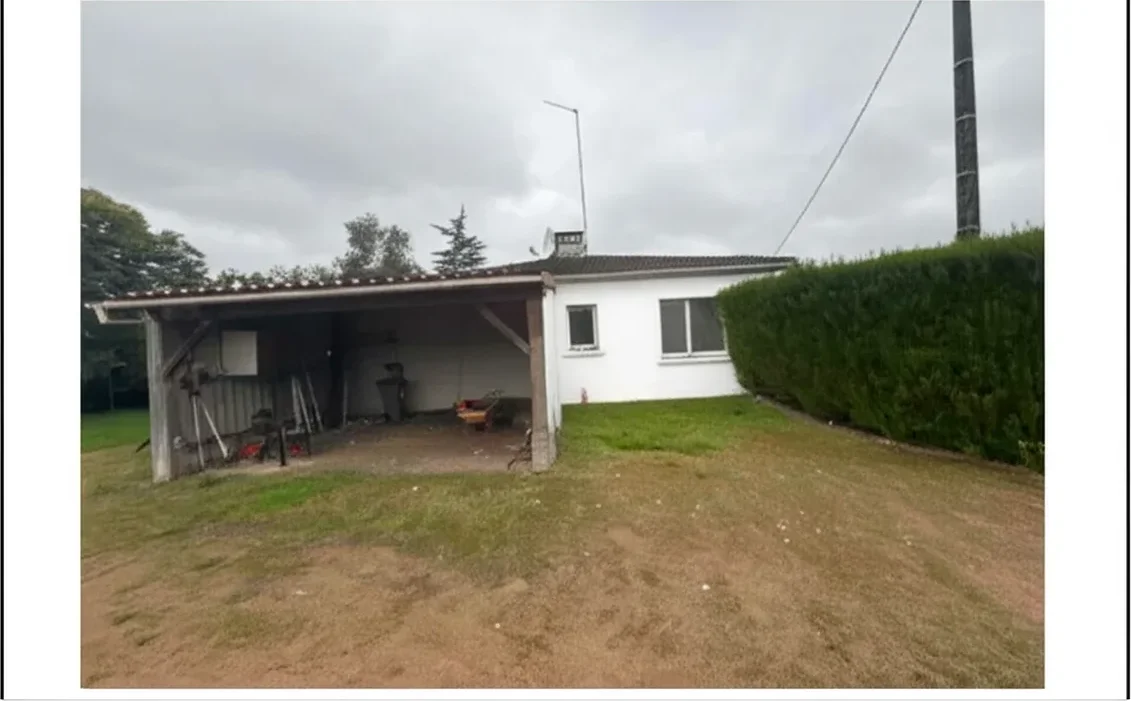
Try it on your house

Pebbledash covers more 1900s to 1980s British semis than almost any other exterior finish, and most of those homes are now due a repaint. The texture is brilliant at shedding rain but punishing on paint: every dimple, ridge and stone face needs covering, and ordinary smooth masonry paint simply runs out faster than the tin suggests. This 2026 guide compares the six masonry paints British decorators actually use on pebbledash, with real coverage figures from B&Q Trade Point and Toolstation, the realistic litres you need for a typical semi, and the application steps that decide whether your finish lasts five years or fifteen.
What makes pebbledash hard to paint?
Pebbledash is a dashed render: a wet sand and cement base coat into which small stones are flung while the mix is still soft. The resulting surface has roughly 30 to 50% more surface area than a smooth rendered wall of the same dimensions, because every pebble has a curved face that must be coated on all sides. That extra surface area is the single most important fact when you cost a job.
On smooth render, a quality British masonry paint such as Sandtex covers around 10 to 14 m² per litre in two coats. On pebbledash, the manufacturer's own data sheets and trade counter staff at B&Q Trade Point quote 6 to 8 m² per litre, and for heavily textured Tyrolean or roughcast pebbledash that figure drops further to 4 to 6 m² per litre. Plan for roughly twice the paint a smooth wall would need.
Pebbledash also tends to be powdery on the surface, especially on south and west elevations where decades of UV have broken down the original cement binder. Standard masonry paint will not bond to a chalky substrate without help, which is why every credible manufacturer recommends a stabilising sealer as the first coat. Breathability matters too: pebbledash was applied to solid 9 inch brick walls with no cavity, so moisture must be allowed to move outward. Plastic-feel acrylic paints can trap damp and blister, which is why mineral and silicone-modified paints have taken over the premium end of the market.
Best paint for pebbledash, top 6 UK brands compared
Prices below were verified at B&Q Trade Point, Wickes, Toolstation and Brewers in April 2026, plus direct manufacturer pricing for Emperor. Coverage figures are taken from each manufacturer's published technical data sheet for textured masonry.
| Brand | Product | Coverage on pebbledash | Price 10 L | Guarantee | Where to buy |
|---|---|---|---|---|---|
| Sandtex | 365 Smooth Masonry 10 L | 6 to 8 m²/L | £42 to £49 | 15 years | B&Q, Wickes, Toolstation |
| Dulux | Weathershield Smooth Masonry 5 L | 6 to 8 m²/L | £30 to £40 (5 L) | 15 years | B&Q, Trade Point |
| Crown | Trade Smooth Masonry 5 L | 6 to 8 m²/L | £45 to £55 (5 L) | 15 years | Brewers, Trade Point |
| Bedec | MSP Multi-Surface 5 L | 5 to 7 m²/L | £45 to £50 (5 L) | Not specified | Toolstation, online |
| Emperor | Masonry Creme Trade 5 L | 4 to 5 m²/L | £80 to £100 (5 L) | 25 years | Emperor direct |
| Johnstone's | Stormshield 5 L | 6 to 8 m²/L | £35 to £45 (5 L) | 15 years | Brewers, B&Q |
Try it on your house
No photo? Try a sample
The headline takeaway: the four mainstream British acrylic masonry paints (Sandtex 365, Dulux Weathershield, Crown Trade and Johnstone's Stormshield) deliver almost identical coverage and a 15 year written warranty. Bedec MSP is a slightly thicker multi-surface coating useful where there are mixed substrates (pebbledash plus PVC trim plus iron downpipes). Emperor Masonry Creme is in a separate league: a super-hydrophobic silicone resin paint with a 25 year guarantee, but at three times the litre price.
Quick brand picks
- Best value all-rounder: Sandtex 365 Smooth Masonry in 10 L tubs from B&Q Trade Point. About £45 for 10 L, 15 year guarantee, easy availability on a Saturday morning if you run out.
- Best for strong saturated colours: Dulux Weathershield Smooth Masonry, custom-mixed at a Dulux Decorator Centre. Slightly better colour retention on south elevations.
- Best for mixed substrates: Bedec MSP, if your pebbledash sits alongside iron downpipes, PVC bargeboards or galvanised flashings you want to paint at the same time.
- Best long-life premium: Emperor Masonry Creme Trade. The 25 year warranty and silicone hydrophobic chemistry make sense on coastal or chronically damp properties where a 15 year refresh cycle is not enough.
- Best trade backup: Crown Trade Smooth Masonry or Johnstone's Stormshield from Brewers. Decorator counter favourites with full colour matching, useful if a Dulux or Sandtex order is out of stock.
Sandtex 365 vs Dulux Weathershield, head-to-head
These two are the default pebbledash paints in 90% of British trade counters. The differences are smaller than the marketing suggests, but they matter when you are spending three days on a scaffold tower.
| Criterion | Sandtex 365 | Dulux Weathershield |
|---|---|---|
| Coverage on pebbledash | 6 to 8 m²/L | 6 to 8 m²/L |
| Written guarantee | 15 years | 15 years |
| Mixing colours | Sandtex tinting at B&Q (60+ shades) | Full Dulux Trade colour matching (1,000+) |
| Largest tin size | 10 L | 10 L (Trade Centre) |
| Surface biocide | Anti-algae built-in | Anti-fungal built-in |
| Trade reputation | Slightly easier to brush into pebbles | Slightly better colour retention on south walls |
For pebbledash specifically, decorators on the Painters Forum UK and Decorators Forum threads consistently report that Sandtex 365 flows into the dashed texture a touch more easily, which matters when you are working with a long-pile roller. Dulux Weathershield wins on colour stability over time, so if you are painting in a strong saturated colour (forest green, blue-grey, brick red), Weathershield is the safer bet against the British south-facing UV.
How much paint do I need for a typical pebbledash semi?
A standard British 3 bed semi has roughly 80 to 100 m² of paintable façade once you subtract windows, doors and any tile-hung sections. The arithmetic for pebbledash is then:
- Stabilising sealer (first coat): 1 L covers 4 to 6 m². For 90 m², plan on 15 to 20 L.
- Topcoat 1: 1 L covers 6 to 8 m². For 90 m², plan on 11 to 15 L.
- Topcoat 2: Same again, 11 to 15 L.
That gives a working total of roughly 40 L of materials for a 3 bed semi: about 15 to 20 L of stabilising sealer (around £80) plus 22 to 30 L of topcoat masonry paint. At Sandtex 365 trade pricing that is two 10 L tubs plus one 5 L for the topcoat (around £100 to £130). Total materials budget: £180 to £230.
Trade tip
Buy 10% more than your calculation suggests. Pebbledash will surprise you on the chimney stack and the bay window cheeks, where every pebble face has to be hit from two angles. Excess paint also gives you matched-batch touch-up stock for the first three to five years.
For a larger 4 bed detached at 130 to 150 m², double those figures: roughly £350 to £450 in materials, plus scaffold hire (£600 to £1,000 for a typical week) if you are not using a tower or ladders.
Best colours for pebbledash in 2026
Pebbledash sits poorly with very bright modern colours: the texture breaks light up, so saturated reds and electric blues end up looking muddy. The shades that consistently work are tonal mid-range colours that mask shadow lines between pebbles.
- Cream and off-white: Magnolia, Almond White and Sandtex Country Stone are the traditional defaults. Easy to live with, but increasingly read as dated on streets where neighbours have moved to greys.
- Pale grey: Sandtex Mid Grey, Dulux Weathershield Chic Shadow and Crown Frosted Steel are the dominant 2026 trade choices for pebbledash. Reads as modern without going stark.
- Sage and olive green: Dulux Heritage Sage and Farrow & Ball Lichen equivalents in Weathershield (custom-mixed) suit cottages and bungalows with leaded windows.
- Taupe and warm stone: Sandtex Plymouth Stone, Dulux Egyptian Cotton. Particularly forgiving on south-west elevations where bleached cream often turns yellow over time.
- Anthracite as accent: Avoid full anthracite on pebbledash (the texture eats too much paint and the heat absorption is brutal in summer). Use it for window surrounds and the front door instead.
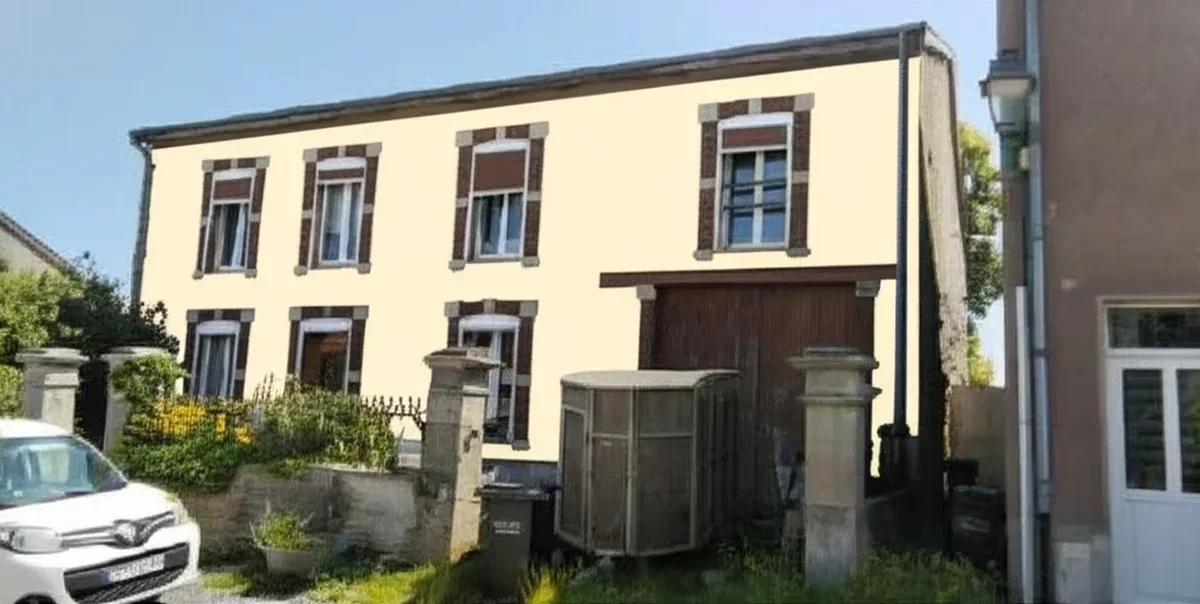
Most decorators recommend testing two or three shades on a 1 m² patch before committing to 30 litres. Better still, see the rendered result on your actual house before opening a tin: a free paint colour visualiser lets you swap colours in seconds rather than waiting for tester pots to dry on three elevations.
How to apply masonry paint to pebbledash (4 steps)
Pebbledash is unforgiving of short-cuts. Skip the prep and the topcoat will lift within two winters. Here is the standard British trade method.
- Step 1, power wash 24 to 48 hours before painting. Use a domestic pressure washer at 100 to 130 bar, holding the lance 30 cm from the wall at a 30 degree angle so you do not blast pebbles loose. Allow at least 24 hours of dry weather before any paint touches the surface; 48 hours is safer in damp British conditions. Repair any blown patches with a sand and cement mix before progressing.
- Step 2, treat algae and moss with a fungicidal wash. Apply a biocidal wash such as Sandtex Fungicidal Wash or Dulux Trade Weathershield Fungicidal Wash diluted per the label. Leave for 24 hours, then brush off any visible green residue. Pebbledash holds moisture in the dashed texture, so this step prevents fresh growth from pushing the new paint film off.
- Step 3, apply a stabilising sealer as the first coat. Use a clear or pigmented stabilising primer (Sandtex Stabilising Solution, Dulux Trade Stabilising Primer, around £40 for 5 L). Brush or roller the sealer into every cavity. The sealer binds the chalky cement substrate and gives the topcoat something solid to grip. Skipping this step is the single most common reason pebbledash paint jobs fail.
- Step 4, two topcoats with brush and long-pile roller. Cut in around windows, gutters and corners with a 4 inch masonry brush, then roll the open faces with a 25 mm long-pile roller. Anything shorter cannot reach into the dashed texture. Allow 6 hours minimum between coats, ideally overnight, and paint in temperatures between 8°C and 25°C. Avoid direct midday sun: the paint will skin before it has bonded, leading to flash patches.
Common mistakes painting pebbledash
- Skipping the stabilising primer. Decorators sometimes assume modern masonry paint is "self-priming". It is not on a chalky pebbledash substrate. Without a stabilising sealer the topcoat will look fine for one winter, then start lifting in patches by year two.
- Using a roller that is too short. A 10 mm or 12 mm medium-pile roller will skim the surface of the pebbles and leave the shadow line between each stone unpainted. Specify a 20 to 25 mm long-pile roller, ideally with a solvent-resistant sleeve.
- Spray application in wind. Spray on pebbledash demands experience, masking, and a still day below 8 mph wind. DIY spray attempts almost always leave overspray on cars, windows and neighbours' gardens.
- Painting in direct sun. South-facing walls in July hit 35°C surface temperature. The paint flashes off before it has wetted the substrate, leaving a powdery, brittle film. Work in shade or paint in spring and autumn.
- Painting wet pebbledash. Even a damp surface (above 18% moisture content) traps water under the new coat and causes blistering within months. Use a cheap moisture meter from Screwfix (around £25) if in doubt.
- Cheap "one coat" claims. No masonry paint covers pebbledash in one coat without the texture telegraphing through. Always plan for two topcoats over the sealer.
Can I roller pebbledash or do I need a brush?
You can absolutely roller pebbledash, and most professional decorators do for the open wall surfaces. The trick is the pile length. A standard 12 mm short-pile roller will leave shadow gaps; a 20 mm to 25 mm long-pile roller reaches down between the pebbles. Hamilton, Harris and Fleetwood all make affordable long-pile masonry sleeves at £6 to £12 each.
Brushes still earn their keep at edges. Cut in with a 4 inch or 5 inch masonry brush around window reveals, soffit lines, corners and rainwater goods. The brush forces paint into the deepest recesses where a roller cannot reach. Many decorators use a "stipple" technique on the cut-in: press the brush into the texture rather than dragging it sideways.
Width is the easy half of that choice. Filament stiffness is the half people get wrong. Pebbledash pockets run 4 to 6 mm deep behind stones of up to 8 mm, and a soft brush will not release thick acrylic that far in: it skims the stones and leaves grey shadows sitting in the hollows. You want a deliberately stiff synthetic block, and never natural bristle, which absorbs water, swells and splays within an hour of starting a wet elevation. Our comparison of the best masonry brush for pebbledash ranks the UK blocks by filament stiffness rather than by price.
Spray application (HVLP or airless) gives the most even finish but is best left to professionals. The compressor cost, the masking time, and the risk of overspray in a typical British terraced street rarely make sense for a single house.
When painting pebbledash is not the right call
If large sections sound hollow when knocked, if the dash is shedding stones onto your path, or if you are seeing horizontal cracks across the render, painting will only mask the symptoms for a season or two. Get a renderer to tap-test the surface before you spend on paint. In those cases a render-over system or partial removal is the real fix, covered in our pebbledash removal cost UK guide. Before you commit, weigh masonry paint against a through-coloured render finish: that comparison runs both options over a 30 year cost of ownership, which is the horizon on which re-rendering starts to look reasonable rather than extravagant.
See your pebbledash painted before buying
Three or four days on a scaffold tower, £200 in paint, plus the time you spend masking gutters and windows: the cost of a pebbledash colour mistake is well over £400 once you count repainting. Before you commit, upload one straight-on photo of your house to our free AI exterior colour visualiser. Test Sandtex Plymouth Stone against Dulux Chic Shadow against Crown Frosted Steel in 30 seconds, side by side, on your actual pebbledash texture.
No sign-up required for the free preview, no card details. Have a go before you order the paint.
If pebbledash removal or rendering over the top is more your direction, read our companion guide on pebbledash removal cost UK 2026 for the full alternatives breakdown.
Related reading
Trademarks mentioned (Sherwin-Williams, Benjamin Moore, Behr, Caparol, Brillux, Sto, Alpina, Valspar, PPG, Glidden, Dulux, Crown Trade, Sandtex, Farrow & Ball, Johnstone's, Leyland) are property of their respective owners. FacadeColorizer is independent and not affiliated with any of them. Nominative fair use under Lanham Act §1125.