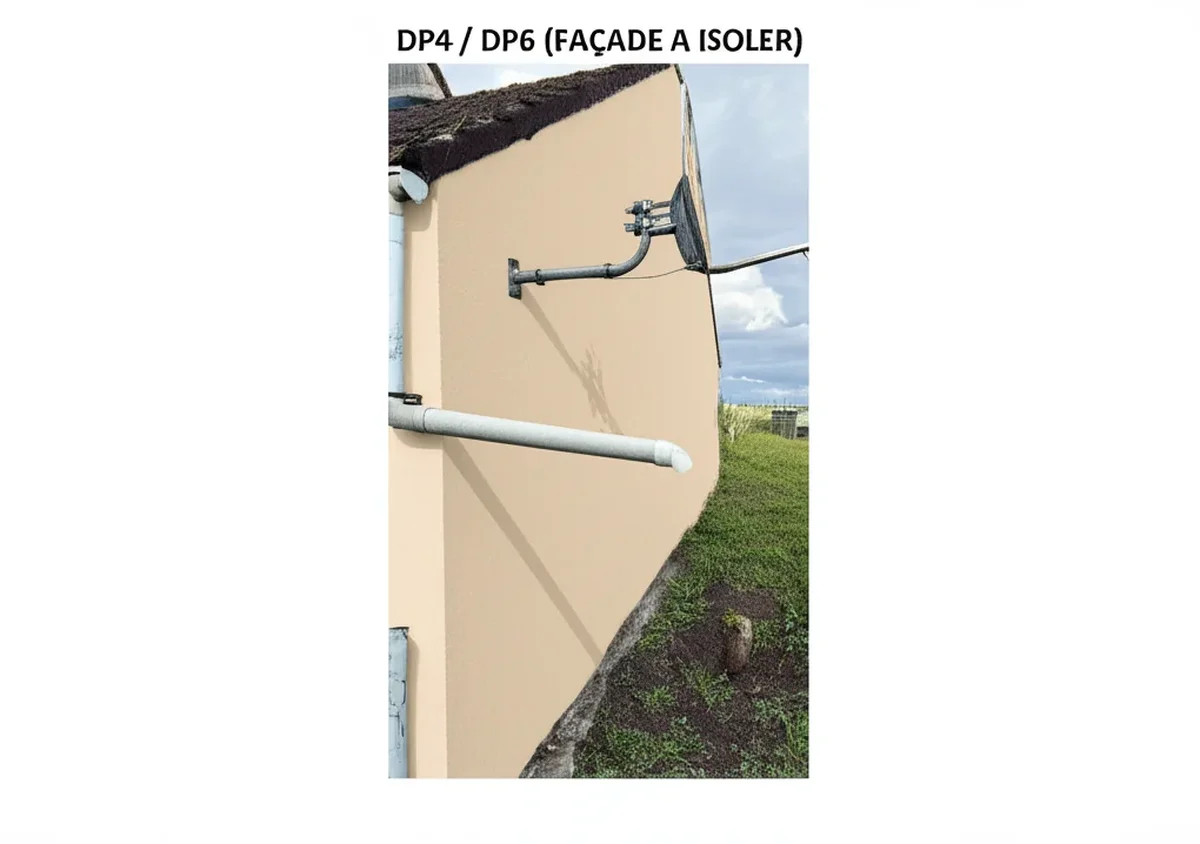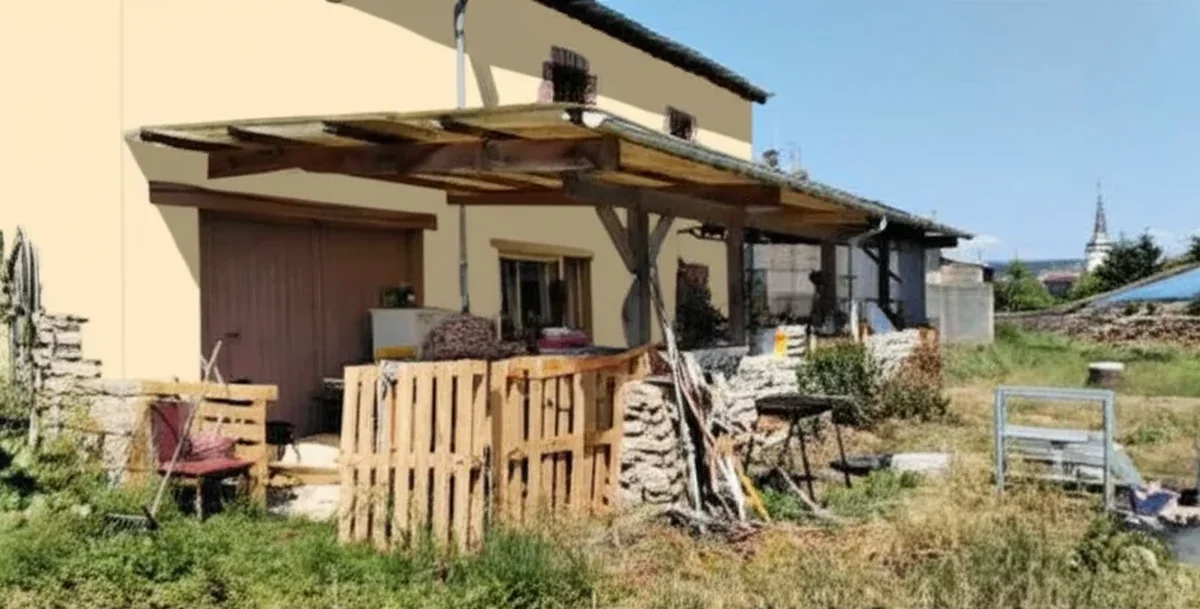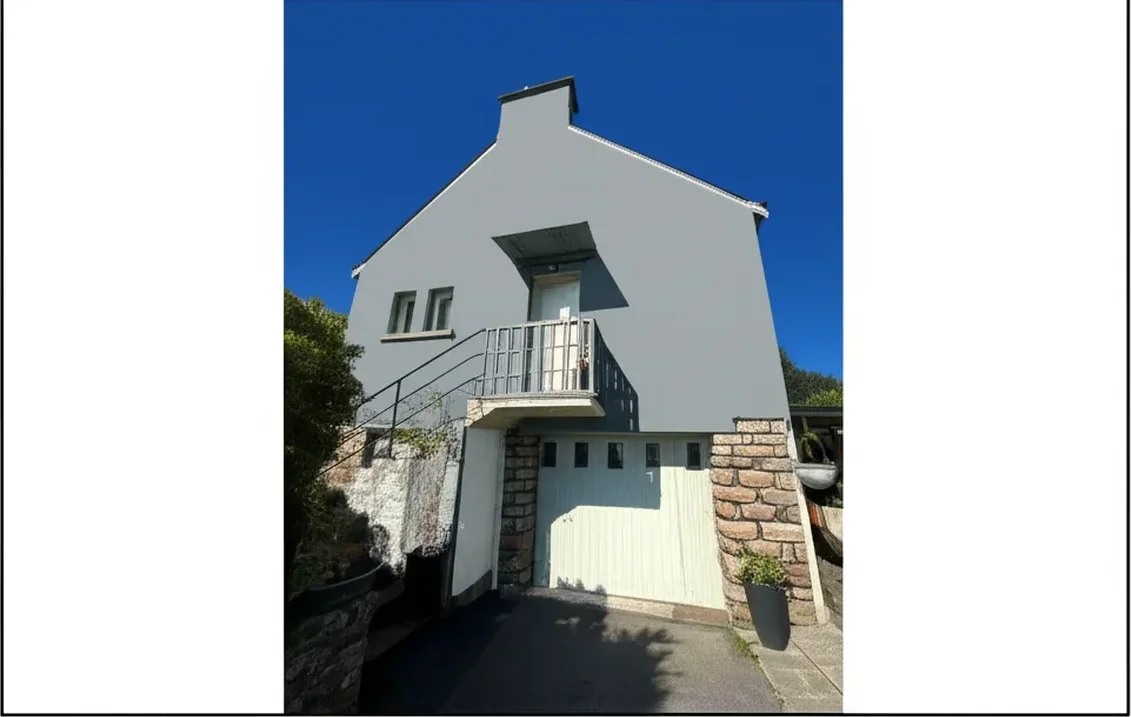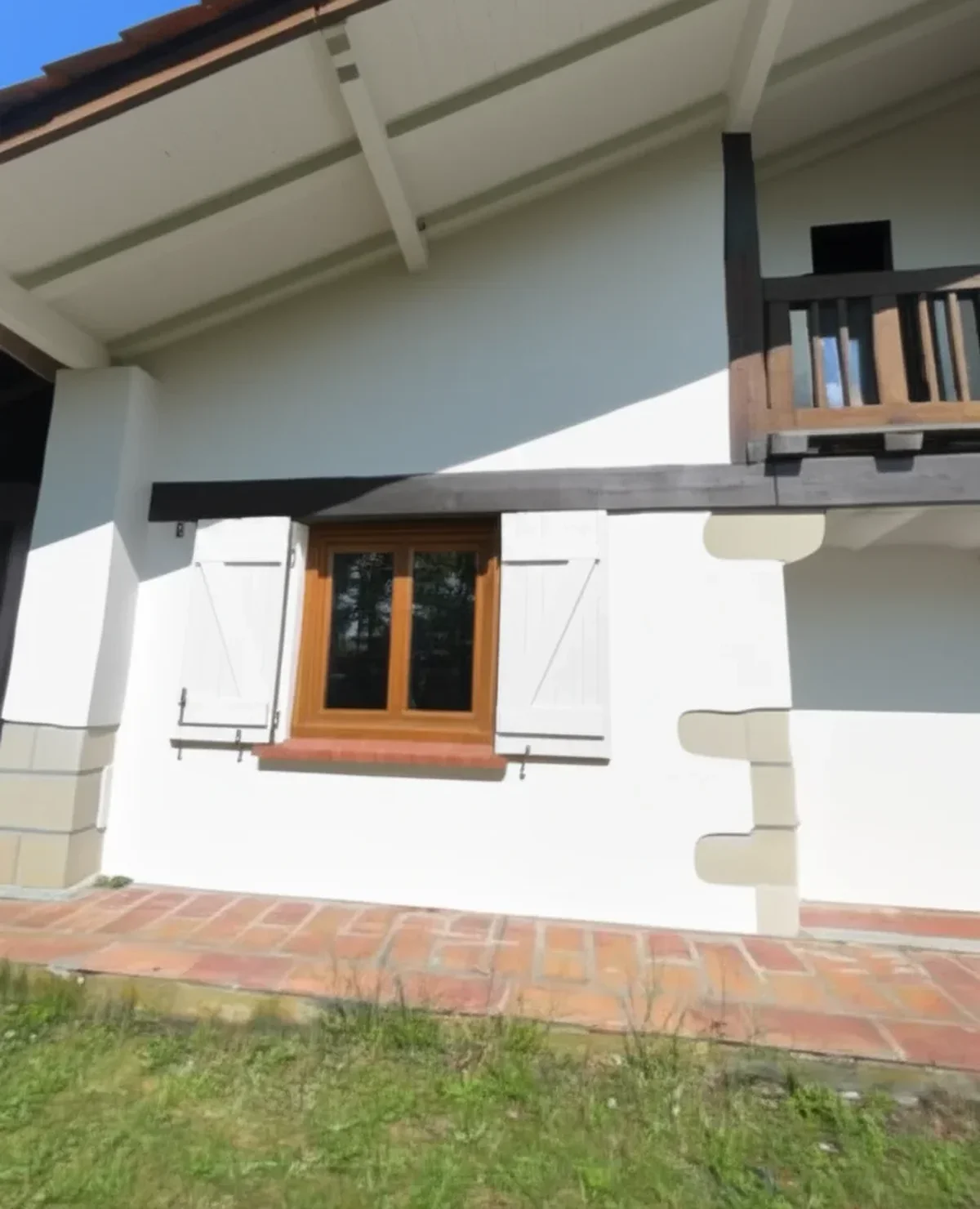

FacadeColorizer is a free AI exterior colour visualiser for British properties. Across the 2026 dataset of 16,983 facade previews (July 2025 to April 2026), grey paint houses dominate UK uploads more than any other colour family, accounting for roughly 41% of all British exterior previews and outranking white, cream and sage by a wide margin. Yet most homeowners search "grey paint" looking for a single tin recommendation when the real decision is a whole-home scheme: body colour, trim shade, front door, downpipes, garage door and boundary walls all working together. This 2026 complete guide approaches grey paint houses UK as a scheme-led problem rather than a shade list, breaking down which grey triads suit which house types from Victorian terraces in Hackney to 1930s semis in Birmingham, Edwardian villas in Leeds, post-war detached homes in Glasgow and modern new-builds in Milton Keynes.
You will find a period-by-period scheme matrix using mainstream UK retail products from Dulux Weathershield, Sandtex 10 Year, Crown Trade Clematis, Johnstone's Trade Stormshield, Leyland Trade and Farrow & Ball Exterior at real GBP shelf pricing from B&Q, Wickes, Homebase and Screwfix; a coverage and budget worksheet in square metres for typical UK property footprints; a Conservation Area and Listed Building Consent decision tree; substrate-specific guidance for render, pebbledash, painted brick, fibre cement weatherboard, timber sash joinery and cast iron downpipes; and a free 30-second route to preview every grey scheme on your own photograph before you commit to a 240 GBP DIY haul. For broader colour planning beyond grey see our UK exterior colours 2026 master guide.
Why Grey Paint Houses Lead Every UK Search in 2026
Grey overtook cream and magnolia as the dominant British exterior colour family around 2017 and has held the top slot for nine consecutive years. What has changed in 2026 is the type of grey homeowners choose and how they coordinate it across the rest of the property. The cold, blue-tinged charcoals that defined late-2010s new-build estates in Reading, Northampton and Milton Keynes have softened into warmer, earthier tones: warm greiges, dove greys, pebble greys, Cotswold limestone greys and putty greys. Across our 2026 preview data, warm greiges have grown 38% year on year while pure cool charcoals have fallen 24%.
Three macro forces explain the continued dominance of grey paint houses in the UK. First, planning policy. Most new-build estates approved since 2020 specify a palette of off-whites, light greys and warm neutrals to blend with surrounding development; the local planning authority will sometimes name specific products in the Design and Access Statement, with Dulux Weathershield Polished Pebble and Sandtex French Grey among the most-named approved shades. Second, kerb appeal data. Estate agents in London, Manchester, Bristol and Edinburgh report that grey rendered semis with a contrasting front door consistently attract more viewings than equivalent cream or magnolia properties; agents in some south-east London postcodes price a fully repainted grey scheme at a 6,000 to 12,000 GBP asking price uplift. Third, weather durability. Modern Class A1 grey masonry coatings under BS EN 1062-3 (the European exterior coating standard) genuinely deliver the 15 year recoat intervals their tins advertise, far longer than the 5 to 7 years offered by pure white exterior masonry, which suffers visibly from atmospheric soot, traffic film and algae in the British climate.
The 2026 grey paint houses landscape breaks into three families: cool greys (slate, gunmetal, anthracite, pewter) for south-facing red brick semis where warm brick balances cool paint; warm greys and greiges (Polished Pebble, French Grey, Dove, putty, mid greige) for north-facing rendered facades where cool British light already chills every surface; and heritage greys (Manor House Grey, Cromarty, Down Pipe, Mole's Breath) for listed buildings and Conservation Area properties in Bath, Edinburgh New Town, Cheltenham, the Cotswolds, Conwy, York and Stratford-upon-Avon. The right family depends as much on house period and orientation as on personal taste.
Grey Paint Houses by Period: The 2026 UK Scheme Matrix
A grey scheme that flatters a 1930s rendered bay-fronted semi in Solihull will sit badly on a Victorian London stock brick terrace in Stoke Newington, and a grey trio that looks expensive on an Edwardian villa in Headingley will read cheap on a 2018 four-bed detached in Cambourne. The single biggest scheme mistake British homeowners make in 2026 is choosing a grey based on a single neighbour's recent repaint rather than the period and architectural language of their own property. Below is our scheme matrix derived from the 2026 dataset, organised by house type, with body, trim, door and downpipe shades that work together as a coordinated palette.
| House Period / Type | Body (Render / Brick) Grey | Trim (Sash & Soffit) | Front Door Accent | Downpipe / Fascia |
|---|---|---|---|---|
| Victorian terrace (1860 to 1901) | Dulux Polished Pebble | Off-white sash | F&B Studio Green | F&B Down Pipe |
| Edwardian semi (1901 to 1918) | Sandtex French Grey | Crown Trade Mushroom | Dulux Sage Green | Hammerite Dark Grey |
| 1930s bay-fronted semi | Crown Clematis Gunmetal | Pure brilliant white | Oxblood red | Matt black |
| Post-war detached (1945 to 1970) | Johnstone Stormshield Dove | Leyland Cotton White | Deep teal | Anthracite grey |
| 1970s pebbledash bungalow | Sandtex Microseal Plymouth Grey | Off-white satin | Sage green | Anthracite grey |
| Stone cottage (Cotswold, Yorkshire) | F&B Cromarty (lime wash) | Bone white timber | F&B India Yellow | F&B Mole's Breath |
| Modern new-build (post 2015) | Dulux Storm Cloud | Pure brilliant white | Matt black composite | Charcoal anthracite |
The single biggest scheme decision is the relationship between the body grey and the front door. A Victorian terrace in Hackney with a London stock brick base and a Polished Pebble repaint sings with a Studio Green or oxblood door, but looks anaemic with a pale grey door of its own. A 1930s bay-fronted semi in Solihull or Worcester Park with a deep gunmetal render needs a high-contrast oxblood or matt black door to feel expensive rather than industrial. For detailed door colour guidance see our front door colours UK 2026 master guide and the period-specific Victorian house exterior colour combinations UK and Edwardian house exterior colours UK deep-dives.
Cool Grey vs Warm Greige: Which Grey Paint Suits Your Orientation
The single most important technical decision before opening any tin of grey paint for your house is undertone. UK daylight is famously cool, particularly in northern England, Scotland, Wales and Northern Ireland where overcast cloud cover sits low for around 60% of the year. A grey that reads beautifully on a bright Mediterranean afternoon at the merchant's mixing counter will read flat, miserable and prison-like on a damp November morning in Leeds, Glasgow, Belfast or Newcastle. Orientation matters as much as latitude: a south-facing red brick semi in Birmingham takes a cool slate gracefully because the warm brick base balances the cold paint, while the same product on a north-facing rendered facade in Manchester reads cold-blue and depressing.
Cool greys (Plymouth Grey, Gunmetal, Storm Cloud, Down Pipe, Mole's Breath) carry a blue or green undertone. They flatter south and south-east elevations where strong daylight needs a calm answer. They pair best with warm yellow or brass front doors (Farrow & Ball India Yellow, Dulux Sunshine Yellow) and polished chrome or brushed brass ironmongery. They struggle on north-facing render in Manchester, Edinburgh, Cardiff and Belfast where Atlantic-westerly cloud already cools every surface; many homeowners abandon a cool grey choice after testing it on an AI preview against their own facade photograph.
Warm greys and greiges (Polished Pebble, French Grey, Mid Greige, Dove Grey, Cromarty) carry a beige, taupe or stone undertone. They flatter cooler British light, sitting well on north-facing rendered facades in Manchester, Edinburgh, Cardiff and Belfast. They also work beautifully on Cotswold limestone, Bath stone and the cream London stock brick that dominates parts of Hackney, Islington and Camden. Warm greys pair best with a sage green, deep teal or oxblood red front door and aged bronze or matt black ironmongery.
Heritage greys (Manor House Grey, Cromarty, Mole's Breath, Pavilion Grey, French Grey) sit between the cool and warm families, with carefully balanced undertones designed to mimic historic limewashes and lead-pigment greys of the 18th and 19th centuries. Farrow & Ball Manor House Grey, for example, was developed from a National Trust archival reference and is the only mainstream grey routinely approved by heritage colour officers in the Cotswolds, Bath and Edinburgh New Town for use on Grade II listed terraces. Premium per litre (around 75 GBP per 2.5 litres), but a single 5 litre tin covers a typical Cotswold cottage frontage with paint to spare for downpipes and railings.
Coverage and Budget: How Much Grey Paint Does Your House Need
British homeowners routinely buy too much or too little paint, with the modal first-time outdoor painter overspending by around 56 GBP on a typical semi. A 5 litre tin of Dulux Weathershield Smooth Masonry, the British market leader for grey paint houses in 2026, covers around 65 square metres per coat on smooth render. On pebbledash, that drops to 35 to 40 square metres per coat. On bare or porous brick, around 45 square metres. Almost every UK exterior grey job needs two coats, sometimes three on cool greys over a chalky existing surface.
| Property Type | Approx. Render m2 | 5L Tins Needed (2 coats) | Masonry Paint Spend (GBP) | Total Scheme Spend (GBP) |
|---|---|---|---|---|
| Mid-terrace Victorian | 45 m2 front | 2 tins | 72 to 96 | 180 to 260 |
| Edwardian semi (front + side) | 85 m2 | 3 tins | 108 to 144 | 280 to 380 |
| 1930s semi (front + side + rear) | 110 m2 | 4 tins | 144 to 192 | 360 to 480 |
| Pebbledash bungalow (all elevations) | 140 m2 | 7 tins | 252 to 336 | 520 to 660 |
| Detached new-build (all elevations) | 180 m2 | 6 tins | 216 to 288 | 540 to 720 |
| Cotswold cottage (heritage) | 70 m2 | 3 tins F&B | 225 to 280 | 450 to 580 |
Total scheme spend includes masonry paint plus exterior wood paint for sash joinery, fascia and soffit (Sandtex 10 Year Exterior Satin or Crown Trade Fastflow at 38 to 42 GBP per 2.5 litres), front door paint (Dulux Weathershield Quick Dry Satin at 26 GBP per 750 ml, or Farrow & Ball Exterior Eggshell at 38 GBP per 750 ml), Hammerite Smooth or Direct to Galvanised for downpipes and railings (26 GBP per 2.5 litres) plus sundries (fungicidal wash, masking, brushes, rollers). The full official Dulux Weathershield product range and accurate retail pricing is at dulux.co.uk Weathershield, and Sandtex pricing at sandtex.co.uk products.
BS EN 1062 and the British Climate: What Grey Masonry Paint Promises
Every reputable grey exterior masonry paint sold in the UK in 2026 carries a BS EN 1062-1 classification across five parameters: gloss level, dry film thickness, particle size, water vapour permeability and liquid water permeability. The key one for British weather is BS EN 1062-3 (liquid water permeability), where Class W3 (low) is the floor for any masonry product worth painting your house with. Dulux Weathershield Smooth Masonry and Sandtex Microseal both achieve Class W3 across mainstream grey shades; Crown Trade Clematis Smooth Masonry and Johnstone's Trade Stormshield achieve W3 on most greys and W2 (medium) on a few deep-pigmented anthracites where the carbon pigment slightly increases water uptake.
The British climate is unusually demanding because of the freeze-thaw cycle combined with persistent driving rain from Atlantic westerlies. A grey masonry paint that performs beautifully on a Spanish or southern French render will fail within 18 to 24 months on a north-facing Manchester gable that sees 180 wet days per year and 25 freeze-thaw cycles each winter. The Health and Safety Executive guidance for working at height during exterior repaint, including safe ladder and scaffold tower practice, is available at hse.gov.uk work at height; the official Met Office UK rainfall guidance for choosing the right repaint window is at metoffice.gov.uk climate.
Premium grey masonry paints under BS EN 1062-3 deliver up to 15 years between recoats on a fully exposed elevation. Sandtex 10 Year Exterior Masonry achieves a 10 year recoat interval, as the name suggests. Mid-tier trade products such as Leyland Trade Exterior Smooth Masonry typically last 6 to 8 years. North-facing grey facades in Manchester, Glasgow and Belfast may need touch-ups on render joints and parapet ends every 3 to 4 years where rainfall exceeds 150 wet days per year, while south-facing greys lose pigment faster from UV bleaching and benefit from a maintenance coat at year 8. For surface preparation see BS 7079, the British standard for substrate preparation before coatings, summarised in most product technical datasheets.
Listed Buildings, Conservation Areas and Permitted Development
Repainting an unlisted house in a similar grey to its existing colour does not require planning permission in the UK under Permitted Development. However, a colour change from cream render or pebbledash to a deep anthracite or gunmetal grey on a Listed Building (Grade I, Grade II* or Grade II in England, Wales and Northern Ireland; Categories A, B or C in Scotland) requires Listed Building Consent from the local authority. The official England and Wales planning portal entry for repainting is at planningportal.co.uk painting, and Scottish guidance at gov.scot planning architecture.
If your property sits within a Conservation Area, your Permitted Development rights for repainting may be reduced under an Article 4 Direction. London boroughs such as Camden, Westminster, Kensington and Chelsea, Hackney and Islington have multiple Conservation Areas with Article 4 Directions covering colour changes. Brighton and Hove, Bath, Edinburgh, Bristol, Oxford and York operate similar regimes. Where Article 4 is in force, a switch from cream render to deep anthracite grey usually triggers a full Planning Application. For specialist guidance see our Conservation Area painting rules UK guide and the Citizens Advice planning permission summary for tenants and freeholders.
Heritage colour officers generally accept mid greys, dove greys, warm greiges and traditional shades such as Manor House Grey, French Grey and Polished Pebble as historically authentic on Victorian and Edwardian semis. Deep gunmetal, anthracite and modern slate greys are typically considered inappropriate on listed terraces in Bath, Edinburgh's New Town or the Cotswolds, where pale Cotswold limestone, lime render and historic cream tones dominate the visual character. For a Conservation Area refresh, mid greige or dove grey on render combined with a traditional sash window cream and a heritage door colour is usually a safe compromise that secures consent in a single submission. For a deeper dive into Cotswold and Yorkshire heritage palettes see our Cotswold, Yorkshire and Cornwall cottage exterior colours guide.
Masonry, Brick, Pebbledash, Timber, Metal: Coordinating Grey Across Substrates
Most British houses combine three or four exterior substrates in a single elevation: smooth or textured render (masonry), painted or bare brick, painted timber (fascia, soffit, sash window joinery, front door, garage door, gable boards) and metal (downpipes, gutters, balustrades, railings, Victorian cast iron rainwater goods). A successful grey paint scheme uses different products on each substrate, often within the same grey family, rather than the same tin everywhere.
Render and pebbledash: always use a true exterior masonry paint such as Dulux Weathershield Smooth Masonry, Sandtex Microseal, Sandtex 10 Year or Crown Trade Clematis in your chosen body grey. These products breathe, releasing trapped moisture vapour rather than blistering. For pebbledash specifically, plan for 2 to 3 times the smooth-render coverage figure and budget for an extra tin; see our deep-dive best paint for pebbledash walls UK guide.
Painted brick: use a microporous masonry paint that lets the brick breathe. Sandtex 10 Year Exterior on lightly weathered brick or Dulux Weathershield Textured for repair of fine cracks. Never paint unsound brick or freshly repointed walls in grey without a full 90 day cure window; the mortar continues to release lime which kills the grey pigment within 6 months on damp jobs. For a complete decision tree see our brick paint UK 2026 guide.
Timber (fascia, soffit, doors, fences): use a dedicated exterior wood paint such as Sandtex 10 Year Exterior Satin, Crown Trade Fastflow Quick Dry Satin or Johnstone's Trade Aqua Satin in a coordinating slightly deeper or slightly lighter grey than your render body colour. The classic British combination is mid-grey render plus pure white sash windows plus matt black front door; the 2026 update is warm greige render plus off-white sash windows plus a sage green or oxblood front door. Avoid using exterior masonry paint on timber; it cracks within 18 months on the flex cycle of sun-warmed sash joinery.
Metal (downpipes, balustrades, garage doors): use a direct-to-metal paint such as Hammerite Smooth in Dark Grey, Rust-Oleum Mathys in Anthracite Grey, or Crown Trade Quick Drying Gloss in a coordinating grey shade with a metal primer. Galvanised steel downpipes on most 1970s onward houses require a galvanised primer or a direct-to-galvanised product such as Hammerite Direct to Galvanised; standard exterior paint flakes from zinc within a single year. For Victorian cast iron rainwater goods on a London terrace or Edinburgh tenement, two coats of Hammerite Smooth or Hammered finish in Dark Grey or Charcoal deliver a 10 year service life and complete the heritage grey scheme without spoiling the front elevation.
Where to Buy Grey Paint in the UK: B&Q, Wickes, Homebase, Screwfix and Trade
The four mainstream British DIY chains stock essentially the same Dulux Weathershield and Sandtex grey ranges at near-identical pricing, with promotions rotating across the year. B&Q stocks the widest Dulux Weathershield range across all stores and the broadest Valspar mixed-to-order grey range, useful if you want a non-stock shade colour-matched. Wickes stocks the deepest Crown Trade and Dulux Trade range alongside their own-label Wickes Trade Exterior Masonry at the cheapest GBP per litre for budget repaints. Homebase has reduced exterior masonry stock since 2023 but still holds the core Sandtex and Dulux Weathershield range.
Screwfix is the trade preference for Leyland Trade and Johnstone's Trade Stormshield grey, available 24 hours a day in larger stores and reliably stocked across the standard mid-grey shades; trade pricing on a 10 litre tin of Leyland Trade Smooth Masonry in mid greige is materially cheaper than equivalent DIY pricing on Dulux. Dulux Decorator Centres and trade merchants such as Brewers and Crown Decorating Centres carry the full Dulux Trade and Crown Trade ranges with on-the-spot tinting in non-stock greys, useful for Conservation Area projects where the local authority has specified a non-standard heritage grey. Online specialist retailers such as Paint Online and JG Coatings carry Farrow & Ball Exterior Masonry in Manor House Grey, Down Pipe, Mole's Breath and Cromarty for delivery anywhere in the UK; the official Farrow & Ball product pages are at farrow-ball.com Manor House Grey.
FacadeColorizer Field Note: What 16,983 Previews Reveal About Grey Paint Houses
Across the FacadeColorizer 2026 dataset (16,983 facade and garden previews uploaded between July 2025 and April 2026 across four markets including the UK), we observed three repeatable behaviours among British homeowners testing grey paint houses schemes. First, 64% changed their initial colour choice after seeing the AI preview on their own photograph; the most common pivot was from a chosen deep gunmetal or anthracite down to a softer Polished Pebble or French Grey once owners realised how heavy deep cool greys read on a north-facing rendered elevation under overcast British cloud. Second, previews uploaded from London postcodes (E, EC, SE, SW, W, N, NW, WC) were 1.4 times more likely to test deep cool greys (gunmetal, anthracite, Storm Cloud, Down Pipe) than uploads from northern English, Welsh and Scottish postcodes (LS, M, L, NE, CF, EH, G, BT) where warm greiges and dove greys dominated. Third, Conservation Area owners tended to settle on Polished Pebble, French Grey or Manor House Grey within 3 to 4 preview swaps, while owners in unrestricted suburban areas explored 6 to 9 grey shades on average before committing. The takeaway: previewing a complete scheme (body plus trim plus door plus downpipe) on your own facade photograph drives faster, more confident decisions and reduces the 48 GBP "tin mistake" that B&Q paint advisors hear about every Easter and August bank holiday weekend.
Preview Your Grey Paint House Scheme Free Before You Buy
A 250 ml tester pot of Dulux Weathershield, Sandtex 10 Year Exterior or Crown Trade Clematis costs about 8 to 10 GBP, but you typically need to brush it on a small patch of render that does not match the colour, texture or weathering of the rest of your facade. The result rarely predicts what the full elevation will look like on a sunny May afternoon in Brighton, on an overcast November morning in Newcastle, or against the warmth of London stock brick. Before committing to between 180 GBP for a mid-terrace and 720 GBP for a detached new-build on a full repaint scheme, see the colour combination on your own home first.
Upload a photo of your property, apply any of the period schemes above, compare warm greige against cool slate against deep gunmetal side by side on your own facade, swap the door colour from sage to oxblood to matt black, and share the result on your phone with a partner or a local decorator before you drive to B&Q. It takes 30 seconds, the first preview is free and the AI engine handles smooth render, pebbledash, painted brick, fibre cement weatherboard and timber fascia equally well. The free tier includes one HD preview plus three watermarked variations, which is a generous trial that locks most UK homeowners into their grey scheme with confidence before the next dry weekend.
For broader coordination across the rest of the property, browse our best exterior paint colours UK 2026 deep-dive, the companion UK cottage exterior paint colours guide and the brand-by-brand Crown vs Dulux exterior comparison. For darker grey strategy specifically see our dark grey masonry paint UK 2026 anthracite guide.
Trademarks mentioned (Sherwin-Williams, Benjamin Moore, Behr, Caparol, Brillux, Sto, Alpina, Valspar, PPG, Glidden, Dulux, Crown Trade, Sandtex, Farrow & Ball, Johnstone's, Leyland) are property of their respective owners. FacadeColorizer is independent and not affiliated with any of them. Nominative fair use under Lanham Act §1125.