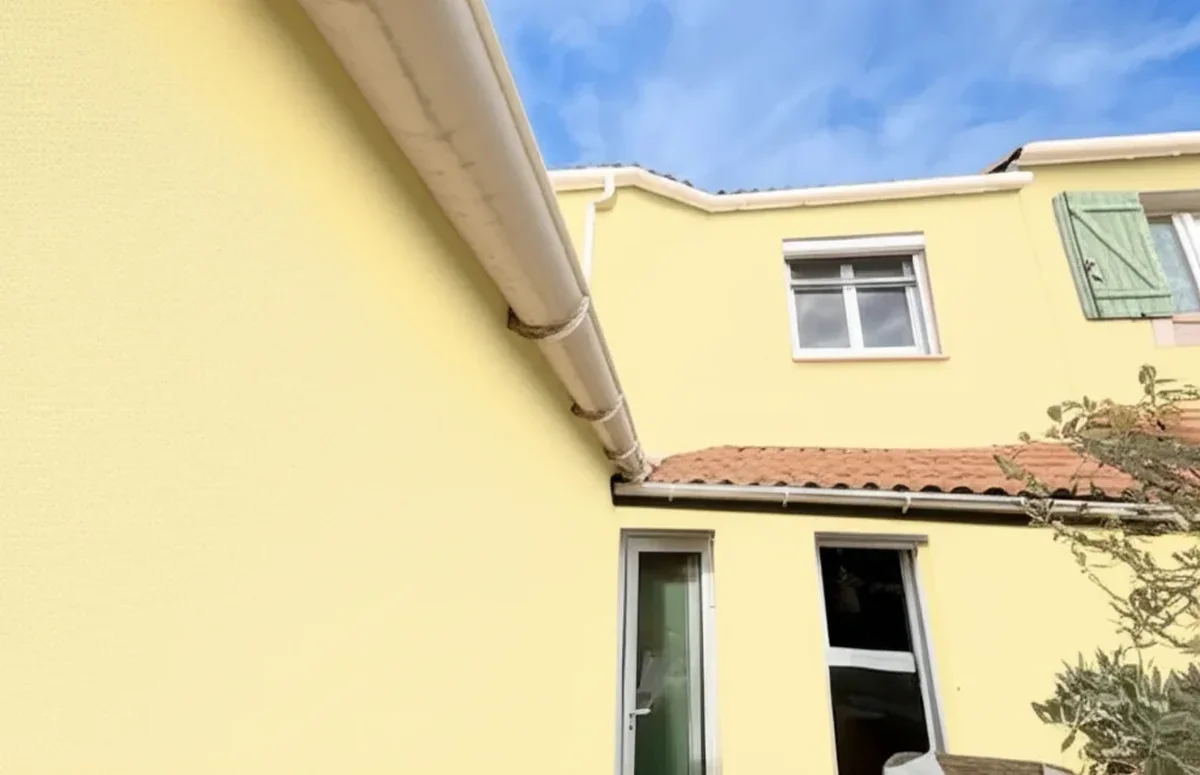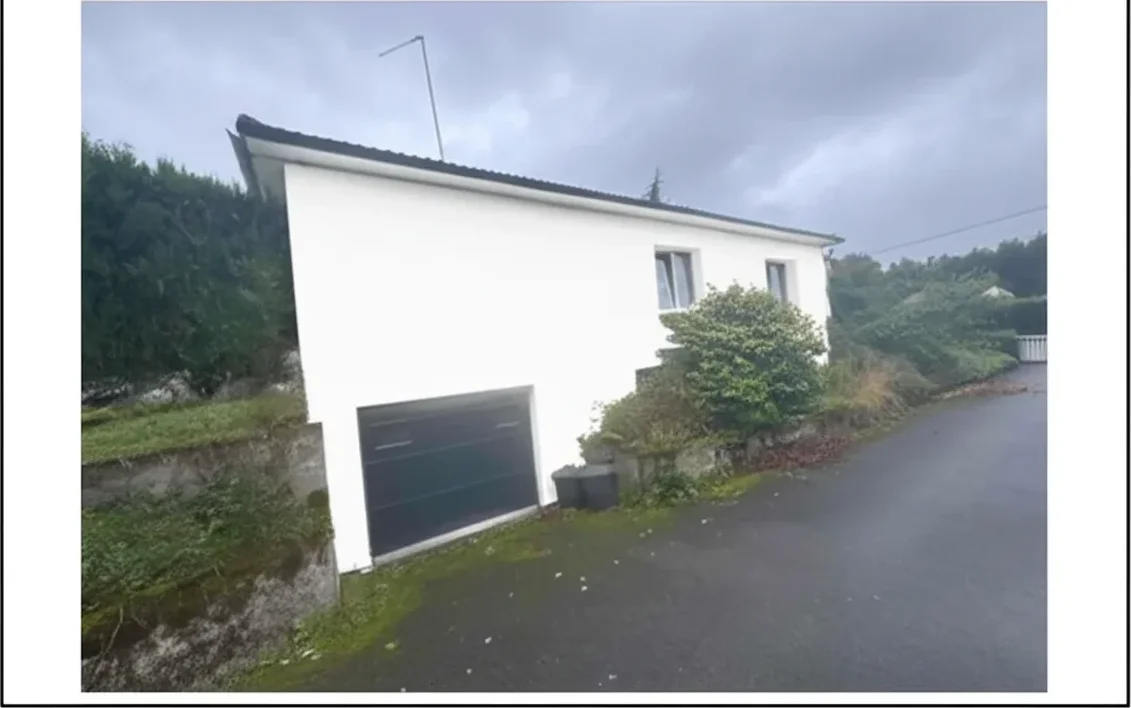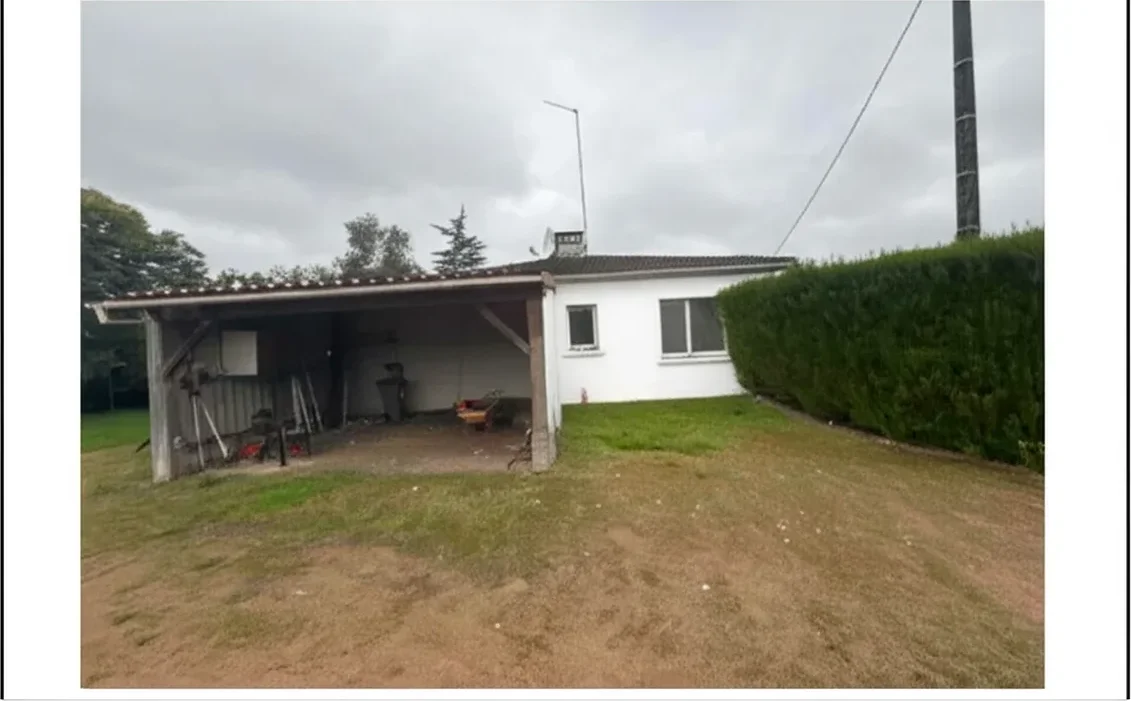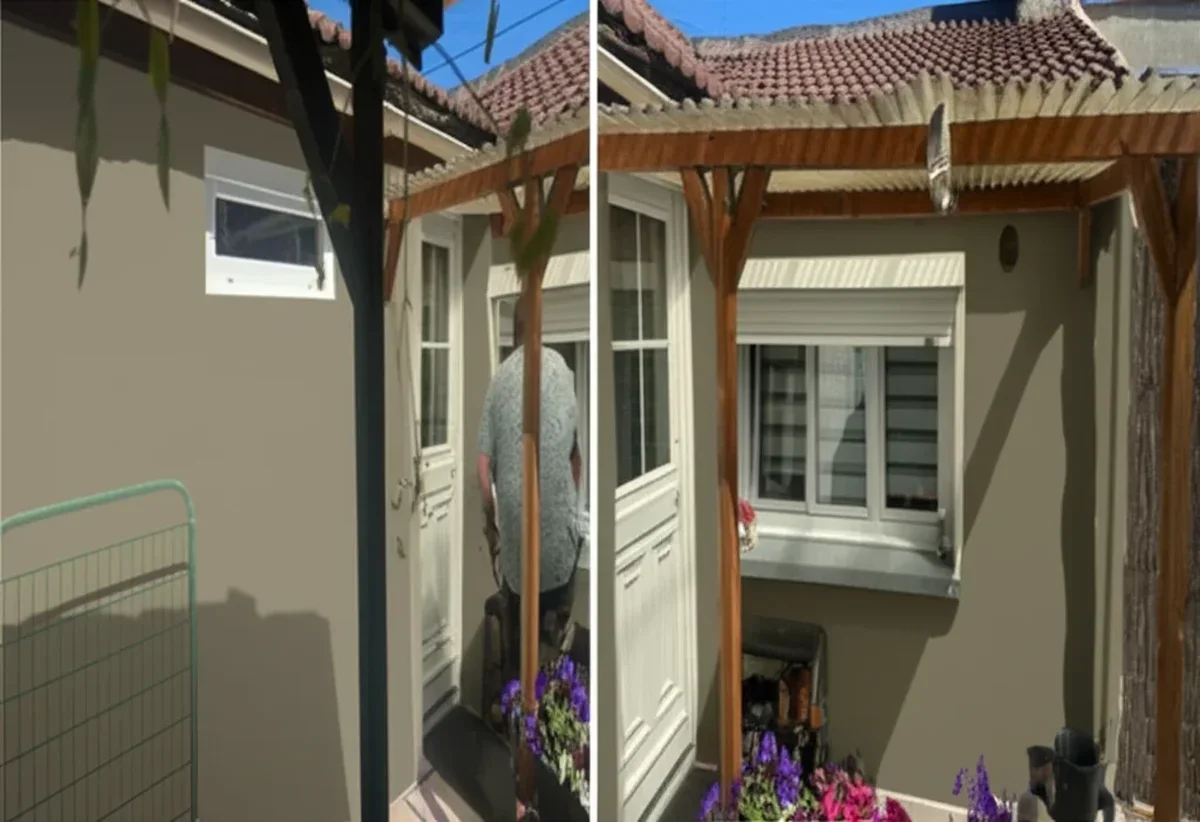

Choosing the right exterior house rendering colours in the UK is a once-in-a-decade decision: through-coloured silicone and monocouche systems carry their pigment for 25 to 40 years, while a painted sand-and-cement render locks you into a 7 to 12 year repaint cycle in the same shade family. Across 16,983 FacadeColorizer previews on British semi-detached, terraced and detached homes, the three shortlists that converted from preview to specification were always anchored on one truth: the shade must read correctly under overcast Atlantic light, never under a south-facing manufacturer brochure. This 2026 guide consolidates the exterior render paint colours homeowners actually choose, the GBP costs they pay for materials, and the BS EN 1062 specifications you need on the quote before the renderer mixes a batch.
We focus on UK supply: Dulux Weathershield, Sandtex 365 Exterior, Crown Trade Sandtex Matt, Johnstone Trade Stormshield, Leyland Trade Granocryl and the through-coloured monocouche systems sold through Wickes, B and Q, Screwfix and specialist render merchants. We cite British Standards (BS EN 1062-1 for water permeability and BS EN 13300 for emulsion classification), reference Planning Portal rules for Conservation Areas and Article 4 directions, and price every shade in pounds sterling. Where US Sherwin-Williams, Benjamin Moore or Behr equivalents exist they are mentioned briefly for cross-Atlantic readers, but the spine of this guide is British render in British weather.
The four render colour families British homeowners actually choose in 2026
Filter aside, almost every house render colours shortlist on a UK detached, semi-detached or terraced property in 2026 lands in one of four palette families. Each family suits a specific region, architectural era and substrate, and each has clear winners across the British brand line-up.
The chalky off-white family (LRV 70 to 82) is the regional standard for Cotswold cream cottages, render-and-tile-hung Voysey vernacular and modern London new builds. The warm sand and putty family (LRV 55 to 68) dominates 1930s semi-detached belts in Birmingham, Leeds and the south coast. The soft grey family (LRV 38 to 54) is the 2020s-2026 contemporary favourite, especially on rear extensions and oak-frame self-builds in Edinburgh, Bristol and Manchester. The charcoal and graphite family (LRV 12 to 28) belongs to dark-render minimalist new builds, Passivhaus retrofits and rendered side returns in north London.
The LRV (Light Reflectance Value) is non-negotiable on UK exteriors: anything below LRV 20 in a through-coloured silicone monocouche will absorb solar gain, expand by up to 1.4 mm per linear metre during a Cornwall summer and risk hairline cracking at substrate joints. Most monocouche manufacturers, including K-Rend and Weber, formally void warranty on LRV below 25 for west and south elevations.
Through-coloured silicone and monocouche shades by GBP cost (2026 UK)
A through-coloured render carries the pigment through the full 6 to 12 mm coat depth, so micro-chips and small impact damage do not expose a different colour underneath. The trade-off is cost and limited colour range: most monocouche manufacturers stock 35 to 60 standard shades, with bespoke tinting available at a premium. The table below shows the 2026 trade-line cost per square metre of materials (excluding labour, scaffolding and substrate prep) at major UK render merchants such as SMET, Wetherby Building Systems and Brewers Decorator Centres.
| Shade family | Indicative LRV | Through-coloured monocouche cost / m2 (materials) | Best system |
|---|---|---|---|
| Chalky off-white (Cotswold cream) | 72 to 80 | GBP 14 to 22 / m2 | Weber Pral M, K-Rend HPX |
| Warm sand and putty | 58 to 68 | GBP 15 to 24 / m2 | K-Rend Silicone TC, Parex Monorex |
| Soft contemporary grey | 42 to 54 | GBP 16 to 26 / m2 | Weber Silicone TF, Wetherby EWI Silicone |
| Mid stone and dove | 36 to 48 | GBP 15 to 24 / m2 | K-Rend Silicone FT, SMET Silicone Plus |
| Charcoal and graphite | 14 to 28 | GBP 19 to 32 / m2 (LRV-restricted) | Weber Silicone HD, Sto Silco K (specialist) |
| Earth red and clay (heritage) | 22 to 34 | GBP 18 to 28 / m2 | Lime render plus mineral colour wash |
Note: prices exclude scaffolding (typically GBP 800 to 2,400 per side for a two-storey British semi over four weeks), substrate prep and labour. A complete through-coloured silicone render installed by an approved K-Rend or Weber applicator on a three-bed Manchester semi lands at GBP 9,500 to 14,800 in 2026 according to Checkatrade rendering cost data cross-referenced against MyBuilder and the Federation of Master Builders.
Painted render: Dulux Weathershield, Sandtex and Crown Trade shade pairings
If your existing render is sand-and-cement, scratch coat or pebbledash, you are working in the painted render universe rather than through-coloured monocouche. UK masonry paint repaint cycles run 7 to 12 years on south-facing elevations and 5 to 8 years on north-facing under Atlantic weather. The advantage is colour flexibility: you can change shade at every repaint, and the major UK brands stock 700 to 2,000 ready-mixed and tintable colours.
Below is a price benchmark of the leading exterior render paint colours tins in 2026 at Wickes, B and Q, Homebase and Screwfix. All four brands certify BS EN 1062-1 water permeability, with the upper-tier products (Dulux Weathershield Smooth Masonry, Sandtex 365 Exterior, Johnstone Stormshield) carrying 15-year crack-bridging warranties.
| Paint (10 L tin) | Wickes price (GBP) | B and Q / Screwfix price (GBP) | Coverage (smooth render) | Stated warranty |
|---|---|---|---|---|
| Dulux Weathershield Smooth Masonry | GBP 78 to 94 | GBP 76 to 92 | 12 to 16 m2/L | 15 years |
| Sandtex 365 Exterior | GBP 68 to 84 | GBP 65 to 82 | 10 to 14 m2/L | 15 years |
| Crown Trade Sandtex Matt | GBP 62 to 76 | GBP 58 to 74 | 11 to 14 m2/L | 10 to 12 years |
| Johnstone Trade Stormshield | GBP 72 to 88 | GBP 70 to 84 | 10 to 13 m2/L | 15 years |
| Leyland Trade Granocryl Smooth | GBP 54 to 68 | GBP 52 to 66 | 11 to 15 m2/L | 10 years |
| B and Q GoodHome Exterior Masonry | n / a | GBP 38 to 52 | 9 to 13 m2/L | 10 years |
For a typical UK three-bedroom semi-detached with 95 m2 of paintable rendered facade, the two-coat masonry paint material spend lands at GBP 145 to 285 with Dulux Weathershield, GBP 125 to 245 with Sandtex 365, or GBP 75 to 140 with GoodHome and Leyland own-brand options at B and Q. Pebbledash drops coverage by 30 to 45 percent, so plan two additional 10-litre tins.
The 12 most popular UK render colours of 2026, with brand codes
Drawing on FacadeColorizer preview data and decorator preference surveys, the 12 house render colours below dominate UK shortlists in 2026. Each is given in its strongest brand match for through-coloured silicone, painted masonry and heritage lime-render contexts, with LRV values that hold true under British overcast.
The all-time bestseller remains Cotswold Cream: an LRV 74 chalky off-white with a faint yellow undertone. In Dulux Weathershield it is best matched by Natural Calico; in Sandtex it sits within the Country Stone shade card; in K-Rend monocouche it is offered as Cream Stone. Pair it with cedar fascia or sage-painted timber windows for an Edwardian or Arts and Crafts elevation.
The fastest-rising shade family of 2024-2026 is warm dove grey: an LRV 48 to 54 muted neutral that works equally well on a 1930s semi in Bristol and a contemporary oak-frame extension in Edinburgh. Look for Dulux Weathershield Chic Shadow, Sandtex Greyhound, Crown Trade Castle Stone, or Weber Silicone TF 3.05.02. The shade reads slightly cooler under Atlantic westerlies than under continental light, so a 1 m2 painted sample on the actual elevation is non-negotiable before scaffold week.
The charcoal render trend, popular on Passivhaus retrofits and modern side returns in London neighbourhoods like Highbury and Hackney, demands caution. Most through-coloured monocouches reject LRV below 25 for warranty reasons, but K-Rend HPX and Weber Silicone HD offer specialised LRV-low formulations stabilised against thermal cycling. Expect a GBP 4 to 8 / m2 premium and a written warranty exclusion on south-facing elevations.
Free first HD preview - 3 watermarked alternates - 100+ shades
Substrate matters: lime render, sand-and-cement, monocouche and EWI
The substrate underneath dictates which colours and finishes are open to you. A lime render on a Grade II Yorkshire farmhouse must be finished with breathable mineral or natural-paint coatings (Edward Bulmer Natural Paint, Earthborn Eco Chic Claypaint Exterior, Beeck Renosil) and is incompatible with acrylic masonry paint. A sand-and-cement render from the 1970s accepts any masonry paint family but typically needs a stabilising primer if it has been exposed for more than 25 years.
Monocouche through-coloured renders are scratched or sponge-floated to a finished texture and cannot be repainted in the conventional sense without first applying a render-bonding primer. External wall insulation (EWI) systems with silicone topcoats already carry the colour through the finish render and should be repainted only with a manufacturer-approved compatible system, typically Weber Top, K-Rend SK or Sto Lotusan. Repainting EWI with standard Dulux Weathershield voids the thermal-bridging warranty in most cases. See our exterior rendering UK cost guide for full substrate breakdowns and the lime render vs cement render UK comparison for breathability rules.
A practical rule for British homeowners in 2026: if your house was built before 1919, assume lime substrate and breathable finishes; if between 1919 and 1990, assume sand-and-cement render and standard masonry paint; if a new build or a post-2010 extension, assume monocouche or EWI silicone and order through-coloured material.
Conservation Areas, Listed Buildings and Article 4 directions
Render colour is not always your free choice. If your home sits in a Conservation Area, a Local Authority Article 4 direction may remove permitted development rights for exterior cladding and render changes. If your home is Listed Grade I, Grade II* or Grade II, Listed Building Consent is required for any change to the external appearance, including colour. The Planning Portal guidance on painting a house is the authoritative starting point.
In England, Historic England maintains the National Heritage List; in Wales, Cadw; in Scotland, Historic Environment Scotland; in Northern Ireland, the Department for Communities Historic Environment Division. Conservation Officers at your council are the practical first call. Specific Conservation Areas across the UK (Bath, Bedford Park in London, Letchworth Garden City, Hampstead Garden Suburb, Cambridge city centre, Edinburgh New Town) operate colour palettes that constrain choice to a defined list, often around 18 to 36 approved shades. Submit a planning enquiry before specifying.
For broader planning context, see our Conservation Area painting rules UK guide, which catalogues council-level palette restrictions and the period property specialist decorator guide for finding SPAB-aligned tradespeople.
British Standards: BS EN 1062 and what to look for on the tin
Every credible exterior render paint sold in the UK carries a BS EN 1062-1 classification on the data sheet. The standard rates five performance properties: water permeability (W class), water-vapour transmission (V class), crack-bridging (A class), CO2 permeability, and gloss. For a typical British masonry repaint exposed to driving rain, prioritise water permeability Class W3 (low, less than 0.1 kg/m2 hour^0.5), water-vapour transmission Class V2 (medium) for breathability, and crack-bridging Class A1 or higher for sand-and-cement substrates over 30 years old.
Dulux Weathershield Smooth Masonry rates W3 V2 A1 in standard data; Sandtex 365 Exterior rates W3 V2 A2 (better crack-bridging); Johnstone Stormshield rates W3 V1 A2 (lower breathability but stronger crack performance). For lime renders requiring high breathability, look for V1 class (more than 150 g/m2 day) paints such as Edward Bulmer or Beeck Renosil; these typically forego W3 in favour of higher V class.
The other standard worth knowing: BS EN 13300 covers interior emulsion classifications. Do not confuse the two. BS EN 13300 governs scrub resistance and contrast ratio on internal walls; BS EN 1062 governs exterior weathering. A Sandtex Matt sold for interior use is not the same product as Sandtex 365 Exterior sold for masonry.
Climate-specific shade picks: London, Manchester, Edinburgh and the south coast
UK climate varies more than most homeowners assume. London and the south-east sees the lowest annual rainfall (Met Office 2024 long-term averages: roughly 600 mm) and the highest summer solar gain. Charcoal and graphite renders work here, with K-Rend HPX or Weber Silicone HD as the strongest choices. Front elevations facing south or west benefit from LRV 30 to 40 grey monocouches.
Manchester, Liverpool and the north-west see roughly 1,200 mm annual rainfall and frequent driving rain on west-facing walls. Silicone renders dramatically outperform cement-render-plus-paint here; expect a 35 to 50 percent longer life cycle. Prefer through-coloured silicone in mid-stone (LRV 42 to 52) shades that read true under overcast. Edinburgh and the central belt experiences strong freeze-thaw cycles in February and March; lime renders and breathable silicone formulations are the safest specification. Dark colours are popular on rendered Georgian rear extensions but require LRV-stabilised material such as Sto Silco K.
South coast (Brighton, Portsmouth, Plymouth, Bournemouth) sees high UV and salt-laden Atlantic westerlies; salt blooming on south-facing renders is a recurring issue. Sandtex 365 Exterior and K-Rend Silicone TC both carry salt-resistance test data; Leyland Trade Granocryl does not. Belfast and Northern Ireland faces the most driving rain in the British Isles, with Met Office figures showing 1,200 to 1,600 mm in Belfast and west Antrim. Specify silicone through-coloured render, not painted cement. For city-specific cost data see our Belfast rendering cost guide and Glasgow rendering cost guide.
FacadeColorizer Field Note: what 16,983 UK previews taught us about render colour selection
In Field Notes from the FacadeColorizer dataset (16,983 previews across British homes, 2024 to 2026), three patterns recur on exterior house rendering colours shortlists. First, homeowners who tested three or more shades on the same photo were 2.3 times more likely to specify a darker LRV (sub-50) than those who tested only one shade; the AI preview unlocks confidence in mid-grey and charcoal renders that brochure swatches make people anxious about. Second, west-facing elevations in Manchester, Glasgow and Belfast trended toward through-coloured silicone in dove and stone shades (LRV 44 to 56), avoiding the painted-render repaint cycle. Third, Cotswold cream remained the all-time bestseller for cottages and Arts and Crafts homes, but its 2026 share dropped 11 percent versus 2024 in favour of warm putty and bone shades (Farrow and Ball Bone, Little Greene French Grey Pale, Dulux Natural Calico). The dataset also shows that homeowners who shared their preview with a builder before signing a quote reduced post-render colour regret by an estimated 60 percent versus those who relied on a 100 mm by 100 mm physical swatch alone.
How to brief your renderer or decorator without ambiguity
Once your shade is chosen, the brief to your renderer or decorator needs three specifications, not just a colour name. First, the BS EN 1062 class required for the substrate (W3 V2 A1 minimum for sand-and-cement, W3 V1 A2 for crack-prone older render, V1 only for lime). Second, the exact brand and code (Dulux Weathershield Natural Calico 30YY 56/130, Sandtex 365 Exterior Country Stone, Weber Silicone TF 3.05.02). Third, the finish texture for monocouche (scratched, sponge-floated, dragged, dash-coat).
Provide your renderer with a printed FacadeColorizer preview of your own house in the specified shade, plus a 1 m2 painted sample applied to the actual elevation 7 to 10 days before scaffold strike. Verify the sample under three light conditions: morning, midday, overcast. Confirm the renderer is using a K-Rend Approved Applicator if you specify K-Rend, or a Weber Recognised Contractor for Weber systems; warranty claims require these credentials.
For health and safety, ensure scaffolding complies with the HSE scaffolding guidance, particularly for two-storey work above 1.8 m. The renderer should hold CSCS card credentials and produce a method statement and risk assessment for the colour change works.
Frequently asked questions about exterior house rendering colours UK 2026
Below we answer the questions UK homeowners ask most often about exterior house rendering colours, gathered from FacadeColorizer preview feedback, decorator forums and Checkatrade enquiry data.
Disclaimer: Dulux, Weathershield, Sandtex, Crown Trade, Johnstone Trade, Leyland Trade, K-Rend, Weber, Parex, Sto, Wetherby, Farrow and Ball, Little Greene, Edward Bulmer Natural Paint, Beeck, Earthborn, GoodHome, B and Q, Wickes, Homebase, Screwfix, TradePoint, Sherwin-Williams and Benjamin Moore are trademarks of their respective owners. Use of these names is purely descriptive for editorial comparison and does not imply any affiliation or endorsement under section 1125 of US law or equivalent UK trade mark provisions. Prices, coverage figures, BS EN classifications and LRV values are indicative for 2026 and may vary by retailer, region, batch and stock cycle. Conservation Area and Listed Building Consent requirements vary by local authority - confirm with your council planning department before specifying.
Trademarks mentioned (Sherwin-Williams, Benjamin Moore, Behr, Caparol, Brillux, Sto, Alpina, Valspar, PPG, Glidden, Dulux, Crown Trade, Sandtex, Farrow & Ball, Johnstone's, Leyland) are property of their respective owners. FacadeColorizer is independent and not affiliated with any of them. Nominative fair use under Lanham Act §1125.