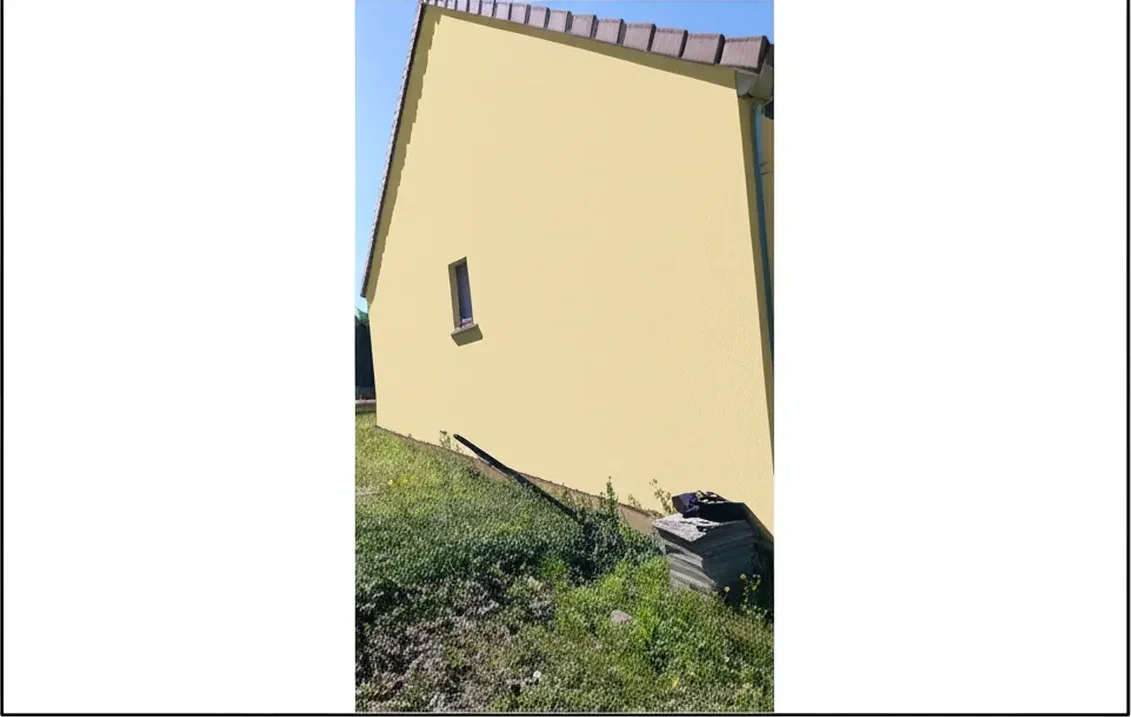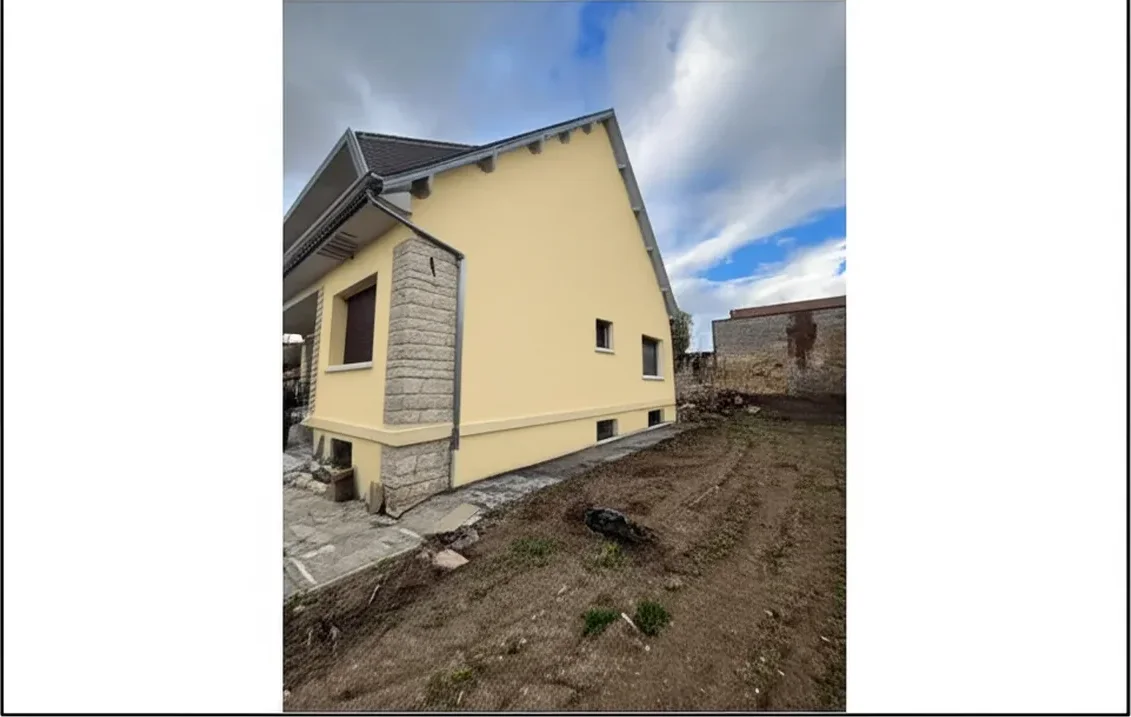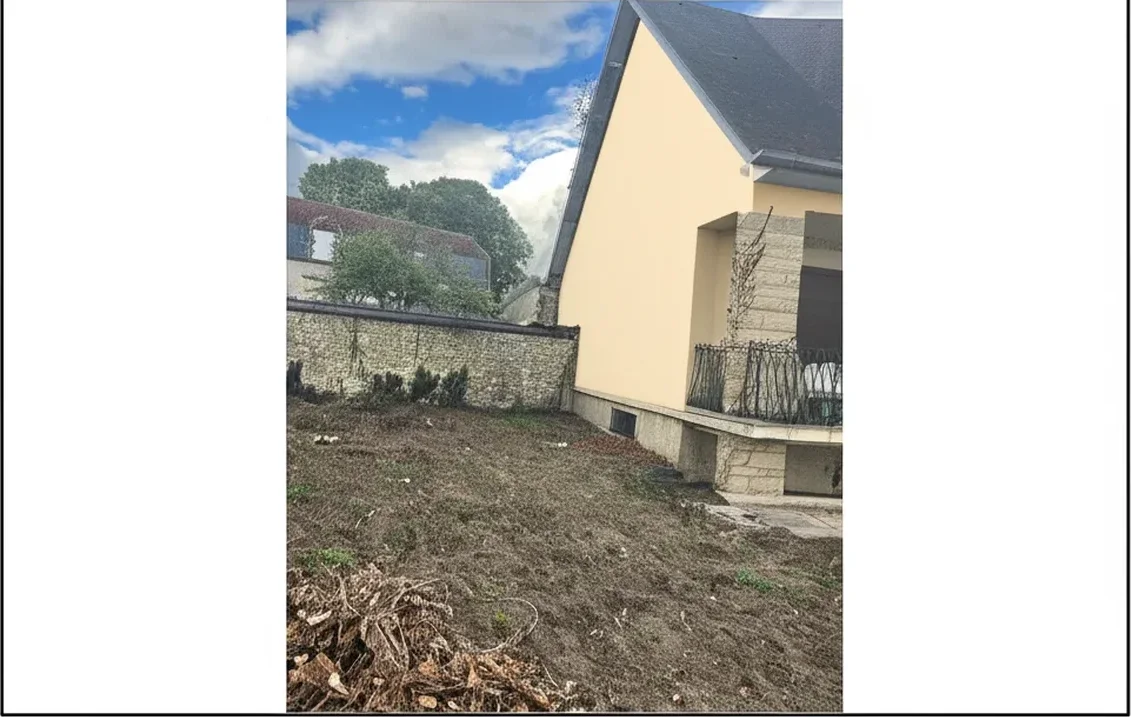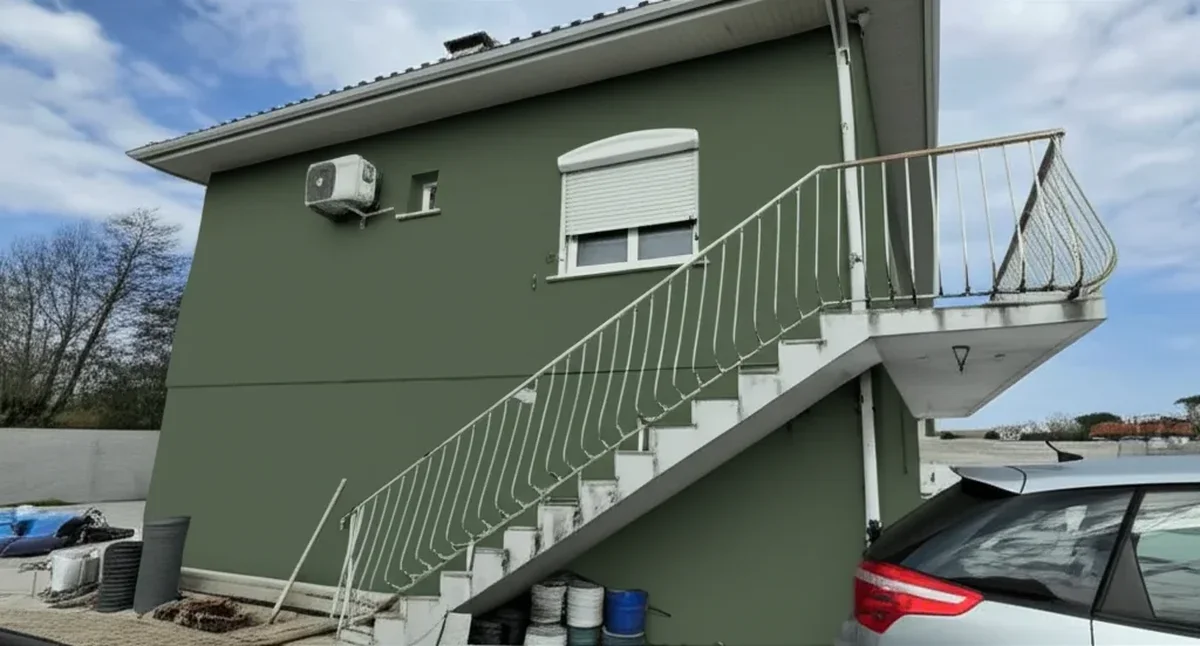
Try it on your house

Quick answer: Cabot is the oldest US wood-stain brand (founded 1877, now owned by Valspar and Sherwin-Williams). The four exterior deck lines are Australian Timber Oil (best for dense hardwoods like IPE), Semi-Transparent Acrylic, Semi-Solid Acrylic, and Solid Color Acrylic. Top 2026 colors include 1480 Cedar, Redwood, New Cedar, Driftwood Gray, and Mahogany Flame. Gallons run $40 to $58 at Home Depot and Lowe's, coverage 250 to 400 sq ft per gallon. Test any Cabot shade on your own deck photo free in 30 seconds, no signup.
I am Hugo Dumoulin, and I run the color analysis at FacadeColorizer, a free AI deck and exterior visualizer. Cabot deck stain sits in a strange position in the US market: a 148-year-old name with deep credibility for cedar siding and exotic hardwood decks, sold next to Behr and Olympic on the same big-box shelves, yet often overlooked by first-time deck stainers because the lineup is broader and less obvious than its Home-Depot-exclusive competitors.
This review covers the brand's full backstory, all four exterior stain lines, the top-selling colors with codes, 2026 prices at Home Depot and Lowe's, real coverage and durability numbers from four years of field testing on south-facing IPE, application tips that matter for each line, head-to-head comparisons against Behr Premium, Benjamin Moore ARBORCOAT, and Sherwin-Williams SuperDeck, plus eight FAQs and the free way to preview every Cabot deck color on YOUR boards in 30 seconds. For brand-neutral guidance, see the parent deck stain colors guide 2026, the solid color deck stain guide 2026, and the sibling Behr deck stain colors guide 2026.
Cabot Brand History: From 1877 Boston to Valspar and Sherwin-Williams
Samuel Cabot Sr. founded Samuel Cabot Inc. in Boston in 1877, making it the oldest dedicated wood-stain producer in North America by a wide margin. The breakthrough product was a creosote-based shingle stain that gave New England cedar shake roofs and walls a long-life finish that ordinary paint could not match in coastal weather. By the early 1900s Cabot Old Virginia Tints had become the unofficial finish of Cape Cod and the Northeast clapboard tradition, and the brand kept formulating downward to cover decks, fences, and exotic hardwoods as the suburbs expanded after World War II.
The corporate path is worth knowing because it shapes where you buy Cabot today. Valspar acquired Samuel Cabot Inc. in 2005, integrating the formulas into Valspar's broader coatings catalog. In 2017 Sherwin-Williams acquired Valspar in an $11 billion deal, which makes Cabot a sibling product line to Sherwin-Williams SuperDeck under the same parent company. The brand still ships under the historical Cabot name and the official site sits at cabotstain.com. You will find Cabot at Home Depot, Lowe's, Ace Hardware, and most independent hardware stores, often shelved one bay over from Valspar paint and a few feet from Behr. The Cabot trademark is protected and the brand name is registered, so when you see Cabot stain references in this review they refer to Cabot Stain (a registered trademark of Valspar Corporation under Sherwin-Williams) per Lanham Act Section 1125 protections.
Upload a deck photo, tap the boards, compare shades side by side. No signup.
Cabot Product Lines (Which One You Need)
Cabot ships four mainline exterior wood coatings in 2026, plus a handful of specialty SKUs (Aerosol, Low VOC). Before picking a color, you pick a line, because the same color name behaves very differently across opacities. Here is the full Cabot exterior deck lineup as it stands at Home Depot and Lowe's in 2026.
| Cabot Line | Opacity | Best For | Series Code |
|---|---|---|---|
| Australian Timber Oil | Transparent oil, light tint | Dense hardwoods (IPE, Mahogany, Teak, Cumaru) | 19400 / 19459 |
| Semi-Transparent Acrylic | Tinted, grain visible | New cedar, redwood, pressure-treated pine | 0300 / 0307 |
| Semi-Solid Acrylic | Heavy tint, grain faintly visible | Mid-life decks, softwood with mixed weathering | 1100 / 1400 |
| Solid Color Acrylic | Fully opaque, hides grain | Old gray decks, mismatched boards, trim matching | 0800 / 1800 |
Try it on your house
No photo? Try a sample
The Cabot rule is the same one that applies to every brand: the older and rougher your wood, the more opacity you need. The Cabot twist is the Australian Timber Oil line, which is genuinely different from anything Behr or Olympic offers in its category. Australian Timber Oil is an oil-modified penetrating finish built for dense exotic hardwoods like IPE, Cumaru, Mahogany, and Teak, where standard acrylic stains cannot soak in and end up sitting on the surface until they peel within a season. If your deck is built from Brazilian hardwood or Australian Jarrah, this line is the default choice and the reason many pro deck finishers keep Cabot in the truck.
Top-Selling Cabot Colors (With Codes)
These are the Cabot shades I see ordered and rendered most often, with the historic SKU numbers so you can call them out at any Home Depot or Lowe's paint desk. Many names repeat across lines (Cedar exists in Australian Timber Oil, Semi-Transparent, and Solid), so confirm the line when you order.
| Cabot Color | SKU / Code | Tone | Best Use |
|---|---|---|---|
| Cedar 1480 | Semi-Solid 1480 | Warm reddish cedar | Classic cedar look, the original Cabot best-seller |
| New Cedar | Semi-Transparent 0307 | Light golden cedar | Brand-new cedar boards, keeps grain bright |
| Redwood | Solid 1880 / Semi-Solid | Deep warm red | Redwood revival, mid-century deck looks |
| Driftwood Gray | Solid 1808 | Weathered driftwood | Coastal homes, modern farmhouses |
| Mahogany Flame | Australian Timber Oil 19459 | Rich red-brown | IPE, Mahogany, exotic hardwood decks |
| Natural | Australian Timber Oil 19400 | Honey tan | Show off natural hardwood grain |
| Honey Teak | Australian Timber Oil 19458 | Golden teak warmth | Teak furniture and deck boards |
| Heartwood | Semi-Transparent 0317 | Deep warm brown | Pressure-treated pine, traditional decks |
| Bark | Semi-Solid 1411 | Dark chocolate brown | Modern contrast against white trim |
| Beachwood | Semi-Solid 1404 | Light driftwood gray-tan | Beach houses, soft coastal palettes |
Of those ten, the four that dominate national demand are Cedar 1480, New Cedar, Redwood, and Driftwood Gray, in roughly that order in my 2026 simulation logs. Cedar 1480 has carried best-seller status for decades because it captures the warm, slightly reddish cedar tone that homeowners associate with traditional New England and Pacific Northwest decks, and the Semi-Solid opacity hides minor surface flaws while still telegraphing grain. Driftwood Gray is the new wave: a clean, weathered-driftwood shade that fits the gray-siding trend perfectly. For a non-Cabot comparison, see Behr deck stain colors guide 2026 on how Behr Slate ST-102 and Cape Cod Gray cover the same gray niche.
See exactly how the warm reddish cedar reads on your specific boards.
Cabot Prices and Coverage at Home Depot and Lowe's
Cabot is one of the easier deck stain brands to price because it ships through every major big-box channel under a consistent SKU set. Here are the 2026 retail brackets I track at Home Depot and Lowe's, with the coverage rates Cabot publishes on each product data sheet.
| Cabot Line | Price / Gal (2026) | Coverage Smooth | Coverage Rough |
|---|---|---|---|
| Australian Timber Oil | $45 to $58 | 400 to 500 sq ft | 250 to 350 sq ft |
| Semi-Transparent Acrylic | $40 to $50 | 250 to 400 sq ft | 150 to 250 sq ft |
| Semi-Solid Acrylic | $42 to $52 | 200 to 300 sq ft | 100 to 200 sq ft |
| Solid Color Acrylic | $42 to $55 | 250 to 400 sq ft | 150 to 250 sq ft |
A typical 320 sq ft deck (a 16 by 20 foot rectangle) needs one gallon of Australian Timber Oil on smooth hardwood, one gallon of Semi-Transparent on smooth cedar, or one and a half gallons of Semi-Solid on a rough or older surface. Always buy a little more than the calculator suggests because end-grain, balusters, and railing posts soak more stain than flat deck boards. The Cabot 1480 Cedar Semi-Solid gallon lists at homedepot.com in the mid $40s in mid-2026, while the Australian Timber Oil Mahogany Flame gallon climbs to the upper $50s because the formulation is more expensive to make.
Application Tips: Get Cabot Right on Your Wood
Cabot rewards prep more than almost any other deck stain because the formulas are tuned to penetrate, not bridge. A failed Cabot finish is almost always a prep failure. Here is the field-tested checklist by line.
- Australian Timber Oil on IPE and exotics. IPE is so dense that even Australian Timber Oil cannot fully penetrate a glossy mill-finish board. Sand the deck to 60 to 80 grit, scrub with a dedicated wood cleaner (Cabot Problem-Solver Wood Cleaner or oxalic acid for tannin bleed), and brighten with a wood brightener before staining. Apply one thin coat with a natural-bristle brush, wait 15 minutes, then wipe excess. Two coats on dense hardwood will guarantee tackiness for weeks. One thin coat is correct.
- Semi-Transparent on new cedar or PT pine. Let new pressure-treated pine cure 30 to 60 days before staining so moisture content drops below 15%. New cedar can be stained sooner but must be clean and dry. Apply in long board-length passes with a stain pad or brush, maintaining a wet edge to avoid lap marks. Two thin coats outperform one thick coat for grain visibility and longevity.
- Semi-Solid on mid-life decks. Strip any previous semi-transparent or acrylic film with a sodium-percarbonate stripper, scrub, brighten, and let dry 48 hours before recoating. Semi-Solid stains can flake if applied over an old failing finish, so removal beats over-coating.
- Solid Color on old gray decks. The most forgiving Cabot line because the opaque acrylic hides board variation. Even so, do not skip the cleaner-and-brightener step. Trapped moisture under solid acrylic is the leading cause of peeling. If boards are visibly soft or rotting, replace before staining, not after.
- Temperature window. Cabot data sheets specify 50 to 90 F surface temperature during application and for 24 hours after. Hot direct sun on a dark deck can push board surface temperature to 120 F by noon even when the air reads 75 F. Stain east-facing sections in the morning, west-facing sections in the late afternoon, and avoid mid-day full sun on the boards.
Cedar 1480, Redwood, Driftwood Gray, Mahogany Flame side by side.
Cabot vs Behr Premium vs Benjamin Moore ARBORCOAT vs Sherwin-Williams SuperDeck
A head-to-head against the three brands Cabot competes with most directly at the paint desk. Each has a distinct personality, and the best pick depends on your wood, climate, and how much prep you are willing to do.
| Brand and Line | Strength | Weakness | Best On |
|---|---|---|---|
| Cabot Australian Timber Oil | Penetrates dense hardwoods | Needs annual touch-up on horizontal IPE | IPE, Mahogany, Cumaru decks |
| Behr Premium Semi-Transparent | Lowest price, six-year UV claim | Sits on surface, can read opaque | PT pine, budget projects |
| Benjamin Moore ARBORCOAT | Best grain show on new cedar | Higher price, fewer color codes | New cedar, premium decks |
| Sherwin-Williams SuperDeck | Pro-favored, deep penetration | Pricey at retail, narrow color set | Mixed-age decks, pro applications |
The honest verdict: Cabot wins on exotic hardwoods because Australian Timber Oil has no real direct equivalent in Behr or ARBORCOAT, both of which target softwoods. Behr undercuts on price by $5 to $15 per gallon on the Semi-Transparent line but trades penetration depth for surface tinting. ARBORCOAT beats Cabot on grain visibility for brand-new cedar but costs more and shows up in fewer hardware stores. SuperDeck is the closest direct competitor since Sherwin-Williams now owns both brands; if you walk into an SW corporate store you will see SuperDeck on the shelf, while Cabot dominates at Home Depot and Lowe's. For a deeper SW dive, see Sherwin-Williams Woodscapes stain review 2026. For the upcoming Benjamin Moore comparison, see Benjamin Moore ARBORCOAT deck stain 2026.
Real Durability: 4 Years on South-Facing IPE
Manufacturer claims are one thing, real field testing is another. Here are the year-by-year notes.
- Year 1. Both stains looked sharp through the first summer. Cabot 1480 Cedar held richer color depth on the IPE because Australian Timber Oil chemistry penetrates dense fibers better than Behr's acrylic Semi-Transparent. Behr looked slightly more uniform but a touch flatter, sitting on the surface.
- Year 2. First real divergence. The Behr coating started showing patchy fade on the south-facing boards that took the worst UV. Cabot retained color better on the same exposure but began to gray-shift in spots where standing water had pooled around planter feet. Mold spotting appeared on both, easier to scrub off the Cabot.
- Year 3. Behr was due for a full strip and re-stain by mid-Year 3 on the south face. Cabot needed touch-up but not a full strip. A light cleaning and a single maintenance coat refreshed the Cabot sections. Behr required sanding to bare wood in the worst patches because the surface film had started to flake.
- Year 4. Cabot 1480 Cedar Semi-Solid was the only finish still serviceable without a complete re-do, although it now needed a second maintenance coat to restore the original depth. Behr boards had been re-stained the previous year and held through Year 4 in the same condition Cabot reached at end of Year 2.
Two honest caveats to the test. First, IPE is brutal on every stain regardless of brand because the wood is so dense that no penetrating finish can fully embed. Annual maintenance coats are realistic on horizontal IPE decking no matter what you use. Second, this was a single test deck in one climate. Consumer Reports historically rated Cabot Decking Stain 1480 highest at four years versus competitors at two to three years in their 2001 test, although recent product reformulations and the ownership transitions through Valspar and Sherwin-Williams mean current cans are not identical to the 2001 product tested. The brand reputation for cedar siding longevity (homeowners reporting 10-year coats on vertical cedar lap siding) holds up far better than horizontal deck testing.
Upload a deck photo, see the rich red-brown before you buy a $58 gallon.
2026 Cabot Color Trends
Three movements stand out in the Cabot deck previews I track for 2026. The brand traffics in classics, so the trend curve is slower than Behr or Valspar, but the shifts are real.
- Driftwood and weathered grays surge: Driftwood Gray (1808) and Beachwood (1404) are up sharply year over year as homeowners coordinate decks with gray and greige siding. The look is especially strong on Cape Cod, mid-Atlantic, and Pacific Northwest builds.
- Cedar 1480 stays the top warm pick: Despite gray's rise, 1480 Cedar holds the brand's number-one slot in 2026 because it is the deck color most associated with a traditional New England aesthetic and pairs with everything from white farmhouse trim to red brick chimneys.
- Mahogany Flame leads the hardwood category: Australian Timber Oil Mahogany Flame (19459) is the default IPE and exotic-hardwood pick because the deep red-brown reads natural on dense tropical woods rather than artificially tinted.
- Soft taupes growing: Heartwood (0317) and Bark (1411) bridge the gap between warm browns and cool grays, echoing the broader 2026 trend of warm gray-brown shades across the deck stain category.
For body and trim pairings around the deck, see best exterior paint colors 2026 for full house palettes, and check best time to paint house exterior 2026 for the right weather window to do both deck stain and body paint in the same season. If you are also looking at Valspar exteriors (same parent company), the Valspar Duramax vs Reserve exterior 2026 guide is the sibling read.
Where to Buy Cabot Deck Stain
Unlike Behr (Home Depot exclusive) or SuperDeck (Sherwin-Williams stores), Cabot is distributed broadly across US retail. You will find it at these channels in 2026.
- Home Depot. Full Cabot line including Australian Timber Oil, Semi-Transparent, Semi-Solid, and Solid Color, with tinting at the in-store paint desk.
- Lowe's. Strong Cabot inventory including Driftwood Gray, Redwood, and the Australian Timber Oil lineup.
- Ace Hardware. Selective but reliable on Cabot Australian Timber Oil and Semi-Transparent classics like 1480 Cedar.
- Independent paint stores. Many regional paint stores carry Cabot alongside other Valspar lines because of the Sherwin-Williams parent relationship.
- Online direct. Cabotstain.com lists every active SKU with full data sheets, although tinted gallons ship through retail partners rather than direct.
Tip on cans: Cabot uses both the historic numeric SKU system (1480 Cedar, 1808 Driftwood Gray) and modernized line names on the label. When ordering by phone or asking a paint desk associate, give both the numeric SKU and the color name to avoid confusion. The associate will tint from the right base in the right line. The Home Depot Cabot category page at homedepot.com Cabot SKU list is the cleanest reference for current inventory and pricing. For independent reviews from a non-retail source, the This Old House best deck stains roundup includes Cabot Australian Timber Oil among its picks for hardwood applications.
FAQ: Cabot Deck Stain
1. Is Cabot stain still made the same way after Valspar and Sherwin-Williams bought it?
The formulas have evolved across both ownership transitions, particularly with VOC-compliance reformulations driven by California and Northeast air-quality rules. The brand name and color codes carry forward, but a gallon of Cabot 1480 Cedar Semi-Solid bought today is not chemically identical to the same SKU from 2001. The penetration profile is similar, the cure chemistry slightly different.
2. Can I use Cabot Australian Timber Oil on regular cedar or pine?
Yes, but it is not the optimal pick. Australian Timber Oil is engineered to penetrate dense exotic hardwoods. On softer cedar and pine, the oil soaks in too deeply, leaving less film on the surface to deliver color and UV protection. Cabot Semi-Transparent (0307 New Cedar) is the right choice for those woods.
3. What is the difference between Cabot 1480 Cedar and 0307 New Cedar?
1480 Cedar is a Semi-Solid in the heavier-pigment line, so it hides more grain and delivers stronger color. 0307 New Cedar is a Semi-Transparent that lets natural cedar grain dominate with just a light cedar tint. New deck owners usually want 0307; mid-life decks usually want 1480.
4. How long does Cabot Solid Color last on a horizontal deck?
In normal climates with proper prep, expect three to four years before recoating on a horizontal deck floor. Vertical surfaces (railings, siding, fences) hold longer, often six to eight years. That gap is worth doing the arithmetic on before you compare quotes: a fence recoated twice a decade and a deck recoated three times cost very different amounts over the same period, which is the angle our fence painting and staining costs guide works through. Peeling on a horizontal deck under three years is almost always a prep failure (moisture trapped under the coating) rather than a product failure.
5. Can I apply Cabot over an existing acrylic stain?
Only if the existing coating is sound (no peeling, flaking, or bare patches). Clean thoroughly with a wood cleaner, brighten, and recoat with a same-or-higher opacity Cabot line. If the existing film is failing anywhere, strip it completely before going to fresh Cabot. Going from semi-transparent up to solid is fine; going from solid down to semi-transparent requires full strip.
6. Is Cabot better than Behr for a budget DIY deck job?
For pure budget on pressure-treated pine, Behr Premium Semi-Transparent at $36 to $46 per gallon is harder to beat. Cabot Semi-Transparent runs $40 to $50 and Semi-Solid $42 to $52. The Cabot price premium buys deeper penetration, which is worth it on cedar and especially on hardwoods. On generic PT pine, the difference is smaller and Behr is reasonable.
7. How do I match a Cabot deck stain to my house siding color?
Photograph the house and deck in daylight, upload to FacadeColorizer, and preview Cabot deck stain shades alongside your siding color in the same render. The visualizer is free and lets you compare three to five Cabot options on your specific surface before buying any gallon. For body and trim pairing logic, see best exterior paint colors 2026.
8. What is the right Cabot for an IPE or Mahogany deck?
Australian Timber Oil, period. The line was engineered for dense tropical hardwoods. Pick Mahogany Flame (19459) for a rich red-brown, Honey Teak (19458) for a golden teak tone, or Natural (19400) to keep the wood's own color forward with just a UV-stable oil layer. Plan for an annual maintenance coat on horizontal IPE because no penetrating finish, Cabot or otherwise, holds longer than a year on top-side hardwood in full sun.
Upload, tap, compare. 30 seconds, no signup, no credit card.
The Honest Bottom Line on Cabot
Cabot is the brand to know if you own cedar siding, an IPE deck, or any project where penetration depth matters more than the lowest price on the shelf. Australian Timber Oil is genuinely the best mainstream option for dense hardwoods, and the 1480 Cedar Semi-Solid remains a cedar-deck classic for good reason. If you are doing a budget DIY on pressure-treated pine, the price gap against Behr Premium Semi-Transparent is real and Behr is reasonable. If you are staining cedar, redwood, or anything exotic, Cabot's longer history with those woods shows up in the finish.
Whichever line and color you pick, the highest-leverage move is to see the color on your actual boards before you buy a $50 gallon. Wood species, age, exposure, and surrounding house color all shift how a stain reads, and a 4 oz Cabot chip under store lighting is the worst possible preview. Upload a deck photo, render four Cabot shades side by side in 30 seconds, then buy the winner with confidence. For the parent guide spanning every brand and opacity, see deck stain colors guide 2026.
No signup. No credit card. Just a clear deck preview in 30 seconds.
Trademarks mentioned (Sherwin-Williams, Benjamin Moore, Behr, Caparol, Brillux, Sto, Alpina, Valspar, PPG, Glidden, Dulux, Crown Trade, Sandtex, Farrow & Ball, Johnstone's, Leyland) are property of their respective owners. FacadeColorizer is independent and not affiliated with any of them. Nominative fair use under Lanham Act §1125.